Lasagna Pizza Galette

Oh, look, ricotta. What can I do with that?

I came home from being away for a few days and opened the fridge to see what might be possible for dinner, and there was a container of ricotta, front and center, staring at me, practically begging. You know you want to use me. I did, not only because I had an idea brewing, but because it had been in there almost too long.

Two experiences contributed to the new concoction I made tonight. New for me anyway.

  1. While in D.C. this past weekend, we stopped for a bite to eat at a pizza place and were intrigued with the one that had pickles on it! That’s right, pickles along with ham, pulled pork, feta cheese and a bit of mustard. They call this a pizza, and I’ll play along. It has a crust like a pizza, is round like a pizza, and has creamy, melted cheese on it like a pizza. The rest is a stretch, but it didn’t matter because it was totally delicious. The server described it as an “open sandwich.” Put whatever you want on a pizza crust. Hmmm.
  2. Claudia and I had a conversation about pie vs. galette. I think of galette as the free form version of pie, I said. To me pie has more fruit than galette, she said. Deeper maybe, ok, fair, I said. Look at us, she said. 🙂 Claudia made a plum pie. The sticky dough made with gobs of butter was hard to work with, hard to make pretty, but oh how amazing it must have tasted. I could only dream about it because she lives in Germany. I’m sure it’s long gone.
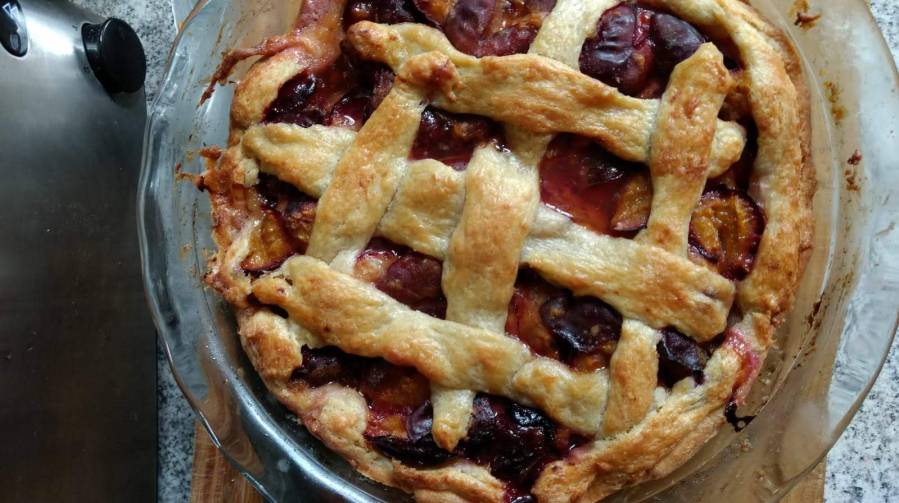
Claudia's plum galette.jpg

So here I was thinking free form and wanting to do something with my must-be-used ricotta when I saw it in the fridge. That’s all there was at first.

Okay. Start with a pizza dough, which we have discussed in my pizza pile post https://anunboringpath.com/2018/07/31/pizza-pile/. While the dough was resting I gathered basil and oregano from the garden (oh, how glorious basil and oregano are in August!!) and cut it up, took out the ricotta, looked for mozzarella but didn’t happen to have any so settled on a small chunk of asiago (it’s a stronger cheese – don’t need too much, but the flavor works), grated that, chopped up a red pepper and a couple handfuls of spinach, defrosted the half a can of Don Pepino pizza sauce I had put in a jar the last time we made pizza, and took out the jar of grated parmesan that I keep ready to go in the fridge. I oiled the pan with olive oil and sprinkled cornmeal on it. I’m hungry, worked fast.

Ready. I rolled out the rested dough bigger than my pizza pan by about 4” all around. Truth be told, that’s just how big it rolled out. Looked good to me. Not overly picky when I am hungry. I set the pan on the first thing that caught my eye on the counter that would raise it up high enough for the dough to hang down, which happened to be my teapot without its lid waiting by the sink to be rinsed, which you cannot see in this photo, but trust me, the teapot is under the pan and the dough is hanging down the sides.

True confession: I was just making dinner for me and Samuel. That’s all. This is the point where I realized the idea might work and it might be yummy and I ought to be taking some pictures so I could share it!

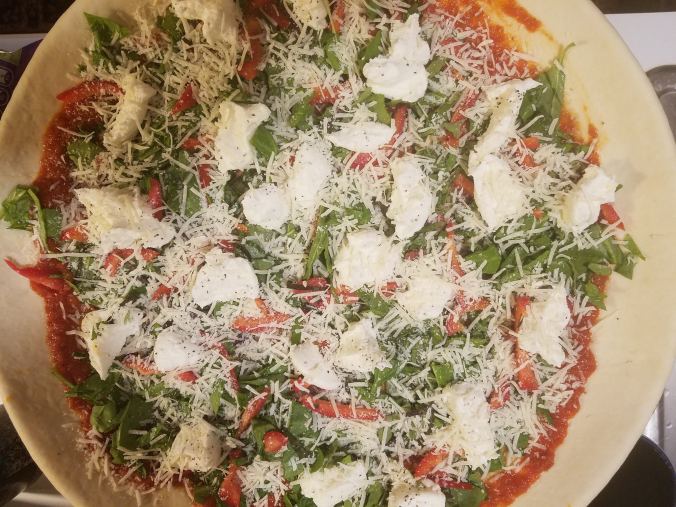
Here it is with the pizza sauce, then the spinach, basil and oregano, then the red pepper, then small blobs of ricotta.
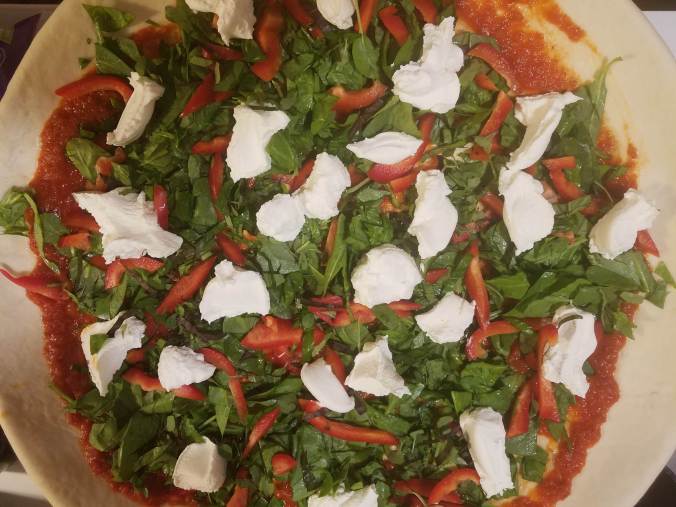
1.jpg

Next came the salt and pepper and parmesan.
2.jpg

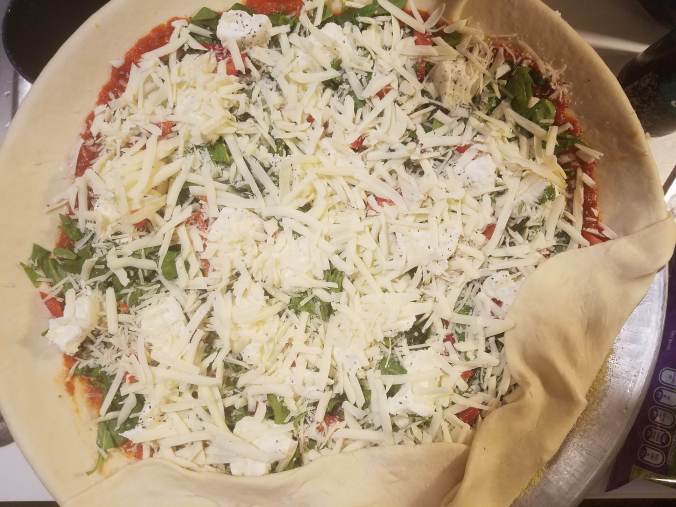
Then the grated asiago. I began flipping the sides up. This is the part that reminds me of a galette. Wherever it lands, it lands. After it’s done, the whole thing is fabulous, but the part encased in the dough all around the edges is extra fabulous. But I am getting ahead of myself. And I know I’m being terribly UN-EXACT this time. So sorry. Been away. Hungry. Slacker!
3.jpg

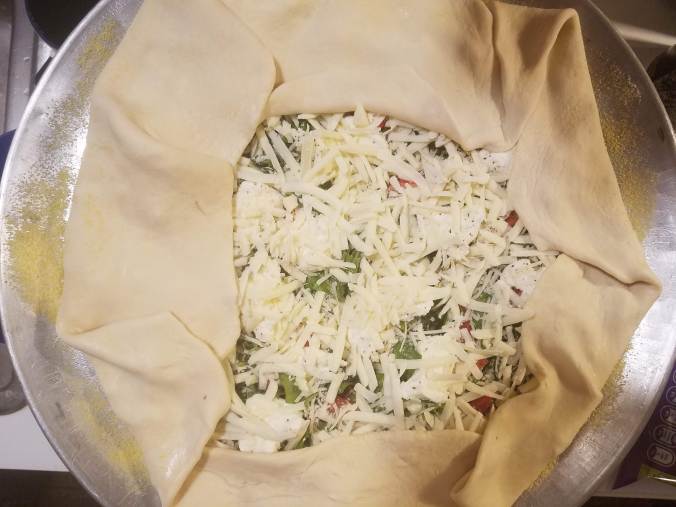
When all the sides are flipped up, it looked like this.
4.jpg

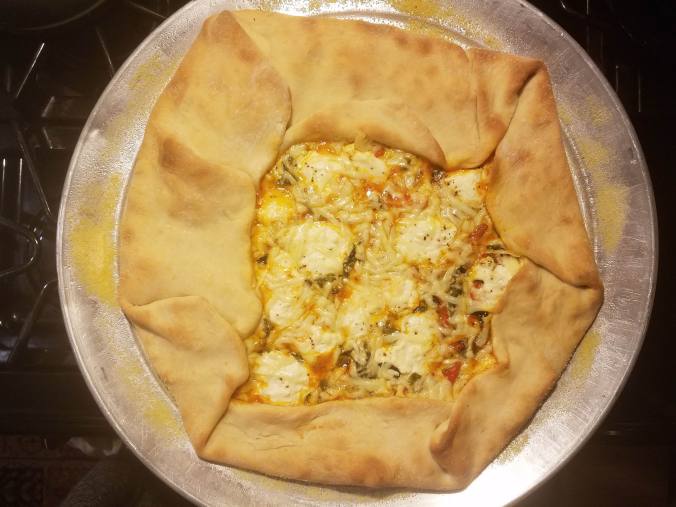
And when it has cooked until it’s almost done, it looks like this.
cooked 1.jpg

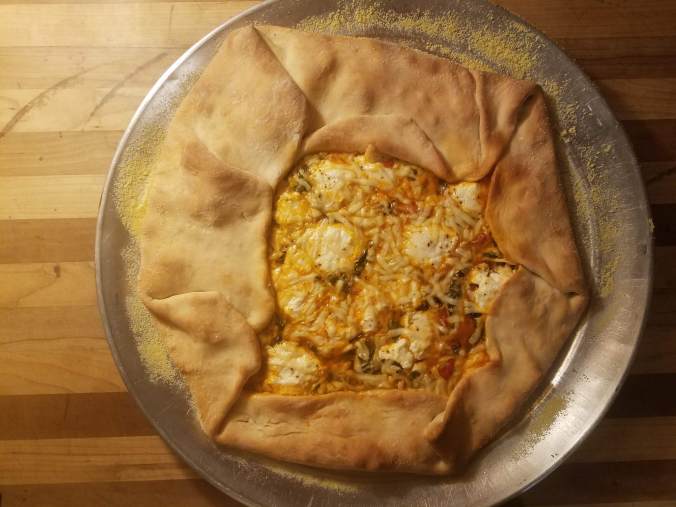
I like mine a little darker and the bottom crust a little crisper, so I slid it off the pan right onto the oven rack and in five more minutes ended up with this.
cooked 2.jpg

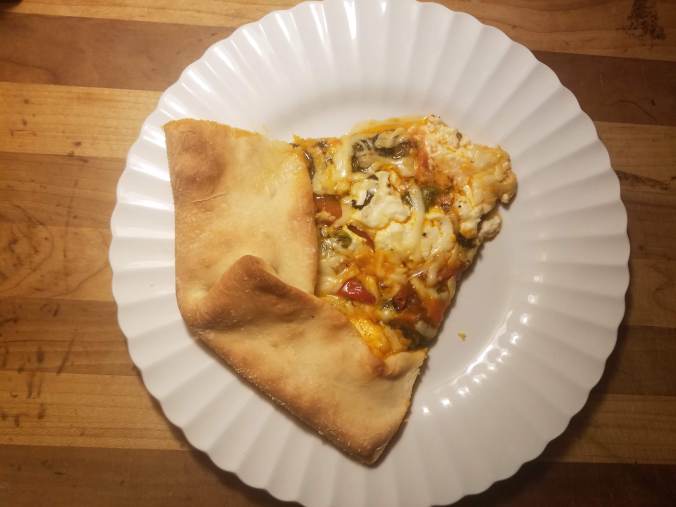
Seems to be a combination of pizza, Stromboli, calzone, lasagna and galette.

  • Round, thin crust, creamy cheese on top like a pizza.
  • Crust enveloping cheese like a Stromboli or calzone.
  • Ricotta to remind me of lasagna or calzone.
  • All in a free form that still reminds me of a galette.

I have no idea what to call this! But it was divine. Note past tense verb was.
piece on a plate.jpg

Being Not Wishy, But Washy

Not many people have heard of Washy Custis. His full name was George Washington Parke Custis. I did not expect to meet him, but there he was. You may remember that George Washington (yes, that George Washington) married a widow named Martha Custis, whose late husband was a man named John Parke Custis. Martha’s grandson was Washy, and he grew up at Mt. Vernon.
guide Wash (3).jpg

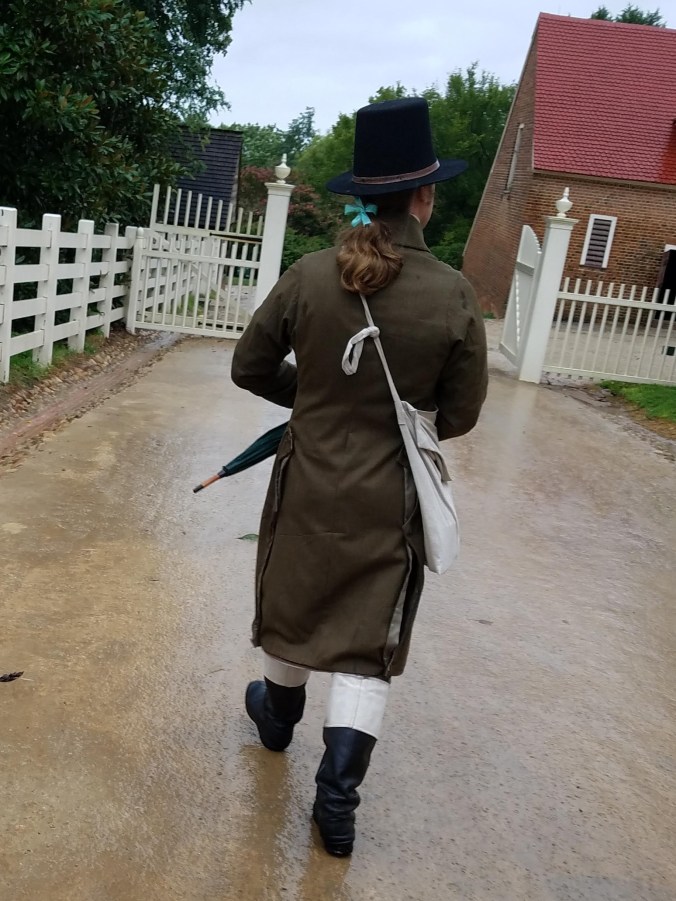
(It is, by the way, historically accurate for him to be carrying an umbrella, which we all needed to do on this rainy Sunday. When I asked about that, I was told that the Egyptians had umbrellas. “A palm frond on a stick is not rocket science,” I was told.)

Washy guided us through the historic property, pointed out the “necessary” (the privy) but discreetly saying very little about it; gentlemen don’t need to talk about such things. He described the winding paths that led to the house, each flanking the “bowling green” – which was not for bowling but for bocce balls (which, if you haven’t played it recently, is a really fun game on a flat lawn). The paths were designed to look like they meandered naturally but were in fact quite specifically planned that way.

He explained about the cupola, affixed to the roof of the house not to ornament it, but to provide a much-needed escape for the hot air of the summertime. You opened the first-floor windows and the cupola windows, and the hot air went up and out (some of it, anyway, let’s hope most of it).

front of house

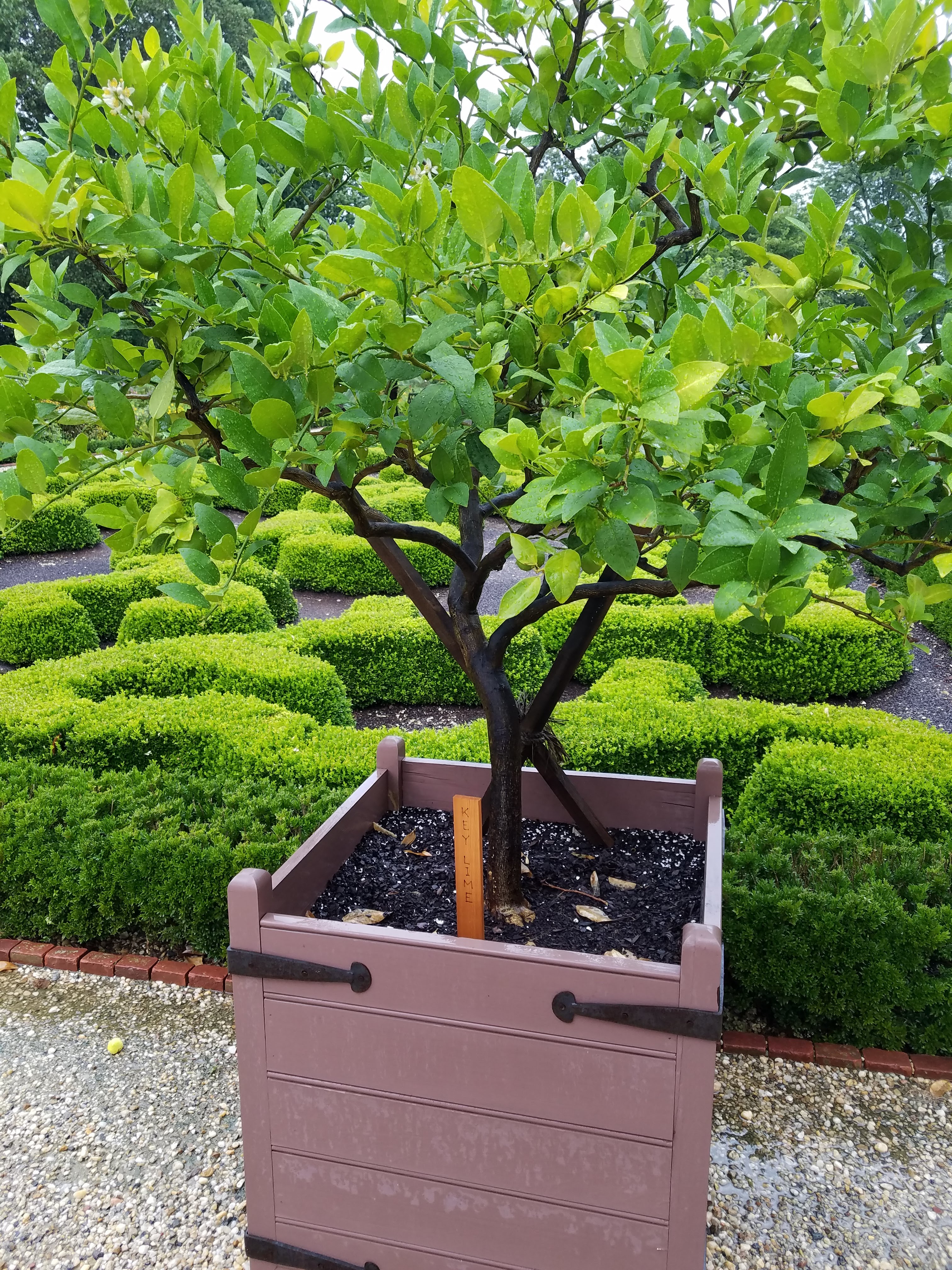
He took us to the greenhouse, where Washington’s tropical plants, such as this key lime tree, live during the winter. Washington’s only trip outside the continent was to Barbados when his brother was ill; it was there he developed a fondness for things tropical.

key lime reflecting Washington's interest in tropical plants.jpg

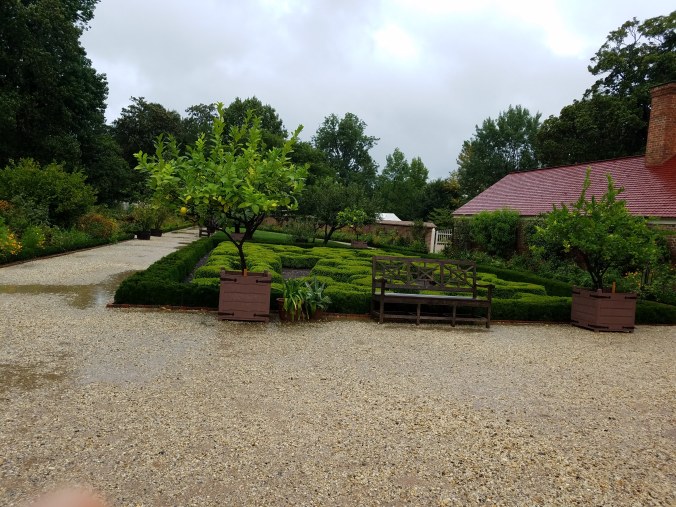
The formal gardens, seen behind the tree and in the next photo, are comprised of boxwoods carefully shaped into fleur de lis (to honor the French and their help during the Revolutionary War), the freemason’s symbol (General Washington joined this elite organization at the age of 20) and something that resembles a dog bone but does not represent dogs, even though Washington had several. Funny how you sometimes remember what a thing isn’t, but not what it is!

Hats off to the gardening staff at Mt. Vernon!

parterre garden.jpg

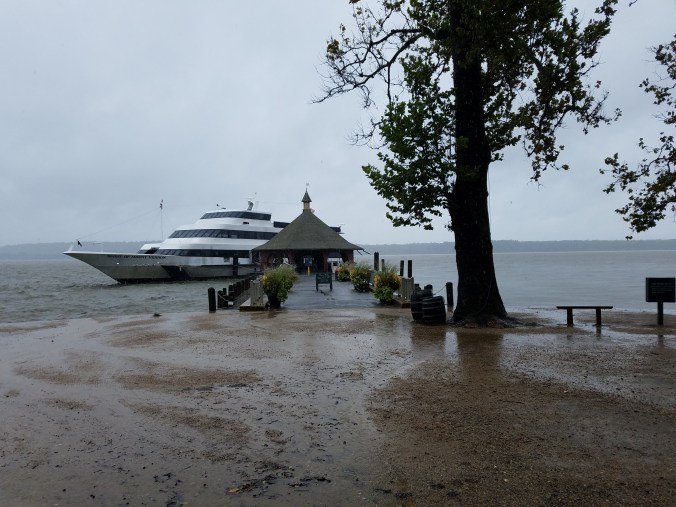
(Did I mention it was raining? Our feet were soaking, our umbrellas were dripping through. The view through the window of the boat, this boat,

cruise ship.jpg

during the river cruise we took that had nothing at all to do with Washy (to whom we shall return) looked like this. Not the nicest day for a tour.

rainy day 2.jpg

When I worked at Smuggler’s Notch ski resort in Vermont one winter and the wind chill factor one day made the temperature feel like 50 below, and people were getting on the lift to go up to the top of the mountain to go skiing, I remember thinking Fools! No, actually I realized even then that, well, this is their vacation, this is their day. If they don’t go today, they don’t go. I used to think I would have stayed by the fireplace, but there I was today out in the rain with all the others – all the other fools! It was my day!)

We followed elegant, amazing Washy all over the place, into the stable courtyard, through muddy paths, across soaking wet grass. He cut a dashing figure, bow in the hair and all. His jacket in the back is joined with buttons at the sides, which of course he could undo when it came time to get on a horse.

back of Wash (2).jpg

Washy, what a name. He was a trip, continually referring to what his grandpapa would have thought or said or done. At the smokehouse, a squirrel interrupted his spiel, walked right through the eight or ten of us carrying its baby into the (unused for smoking hams anymore) smokehouse.

Coming through, folks. Baby duty. ‘Scuse me, to your left. Coming through…

“Never share the stage with babies or animals,” he said. “They one-up you every time.”

Botanical Beauties

I never want to see all there is to see or do all there is to do. (Not that I could if I wanted to, but that is another story.) Don’t get me wrong, I want to see a lot, do a lot, fill my world with fun, challenging, delightful, worthwhile, interesting amazing and beautiful things and activities. I want to use every moment I can wisely because you never know what’s around the next bend.

But if I could see it all and do it all, what would be left? In my world, there’s something new every day. The reason for this seems clear: Otherwise I might cease to be astounded at the diversity and majesty of the natural world around me as well as the artistry and cleverness of my fellow humans. Standing in awe at the wonder of creation or the ingenuity of people keeps me on my toes, which is one way to keep things unboring.

Yesterday, for instance, a quick walk through the botanical gardens here in Washington, D.C., included lots of green, lots of spikes, lots of color. None of that is what struck me first though. As you walk in the door, the very air embraces you, tells you a story, encourages you to keep moving forward. It both feels and smells fresh, sweet and in its own way intoxicating. I kept going.

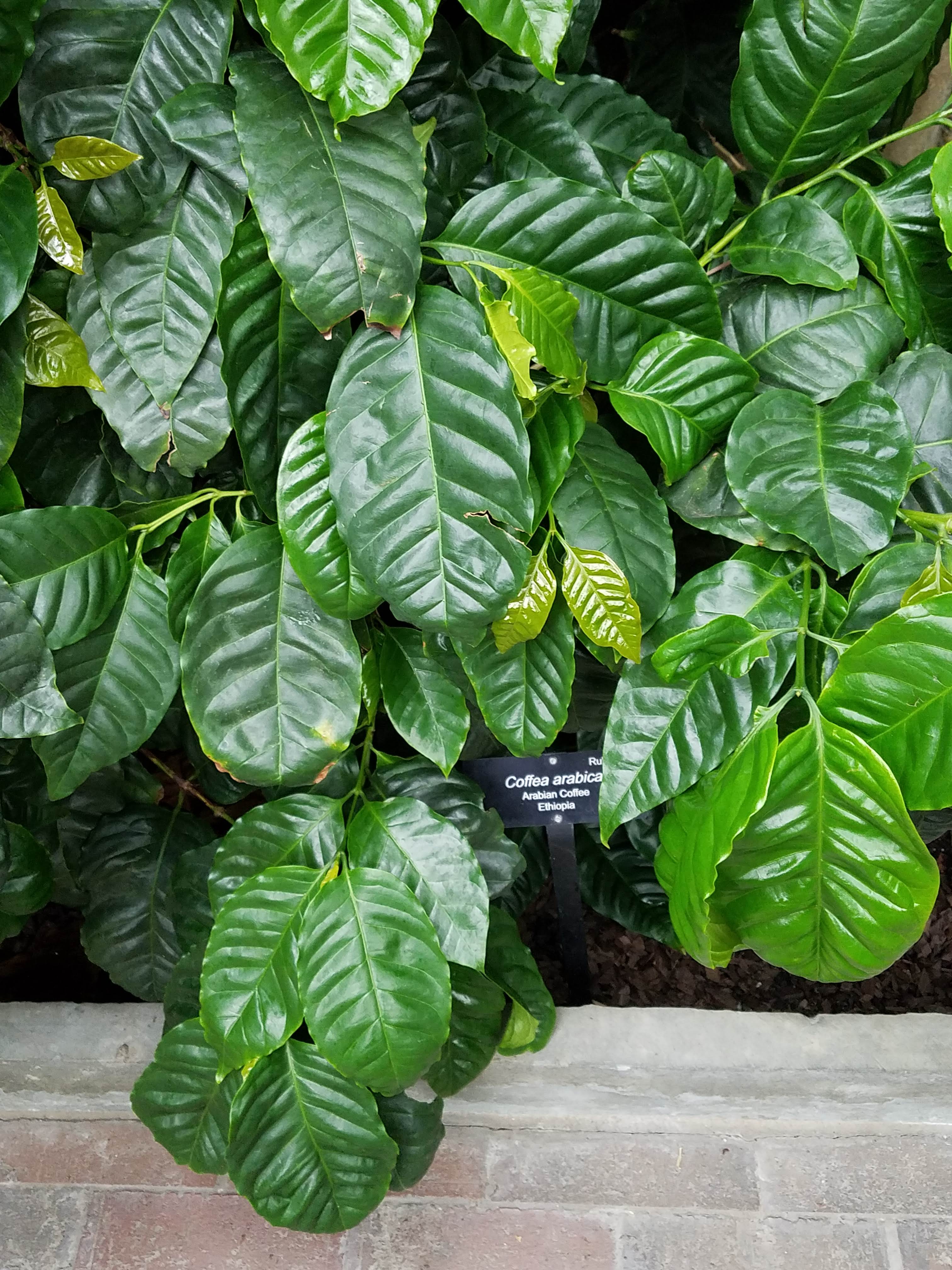
Maybe you have seen how coffee grows, how shiny green its leaves are, but I hadn’t. They might be plastic for as perfect as they looked to me. The staff added those few broken brown edges just to make it look real, right?

coffee plastic.jpg


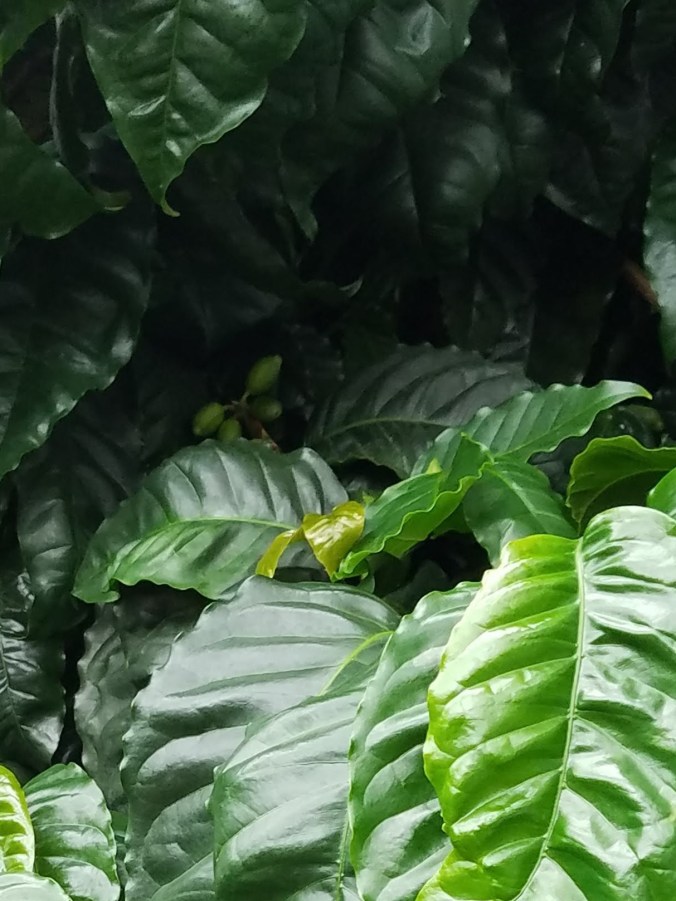
The beans seem to like to hide. Shy maybe? Hoping to escape detection? See them in there?

coffee beans (2).jpg

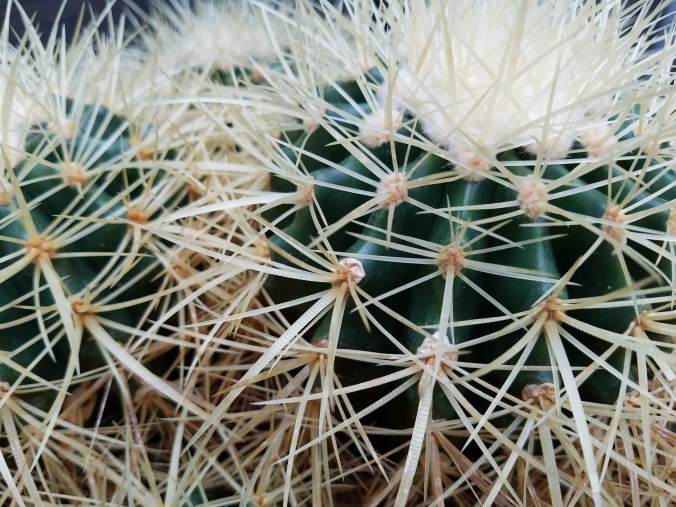
Some of these plants have a very effective way of protecting themselves. Don’t even think of touching me! says the cactus to anyone or anything that comes by. We get the message!

cactus up close.jpg


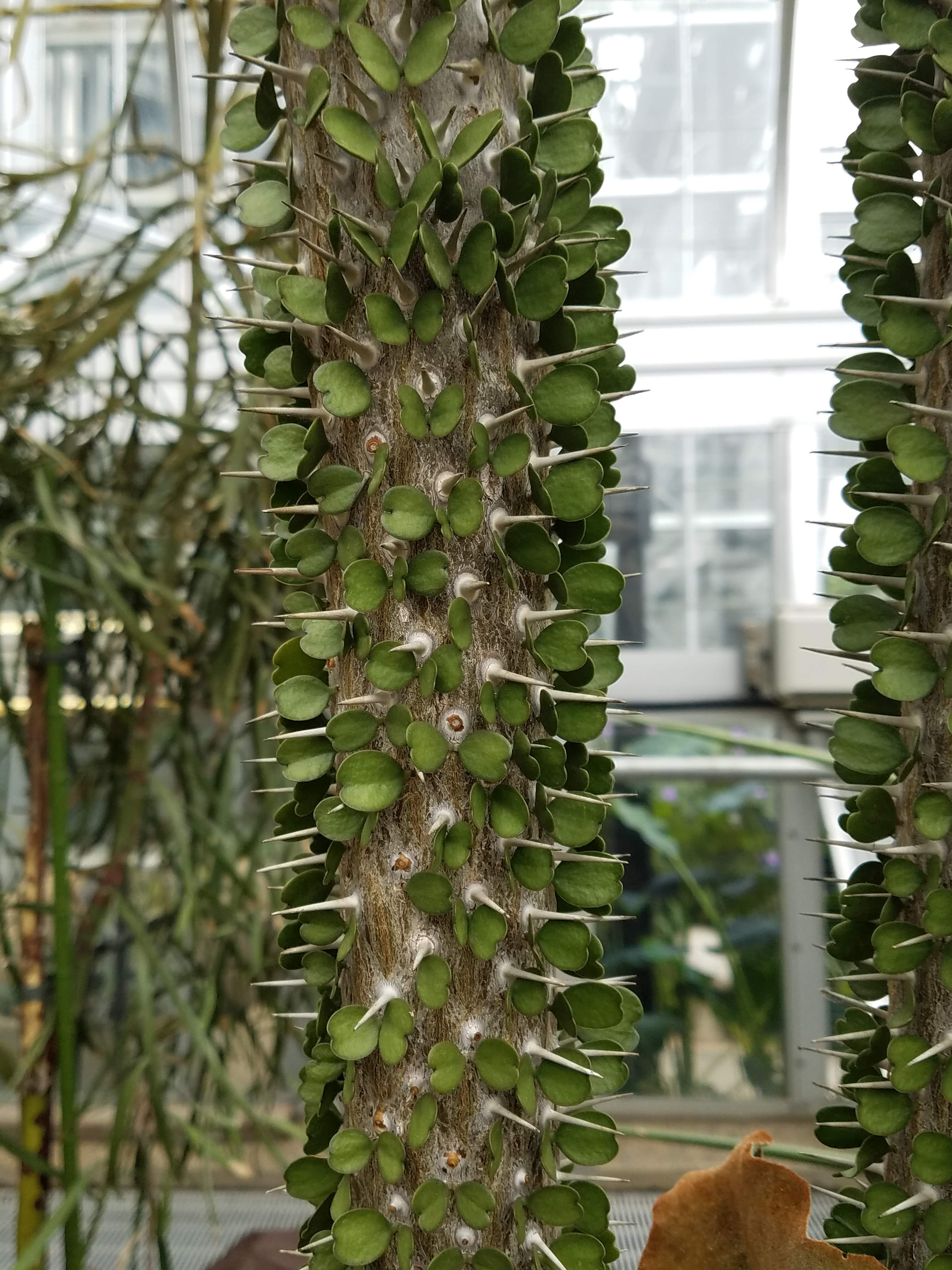
Some plants are aptly named. Botanists sometimes get the fun of assigning a name. Do you think this name works? It’s the “devil’s dagger.” The little heart-shaped green parts looking remarkably like harmless leaves are a bit misleading. They say You know you want to touch me, while the spikes are waiting patiently, in just as plain sight, for you to try it. Just try it!

devil's dagger2.jpg


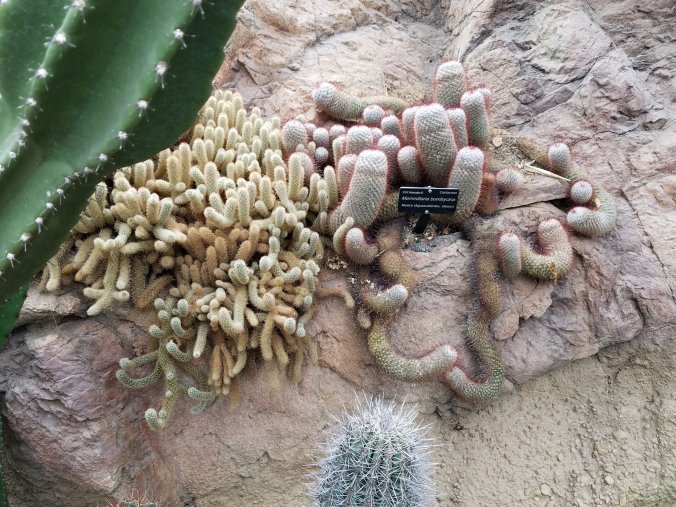
Whoever named these little babies clearly did not have a sense of humor, so I am choosing to call them “sausage cactus.” What would you call them?

sausage cactus.jpg

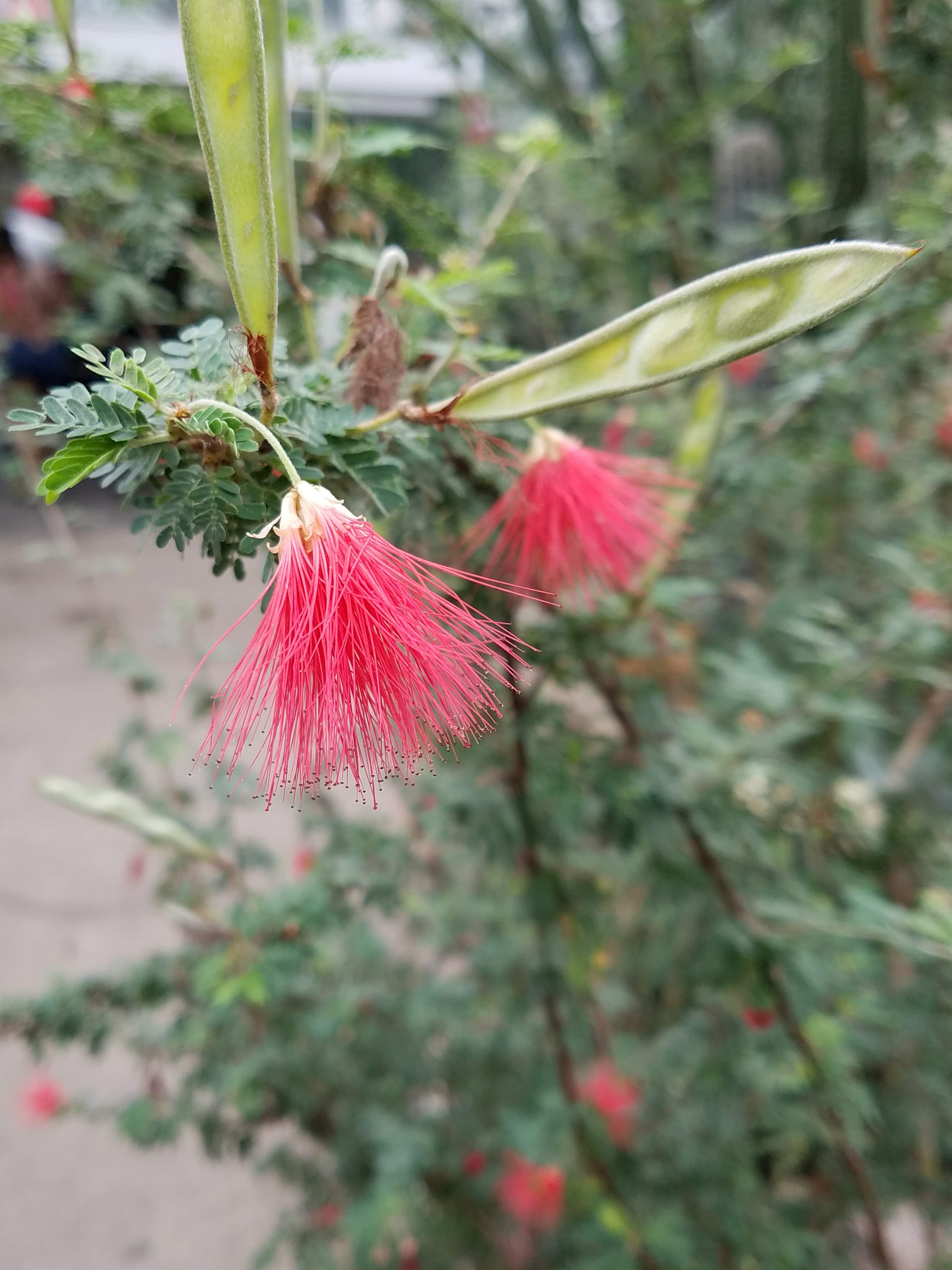
I did not see a name for these beauties, but a fairy who is bent on housekeeping would surely carry one around as she goes flitting from crystal to crystal on your undoubtedly gorgeous but unfortunately dusty chandelier, happily revealing the splendor under the dust with her “fairy duster.”

fairy dusters.jpg

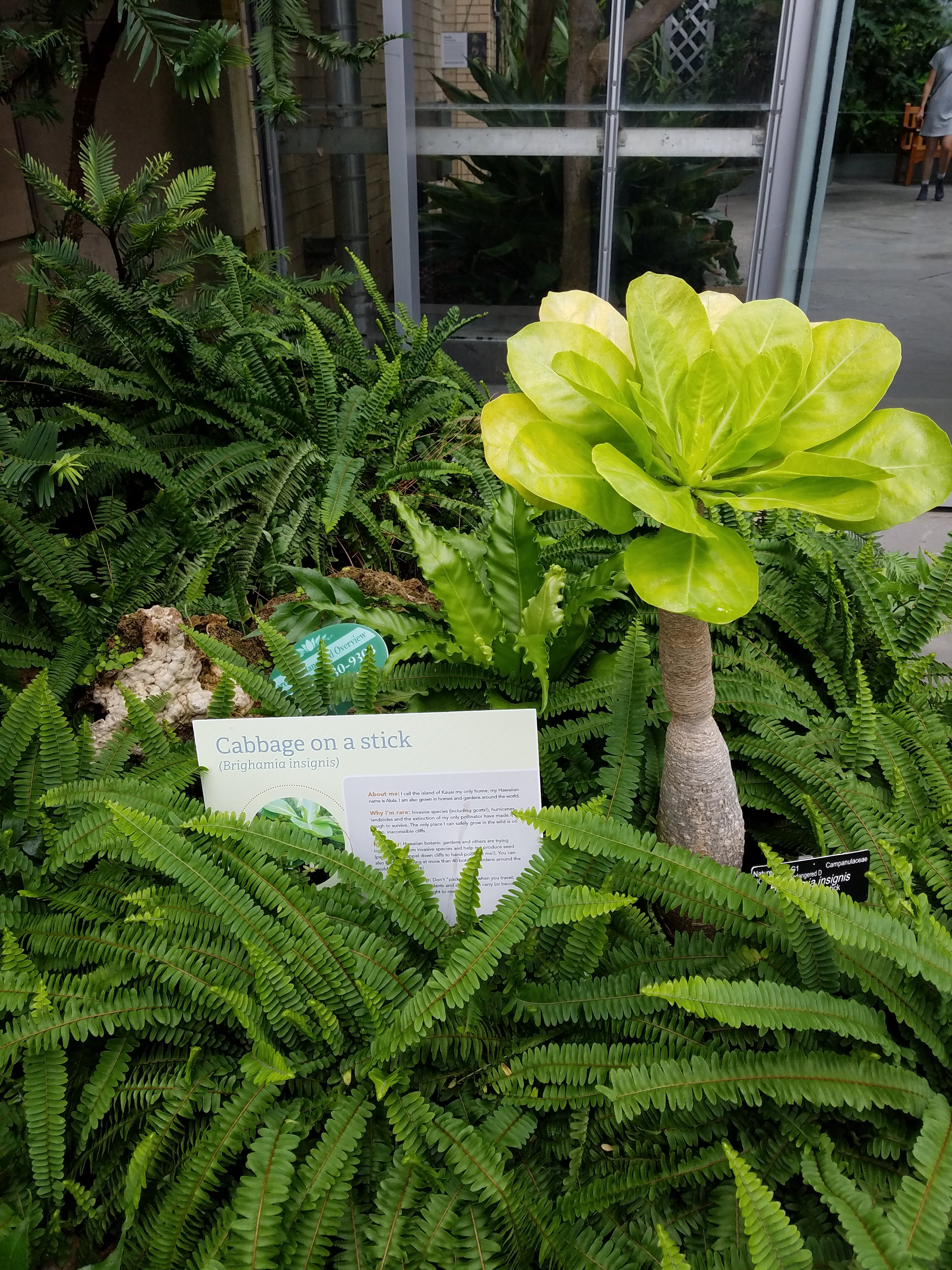
And who could look at the Cabbage on a Stick without wondering who had the fun of naming it?

cabbage on a stick.jpg

Here’s another great name: parodia warasii. It looks healthy, wispy – don’t those hair-like things look wispy? soft even? It’s very interesting and, yeah… don’t come any closer.

parodia warasii.jpg

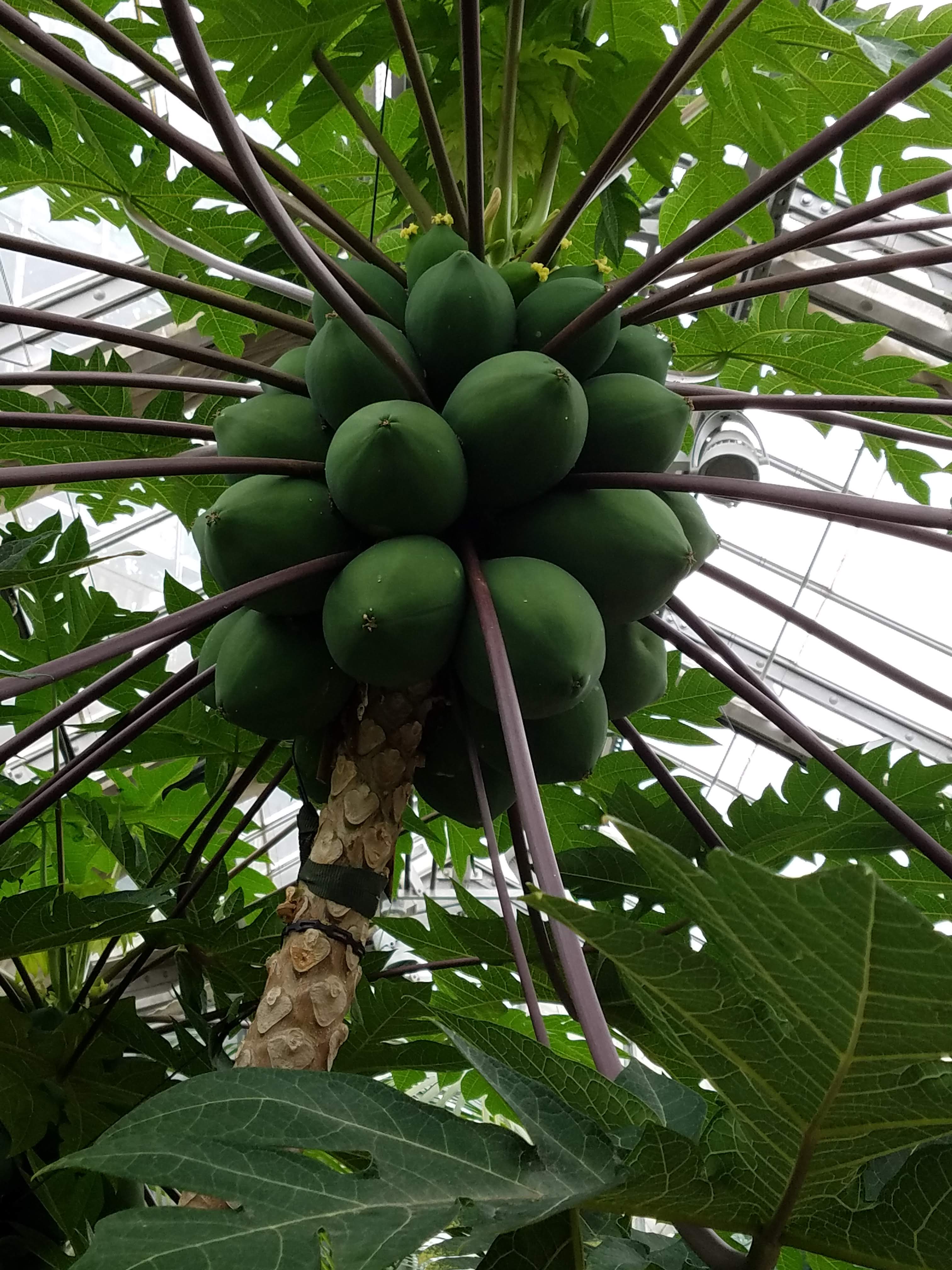
It’s great to see where fruits come from. My education today included papayas. Who knew they look like this when they’re growing on a tree? I admit I didn’t.

papaya2.jpg

This handful of plants is but a drop in the bucket (or a drop in the ocean!) of what’s out there in this marvelous world of ours. Knowing that, taking a moment to grasp the enormity of that, makes me happy to be a part of it, even if my part is just looking and not touching!

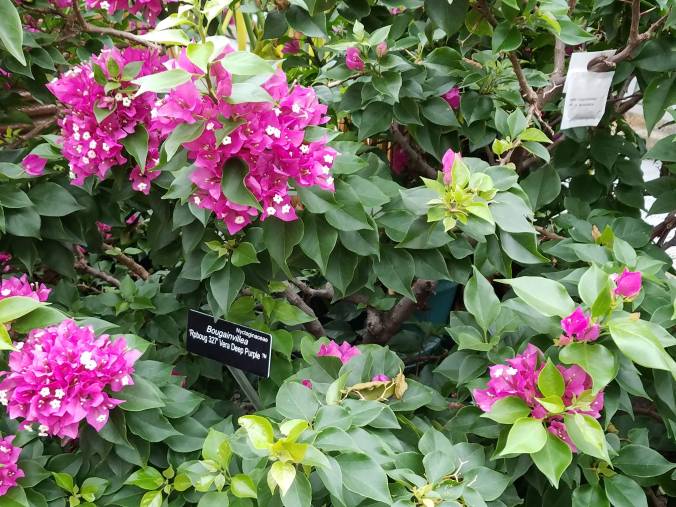
One more — bougainvillea. How beautiful is this?? And who can’t love a plant with a name that rolls off the tongue like boo-gan-viya?

bougainvillea


A Blow Out on 66

Some people have all the luck. Today, I didn’t. I was on the way to Washington, D.C. to pick up a friend at the airport. I time these things well in general, so that I arrive not too early and have to sit there, but early enough that I am not stressed about getting there on time. I allowed enough time for a little traffic, but didn’t anticipate too much of it since it was already mid-morning when I approached the D.C. area.

I like to sing in the car when I am by myself, so when I have some time, I put in an old CD and cut loose with Kelly Clarkson (the trouble with love is… … it can tear you up inside…), Girls Aloud (JUMP! For my love) and Norah Jones (…my glass is a-waitin’ for some fresh ice cubes), off the soundtrack from Love Actually. Think what you will of my taste in music, this stuff is serious sing-along material! There I was, singing (if you can call it singing) when I decided to stop at Wegman’s in Gainesville to stretch my legs. There I noticed a little light on my dashboard. It turns out to be the low tire pressure light. This light. Sorry it’s blurry. I think my hands were shaking when I took the picture later.

dash ight (2).jpg

Oh, that’s nothing. I’ll worry about it later.

Bad decision. About ten miles later, while traveling at full speed on I-66 eastbound, my car started bouncing. I thought maybe the road was uneven, in need of new paving. Wrong. The car really shook, and then started to smell like something burning (this is bad, I know), but I had nowhere to go. The road had those solid barricades that block the shoulder, so I had to keep going until there was a break in them. I don’t know how long I drove with that bumping and burning going on. I just knew: It’s not the road that has the problem here!

I totally forgot that when the weather is very hot — and it has been very hot lately — the tire pressure goes down. My tires have had their pressure go down before in very hot weather. It just hasn’t happened often enough to have imprinted strongly in my brain. Perhaps I will remember this correlation in the future, now that there has been a consequence?

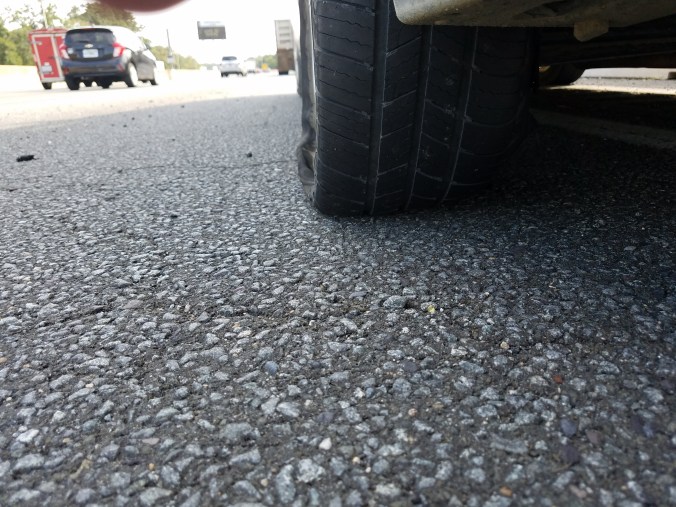
Safely off to the side of the road as quickly as possible, no mile markers in sight, no road signs, no way to know my own whereabouts for sure and be able to tell someone where to find me, I discovered that AAA can figure out where I am. They did. While waiting for help to come, I discovered this,

dead tire.jpg

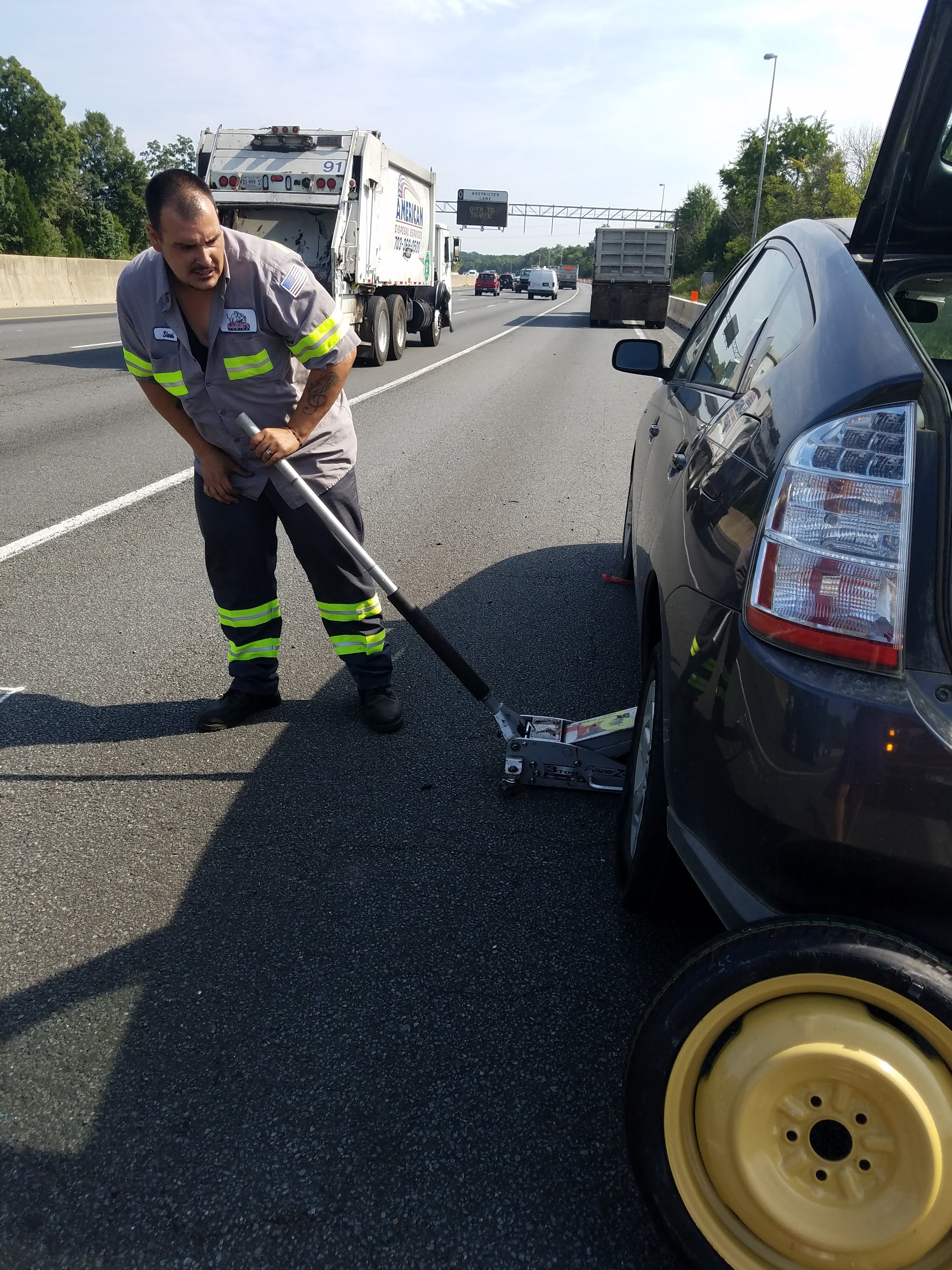
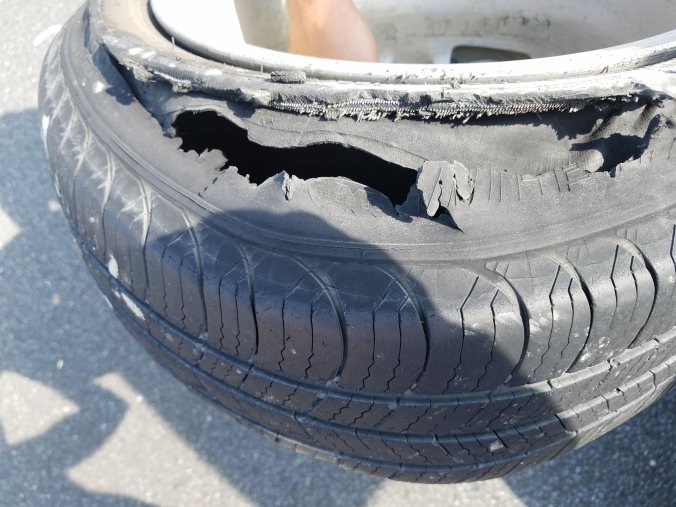
which looks bad from this angle. In no time, it seemed, Sirri arrived in his big tow truck. (Word to the wise, and I can’t know for sure, but I think the stress in my voice when I called AAA helped them make mine a “priority” case. He arrived within about 20 minutes.)  Blessed man, he got to work with a good spirit.

Sirri at work.jpg

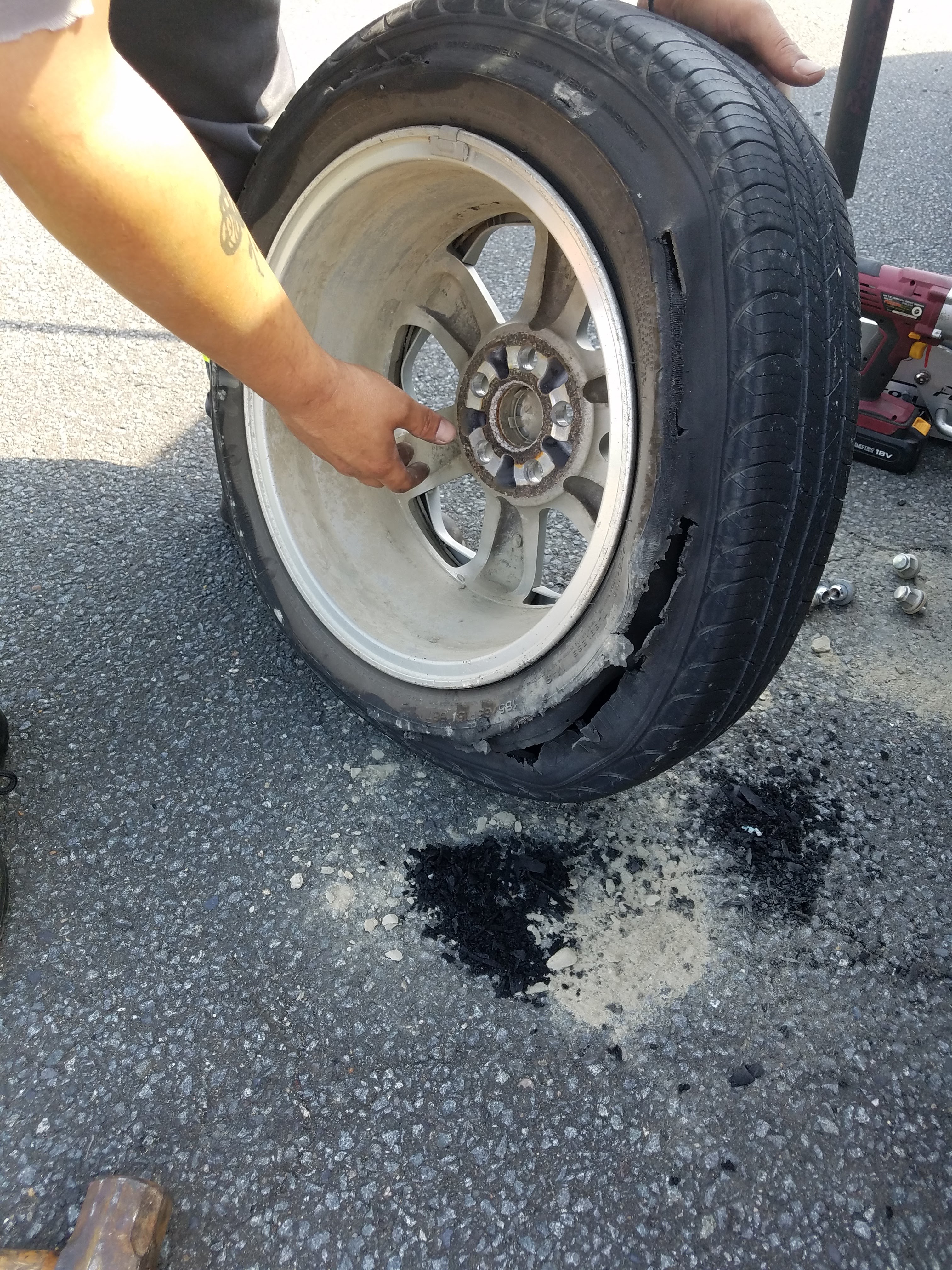
Yeah, I blew the tire.

dead tire3.jpg

Perhaps more impressive from the top?

dead tire2.jpg

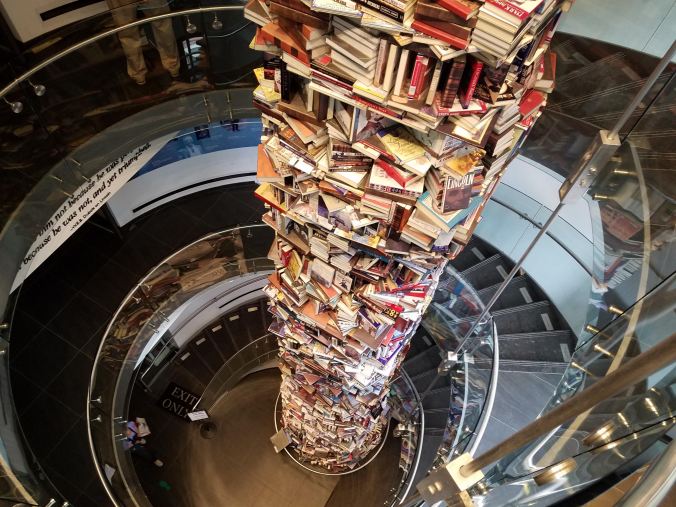
Just last week I had been bragging that I never have problems with this car. It’s the truth (mostly!) but maybe I should be more careful what I brag about. Needless to say I did not get to the airport on time, and simply met my friend at the hotel a little later. My heart did finally stop beating at increased speed, though I did not take the well-intended advice to try “scotch and chocolate” to calm down. Instead, we hit the ground running: National Archives, Spy Museum and Ford’s Theater. Did you know there is a stack of books about Abraham Lincoln that’s three floors high?

books about Lincoln.jpg

I wonder if just plowing ahead – you have to take advantage of every minute in D.C., there is so much to see! – maybe helped mitigate the stress. The Spy Museum is very cool too, by the way. I loved how they showed perfectly honorable people like George Washington absolutely dependent on the intelligence gathered from his spies, the part where they reviewed the qualifications for being a spy (sense of adventure, willingness to take risks, patriotism, etc) and – this being especially interesting after a car adventure today – the ways people have hidden within (and sometimes under!) cars to escape detection getting through checkpoints. I was so distracted and engrossed by all of the fascinating exhibits– and in the case of Ford’s Theater, positively, emotionally moved — that I forgot all about my tomorrow…

Tomorrow, right. It’s a Saturday, possibly a rainy Saturday, and after a tour of the Capitol, we will set about finding a garage that will have a couple of new tires for me. They will have the ones I need, right? And there’s nothing else wrong with my car? That oil we saw under the car in the garage when we went to check the tire size was from the car that was in that spot before me, right? Not my car. And I will be able to get home on Monday as planned? And… and… good thing the stress is gone!

Unnecessary (Silly!) Things

I was raised in a serious household. We worked hard, got things done, met our goals via the quickest route possible. There was no stopping to smell the roses, shooting the breeze with neighbors or getting in the car with no destination in mind. Something was wrong with a day if you had nothing to show for it.

I do not take issue with people being industrious and productive. Money doesn’t grow on trees, as they say, and generally you get money when you work. Then, not only do you get the things you need (and a few things that you just plain want), you develop a sense of accomplishment, of contributing to the world around you in a positive way, of earning your keep. Walking downtown the other day, I heard some people hanging out in the park (same people who hang out in the park every day), complaining, yelling, insulting one another. I hurried on, thinking they have nothing to do! If only they had something valuable or interesting or important to do!

A classical statue depicting Diligence, the (one of seven) heavenly virtue that represents the “drive to steadfastly move forward with one’s means,” shows a woman holding a whip and spurs. (The fact that a woman is holding them, not a man, is an interesting point all by itself, but outside my scope for today. We might come back to that…) I am all for people showing up for work, keeping the lights on and the wheels of community turning.

But anything taken to an extreme is no good. I even heard (though bear in mind that this could be one of those things you hear that has zero validity) that you can even take the “Drink lots of water” advice too far, that you can kill yourself drinking too much water. Fact check required here, but point here being, All work and no play makes Jack a dull boy. Isn’t that how it goes?

I don’t remember laughter at the dinner table when I was a kid. Or anywhere at home for that matter. There was a time when I remember thinking I had never seen my father’s teeth – as in he didn’t smile or laugh enough for us to see his teeth! If something funny happened, his expression moved in the direction of chuckling, no doubt about that, but actual, audible laughing-out-loud, no. I don’t mean this as a criticism of my father – he was ultra-industrious, as was his prerogative, and surely laughed sometimes. I just didn’t see it.

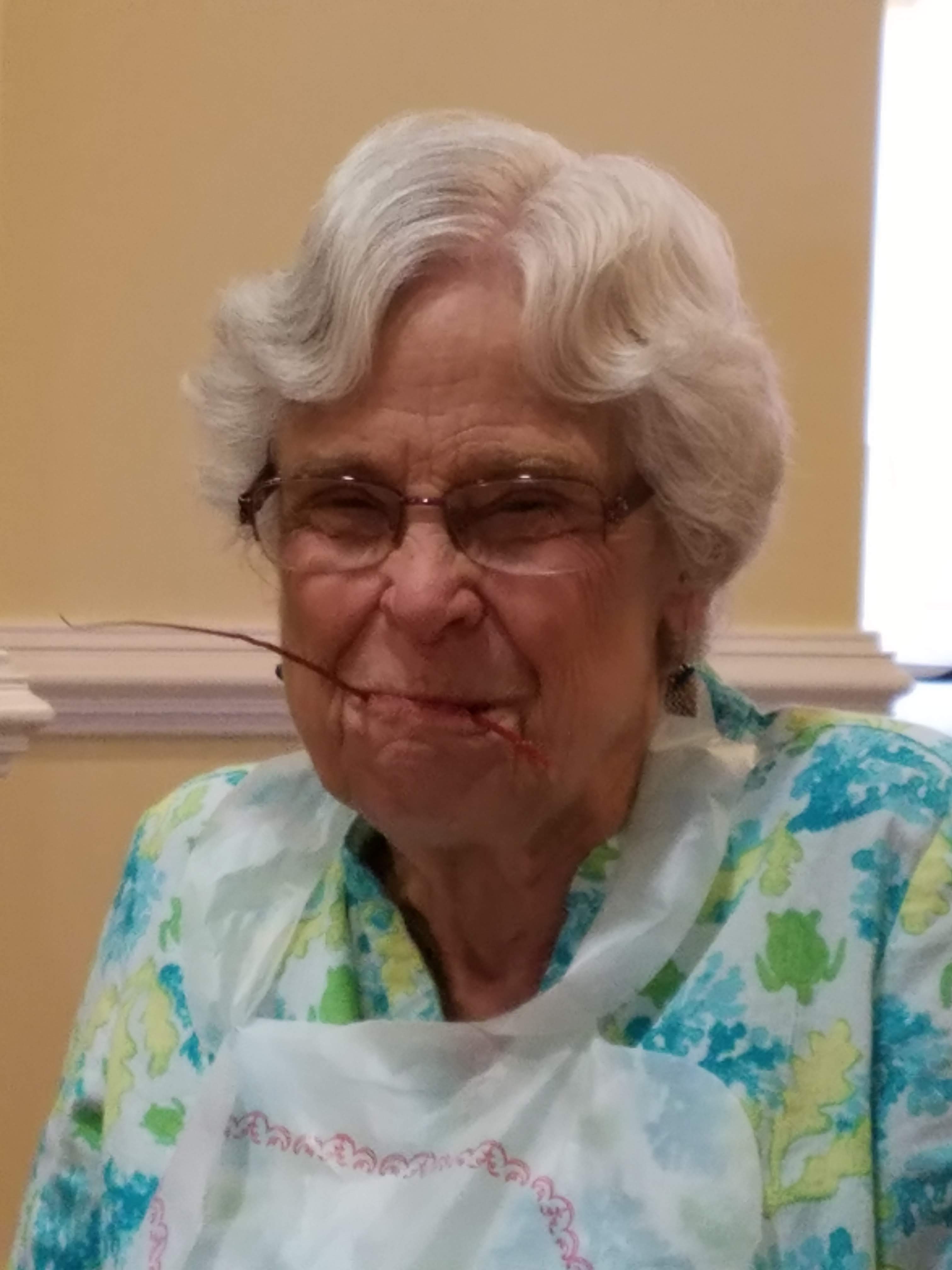
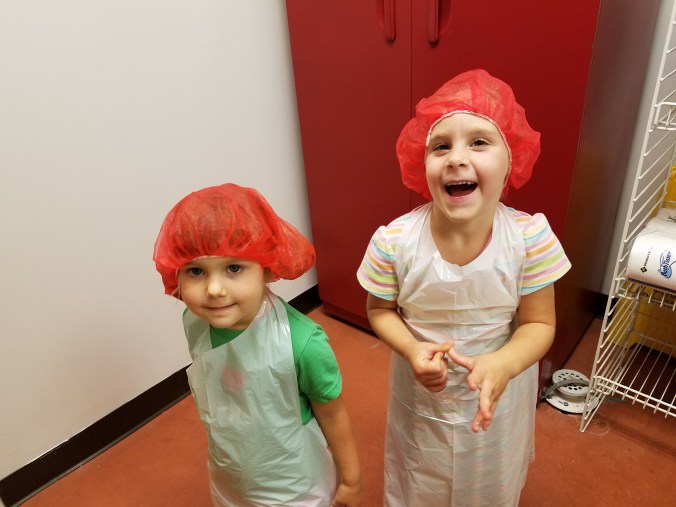
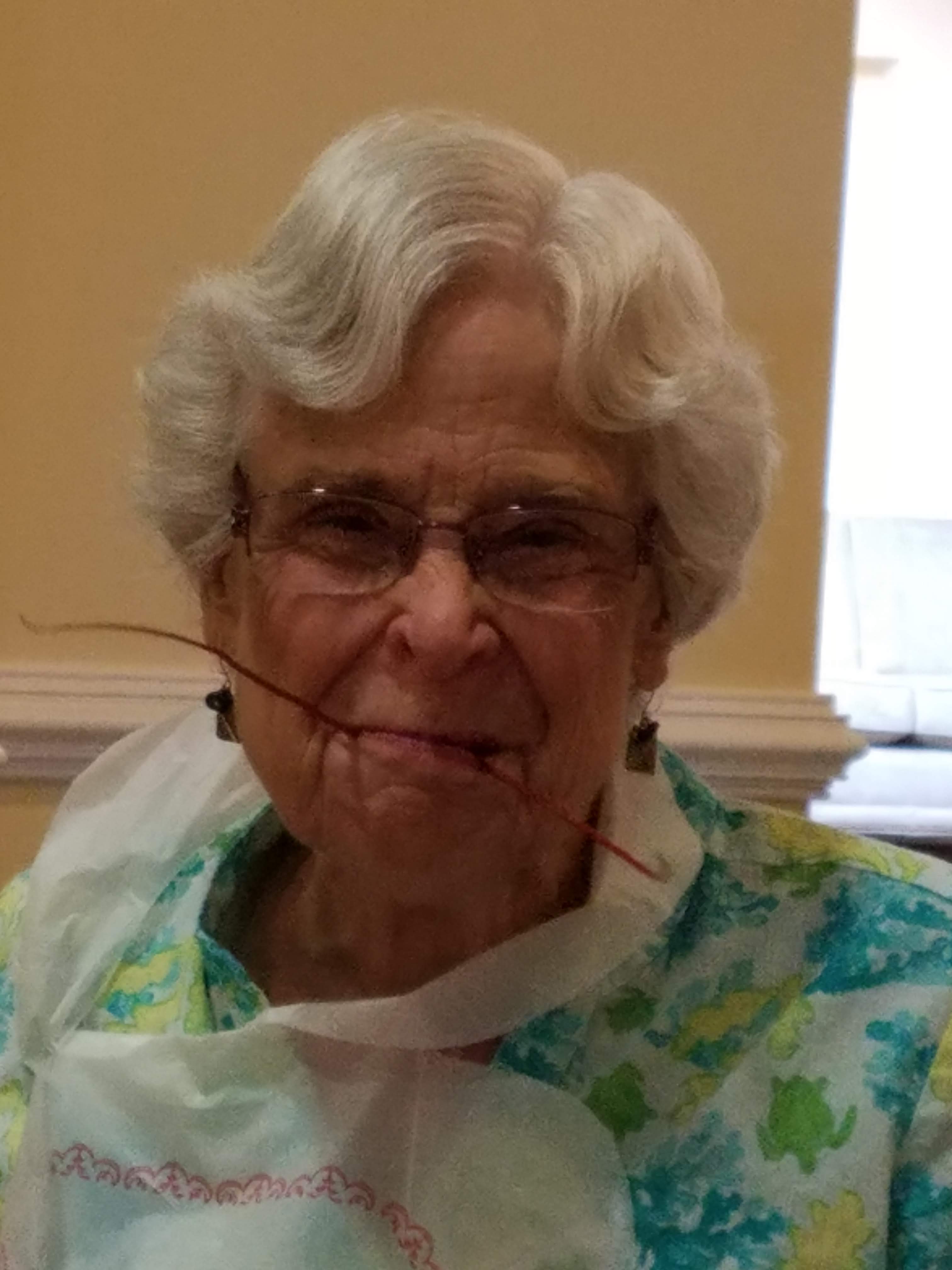
But laughter, silliness, childishness – these thongs (oops, things!) came along later for me, and I am so glad they did! They came along for my mom too, who could hardly do anything more out of character than pretending to be a lobster while wearing a plastic bib in (this is the kicker) a dining room filled with lots of people!

mom whiskers1.jpg

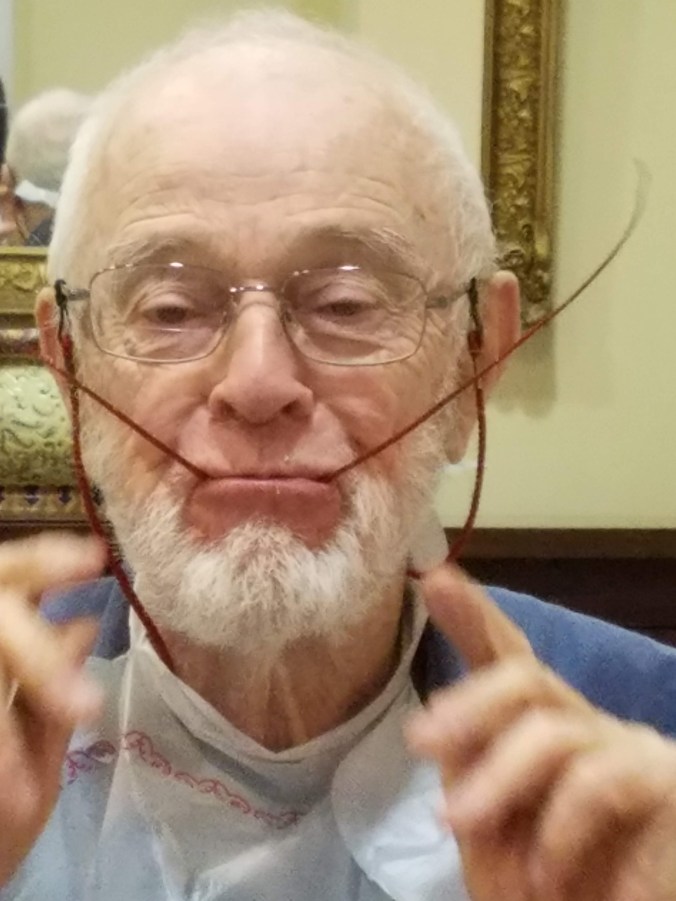
Can’t you just hear some old marm saying Barbara, that’s unnecessary! Stop being so silly! I’m sure she heard those words in her head, but silliness won the day! Granted, she had a good model. Jerry did not need any encouragement, in fact he started the whole thing.

Jerry whiskers4 (2).jpg

On the heels of this, my tennis buddy Scott did a most unnecessary thing on his paddleboard on Labor Day – a headstand!

Scott Newman headstand (2).jpeg

None of us needs to do a headstand on a paddleboard (!) or insert lobster antennae in our mouths like whiskers,

or be tomato-heads

tomato-heads.jpg

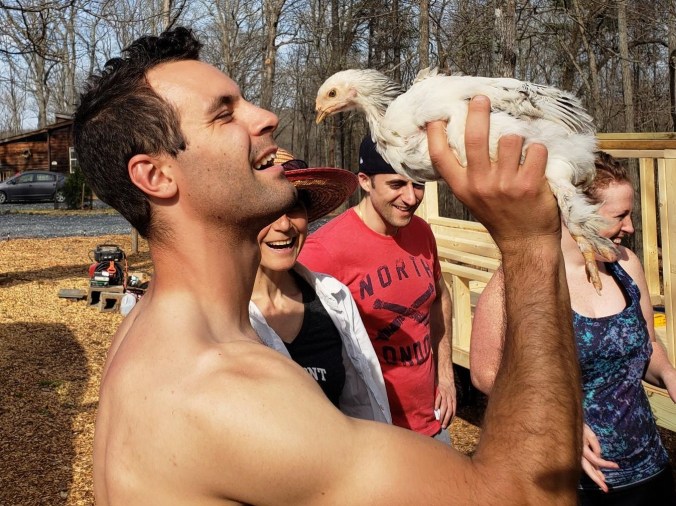
or go face-to-face with ridiculous chickens!

Samuel with chicken (2).jpeg

But we should! We should do all kinds of silly stuff!

My mom with lobster whiskers! My mom laughing so hard she can hardly stand it! Not in my wildest dreams did I envision this moment. I am still giggling just to think of it.  But little makes me happier than seeing that smile on her face 😊

mom whiskers3.jpg

Great Neighbors and The Power of a Tractor

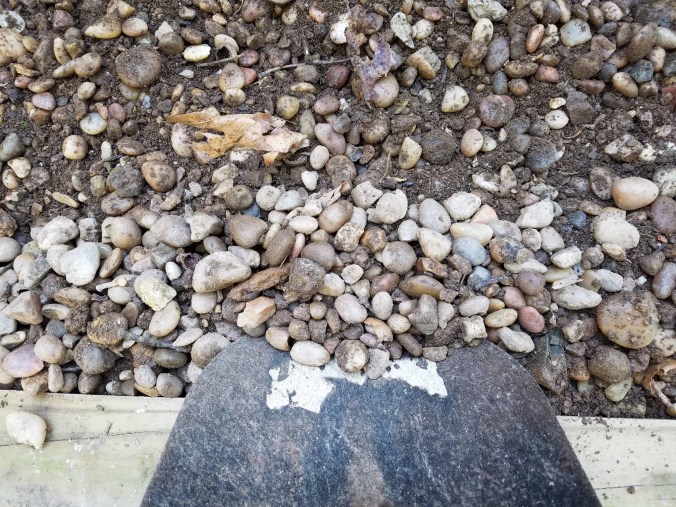
“Have you got a square shovel?” Joe asked.

“I have a snow shovel,” I said.

“As long as it’s not plastic,” he said.

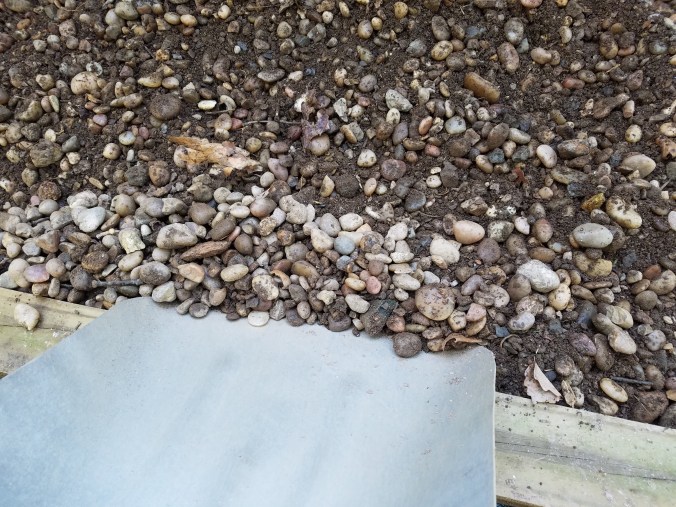
I went to the shed and got the metal snow shovel and brought it to where we were moving the smooth river rock into the bucket of the tractor. The river rock was sitting within an open wooden framework flanking the brick pathway leading to the front porch steps. A square shovel makes it easier to shovel from the inner edge of the frame…

flat shovel.jpg

…while a pointed tip is not so wide and would leave a lot behind.

pointed shovel.jpg

We wanted to move the river rock in order to save it for use some other time. The excavation work soon to happen in this area will erase all traces of river rock, so if you want the rock, move it while you can.

As I walked back to the work site I thought about Laura Ingalls Wilder. Her own “Little House in the Big Woods” was vastly different from mine. Her setting, Wisconsin in the 1870s, was largely unpopulated. Families needed enormous measures of gumption, skill, courage and strength, a portion of luck and at least a few good tools.

I wondered: Did they have a square shovel? I am sure, between building a house in the woods, making their own butter and cheese, harvesting crops, raising, hunting and butchering animals, and fending off a variety of threats to their admirable homestead, they did not have need to move decorative river rock out of preexisting wooden frameworks. But I’ll bet a square shovel would have been handy for some aspect of their operation. More than that, think how different their experience would have been with a good tractor.

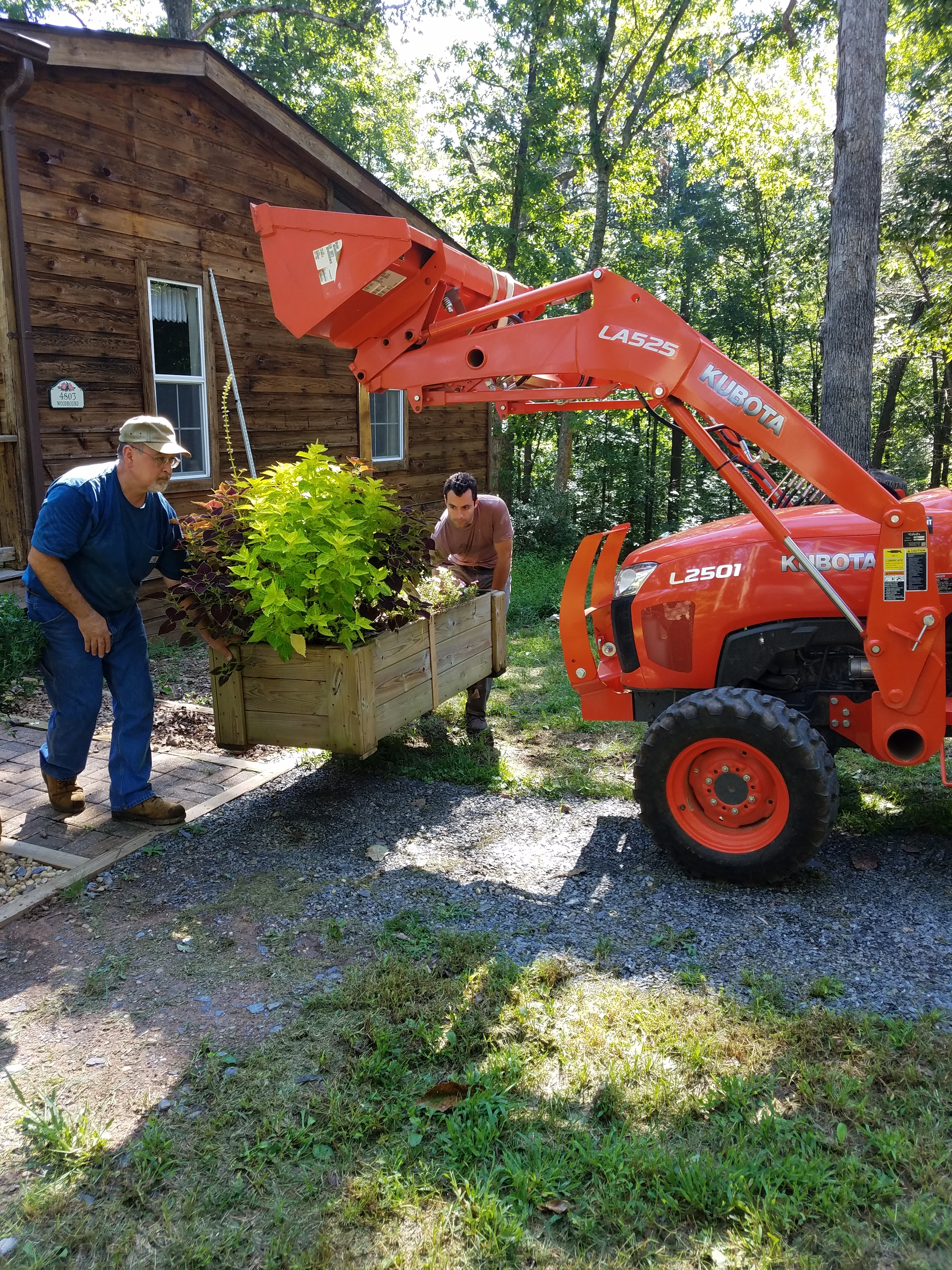
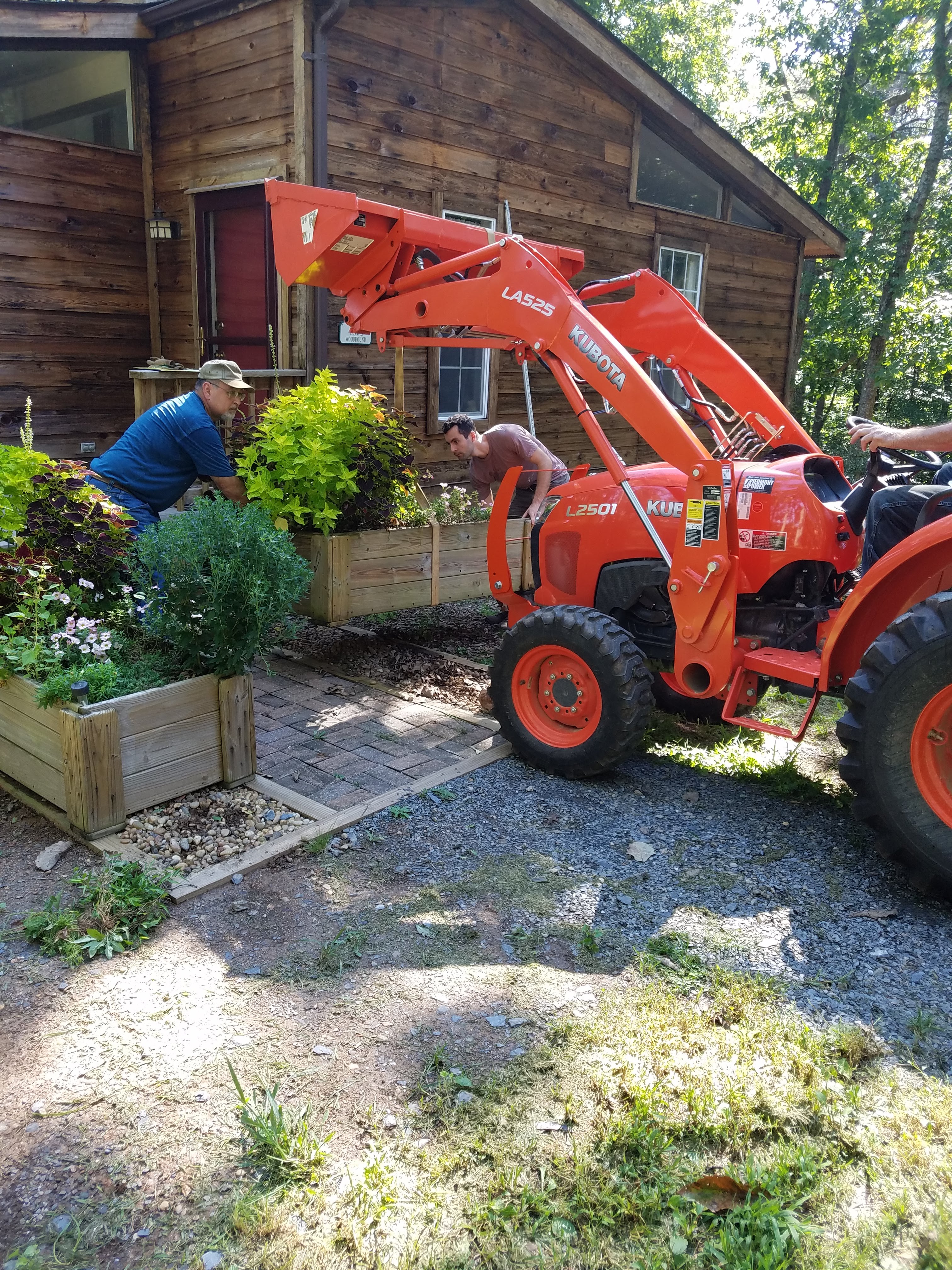
Having the right tools helps so much. It sure helped yesterday. And I don’t mean the snow shovel for the river rock. I mean this Kuboda LA525.

kubodaLA525.jpg

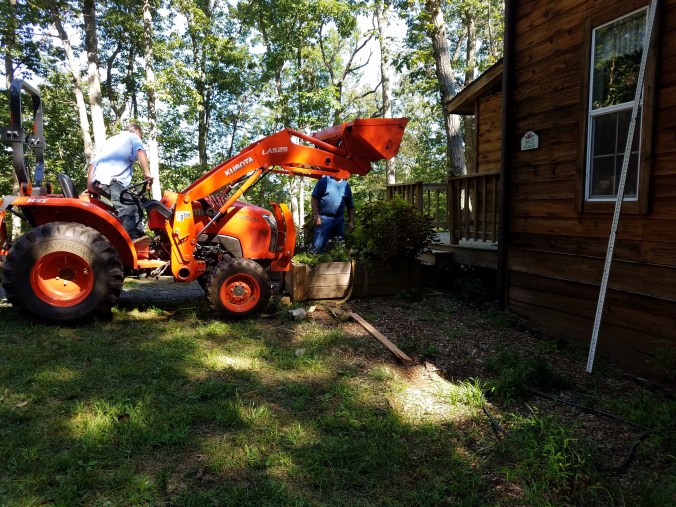
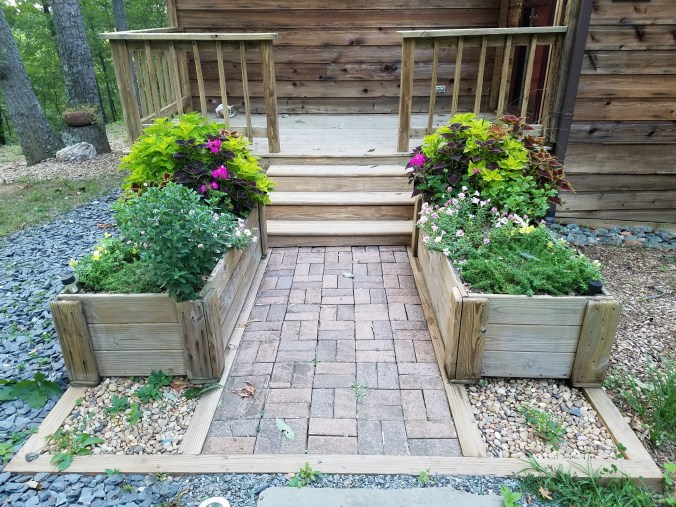
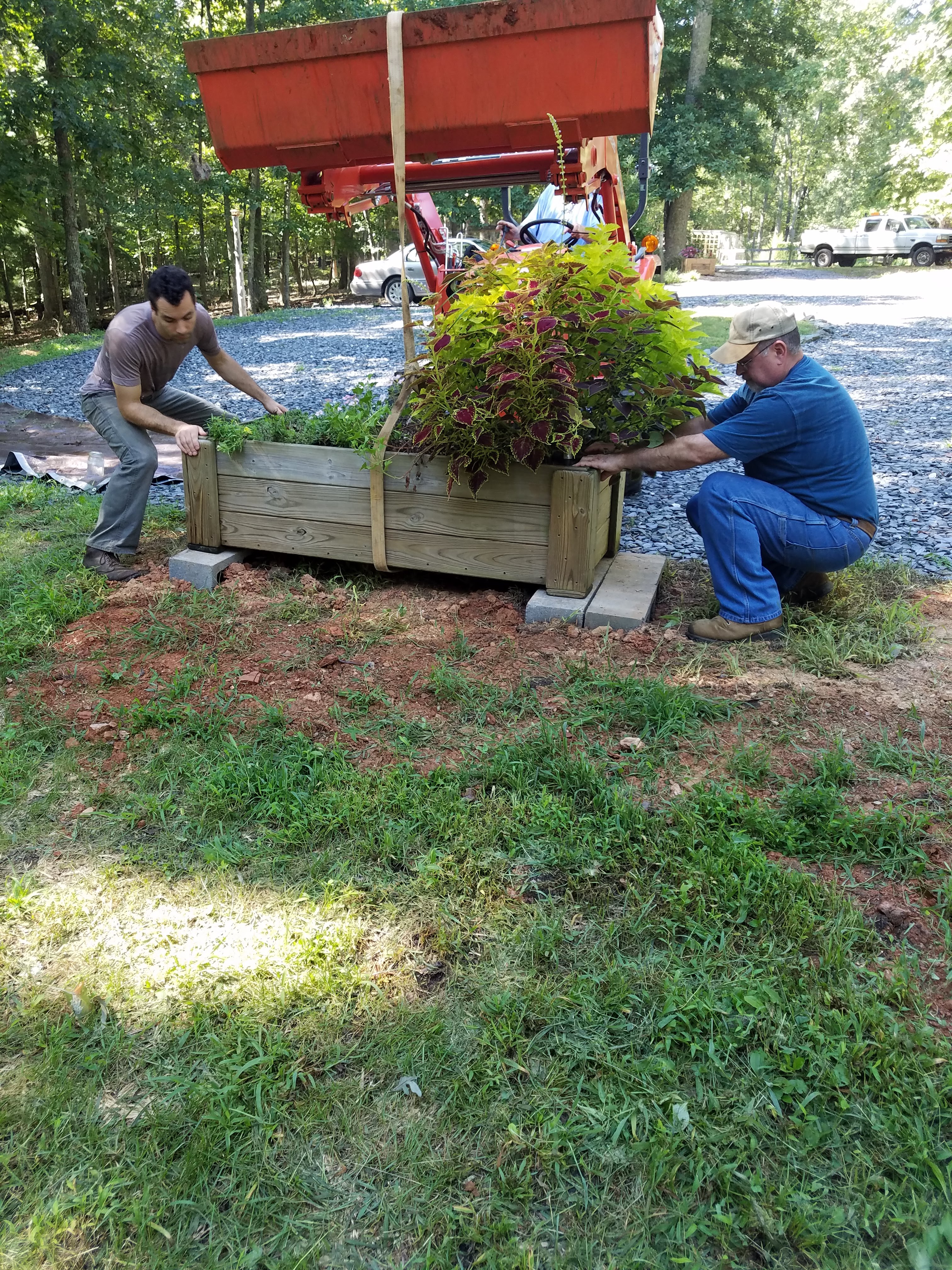
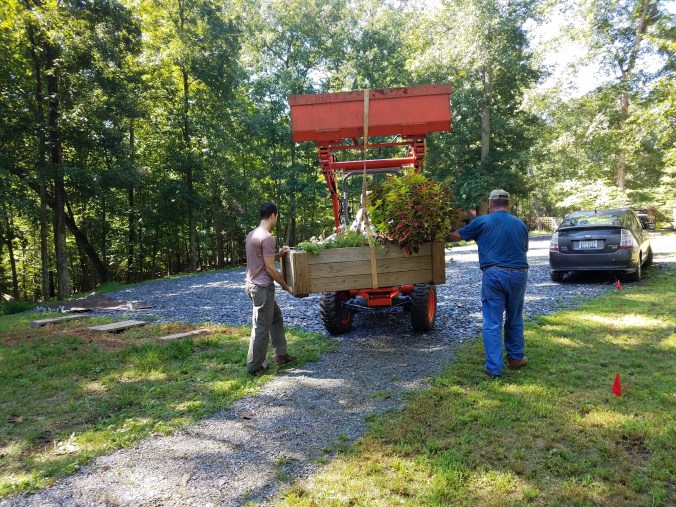
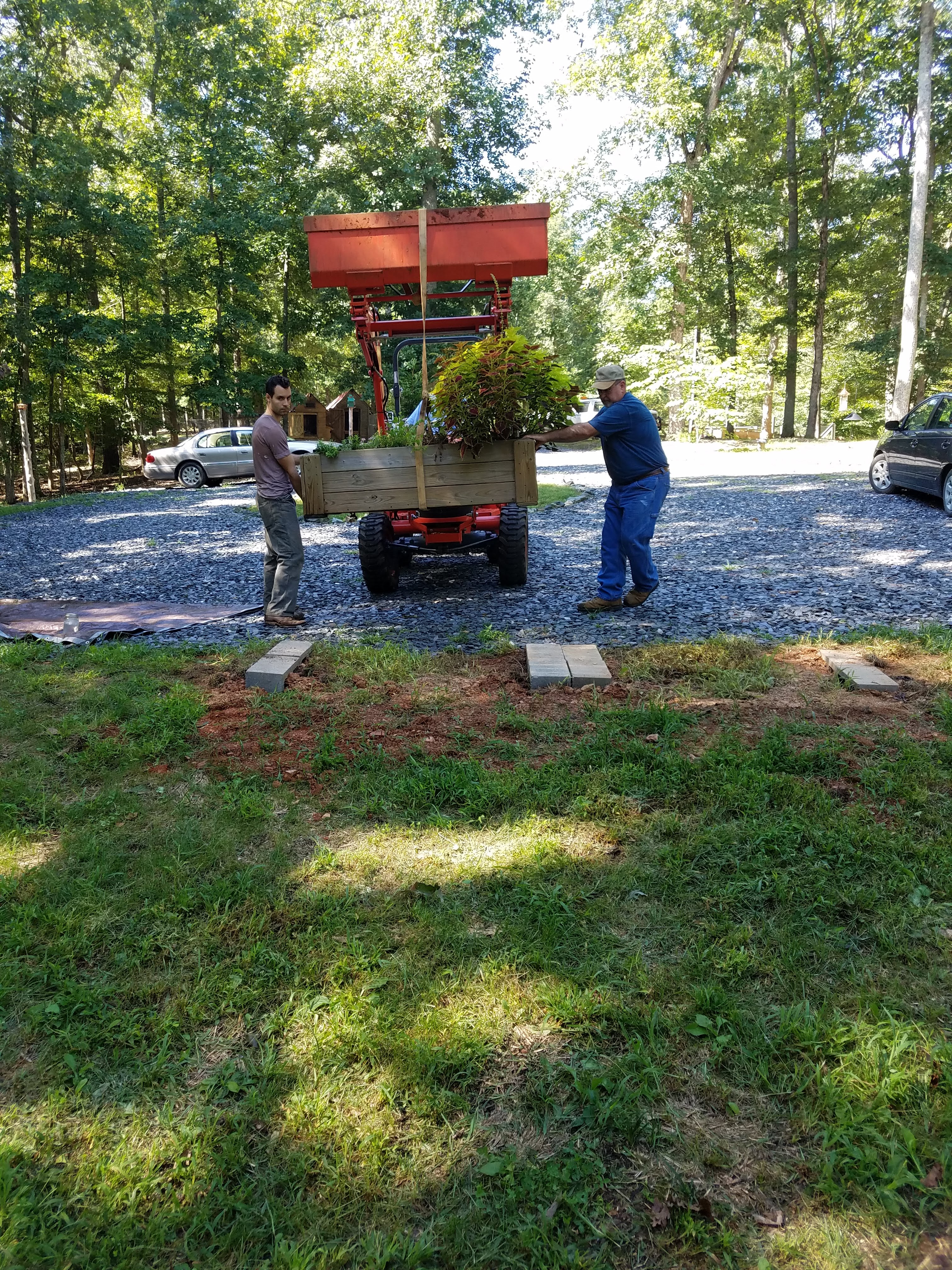
Tracy, my very generous neighbor, gave me two hours of her time along with the use of this beast of hers. Joe, her very capable dad, masterfully orchestrated the relocation of my two planter boxes, each of which has to weigh at least 500 pounds.

coleus.jpg

Together with the help of the beast, these great neighbors did in two hours what would have taken us the whole weekend.

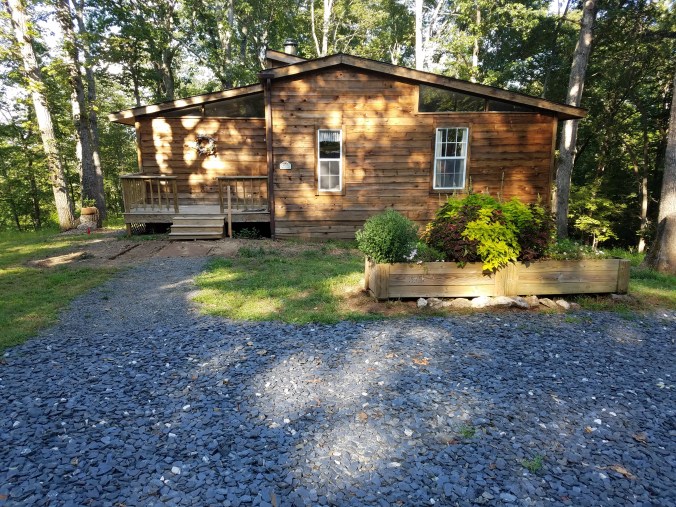
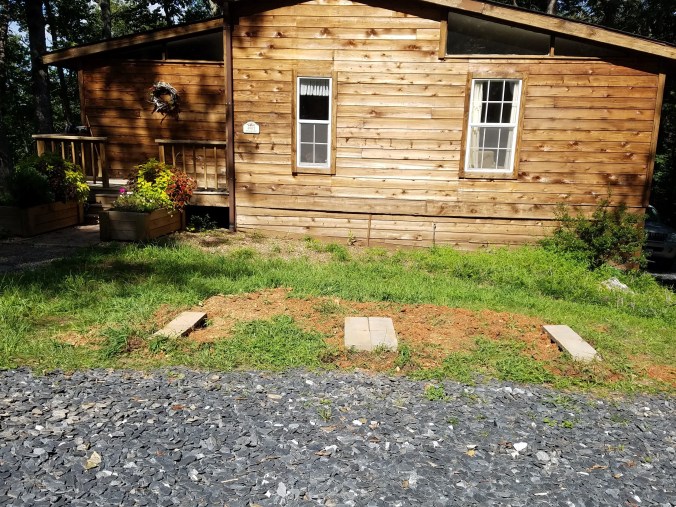
I did the prelim work last week, putting the cinder blocks in place. That’s when it looked like this.

cinderblocks1 (2).jpg

But after that my hands were tied. Earth weighs approximately 100 pounds per cubic foot. These planter boxes are five feet long by about two feet wide and about 18″ high. Granted, the lower half is filled with some empty cans and Styrofoam peanuts just to take up space (coleus, even gigantic ones like mine, don’t need that much dirt). Still, the 100 pounds per cubic foot is just the dirt. The total weight of the boxes also includes the rainwater that soaked that dirt two days ago, the wood itself that the planter box is made of and even the relatively minor weight of the plants themselves.

I don’t own a tractor and had spent a good bit of time considering how we were going to solve the problem of moving these huge and heavy boxes. We might dig the plants and most of the dirt out of them, then drag each box or walk it one angled step at a time, a few inches at a time, to the concrete blocks. Or use a furniture dolly. Sooner or later we would have moved them. But oh, the joy of a machine with this kind of power!

Watch what it can do. With just that strap around the middle, Joe at the wheel, and Samuel and Sandy to keep it from tipping one way or the other, the box went off the ground. They pivoted it,

pivoted.jpg

Joe backed up,

keeping her steady.jpg

they kept her steady,

keeping steady2.jpg

they moved toward the landing pad,

keeping 3.jpg

and he lowered her into position.

down.jpg

The second box was just as simple except for my landing pad not being as level as I thought it was. (Least said about that, the better!)
boxes moved3.jpg

It’s an amazing machine, but more important to me, it was a great team effort, the kind of thing you wonder about sometimes: Is it real? Do neighbors help each other like that?

They did yesterday! They do!

This is community, people coming together to make a hard thing easier. This is the way it’s supposed to be – not to say it always is, but it should be. In the 1870s in the big woods of Wisconsin, pioneers pooled their strengths and resources as well. Wilder’s book includes heartwarming examples of her father trading labor with their neighbors. Yesterday my own heart was warmed as I witnessed amazing labor on Labor Day.
Everyone can do their bit – any day of the year – to perpetuate good, to lend a hand, to make their own corner of the world a better place than it might otherwise be. The best vitamin for making friends is B1, right? Same applies to having good neighbors, I’m sure.

Picky Chickens

I have had chickens for a grand total of almost ten years and today I saw something new. Let me back up.

Chickens love to eat. They eat all day long. They are forever scratching around looking for a bug or some crumb they missed the hundred other times they scratched in that spot. When I worked at the hotel I brought them buckets of carrot peels, old bread, cheese ends gone hard, table scraps, slightly wilty lettuce. Whatever the cooks had that would otherwise have gone in the food trash, they put in a five-gallon bucket for me to bring to my chickens. I had the best-fed and happiest chickens ever. I never saw the hens refuse anything that remotely looked green or like protein except what they physically could not manage, like the woody ends of asparagus or broccoli. Those they left. Everything else they devoured.

I went to a lobster fest today. Lobster, mussels, sausage, corn on the cob, salad, watermelon, amazing desserts. While we were making a mess with the lobsters and people were starting to finish up their plates and put them toward the center of the round table, I remembered my chickens. Wouldn’t they love this?

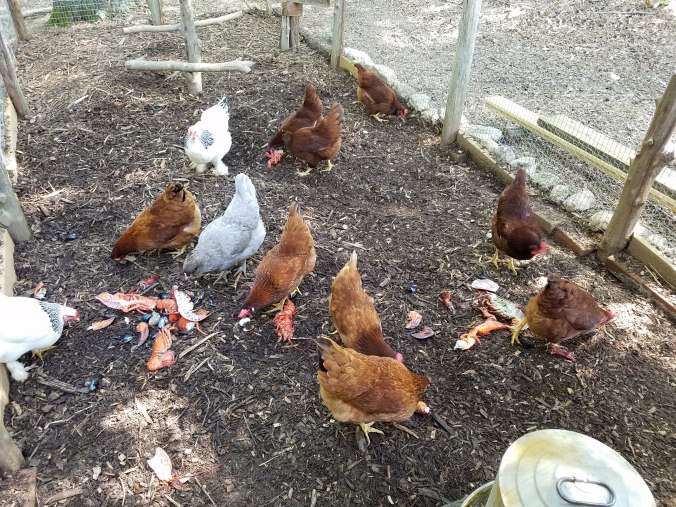
The manager ok’d it, so I went home with three bags full of leftovers. I thought the chickens would pick incessantly at those lobster shells for any remnant of meat left in them – same as they would with a chicken bone (sad but true), a t-bone or a pork chop bone. Some of them did! Good, normal chickens these are.

loving lobster.jpg

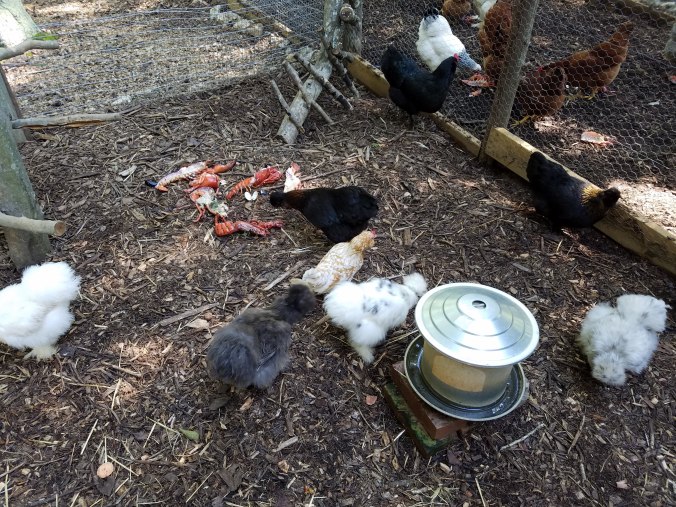
But some of them didn’t!

rejecting lobster.jpg

The silkies walked away, the d’uccle walked away, the black copper maran just looked at it.

Who rejects lobster?? Colonial prisoners protested, this we know. No, not lobster again! It’s true. Back in the day, way, way back in the day, when people committed crimes on Cape Cod and were put into prison, they were fed the cheapest, most abundant food, which at that time was lobster. Apparently the waters teemed with the meaty crustaceans. Lobster was like junk. After a while, the prisoners wanted something else – understandable to me because I’m not exactly a lobster fan myself (the salmon today was delicious!), but that’s not the point! These are chickens! They eat anything!

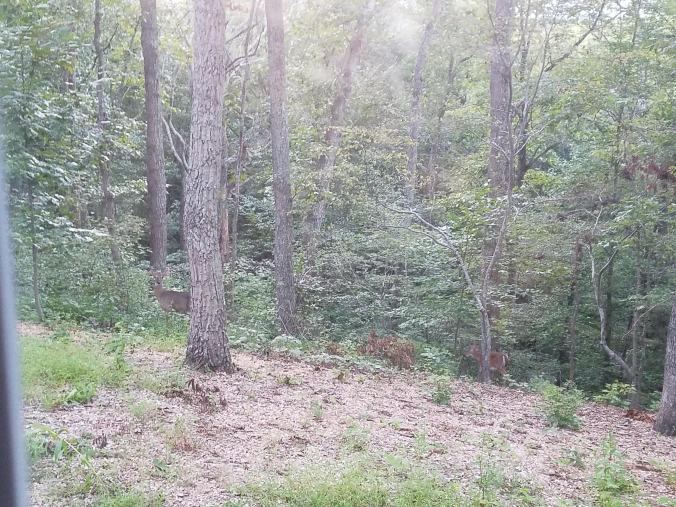
In the meantime, I do think I have some very grateful DEER! At dinnertime, two deer were grazing close to the house on the same side as the watermelon graveyard!

deer in yard.jpg

Do you see them? I watched, tried to take decent photos from inside so as not to scare them (but failed, I know, on account of the screen and the window between us) and then my heart jumped as the young buck on the right headed straight for the graveyard!

deer4 trotting.jpg

He must have smelled the rinds I pitched there earlier. (Sandy wanted to take a picture of me doing this, and did, well before the deer came along, meaning I did not expect to be glad for this picture!)

throwing.jpg

I’ll see what’s left of the lobster when I go check the chickens tomorrow. Maybe the ones who rejected it just had to warm to the idea. Maybe just before I arrived with my gift to them, they had just found a massive stash of fresh bugs and were full. We’re full and watching out waistlines. Maybe later we’ll pick at the lobster… Maybe they don’t see what the fuss is all about. Lobster, so what? Maybe they realized instantly that it’s soooo decadent they have to eat it in private. No one’s looking, right? I can eat my lobster now??

I wonder what I’ll find…

The Watermelon Graveyard

One thing I love about living in the country is that I can stand on my back deck and chuck my watermelon rinds into the woods. If I lived in a city, I couldn’t do this. If I lived in a developed neighborhood, or in an apartment building, or in a place with concrete rather than earth all around my house, I couldn’t. Please understand that I don’t have to chuck them. I have a legitimate way to get rid of trash. But I can chuck those rinds, so I do.

I also chuck the tea leaves out of my teapot behind the house. This requires less of a throwing arm and more of a sweeping fling, a technique I have pretty much perfected through years of practice.

I not only can chuck the rinds, I want to. Reasons abound. Among them:

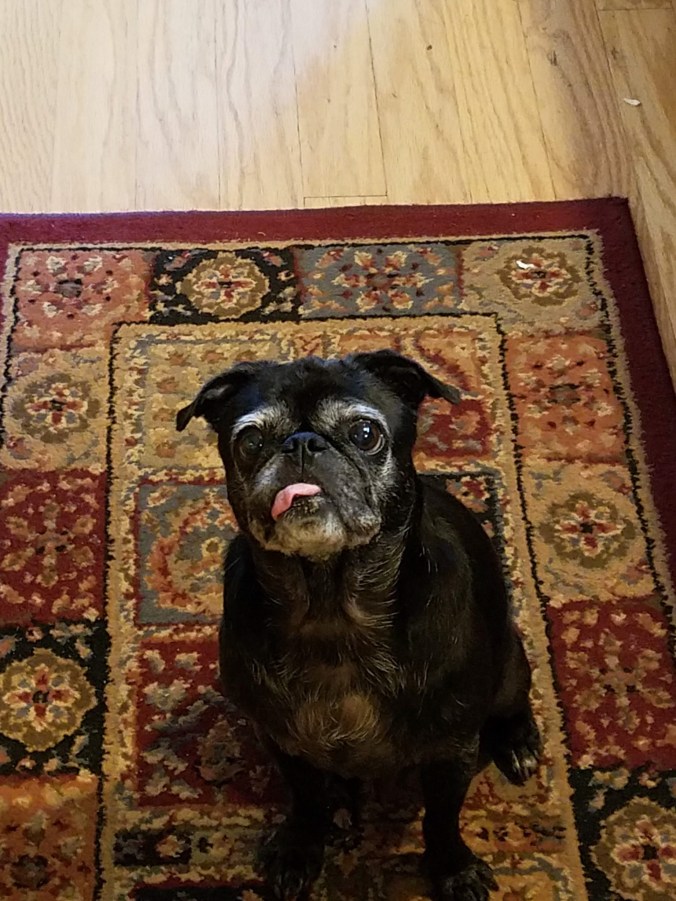
Coco the Adorable, Samuel’s sweet pug, LOVES watermelon and eats more of it than you’d think she could. I, too, can eat quantities that would surprise some people. It’s a thing we do together. I no sooner take the beast of a melon out of the refrigerator and put the point of my biggest knife into it, than she is off the cushy spot on the couch she had been curled up in, seemingly fast asleep, and is at my feet with that face of hers staring up at me. Surely you won’t deny a nice dog like me a healthy snack??  She presents herself as if she is underfed, starving, neglected, pathetic – none of which she is, of course, but she does a mighty fine job of acting that way. I cave. You would cave too.coco begging (2).jpg

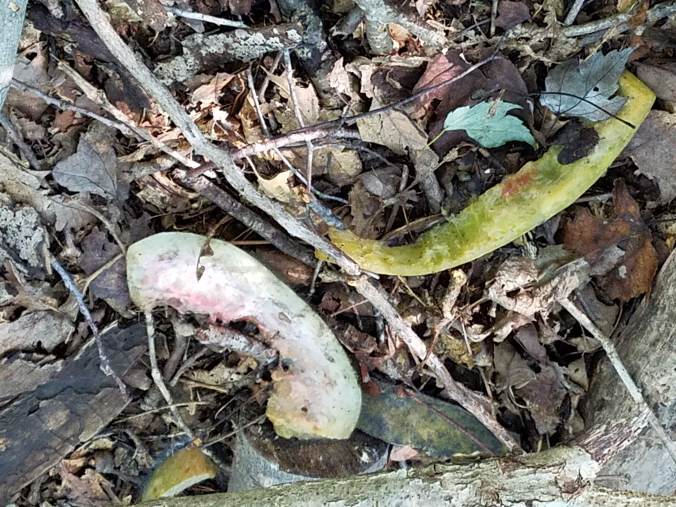
Our routine gave me an idea last year. If Coco likes watermelon, maybe other animals would too. If I have this many rinds from eating this much watermelon, I ought to think of a way to be smart about disposing of them. I do not exist to feed the wildlife in my woods, but I know that deer and mice and squirrels and whatever else are out there. And if I can make their day with free food AND get rid of bulky trash at the same time (without adding to the piles in the landfill) with no known reason why this is harmful in any way to anything, why shouldn’t I? It gives me a warm feeling to know that the wildlife can gnaw away to their heart’s content. Mind, I have never actually seen them do this, but I did check the watermelon graveyard for evidence the other day, and this is what I found:

gnawed.jpg

Looks gnawed to me!

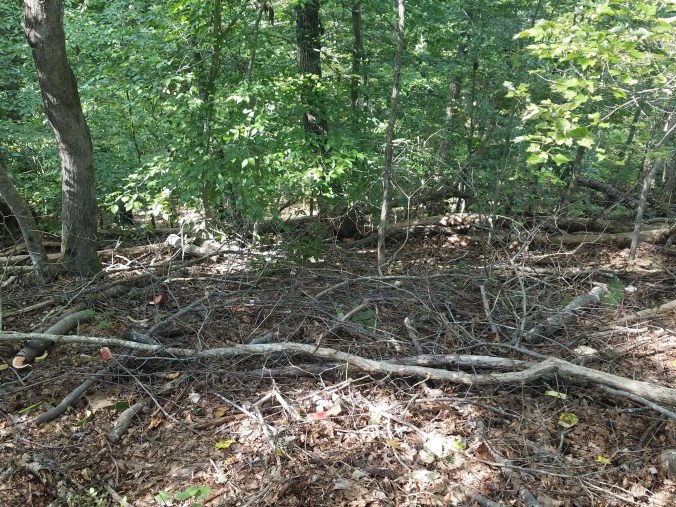
The graveyard, yes. This is the full picture of that area.

watermelon graveyard.jpg

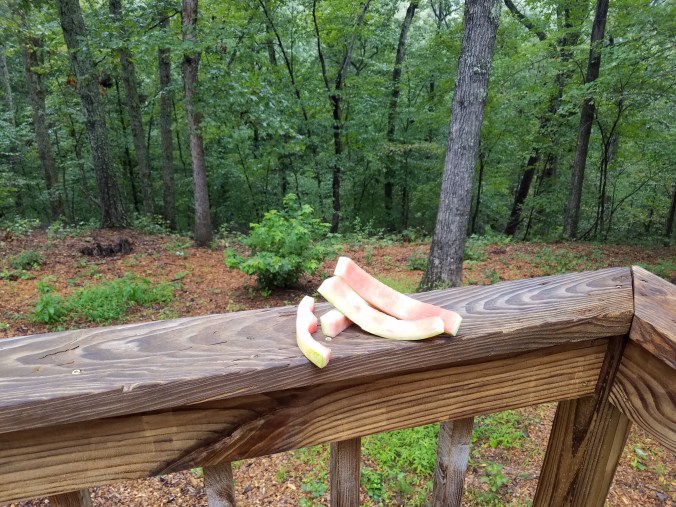
If you look carefully, you can see the rinds, old and new, among the broken, fallen branches which, granted, the wildlife have to maneuver their way through in order to get to said rinds. No one said it was going to be easy. The pinker rinds are from yesterday, the whiter ones have been enjoyed (let me hope immensely) by my resident wildlife.

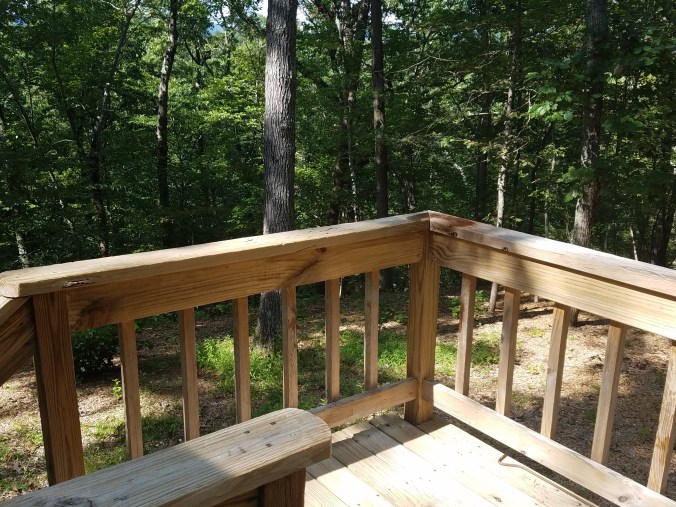
I stand at this corner of my deck.

corner of deck.jpg

I bring my rinds and look out at this view.

rinds on railing.jpg

And I pitch them. It’s just woods, but it’s also a pretty steep hill that drops off quickly, steep enough to have to walk sideways up or down it at times, steep enough to have to hold onto trees for support at times. Walking down to the graveyard to get the photo of it was no walk in the park. Anything I throw from the corner of the deck in that direction is going to land partway down the hill. It’s far enough away from the house to feel “away” from the house, but close enough that I can reach it with a good throw.

I want credit for being smart enough not to invite wildlife to come too close to the house using food as an enticement. I want them to stay in the woods. I want to throw the rind as far as I can. Judging from the abundance in the graveyard, I have a fairly consistent range. I am not going to measure that. I don’t weigh myself either. I don’t need the number. I just know it feels like the right distance/weight for me, and that’s enough.

A good throw has its pleasure for me too. Many, many moons ago I played softball. I have no concrete evidence to support this next statement, but I remember my team making it to the all-stars tournament when I was probably 11. I was a pitcher, and you pitch underhand in softball (or you did back then) but you also have to know how to throw a ball overhand to get it quickly to the first baseman or whoever. My dad taught me how to throw a ball and I am fairly certain he had one goal in mind: Make sure this girl doesn’t throw like a girl!

I am not going to enter any throwing contests, but I can throw a ball. And if you can throw a ball, you can throw a watermelon rind, trust me. The rind is more fun to watch than a ball as it leaves your hand on its way to its final resting place in the woods for one good reason: it spins. You have to do it yourself to know how fun this is.

As you may have noticed, the graveyard also contains unwanted branches; these were cut from saplings closer to the house that I needed to get rid of. (You need only so many saplings near the house.) When I have to get rid of cut flowers that have seen better days, I make my way toward the graveyard and fling them in that direction too. The watermelon graveyard is a place of eternal rest (and decomposition!) for unwanted plant material.

Come to think of it, the tea leaves are what got me started with the idea to Give back to nature what nature produced. I get my loose Earl Grey tea at Foods of All Nations in Charlottesville. I put a teaspoon of leaves in the pot, pour in the boiling water, then use my nifty strainer. Some of the leaves end up in the strainer, but none of them in the cup – a great, well-tuned system. Most of the leaves stay in the pot. Cleaning up (later) means finding a way to get rid of whatever tea leaves and liquid is left in the pot. I don’t want to throw liquid in the trash can, nor tea leaves down my drain. The perfect solution seemed to be: Chuck them. Give the leaves back to the earth. Granted, the earth didn’t produce the tea leaves exactly here, but let’s not fuss about details.

The main thing is we ought to embrace the freedoms we have and celebrate them. Act on them, live them out, enjoy them, cherish them. I realize that chucking watermelon rinds would probably not give anyone else under the sun the thrill it gives me. I realize that there are other ways to get rid of loose tea leaves and that flinging them off my deck into my backyard will not matter one bit in regard to improving the soil quality (although maybe that’s why the weeds grow so well??). But I can chuck and I can fling! Not everyone has the freedom (and the right property on which) to do it. But I do. Yay! Other people have the freedom and circumstances to do other things that I can’t do. I hope they appreciate theirs the way I appreciate mine.


Mario’s Yam Soup

Yams were $0.79/pound yesterday in my grocery store, which must mean that they are coming into season. And now it’s September (how can this be!?). As soon as the air is a little cooler at night and you start to see the leaves turning color or falling – here and there they are doing that already in Virginia! – it’s time to think about the fall recipes.

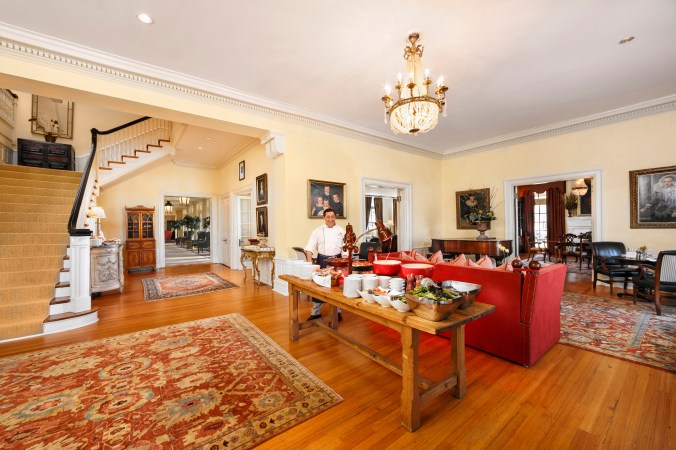
Yam soup is one of my favorites. I first had it a few years ago when Mario, the “Villa Lunch” chef at the hotel where I worked, included it in his buffet. This is Mario in his glory. It was a nice hotel.

villa_crawford_mario.jpg

Unlike most cooks, Mario was out on the floor daily. He made all the food for Villa Lunch starting at 7am, then came upstairs with it at noon and personally sliced the meat and spooned the sides onto the plates of very happy guests. He is talented, personable, kind and funny – absolutely perfect for this job. He often made up a plate for me as he was breaking down the buffet table around 2pm. It would include whatever I wanted from that day’s items, quite a nice perk! He knows how much the guests loved him from the stack of comment cards collected over the years that sing his praises. I hope he takes those out of his desk and reads them now and then.

Mario’s yam soup was a guest favorite – out-of-this-world flavor, but so simple. If you were preparing lunch for 40-50 people every day including a soup, a salad, a main dish (and associated sauce or accompaniment) and two hot sides, various cold salads and a cheese and charcuterie board, and you had a total of five hours to get everything ready, you would keep it simple too.

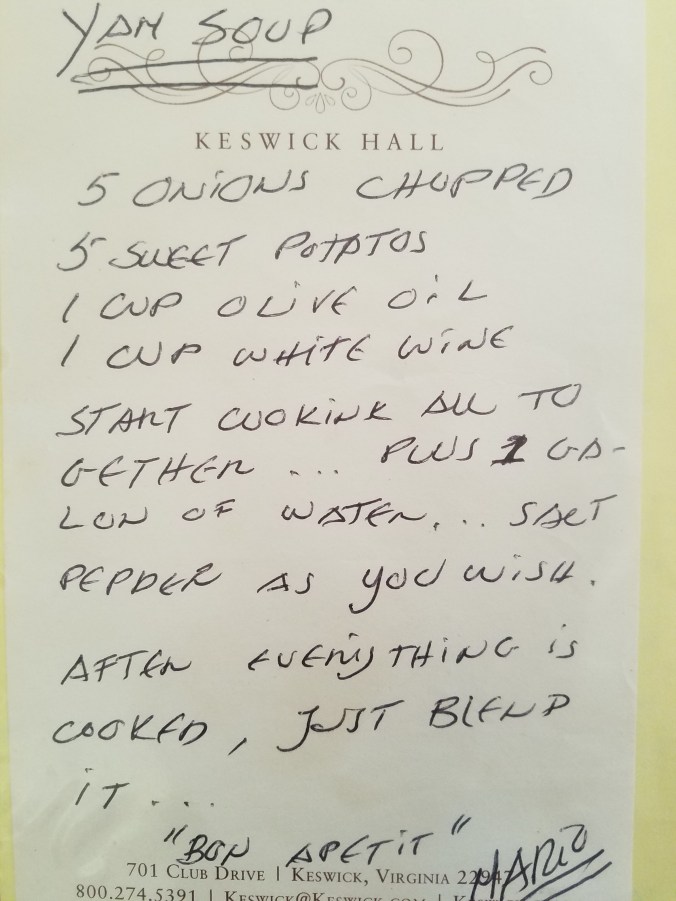
I posted this recipe on July 19 (in The Cookbook Comes Out). Here it is again. Now’s the time to make it.

Mario's yam soup

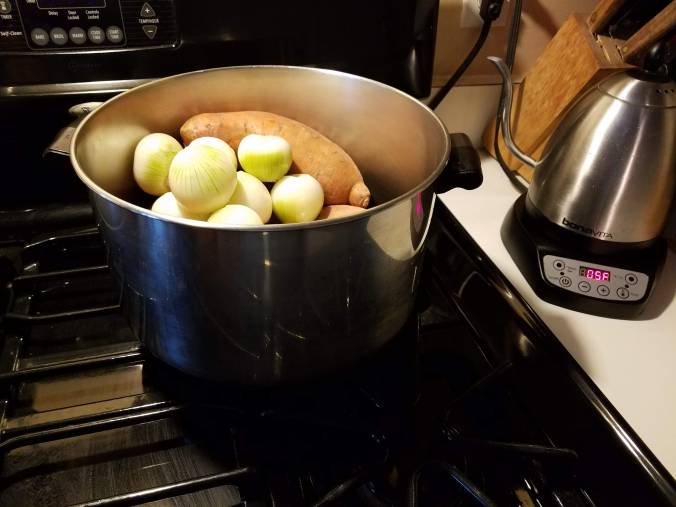
You might want to divide all the ingredients in half (and if you want to use three yams instead of two and a half, it won’t hurt anything). This recipe as it is makes a lot of soup. It freezes very well and I have always made it in this quantity, but you need a big pot. A really big pot. To get an idea if my regular Dutch oven would be big enough, I put the yams and onions in it, whole, and then tried to imagine having to add the oil, wine and a gallon of water. I don’t think so.

onions and yams in pot2.jpg

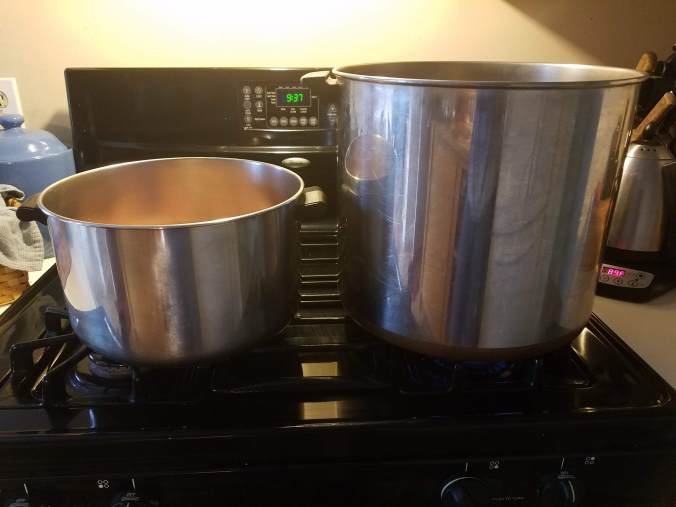
I had to bring out my big pot. It’s considerably bigger than my Dutch oven, bigger than I really need, but better to have more room in the pot than a quantity that is unwieldy at best and possibly might even spill over. My big pot is this big compared to my Dutch oven. It worked.

pots.jpg

A pot midway in size between these two would have been perfect.

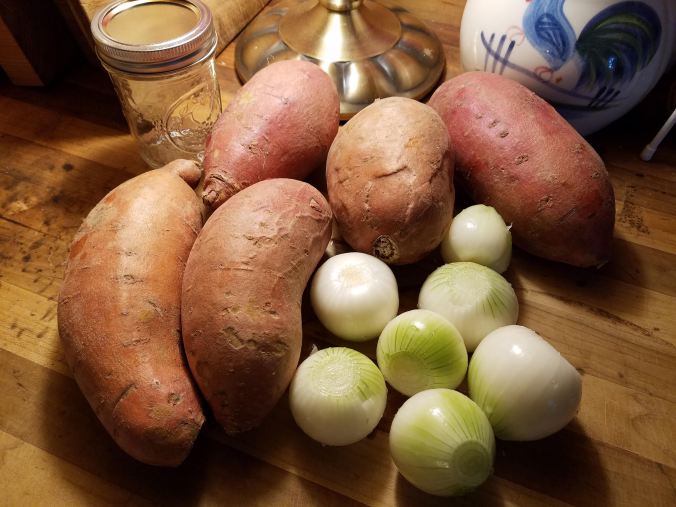
Having settled on the right pot, I started chopping. Those of you who are very sharp might have noticed that there are more than 5 onions in my pot in the photo above. Isn’t that the thing about recipes? They tell you 5 onions but not necessarily how big the onions are supposed to be.

I have Mario’s onions in my mind, the huge ones I saw him cutting up when he was making this soup. My onions are not huge. They are from my garden so I love them, but they are on the small side, so I used seven instead of five. Mario might have used ten of this size, but I’m going with seven. That’s the thing about onions. It doesn’t matter that much how many – more gives a stronger onion flavor, fewer gives not as strong an onion flavor. Your call.

(The yams look redder in this photo than they are.)

onions and yams on counter.jpg

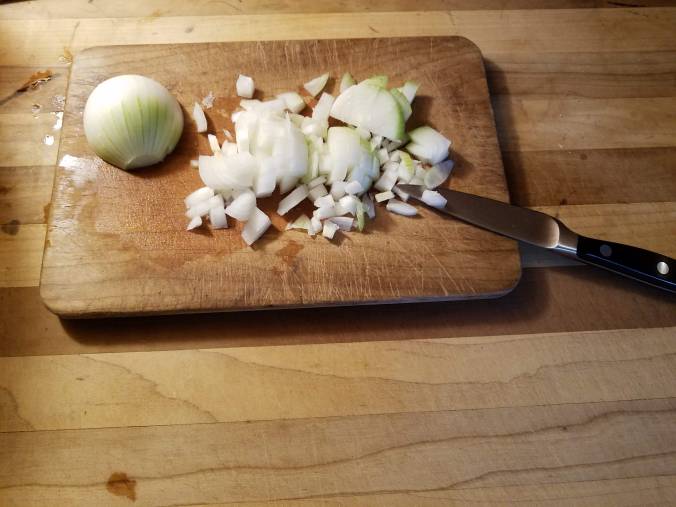
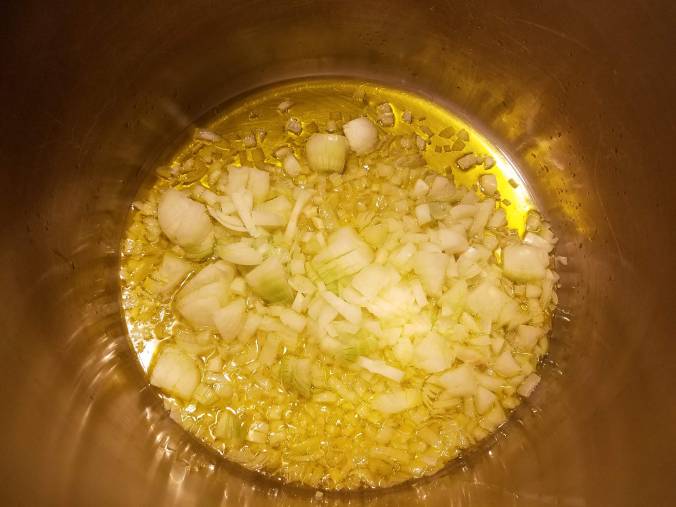
I put the cup of olive oil in the pot, turned the flame on low, and proceeded to chop up and add the onions to the oil. My onions were chopped like this. I chop them on a separate board – always have, this particular board for decades actually – because as much as I love onions, I don’t want their flavor/odor getting into the wood of my countertop and I don’t want the thing I cut up later (let’s say, watermelon) to pick up any of that flavor. It’s a small price to pay for the joy of chopping on a wooden surface.

chopped onion.jpg

The onions in the oil are a thing of beauty.

onions inpot.jpg

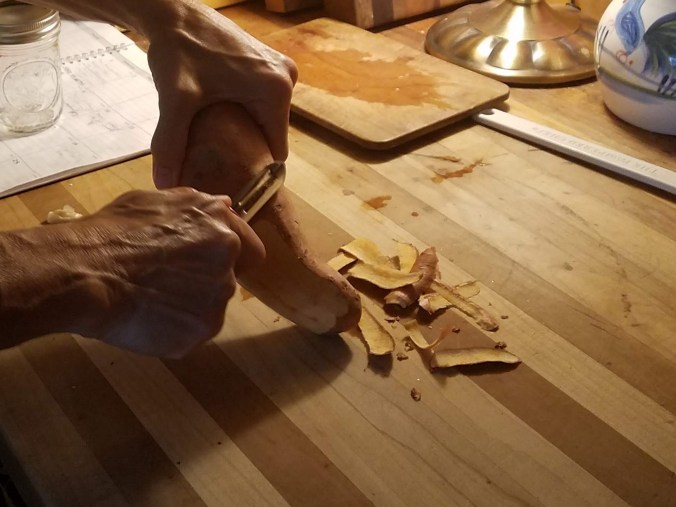
There are two ways to peel a yam. One way is with a peeler and the other is with a knife. The peeler works only if you have a good peeler. Even then, it is simply a matter of preference.

peeling yam2 (2).jpg

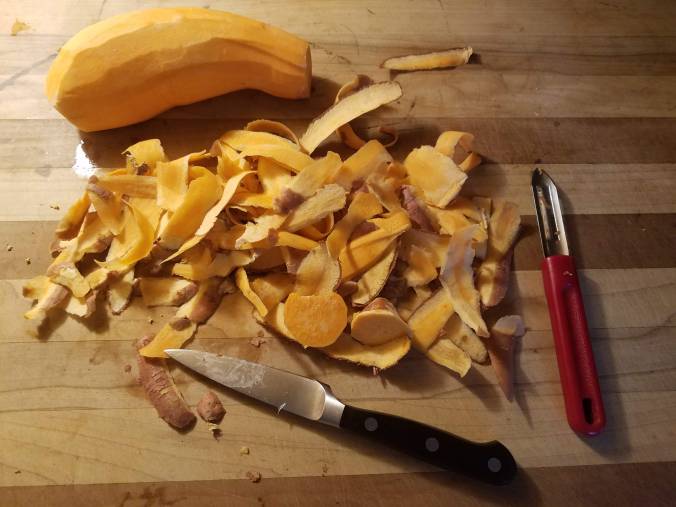
When it is peeled and the end is cut off, it looks like this.

peeled yam.jpg

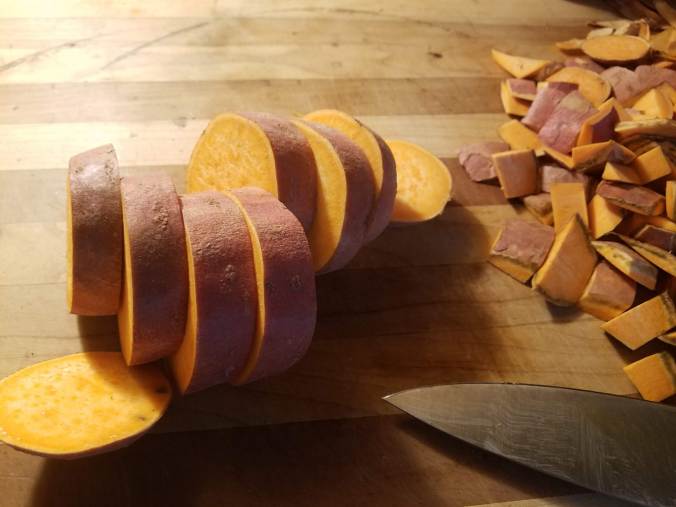
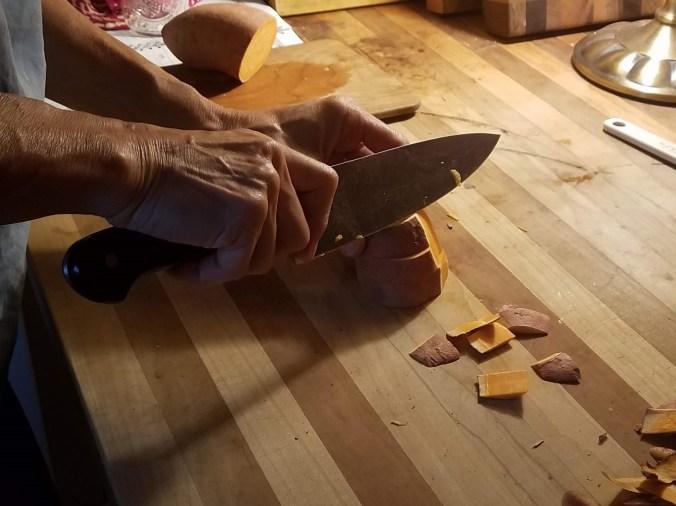
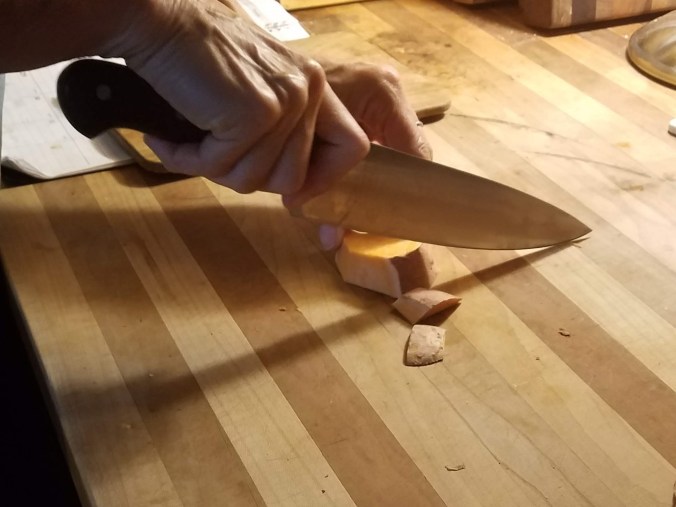
I find it easier to slice it into thick wheels first, and then cut off the edges. For this I use my 10” chef’s knife. First make slices about ¾” thick.

slices.jpg

Then, either in a small stack…

cutting sides off a stack (2).jpg

…or one by one, cut the edges off.

cutting sides off (2).jpg

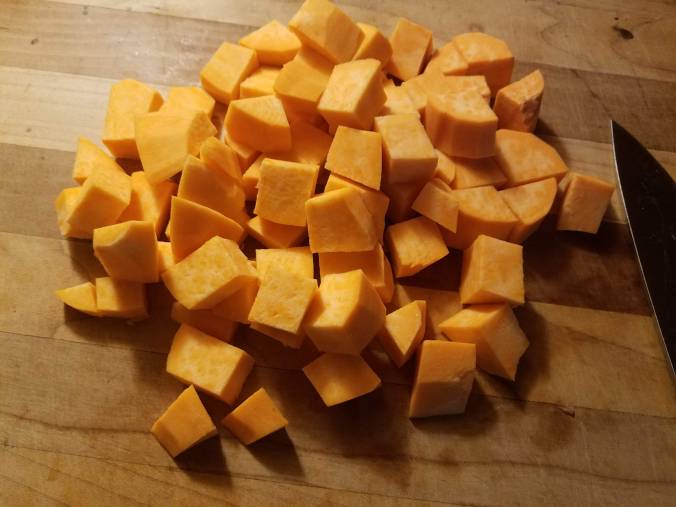
Then cut them into cubes…

cubed yams2.jpg

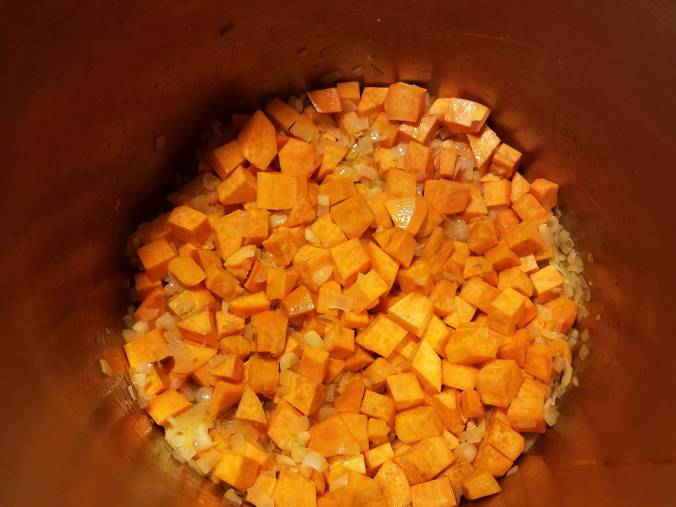
… and put them in with the onions.

onions and yams in pot.jpg

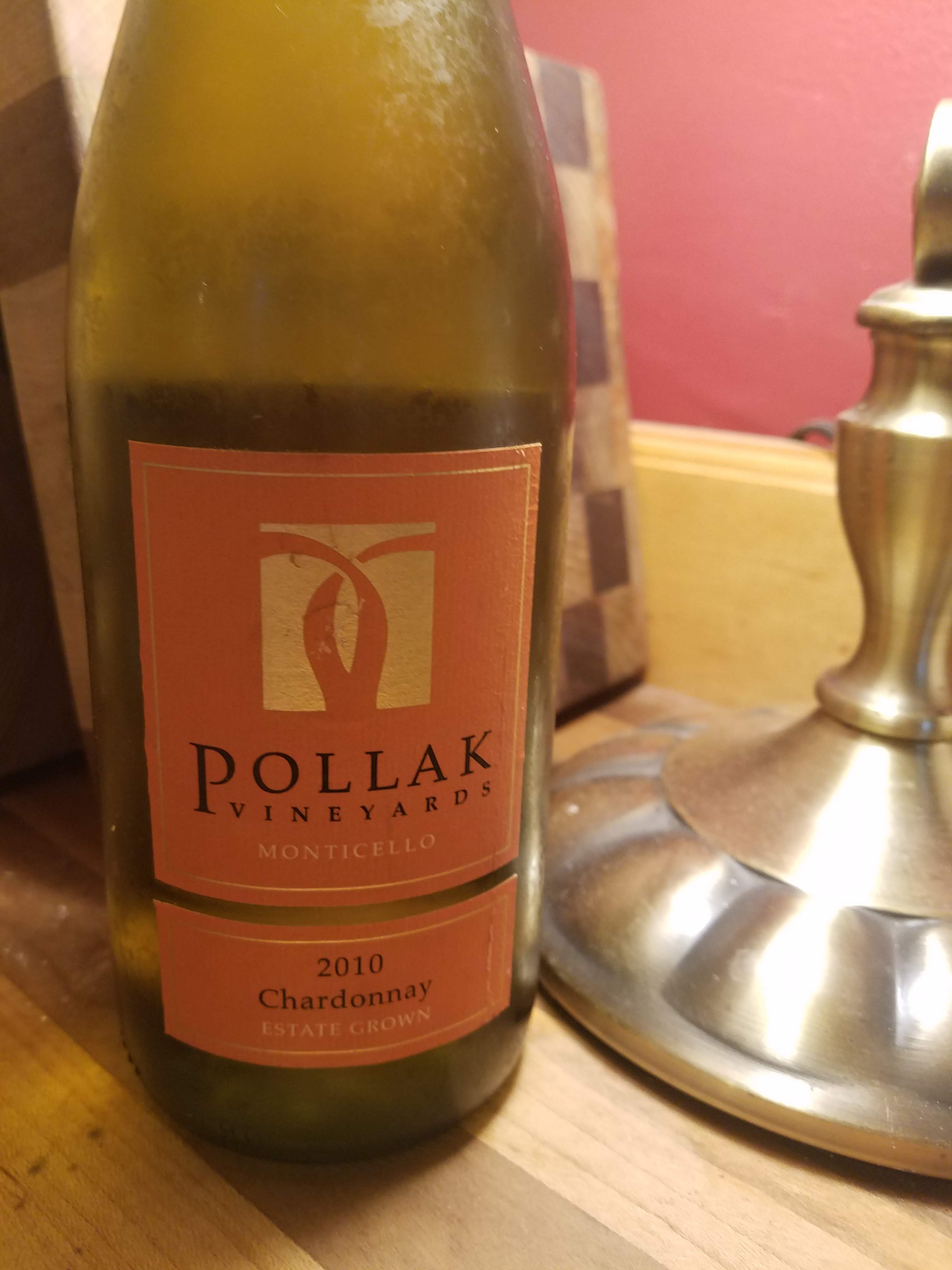
I turned it down to low and put a cover on to let this all soften. About 20 minutes went by before I remembered the wine. White wine, the recipe says. Talk about UN-EXACT! I guessed at a chardonnay. It also happened to be the first thing I pulled from my fridge. Chardonnay will work, I decided. Pollak is a local Virginia wine and a very nice vineyard to visit if you are in the area.

wine.jpg

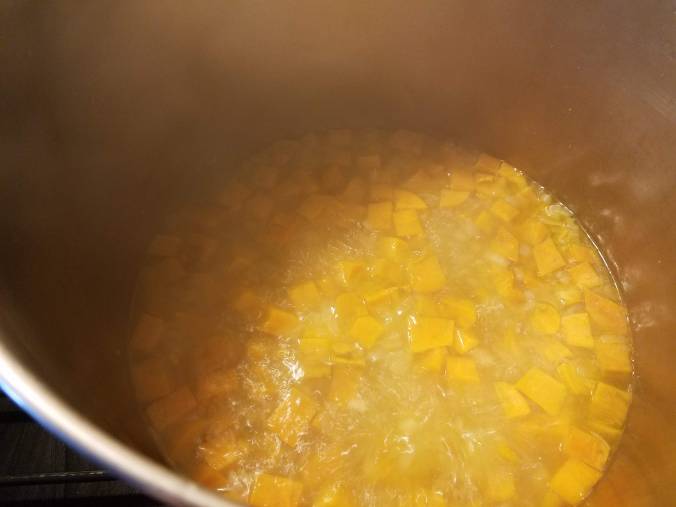
In went the wine and again I covered the pot, this time forgetting the water! Not the end of the world, she says ten minutes later. The veggies had already cooked down a bit, were not quite mushy but getting there. In went the gallon of water. It seems less formidable if you just fill and dump your quart-size measure four times. Then it looks like this.

cooking with water.jpg

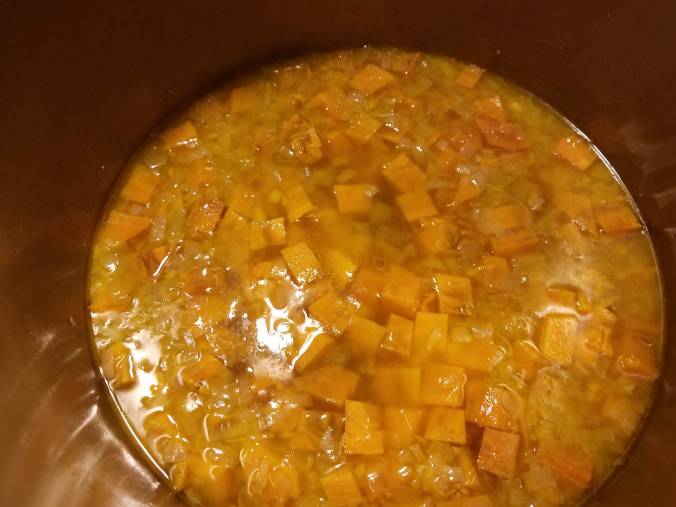
And in half an hour it looked like this.

cooked.jpg

That’s when I turned it off and let it cool. You don’t have to let it cool before the next step, but I was going out to read to Evelyn (we are almost to the end of the Queen Victoria book!) so I left it.

There would be two ways to “just blend it,” as the recipe says. God bless him, Mario means blend as in blender, electric blender, and there are two of those: the traditional stand-up blender and the immersible kind. Let’s try both, and see.

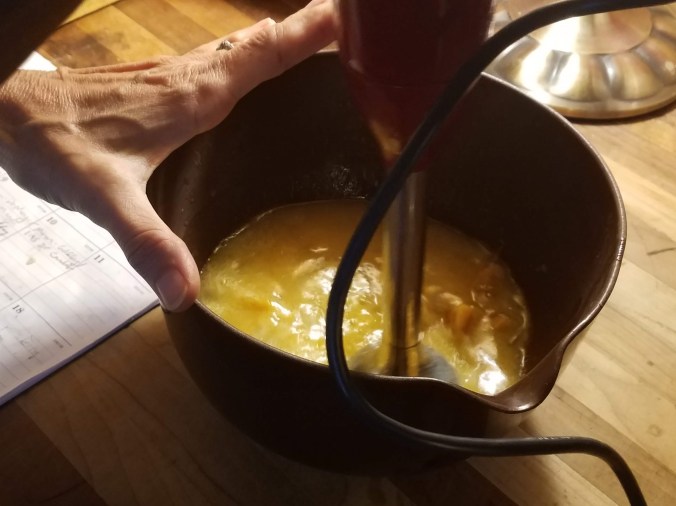
I put some in a bowl, thinking I had a big/tall enough bowl for the immersion blender. Wrong. It made a splashy mess and did not puree the veggies as I wanted. Reject this method.

immersion2 (2).jpg

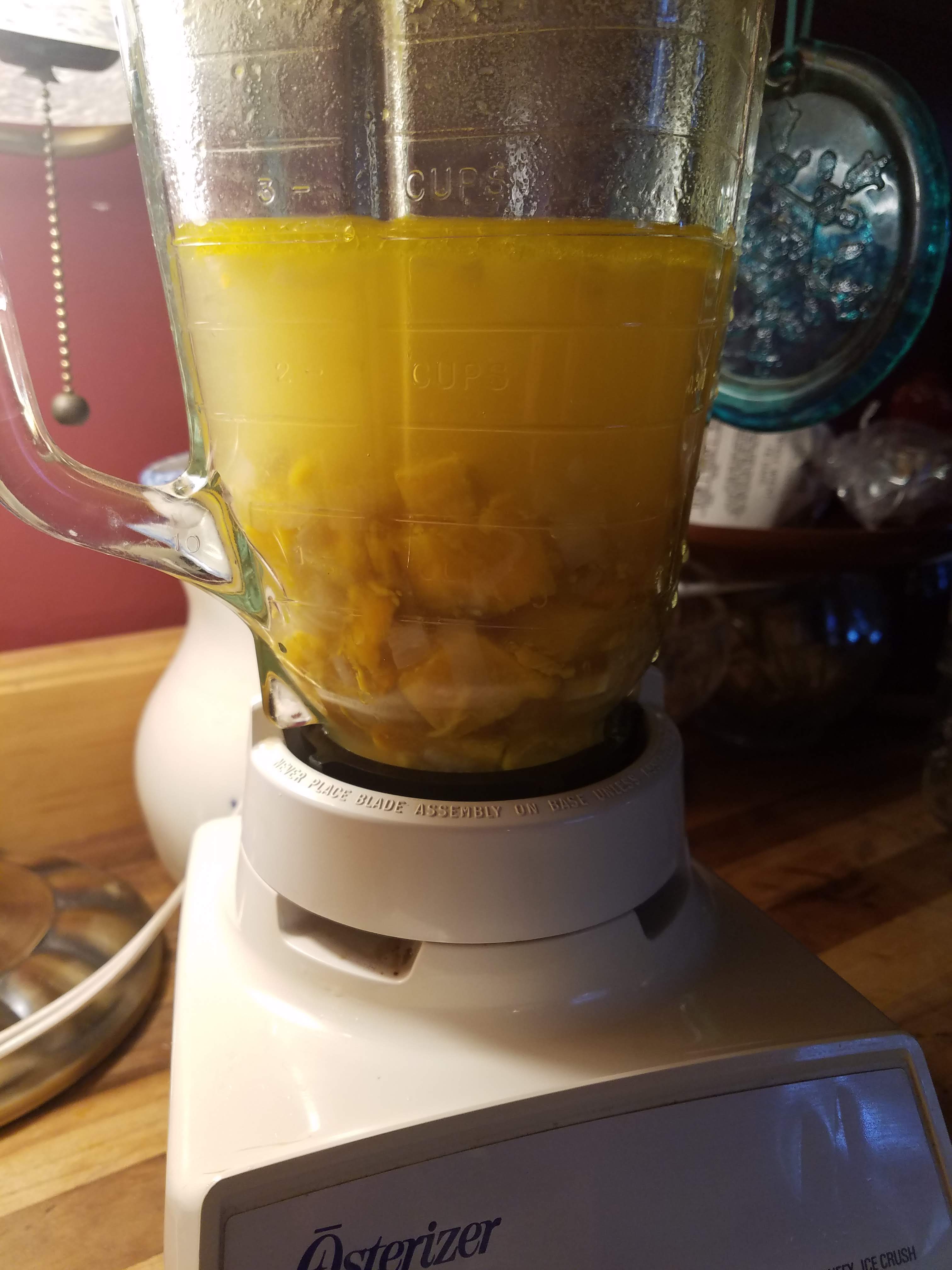
I got out the tried-and-true blender that has to be 25 years old, filled it about halfway,

blender1.jpg

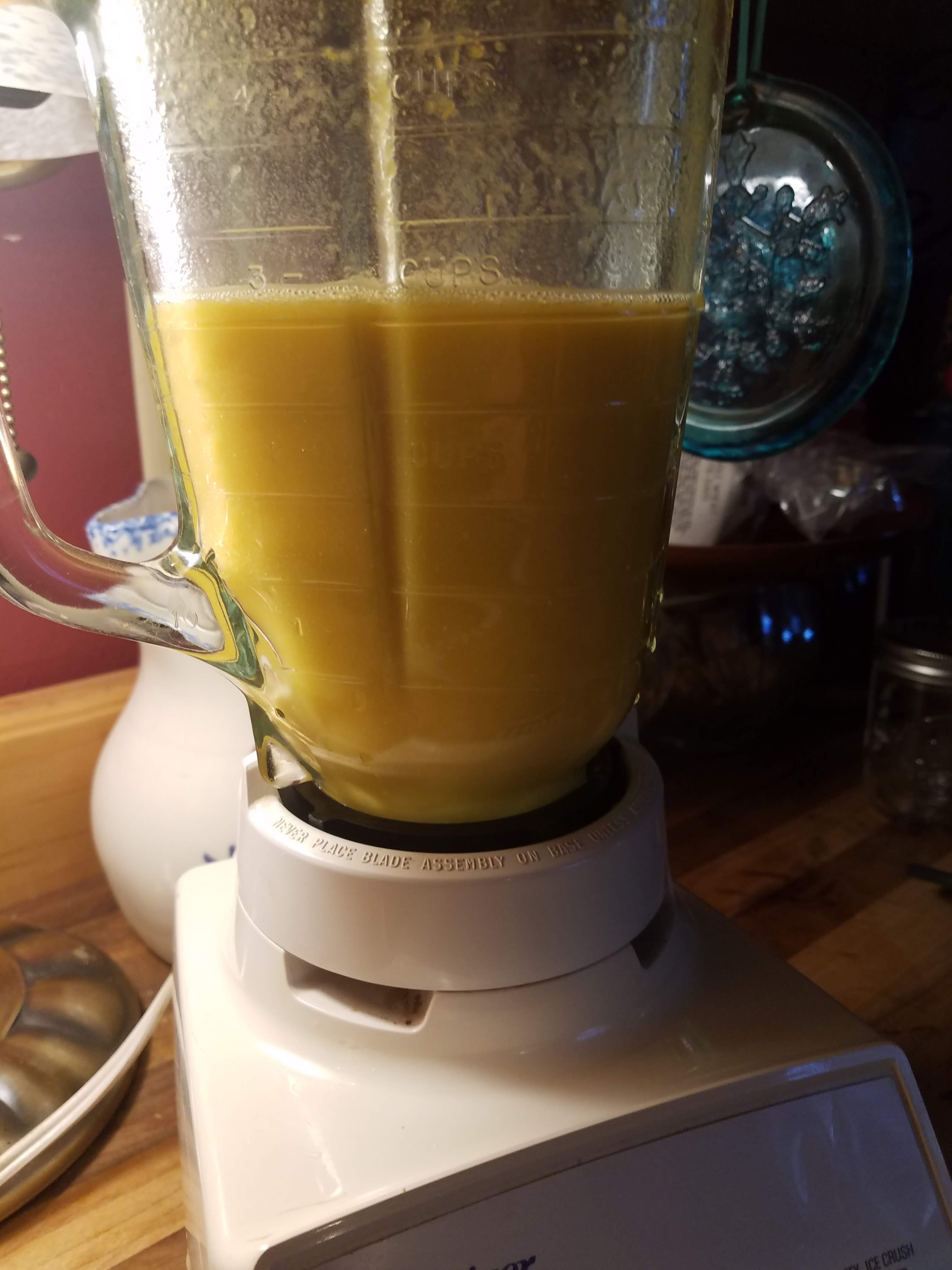
put the lid on tight and hit Puree. I let it do its thing, whirring, chopping, pureeing at high speed for ten seconds. Ten seconds means me counting to ten as in one, one thousand, two, one thousand, three, one thousand….

Voila!

Don’t you love that word: Voila!

blender2.jpg

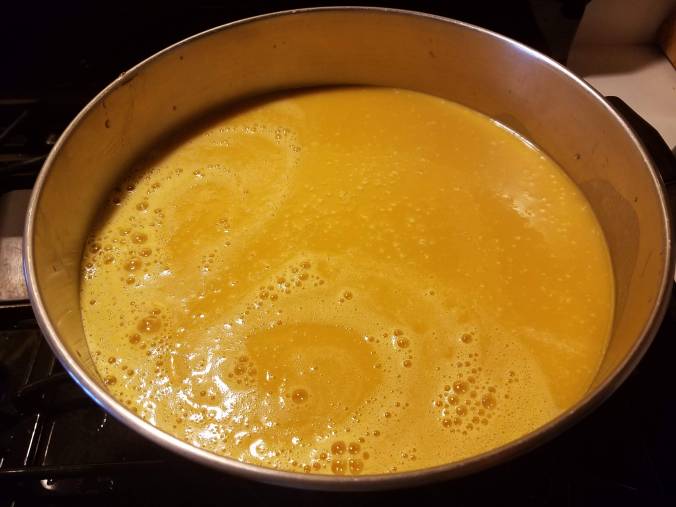
It was enough. I transferred each blender-full of the now-pureed, almost-soup to the regular size Dutch oven. Fill, puree, repeat until all is done. I got this much, which turns out to be just shy of 5 quarts.

finished in pot.jpg

Add salt a teaspoon at a time, remembering that salt enhances the flavor, brings it out. Stir and taste each time. Too little is no good. Too much is no good. I needed about a teaspoon per quart to make it taste right (to me). Add pepper to taste.

When you heat it up to eat it, put some of the Backerbsen or some other little crouton on top of the soup in your bowl as I suggested with Mom’s Tomato Soup. They would be terrific on this.

Please let me know if my efforts to be EXACT in my instructions are not exact enough. I was timing something earlier, another recipe I might share, and Samuel, my son who’s 24, chided me. “Since when do you time things?” he said to me.

“Since the people who read my blog requested that I be EXACT,” I replied.

“Is this an effort to rebrand yourself as someone who gives specific instructions instead of your normal ‘you’ll know when it’s done’?”

Very funny.

Falling to Ruin, or Not

The cottage on my property that Bradley and Beth built is a beauty. I am certain that the way its design elements come together visually strikes people as they look through their options on the Airbnb and VROB websites, and that they choose it because of how beautiful it is.

cottage.jpg

A guest last week who is an architect by trade wrote in his review:

“The house is exceptional in its design. It is nestled among soaring trees with their lush green canopy of leaves, which are awesome to behold from within this all-glass pavilion. The layout is smart for the traveler who needs a few days of accommodation. The kitchen is compact but well equipped. The living space gives a group the chance to spread out. The bedroom is loft-like and from its vantage point, you feel as though you are in a tree house. If you’ve never been to Charlottesville, your first time ought to be spent in the heart of the city. However the second time and forever after, this is the place to be!”

(And he went on!)

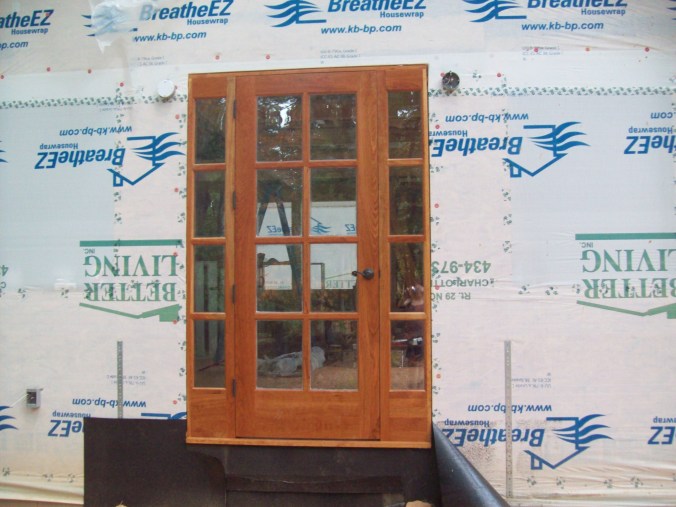
The design is not only unique, but pretty much every aspect of the construction is custom-made. The windows, for example, all the trapezoidal and rectangular ones, are made with cherry wood. So is the side door that leads to the deck, also handmade by Bradley. I remember when its pieces were laid out on the basement floor. When it was first installed, it looked like this:

Tzcherry door Brad made.JPG

I repeat, this is not a store-bought or catalog-ordered door. Bradley cut, routed and connected every piece. Seven years later, it still blows my mind when I look at the detail and the craftsmanship.

But built things do not last forever in their original condition. When Bradley was here in May, he said, “Mom, if you want those windows to last, you need to refinish them.” I want them to last. A marine grade polyurethane will not protect the wood forever, but it’s the best protection on the market for a few years, when I will do this job again. These are the second-floor windows as I was refinishing them this week (before the rain came!).

upper floor windows.jpg

When you take care of things, they stand a much better chance of being around, being useful, being still beautiful in years to come. Maybe in a hundred years, this cottage will still be standing tall and gorgeous. I hope so!

Such is not always the case. This past year I had the honor of publishing Hank Browne’s book, Vanishing History, Ruins in Virginia.* Hank, another architect by trade, has a passion for discovering and calling attention to ruined structures like bridges, railroad stations, mills and kilns. The ruins he featured are exceptional in their own way; all are well more than a hundred years old and showcase the workmanship of those who came before us as well as the creative and skillful use of materials. Nonetheless all are abandoned, neglected and in a sad state of disrepair.

The remains of the Wheelbarger-Rumsey Kiln once produced enormous quantities of limestone for use in mortar.

Rumsey.JPG

Look at the shapes and colors of the stones that make up the front face of this structure. They were dug out of the earth, hauled to the site and carefully put in place. Together they look like a beautiful puzzle, with each stone placed in its perfect spot, but the work of choosing and fitting them together required a careful eye and lots of hard work.

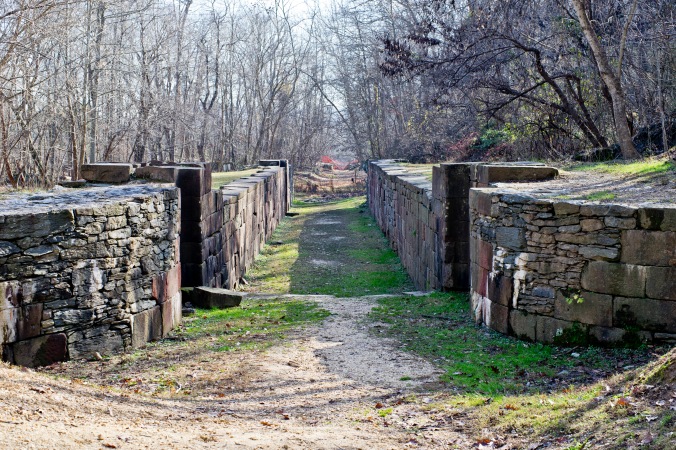
Same for these stones of the Patowmack Canal. Why some stones are giant blocks and others are thin slabs is a mystery to me, but I do know that the rounded walls were to help the boats navigate into the opening without hitting sharp corners and damaging their hulls. The recesses in the wall on both sides indicate where the doors of the lock were once attached so that the water level could be adjusted up or down.

Patowmack.JPG

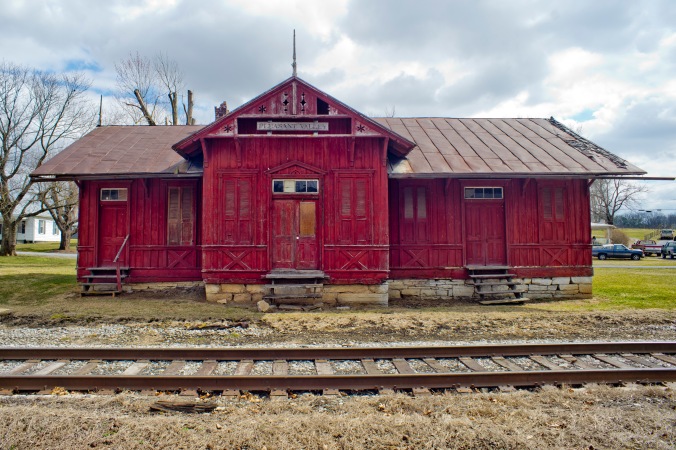
The dilapidating train station at Pleasant Valley was built in 1874; its pleasing lines must have been a welcome sight for those who had come to the end of a long journey. But the hugs, smiles, first words, last words and tears that happened here are long since past. The damage to the right-hand side of the roof is not a good sign. When rain and other unwelcome elements finds their way into the interior, it’s the beginning of the end.

Pleasant Valley.JPG

You can surely think of some structures near you that are likewise falling apart. Not all of them can claim exceptional design or expert workmanship, but all were built with purpose and hard work. The people who hauled the lumber and hammered the nails were very likely tired at the end of the day!

It’s hard to look at photos like these and not think (at least a little) about the inevitability of time passing. We see here plainly – and in our own areas undoubtedly – what happens when people stop paying attention, when buildings are untended, neglected or abandoned, and nature is left to its own devices.

This makes me think about other things that need occasional attention or careful tending: not just buildings, but the people around us, the ones we walk alongside day by day. They have their own beauty despite their age, their own mysterious aspects, their vulnerable places too, where unwelcome elements can do incremental damage. Every time you see them or talk on the phone with them or send them a text, you have the chance to do good: to serve them in some way, to speak encouraging words or to tell them how much you appreciate them, to bring cheer.

You don’t have to, but you can. If you do, I’d say the chances of that relationship getting strong or staying strong – not crumbling or dilapidating or falling to ruin – are way better.


*https://www.amazon.com/Vanishing-History-Ruins-Virginia-Browne/dp/0999131001/ref=sr_1_1?ie=UTF8&qid=1535664727&sr=8-1&keywords=vanishing+history+ruins+of+virginia