Your Favorite Chair and a Flood of Light

Did you ever notice that you often sit in the same chair when you head to your living room? There are, say, three, maybe four chairs in there, and nine times out of ten you sit in the same one. Maybe ten times out of ten. How about when you go to visit a friend, neighbor or family member? Same thing, right? If given the choice (that is, if it’s an occasion to sit down and someone else didn’t get there before you), you find yourself in the same chair. I do.

For some reason, the right end of my couch is softer than the left. You sink in more, which is not necessarily a good thing unless you are settling in for a good long movie. I am not sure whether it came this way or whether this happened during the first year I had it, when we lived in Maine and spent hours, sometimes entire weekends during the cold and snowy winter, watching consecutive episodes of Buffy the Vampire Slayer (I put this on the list of things I will never know). Anyway, the other thing for me is that being right-handed, if I sit on the right side of my couch I have the arm to contend with. I almost always sit on the left.

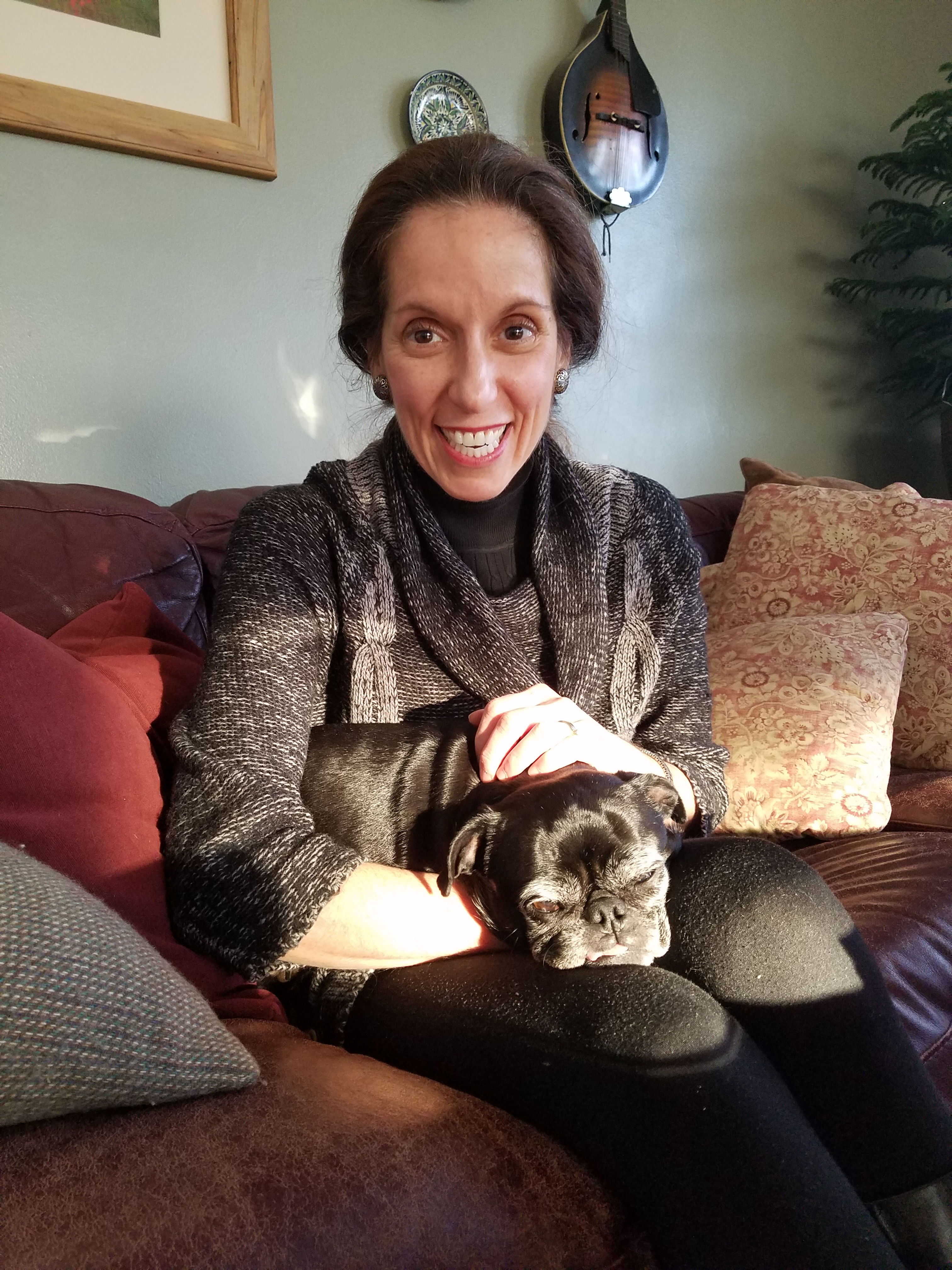
This is my friend Lisa enjoying a moment with Coco on my couch. Coco does not seem to have a preference as to which end to snuggle down in, as long as it has a pillow. I aim to please, and she has her choice. Or a lap, which is sometimes better.
Lisa on couch2.jpg

I never really thought about this chair business until I read a book that my friend Stephen in Canada recommended. “If you are going to build anything, read A Pattern Language first.” The title confused me, but Stephen is a smart person so I ordered the book sight unseen. It’s written by Christopher Alexander, who, according to author Witold Rybczynski, is “an architectural theorist who has inspired smart-growth advocates, counterculture DIY-ers, and computer programmers.” http://www.slate.com/articles/arts/architecture/2009/12/do_you_see_a_pattern.html

Am I perhaps a counterculture DIY-er? Can’t say I ever defined myself like that, but the book makes a lot of sense to me. It includes – briefly and clearly – hundreds of ideas for designing spaces that are comfortable for people. It talks about light and privacy and community, about the height of the ceiling, the pitch of the roof, the gradience of intimate spaces, and which side of the street you would most likely prefer to live on because of its orientation to the sun. It’s a cross-cultural, cross-economic, brilliant classic. You pick and choose your way through it nonlinearly, ignore the parts that don’t and won’t apply, and marvel at Alexander’s ability to state the obvious about the house and neighborhood you live in and some reasons you like it or don’t but never put your finger on before.

Almost the last chapter is “Different Chairs.”

“People are different sizes. They sit in different ways. And yet there is a tendency in modern times to make all chairs alike….

Obviously, the ‘average chair’ is good for some but not for everyone. Short and tall people are likely to be uncomfortable. And although situations are roughly uniform – in a restaurant everyone is eating and in an office everyone is working at a table – even so, there are important distinctions: people sitting for different lengths of time; people sitting back and musing; people sitting aggressively forward in a hot discussion; people sitting formally, waiting for a few minutes. If all the chairs are the same, these differences are repressed.

What is less obvious and perhaps most important of all, is this: we project our moods and personalities into the chairs we sit in. In one mood, a big fat chair is just right; in another mood, a rocking chair; for another, a stiff upright; and yet again, a stool or sofa. And of course, it isn’t only that we like to switch according to our mood; one of them is our favorite chair, the one that makes us the most secure and comfortable; and that again is different for each person. A setting that is full of chairs, all slightly different, immediately creates an atmosphere that supports rich experience; a setting that contains chairs that are all alike puts a subtle straight jacket on experience.

Therefore:

Never furnish any place with chairs that are identically the same. Choose a variety of different chairs, some big, some small, some softer than others, some new, with arms, without arms, some wicker, some wood, some cloth.”

Working with what I have – old red couch and chair, two armed chairs gifted to me, one love seat from when Mom downsized – I have tried to make a space that gives options for people, and I do notice visitors gravitating to one chair or another. I prefer large dogs on the floor; this one, called Coconut, generally respects this rule. At least when I’m around.

different chairs.jpg

The chapters in Alexander’s book are that succinct and that practical. Naturally, there are many chapters about light: Wings of Light, Tapestry of Light and Dark, Indoor Sunlight, Light on Two Sides of Every Room, Window Place, Filtered Light, Windows Which Open Wide and Pools of Light. Yesterday we did some work to make Samuel’s room brighter and more comfortable. One thing at a time in an old house, and this weekend was his turn.

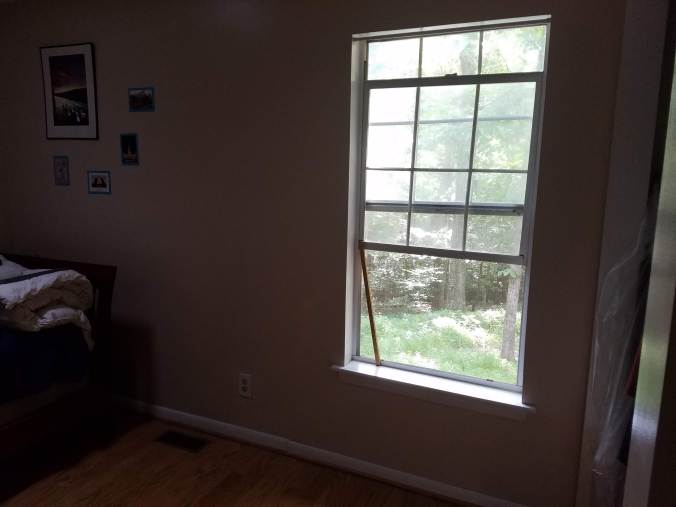
This is what it looked like before, the darkest room in the house. The single window might be original to the house, built in 1973. We’ve been slowly replacing them all. Moisture gets between the panes over time, clouding up the view, and this one, as you can see, requires a stick to hold it open!
before.jpg

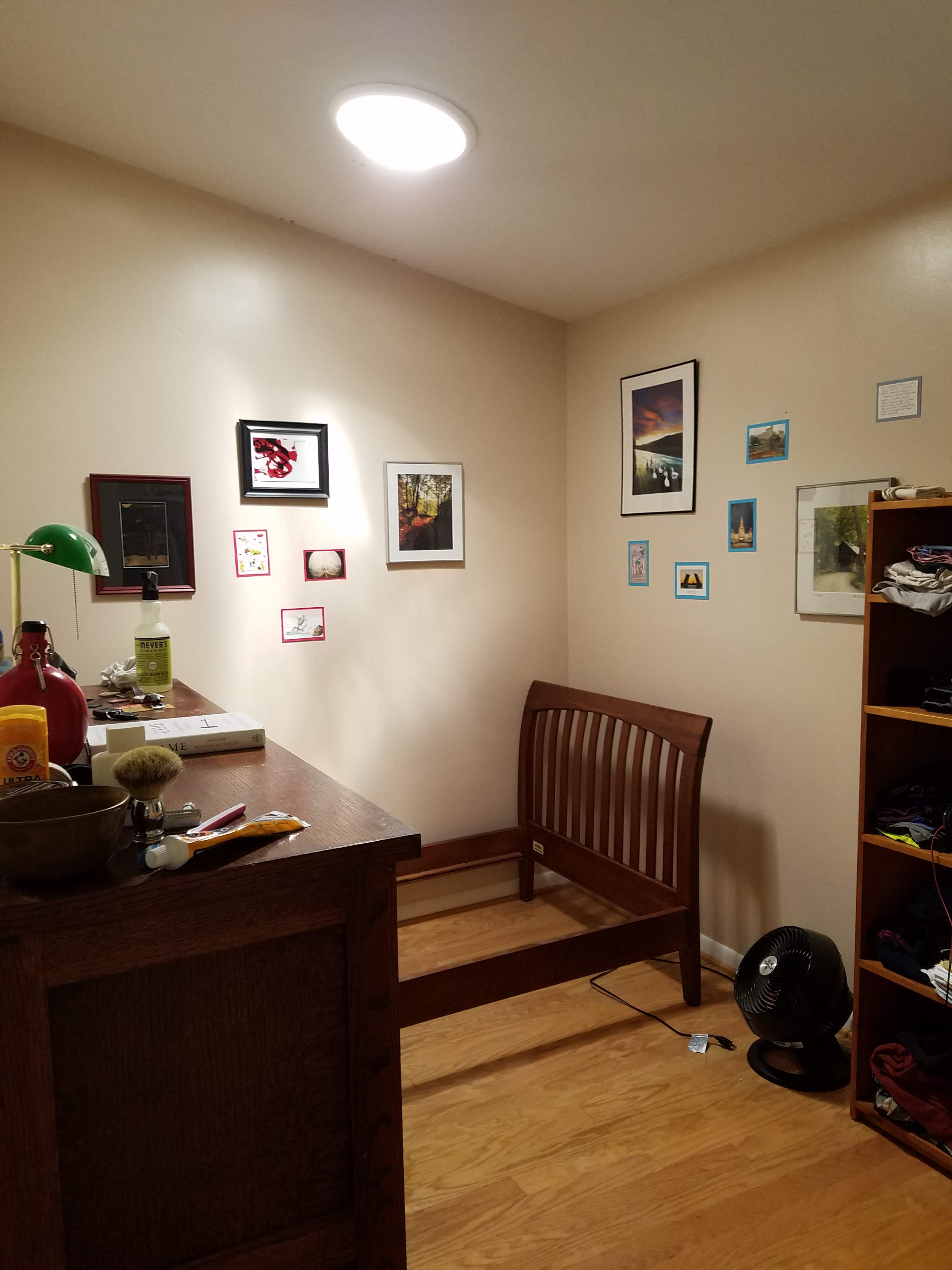
First the skytube: to bring light from above and to balance the light in the room. There is only one exterior wall, so we can’t have “light on two sides.” But light from above is a darn good substitute for one of the sides.
skytube.jpg

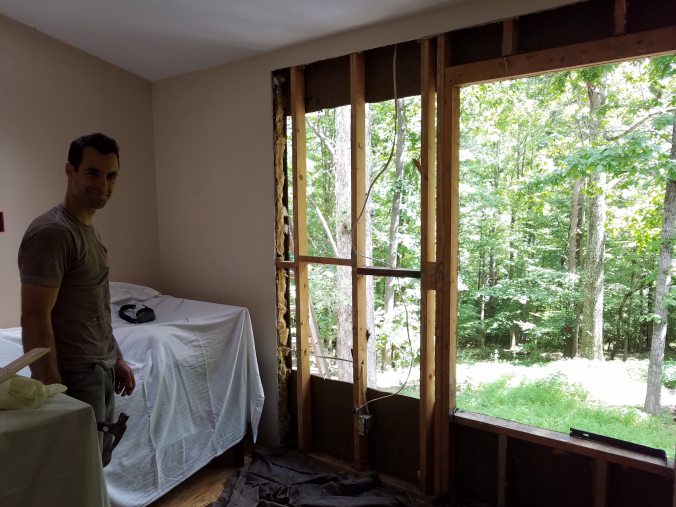
Then we made a hole in the wall in to put in new windows. A big enough hole for two windows. They are not in yet; that comes later today. Those plus the sky tube will make a big difference!
hole in wall.jpg

Light is, of course, not the only thing that makes our spaces comfortable. But wherever we spend a lot of time, we want to feel as good as we can feel. The environment of our created spaces plays into that more than we realize sometimes. It’s only one factor of course, but many, many things come together to make our lives wonderfully interesting, comfortable, safe, personalized and unboring. Comfort is one of them.

I don’t know who’s happiest about the new light in Samuel’s room, but I know it’s worth every bit of effort and frustration. See that wire hanging between the studs that had to be moved? By tomorrow that’s long forgotten. Light will flood this room and the peacefulness of the view will both sooth and inspire.

For seven years that room has been too dark. I am so grateful for the change!
 

The First Step is One of Many

It seems like there are all kinds of first steps taking place in my world. Some first steps are literal. My oldest granddaughter and my youngest son both had their orientation for school this week – Rise for kindergarten and Samuel for an intensive online course. Both of them took the first step into a new world that will stretch their minds, their skills and their futures.

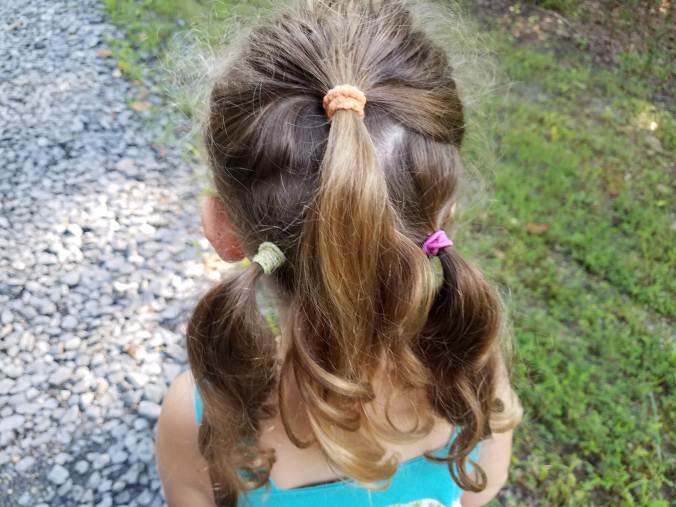
Are these the ponytails of a kindergartener or what?

3 ponytails.jpg

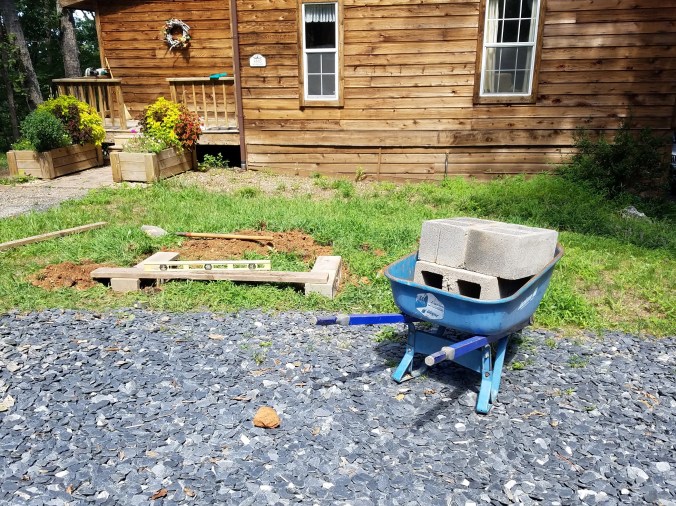
Some first steps are a long time coming. Yesterday I put eight concrete cinder blocks in place in front of my house. This is when I was partway there, with four in place and four to go.

cinderblocks3 (2).jpg

See those large planter boxes off to the side? They need to move to make way for the “big dig” coming up soon – excavation work at the front foundation to fix an issue I’ve known about for seven years. By the time all eight blocks were in place, the sun had made shadows across the boxes so you can’t see them as well in the photo below. But they are still there. Soon they will be on the blocks. Here are all eight blocks in place, just waiting.

cinderblocks1 (2).jpg

Seven years! Ever since I moved into this house, I knew there was something funny about the outside wall as you go down the circular stairs toward the basement. It’s definitely bowed inward. No, I have not been watching too much of Stranger Things, the Netflix series Samuel has me hooked on. Okay, I take that back, I’ve been watching it every night all week. But I do not think a monster will be pushing through it any time soon! The earth though, surely, has been pushing against that outside wall for some time now, about 45 years actually. It’s time to fix it.

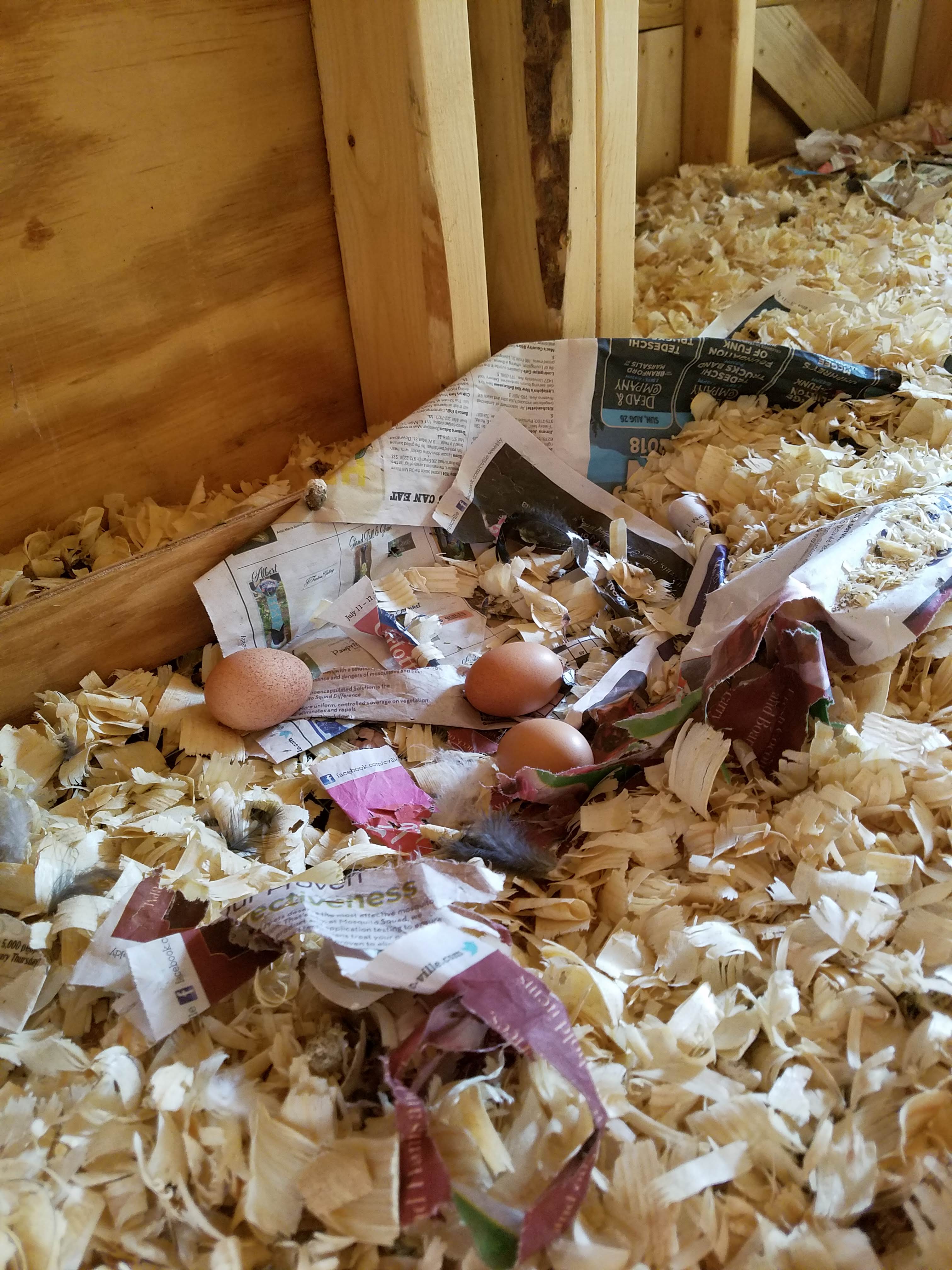
Some first steps are unexpected. I wonder if the silkies that laid these first eggs knew what was going to be happening when they sat down that day last week.

first silkie eggs.jpg

First steps can be exciting. They take you back. Oh, this thing is really happening! Look at that! Even if you are a chicken, first steps mean that a thing that has previously been just a vague unknown is finally a reality.

First steps can be scary. The situations at school that Rise will face will mostly be fun and good, but some will take her into new territory socially, academically, emotionally. She’s ready for it, but we all know how other kids can be. She’ll have her moments. She’ll grow. She’ll get stronger. She’ll face the next day slightly less unsure. Then, hopefully, the next first step will be slightly less scary.

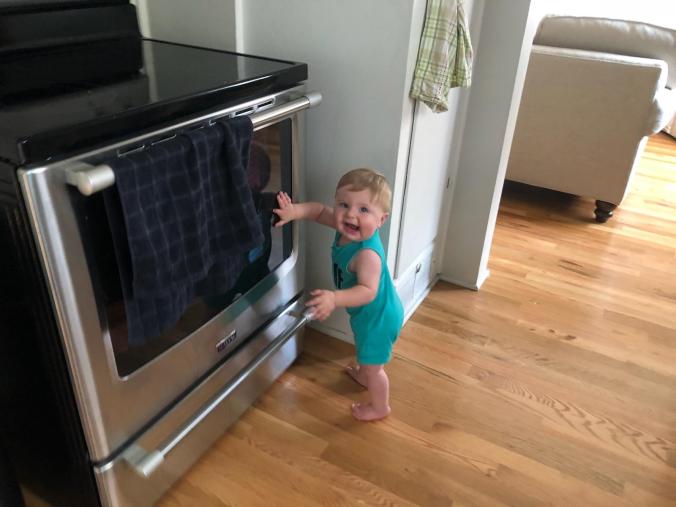
Most first steps are not as freestanding as we think. They might feel like a first step, but there are usually steps toward the first step. There are connecting steps, prior steps, prep work that came before. The first step toward actual walking is actual, confident standing up, the first step toward which was actual, confident sitting up. My grandson Nelson hardly needs a prop anymore and will very soon be off and running.

Nelson standing.jpeg

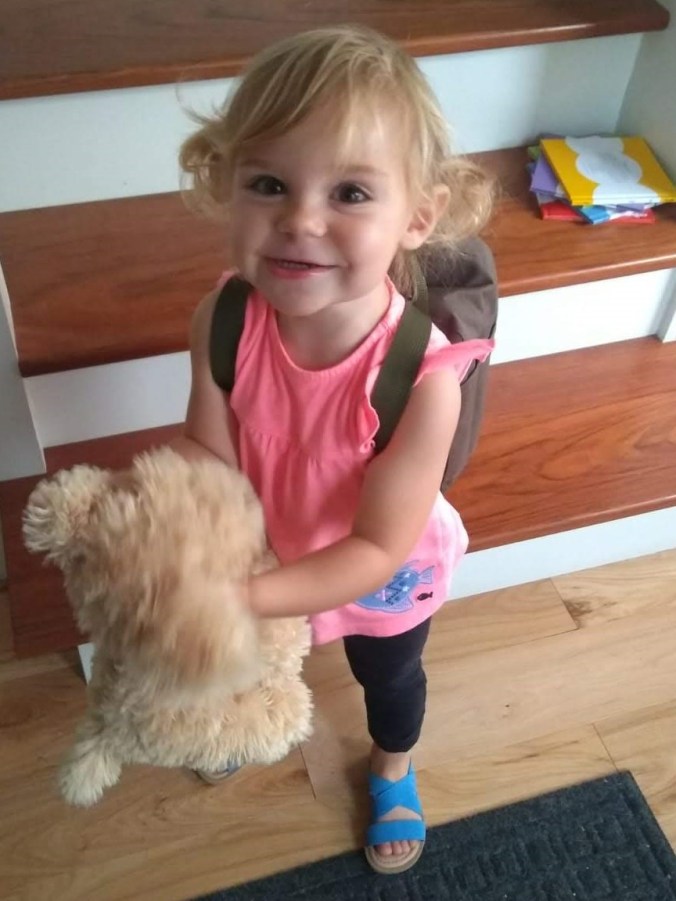
My granddaughter Piper is two. She is not a kindergartener yet, but this week she played as if she was going to school with Rise.

Piper getting ready for school (2).jpg

First steps often start with an idea or a hope. We build up to them. A few weeks ago on the way to Vermont I bought a book at the airport. It might have been the first time I ever bought a book at an airport. But I wanted something light and interesting, and found The Guernsey Literary and Potato Peel Pie Society. It got my attention on several points. Isn’t there a guernsey cow? What could that have to do with a literary society? And what could potato peels have to do with a pie?

I finished the book yesterday when I had had enough of digging holes, fetching cinder blocks and hauling them into place, leveling, squaring, backfilling, etc. and needed to sit on the couch for a bit. (Funny how your body tells you That’s enough! You are done for today!) It turns out that the Guernsey is indeed a breed of dairy cattle from the island of Guernsey in the Channel Islands off the coast of Normandy (the other major island of which is Jersey, thus Jersey cows are a real thing too – who knew!?). On Guernsey, which was occupied by the Germans during the second world war, was (fictitiously) a literary society. The shortage of food led to making pie crusts with potato peels.

The author notes at the end explain that the book was many years in the making, many years vague, unformed, unsubstantive. The book was in fact a collaboration between a woman and her niece, health issues necessitating the help the younger woman gave toward the finished product. For all of us, every project, every meal, every trip, every class contains many steps, many of which are steps toward the next thing, which can sometimes feel like the first thing.

I remember in my house in Vermont there was a shabby bathroom next to the family room. It was functional when we moved in, but partly unfinished (visible studs even), nowhere close to as nice as I wished it was. For one reason or other, it took five years to get around to redoing that bathroom. I cringed at the bathroom, wished its remodeling came sooner, but it didn’t. And because it didn’t, I had five years to think about it and play with ideas, rejecting some, holding onto others. There’s no doubt in my mind that that bathroom was better in the end because I had five years to think about it.

Reading the notes at the end of the book about Guernsey felt like a step for me toward writing one of the books that have been in my head for many years. I was inspired by the author having made an impulsive decision to visit Guernsey, bought a book at an airport (!) and then (unbeknownst even to her) developed the spark of an idea for her own book over the course of the next few decades. Impulse can be good, books can be good, and letting ideas brew for a time is definitely good.

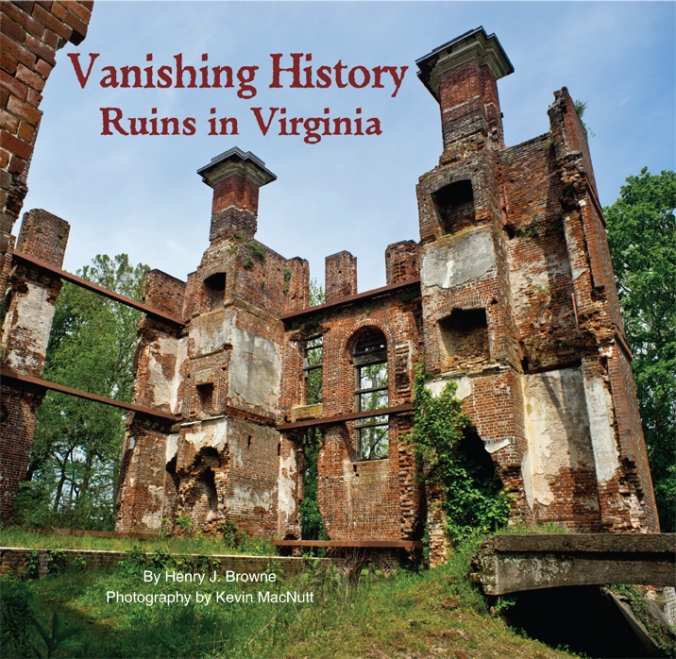
Hank Browne, who wrote the Ruins in Virginia book I referred to yesterday, was an architect for 50+ years, working often on projects that involved some sort of historic preservation. It was an idea of his for a long time to draw attention to the crumbling ruins he saw here and there. At some point he decided It’s time to make this real. He has already sold hundreds of copies and is working on a book about ruins in Maryland. Hank is 86. My hat is off to him in a very big way!

What’s brewing for you? What new project do you have in mind? What recipe do you want to try for the first time? What trip do you want to take to a place you’ve never seen before except in photos? You know you’ve already taken some of the steps toward making that thing a reality. You’ve thought about it. Maybe you’ve even rejected it. But then you think about it again.

Rise and Samuel and even Piper took important steps this week in their journey of lifelong learning. Nelson is one step closer to walking on his own. The silkies are laying eggs! I took a concrete (using literal concrete) step yesterday toward my big dig project.

Sparks. Brewing. Steps forward. Movement forward. Doing the next thing. Thinking about what that will lead to. Time goes by. More sparks. More brewing. More time. Real steps. “First” steps. Next steps.

I wonder what steps today will bring.


Crackers Revisited

Late in the afternoon yesterday I went to visit my friend Hank Browne. First thing (after hello) I said was, “I have a little something for you. These are my homemade cheese crackers,” and I handed him a little baggie full. Never having had these crackers before, he said, “Now why would you make these when you could just buy a box?” I said, “You try them and then talk to me.”

This is the photo of Hank that we used on the end flap of the jacket of his book.* I love the fact that he is actually holding a bagel in this photo but we cropped it out.

hank browne bio pic4.jpg

Sometime after I left him with my crackers, I texted him and said, “I need to know what you think of my crackers.” He said simply, “You are my cracker maker.” I think he liked them.

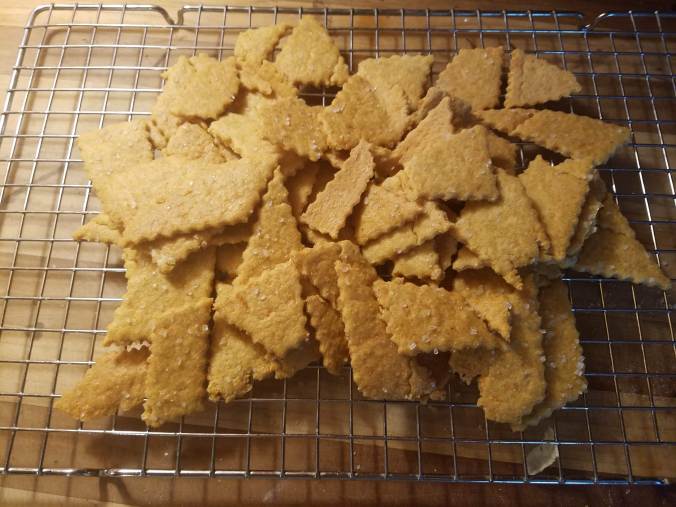
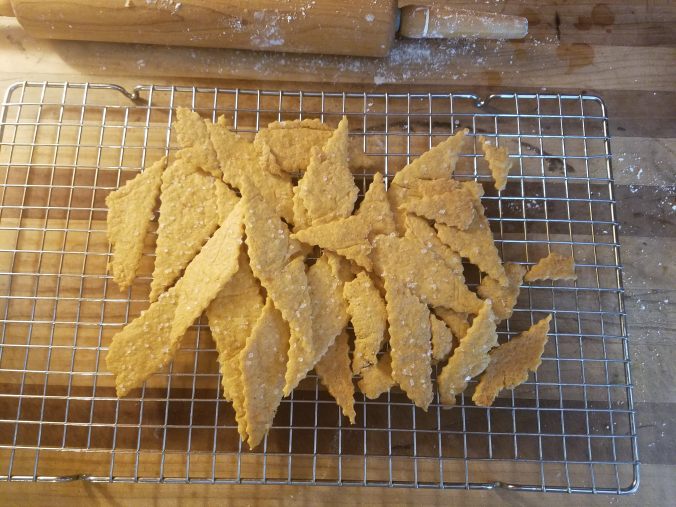
Last week my mom called me to ask for “the cracker recipe.” She did not have to tell me which cracker recipe because only one matters in my world at the moment. There’s a reason you stick with a recipe. It works and it’s wonderful! Imagine sharing /savoring/devouring some of your favorite cheese alongside homemade crackers – these homemade crackers.crazy 2 baked on rack.jpg

These crackers have texture, flavor and the possibility of crazy shapes if you are so inclined. They can take cheddar (Cabot if you please), parmesan, Monterey Jack or just about any hard or semi-hard cheese. I think asiago would be great. Jarlsberg even.

About two years ago I wrote about these same crackers, but at the time I thought it was enough to present the recipe and show what they looked like finished. See how much I’ve learned in two years? Lots of pictures are good! Here we go. Still, we will start with the recipe. It’s from the King Arthur Flour 200th Anniversary cookbook. Back in the day I thought it was very cool that I got one of their first-run, limited-edition 3-ring binders.

All you need on this page is the list of ingredients, but feel free (later) to compare their instructions with mine. I don’t even look at the instructions any more. Oh, wait. Perhaps I had better check!

recipe.jpg

That’s right. They wanted you to roll out the dough on a floured surface and then transfer the crackers one by one to the baking pan. I did that for a long time. Terribly time-consuming, and as you might have guessed, I have other things to do. So a few years ago I came up with a waxed paper method I will show you, and just yesterday (lucky you!) I realized an even better way to get the rolled-out dough to the pan. I can’t believe I didn’t think of this before!
First, grate your cheese. Use the finest hole of the grater you have. This is mine that I got in IKEA years ago. I like it because 1. It has its own bowl that the cheese falls into and 2. it has a second top with bigger holes that I use at other times for other things. My sister Lynn has the same one and she loves hers too. But my mom never liked hers and gave it away. To each her own.

grater.jpg

Of course if you are using parmesan or romano cheese and it came already grated, you are good to go on that point. I chose cheddar this time because Cabot was on sale this past week and I bought four of the Seriously Sharp bricks, maybe five.

Also, I tripled the recipe because I know how these disappear. If I am going to go through this process and make something that doesn’t go bad in three days (not that they will last three days even tripled!), I might as well make enough to last a while and be able to give some away. You want to share this kind of love.

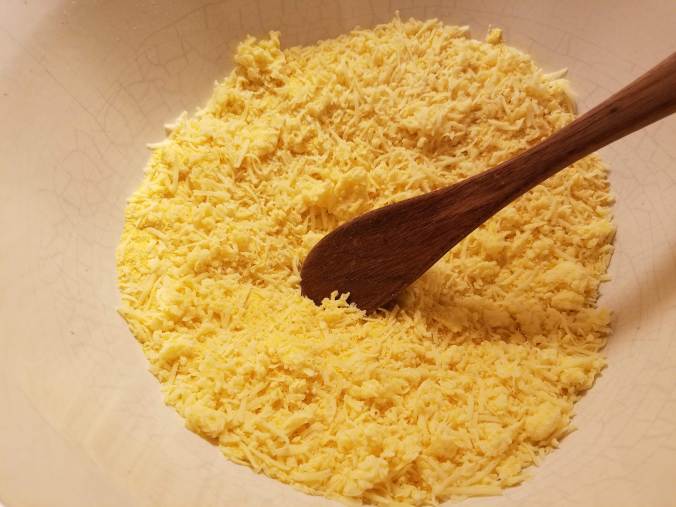
Put your cheese in a large bowl and mix in the cornmeal. I happened to have yellow cornmeal but you can get white also. The one I had in the house yesterday is also a somewhat coarser texture than I have had in the past, but it doesn’t matter unless you care about them being a finer texture in the end. They are good either way.

cheese and cornmeal in bowl.jpg

Naturally your cheese is a little moist, so mixing the cornmeal into it first helps keep the cheese from clumping. We don’t want clumps.

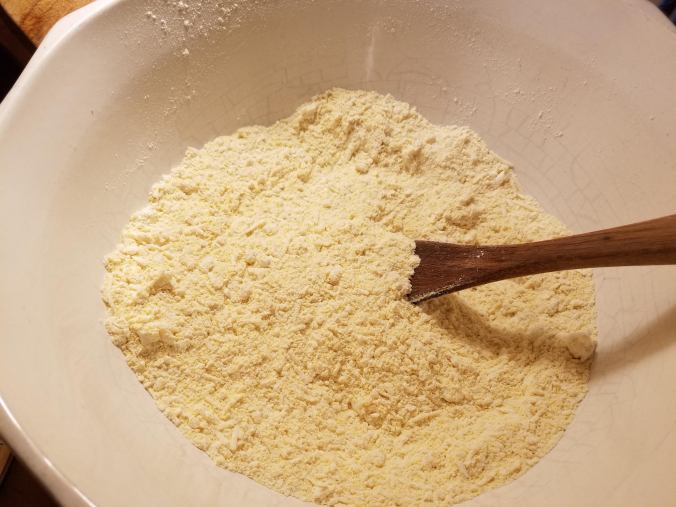
Next add the flour. This additionally de-clumps.

cheese flour and cornmeal in bowl.jpg

Add the rest of the dry ingredients (i.e. everything else except the eggs, oil and water). Mix in. I did not add the Dijon as suggested in the recipe, but I’m sure it’s good.

The recipe says to mix the eggs, oil and water together separately and then add it to the dry ingredients. You can do this if you want but it works just as well for me to break the eggs right in the bowl and then pour the oil and water in and stir it all up. Two things: 1. If you are worried about shells getting in your crackers (you don’t want shells), break the eggs in a separate small bowl and pour them in, and if you are going to do that, you might as well beat them up right then with the oil and water before adding to the big bowl. I did not worry about shells because my hens are making good strong shells. Your call. 2. I always use extra virgin olive oil (EVOO, as the pros call it).

mixing in eggs, oil, water.jpg

This mixture looks so yellow because of the yellow cornmeal as well as the very yellow yolks my hens are making. Yours might not look this yellow.

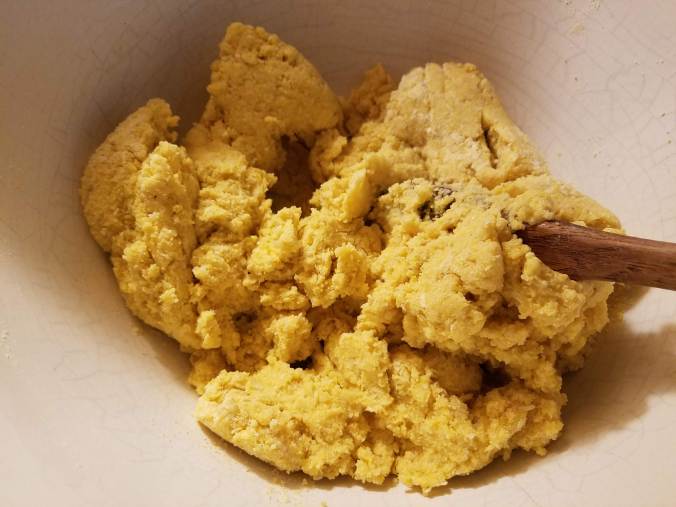
Here is what they dough looks like with all ingredients mixed together. You don’t want it gooky, but it should hold together. If your dough doesn’t hold together nicely or seems too dry, you can add a little water to it. But don’t make it gooky.

mixed in bowl.jpg

Now the fun part.

I did the rolling out part three ways. You can choose which way seems best to you.

  1. Between two sheets of waxed paper
  2. On one sheet of waxed paper with flour on top of the dough
  3. Between a sheet of parchment paper and a piece of waxed paper

All of these methods allow you to transfer a full pan’s worth of crackers to the pan all at once. The two-sheets method is what I discovered a few years ago. It has the advantage of being less messy than the old floured-surface method but the bottom sheet can wrinkle a bit. I’ll show you.

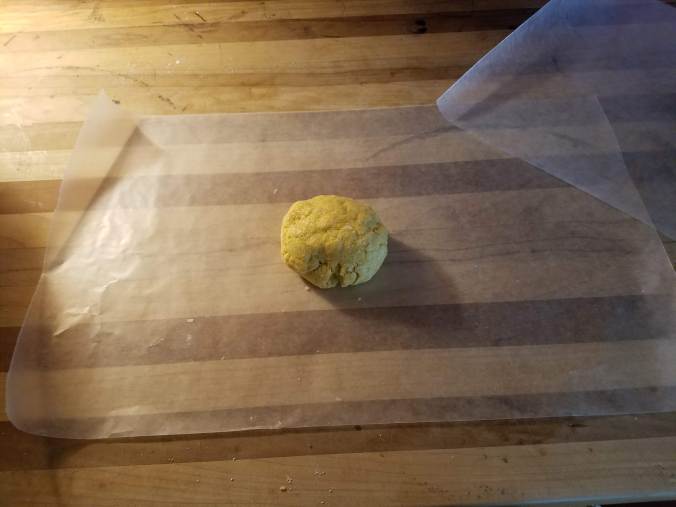
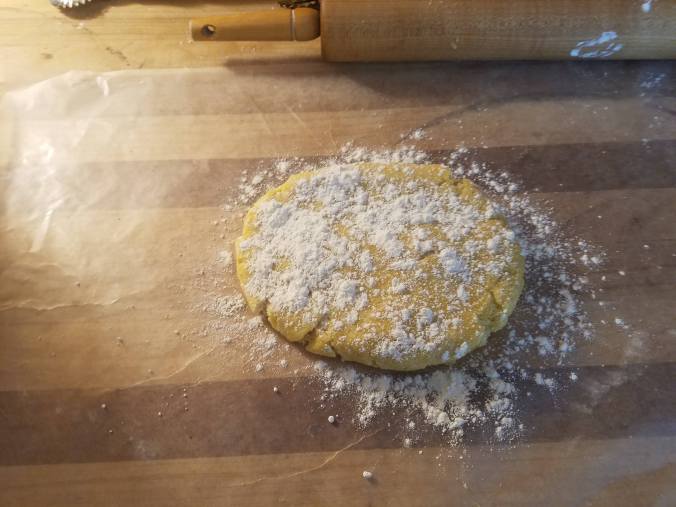
Take about as much dough as comfortably fits in your hands mold it to a flat ball or oval and put it on the paper.

dough on waxed paper.jpg

Put the second sheet on top and smoosh it a bit.

dough between waxed paper.jpg

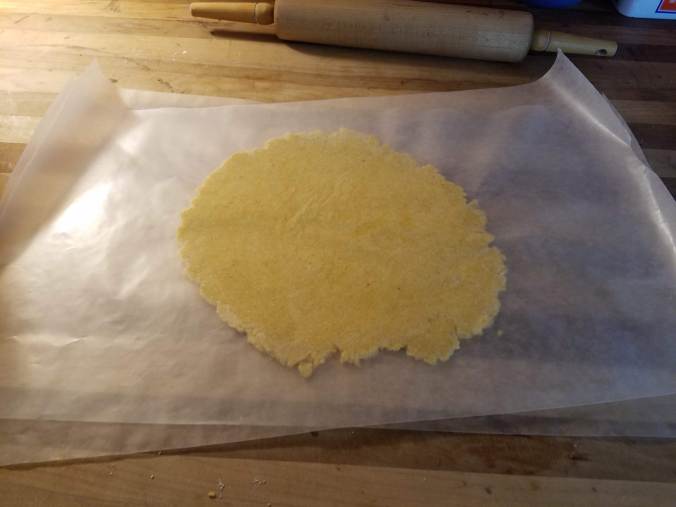
Now use your rolling pin to roll it out. See, no messy floured surface. If you are careful you can re-use the paper for the next ball of dough.

dough rolled out betweem waxed paper.jpg

Keep rolling until your dough is about 1/8-inch thick. Remove the top sheet and flip the whole thing onto your silicone-mat-lined baking sheet. If you don’t have a silicone mat, grease the pan.

The first time I did this, I cut the cracker shapes first, then flipped it. You should not cut on a silicone mat. In the end I found a better way, but this way first.

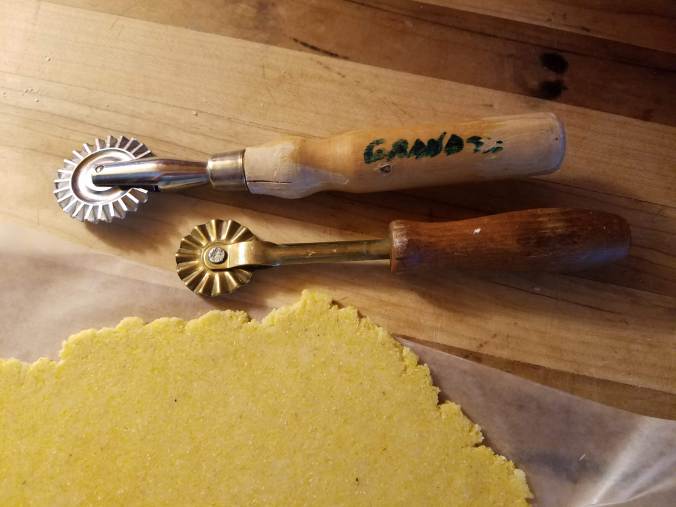
I removed the top sheet and cut the shapes I wanted. The tool I have is called a Raedle, which is basically a wheel with a zig-zag edge connected to a handle. The one that says Grand.. on it was my grandma’s. It has been used a lot over the years, thus the chipped off name. The other pictured here I found in an antiques shop near me called A&W and had to decide which of my children to give it to. I settled on Samuel because he made these crackers for me some years ago when I was writing my book. Batch after batch sustained me through that project and I’ll never forget his kind service to me. This one is a beauty. If you find one at an antique shop, buy it. If you don’t have one, a pizza cutter works fine.

raedle.jpg

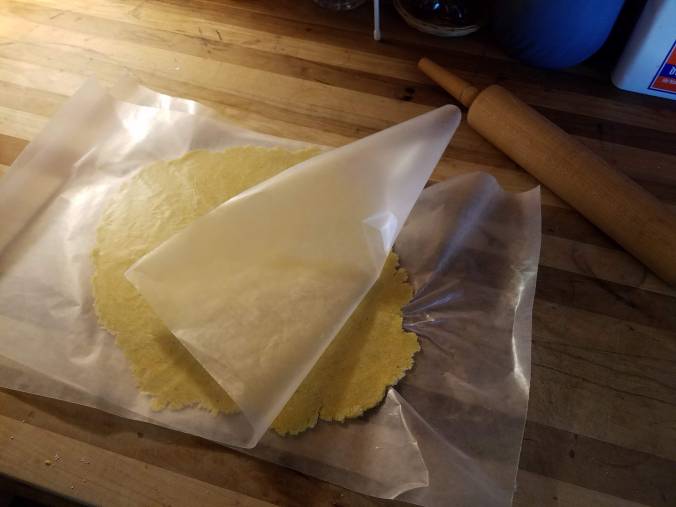
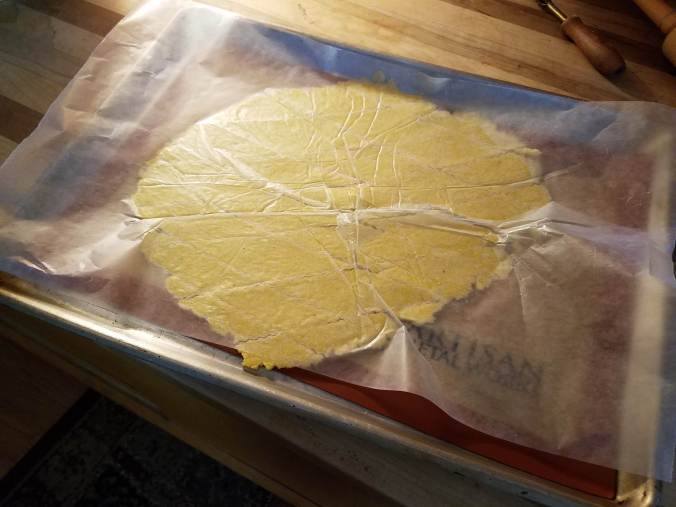
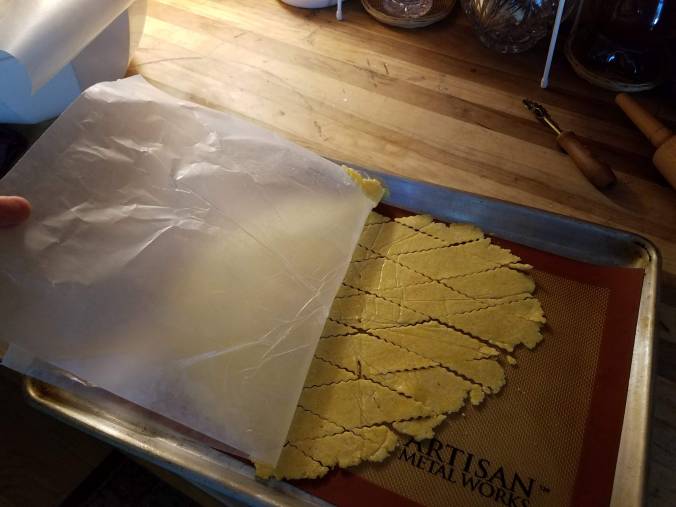
The dough sticks to the paper which makes the flip possible, but do you see how the paper can get a bit wrinkly? This happened as I continued to roll out the dough to the thinness I wanted. It does not affect the crackers, but maybe that bothers you.

removing paper.jpg

The bottom sheet may wrinkle less if, on top, you use flour instead of another sheet, but either way the wrinkling is not a big deal. Using waxed paper also means you have to be able to flip the paper on to the pan as I will show you. If you are shy of flipping, use the parchment. You can bake right on it. I’ll show you that later.

For now, this is the flipped waxed paper on the pan.

flipped cut dough.jpg

Little by little I carefully peeled what is now the top paper away.

peeling paper back.jpg

There are always a few stragglers that don’t want to stay with their fellows. See that one at the top? Every crowd has a few renegades. Just put them where you want.

stragglers.jpg

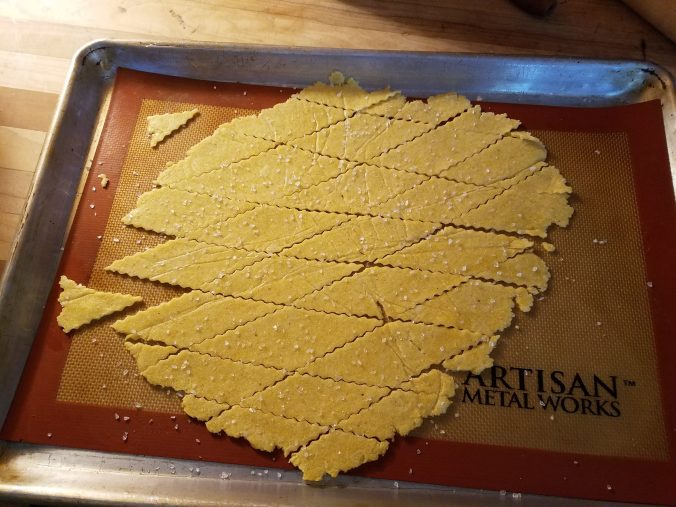
Brush water on the dough before you salt the crackers. I couldn’t find my little brush so I dipped my hands in a little bowl of water and used my fingers to wet the dough – just enough to make the salt stick. Use coarse salt.

salted.jpg

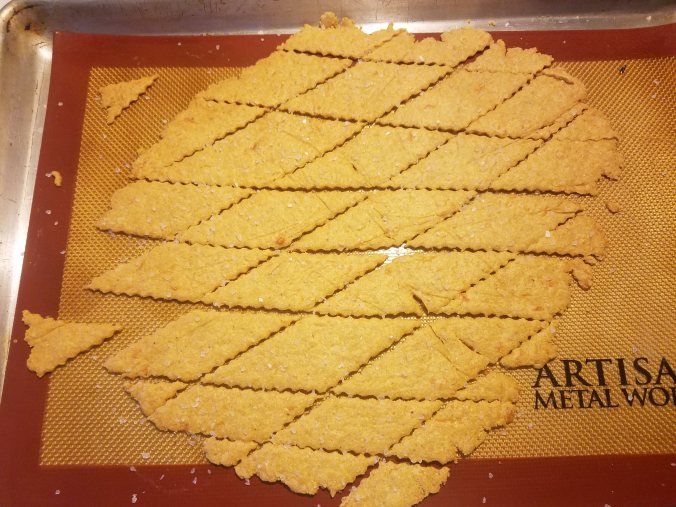
And into a 400-degree oven they go. The original recipe says 375, but 400 works for me. You bake these until they are as dark as you like them. I love them a little darker but was in rather a hurry yesterday so these are not as dark as I would normally make them. Still good though!
baked first pan.jpg

Transfer them to a rack to cool. Try one or two. Stop if you can. Oh yum.

baked on rack.jpg

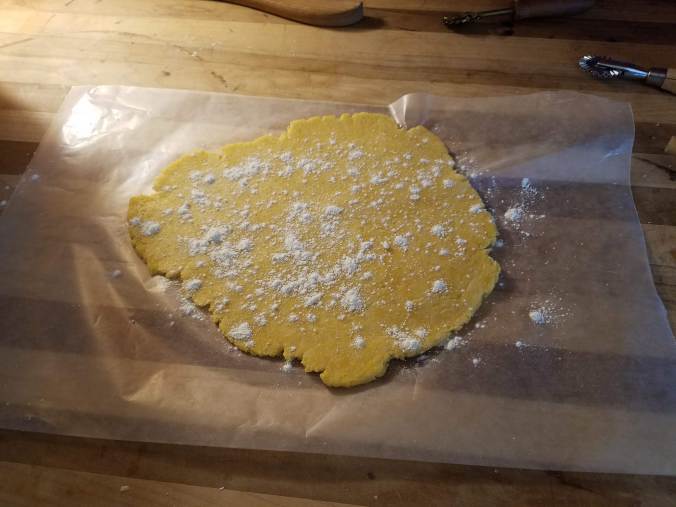
Now back to the other rolling-out methods. First, one sheet of waxed paper only. Put flour on top, rub your fingers over it to smooth out the flour a bit and then roll the dough out.

flour on top2.jpg

You might need to keep adding a bit of flour until you get to full size and desired thinness.

lternate with flour on top.jpg

This method still requires you to flip the paper onto the pan. I found that cutting the cracker shapes before flipping made it trickier, and I know you should not cut on the silicone mat for fear of damaging it but I decided to take the chance. I flipped the uncut dough, removed the paper, then used the Raedle gently. It’s easier and I managed to not damage my mat, but then I remembered parchment paper. That’s the ticket!

Cut a piece of parchment paper that will fit your pan, roll out the dough either with waxed paper on top or with flour on top. This shows waxed paper on top.

parchment.jpg

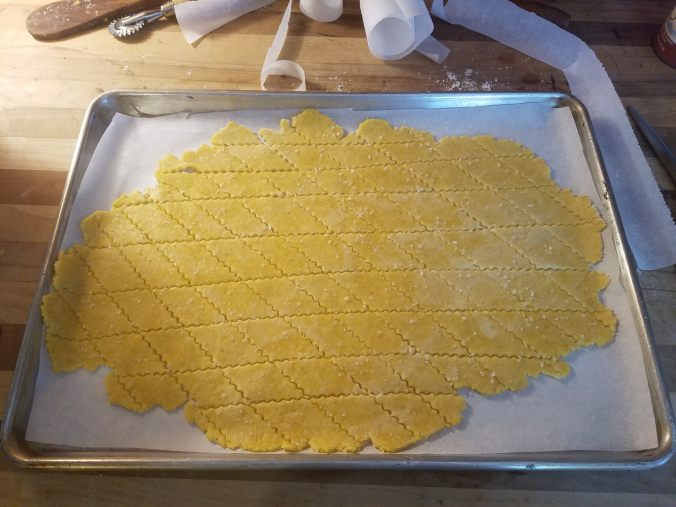
Then simply slide this paper onto your pan. No risky flipping. No pre-cutting of shapes. No worry about mat damage.

This is the parchment slid onto my pan, which you can’t see because I cut the paper too big.

parchment ready.jpg

So I trimmed the paper.

parchment cut.jpg

Brilliant. Cut shapes, brush with water, sprinkle salt, and into the oven it goes just like that. Regarding shapes, have at it – standard squares or rectangles, maybe diamonds as you see above, or a little more free form as below. It was fun to make the arc cuts, but in the end the crackers were pretty square anyway. You can use cookie cutters if you want too. Either cut them on your counter and move them (tedious but the most efficient use of the dough) or cut them on the parchment and just leave the in-between parts to eat on the side later.

You don’t have to separate the crackers after cutting but before baking. The baked crackers break apart easily.

I know it’s just as easy to buy a box. But the other night I took the last few of the last batch of these, the ones my mother made last week and gave me, to the airport when I picked up my son Samuel. He polished them off well before we got home, at which time he asked, “Do you have any more crackers?” I knew there were no more of the homemade ones and started showing him his choices, the boxes in the cabinet. He stopped me short. None other would do.

You try them and see if he’s not right.

free form.jpg


*Hank’s book is Vanishing History, Ruins in Virginia, published last year by my little publishing company, Paper Shoe Press. You can find it on amazon!

low res Ruins cover image Browne.jpg


Mom’s Tomato Soup

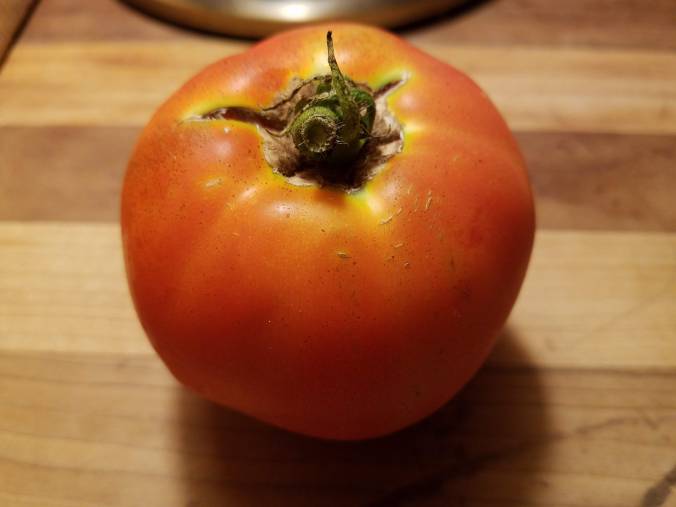
It’s that time of year. Gardens, farm stands and farmers’ markets are loaded with gorgeous red tomatoes. There is absolutely nothing under the sun to compare with the taste of a sun-ripened garden tomato. How beautiful is this?

tomato.jpg

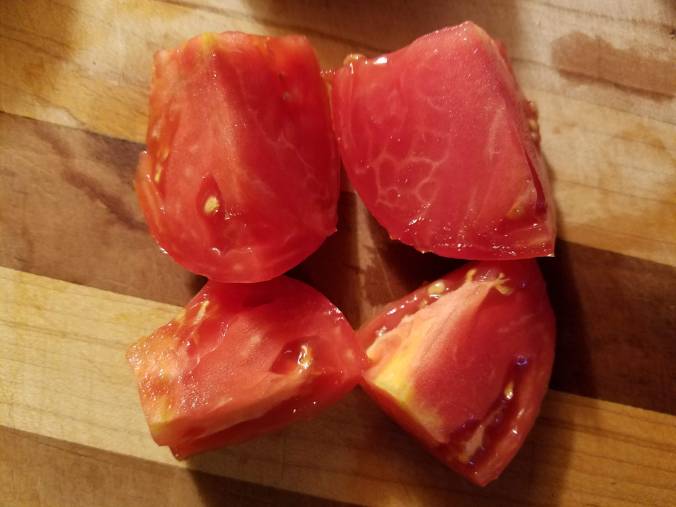
cut up.jpg

My favorite way to eat them fresh is cut up in a bowl with olive oil, cider vinegar, fresh basil (cut up) and salt and pepper. My dad’s favorite was to make a sandwich of toasted white bread, sliced tomatoes, mayo and salt and pepper – a BLT minus the B and the L. But when tomatoes are in abundance, when you can’t possibly eat that much salad or that many sandwiches, the best solution is fresh tomato soup. To be specific, the tomato soup my mom always made, and still does. It’s easy and freezes well, so you can have the taste of summer when the snow flies.

I am under strict instruction from [you know who you are!] to be EXACT in this recipe, so I will do my best to not say “a little of this” or “until it looks right.” 😊

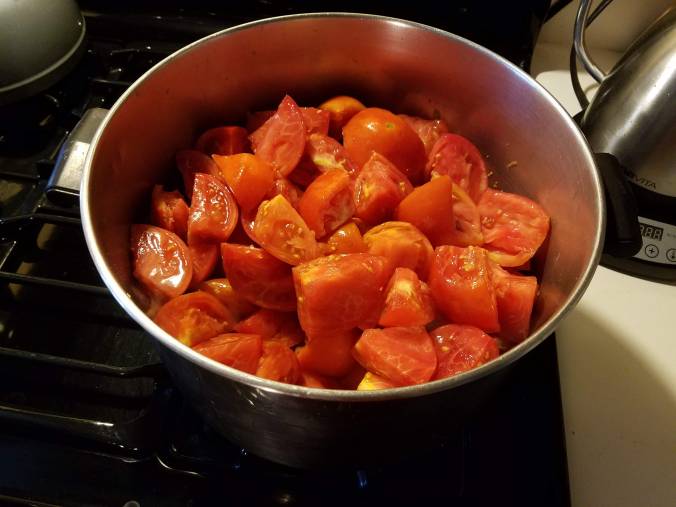
I’ve been gathering the tomatoes from my garden, eating some and saving some. For the soup, I cut up the saved ones as shown above, stems, green-part-under-the-stem and any bad parts cut off, and had enough to fill my 3-quart bowl to overflowing. Meaning I could not possibly put one more piece in or it would have fallen out. Note that skin and seeds are not removed at this point.

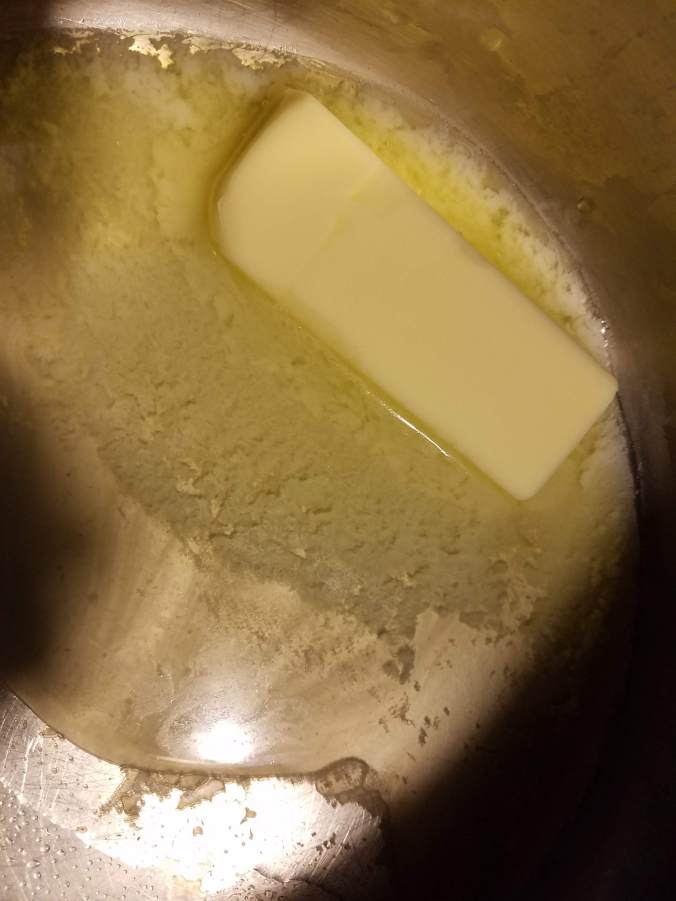
For this amount of tomatoes I started with 6 tablespoons of butter. Put it in a large cooking pot – my Dutch oven was perfect. Melt the butter on a medium heat.

melting butter


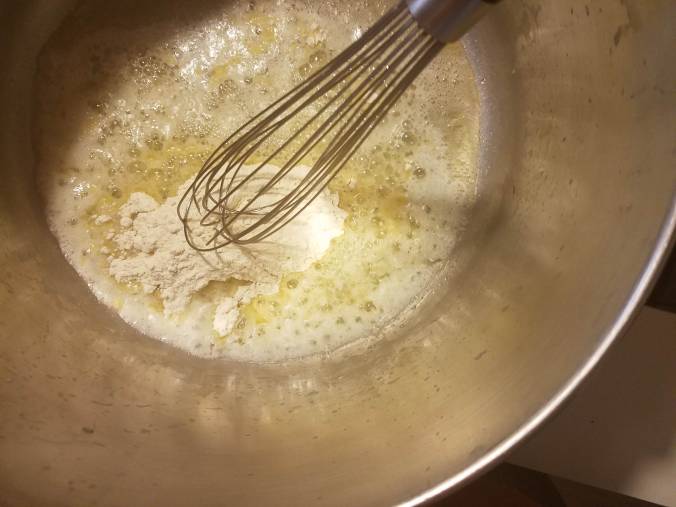
Add the same amount of flour (6TB) and whisk it in.

flour to butter

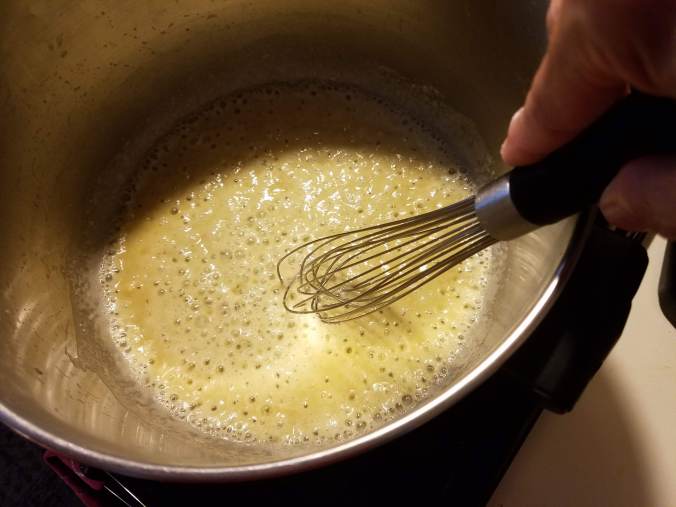
Let this get bubbly over the heat.

butter and flour in pan.jpg

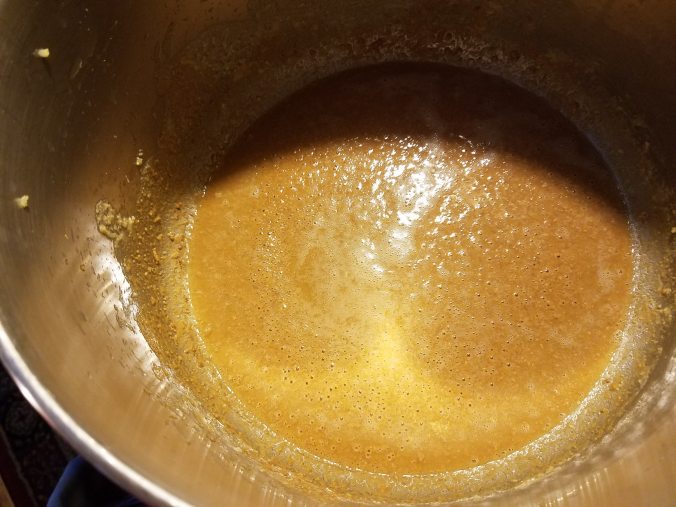
Turn the temp down to low and cook it for about 5 minutes, stirring occasionally, until it looks light brown, like this. You have now browned the butter.

browned butter.jpg

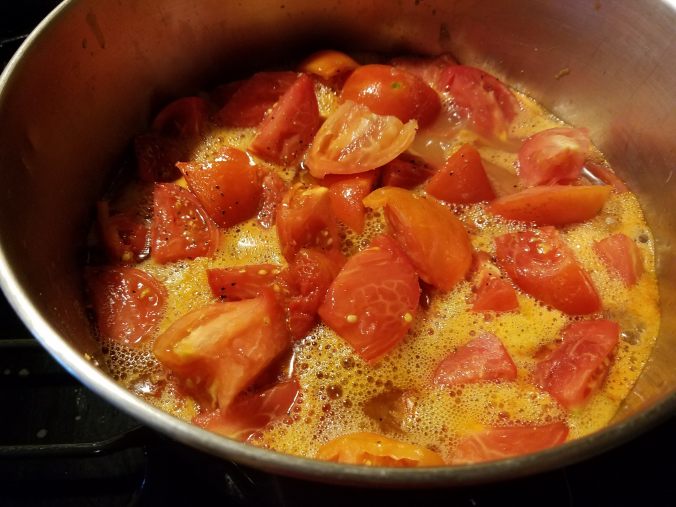
On top of the browned butter, dump your 3+ quarts of cut-up tomatoes.

pot3.jpg

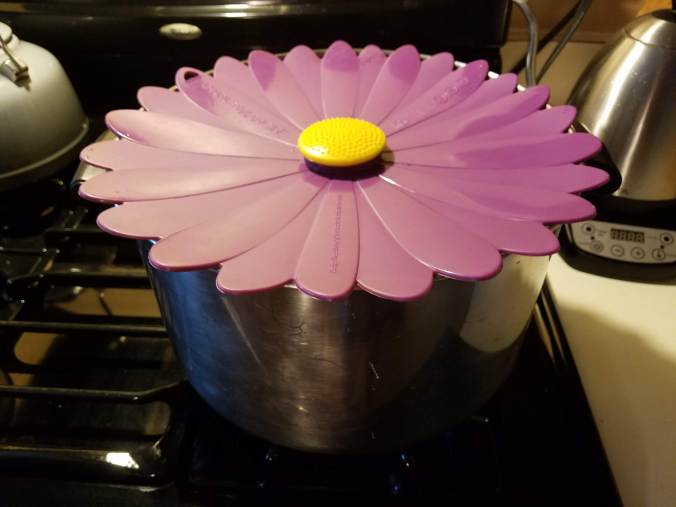
You should not need any other liquid. The tomatoes have their own juice. Leave the heat on low and cover. I love my silicone lids! This one is particularly nice because the edges let a little steam out.

covered.jpg

Peek at it now and then. Oops, that wasn’t EXACT. Peek after 10-15 minutes. It should start to cook down, first like this:

pot2.jpg

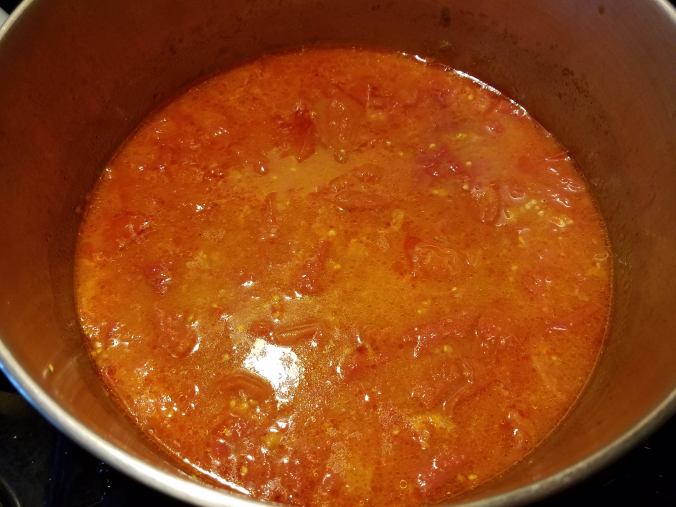
A good stir would be good at this point. Then let it cook some more (10-15 minutes more? doing my best to be EXACT here, really I am!!) until it looks like this:

pot1.jpg

When it looks like this, give it another good stir and turn off the heat. I let it cool for a while, say half an hour or even an hour, while I do something else. You can think of something else to do.

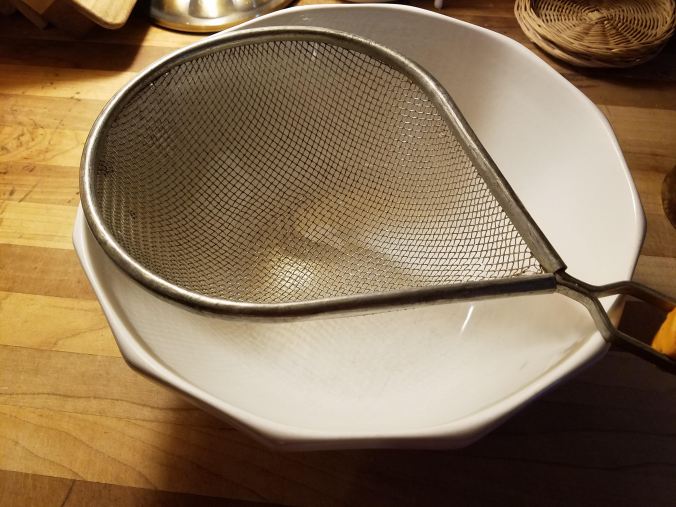
The next step is separating soup from skin and seeds. A strainer works well. This is my set-up.

strainer in bowl.jpg

The holes in my strainer are not overly small meaning two things: One, the soup will go through easily, which is good, and two, some seeds will get through, which may or may not be ok with you. It’s ok with me, but I am one of those people who likes raspberry jam with the seeds still in it, so decide for yourself. Some seeds, or use a strainer with smaller holes and do a little more work.

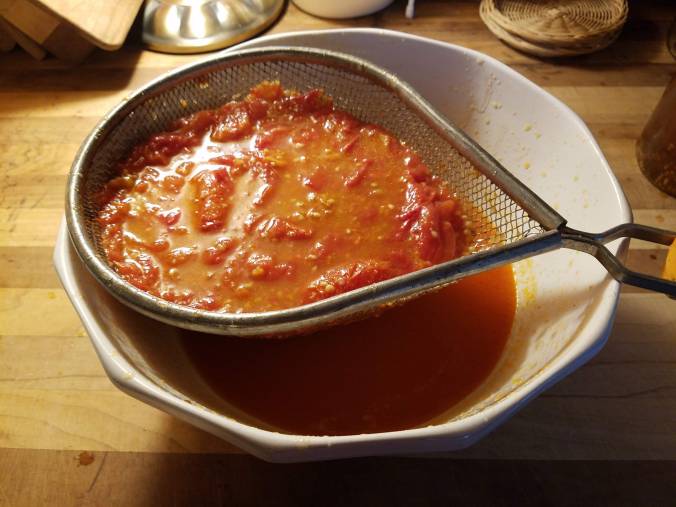
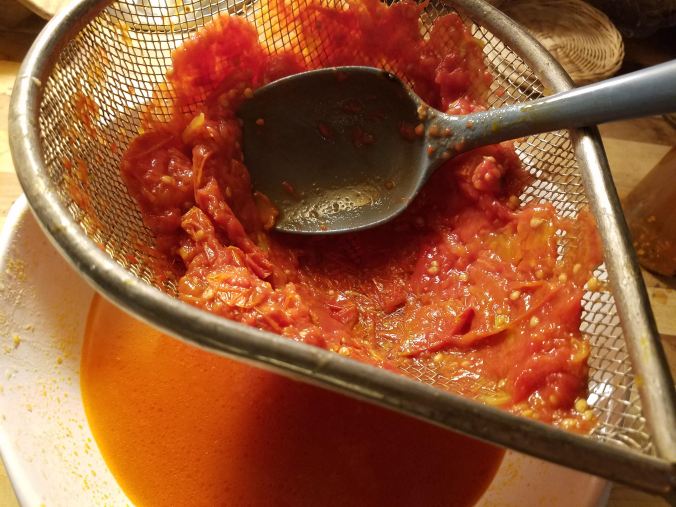
The work is in the pushing through. First, use a ladle to put enough of the tomato mixture in the strainer to almost fill it, like this:

seeds4.jpg

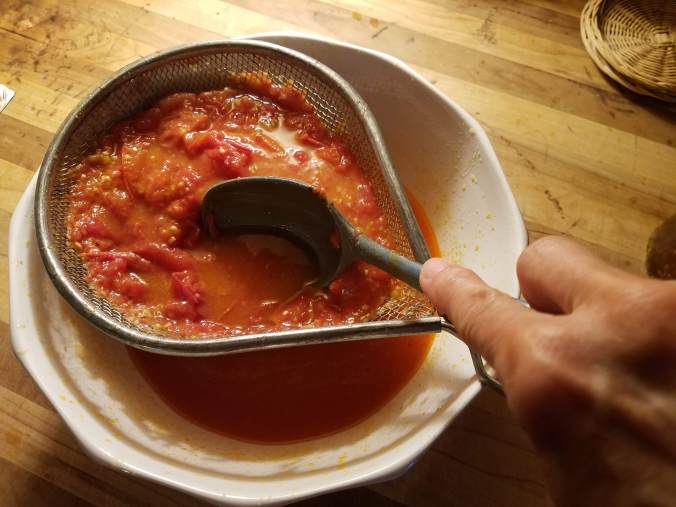
You see that some went through already. Your job is to get the rest of the soup to go through but leave the seeds (most of them) and the skins in the strainer. With a large spoon, stir it up and some more soup will go through.

seeds3.jpg

Then with the back of the spoon, push against the side of the strainer.

seeds2.jpg

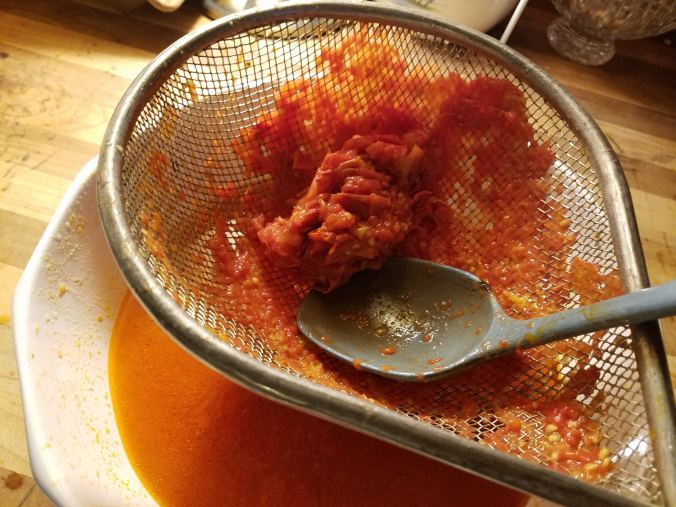
More and more soup goes through, and more and more seeds and skins don’t, until it looks like this:

seeds1.jpg

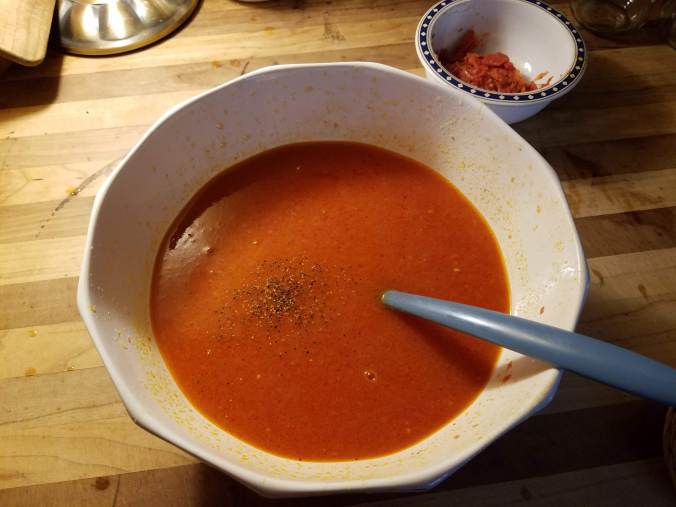
Use your spoon to scrape off – into the soup – any bits that are stuck to the bottom of the strainer. Set the strainer aside. Now depending on how big your bowl is, you have two choices. Either remove the seeds and skins to a separate bowl (and later feed it to the chickens) and start over with putting the rest of what’s in the pot through the strainer OR season what’s in the bowl with salt and pepper, transfer it your freezer containers and then put the rest through the strainer.

seasoning.jpg

This is the first half of my soup. I added the salt and pepper (to taste – I can’t be more EXACT about that), stirred it up, then transferred it to old quart-size yogurt containers which work beautifully for freezing this or any soup. I then pushed the second half through, and seasoned it just the same (or about the same because, you know, seasoning to taste is not an EXACT science 😊).

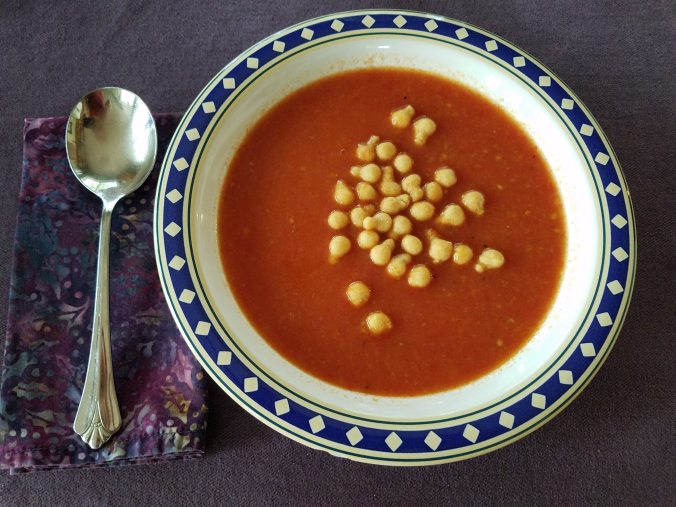
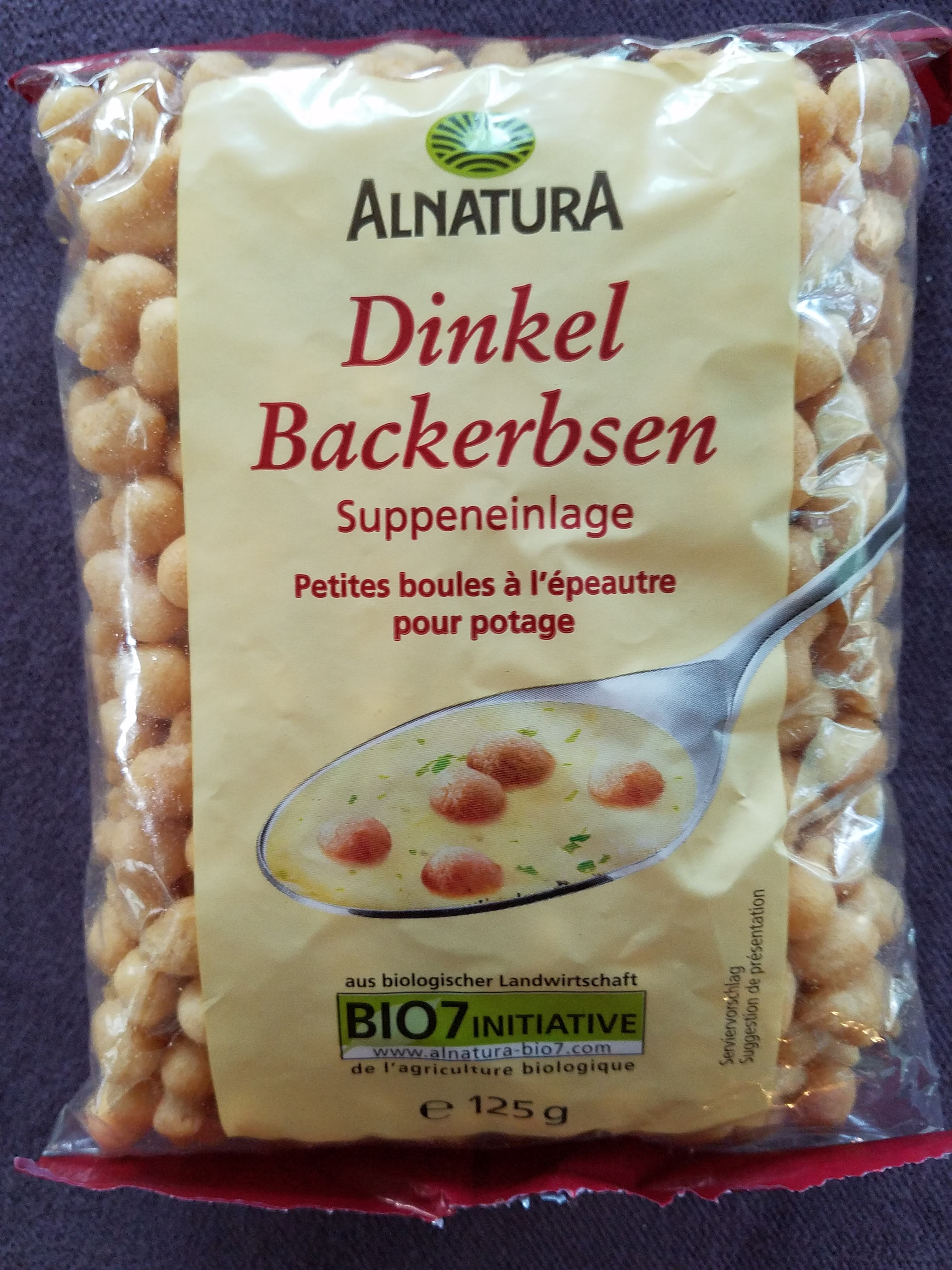
See if you can put it away without preparing a bowl for yourself. I’ve topped mine with Backerbsen, a German specialty I discovered years ago. This past April, my friend Anett brought me some when she came from Karlsruhe to visit. (If you want to try them, you can get them on amazon — maybe not the brand below, but Leimer is a good brand too.) The translation is “baked peas” but they are just perfect little croutons for tomato soup. Oh yum!

in bowl.jpg

backerbsen.jpg


Passing This Way

When you are in someone else’s car, you listen to whatever music they have going. It’s great to let someone else do the choosing sometimes. Not being musically inclined except for liking to listen to it and sometimes sing along, I am continually astounded at the incredible talent and creativity of musicians. It’s amazing to me how they manage to stir up feelings and longings and memories and hopes from deep within you. And they do it in a way that is soooo pleasant!

Among the many songs I heard in the past few weeks, two struck me and have played over and over again in my head (parts of them anyway). From the Notting Hill soundtrack is Elvis Costello’s “She” (https://www.youtube.com/watch?v=Ttj0Kd6BWQU). It’s one of those songs that builds on itself as it goes along, with the strength of his voice adding increasingly more weight to the words*. This song reminds me that this kind of love – this deep, abiding, heartfelt love – is real, even if it is rare, even if most people don’t ever find the words to express what’s in their hearts.

A few days ago I heard Seals & Croft sing “We May Never Pass This Way Again” (https://www.youtube.com/watch?v=Vd6zYQPCgsc) and that one hit me hard. Here’s why.

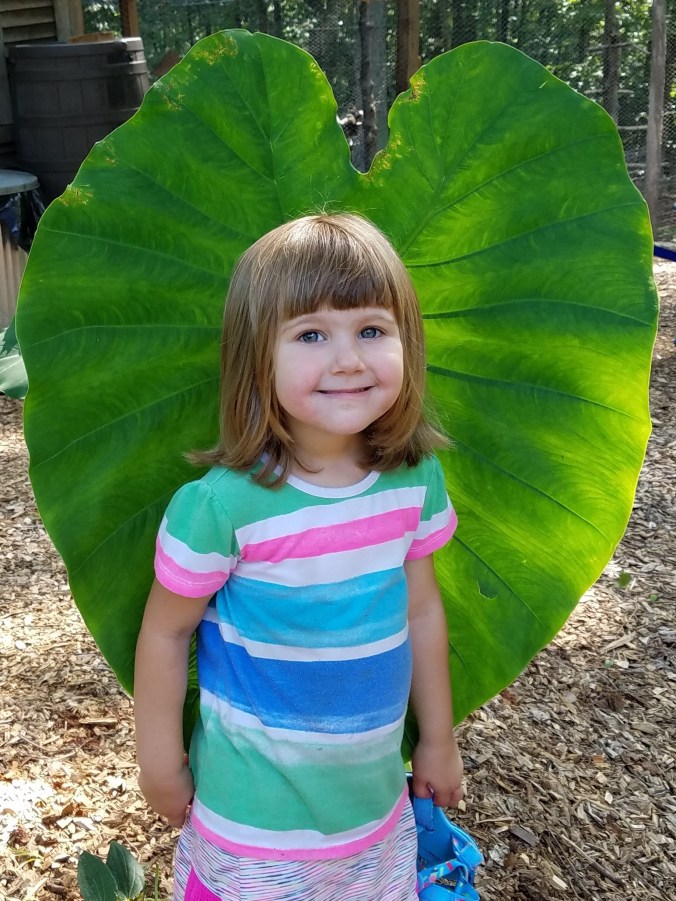
I asked Eppie to stand in front of the elephant ear so that I could record how big it is in relation to how big she is. These plants just keep getting bigger and bigger. But as she stood in front of it, the leaves of the plant looked like angel wings to me, with the sun shining behind and through them and her sweet face radiating all that is good and fresh and wholesome. The photo captures a moment, as all our photos do, yet we know as we look at the photo that the moment is past. Less than a week later, the moment is past.

eppie elephant ear (2).jpg

When I heard the song, I thought: It’s not We May Never Pass This Way Again, it’s We Will Never Pass This Way Again. I hope that face looking up at me will look up at me again many times in the future (and I will cherish it just the same), but never again will it be Eppie’s just-turned-four face. She’s a little angel in this picture. She’ll be a bigger angel next time.

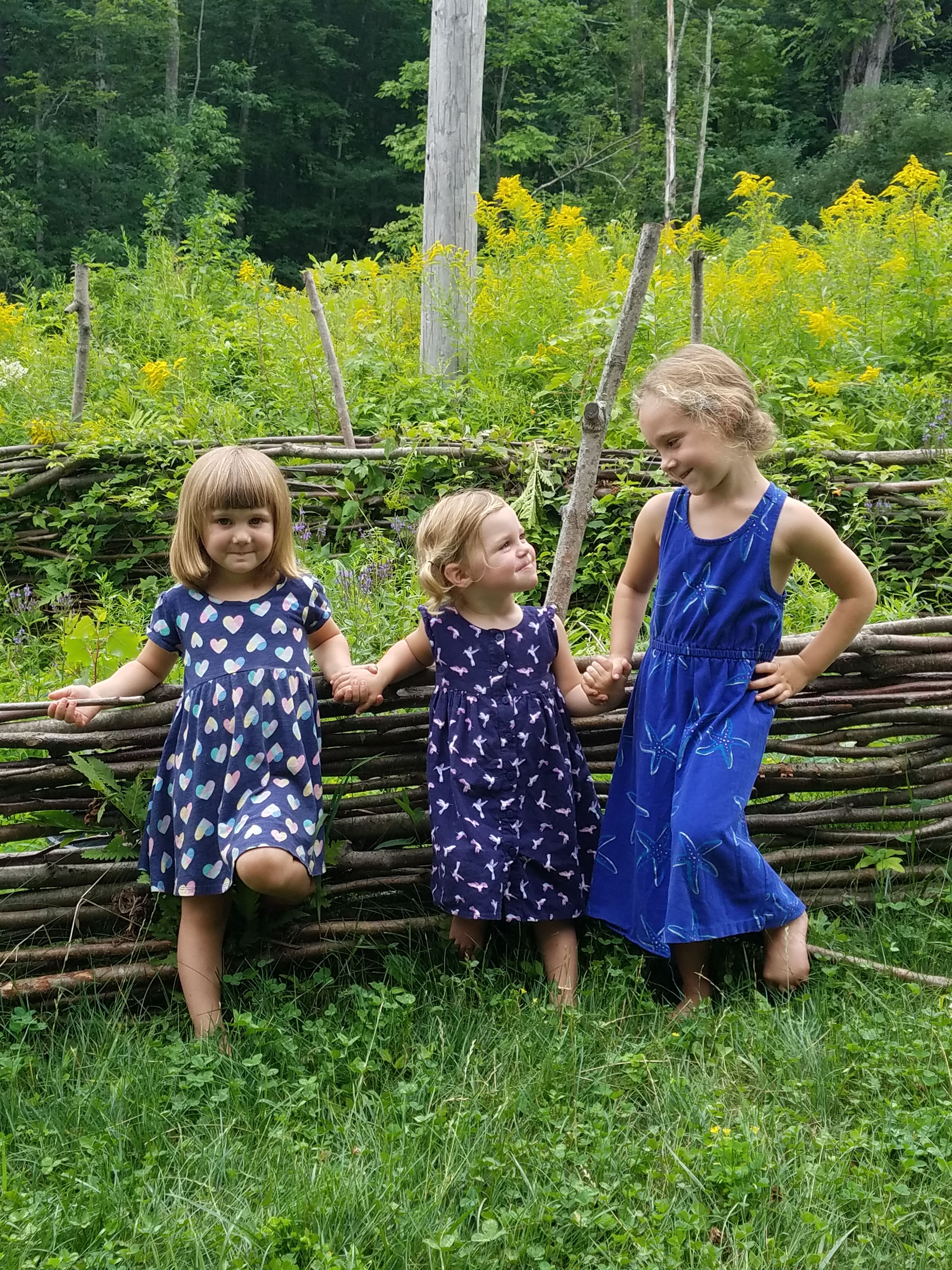
My son Bradley said to me recently that the harshest reality of adult life is how fast time goes. His own daughter Piper is now two and another (P2, he calls her!) is coming soon. How is this possible?! Here is Piper between Eppie and Rise during my visit to Vermont a couple weeks ago.

Eppie Piper Rise 1.jpg


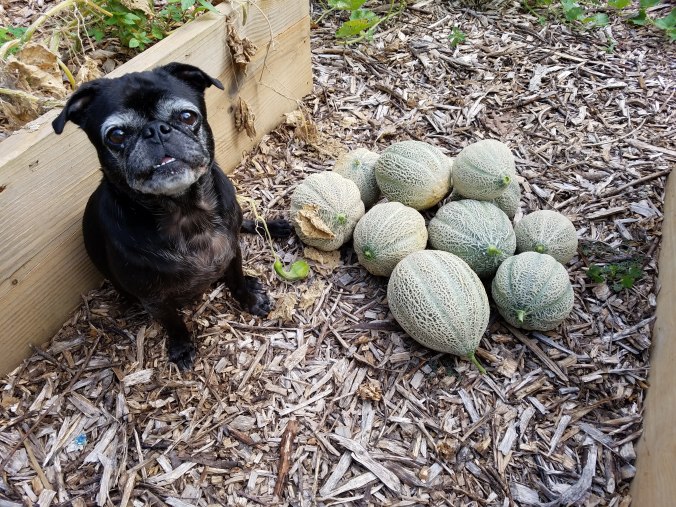
Precious moments, these are. Precious little ones. Every now and then, or as often as you wish, it’s good to think about what you consider precious. Maybe the voice or touch of someone you love, or the way they say your name. Maybe the view you see when the sun rises in the morning. Maybe a person you have contact with every day who is remarkable without knowing it. Maybe your good health (or the aspects of your health that are still good!). Maybe the music that uplifts you. Maybe the bounty of your garden – these are the cantaloupes I harvested today from mine. Maybe the funny face of a little dog who has found a special place in your heart!

coco cantaloupes.jpg


My neighbor Jennifer asked Eppie the other day if she missed her parents. Eppie said, “When I am with Oma, I miss my mom and dad. When I am with my mom and dad, I miss Oma. I wish I could be with them both.” For my ears, those were the most perfect words she could have said in reply.

It’s a rather reflective day for me, perhaps you can tell. My darling granddaughters and I had two and a half weeks together, starting at their home in Vermont and ending at my home in Virginia – marvelous, precious weeks. But it’s the middle of August and they will be going to kindergarten and preschool very soon. As I think about how we will never pass this way again, I am less sad because of the certainty that we will pass another way someday (someday soon I hope!), and it will be equally wonderful to walk through those days together.


*She (lyrics)

She may be the face I can’t forget
The trace of pleasure or regret
May be my treasure or the price I have to pay
She may be the song that summer sings
May be the chill that autumn brings
May be a hundred different things
Within the measure of a day

She may be the beauty or the beast
May be the famine or the feast
May turn each day into a Heaven or a Hell
She may be the mirror of my dreams
A smile reflected in a stream
She may not be what she may seem
Inside her shell

She, who always seems so happy in a crowd
Whose eyes can be so private and so proud
No one’s allowed to see them when they cry
She may be the love that cannot hope to last
May come to me from shadows in the past
That I remember ’till the day I die

She maybe the reason I survive
The why and wherefore I’m alive
The one I’ll care for through the rough in many years*

Me, I’ll take her laughter her tears
And make them all my souvenirs
And where she goes I’ve got to be
The meaning of my life is
She, she
Oh, she


*Somehow I always thought this was “the rough and ready years” (“rough in many years” doesn’t make any sense to me!).

Fun with Names

People can tell you that they love the sound of waves crashing on the shore or birds singing in the trees, but common sense tells you (and studies have shown) that the sound people love more than any other is the sound of their own name. “How can I help you, Mr. Jones?” is so different than “How can I help you?”

When I was directing the training program at a high-end resort, we had a set of “behavioral standards” that helped staff to know, in general, the expectations for their interactions with guests. These were not the technical directives such as the wait staff offering to refill the guest’s coffee cup within three minutes of them finishing the cup they have or the housekeeping staff remaking the bed “tightly and attractively” during daily service. Behavioral standards were the basics like smiling, being polite and maintaining eye contact. Use the guest’s name, we told them. Do not underestimate the power of using someone’s name. Use it discreetly, but use it.

Using someone’s name builds good relations, makes people feel respected, shows attention to detail, is the ultimate personalization. There are good reasons why, when you sign in to a web page such as your email or credit card statement, you invariably see some form of “Hello, ______[your name]______” or “Welcome back, ______[your name]______.” These companies know the power of using your name and work hard to make it seem natural, as if you are being spoken to personally.

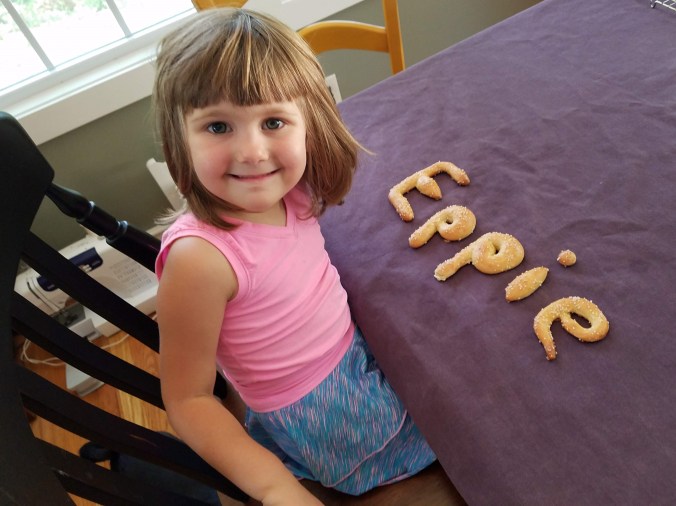
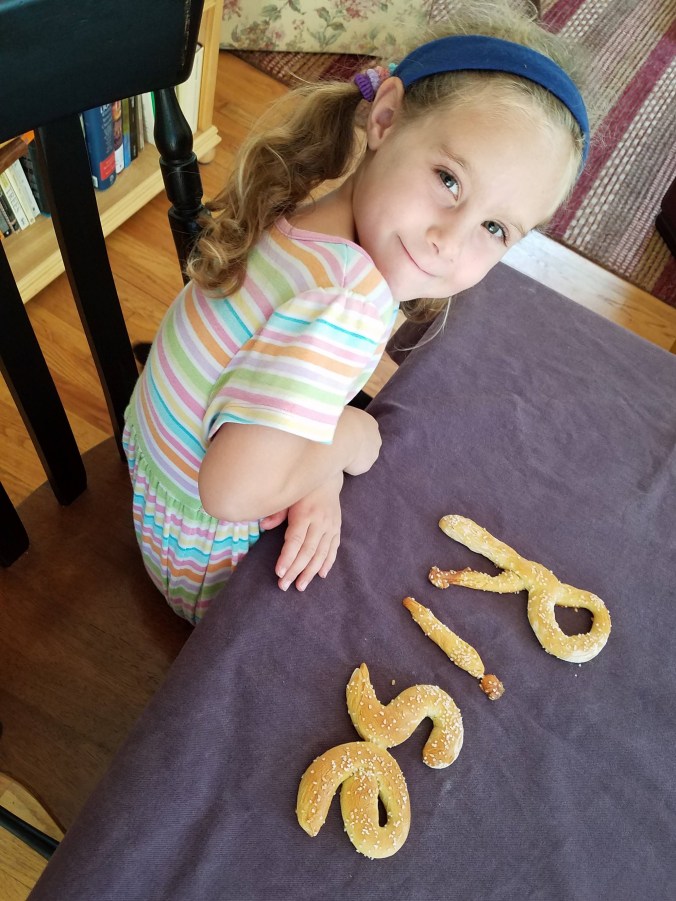
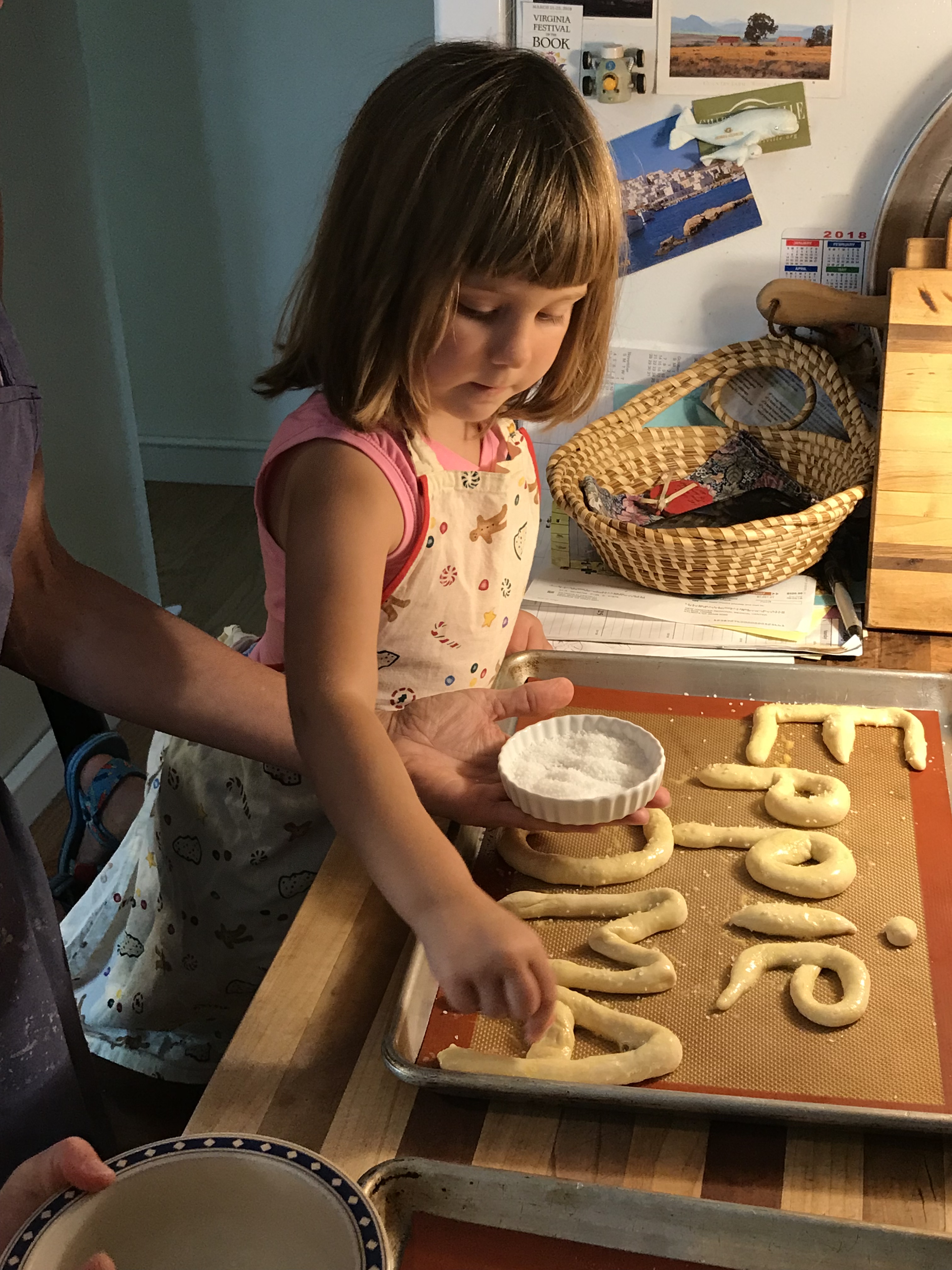
Plus it’s fun, especially if you have names like Eppie and Rise. And we should have fun wherever and whenever we can! This past week my granddaughters and I did something we have done twice before on previous visits (does this make it a tradition yet?). We made name pretzels! They may be only four and five, but they know their names!

eppie at the table (2).jpg

rise at the table (2).jpg

It’s rather tricky to guide a child in dough-rolling and take pictures at the same time, so many thanks to Fred, my friend who was visiting, for the great photos that follow.

For pizza dough and pretzels, I have used King Arthur Flour’s “Easiest Bread You’ll Ever Make” recipe for many years. I grant that all the practice I’ve had makes it easier for me than for someone who is new at it. Nonetheless, this is what I started with when I was new at it, and it has served me well. https://www.kingarthurflour.com/recipes/hearth-bread-recipe

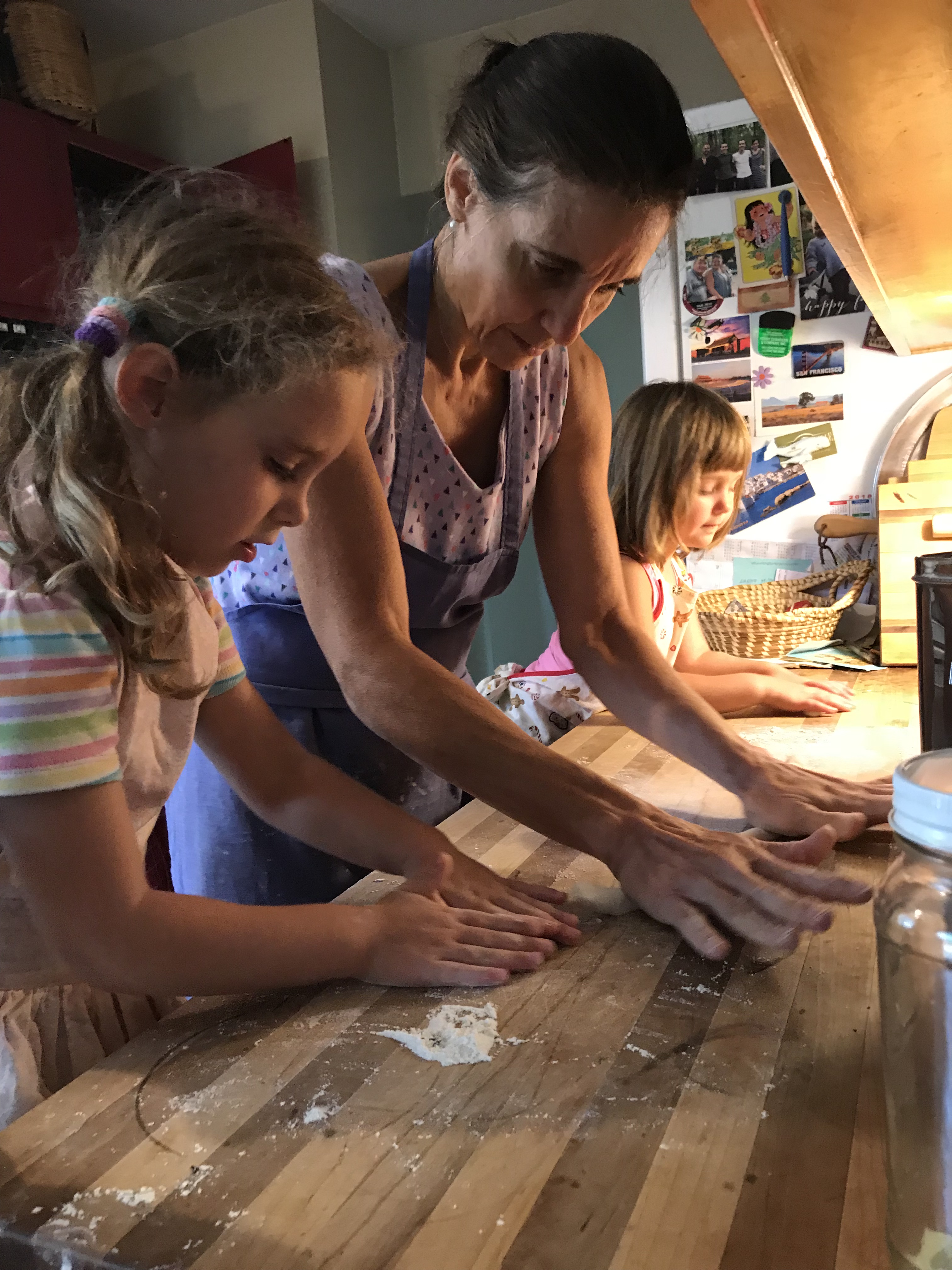
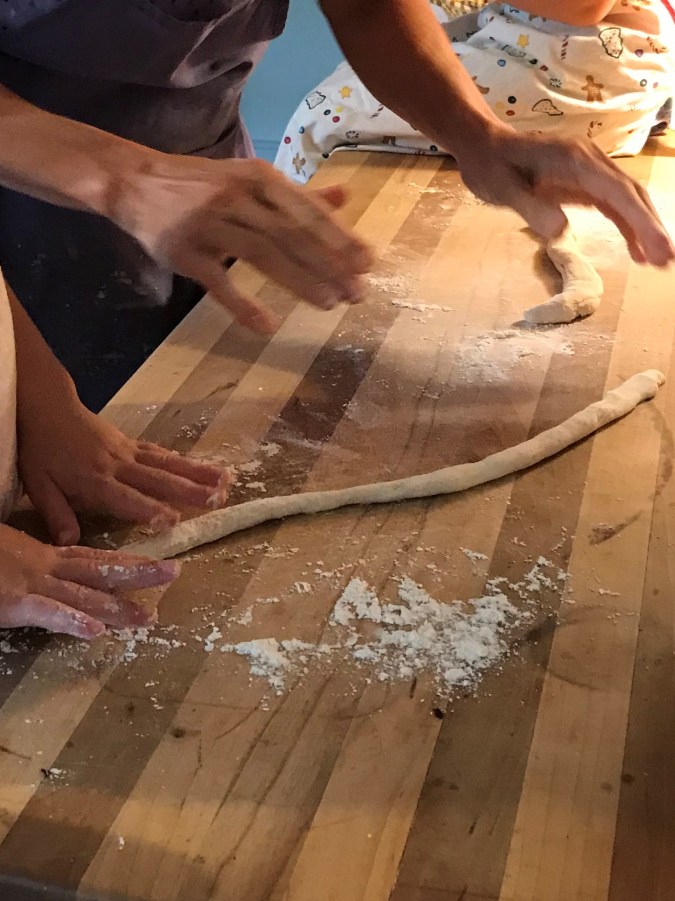
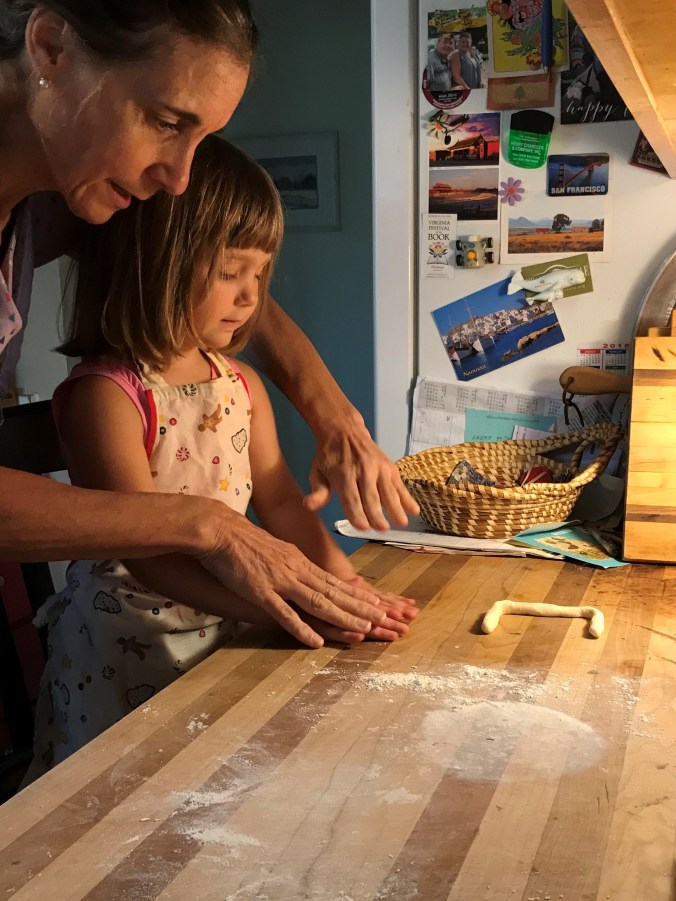
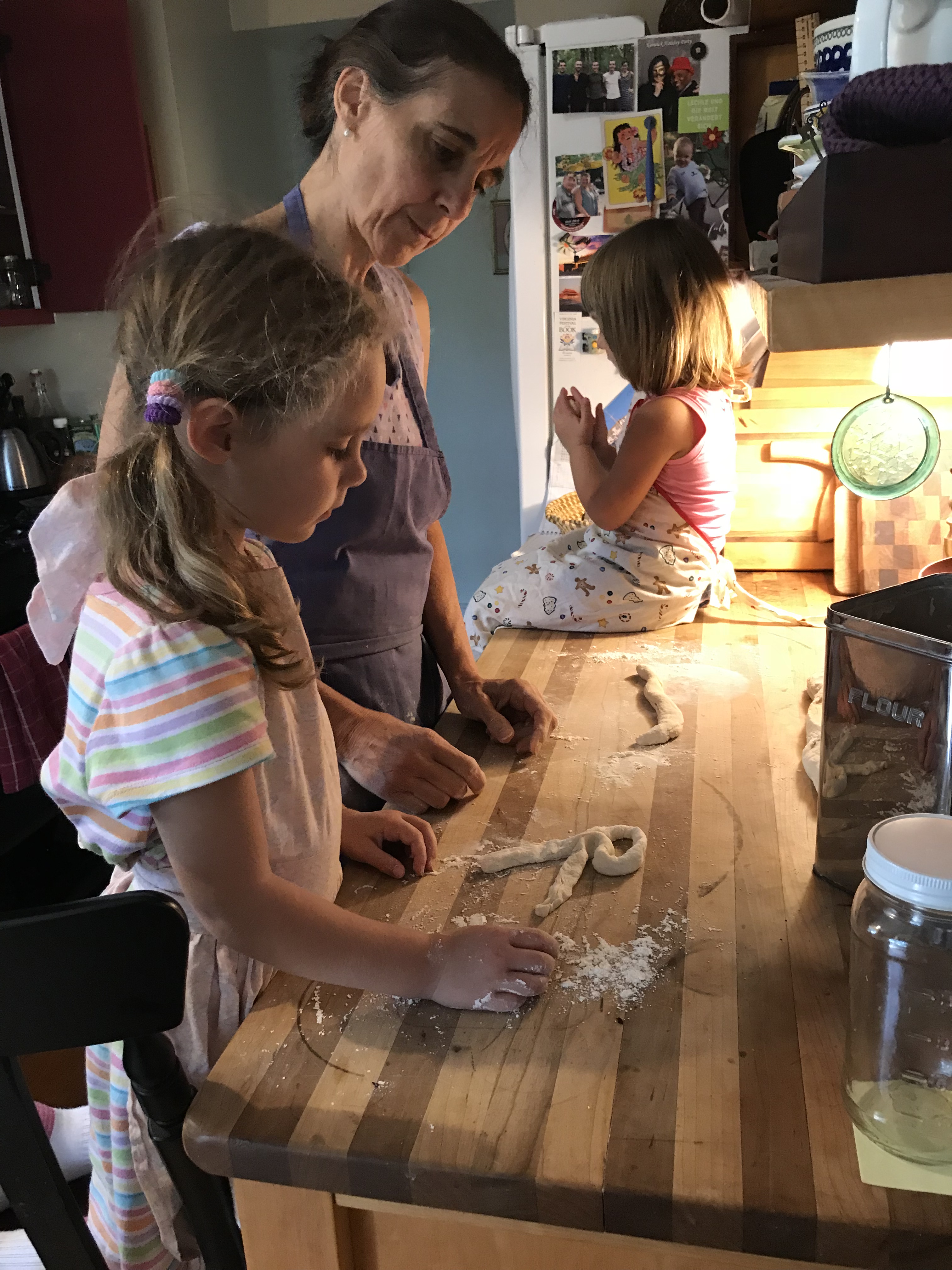
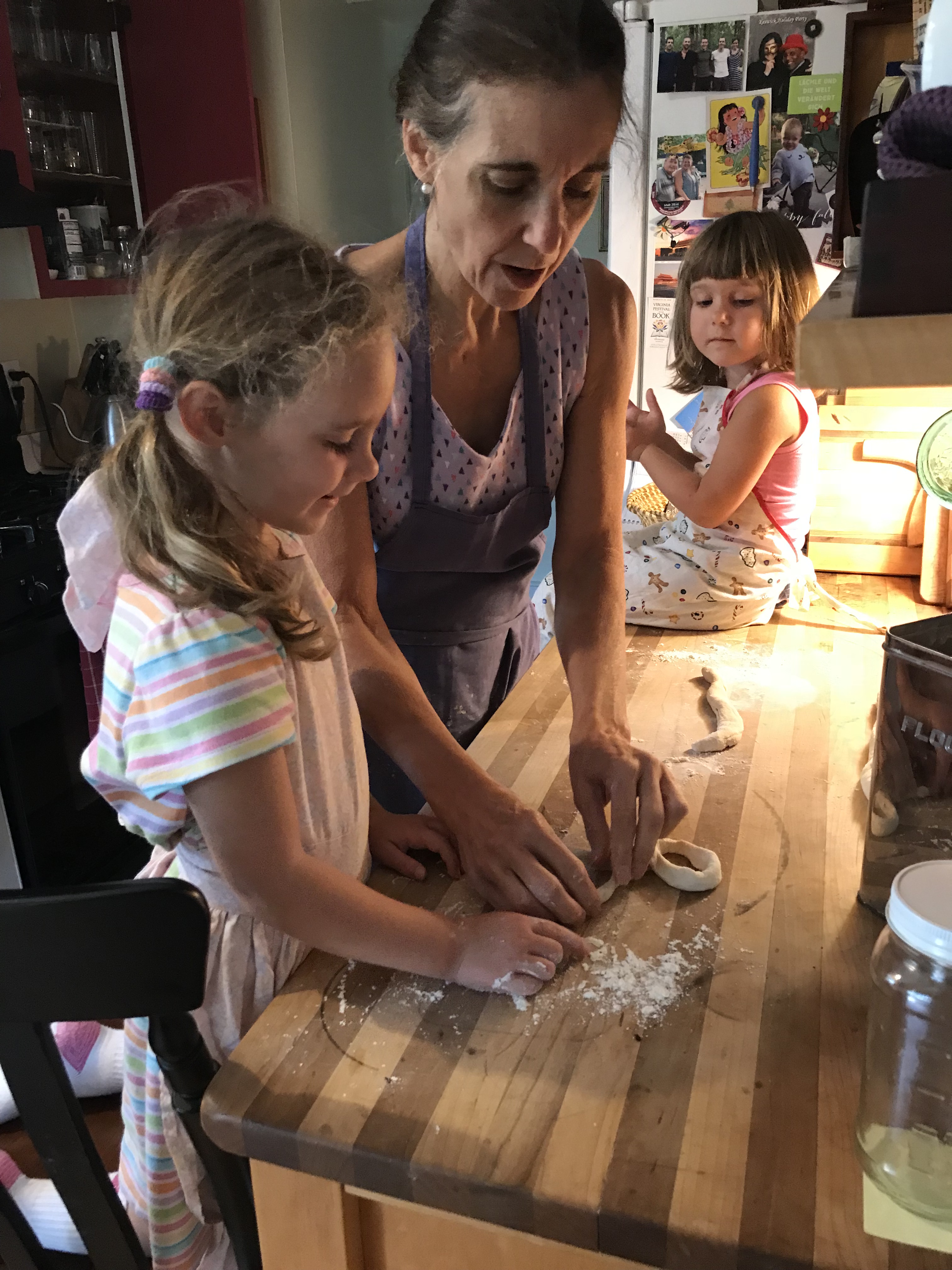
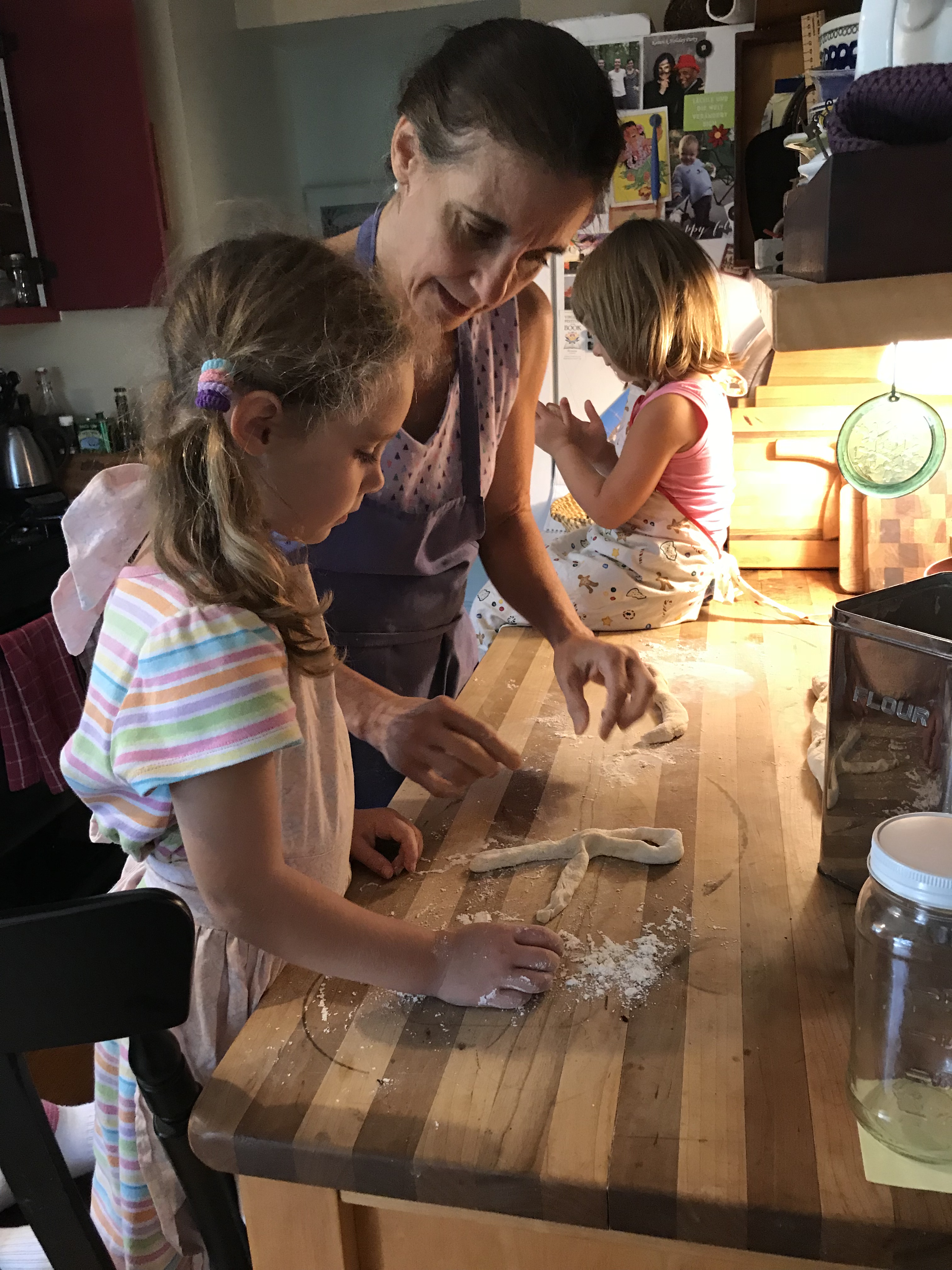
Once the girls have their aprons on and the dough is rising on the counter, it’s time for the real fun to begin. You pinch off a piece of dough and get a snake started, one snake at a time. Applying enough pressure to get the dough to stretch out lengthwise but not so much as to smoosh it is probably the trickiest part of this whole operation.

demonstrating rolling technique.JPG

But after a few of them, you get the idea.

snake (3).JPG

With a four-year-old and a five-year-old, this activity is about working with your hands to make something interesting and yummy. If it’s not perfect, it will be yummy anyway, but the fun for a child – think of it – writing your name using snakes of bread dough! And then getting to eat it!

Let’s start with E for Eppie (which is short for Eponine, in case you wondered).

starting the E (2).JPG

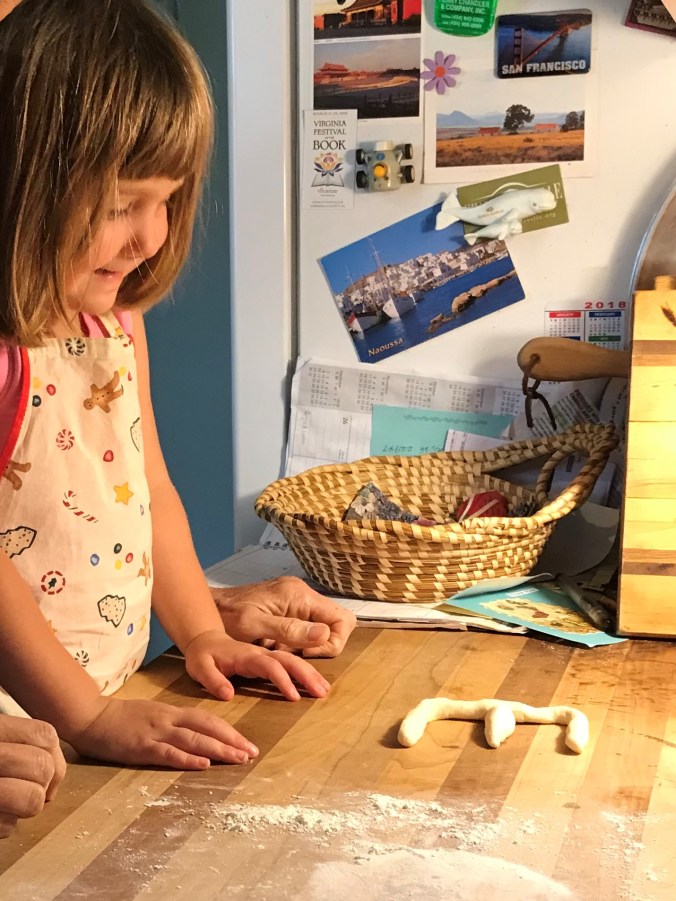
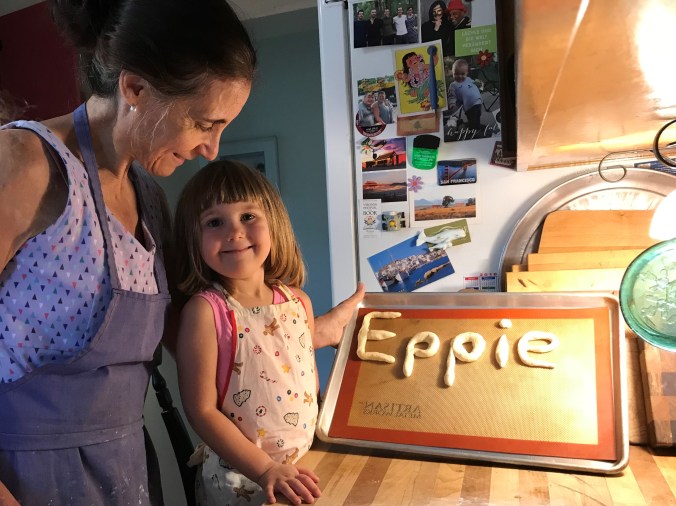
How proud and happy she was to see it take shape.

eppie admiring E (2).JPG

And R for Rise. Do we like it?

R.JPG

R is not so easy as E. A little tweak is in order.

R2.JPG

That’s better. She’s happy. I’m happy. Onward.

making R.JPG

I’m not sure this is strictly for kids either. Can you see yourself with your friends in your kitchen, party-time (!), each of you making your names? Eppie loved seeing hers!

eppie unbaked2 (2).JPG

By the way, those are silicone mats on my baking pans. I love them. Before I had these, I prepared the pans differently. I used to cut brown paper grocery bags to fit the pans and then greased the paper. This technique works beautifully but I prefer the mats. One less step.

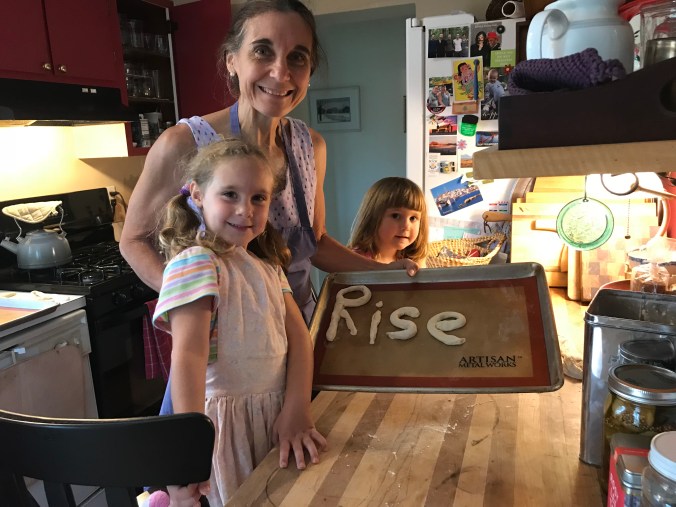
Rise was equally proud of her name.

Rise unbaked.JPG

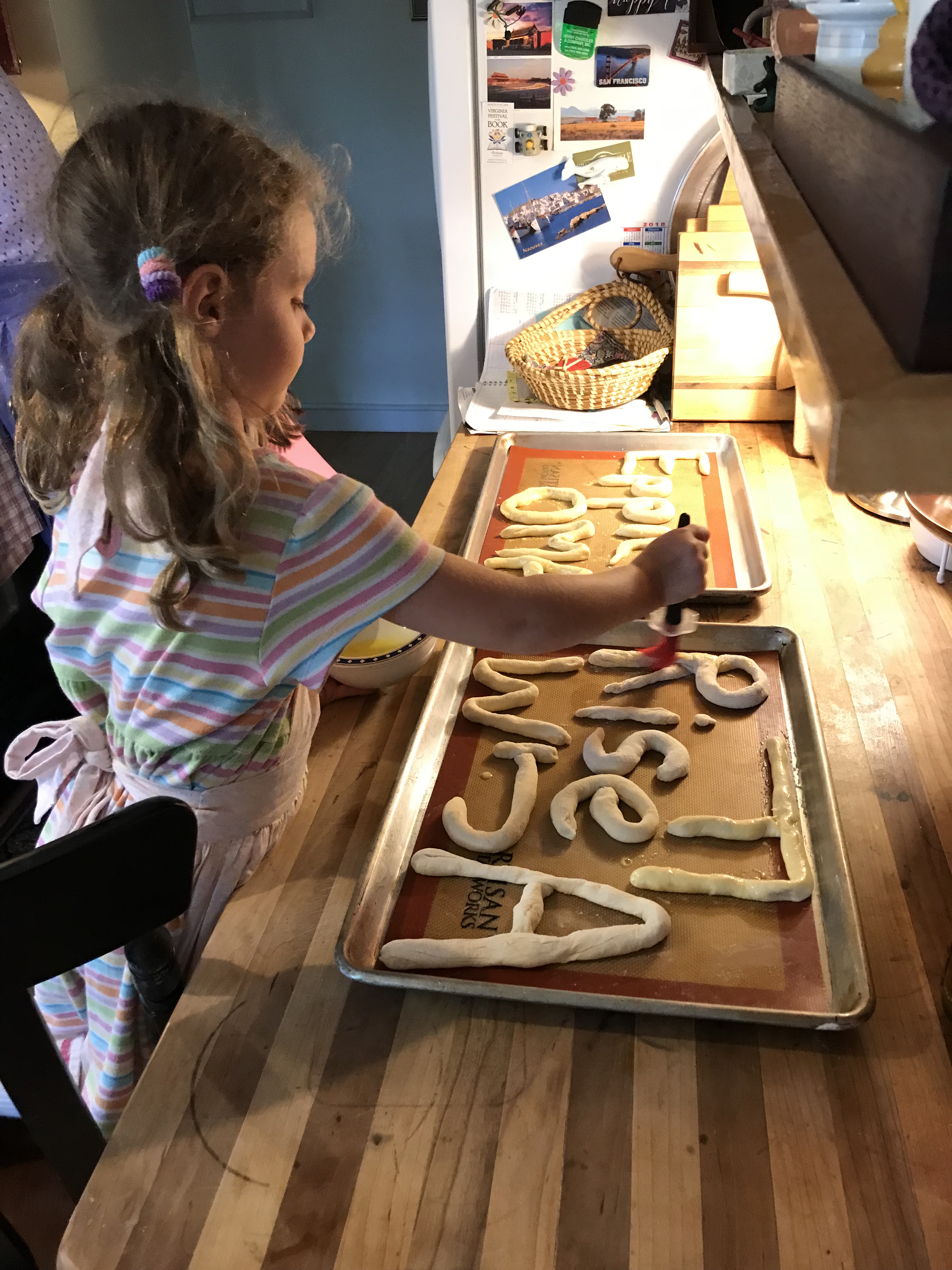
We also made OMA (for me, Oma), an F for Fred, and a J, A and W for Jennifer, Anna Lane and Will, our neighbors who were coming later to play. But before you bake them (at 400 degrees), you first have to paint beaten egg on them and then add salt. The painting is another artistic element for the girls to enjoy.

rise painting egg.JPG

When the time comes for adding salt, you can talk about how different people have different tastes, different preferences, even with something as simple as salt. Some like more, some like less. We put on as much as we wanted to, and in some cases more (oops) than we intended to, though their ability to distribute it carefully and evenly was quite remarkable. If you do put on too much, you can push it off later. We are using coarse salt, umpteen varieties of which are available to choose from.

eppie adding salt.JPG

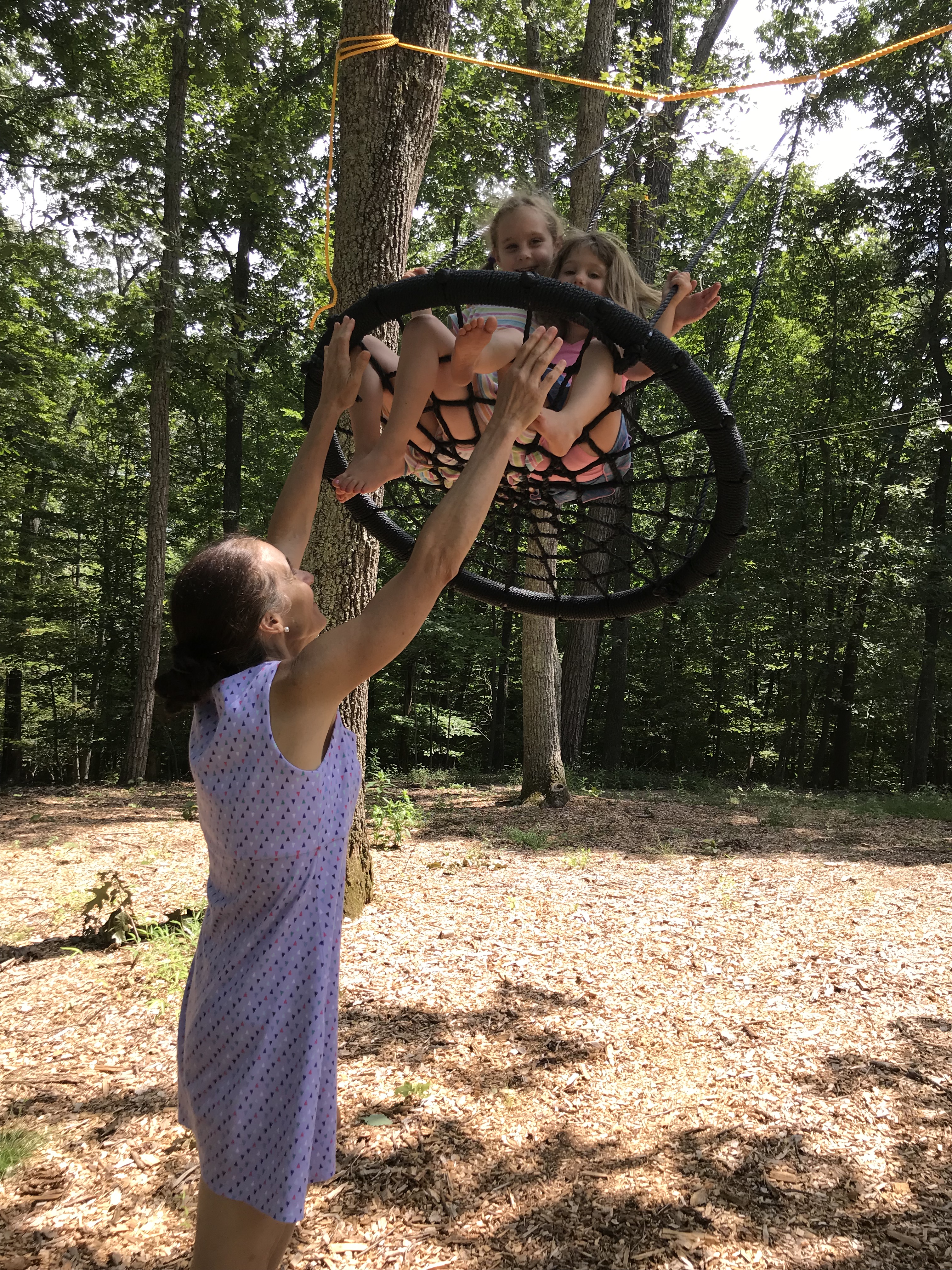
While waiting for them to bake, the new swing came in very handy. I don’t know about the kids in your life, but these kids LOVE to swing!

swing3.JPG

We didn’t read as many books together this time as we did in March – I wonder why!

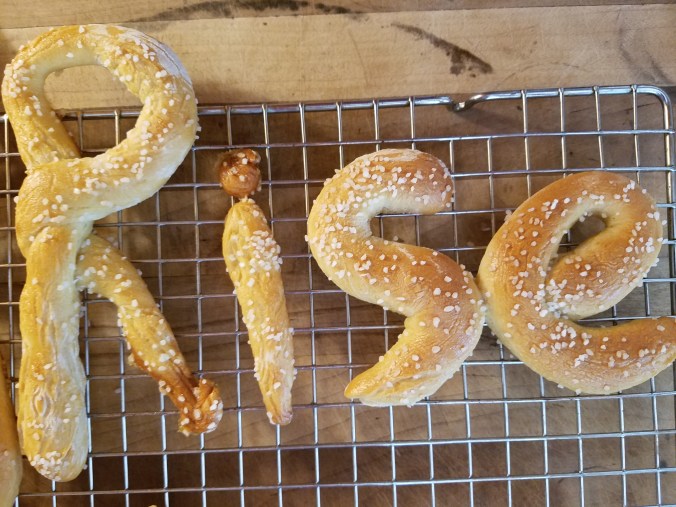
When the pretzels are good and browned, take the letters off the baking sheets to cool. Wire racks are perfect for this.

rise on cooling rack.jpg

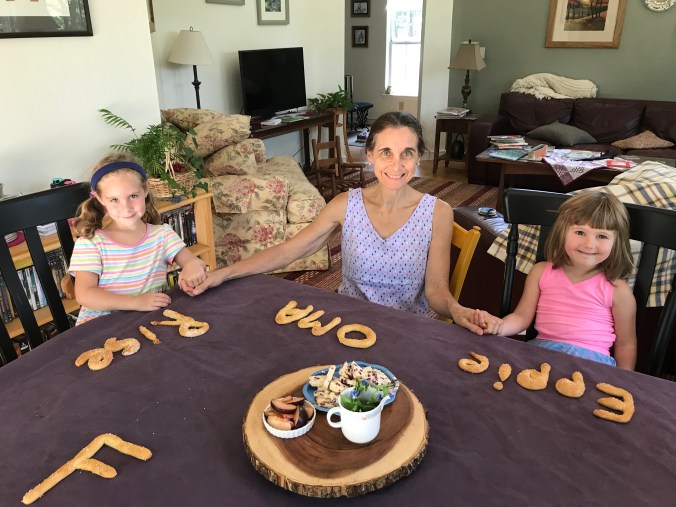
Add a plate of cheese (this one has dried cranberries in it) and a perfect plum or some other fruit cut up, and you have lunch! A very special lunch!

eppie rise oma at table.JPG

Corn Muffins at Their Best

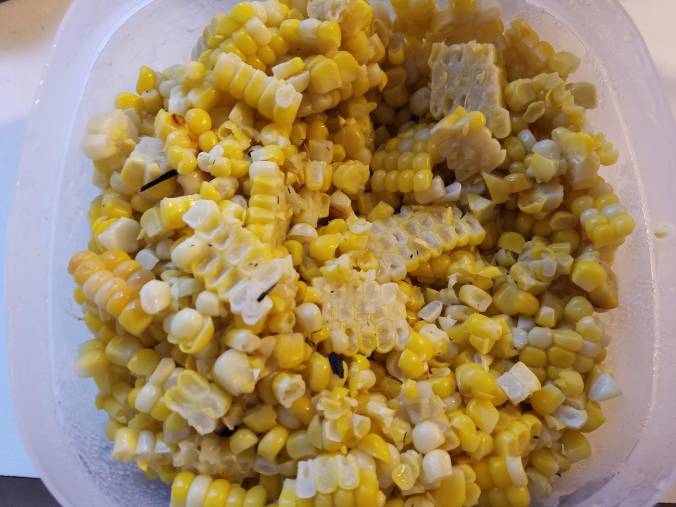
There are some foods I just don’t buy except at the height of their season. Corn on the cob is one of them. I read a great post by Shaun H. the other day about Grilled Sweetcorn (https://catchmeonthewater.com/2018/07/21/grilled-sweetcorn/) and then saw the best looking fresh corn at Yoder’s (Madison, Va) the next day. Yes, need to try that. We got a dozen ears, followed his instructions for removing the silk, soaking the ears and grilling till slightly blackened, and oh how heavenly it was. Thank you, Shaun. The leftover ears I shaved clean with a sharp knife, then put the kernels in the fridge for another day, not having any idea what would become of them.

corn

I love a new day and the ideas it brings. At the moment I have two little granddaughters in the house, Rise and Eppie, ages 5 and 4. “What shall we have for breakfast, girls?” In that moment I remembered three things: the fresh corn in the fridge, my wonderful recipe for Johnnycake (a.k.a. Cornbread) and another recipe I got from an Amish cookbook for “Unconventional Cornbread.”

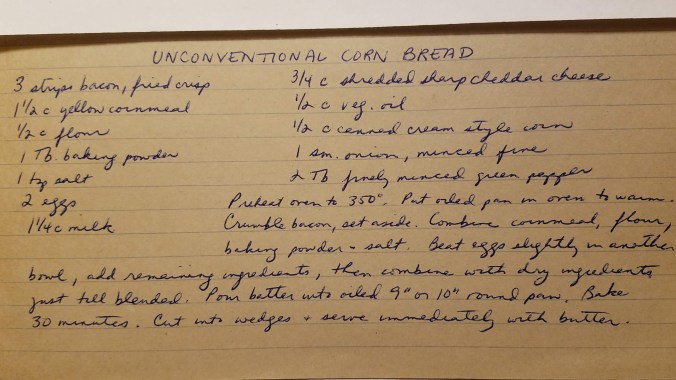
I vaguely remembered that the “unconventional cornbread” recipe included corn as well as cornmeal. It had been a long time since I looked at it,* but I recall it had other things in it, bacon even – undoubtedly good, but more than I wanted to bother with at the moment.

Keep it simple. How about just a handful of the fresh corn in the cornbread? Use the tried (a hundred times) and true cornbread recipe and add the grilled kernels.

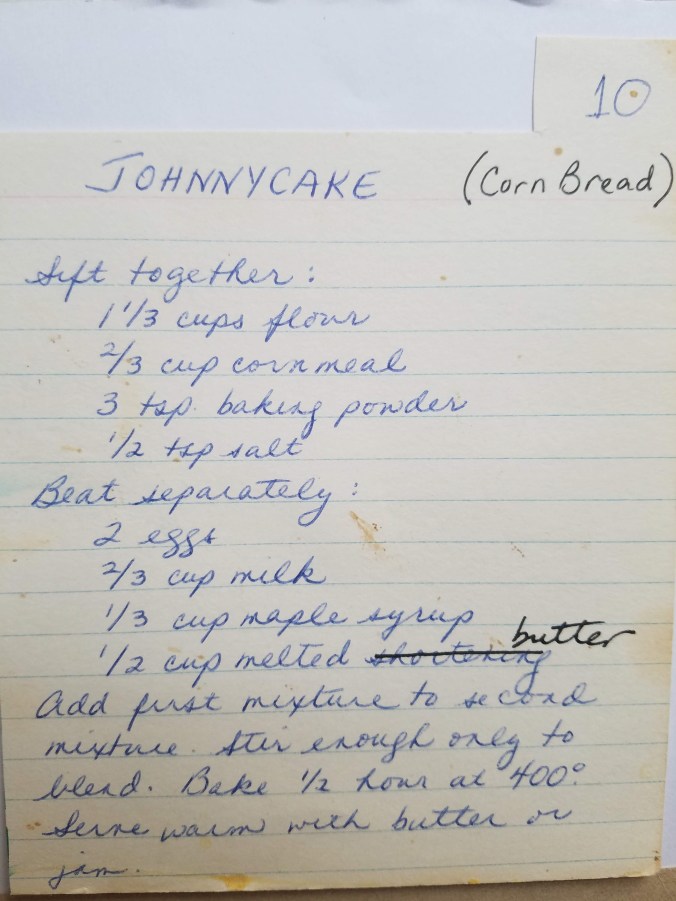
You can always tell which of my recipes date from way back. They are the ones that include shortening crossed out and replaced by butter. Early on, I just copied recipes from wherever I found them and generally followed them to the letter. But it didn’t take me long to discover that butter is far superior to shortening in all but a few applications, so I made corrections. Rule of thumb: Err on the side of butter.

johnnycake (2).jpg

This recipe is great for two reasons: 1. It’s simple and comes out great every time and 2. the maple syrup. I lived in Vermont for 22 years so I got used to the real stuff. If at all possible, use the real stuff. It is so much better there is hardly a comparison with the product called pancake syrup.

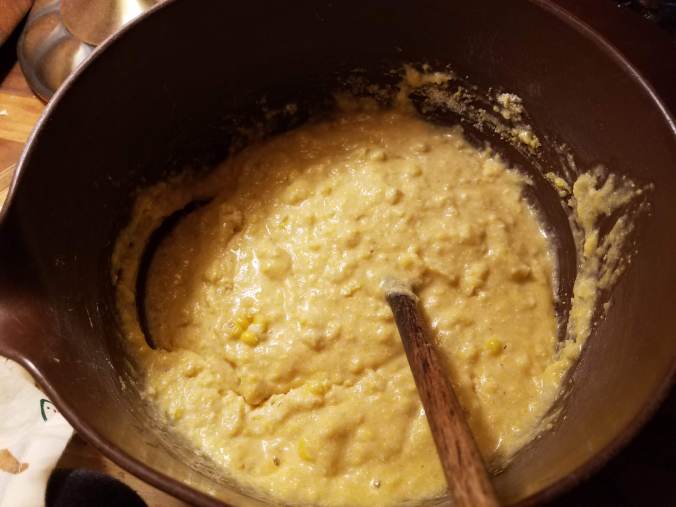
Put the dry ingredients in a bowl and stir them up. A wooden spoon works great. I don’t beat the rest separately, but feel free to follow the recipe. I just mix the dry stuff, then break the eggs onto it, pour the milk and maple syrup onto it and start stirring as I add the melted butter. Stir only enough to blend. This is important. Lastly, if you have it (find a way to have it!), add some fresh corn recently grilled and shaved from the cobs. I think I added about half a cup, maybe ¾ cup. The batter them looked like this, kinda lumpy, just right.

batter

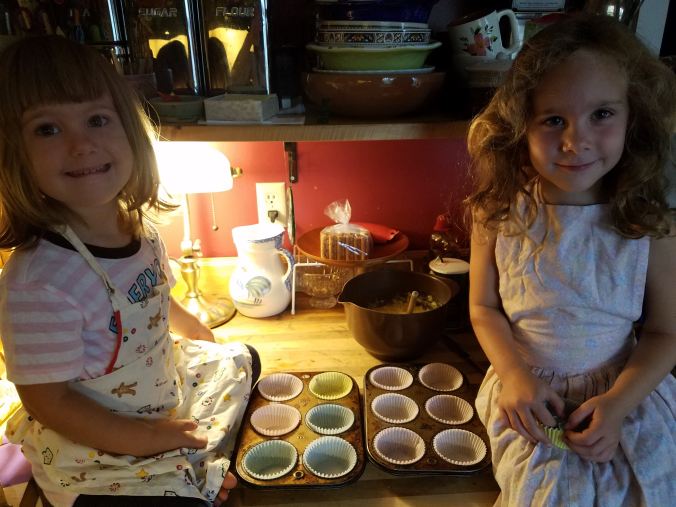
To make things easier (and fun) for the girls, we used paper muffin cups inside my tins. They loved wearing their aprons, helping to stir the batter and having the job of putting the papers in the tins.

paper muffin cups

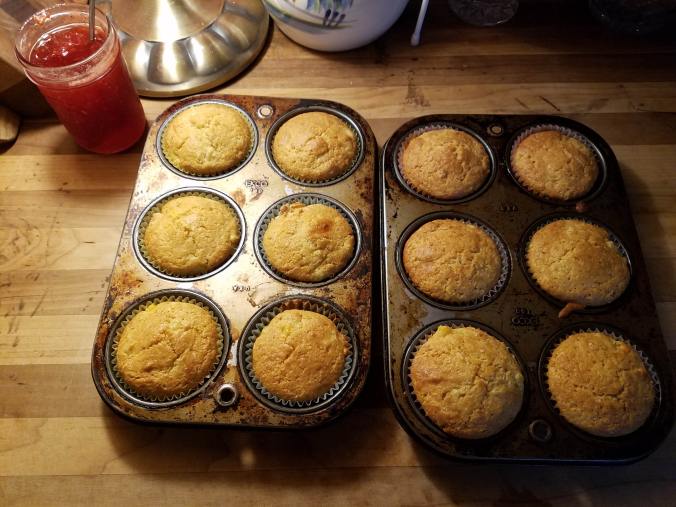
This amount of batter was perfect for twelve muffins, which baked to a golden brown and smelled soooo yummy.

muffins in tins

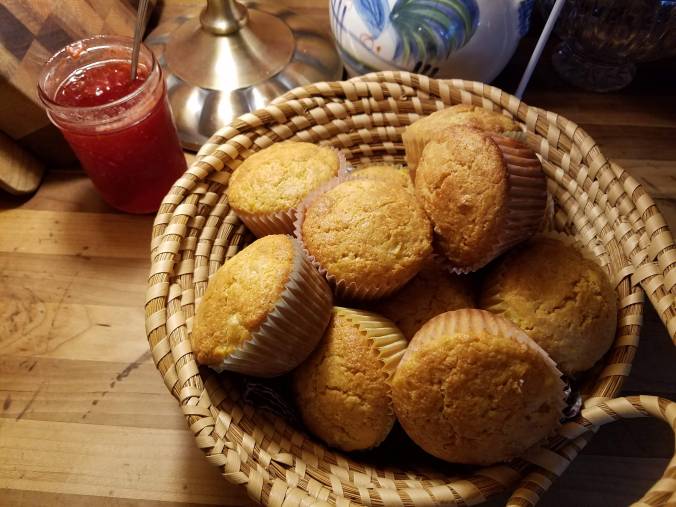
The jar to the left is my homemade strawberry jam, which in no way conflicted with the corn, in fact enhanced it. I also put honey and of course butter on the table. The muffins needed a basket for serving, and we were ready.

muffins in basket

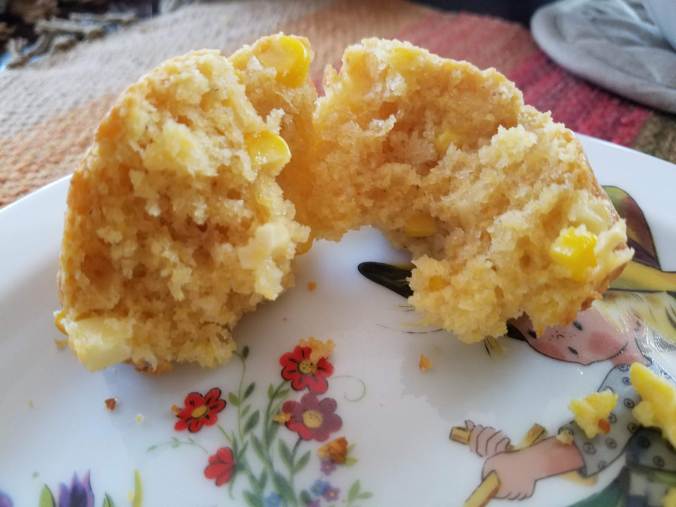
I tried to capture the steam wafting up from the hot muffin in this next photo – you might see it, but I don’t. I also know that a photo can’t capture the sweet scent, the waiting jam, our hungry bellies… It was almost 830am by the time we were sitting down, the preparation process taking slightly longer when two little girls are involved – not that I would trade this time with them for the world!

inside of muffin

I haven’t had a good corn muffin in a long time. These were both new for me – never added corn to that recipe before – and beyond good. Outstanding texture, perfect moisture. I’ll make them a time or two again before that stash in the fridge is gone, and then most likely I’ll wait till next year for a repeat. I don’t mind a bit having something so delicious only in its season.

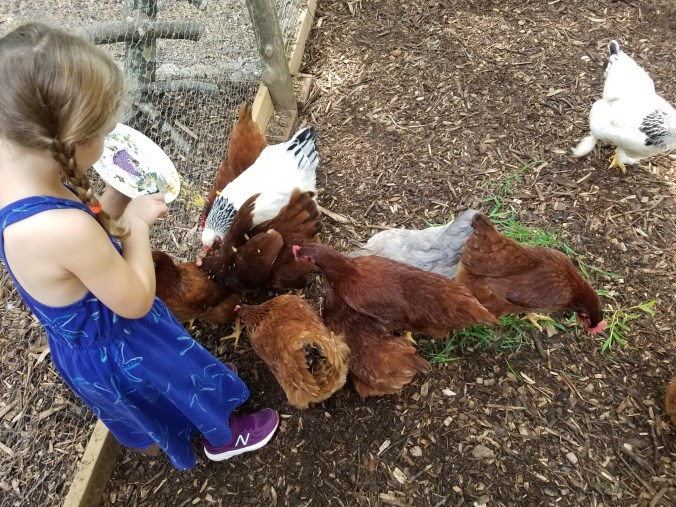
Naturally there were a few crumbs left on the plates when we were done, so guess who else got to enjoy some of this delicious breakfast: chickens! I think they like it too.

crumbs to hens 2

*In case you are interested in the “Unconventional Cornbread”

unconventional2 (2)


Here a Word, There a Word

At odd moments throughout the day or night, I play a word on the scrabble-type game on my phone called Wordfeud. On any given day I have six or seven games ongoing, which could mean I play six or seven words or could mean dozens. Playing is good for us! Maybe I’m just trying to justify an activity that some might deem pointless, but truly, I observe numerous benefits.

First and always first for me is the connection I maintain with other people. My most active opponent is Nancy. She and I live far away from each other, but she’s a wonderful person and I like her a lot and this is our thing. Through the consistency of play and occasional chats – even just to say “I never heard of that word!” or “Well done!” (to which she invariably and modestly replies “I had the right letters”) – we maintain a lovely friendship.

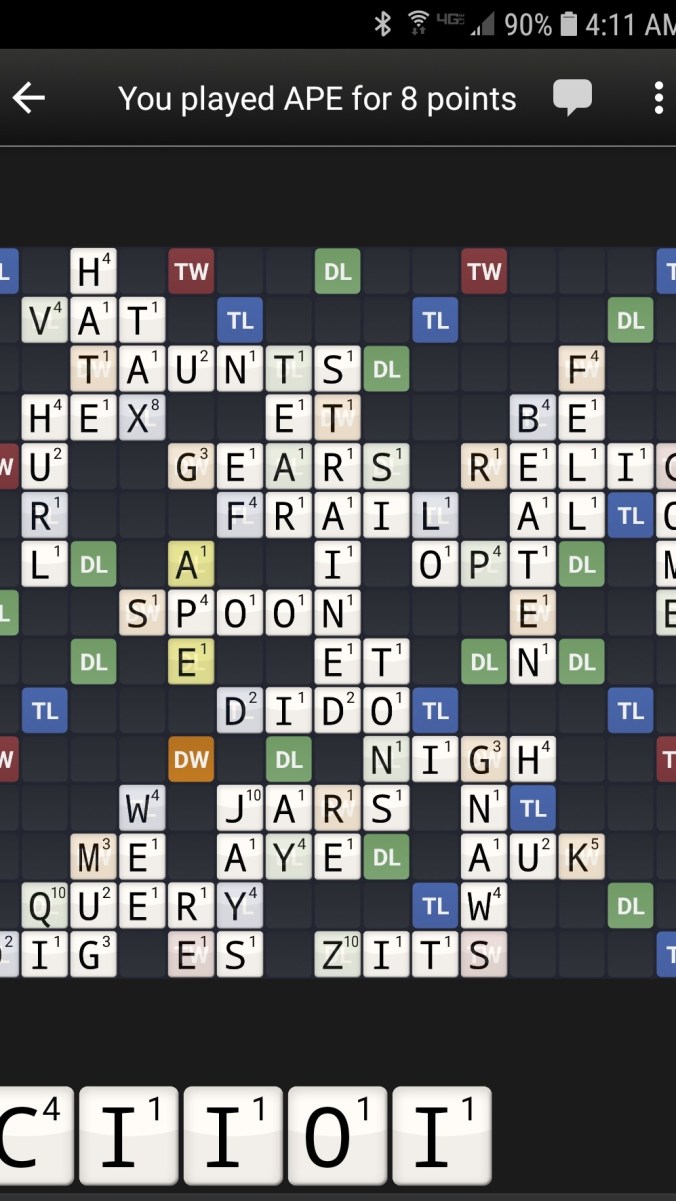
wordfeud1 (2).jpg

Secondly, playing a word takes me away from whatever else happens to be going on at the moment, or gives me a reason to redirect my thoughts. The momentary distraction somehow helps me do the thing I was doing before just a little better. Why? Maybe my brain chemistry is jumpy? Maybe the back and forth allows it to rest and regroup and carry on more efficiently overall? I have no idea. All I know is that I get things done despite this background activity.

Also, I enjoy the challenge. Do I remember how many U’s there are and count how many have already been used before I decide I need to find another way to play my late-game Q? No. Do I remember all the two-letter words that start with D? Is DE a word? DI? DU? No. How many times did I play QUO (as in status quo) and have it tell me “QUO is not in our dictionary”? (Why not? That one baffles me!) But even though I am not as competitive as some people, I still get a thrill from making high-scoring words so I keep trying to do it.

Mainly though, I enjoy the not-always-obvious parallels to everyday life. Here are ten that have occurred to me:

  1. You don’t always get what you want. Sometimes, no matter what you do, you just don’t have what it takes to make it work. If I had had a T in the game above, I could have made NIGHT out of NIGH, and used that to connect to the DW (Double Word) space that later held the K in AUK. I could sit there all day wishing I had a T, but I don’t. I could sit here all day wishing I had the money to make my vision of a new kitchen become a reality, but I don’t. No amount of wishing makes certain things happen. I simply don’t have the T or the money. Onward we go with what we have.
  2. You sometimes learn something new. What is AUK, you may ask? According to Wikipedia, “an awk or alcid is a bird of the family Alcidae in the order Charadriiformes. The alcid family includes the murres, guillemots, auklets, puffins, and murrelets.” Did I know this when, not having a T, I played that word? No. But it worked. Do I try to know what the words mean that are unknown to me but work? Sometimes. The main thing is that it’s new, and I am stretched intellectually and possibly enlightened about something I didn’t know before. John Holt’s book Learning All the Time articulated beautifully for me (at a time in my life when this truth was not self-evident) that we do not stop learning when we graduate from whatever school we attend. Ideally, we should be learning our whole lives long. ZINE is a word? FEATER? PIA? Apparently!
  3. Some of what we do is predictable and that’s not always bad. When I go first, I almost always start at the left and move right toward the center space (which you have to cover in the first move) or I start above that space and work down to it. I seldom start at the middle space and play a word down or to the right. Similarly, I almost always put milk and sugar in my earl grey tea. I almost always park my car in the same spot. Life is full of what’s unpredictable and challenging. Some elements being almost always the same is stabilizing and helpful.
  4. Sometimes something funny comes along and you get a smile. In my game this morning, Nancy played FLIRTY, which brought its own images to my mind (you have your images, I have mine!). BLAH brings to mind Frog and Toad Are Friends, a silly kids’ book by Arnold Lobel. (Frog ran up the path to Toad’s house. He knocked on the door. “Toad, Toad,” shouted Frog, “wake up. It is spring!” “Blah,” said a voice from inside the house….) In our everyday world, people say and do funny things randomly, and they make us smile. The more of this, the better, I say.
  5. Sometimes you get really lucky. The more of this, the better too! Having the right letters to make a word using all of your seven letters in one word happens occasionally (and results in a lot of points which of course could be pivotal in winning), and we applaud it and bask in it – until the next maddening collection of letters is at the bottom of our screen, waiting for use. The fact is, a good bit of life is the luck of the draw and in different ways we all have blessings. You got really good parents, or a fabulous teacher that the kids in the other class didn’t get, or you had a boss who believed in you and made career advancement possible, or someone couldn’t use those concert tickets and gave them to you for free! What I get (or got) is different than what you get or got, but we all have something someone else doesn’t. Take note of what you have that’s good. Don’t lose sight of it.
  6. You can’t argue with the authority. If the game says it’s not a word, it’s not a word, and you can’t play it. Some things are confusing. Why is JELLO a word? I would think it’s a proper noun like TUESDAY and therefore unacceptable. But it works in Wordfeud. Do I have the right to argue this? Will my protest matter? No. I have to deal with it whether I agree or not, whether it makes sense or not, whether I like it or not. Likewise, if the result of a given election (not that I have a particular one in mind!) is objectionable to you, you have to find a way to deal with it. If the county regulations require a permit for building a porch, you get one. If the street sign says One Way, you go that way. If a tennis ball hits the line during a game, it’s in. If you don’t water house plants, they die. Some things cannot be argued with.
  7. You don’t always see a way at first. I sometimes look at the possibilities and could play this word or that one and can’t make up my mind, or I don’t see anything good at all, and I just close it up. Not always, but sometimes I find that if I wait a bit, I see things in a way I didn’t see them before and all of a sudden I have a move to make. Where did that come from? I had rainwater washing into my chicken coop area making not only a wet mess but also an unhealthy environment for my chickens. I stared at it and stared at it. Then a berm came to mind. A retaining wall came to mind. The shovel came out, and the power tools and measuring devices, and now the rainwater washes around the coop instead of into it. Did I plan it that way from the start? No. Did I see the solution at first? No. But wait. Think on it some.
  8. Some people are just better. Whether they have better skill, better memory, better (consistently better!) luck, I don’t know, but my sons Lincoln and Samuel kill me almost every time. I don’t know how they do it. They rack up the points unbelievably almost every time! You’ve maybe heard that statistic about how if the underdog doesn’t win x-percentage of the time (with rats it might be 30%) they get too frustrated and don’t want to play anymore. It might also sometimes work in reverse where it’s not fun for the winner to always cream his opponent either. Nonetheless, isn’t it the same in life? Doesn’t it seem like some people get all the breaks? There are reasons for this, as there are reasons for Lincoln and Samuel’s domination in this game, but when the reasons are not apparent, it can be maddening.
  9. Unexpected (good) things happen sometimes. You’re behind by 85 points, you’re sure this game is going to become the next loss in your personal stats, and suddenly you have all the right letters for a killer word. Yes! (Or if you’re me it’s Oh dear! if I’m already ahead by a wide margin and don’t wish to demotivate or otherwise deflate my opponent.) The same in life. You can have a string of bad luck with bosses and then find yourself with a gem. You can have a pain in your leg and then happen upon a particular position or exercise that makes it – voila! – suddenly better! You can be too tired to take the pans of newly-made granola out of the oven when it’s done (before going to bed but after you’ve turned the oven off) and find that the delay made for a marvelous, perfect crunch (yes, I will post my granola recipe soon!). Ultimately we control so little. But random delightful surprises pepper our life with joy and fun. Bring it on!
  10. In the end, a lot of things don’t matter that much. If I win or lose this game, life goes on. If I play a word and then realize I could have played a better one, oh well, too late. If I don’t get my new kitchen, I’ll still be able to cook dinner in my old one. If I absentmindedly park in a handicapped spot and get a $180 ticket (bother!), I have to pay the fine. If I am out of milk and instead put just honey in my tea this morning, or nothing at all, it’s not the end of the world. This game helps me keep a good perspective.

All good reasons to keep playing, don’t you think?


A Giant Beanstalk and Treasure Found

I say Beanstalk but I mean Gourdstalk. Nobody thinks of Fee-Fi-Fo-Fum when they hear the word gourdstalk – if gourdstalk is even a word. But Beanstalk – this evokes giants and bravery and treasure. I’m glad for the reference because even if I didn’t deal with a mean giant or a little boy bravely taking back stolen goods, I did find treasure recently.

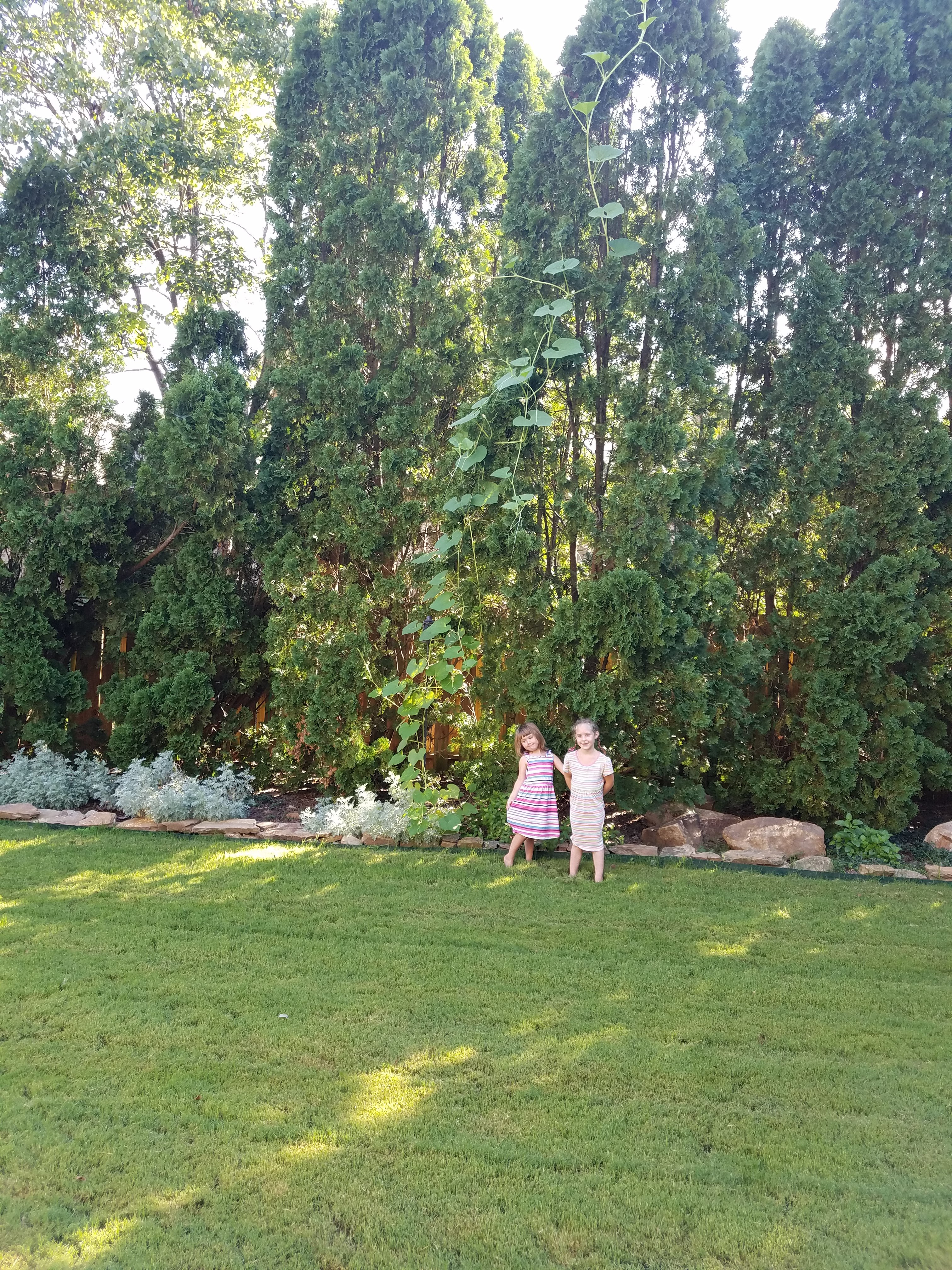
beanstalk.jpg

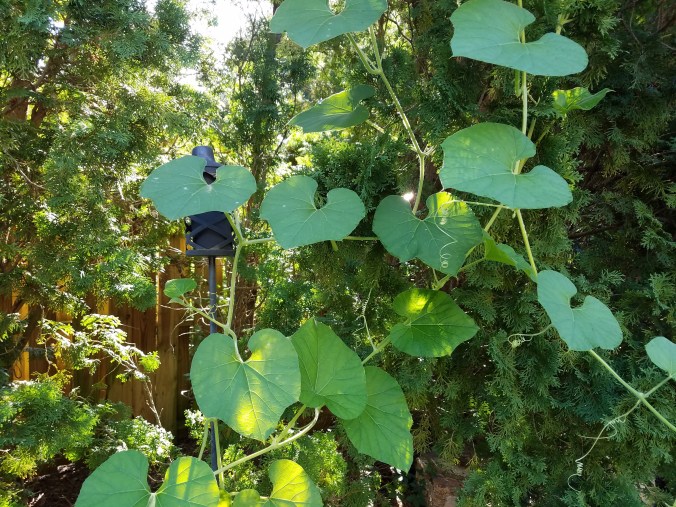
The viney thing with the big green leaves growing vertically to the left of my granddaughters is a gourd. The photo does not even capture the full height of the stalk, which grew from two small seeds. A little closer up, the leaves look like this:

gourd.jpg

The leaves are beautiful and the height is remarkable – even if it doesn’t reach up to a land high in the sky where a giant’s castle stands. But the plant is not the treasure. The treasure is whose plant it is. Last week I made new friends. Not to say I didn’t know them before. Louisa and Jake are friends of our mutual friend Millicent and I met them more than a year ago. But now they are no longer friends of a friend. Now they are simply friends. My friends. And I am theirs.

When I mentioned to Louisa that the girls and I would be passing through Charlotte, she said, “I wish you could stop in. Is there a way?”

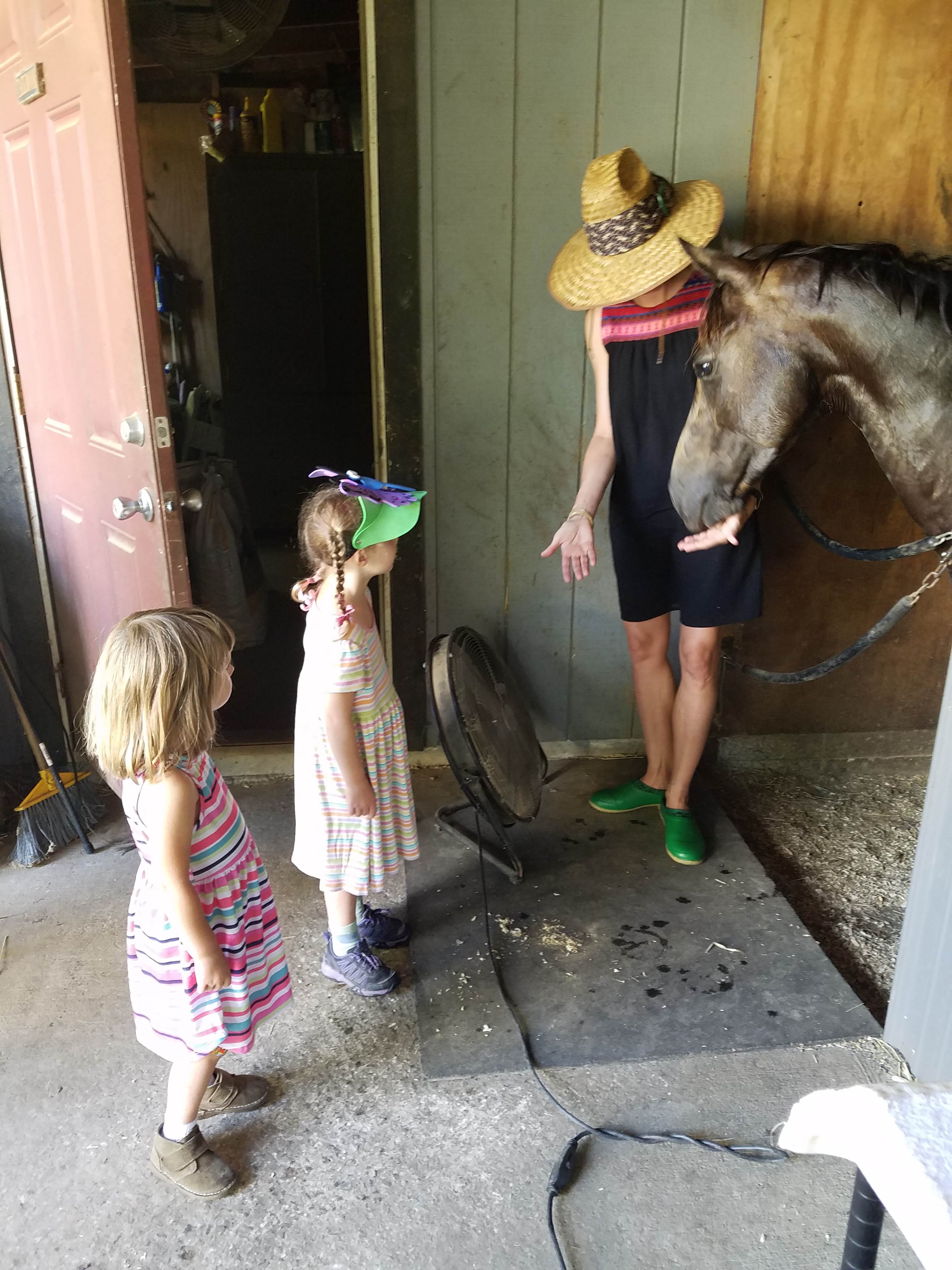
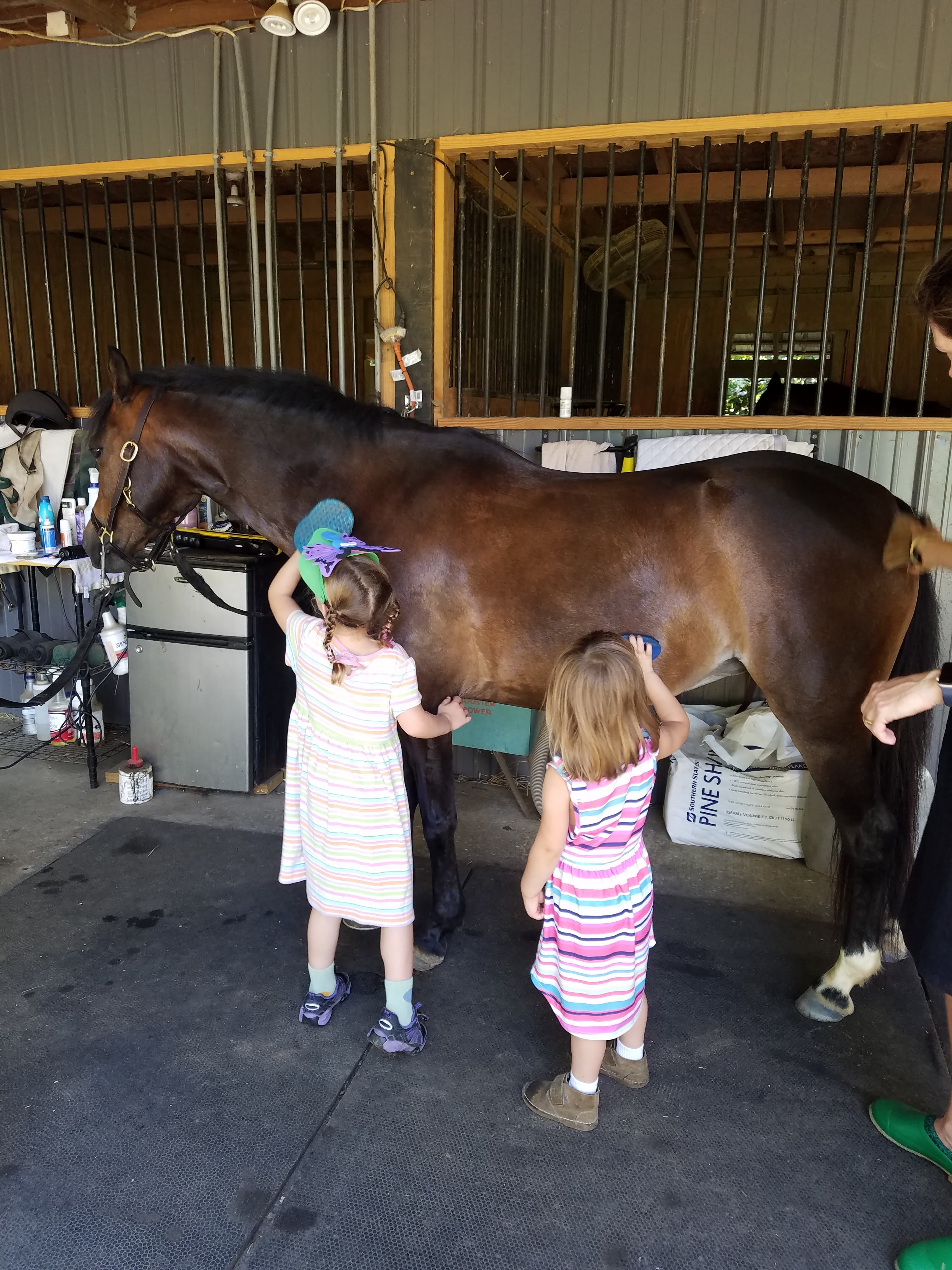
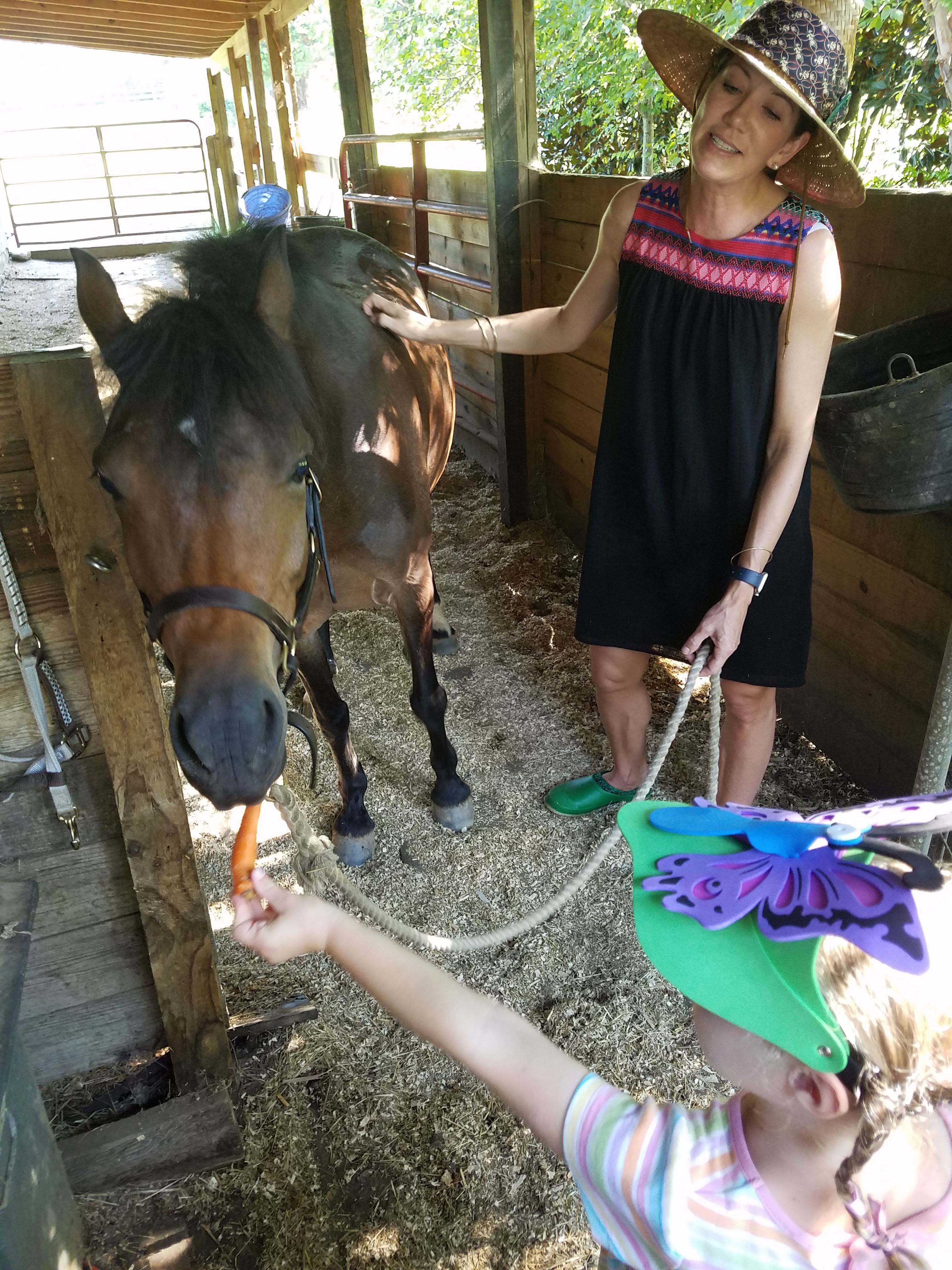
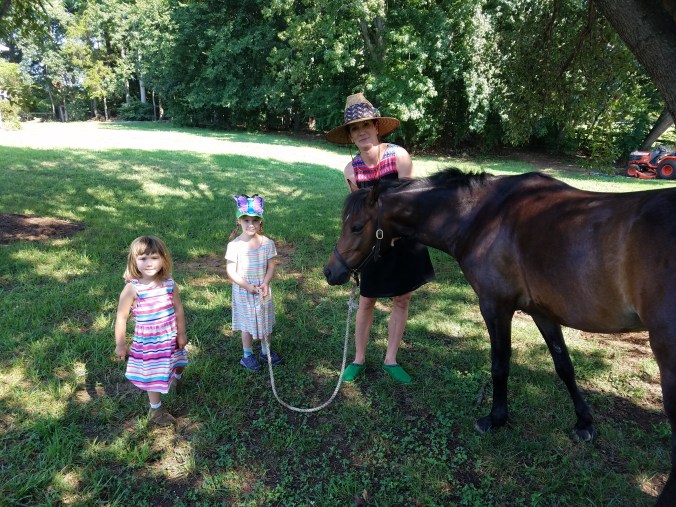
We made a way and it was marvelous! Their kind hospitality included the best mac and cheese I have ever had, the best hot dogs I have ever had and a visit to the barn where Louisa’s horse and a pony live. The girls got to meet the pony,

meeting the pony.jpg

brush him,

brushing.jpg

feed him,

Rise feeding the pony.jpg

and walk with him a bit in the yard. He has not yet been trained to carry small children, but not getting to ride him in no way detracted from this experience for the girls.

walking the pony.jpg

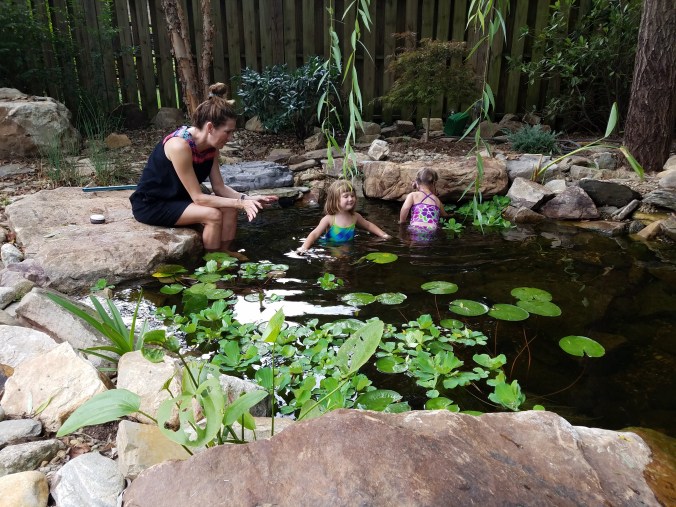
Back at the house, they stared up at the top of that amazing gourdstalk, ran around the yard and fished leaves out of the koi pond.

koi pond.jpg

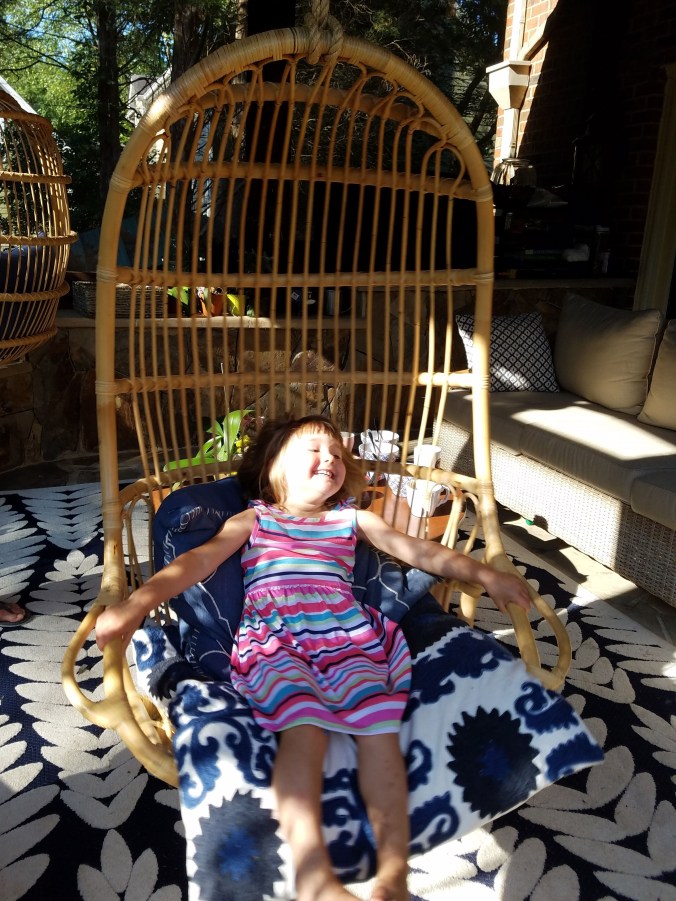
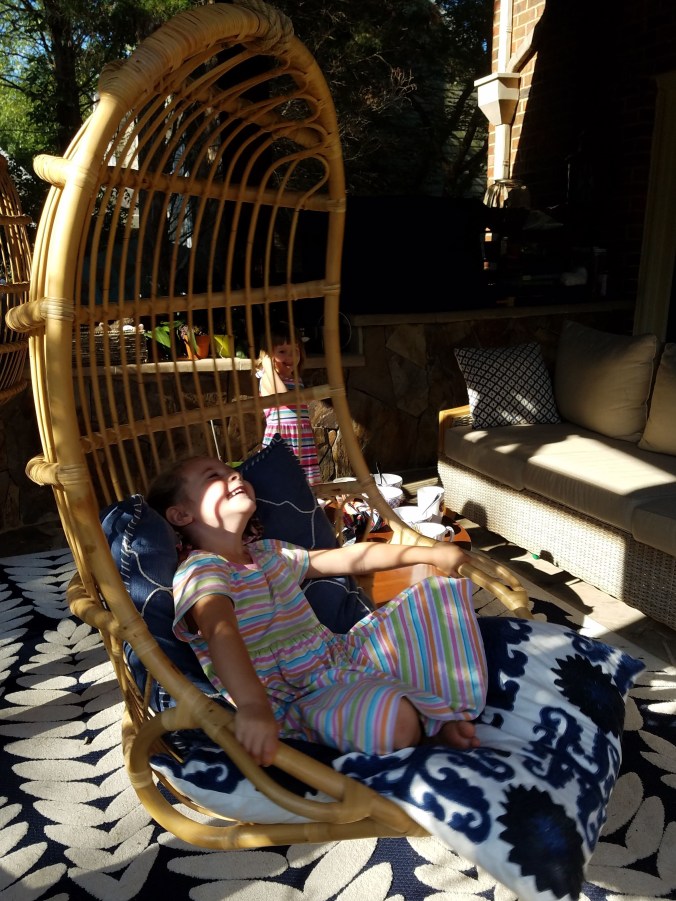
The kindness shown to all of us, our time at the barn and the giggly fun we had at their house with dogs and balls and popsicles and spinning chairs — all of it was remarkable.

chair swinf Eppie 2 (2).jpg

chair swing Rise 6 (2).jpg

Not only this, but I found in Louisa and Jake what Anne of Green Gables would have called “kindred spirits.” I felt as if I had known them for a long time, as if I could be myself, as if we were just catching up after a long absence, as if we could talk forever, which we very nearly did! I felt accepted, cared about, respected. This is what friends do! It’s so wonderful! Most amazing of all was that truly we did not know each other well at all before this visit.

I realized that this must be a bit of how my mom feels. She moved into her new home about eight months ago, not knowing anyone there before she moved in. Now she knows almost everyone in her community. She attends outings of all sorts, invites people over for dinner, says hello in the hallway to everyone she sees, works on the flower committee, reads to Evelyn (who is 101 and blind) and represents her floor in meetings that include discussion of larger issues. (And I’m sure I’m forgetting something.) In this short time, she has been asked to be in photo shoots for new marketing material and is also already on the welcoming committee, reaching out to new residents. She’s never been so happy, so involved, so engaged with the people around her.

I have dear, wonderful friends who have been in my life for decades. I count myself exceedingly blessed in this department, so much so that it could be tempting to close the door to others. Making new friends at any age can be unnerving. Opening up, taking a chance, trying something new, giving of yourself (with an uncertain outcome), going out of your way – it’s a bit risky. There’s no guarantee that you’ll connect with this person or that person. But what a treasure is found when that connection feels genuine and fun at the same time! When you smile thinking back on the time you had together. When someone who doesn’t have to care about you does anyway. When you very much look forward to next time…

Pink Hands

I love the story of the Little Red Hen. You know the one where the hardworking and foresightful Hen goes through the steps of growing wheat. She asks three other animals on the farm – the Cat, the Pig and the Duck in the version I remember – to help her plant a grain of wheat she found. She says, “Who will help me plant the seed?”

“Not I,” said the Cat. “Not I,” said the Pig. “Not I,” said the Duck.

So she does it herself. She continues to ask for help with harvesting, threshing, milling and baking, and the other animals continue to refuse to help. Finally the bread is ready to be eaten and they sure do want to help with that! Too bad! They didn’t want to help with the work, so they don’t get to enjoy the reward. The Hen shares the bread with her happy chicks.

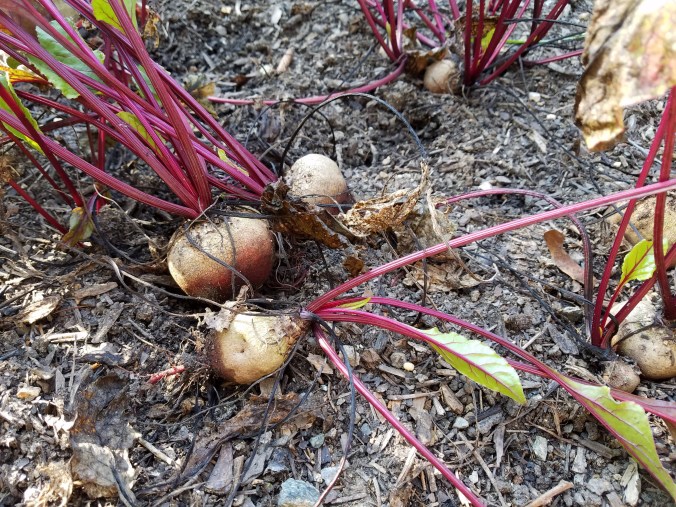
Today was Harvest Day at Golden Hill. The beets and carrots have been doing what garden vegetables generally do if you leave them alone. (Anyone who has harvested a baseball-bat zucchini can relate!) I just didn’t get to it before now, can’t imagine why. But the beets had pushed themselves pretty much out of the ground and the carrot tops had dried up.

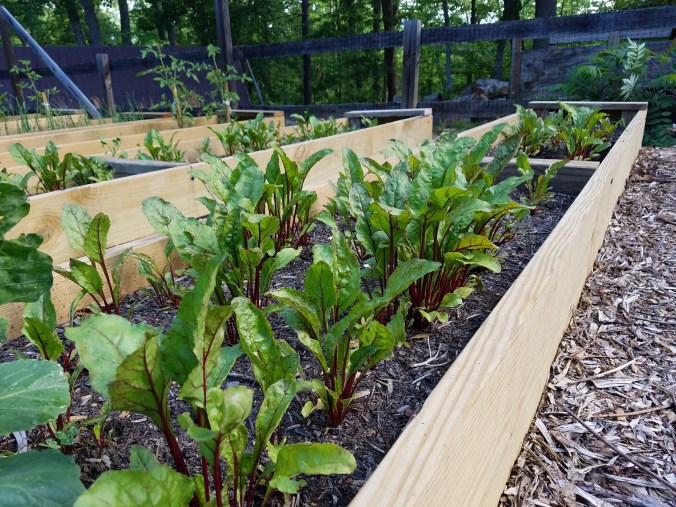
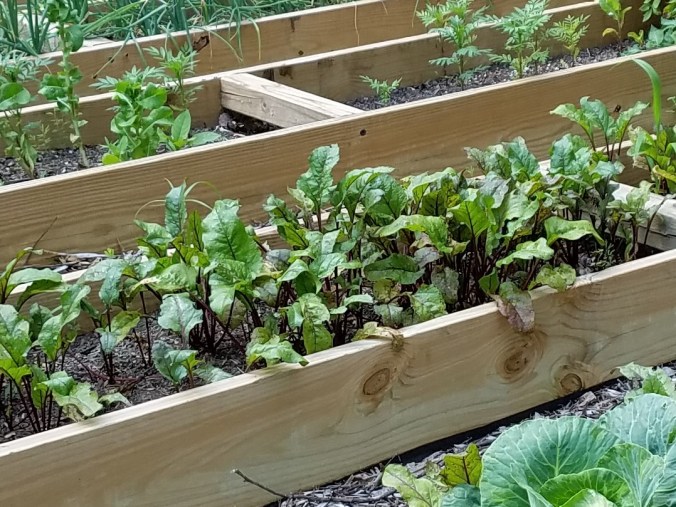
Here are the beets in their bed in May, in June and today:

beets in Maybeets in June (2)beets in ground 2

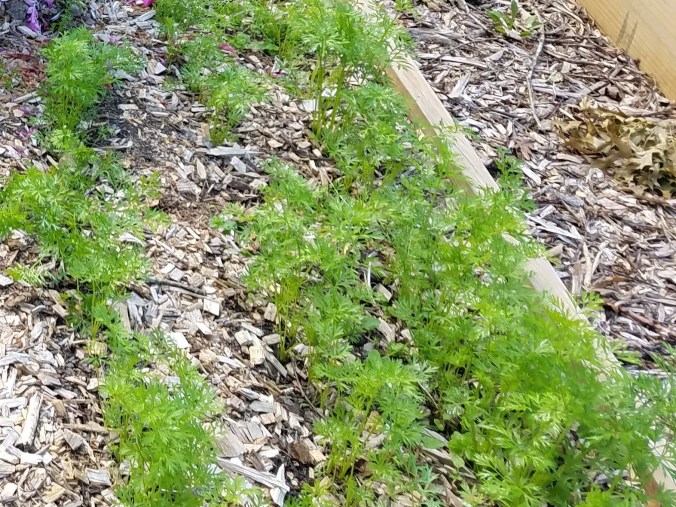
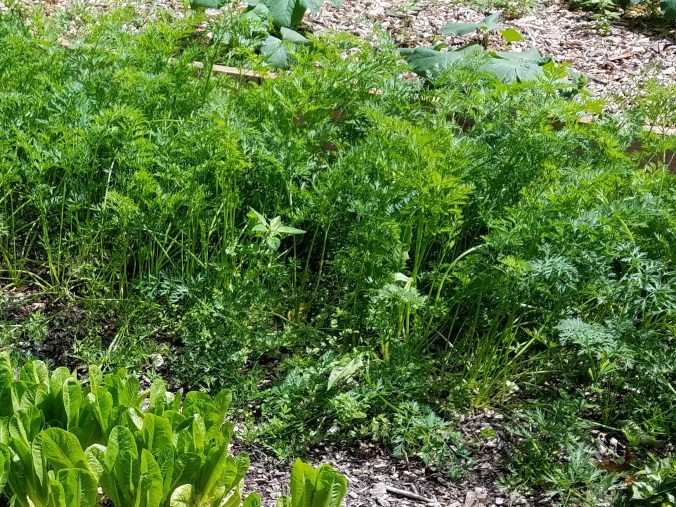
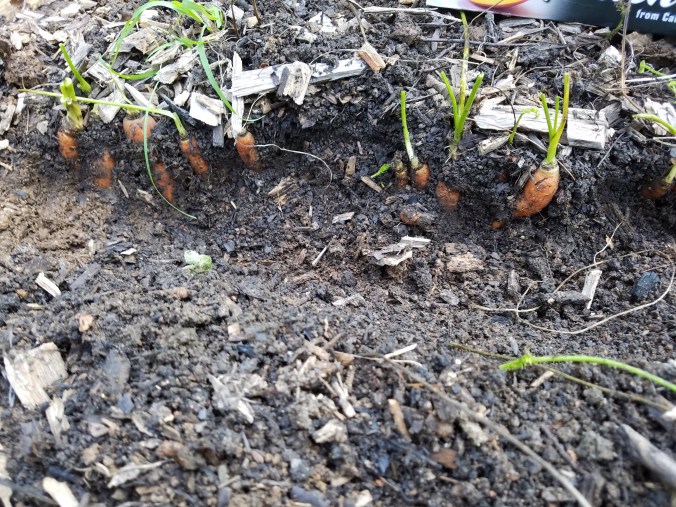
And the carrots in their bed in May, in June and today:

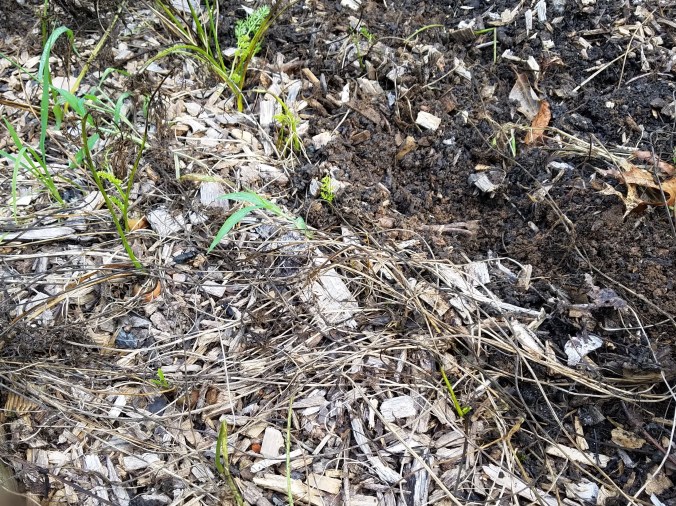
carrots in May (2)carrots in June (3)carrots dead tops (2)

See what I mean? I’m an amateur in the garden, but this I know: It’s time to harvest. And I had little girls happily helping me!

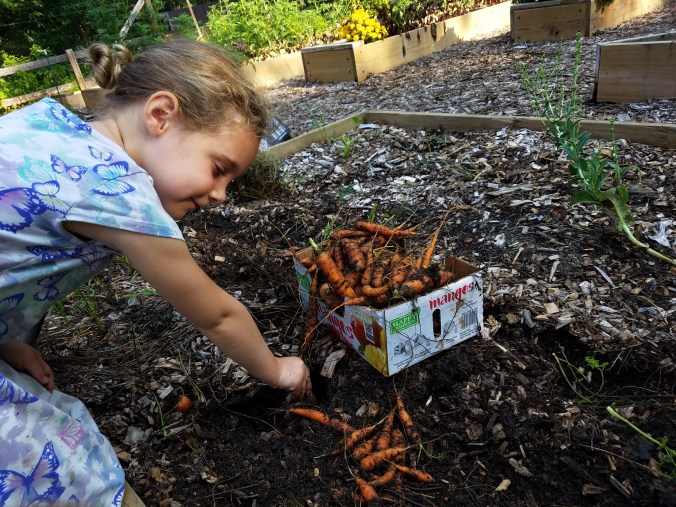
First we did the carrots because you have to pull harder. Little girls get tired, so let’s do the somewhat harder thing first and save the easier task for later. I loosened the soil and exposed those gorgeous orange tubers.

carrots in ground 2

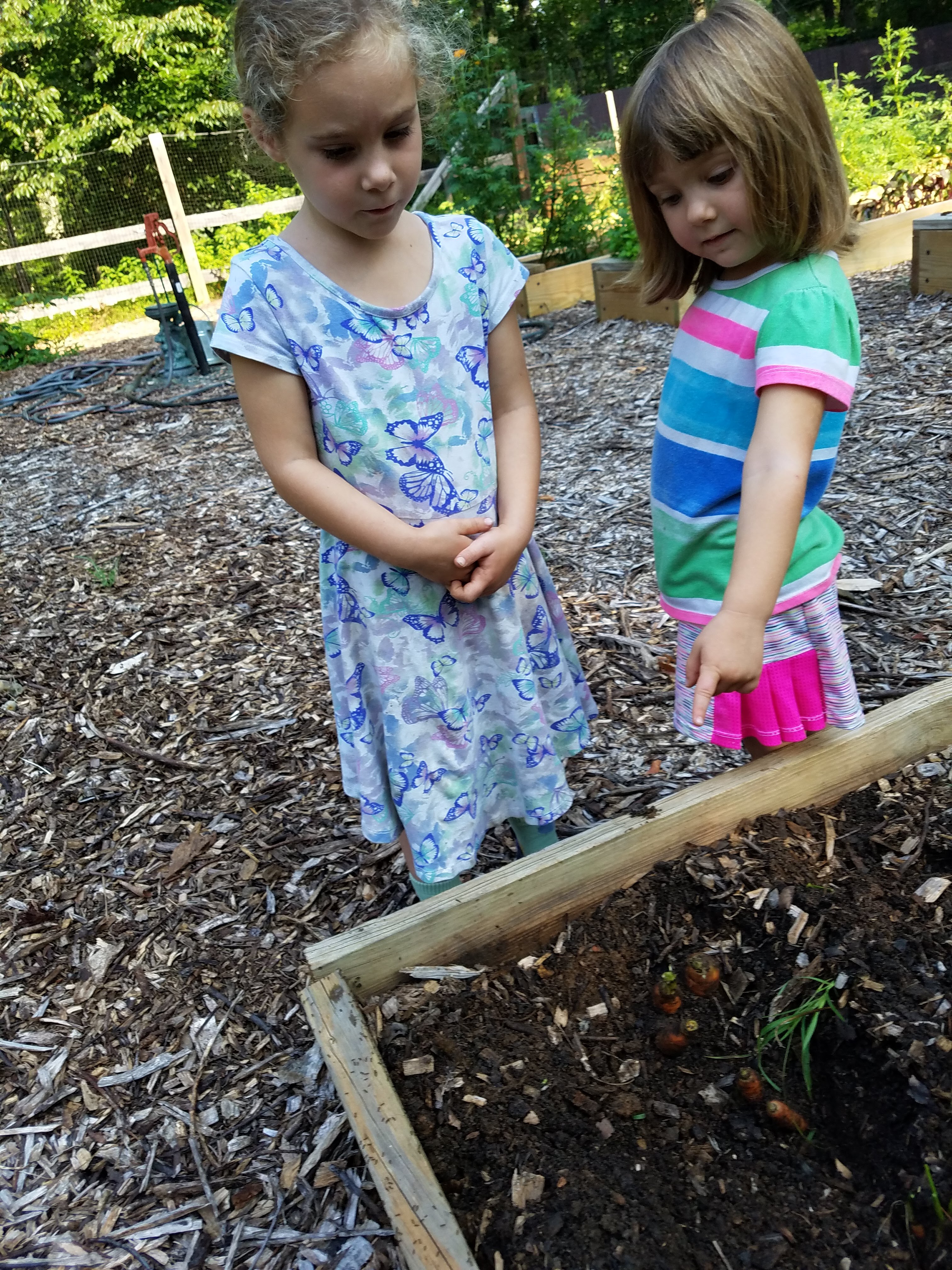
Eppie didn’t want to get her hands dirty with pulling carrots, so Rise helped with this. Eppie put them in the box. Well, some of them. She found other interesting things to look at in the garden, including two worms. I wonder sometimes if some children never get to touch real worms…

carrots pulling Rise.jpg

How fun it was for Rise to pull up some pretty big ones!

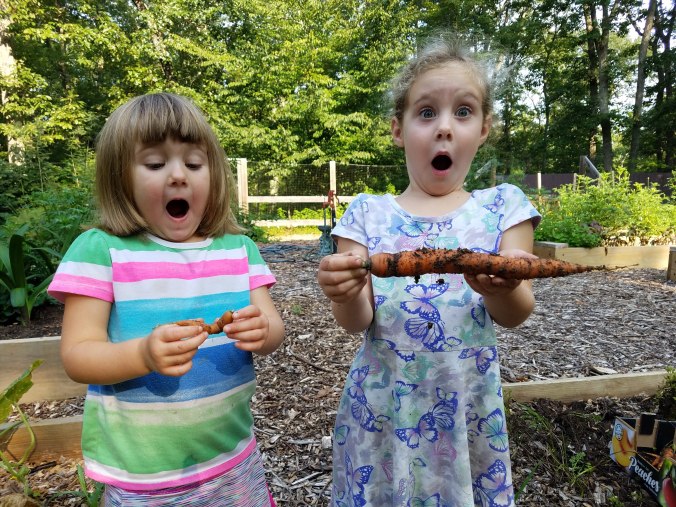
curly surprise.jpg


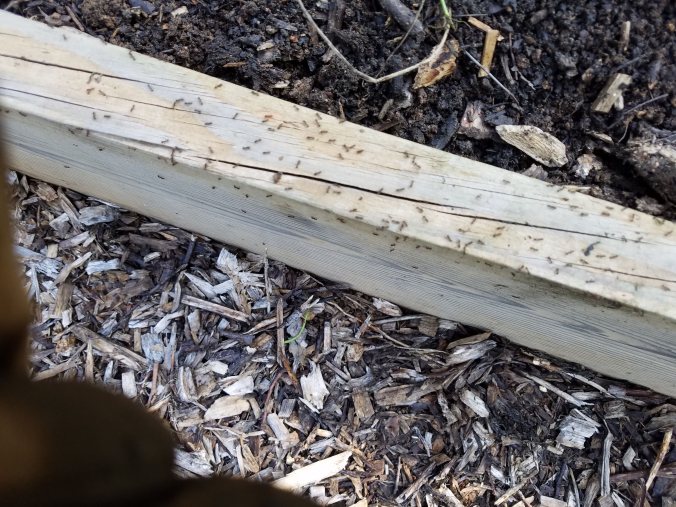
Eppie was more impressed with one that was curled. And with the ants whose home we evidently disturbed. “Look, sister!”

look sister!.jpg


The ants were none too happy but they will figure it out.

ants alive!.jpg

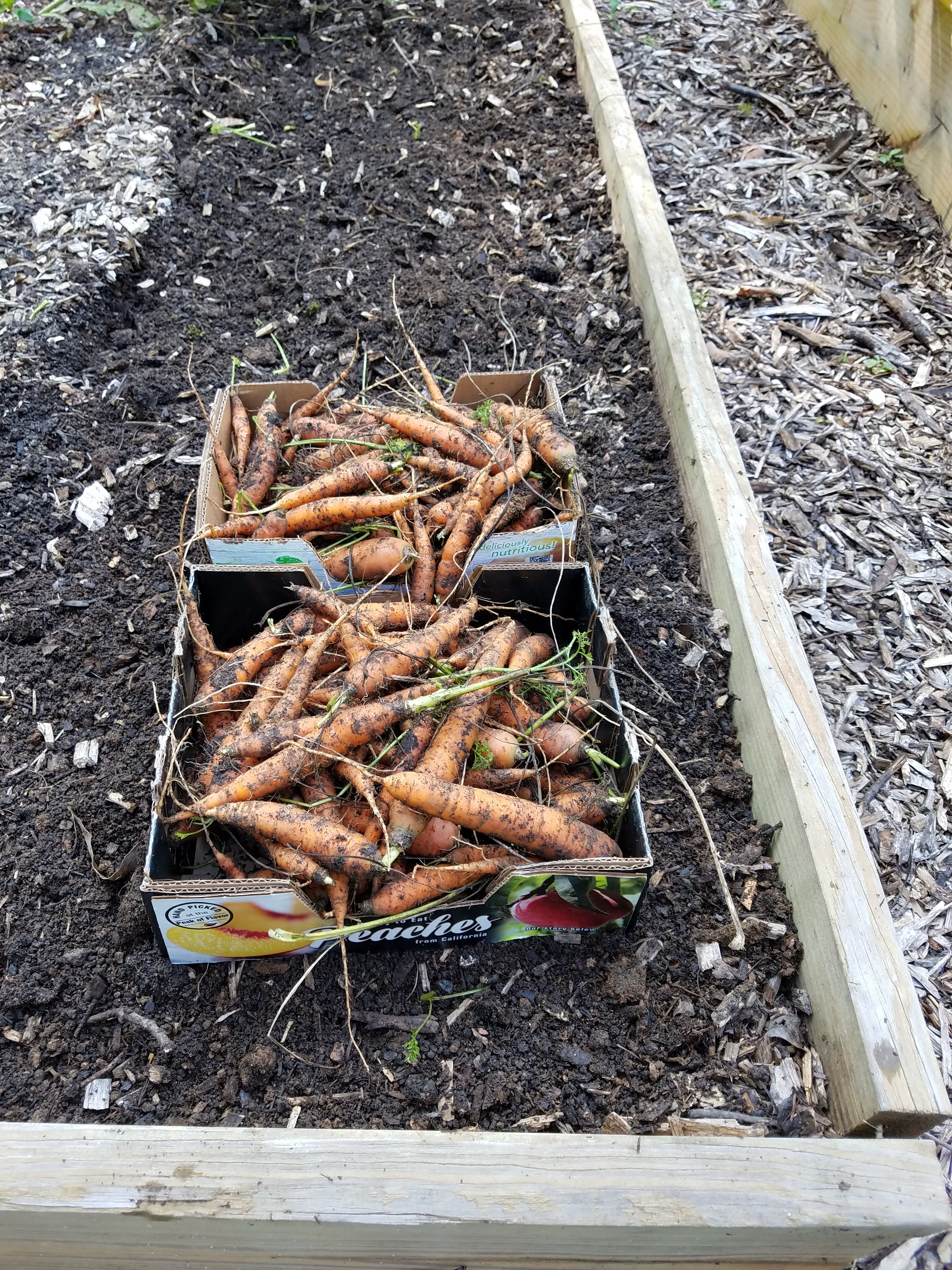
We got two boxes full of carrots, smoothed the dirt for the next planting, and said Wow! as we looked at our harvest. Rise said we should make carrot soup for dinner. We’ll see about that, but how wonderful that she is not only helping but also thinking about what to make with them.

carrots in boxes.jpg

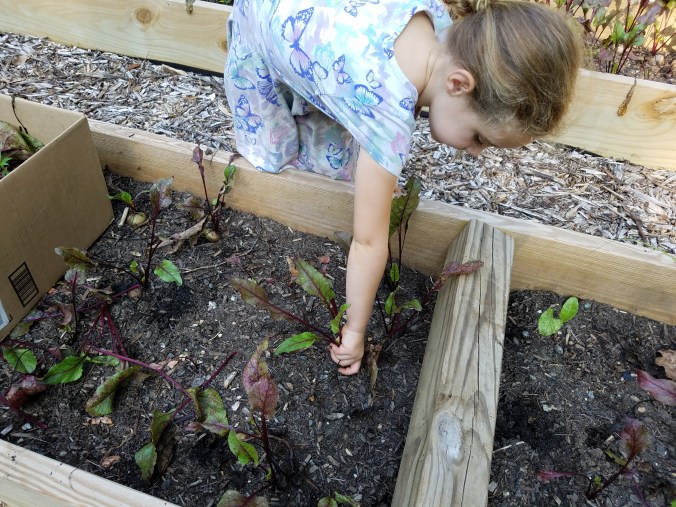
Onward to beets. So much easier. You don’t have to pull at all, but practically just lift them out of their nice bed,

pulling up.jpg


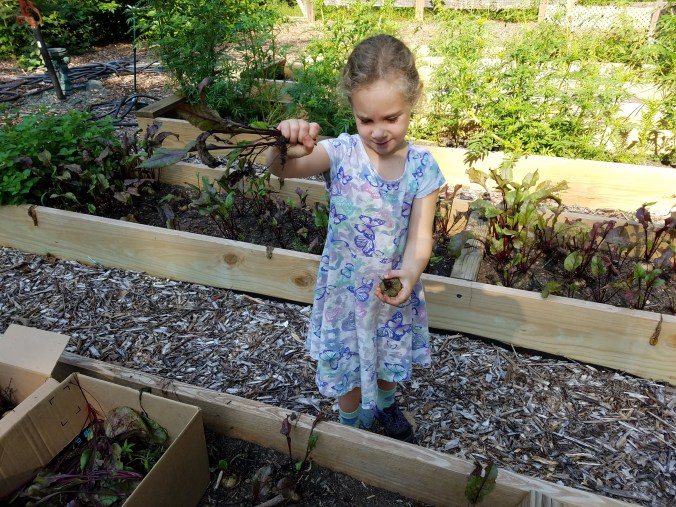
and twist off the green leafy part (that’s for the chickens).

separating beet from green.jpg


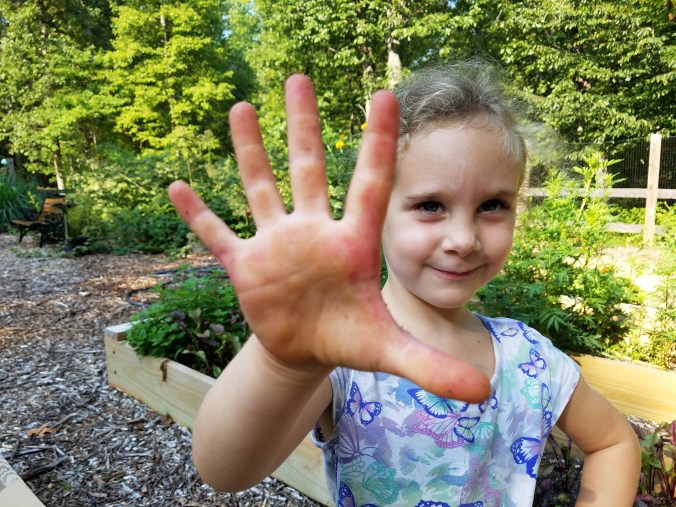
Beets are fun. Look what you get besides beets – pink hands!

pink hands.jpg

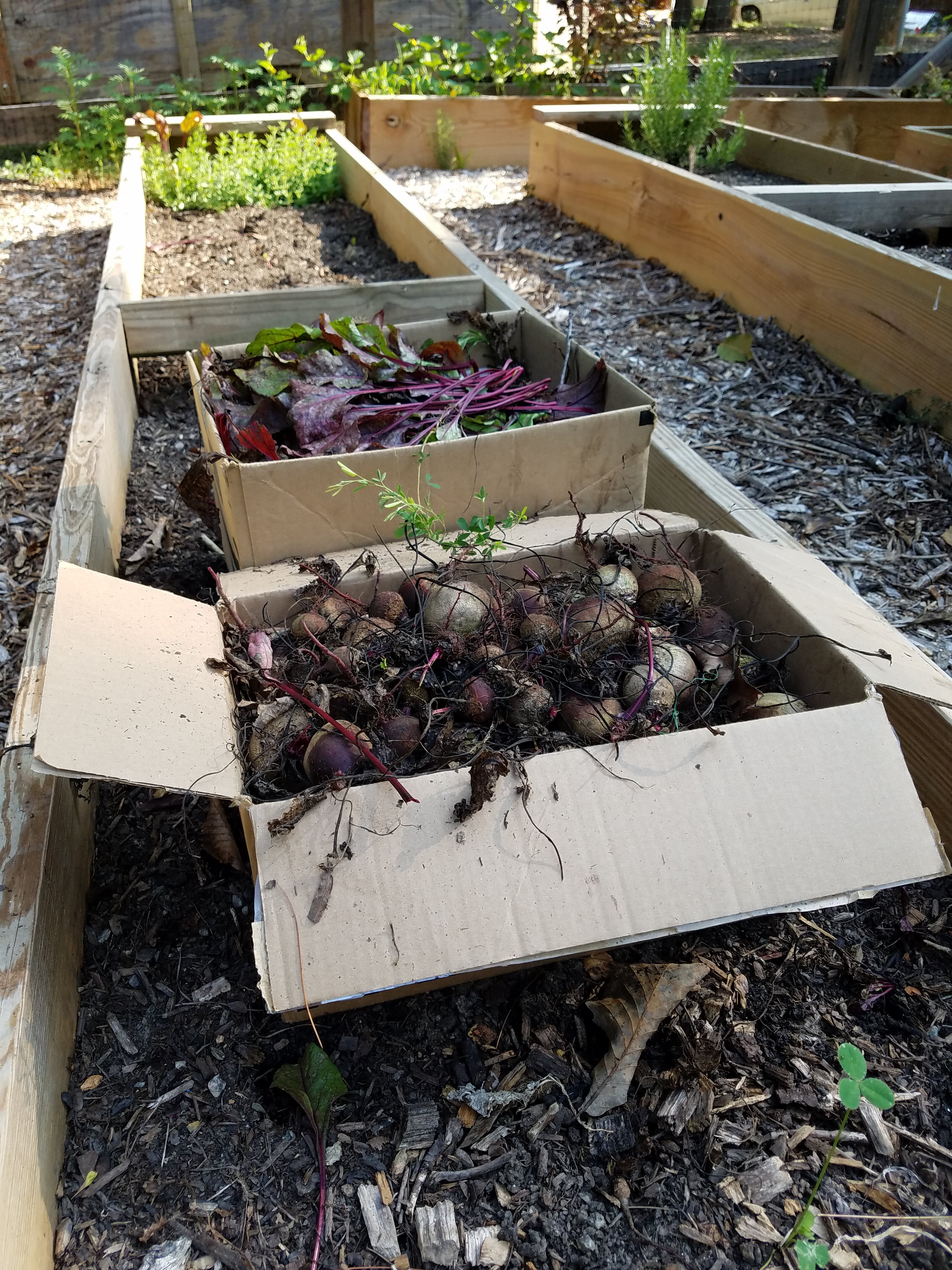
I like making little girls happy. I like making chickens happy. Look at the box of greens behind the box of beets! I know we could eat the greens too, but you have to draw the line somewhere. All those lovely beets make me so happy I can let the greens go.

beets.jpg


The chickens were soon very happy!

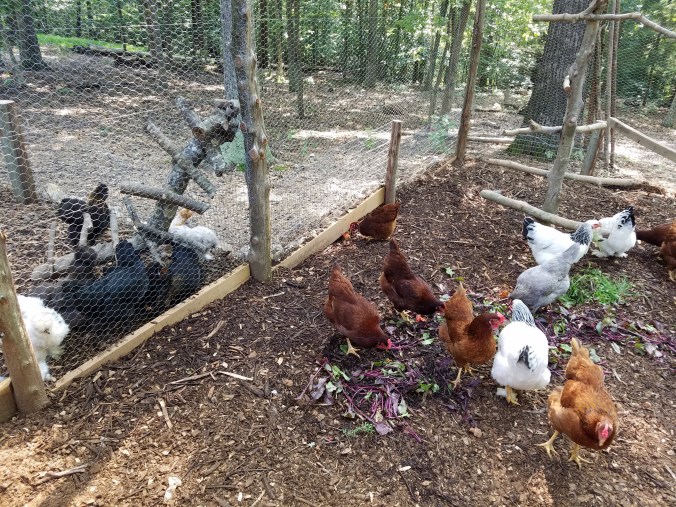
Well, each in their turn. The photo below shows the brahmas, cinnamon queens and Rhode Island Reds, which I have been lately calling Group A – will someone please help me come up with a name for this group?! They got theirs first – the beet greens and a few tomatoes that the garden turtle (remember him?) chewed off half of because they were lying on the ground because someone (I wonder who) didn’t get around to staking up the tomatoes very high either.

happy group A.jpg

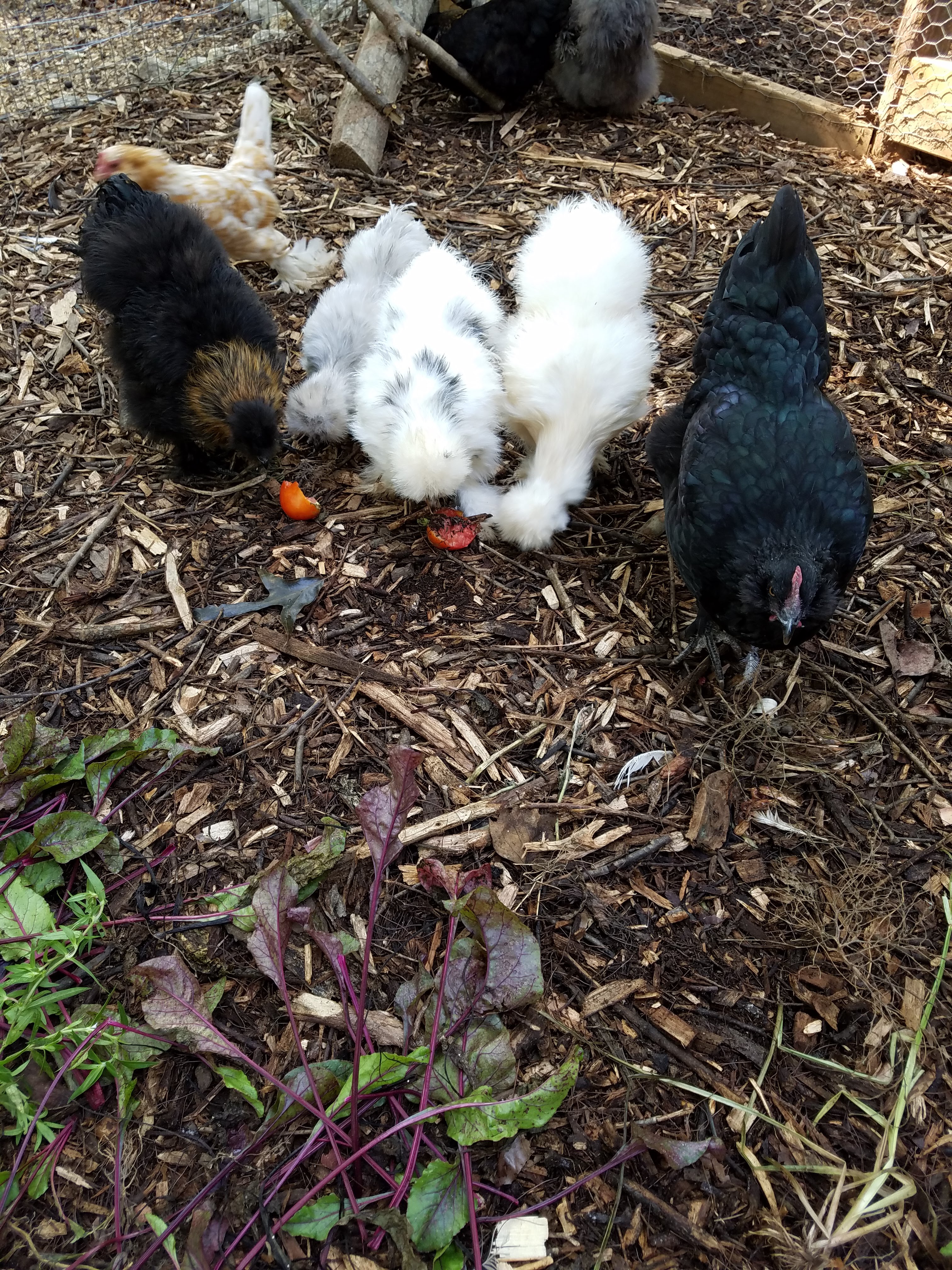
See the silkies and black copper marans (Group B for Bantam?) looking through the dividing wire, longing for theirs. Hey, where’s ours? Patience, patience!

Ah! Good things come (usually) to those who wait. The chickens like the tomatoes better than the greens. But I guarantee that those greens won’t last long either.

happy silkies.jpg

I think I never had a harvest of beets and carrots like this. Never so many. How blessed am I to share the experience with these lovely young ladies! Later in the week we might plant some more carrots and beets in these beds so that there will be a fall harvest. Something tells me I’ll have two good helpers!