Pies, Galettes, Bread and …Cartwheels?

I have been cooking and baking for a long time. When I was a kid, we always helped my mom make the salad or stir the pot. When I was 16 I got a job at a French restaurant called Picot’s Place in Hamden, Massachusetts, and learned to make Beef Wellington, French onion soup, chocolate mousse and the best omelets ever. I wanted to learn to be a master chef and was accepted to the Culinary Institute of America in Hyde Park, New York. Before I turned 18 I had worked in the kitchen at a German restaurant, at a country club and, for part of a summer, at a little country inn in Bavaria. Starting in my 20s I made food for my family all the time.

What on earth this has to do with cartwheels is a good question. Getting there…

Today was a baking day with Kaileena, my ten-year-old great niece. She said she wanted to make something like a tart and had mentioned swirl bread as well. A wet front has been coming through our area, so on this rainy July day, we picked up Mom, got what we could from the garden before the skies opened up, and headed for the kitchen. We decided on plum galette and cinnamon swirl bread.

Kaileena has helped make pies at home at Thanksgiving every year but had never made any kind of yeast bread before, not that she remembers anyway. She helps a lot in the kitchen at home, loves watching cooking shows and is very comfortable in the kitchen. Nonetheless, kneading bread dough until it is smooth and elastic, incorporating enough flour but not too much and keeping yourself and the kitchen from becoming a gigantic mess is no minor effort.
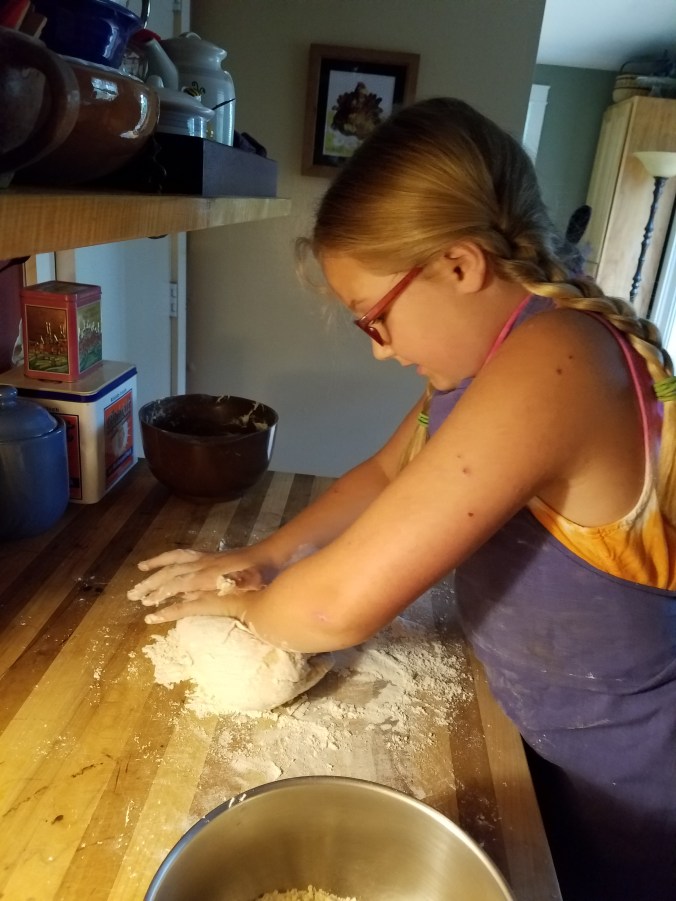
Kaileena kneading bread dough

“Wow!” she said upon seeing that her dough had risen the way it is supposed to.

And oh how yummy the bread was, lightly toasted, a few hours later with its delicate swirls and hint of cinnamon…
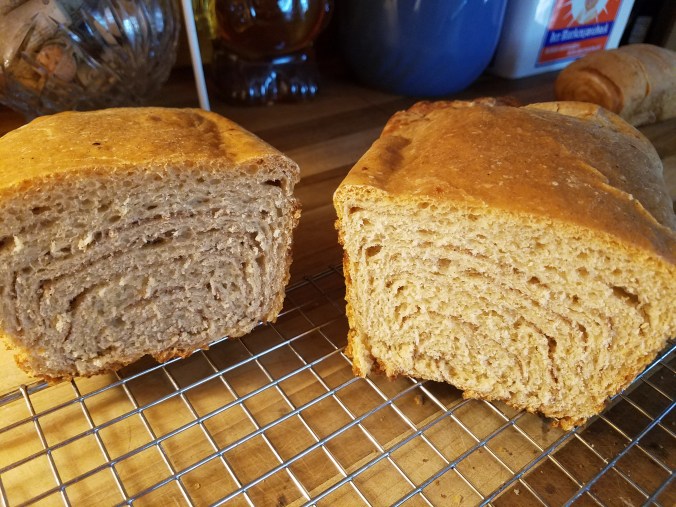
cinnamon swirl bread.jpg

Rolling out pie dough so that it doesn’t stick to the counter, is the right shape and the right thickness and then transfers nicely to the pie dish takes some doing as well. Kaileena had the distinct advantage (and pleasure!) of working alongside her great-grandma.
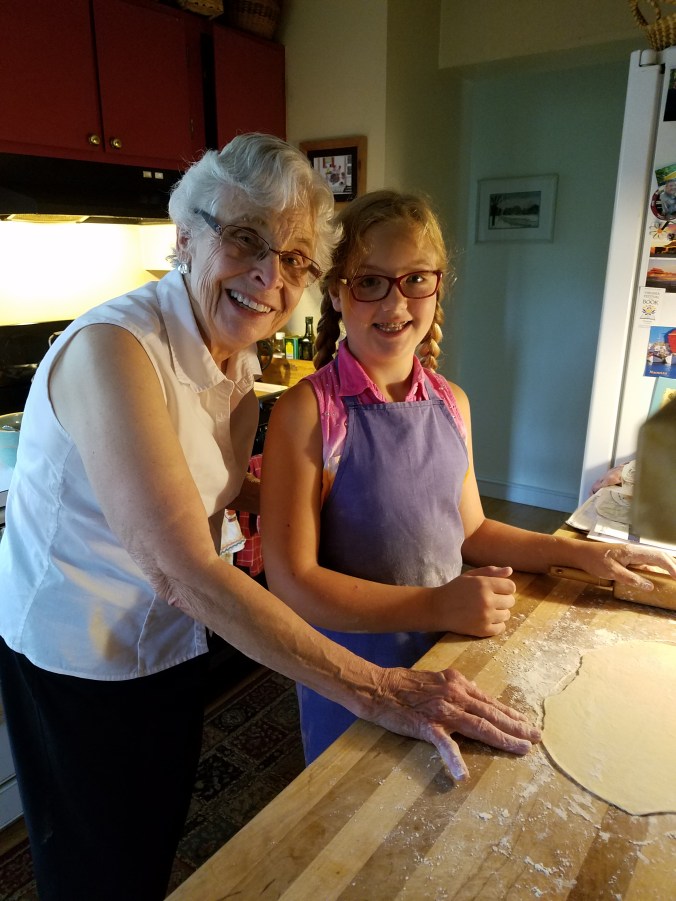
Mom and Kaileena rolling out dough

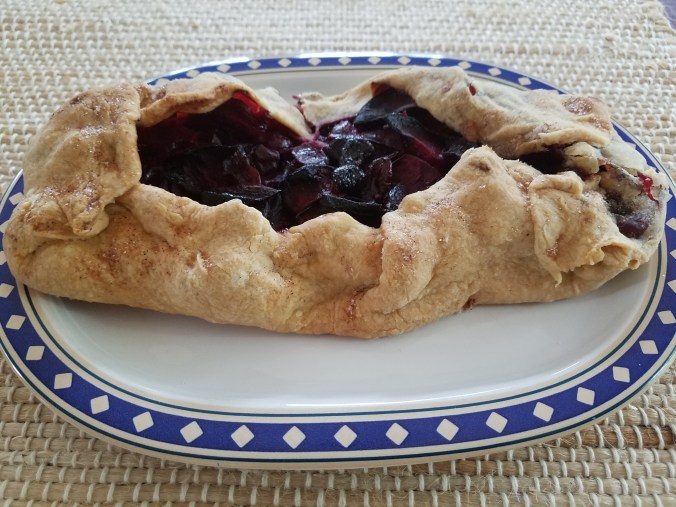
She learned what a galette is – a free form pie, in this case filled with pieces of plum and a few dried cranberries, mixed (as with any fruit pie) with a little sugar for sweetness and flour to bind,
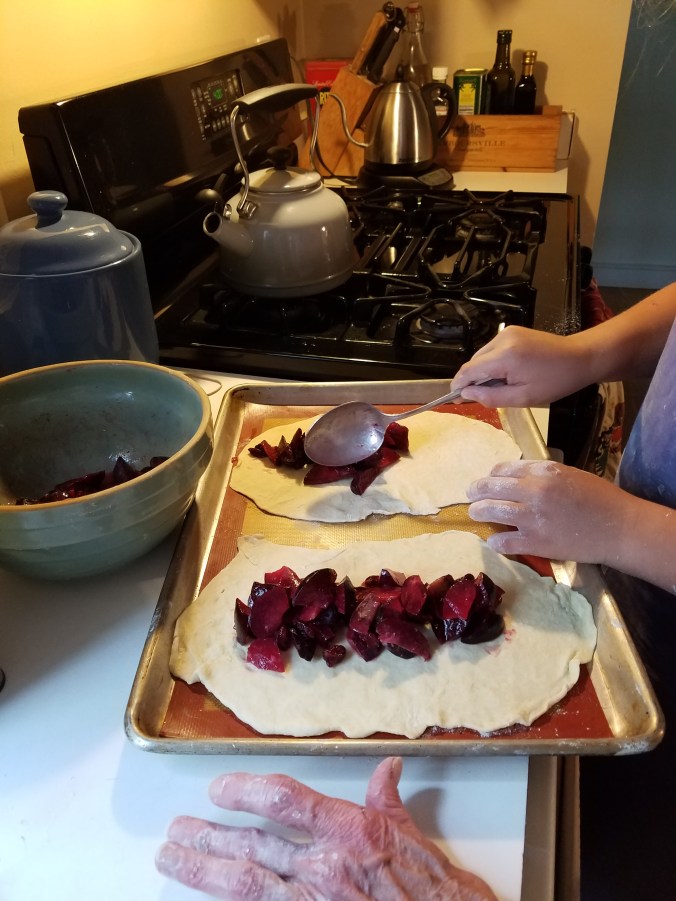
filling galette

and baked to golden brown!

plum galette.jpg

She even learned how to put a lattice top on this little pie (which did not last long)!
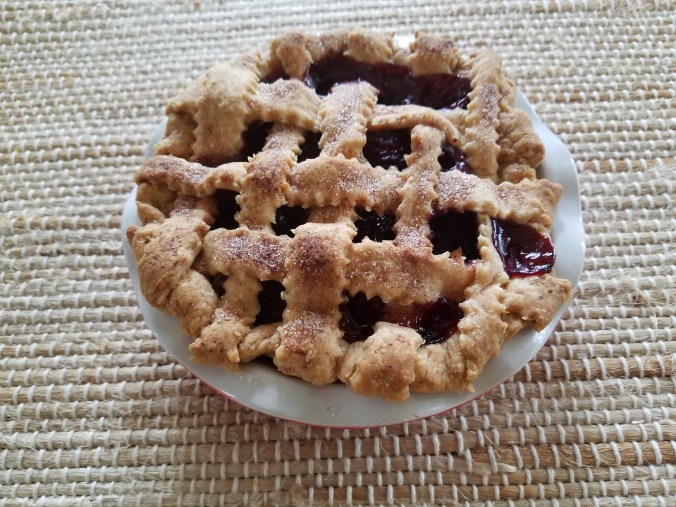
plum pie.jpg

Have you ever tried to put a lattice top on a pie? You start with rolling out a piece of the dough as thin as your bottom crust. A tool called a pastry wheel (which we affectionately in my family call a Raedle) is used to cut the dough into thin strips that have a zigzag edge. You start with two strips laid across the middle of the pie at right angles to each other, then add one strip at a time and weave them together working outward – over, under, over, under – and then another strip in the other direction until you have covered the pie. Crimp the edges and into the oven it goes. As they say, easy as pie!

If you have never made a pie, or put a lattice top on a pie, it’s a little like doing a left-handed cartwheel if you have been doing them right-handed or doing a right-handed cartwheel when you have been doing them left-handed – harder than it looks! Or like signing your name with your nondominant hand. Or like walking up stairs backwards or trying to have an intelligent conversation in a foreign language you learned in high school and never quite polished. In my case it’s like using a biscuit joiner – a woodworking tool that has nothing whatsoever to do with making yummy biscuits! I think about how cool it would be to make useful and beautiful things from wood, and I’ve watched other people do it many, many times, but doing it myself is oh so different!

If you do a thing often and are very practiced at it, you develop an ease, a finesse, an effortlessness. I think of Mark doing a drop shot, Brad or Lincoln or Ernie building anything with wood, Marie taking photos, Samuel doing a handstand, Kim holding a preemie, Claudia making jam. It’s easy to forget how many steps are involved when a given skill is broken down, how awkward and slow you (you too!) used to be back when you had not devoted so much time to developing and practicing it.

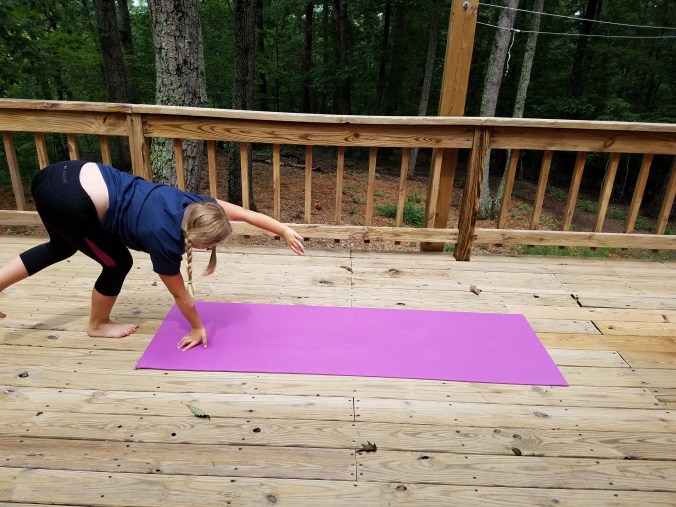
Doing a cartwheel, for instance, involves lunging with your dominant leg in front, then in one smooth motion putting your hands on the ground shoulder-width apart and turned 90 degrees, kicking your back leg up and over followed by your other leg and landing in a lunge facing the opposite way you started. That’s a lot of steps. Not to mention keeping your weight over your shoulders when you are upside down or keeping your legs straight.

Sure, that’s doable, right? This is Kaileena, who is not a gymnast, in mid-cartwheel on her dominant side.
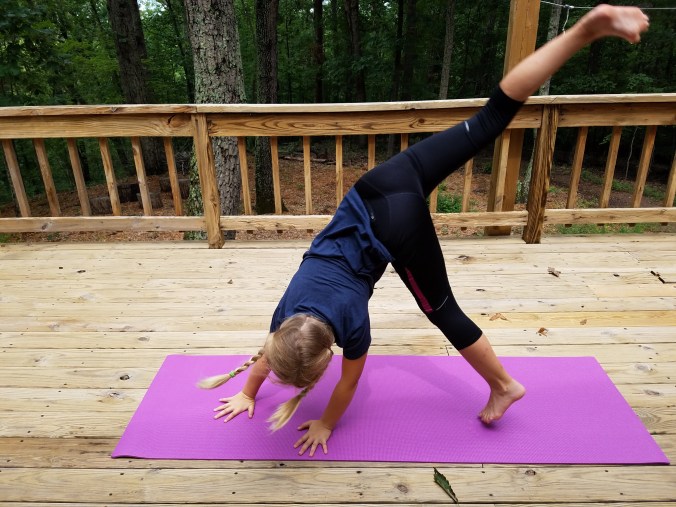
Kaileena cartwheel

And this is her non-dominant side.

Kaileena cartwheel 2

Wait, what? How do I do this? It felt totally awkward to her, but no amount of awkwardness prevented her from wanting to try it again. And in one short session, that cartwheel improved considerably! Luckily, gymnastics is not a required activity for most of us.

As we get older we see the cycle of learning more clearly. People of any age can be eager and energetic but also fairly clueless about the how-to or the why, and certainly lacking in high levels of skill. Others come along to guide, instruct and encourage.  As learners we get the joy of doing something new, which is not only exciting but also feeds on itself and makes us eager to learn something else new. We also get what it feels like to be the novice so that we don’t get too impatient with the novices when we ourselves are on the guiding side. As guides we get the joy of passing along some of our sometimes-hard-earned knowledge and skill, and seeing someone else enjoy a thing maybe as much as we do, as well as carry forward a method, a style or a tradition.

I love this cycle. I love being in some things on the learning side and in some things on the guiding side. I got to make a beautiful red bench with my uncle’s patient help, and with my help and Mom’s, Kaileena got to make a scrumptious pie. For this happy face, I’ll guide her any day!
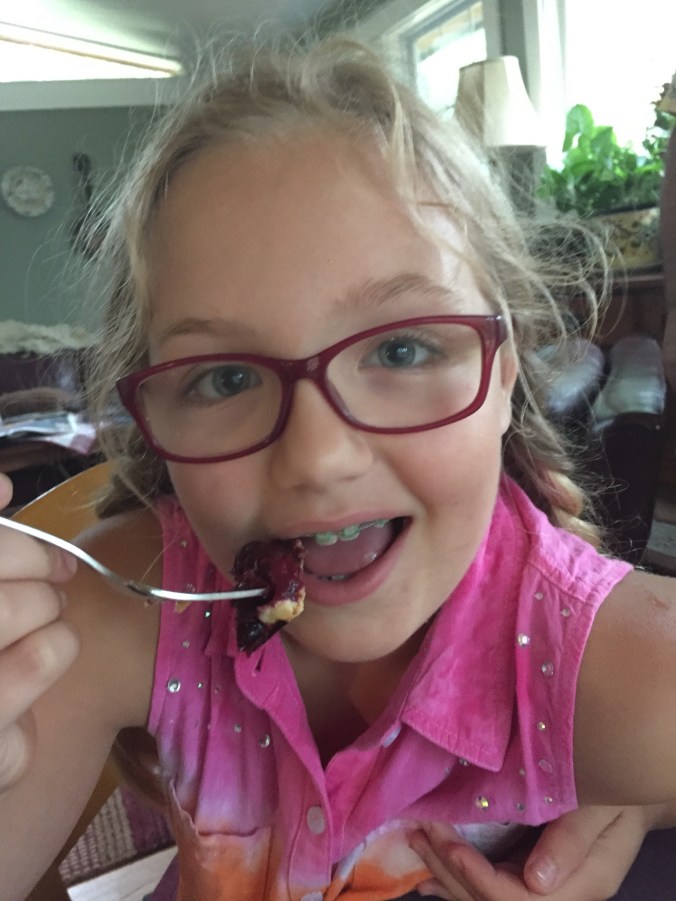
Kaileena and pie

Looking Suspicious

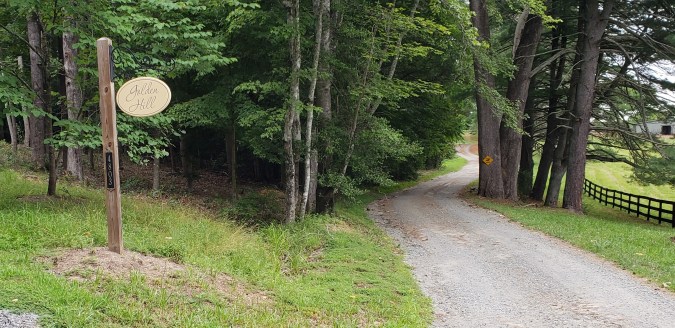
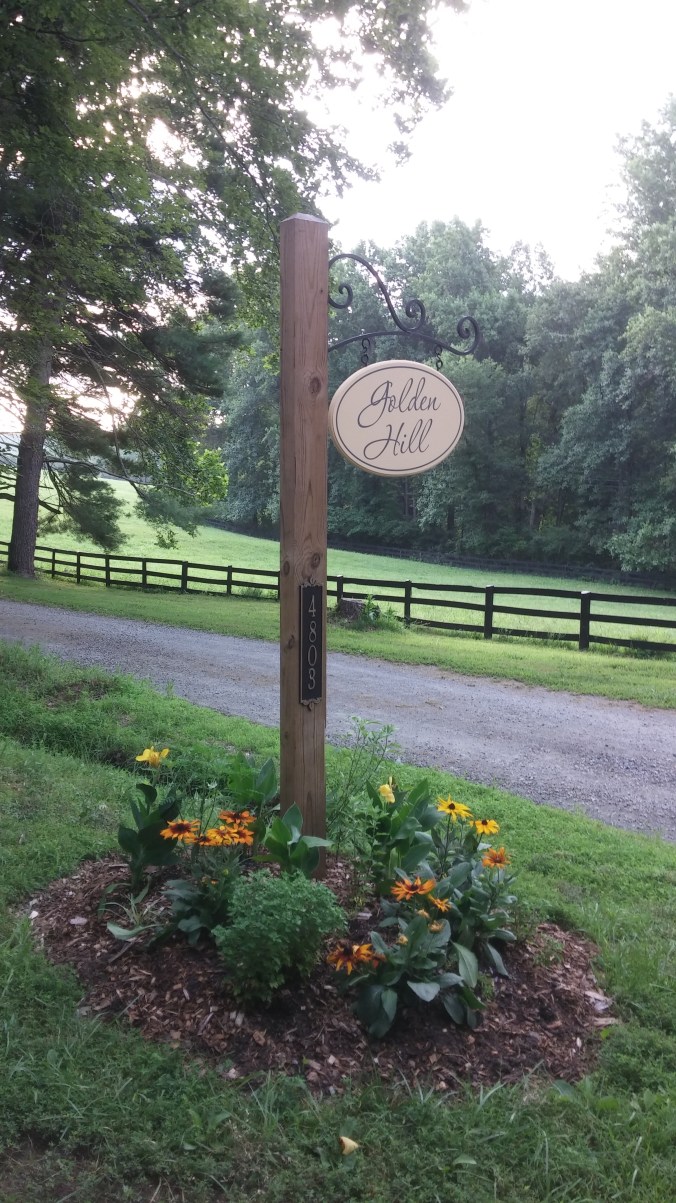
This past weekend we were getting ready to pay long-overdue attention to the sign at the end of the driveway. The chicken coop took a good bit of time but is as done as can be until the siding is milled. The garden simply yields its bounty (cucumbers, tomatoes, onions and carrots mostly right now). It is not presently demanding anything of me. But the sign that should look something like this,

Golden Hill sign summer 2015

instead looked like this, and was calling my name. Calling loudly.

entrance5 before (2)

I have been successfully ignoring it for weeks now but it’s pretty bad, I know. Pathetic. Quite unacceptable. How did I let it get this way? Two reasons:

  1. We each get 24 hours in a day. For my whole life I have felt that I could use more hours than that, I would like more, I would have no problem filling more. But I don’t get more. No one does. Lately, to name a few of the things that have occupied my hours: coop, bench, garden, stream bed, company…
  2. The deer frustrated me and I have resisted giving them another free meal. More than once we have put a lot of work into making the area around the sign look pretty with nice flowers carefully tended, and in one night the deer come along and chew it all up. As if we made them a feast on purpose. As if they can’t find enough to eat in the hundreds of acres of woods surrounding my property. As if I want to tend that area again.

But I can’t leave it looking so bad, deer or no deer, and there were these 19 concrete retaining wall blocks that a neighbor didn’t want sitting under the tarp behind the bench begging to be useful. And Kaileena was here, my 10-year-old great niece who says “okay” when I suggest anything at all and said “okay” when I suggested a project that would involve digging. “I like to dig,” she said, and I smiled. After my own heart she is!

blocks

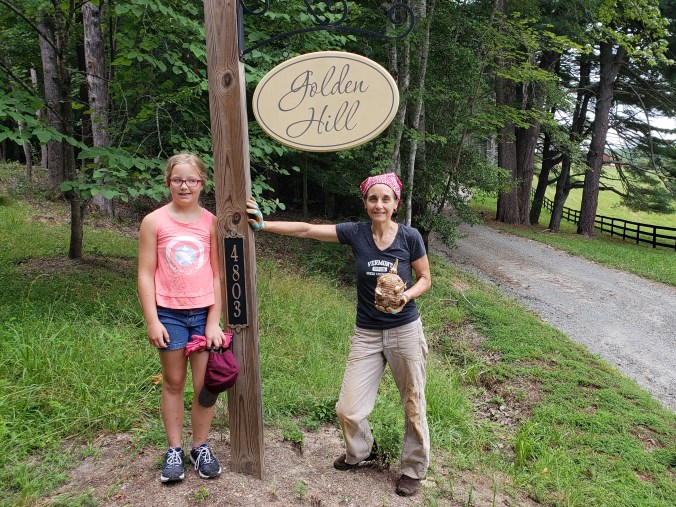
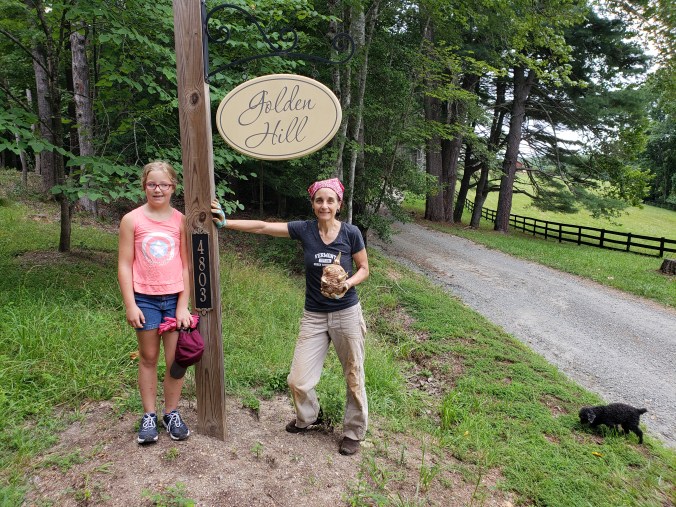
We had to take some before pictures, including the one above, because I will feel that much better when all is lovely again. This is where the suspicious part comes in.

“Come stand here with me,” I said. “You should be in the picture because you are helping.” I am holding an elephant ear bulb, in case you are wondering. It will make a gigantic plant that hopefully deer don’t like to eat.

entrance1 before (2)

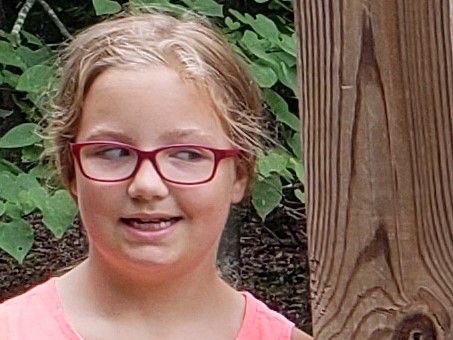
Kaileena stood with me for the picture. In case you can’t quite see the look on her face, it’s this:

entrance1 before (4)

Is she looking suspiciously at me or what? She might be thinking: “What have I gotten myself into!?”

Perhaps it’s more like, “My sister is right. This lady is weird!”

(Context that I failed to mention previously: Kaileena’s 4-year-old sister Brea looked at me squarely one day last week out of the blue and said matter-of-factly, “You’re weird.” When I pressed her for a reason, as in, “Okay, that’s fair, I know I’m weird, but I’m just curious why you think I’m weird,” she could not elaborate. Darn. Just when I thought light was about to be shed…)

Exactly what is that look on Kaileena’s face?

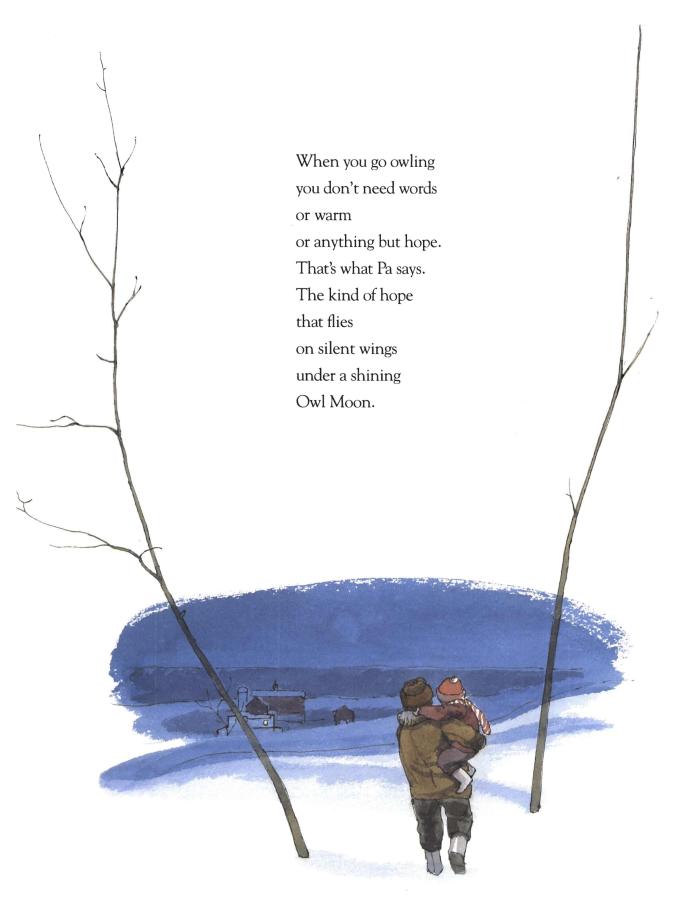
Interpretation is a funny thing. One time in grad school we were talking about the pre-existing notions people have and how this affects the way we see the world. As an experiment, I brought Jane Yolen’s Owl Moon to the seminar that week and read it aloud. The pictures are incredible. This is the last page.

owl moon

I wondered how different people would interpret the story. For anyone unfamiliar with Owl Moon, I have copied Scholastic’s summary, which I found online just tonight:

A young girl and her father take a nighttime stroll near the farm where they live to look for owls. It is a beautiful night, a moonlit winter night. Bundled tightly against the cold, they trudge through the pristine snow, “whiter than the milk in a cereal bowl.” As they go, hidden in the ink-blue shadows, a fox, a raccoon, a field mouse and a deer watch them pass. A delicate tension builds as the father imitates the great horned owl’s call once without answer, then again. Finally, from out of the darkness “an echo came threading its way through the trees.”

Here I am thinking about interpretation and I discover that even though I have probably read this book more than a hundred times out loud to a child, I have NEVER noticed the fox, the raccoon, the field mouse or the deer watching them pass! Yet that bit is deemed important enough to be included in a hundred-word summary.

The summaries of my fellow grad students were equally interesting. The book is written in first person from the point of view of the child. The pictures are not clear whether that child is male or female, nor does the text make it clear, and I have never been quite sure. Some students’ summaries include mention of the boy who went owling with his father and some of the girl who went. Some interpreted stress on the part of the child, some excitement. Some thought the father was mean to bring her out in the cold.

We cannot help but bring our own lenses to any situation. When we are with people, even people we know well, we do our best to figure out what is really going on around us. Words alone tell us only a small part of what we need to know. We look for signs that are not words — stance, hand gestures, facial expression, tone of voice, softness, stiffness. Most of what underlies the words (and is the real story) — pleasure, displeasure, fear, joy, anger, hope, anxiety – — is presented to us through signs.

A picture is worth a thousand words, right? I could describe the Owl Moon picture above, or the look on Kaileena’s face, all day long, yet you, in one glimpse, understand more than I could tell you in endless words.

Generally we are very good at reading the picture in front of us, whether it involves people or picture books. The written summaries of Owl Moon got the story mostly correct. In everyday life, if we pay attention, if we read the nonverbal clues, we can usually just tell when someone is nervous or upset or bored or tired or whatever. We have a sense that it’s time to leave, or something big is about to happen. We have a gut feeling that it’s better to stay away from this person, or better to stick close to another. We can’t necessarily explain this, we just know it.

But not always.  Sometimes we are wrong. Why is Kaileena looking at me that way?

Best to ask her, don’t you think? So I did.

“I don’t know,” she said. “Maybe I was looking at the dog?”

The dog? What dog? There was no dog.

You mean maybe I asked her to stand for a photo and she got distracted by a dog? She wasn’t looking at me at all?

Sure enough, another look at the original photo reveals…. There was a dog!

entrance1 before

Well, good! At least she wasn’t thinking I am weird!

The Story of the Roast

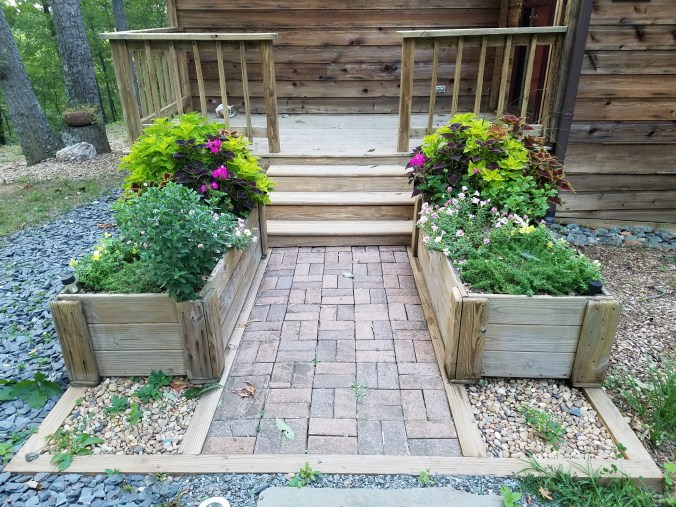
We all fall into traps. One common trap is the Trap of Must. It’s the one that comes into play when something Must be done this way or Must be said that way or Must happen in this sequence. It could also be called the Trap of Habit. Some habits are not good. Some are. I have a habit of putting coleus in the planter boxes that lead to my front porch. I do this because they always do well there and look really pretty.

The coleus are the ones with the colorful leaves closest to the porch.

coleus

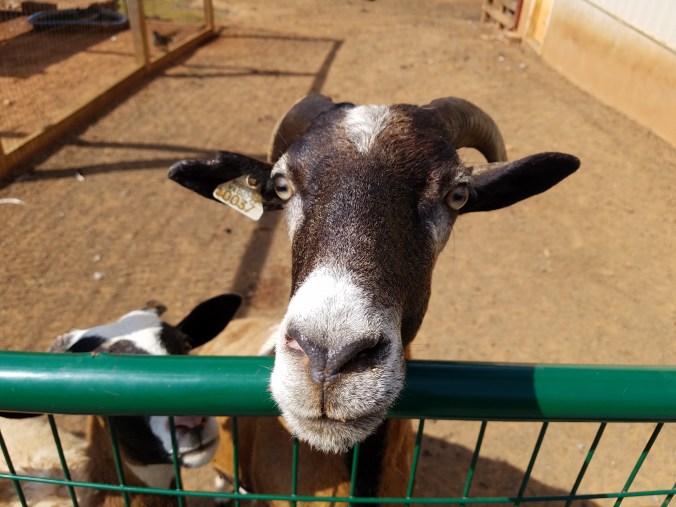
This goat has a habit of sticking his head up over the fence of his enclosure.

goat1.jpg

Why is he doing this? Because he wants food. His chances are better that someone visiting Yoder’s will come along and give him some if he sticks his head out and lets everyone see those big eyes. Experience has taught him this.

Coco has a habit of coming to you with her one-legged monkey (one-legged because she tore the other leg off), standing there, staring at you and expecting you to know what to do. Play with her. Just play.

Coco and monkey

The habit of play is good, assuming you make it a habit. Mom came with Jerry yesterday and taught me and Kaileena a new game called Phase 10. Sandy joined us even though he is generally very bad at games and habitually avoids them. (He ended up dominating completely!)

In it you have to put your cards together to make runs and sets such as a run of 4 like 2-3-4-5 (and they don’t even have to be the same colors in this game) or a set like three 10s or four 6s. Sometimes you want to make sets and sometimes you want to make runs, and sometimes a combination. The card on top of the discard pile might be just the one you need, but sometimes someone else takes it because it’s their turn or they put a card on top of it, burying it forever from usefulness. This is maddening of course.

Say you are on the “phase” of the game where you have to make one run of four and one set of four. Until you manage to make this, you cannot proceed to the next phase. As happens in games that involve some skill but mostly luck, you sometimes get stuck. Jerry found himself continually able to make a run of three or a run of four, but his cards did not seem to want to make sets. He cracked us all up when he blurted out (clearly without considering the alternate meaning), “I seem to get the runs easily.”

I plant the coleus because they look pretty, the goat stretches his neck in hopes of food, Coco comes with her monkey because she wants to play, and Jerry gets the runs easily!

playing phase 10

The world is complicated and our lives are full. We go about our days and weeks and years on autopilot sometimes. As long as those planter boxes are there, I will automatically think of coleus when the time comes to plant pretty things every spring. That goat will look longingly at every last visitor to Yoder’s: You have food for me, right? Coco will come to you at least three times a day with the monkey (or the fox or the giraffe or whichever toy she has not yet torn to pieces — and fyi, no matter what they are, they are all called monkey, no point confusing the poor dog). Jerry’s runs, even though they were by chance – to say nothing of hilarious – did happen over and over and somehow got me to thinking about habits, which is how I got to this topic.

Every once in a while, it is good to think about why we do what we do. Autopilot has its merits. We do a thing because we’ve always done it. We do a thing a certain way because we’ve always done it that way. We have enough to think about, too much to think about, and being able to do some things without really thinking about them is useful.

But not always. Sometimes we do things blindly with no good reason. We just do them because someone said to do it that way or we always just did. Which brings me to The Story of the Roast.

A woman was preparing dinner one day and her daughter watched her cut the end off the piece of meat before putting it in the roasting pan. The girl said, “Mommy, why do you cut the end off the meat like that?”

The woman said, “I don’t know. My mother always did.”

The next time the woman visited her mother, she said, “Mom, a question for you. Why do you cut the end off the meat when you make a roast?”

The mother said, “I don’t know. My mother always did.”

The next time the woman visited her grandmother, she said, “Grandma, a question for you. Why did you always cut the end off the meat when you made a roast?”

Grandma said, “My pan was too small.”

See? Blind habit. Only the first generation had good reason to cut the end off the piece of meat. Subsequent generations had different pans.

There might be very good reason for all of the things you do. There might not. Just think about it.

Flexibility in Cooking, Baking and Other-Food-Making

As I was about to embark on a post about the best brownies in the world, I remembered that I don’t actually have the right pan and would have to explain that. The last time I made them I also didn’t have the right kind of chocolate, but they came out heavenly just the same. I have always known that when I cook I often fudge a bit. I’m going to give credit to (or lay blame on, however you choose to look at this) two women and one magazine. If a woman wrote the magazine article, then three women:

  1. My mother. She did something I have never been able to do. As a child I watched her make meatballs, a common sight. First she put all the various ingredients in the bowl: ground beef, squeezed bread – we will come back to that – eggs, “grating cheese,” parsley, salt and pepper. Then she took her rings off and placed them to the side and mixed the gooky stuff together with her hands. Mushing the whole eggs into the meat and the bread and squishing it all together did not gross me out, but when it was all together (no visible bread lumps, even distribution of green parsley bits, uniform coloring) she took up a little with her fingers and ate it! That always seemed gross to me, still does. But she said How else can I know there is enough salt in it?
  2. Bon Appetit. I have not been able to find the exact article, but in my early twenties I subscribed to this magazine and clearly remember being magnificently empowered in the kitchen when reading about “The Best Tool in the Kitchen.” Your hands! Use them for measuring, it said, as in a teaspoon of salt in your palm or a handful of spinach for the quiche. For mixing, as in my mother mushing the meat, bread, eggs and cheese together to make the meatloaf mixture. For checking if your oven or your pan has reached the right temperature (you don’t actually touch it, you just get close). For kneading, as in glorious, therapeutic kneading of a hefty amount of yeast dough. For pressing, as in pressing the chocolate cookie crumb crust against the bottom and sides of a pan so you can make chocolate lime pie or pressing graham cracker crust for cheesecake. For crimping, as in pie crust around the edge of the pie plate. For spreading, as in the light distribution of crumb topping on a strawberry tea cake. You get the idea.
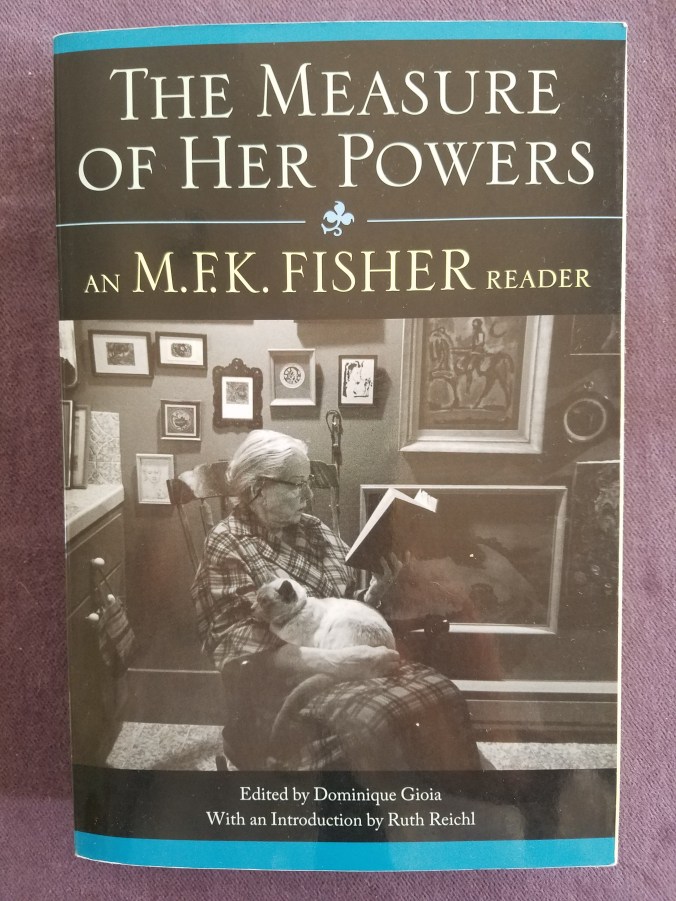
  3. M.F.K. Fisher. A food writer before there was such a thing, this woman’s collection of personal reflections includes a story called “A Predilection for Lame Ducks,” which is ostensibly about her father, but features a tramp named Charles. The butterscotch that Charles made was unlike anything her family had ever had – perfect, perfect every time, perfect even to her mother’s exacting expectations – and the story reveals his secret, which does not exactly make for a happy ending. This story affirmed for me that cooking is connected to the human who does the cooking, and I like it that way. This perhaps explains my aversion to the very idea of food being “processed” in a manufacturing facility. The personal, amazing, human touch is a marvel I’d like to celebrate and encourage.

MFK Fisher

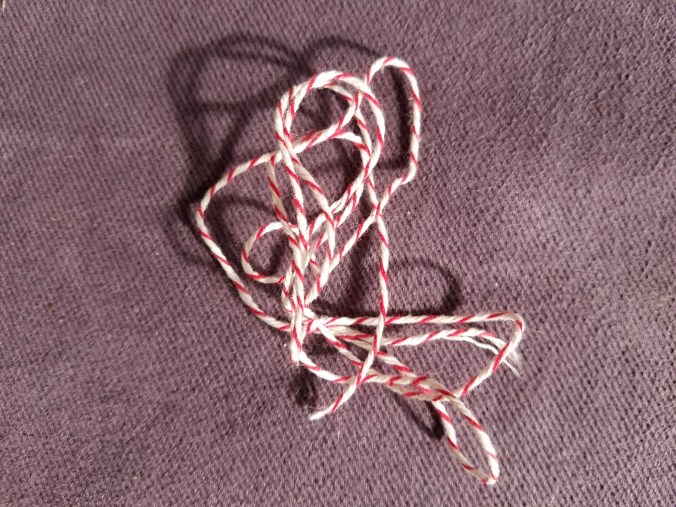
The bottom line is that cooking, baking and other-food-making have an inherent flexibility to them. When my mom got ready to make meatballs, she first had to open the package of meat. When I was a child, before the Shop-Rite supermarket was built, there was still a butcher shop in town. The butcher weighed the amount of meat you asked for on a scale that hung – shallow metal bowl on one side, counterweight on the other – and then wrapped it in a waxy paper and tied it with red and white string. She might have said “and a pound of ground beef” to the man (it was always a man in there) and just like the experienced people who work at deli counters everywhere, he came pretty darn close to a pound on his first try. He knew what a pound looks like. If we were having company for dinner, she might say, “a little more today, please” and when it looked like the right amount to her, he wrapped it up.

This is the kind of string I mean. They still use it at a lot of places, including Mike’s Pastry, a terrific cannoli place in the North End of Boston. The delicious cannolis are long gone, but the string brings me back.

red string.jpg

Later when Mom bought ground beef at Shop-Rite, she took a package from the refrigerated case. These were marked to the hundredth of a pound, maybe 1.03 pounds or 1.13 pounds. If she needed “a little more” maybe she bought 1.37 pounds, or to make enough to be able to freeze some, maybe 2.41 pounds. Correspondingly, the quantity of squeezed bread, grating cheese, eggs and salt and pepper had to be adjusted, all of which she did by eye, by feel, by (ugh) taste.

When she made what we fondly and invariably called “sauce” (i.e. the tomato-based red sauce for pasta that included meat), sometimes she started by browning up some Italian sausage in the pot – great extra flavor and yummy on the side later — and sometimes, if she had it left from another meal, she threw in the bone from a lamb roast or a pork roast. From my mother, early on, I learned that flexing a little on the ingredients adds variety, enhances the flavors and uses up leftovers in a good way. I also learned not to be intimidated when you are forced to flex because you don’t have something on hand. If she was running low on the grating cheese and had only half the amount she wanted, she just added a little more salt.

You can be flexible with pans too. In the early days I eyeballed whether or not the pan I had would hold about the same as the pan that was called for. You can use math for this as well. Last year I was translating a brownie recipe for some friends in Germany and remembered that they don’t necessarily have 8-inch square pans. Springform pans are more common there than here. So what size springform pan would hold the same amount of brownie batter as an 8×8? You just have to do the math (then convert to centimeters, but okay, this is still basic math). Your brownies might be a little thicker or a little thinner, but as the Germans might say, “ist egal”: It doesn’t matter.

In the short run being flexible makes for less driving (fewer trips to the store for the one thing you don’t have) and in the long run for less stress and maybe even better results. You don’t have pickle relish but you do have pickles? Not a big deal — chop up the pickles. Maybe you decide you like it with a little more texture. You don’t have any of the homemade vanilla that you love to use in your banana bread? It won’t be exactly the same but you can use the extract you bought in a grocery store. (Next time you’ll remember the homemade stuff!) You have only two carrots for your soup and it calls for three? It’s not the end of the world. Pretend your carrots are bigger than usual. You had to substitute Jarlsberg for domestic swiss in your quiche? You might find (I suspect will find) it’s actually better that way.

By extension, life also has an inherent flexibility to it. Working with food in the kitchen helped me learn that. Things don’t always go the way you think, you don’t always have what you need, people don’t always come through the way you wish you sometimes have to wiggle your way to the end goal. Ist egal. You learn to do the best you can with what you have in the time you have it.

Plastic on the Floor

The first time I met Raffaele, he was on a work exchange from Italy with IBM, in town for a few weeks and (I was sure) missing his wife and three girls. In my 20-something, half Italian mind, it was a natural assumption that he might like to come to dinner because in my family it was all about the food. Which was normal, especially for Italians, right?

This happened thirty years ago. I don’t remember what time of year it was, nor what I cooked that night. But I do remember one extraordinary thing Raffaele said.

Right about then we were needing a new kitchen floor. Things had gotten to the point where I had been to the flooring store and brought home several samples of high grade vinyl. I emphasize that this was not the really cheap stuff. Nor was it bad looking. I don’t have pictures of it. You’ll see why.

It seemed to me a reasonable point of conversation after dinner. Why not get Raffaele’s opinion on the flooring samples? It was something to talk about. These were the big, stiff pieces with patterns both classic and up-to-date. One by one I showed them to him. “What do you think, Raffaele? Which one is your favorite?”

He did not choose one. He did not choose any. He simply asked, “Why do Americans always want to put plastic on their floors?”

It had never occurred to me to put anything other than vinyl on a kitchen floor. Everyone’s kitchen floor was vinyl. Everyone’s I knew. I was taken aback by his question. Not offended, just taken aback. There are other options?

Well, of course there are other options. Unsurprisingly, vinyl did not win out over the others which I opened my mind to. The white ceramic tile with black grouting that we subsequently chose and installed ourselves turned out to be a far cry better. It stood up to the traffic in our busy house (four kids, then five, two dogs, lots of company), cleaned up easily and looked really nice.

I was ever afterwards always grateful that he had had the guts to ask the question. Someone else might not have tried to tell me I was on the wrong track, might not have risked offending me. But no matterwe got a much better floor. Raffaele made my little world a little bigger that evening. He stretched me, got me outside the box, encouraged something better. Looking back, I wonder if I even knew I was in a box – a vinyl box! Maybe I was open to his question because some little voice inside me said It’s okay, you can step out, stretching is good, there are other ways to accomplish this goal. And something better came. In the end, something way better.

This is not just about kitchen flooring. If a box you are in gets in the way (or might get in the way) of a better you or a better something you are working on – whether a project or a perspective or a relationship – maybe you should step out too. I know it’s safe (or safer) in the box. I know there are reasons to stay in it, sometimes very good reasons. You know it too. We are comfortable in the box. Stretching can hurt. Stretching can be super challenging. But we miss a lot if we stay in the box. The world is huge and amazing and full of endless possibilities. Combine an open mind (including the ability to admit you were on the wrong track), careful use of resources, thoughtful decisions and intelligent execution of the better choice, and you’ll get something you had never imagined could be so good. Besides, if you stay in the box it gets boring. And unboring is key, remember that.

Back then, we got something much better than a much better kitchen floor. We got the start of a lifelong friendship. Raffaele and Marisa and their girls later came for a year-long stint, and we had great times together. A few years after that we visited them in Italy. They took us to Milan, Venice and Lake Como. A few years later, we went again, and again. Talk about stretching! Different cultures are different — norms are different, food is different, habits are different. Ways of making a bed, what people eat for breakfast, how they serve a meal or decorate a house, what their mailboxes and their cars look like, what the street vendors sell, what kind of trees grow in their yard, how they react when the unexpected happens, how they prepare for the weather, when they rest, what they take along on an outing… So much to learn, so much to see, so much to enjoy.

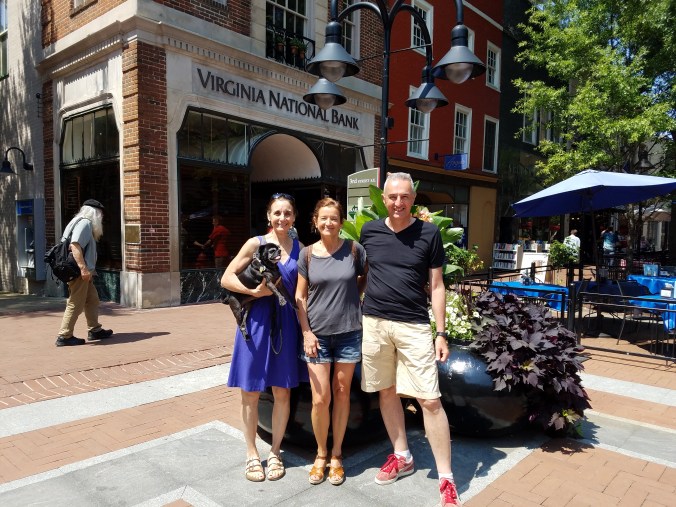
Last week, Raffaele and Marisa came to visit me. They had never been to Virginia before, so they got stretched a little too. I remembered that they don’t eat meat and made them my Italian grandmother’s “Italian Ham Pie” with spinach instead of ham. And I made the best brownies in the world because I know they love brownies. Marisa thoughtfully brought me tortellini stuffed with prosciutto! This I have never seen for sale here. We caught up with all the latest about our children.

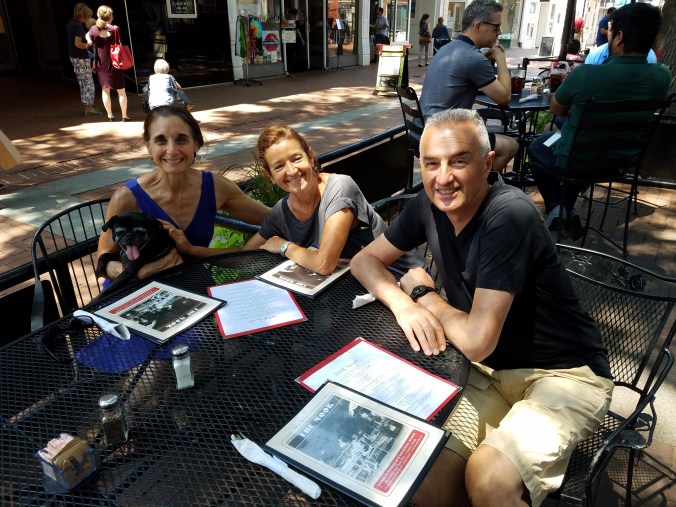
We walked downtown,20180712_114452

had lunch,

20180712_122531

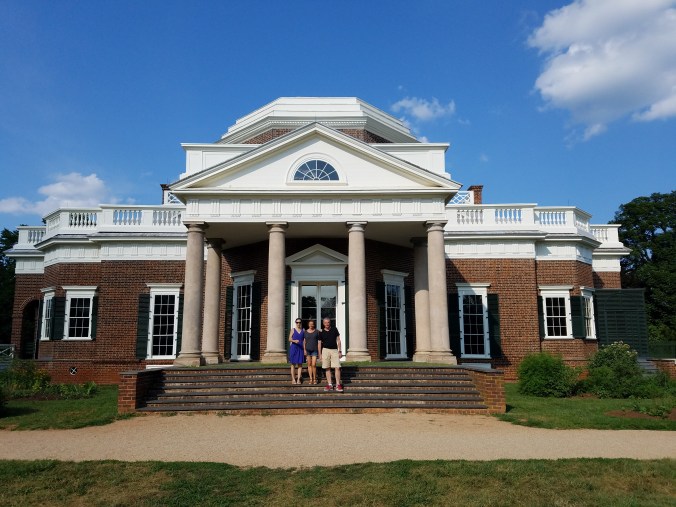
visited Monticello,

20180712_173526(0)

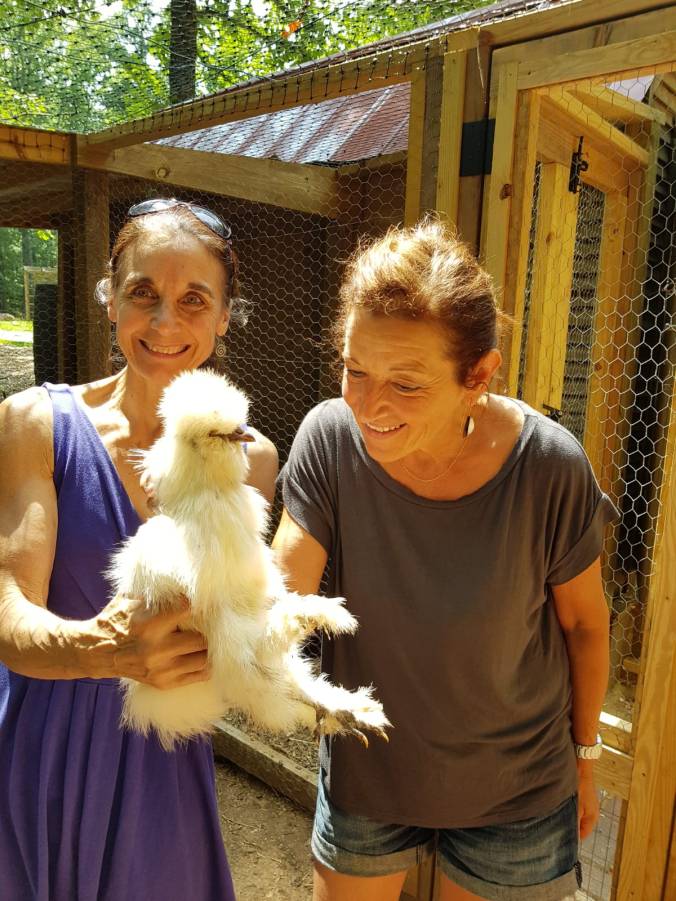
played with chickens,chicken

and laughed and laughed some more.

During their short but wonderful-beyond-words visit, I thought about what I (and my family) might have missed if just two things had been different. What if I had not invited Raffaele to dinner in the first place all those years ago? (I might never have met him or his wonderful wife and daughters.) And what if I had decided to take offense at his question? (Our beautiful friendship might not have developed, might not exist.)

About this Italian ham pie and these brownies: you are sure (and you are right) that they are both very delicious. I will show you how to make everything, crust and all, if you promise to 1. invite someone over for dinner sometime soon, maybe someone new to your area, and 2. assume the best (about their words, behavior and intentions) unless you have very good reason not to.

The Cookbook Comes Out

I grew up in the era of television commercials. One of my favorites was for Almond Joy and Mounds: Sometimes you feel like a nut, sometimes you don’t! I don’t eat nuts at all, and even if you took the almond off the top of the Almond Joy I would not eat it, though I am fairly sure it is exactly the same dark chocolate covered coconut underneath as Mounds is. I would eat Mounds endlessly if only there were not a price to pay for such a delicious indulgence.

I find it’s the same with living in the country. Sometimes you feel like going outside and getting yourself busy with something that is likely to involve wheelbarrows, garden gloves and sweating. Some days I wake up and can hardly wait to get out there. Yesterday I was so anxious to get going (on weeding of all things! It had rained, okay? and I knew the ground was soft, and I had guests coming, and it would get hot later…) that I got dressed in my grubbies before even taking the dog out, then just stayed out there weeding after she did her thing. She stood next to me for that hour with a look on her face that clearly said: This is not the way this works. We get up, we go out, I do my thing, we go back in, you feed me breakfast, then you do whatever else you want. What’s up with messing with the routine? Hungry here! Starving! Wasting away!

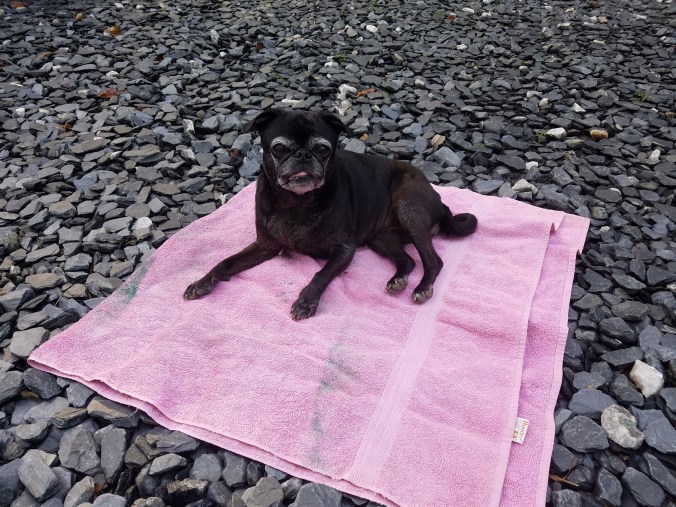
Needless to say, she survived the wait. When we went out after breakfast, she came again, this time standing there with the look that said: Yes, great, my belly is full, but do you really expect me to lay down on these stones? I went and got the old pink towel that doubles as a soft outside blanket for her (which of us is well trained!?), put it in the middle of the driveway where she would be near but not underfoot, and watched her lay down and look up at me with her That’s more like it face.

Coco on towel

But sometimes you don’t feel like going outside. Today I had no such drive. It was a pleasant morning just the same as yesterday, cool enough, calm, lovely. I wasn’t put off by the coyotes howling somewhere in the distance. I didn’t feel overly tired or sore. There is plenty to do out there (and there will be for the rest of my days!). But my inner voice said No, today is a good day to bake!

My 10-year-old great niece Kaileena is coming for a visit with her 4-year-old sister Brea, her mom (my niece Erika) and her grandma (my sister Lynn). I was thinking yesterday about what Kaileena and I will do together next week when the others have gone to North Carolina. I was thinking about baking. We will make pizza together for sure, and maybe crackers (some of you might remember my cracker post from a few years ago – I have a hankering for those again!).

But before they come, some baking would be good. Think about how you feel when you go visit a family member or a friend and they have baked for you or prepared yummy food of any kind for you. That’s how I want my friends and family to feel. Besides, good neighbors of mine brought me some scrumptious lemon bars this past Saturday and I want to give the container back, but with something in it. Many years ago, my friend Kim told me that she and her mom had a plate that went back and forth between them a number of times because neither one wanted to give an empty plate back to the other. I always liked this idea, so I will put something yummy in Jen’s container.

Like anyone who is comfortable in the kitchen, I have some old stand-by, tried-and-true recipes for sweet things that time and again I find myself falling back on. Why? Because they are good! Chocolate chip bars, for instance. Strawberry tea cake. Oatmeal cookies. Sour cream coffee cake – oh, with blueberries in it at this time of year! That won’t fit in Jen’s container very well though. And two children are coming…

I settled on chocolate chip bars, which I made countless times over the years, so many times that the recipe was clearly in my head. I said was because I was a little disappointed in myself this morning in that I was slightly unsure of the amount of butter (Rule Number One: Always use real butter). Being unsure meant that I had to take the cookbook out.

THE cookbook.

Back in the day everyone had a cookbook, everyone I knew anyway. Well, some people had a little file box with 5×7 recipe cards in it, but that system never worked for me. You write recipes on a scrap of paper sometimes, or the back of an envelope, and scraps don’t fit well in a file box. Here is one example from my book. Believe it or not, this is a recipe:

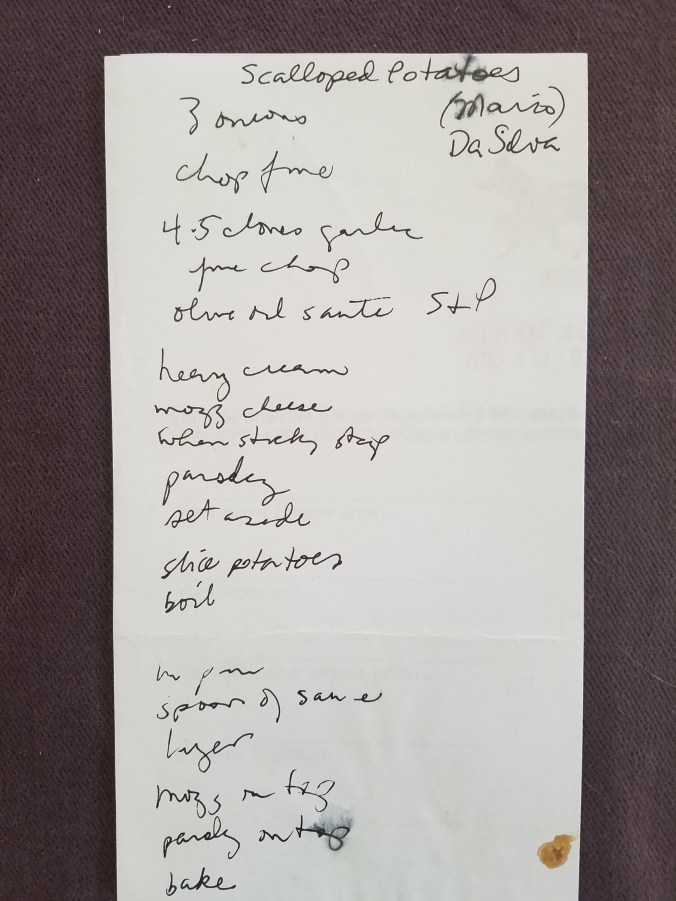
scalloped potatoes

Mario Da Silva was the Villa lunch chef at Keswick Hall for years. He verbalized this recipe to me and I scrawled it out (clearly in a hurry!). It says

Scalloped Potatoes (Mario Da Silva)

3 onions

chop fine

4-5 cloves garlic

fine chop

olive oil    saute    S&P

(What is the difference between “chop fine” and “fine chop”? You tell me!)

heavy cream

mozz cheese

when sticky    stop

parsley

set aside

slice potatoes

boil


in pan

spoon of sauce

layer

mozz on top

parsley on top

bake

That makes sense, right? I’ve made these potatoes several times. They are my mother’s favorite.  Mario now works as the Executive Chef at the Holiday Inn in Sarasota, Florida. If you are in Sarasota, go eat there. Trust me. I never saw a chef get more accolades! And he’s cute besides! (Hello, Mario and Mary!)

My cookbook is in a three-ring binder using plastic sleeves. That way, whatever slip of paper or card a recipe is on, I can find a way for it to fit. For the most part, the recipes written in the standard way, with a list of ingredients followed by instructions. The style of Mario’s potato recipe is the exception (you knew that).

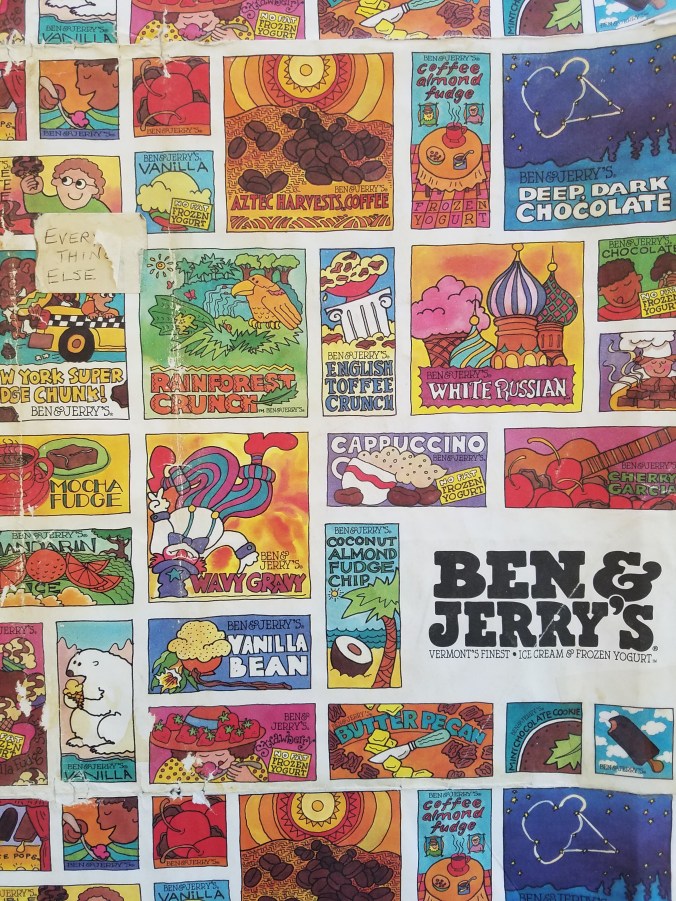
I love so many things about my cookbook. Back in the day I had two smaller notebooks instead of one bigger one. I had one for BREADS CAKES / PIES COOKIES and one for EVERYTHING ELSE. Guess you know where my priorities were! I covered the notebooks the way we used to cover our schoolbooks with brown paper bags cut to fit, except I had book cover paper that had been a giveaway at a Ben & Jerry’s stand at the fair one summer in the mid 90s.

The paper was so colorful and fun. We lived in Vermont then and Ben & Jerry’s was still a local business. I loved my cookbooks covered in this paper:

ben and jerry 2

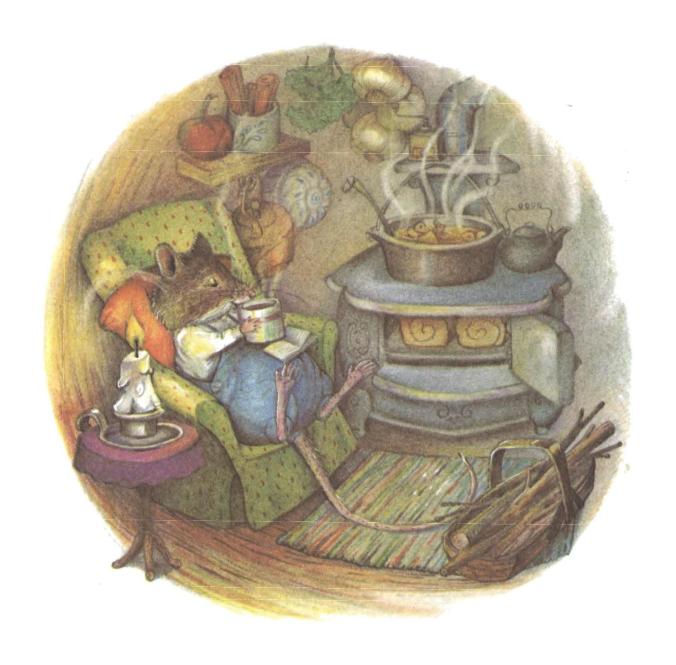
When I made cookbooks for each of my children about ten years ago, I didn’t have any more Ben & Jerry’s paper, so I scanned the last image in The Town Mouse and the Country Mouse, retold and illustrated by Lorinda Bryan Cauley. It is one of my favorite images from when my children were small and I used to read to them (a lot).  I think it made a great cover for a cookbook.

towncountrymouse

The text just prior to this image says: “Then off he went to his snug little home in the fields, whistling a tune and looking forward to a good book by the fire and a mug of hot barley-corn soup.” The cozy chair, the tea kettle on the stove, the cinnamon swirl bread in the oven (just like I made many times!), the soft lighting … I can almost smell that bread!

Inside my cookbook is a collection from many years of trading and finding good recipes. Many are handwritten, which is precious in its own way. One look at the recipe and I know who gave it to me, even if their name is not on it. I see Lyn Boyce’s handwriting, my daughter Marie’s from when she was a teenager, my son Samuel’s, my mom’s, my grandmother’s, my sister Lynn’s, Kim’s, Claudia’s, Anett’s, Crissie’s, Marisa’s, Judy’s, Margaret’s, Eileen’s, and Mario’s (not quite as challenging to follow as my scrawl, but close!).

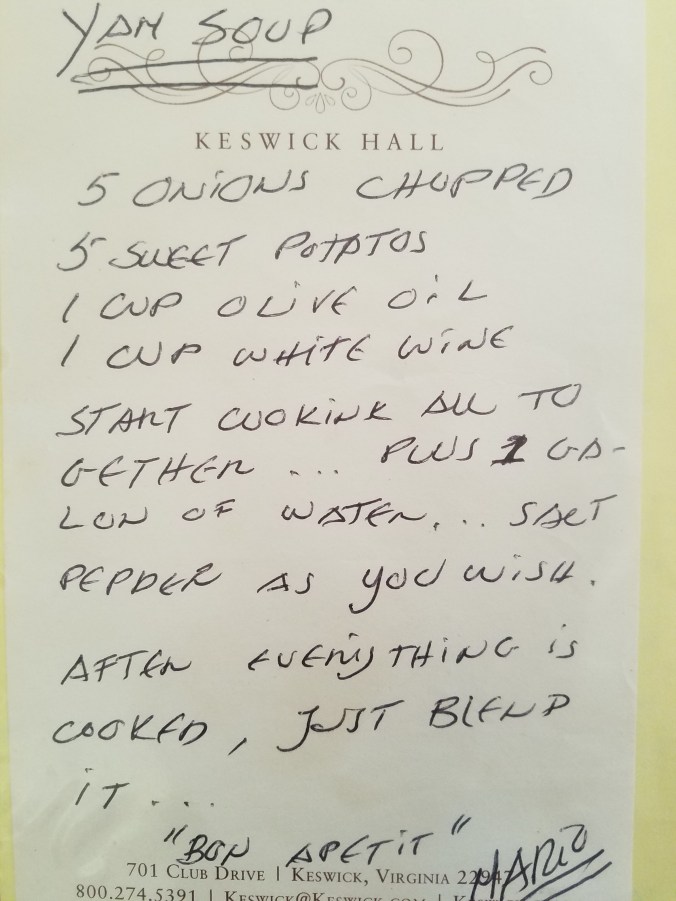
This is really good soup, by the way. Don’t you love it: “…PLUS 1 GALLON WATER… SALT PEPPER AS YOU WISH. AFTER EVERYTHING IS COOKED, JUST BLEND IT.” You know what that means, right? That means a blender, a few scoopfuls at a time. Did I mention that this is really good soup? And see, not everything in my cookbook has sugar in it!

Mario's yam soup

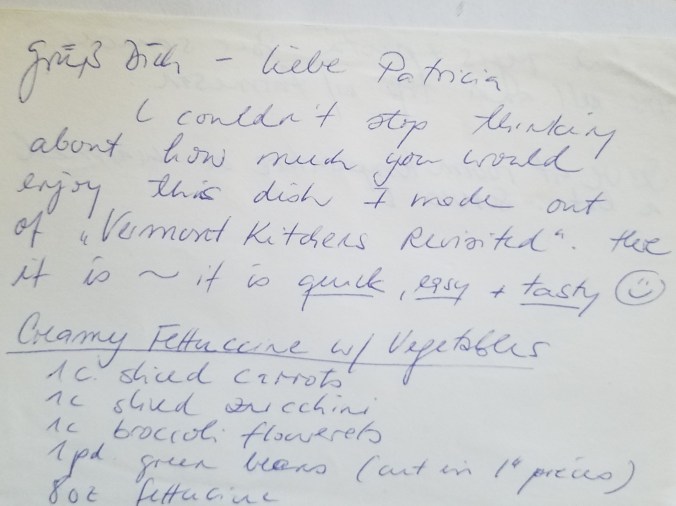
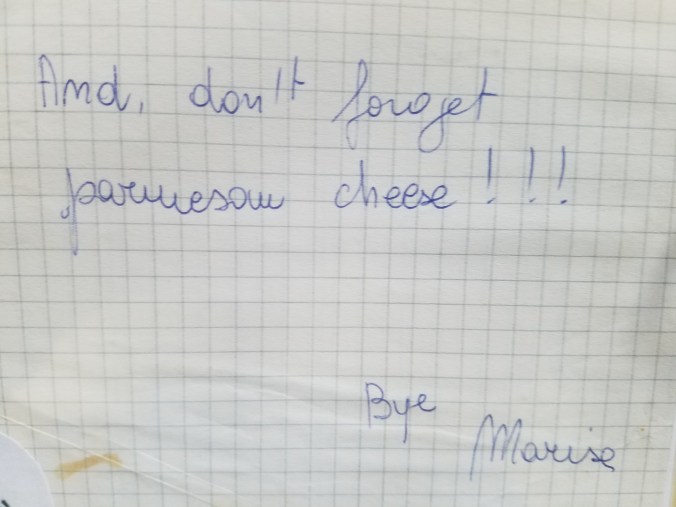
Handwriting is a reflection of personality and individuality, as unique to every person as their voice or their laugh. How blessed am I to have such a collection! I also see recipes cut from the side of packages or from magazines, printed from emails, hand-copied from other cookbooks, typed on an old typewriter. I see smudges, stains on the paper (from pre-plastic-sleeve days), translations (from some of the German recipes), even notes to me, like these:

Claudia's fettuccini (2)

Marisa's handwriting (2)

There is nothing in the world like the combination of good food together with friends and family. You can make all the amazing dishes you want, but if you don’t share with people you care about, something is missing. Sharing good recipes is not as fun as being with people you love and eating the food that good recipes make, but it’s right up there.

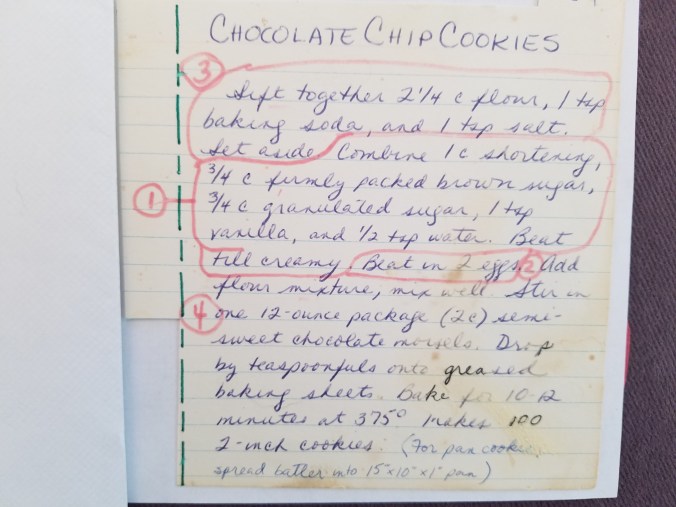
Back to the chocolate chip bars. The recipe (below) says Chocolate Chip Cookies. I haven’t made it as cookies in years. Bars are easier. You put all the dough (no need to grease the pan) in a 9×13 pan. I don’t know why it says 15×10 at the bottom of the recipe – ignore that! Spread it out and bake until golden brown on top, maybe 25-30 minutes, I’m not sure. You tell it’s done by the color, not too dark, not too light. When it has cooled, you cut them up however big you want them.

With bars, you also achieve a more reliable goo-factor — you know, when they are still fresh and the chocolate (which melts together more in bars) is so soft it’s gooey, even kind of a mess. Almost heaven. Almost because, like Mounds, there is a price to pay. Then again, life is short. Every now and then, by all means, pay up.

This recipe is so old, it’s from my pre-must-use-butter days. You see it calls for shortening, which I don’t even have in my cabinet any more. That’s part of the charm of it for me though. I look at the recipe and remember when I kept a cardboard can of white fatty stuff, and I used it! The flavor with butter is so superior, to say nothing of shortening being a mystery food for me, and I like to know what I’m eating: What is that white fatty stuff and what do they have to do to make it? We need to see our own progress sometimes to be reminded of how far we’ve come. It’s like finding some hideous shirt in my closet and thinking I used to wear that?! Then again, sometimes the shirt is hidden for a long time and years later I find it and say, Hey, look at that nice shirt! Maybe I’ll come around to shortening again too.

I always wondered about the half teaspoon of water – could it really make a difference?  What if the eggs are bigger than usual? Might that not be at least half a teaspoon of water difference in the overall amount of liquid going in? But I always put the water in anyway. Some things you just do.

This is the only recipe in my entire book with sections circled and numbered, which I clearly did after the fact. I think I did this in an attempt to tell someone (one of my children maybe?) what order to do it in. Sorry for any confusion. 1. Combine butter, sugars, vanilla and water and beat till smooth. 2. Beat in eggs. 3. Add dry ingredients (I never combine them first any more) and stir them in. 4. Stir in package of chips.

You can add a handful of old fashioned oats if you want. This adds texture and makes them a little easier to justify. A couple shakes of cinnamon is wonderful too. Or add some chopped nuts, let’s say half a cup, if you like nuts. Walnuts might be good, I’m not entirely sure. Nut-eaters could tell you better.

I could type out this recipe, but it wouldn’t be the same.

choc chip bars

Yanking My Way Through the Jungle

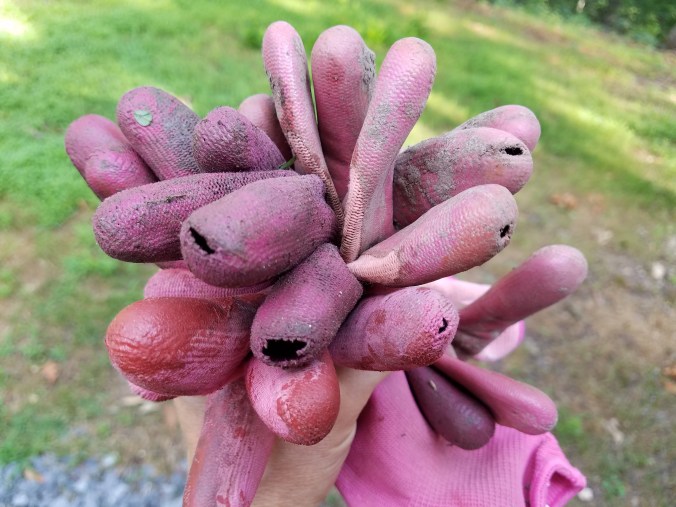
About three weeks ago my friend Fred came for a visit. I don’t know what you do with your friends but sometimes with mine we end up at Lowe’s. Among other useful things, we bought a three-pack of hot pink garden gloves (for me, not for Fred). The palm side is coated with a waterproof layer of some kind of plastic and the back-of-the-hand side is a stretchy cloth to breathe and flex with your movements. They were shiny and clean, but not for long. This is what they look like today. You can see I used one pair for painting the bench.

gloves.jpg

The same thing happens to me when I get rubber gloves for cleaning with detergent water. I end up blowing through the right fingertips. At this very moment there are at least three perfectly good left-hand rubber gloves in my cleaning supply cabinet.

I need gloves. My hands would be torn to pieces without them. Last week I found myself yanking my way through this jungle in the back corner of my garden. This is how it looked when I just got started.

20180713_084901.jpg

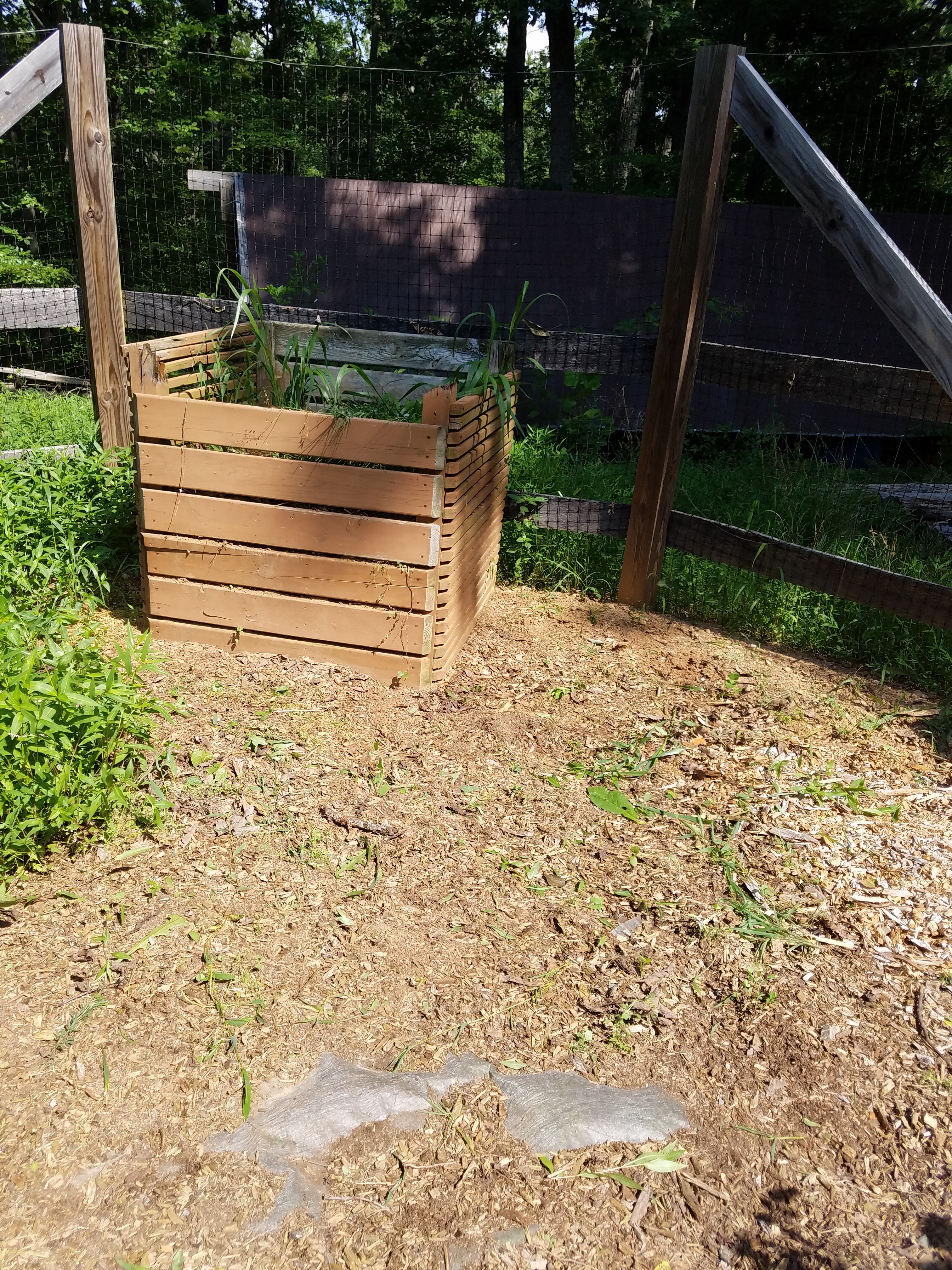
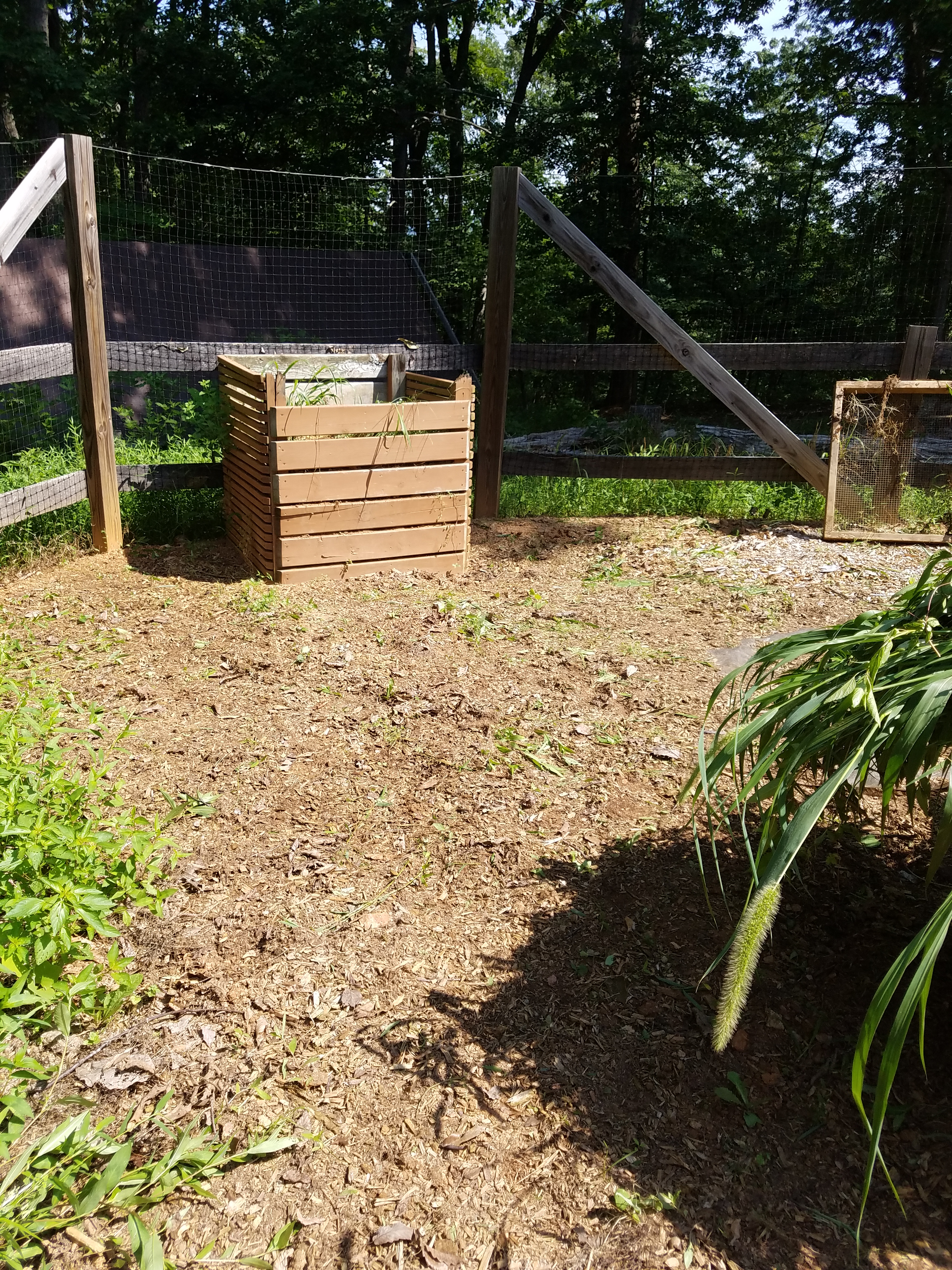
In the very back corner there is a wooden box that my boys built years ago as a compost box. Trust me. Guess what I will find hiding next to it when I get there.

20180713_084906.jpg

When you have a job like this in front of you, there is nothing for it but to Just Do It. Yank, yank, breathe. Yank, yank, breathe. I felt like Michael Douglas and Kathleen Turner must have when they hacked their way through the Columbian jungle after (one of the times) they got away from the bad guys in Romancing the Stone. At least I’m fairly certain I will not come upon a downed airplane with a rotting corpse inside!

20180713_090757.jpg

I’m aware it is the middle of July. Had I done this section sooner, it would not be so dense and high. But there was the chicken coop and the viewing deck and the strawberry patch and the bench with my uncle…

20180713_093044.jpg

You just have to keep going. By this point the wheelbarrow was so full it would hardly hold more. But I was like Mike Mulligan and His Steam Shovel – he had quite forgotten to leave a way out, and I had quite forgotten to make one! There’s a door at the back of the garden. Go through that and you come to Weed Mountain. The size of this mountain stays remarkably the same over time no matter how many weeds you add to it. Rain and decomposition counterbalance the additions.

20180713_090807.jpg

I had to make a path to the door. One side of the door anyway. One side would serve (best to be expedient here). Those are blackberry and raspberry bushes gone crazy on the left. I’ll get to them another day when I have way thicker gloves. The thorns in those off-shoots are nasty.

20180713_095611

I used my (isn’t it beautiful?) newly created path to get to Weed Mountain, emptied my load, then turned my attention toward the compost box in the corner – look at the next picture and you see it now, don’t you? (I didn’t think so.) Surely though, you can see that I do not get every single weed. A few survive my yanking. I return for a second pass later, and will get most of the stragglers then. We all have a style and I have mine, thank you.

20180713_100416.jpg

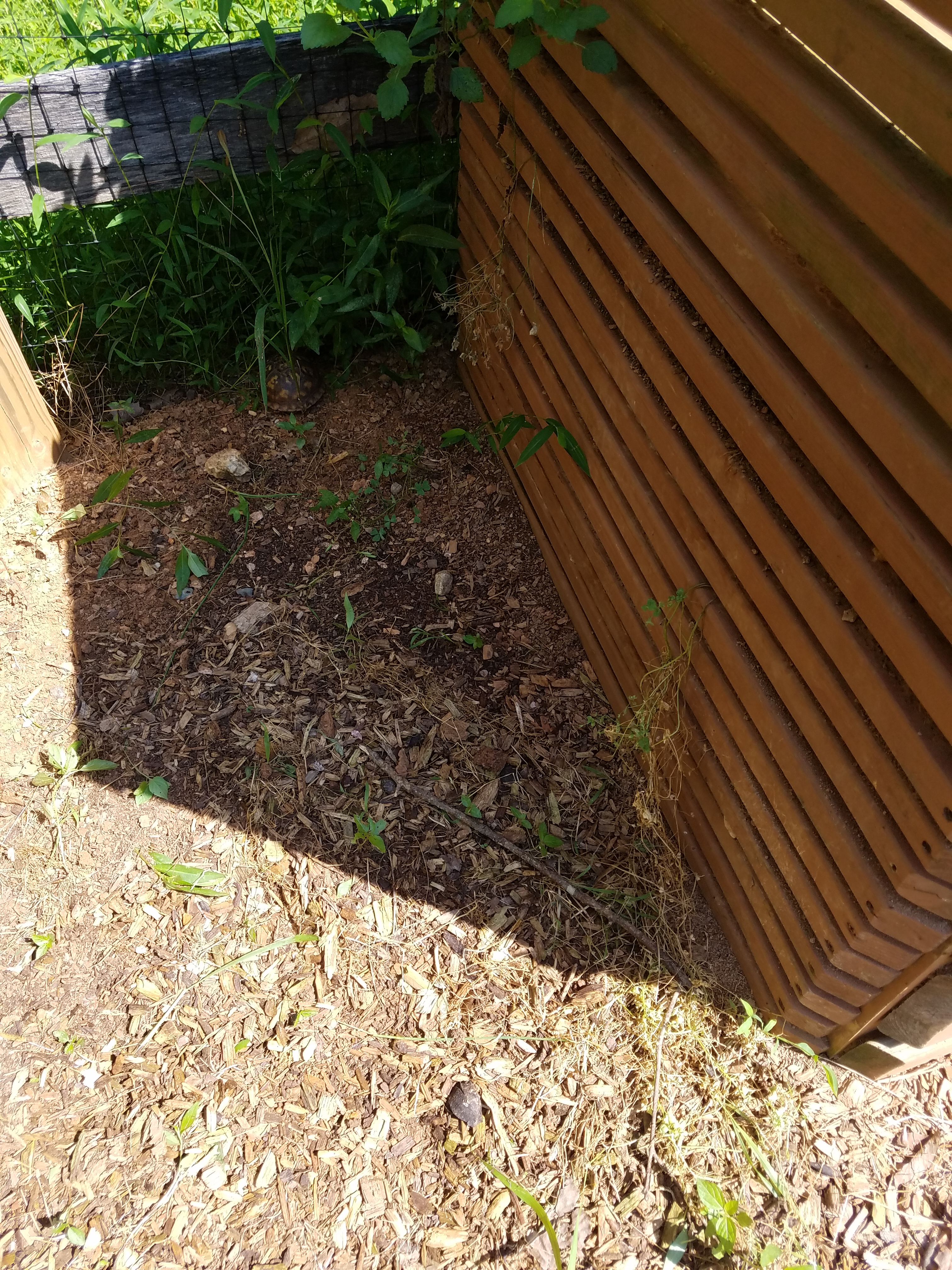
Yank, yank, breathe. Yank, yank, breathe. As I slowly revealed the box, I found a little fellow.

20180713_103436.jpg

He had had the right idea, and I commend his choice of location along the right side as close to the deer fencing as he could get. No way, he had said to himself, no way is anyone going to find me way back here. Foiled!

20180713_104205.jpg

That’s the box. I told you it was there. Almost done, just keep going…

20180713_105328.jpg

The little fellow had been in the shady weeds before I came along, so I moved him into the shadow to the left of the box:

20180713_105334.jpg

See him back there? It was a good idea I thought, but he didn’t like it. Either that or he was so traumatized by being found and then moved, he had to find a more private place, and of his own choosing. (Damn humans.) I got busy with the next section and didn’t see him again.

Finally the area was decent. I didn’t say perfect. Fred had to tell me several times when he was here that “Perfection is the enemy of good.” I wonder what prompted him to tell me that. It reminds me of a saying I got from Claudia when she was here from Germany in the fall: Zu viel nimmt weg von genug, literally Too much takes away from enough. I.e. leave it alone, it’s enough. When it comes to weeding, you have to know when enough is enough. This is enough, don’t you agree?

20180713_111701.jpg

Someday I might plant something back here, but in the meantime I’m just going to mulch over it and forget about it.

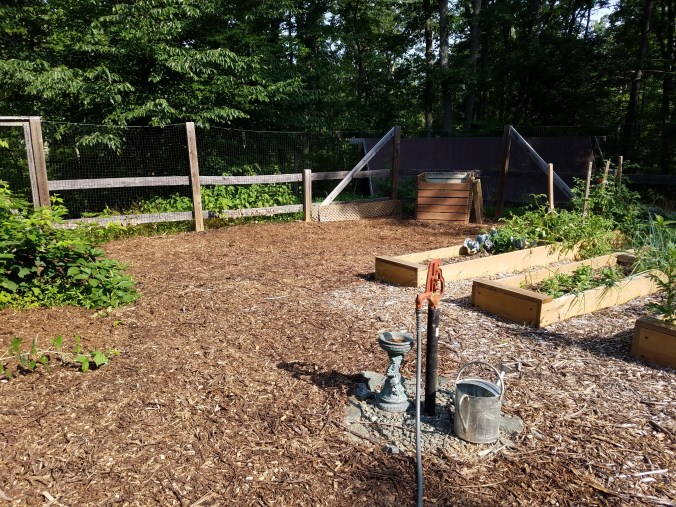
You already knew that my gloves are shot. And for some reason my fingers are sore. But oh, the jungle is tamed! And you see I also pulled those beetle-eaten Brussels sprouts from the last planter box. It all looks much neater now. Almost civilized.

mulched 7.15.jpg

And did I mention the bench is finished?

finished bench 1.jpg


Water Runs Downstream!

Everybody knows that water runs downstream. So why should I get so excited to see it?

A bit of a recap first for those who missed the earlier post on this. Some weeks ago, during a bad rainstorm, I noticed that water was running from the level of my driveway downward. The problem was that it ran all through my chicken coop area. That was fixed with a small retaining wall, plus a berm along the driveway, which did the job of keeping the water away from the chickens. But in the next storm it flowed through the mulch in the area next to the chickens, making a mess of the mulch. Long term, this was not a good plan. In my head I see a woodland garden in this area (someday!), and I can’t have water running willy nilly.

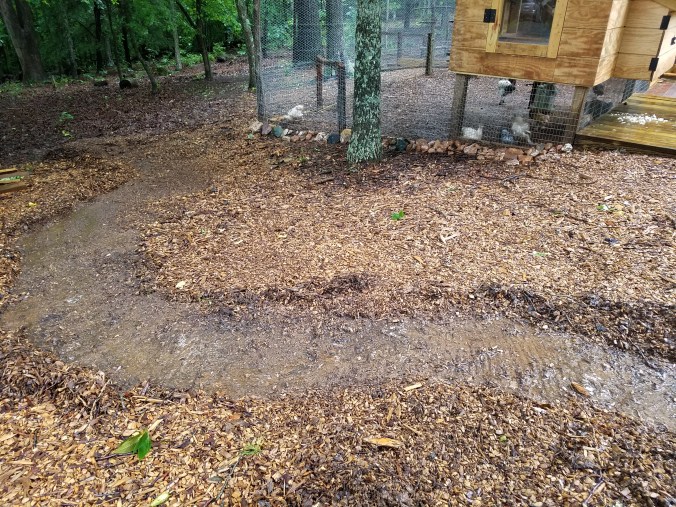
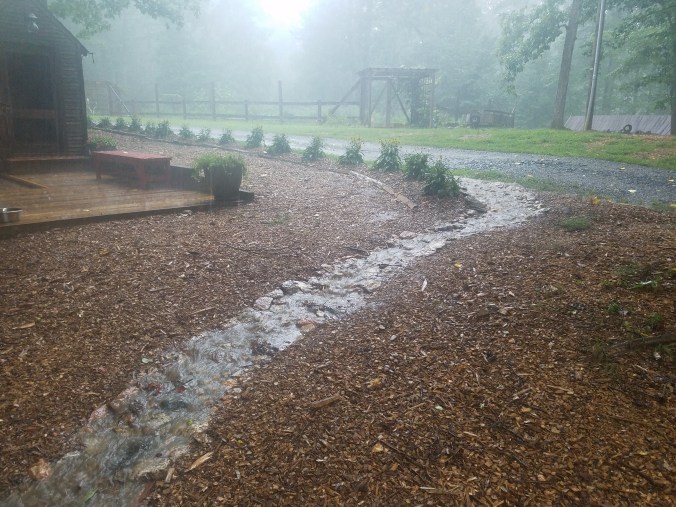
I could see generally where the water had flowed because of how the mulch had been moved – curve here, curve there, according to the lay of the land. I raked it back to the banks of what looked like a natural path for the water to go, and sure enough, in the next rainstorm, the water followed the path. It looked like this:

b.jpg

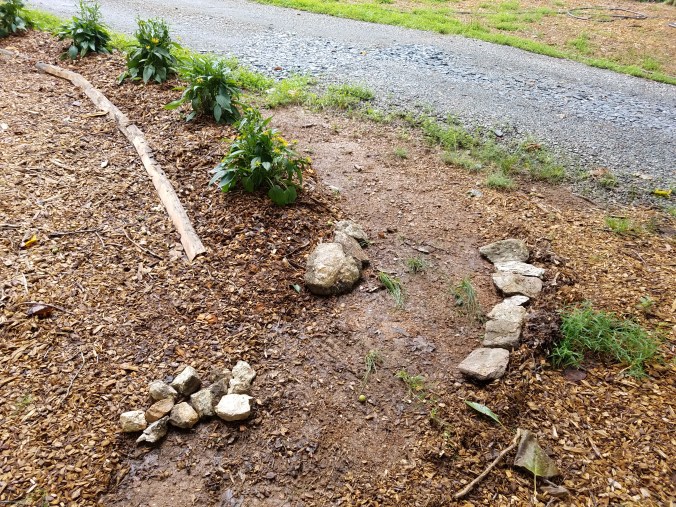
Those are some beautiful curves, but I wanted to make them more beautiful and feel a bit more certain that the water would go where I wanted it to go. I decided to make a stream bed with rocks following that same path. It was a lot of work finding, hauling and laying the rocks. It took a long time.

20180623_104937.jpg

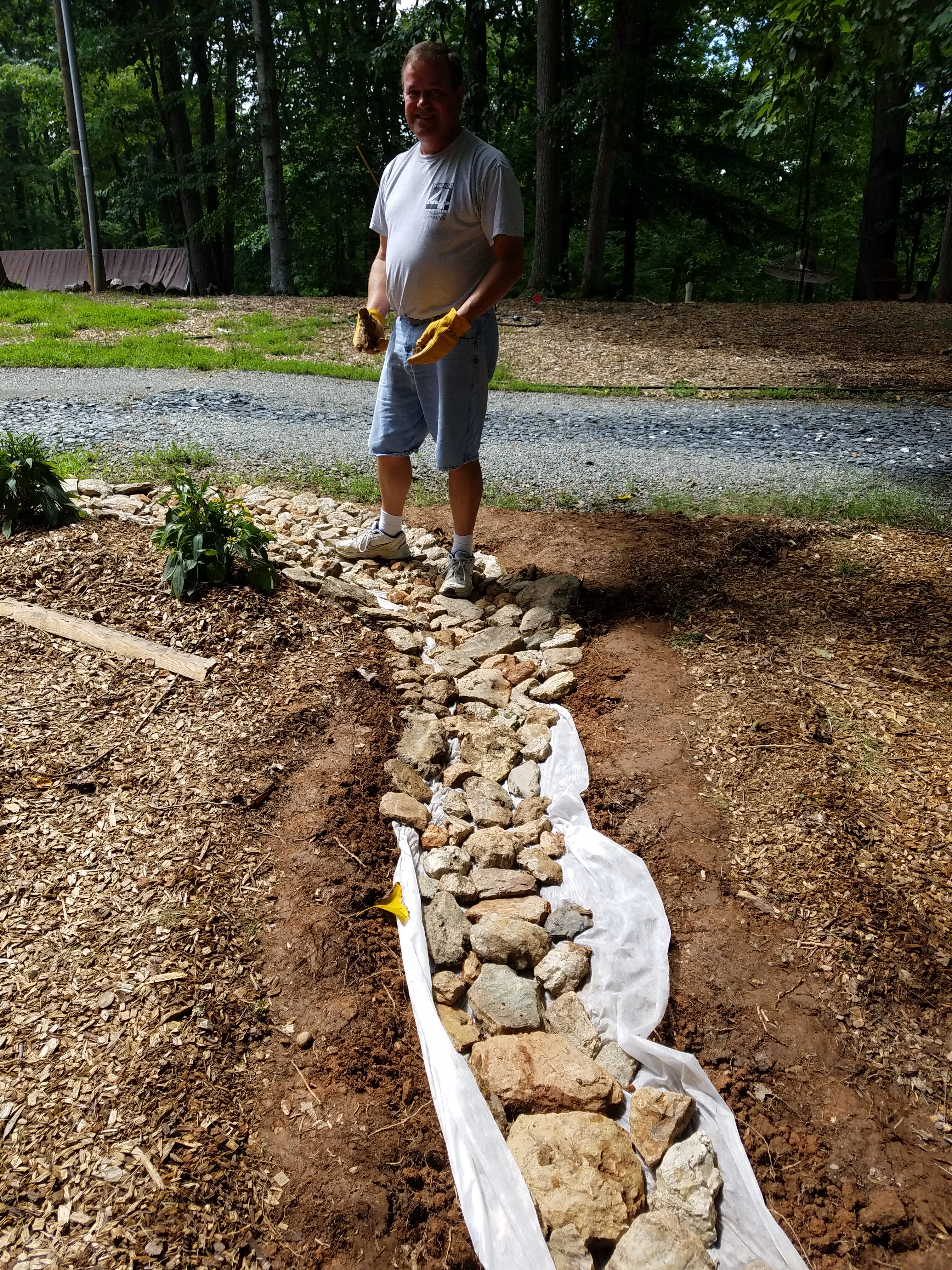
I laid down white landscape fabric under the rocks to keep the weeds at bay and dug out the bed somewhat to make it easier for the water to obey.

20180623_145538.jpgThat’s Fred, who helped me with the first third or so of the total length. You can tell he was thrilled about digging dirt and laying rocks. Who wouldn’t be?! Look what’s coming! Pretty soon it looked like this:

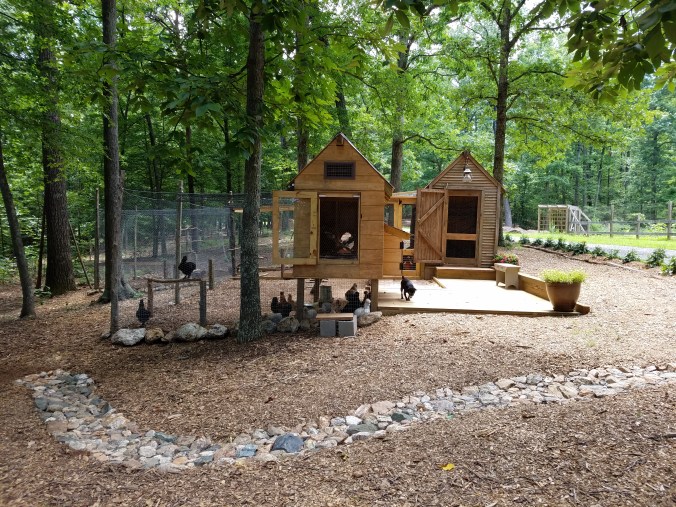
20180702_135702.jpg

I say pretty soon because in retrospect it seems like it took no time at all. How quickly we forget pain and hardship when there is a favorable outcome! It reminds me of the lady in labor in the room next to mine when I was giving birth for the first time (or maybe the third time or the fourth time, I forget that too). She screamed in pain, let me tell you. There was no question that she was not having a good time, no question that it hurt! Well, I had my baby and she had her baby, and coincidentally she and I were placed in the same recovery room. We were both resting when her phone rang. The person evidently asked how things had gone, and she said, just as cheerfully as anything, “Oh, it wasn’t that bad!” Lady, I thought, it was that bad! I was there!

Yes, we forget. I forget the digging (the hacking at Virginia concrete soil, more like) and the tree roots and the bug bites and the hot sun and the heavy rocks and my aching body at the end of the day. Did I mention the heavy rocks? They are heavier when you put a bunch of them in a bucket and carry them back to the work site, a trek which more often than not included an uphill climb. But no matter. In the end I had a beautiful stream bed. And then, of course, we had a dry spell.

I had to water all the plants in the berm and elsewhere it was so dry, so one day when I had the hose out there I stood at the head of the stream bed and let ‘er rip. It took a good bit of water but it flowed the way it was supposed to. My bed passed a small test, but the real deal would come when the skies opened.

I waited and waited. It poured in the night once or twice but I slept through. Today was my lucky day. The wind kicked up in the late afternoon, the gigantic trees outside my windows started to sway and I heard the first drops fall. This was not a tease of a storm, this was real. It started pouring at about 430pm, I mean pouring! Picture time!

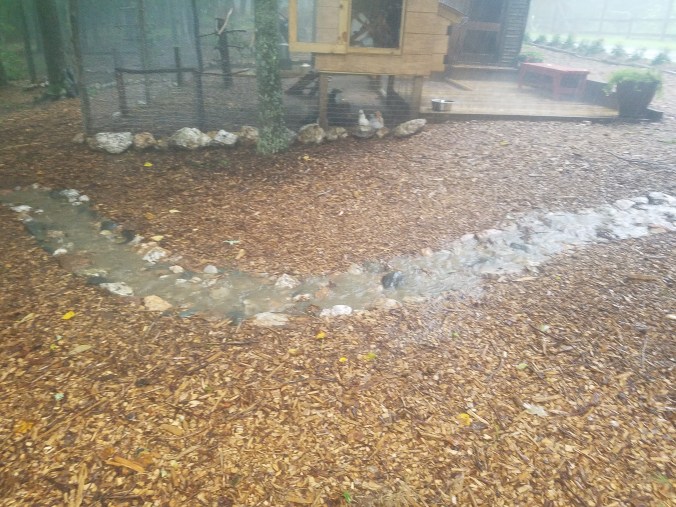
I did remember to put on a hat before running outside, my wide brimmed sun hat, which sort of helped. It was raining so hard I was drenched before I even got to the head of the stream. It took a minute or so for the level of the water to build enough to start flowing over the rocks. I stood there cheering it on… c’mon, you can do it, oh yes, up and over, whoo-hoo, and flow it did! Look at that water flow! It works!

stream bed 1.jpg

That’s water flowing over the rocks! See? Water! A lot of water but mainly where it is supposed to be! Yes!

I know it’s a still photo (wish I knew how to upload the video) but hopefully you get the idea how fast it’s going:

stream bed 3.jpg

I could hardly stop laughing and giggling and whoo-hooing the whole time I was out there (I’m sure the chickens were wondering Who is that kooky human?) – it works! That’s why water running downstream is so exciting! My stream bed did its job! I was soaked through and still laughing when I came back inside. The poor dog, who had scooted out there with me – she never wants to miss anything but I think she regretted this decision – she was drenched too. But she ran all over, found her toy, ran some more, wanted to play. Something really fun is happening, she is thinking, I don’t know what, but something!

Oh, what a beautiful day!
A Firefly Show, Lightning in its Own Time and Other Wonders

Last week at my friend Wendy’s house, her 17-year-old former student, Mackie, suddenly stood up from the dinner we were enjoying, went out from the screen porch and walked slowly along the edge of the woods that border the yard. What was she doing? Wendy, her roommate and I were momentarily unsure. “Fireflies,” her father Mitch said. “She has never seen fireflies.”

Mackie was like a young woman entranced. She stepped softly this way and that toward every firefly that lit up, following as if obedient to a silent call. She said nothing, just followed. We watched, smiling. I didn’t know that fireflies are not commonplace in California, where Mackie and Mitch live. I didn’t know that it’s extremely unusual to see one west of Kansas. I tried to imagine never having seen a firefly.

Several years ago, one of my first Airbnb guests was from San Diego. The same thing happened. This time I didn’t witness the discovery. I read about it the next day. He left me a note that could have described how Mackie felt:

In the middle of the night, I awoke to a ballet of light. Four fireflies were shining bright, darting back and forth. It was a magic and wondrous moment. I’ve never seen real fireflies before.

Mitch and Mackie needed a place to stay for two weeks and, lucky for me, decided to stay at my cottage. One of the first days, a storm was in the forecast. “I’m hoping for it,” Mitch said. “Mackie has never seen lightning either.” Never seen lightning? Surely there is lightning in California, I said. “Heat lightning in the mountains,” he said, “Not the bolts that come in a rainstorm.”

We really should be careful about what we take for granted. I have many times marveled at both fireflies and lightning. But they have always been a part of my world, whether my childhood in New Jersey, my early adulthood in Vermont, or the last 13 years in Virginia. Now that I think of it though, we didn’t have 100-foot-tall oak trees in Vermont. When I first came here, I thought How can oak trees be that tall? I stared at them the way Mackie stared at the fireflies. I still do, especially when the moon is full and the sky is sparkling with stars. The way the trees frame out the celestial map on a clear night never ceases to enthrall me.

Wherever you are, you can find something beautiful and amazing. In Vermont it gets so cold that the snow that squeaks under your boots as you walk through it.  We had moose that walked through the backyard, maple trees a breathtaking red in the fall such as you don’t see anywhere else, summers so pleasant you think about air conditioning maybe twice.

I once walked on the dunes of Lake Michigan and was surprised to hear them “singing” under my feet. I’ve seen a field full of bluebells in Texas, loons on a lake in Maine, seals in the water of the San Francisco Bay. An alligator walked across the road in front of us in South Carolina. A huge alligator! In the woods of Pennsylvania, a black bear crossed the path not 50 feet from where we hiked. The waterfalls in Yosemite and its magnificent sequoias (!) are spectacular beyond words. I’ve seen a white deer not half a mile from my house. He ran off as soon as my camera clicked:
white deer (2)

There are lots of marvels in this world that I have not seen in person. The cliffs of the British coast come to mind, the mountains of New Zealand, the expanse of Wyoming, the crashing waves of Australia. Someday I’d like to go see those places (and just get close to the big waves, not go in them!). I want to see for myself, to have all my senses involved in 3D, real time – sight, sound, smell, even tasting the salt in the air. The way a loon laughs or a bear lumbers or a salmon jumps – you can see these things on TV and it’s far better than not seeing them at all, but oh, for the real thing. What will please me more though, if I ever get to any of those faraway places, and what I love every day at my home in Virginia, is to encounter the things that I don’t already know about, the things I didn’t expect. I want my wonder and delight to always be just like Mackie with the fireflies.

By the way, the storm last week passed us by, and I’m guessing Mackie was disappointed. But today, as the rain poured down, the sky gave her a large and wonderful lightning show, followed by sunshine sparkling on the wet leaves….

The Departure of the Roosters

Until recently I had never had roosters before. I had hens, only hens, and they gave me eggs. That’s all I wanted, that’s all I got. I was happy and the hens were happy. A lot of people ask me: Don’t you need roosters to get eggs from hens? No. You need roosters if you want more little chicks (which I don’t). Hens lay eggs whether there is a rooster around or not. I prefer my eggs unfertilized, thank you.

I had always said I didn’t want roosters. This was because 1. My neighbor had them a few years ago and I could hear their annoying crowing all day long, all the way from his coop, which is way farther than a stone’s throw from my house. It’s at least ten stones. 2. I don’t want a major chicken operation. All I want are eggs. Hens clucking softly works for me as a background noise. They are a bit of entertainment too. Watching chickens go to town on mealy worms makes me smile. Oh boy, mealy worms!

20180714_082731.jpg

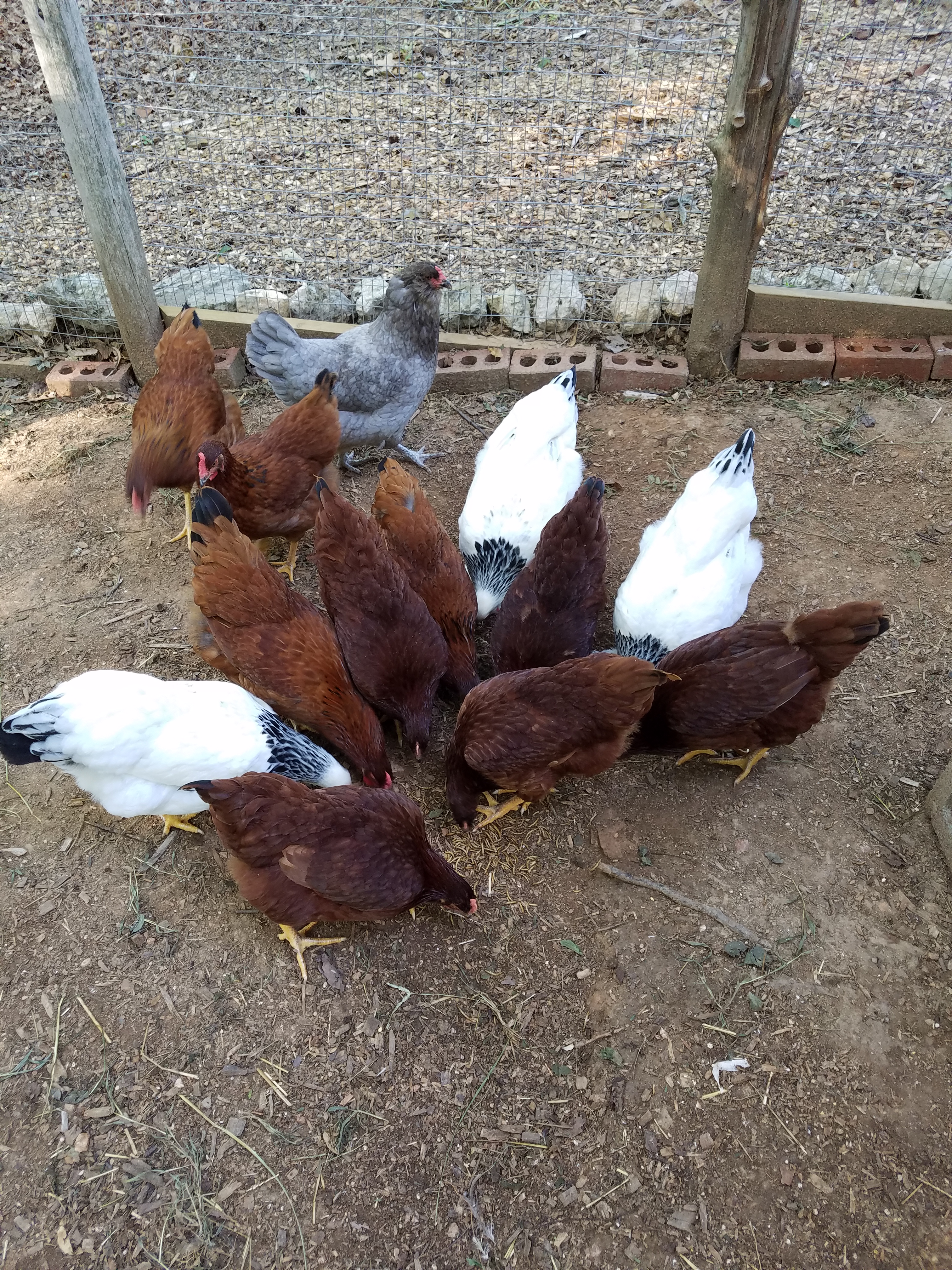
But all that time when I didn’t have roosters I wondered if I would change my mind if I actually had them. Would they somehow endear themselves to me? With this latest batch of 33 chicks, I had the chance to find out. (33, I know I’m crazy, you don’t have to remind me.)

It’s very hard to tell males from females when chicks first hatch. Hardly anyone can do it. You take your chances, and you don’t even really know for sure until you hear their crowing, which happens at about three months. Five of my birds started crowing a month or so ago. Three brahma roosters were “relocated,” one found his way back, leaving him plus two little (but loud) d’uccle roosters. Or so I thought.

It turns out there are other reasons not to want roosters. The crowing is, yes, every bit as obnoxious as I remembered. But roosters are also, shall we say, virile? Additionally, they want what they want regardless of how the hens feel about it. A rooster picks one pretty girl, chases her around the enclosure while she squawks like mad, and soon manages to have his way. It’s fast, and it’s the way of the world, but it riles up the hens. Understandably. I prefer a calmer flock.

Finally, someone answered my craigslist ad. God bless Pablo. Imagine that a person would drive more than an hour to come get a brahma rooster. He said he would come Saturday morning. Great!

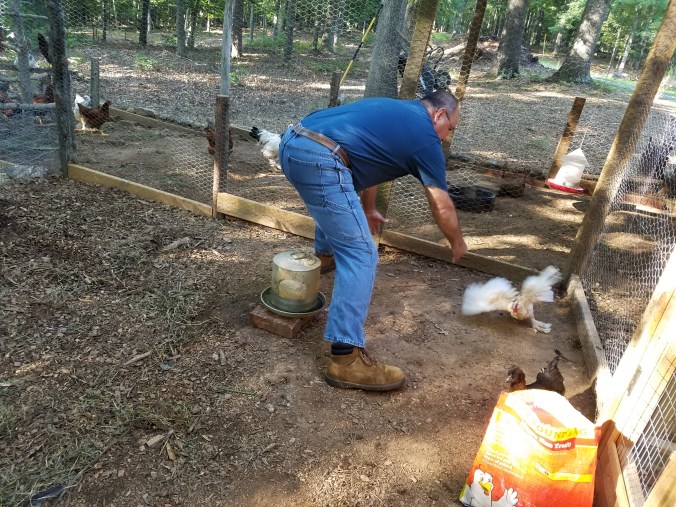
First the Roundup. Let’s just say chickens don’t like to be captured. Perhaps there is a trick to this, but we are amateurs. The blurriness of the bird in this photo makes it clear that he is moving very fast to get away from Sandy. The job is harder than it looks.

20180714_082303.jpgPerseverance paid off, as it usually does. The brahma big boy was actually easier to nab. Look at the size of him!
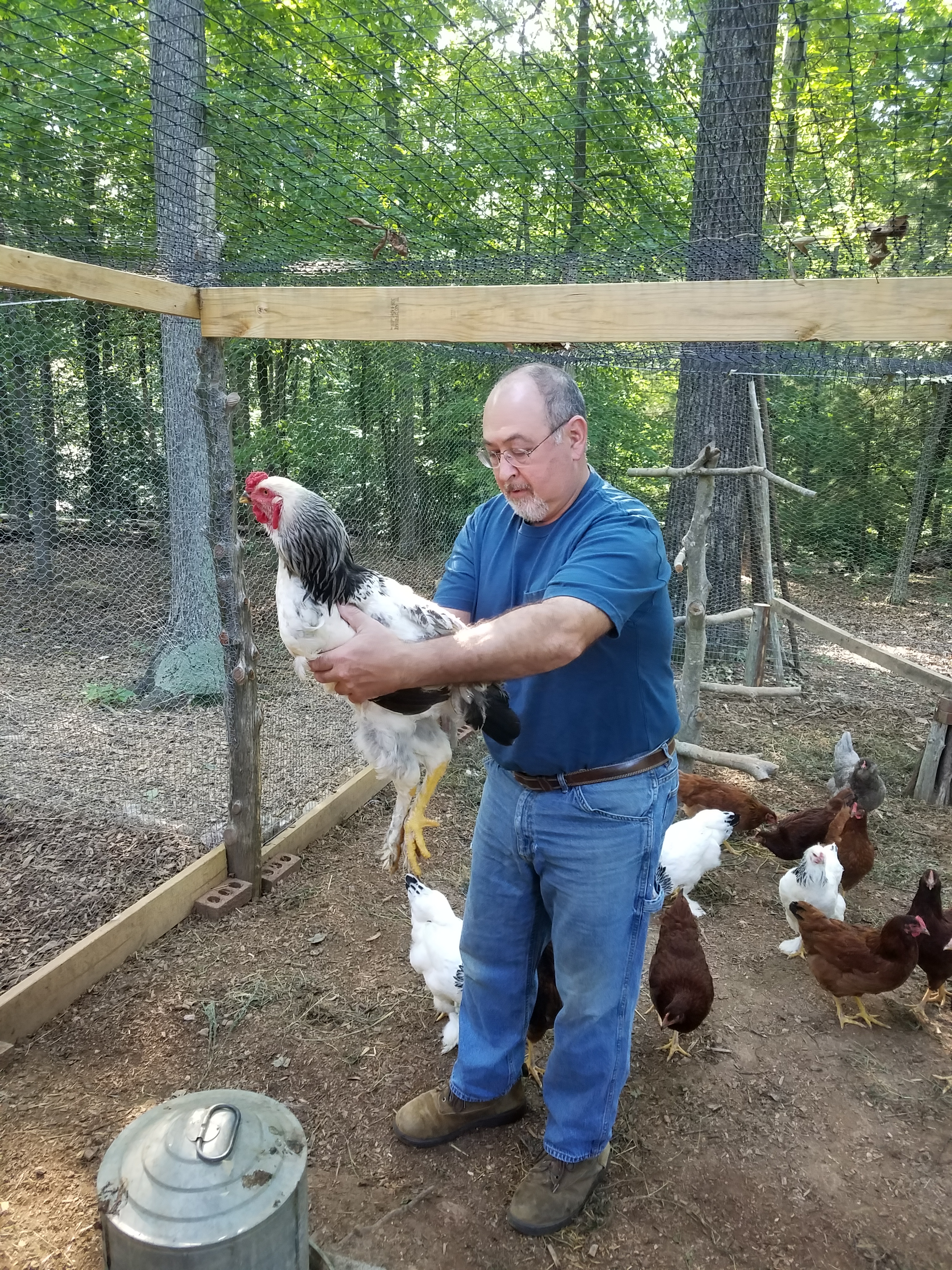
20180714_082535.jpg

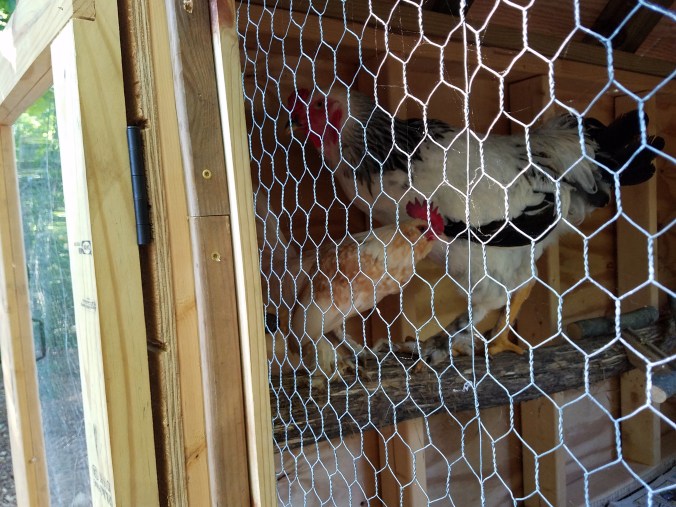
Before too long, three roosters were corralled and placed in the coop that they have been avoiding. The sliding egg door came in very handy.


Trapped! Oh, I mean ready for pick-up. Pablo, where are you?

20180714_082943.jpg

The roosters calmed down after they realized that the chase was over. So did we. Did I mention how happy I am that Pablo wants them?

What does he want them for? I had no idea, and I admit I didn’t care. You may recall the three general purposes for a rooster: dinner, lawn ornament and the fertilization of eggs. There is another and it is awful to think about: cockfighting. That people could get pleasure from this confounds me. If I let myself, I could even get angry about it, but I know you can’t stop all the evil in the world. Still, I didn’t want that to be my roosters’ fate. The only clue I got from Pablo as to his intentions was that he said he was coming with cages.

He also said he was coming in the morning and would let me know what time. In my world, the morning ends at noon. No Pablo by noon. No word from Pablo. Roosters were content in the coop, cluelessly awaiting their fate, but I was worried.

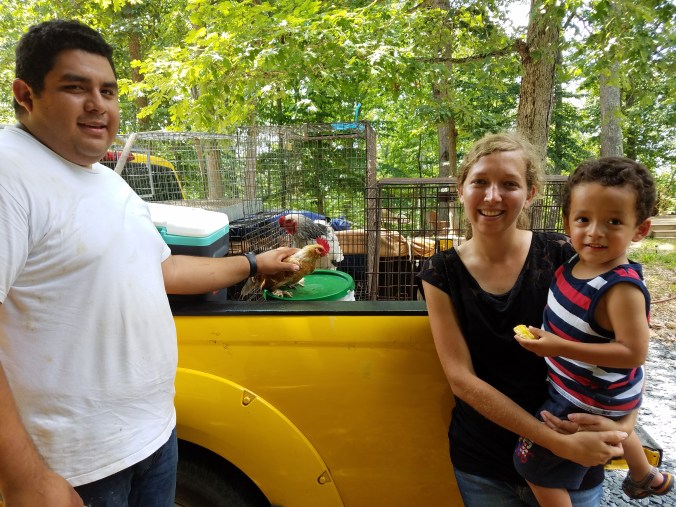
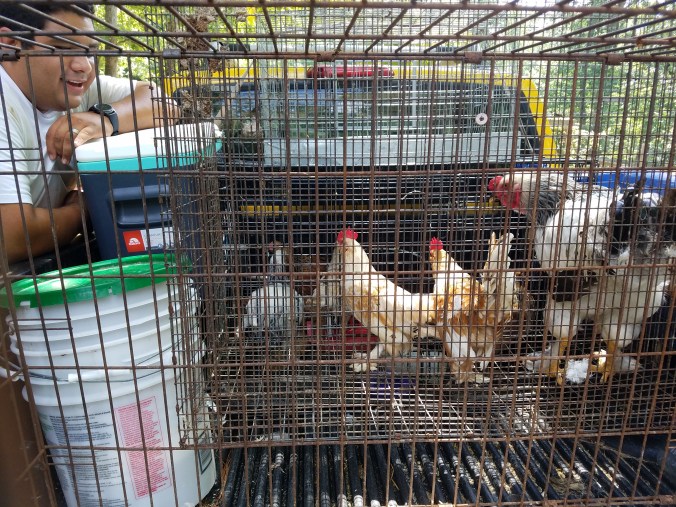
I breathed a great big sigh of relief when he drove in at about 230pm. His yellow truck did have cages in the bed – turned out he and his wife Andrea and their little boy had been to a chicken auction and already had some chickens in those cages. Pablo took one look at my brahma and said, “Whoa.” Yes, I know. He’s a big boy.

I breathed my second big sigh of relief when he told me he planned to use the roosters for stud. Andrea said she wondered if there were different strains of brahmas, big and small, because the brahma hens they had in the back of the truck were smaller than my brahma hens, and gigantic Mr. Brahma dwarfed them all. Thankfully size didn’t matter (you can save your size jokes). A brahma is a brahma after all and God bless Pablo for wanting mine.

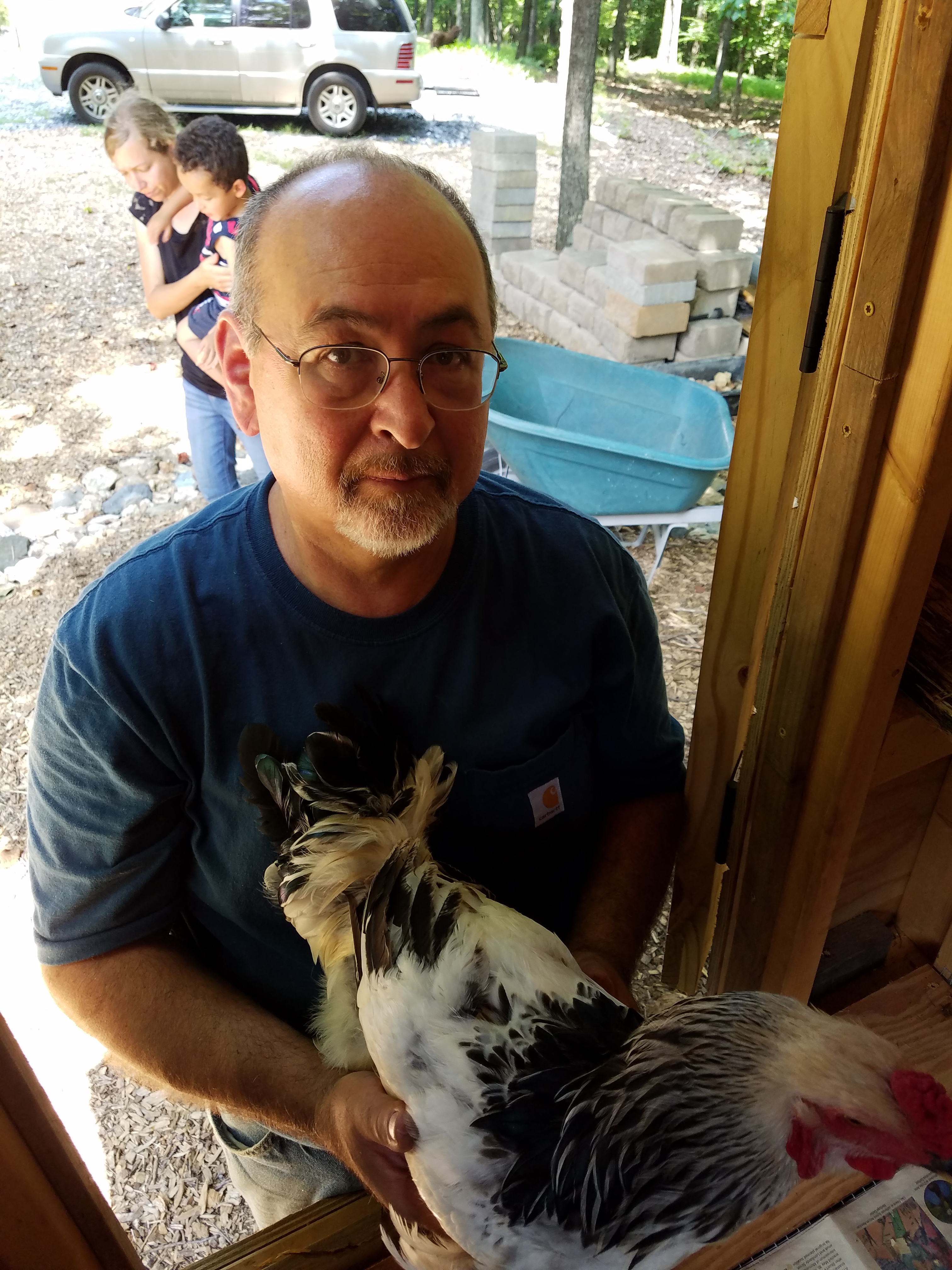
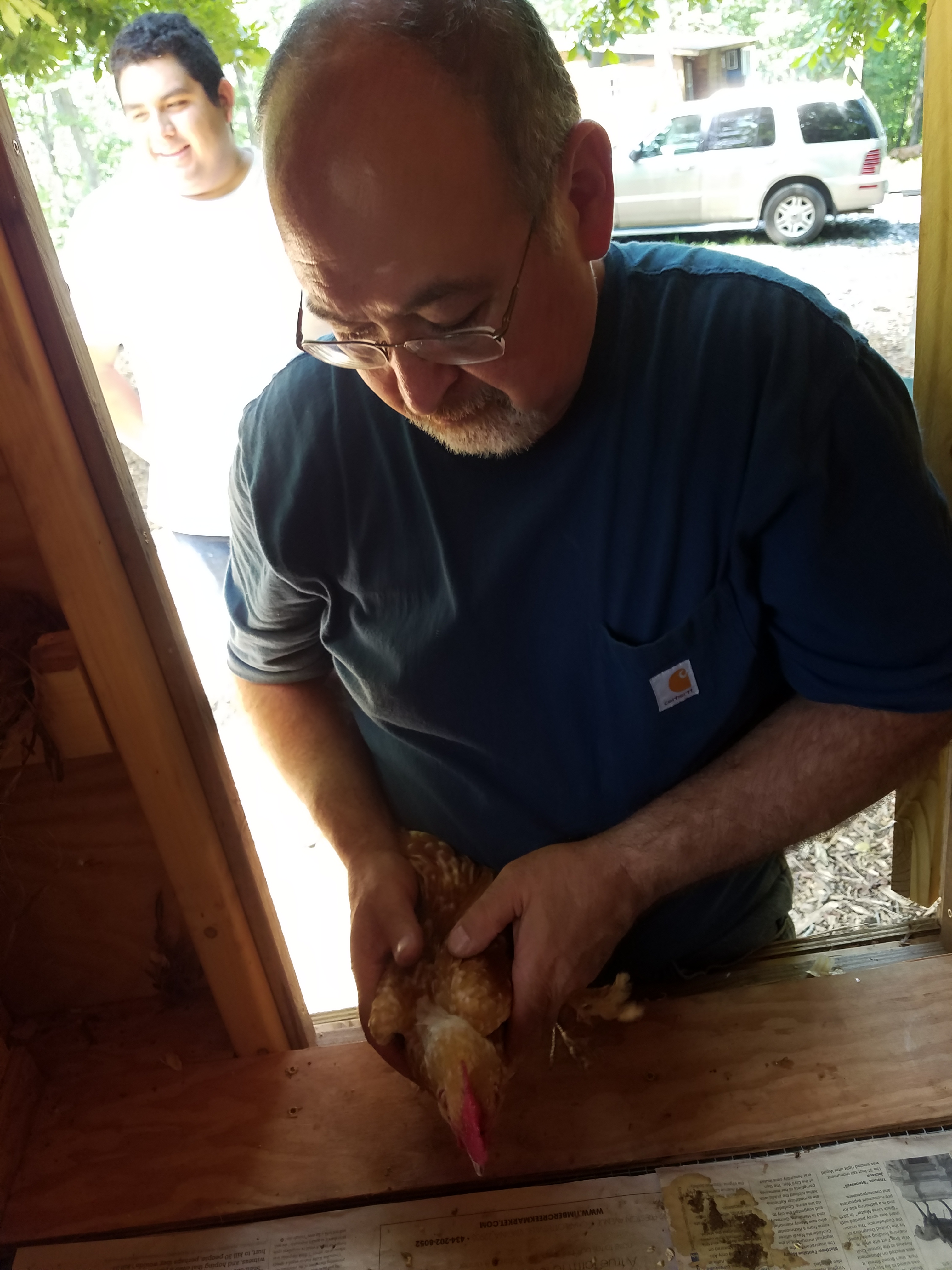
The joyful transfer (joyful because I am soooo joyful that they are leaving) from my coop to their cages started with me getting into the coop with the roosters. What I will do to get rid of these birds!

20180714_143902.jpg

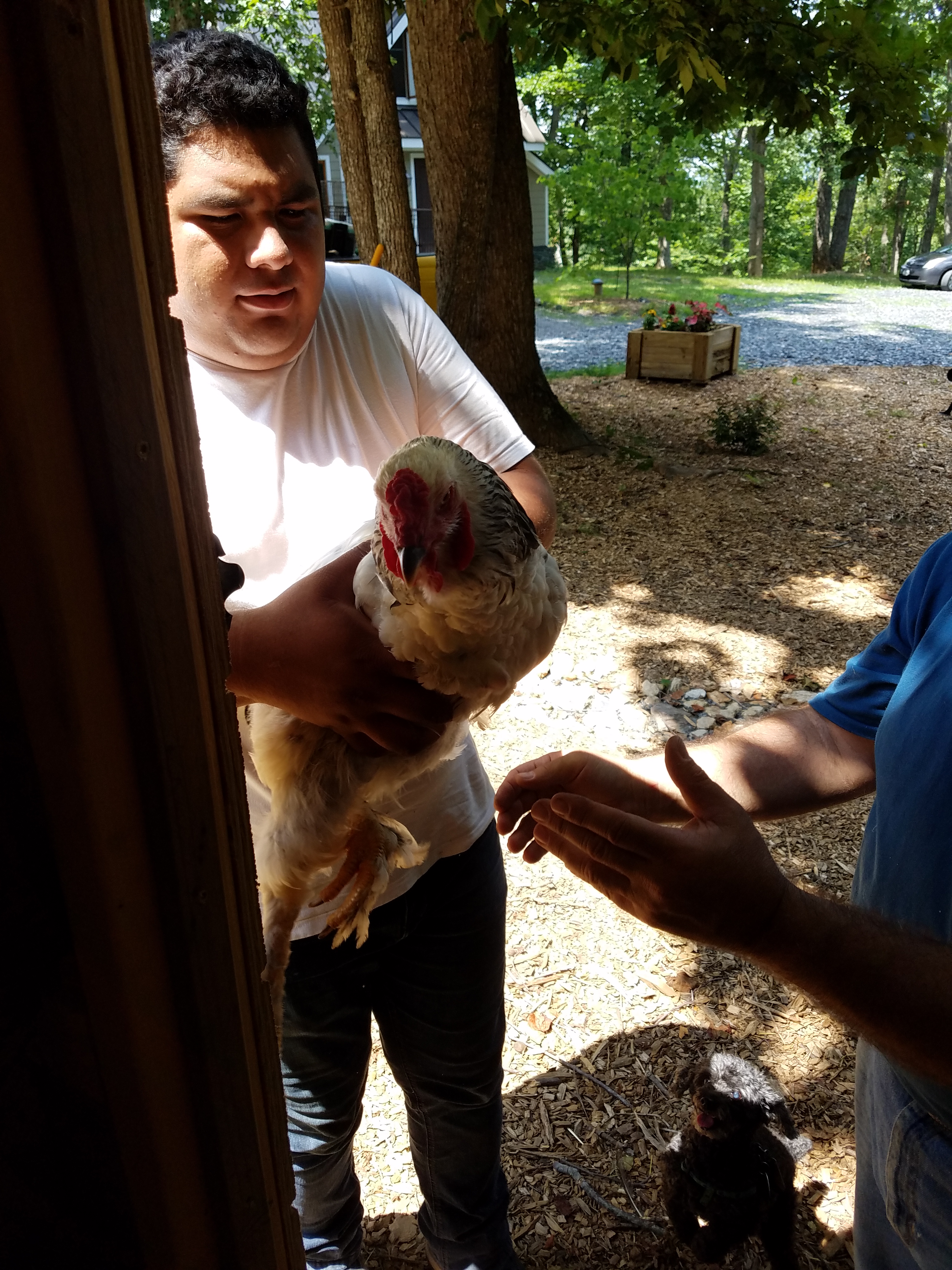
I was enough of a presence to make the birds run toward the door (make for the door! make for the door!) which Sandy blocked. He then got hold of them as they tried to get past. He turned them calmly around and handed them to Pablo.

20180714_143914.jpg

The last rooster put up more of a fuss than the others, but this little fellow had no more choice than the others had had.

20180714_143953.jpg

Pablo and Andrea and their son posed for me …

20180714_144034.jpg

… just before that glorious moment when the third rooster joined the other two in Pablo’s cage.

20180714_144148.jpgHappy smiles. Everyone is happy. All the humans anyway. No one is happier than I am!
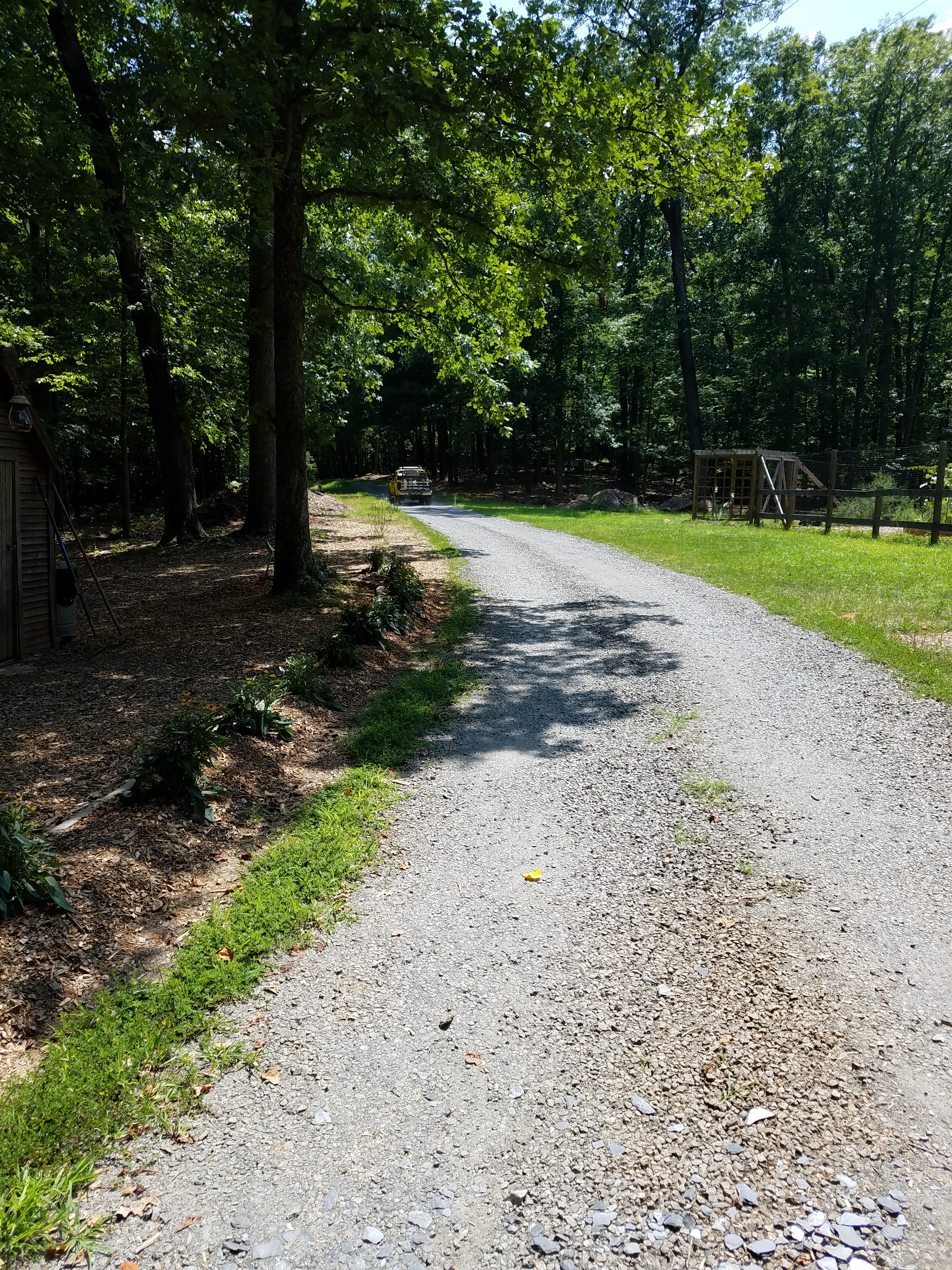
A long time ago, a woman I knew said, “I don’t believe a thing will happen until it’s all over and I can speak about it in the past tense.”

Thus my moment of greatest joy: watching Pablo’s truck drive away with my roosters in the back, off to their new studly life. It’s over! The roosters are gone!

20180714_145044.jpg

Off they go! Bye-bye, roosters! Good riddance! Yay!!!!!

Until Sunday morning. Say it isn’t so!

It is true. We missed one. I heard the incriminating crow early, before dawn, fainter and weaker than the d’uccles had been. How did we miss him?! Possibly the other roosters had drowned him out or intimidated him. With them gone, he was free to let loose. All right, it wasn’t so bad. Maybe I could get used to a little crowing…

last rooster (2).jpeg

But the rascal sealed his fate when he couldn’t help it and had to fast-chase a squawking hen around. Her racket got my attention while Sandy and I were moving plants in the late morning sun. I marched in there, caught him pronto (you are out of here, buddy!) and put him in the woods outside the enclosure. He soon walked back, curious to find himself on the other side of the fence from his beloved girls. Back and forth he walked along the outside of the enclosure. There must be a way back in…

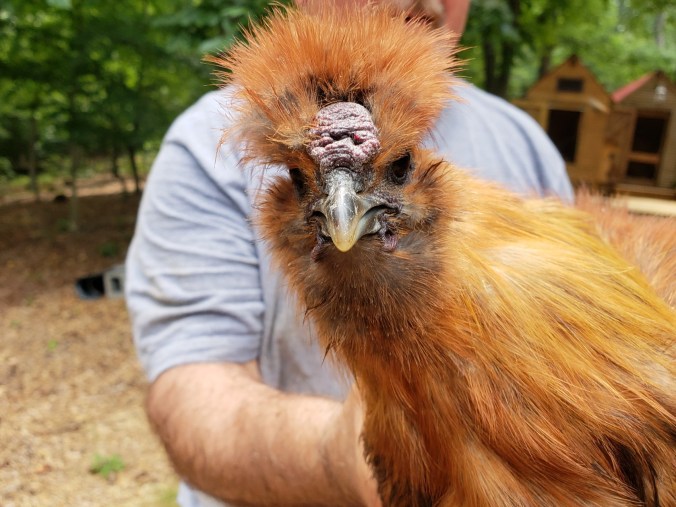
I didn’t care. The image of him chasing an unwilling female meant I had no mercy at that point and would have relocated him to the bottom of the hill to be a fox’s lunch if I had not been so busy with the plants. But Sandy couldn’t stand it. He has a soft spot and hated to see this half silkie, half black copper maran become a snack. This rooster, despite his less-than-charming face,  has rather interesting features like blue ears and iridescent tail feathers. Sandy cornered him pretty easily and put him in the coop, away from the girls, awaiting a new life somewhere else.

Pablo, oh Pablo! Want another rooster?