Half a Piece of Pie

In the past few months, at least two new pie shops have opened in Charlottesville. There’s something about a good piece of pie, and everyone has their favorite. Or do they? Is cherry better than apple better than blueberry better than key lime? Oh, better than pumpkin?? I had to make a decision today at Quality Pie.
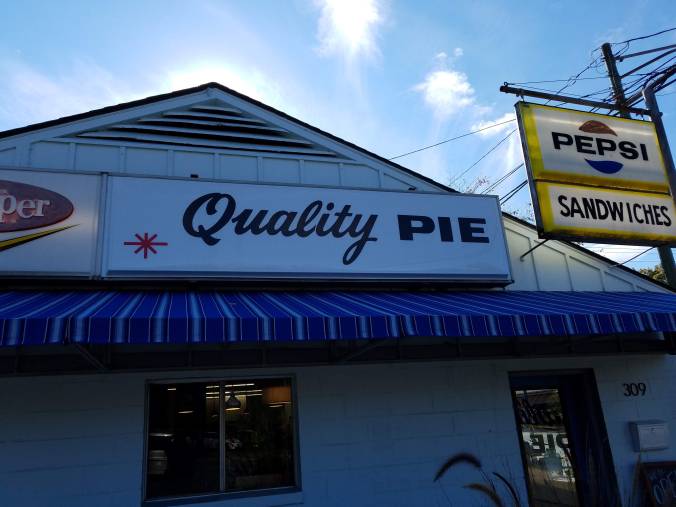
Quality Pie.jpg

This pie shop’s selection includes the basics. I looked in the glass case and asked the nice young man to tell me about the cherry pie. “Bing cherries,” he said, “that’s all I know.” Okay, fair enough. I like bing cherries. How about the crust? “All butter,” he said, “unless it’s for one of the savory pies. Then I think they use lard.” All butter works for me.

Their prices were decent too.
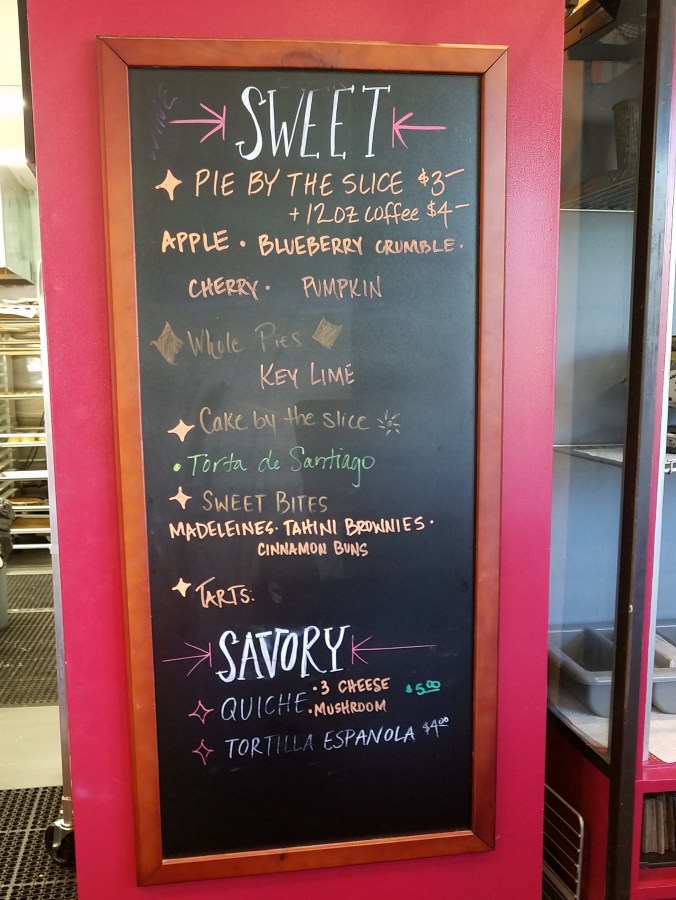
pie menu (2).jpg

I make pie myself. I love to make pie. But when cherries come into season, I do not think of making a pie with them because they are so good all by themselves. So, yes, the cherry pie called my name. It was wonderful. Hat’s off to the baker at Quality Pie.

cherry pie (2).jpg

One bite into my very delicious piece of pie, I remembered another piece – half a piece – that made a great impression on me. This half piece came from a pie I made myself when I was still in college at Rutgers University (Douglass College back then, a part of Rutgers). I was living in a small apartment and invited a friend to come for dinner. I don’t remember what I made for the main part of the meal, but for dessert there was pie.

It was good pie. You’ll have to take my word. I served Penelope her piece and served myself as well, and we kept on talking, having a lovely time. Then something remarkable happened. When she was halfway done with her piece of pie, I mean when there was half a piece of pie still on her plate, she put her fork down.

She put her fork down and did not pick it back up again.

I was 20 years old and confronted with something new. Who doesn’t finish a piece of pie?

We kept talking and I tried to ignore this bizarre turn of events. Eventually I couldn’t stand it anymore. I turned into my mother and said, “Is something wrong with the pie?”

She looked me straight in the eye and said, “No, it’s good. I’m just full.”

If she had stood on her head or told me she would turn into an alien if she ate another bite, I could not have been more surprised. Full? I thought. Full? Sure… but… too full to finish a piece of pie?

“Oh, okay, just making sure,” was all I said about it.

Never before had I encountered anyone stopping because they were full. In my house, growing up, you finished what was on your plate regardless. You were grateful. You had vague notions of starving children somewhere. You especially finished pie!

This was a monumentally earth-shattering, life-changing concept for me, I can assure you. In front of me was Penelope, not an ounce of fat on her, politely putting her fork down because she was full. In my mind I saw my family, many of whom (including myself) either on a diet or about to be on one, always finishing what was on our plates. I understand this is a very small sample size and a very unscientific way to draw a conclusion, but I saw that the person who put down her fork when she was full even if she was eating pie was by all appearances healthier than the people I knew who put down their forks only when their plates were empty even if they were full.

I won’t lie. I had a hard time throwing away Penelope’s uneaten half. No chickens in my life then, nothing to do but throw it away. But another thought occurred to me. Penelope was listening to her body in a way I had never done, never thought to do. Her body was telling her to stop, and she listened. I had always listened to my mind, to the words that had been said to me so often: Finish what’s on your plate. Period. No conditions here. No if’s. Just finish. It’s wasteful if you don’t.

But (I now thought) if my body is telling me I don’t need it, if I’m full but I eat it anyway, isn’t that wasteful too, in its own way? Isn’t that asking my body to waste energy doing what it wouldn’t have to do if I didn’t burden it with food it doesn’t need?

Thus began a profound shift in my thinking about food. I still didn’t like having to throw away the half piece of pie, but what if I had given her a smaller portion to begin with? What if I had not assumed what her portion would be and had perhaps asked her how big a piece she wanted? (This too was a foreign concept – a piece of pie had a size, a set size. You didn’t mess with these things.)

What if I had asked her? She might have said Just a sliver please. And there would have been no pie in the trash.

What if I asked myself? What if I thought about my own portion instead of robotically taking what seemed a normal amount? What if I thought about, gave even a few seconds thought to, how hungry I actually was and adjusted my portion? What if I listened to my own body?

I had a full course load that semester in college and was working three different part-time jobs. It was a lot of juggling. And now one more thing to think about, one more thing on my plate! I can’t say this experience brought about an immediate change for me – old habits die hard – but Penelope taught me a great lesson that slowly worked its way into my own eating patterns. Sadly, I lost track of her after graduation and therefore can’t thank her for the part she played in helping me be more reasonable about food. But I wish I could.
Old Timbers Well Aged

Don’t get the wrong idea. Don’t read the title of this post and think I’m feeling spry and am going to tell you how a good diet and a consistent and sensible exercise routine have long term health benefits. They do, but “old timbers well aged” does not refer to me!

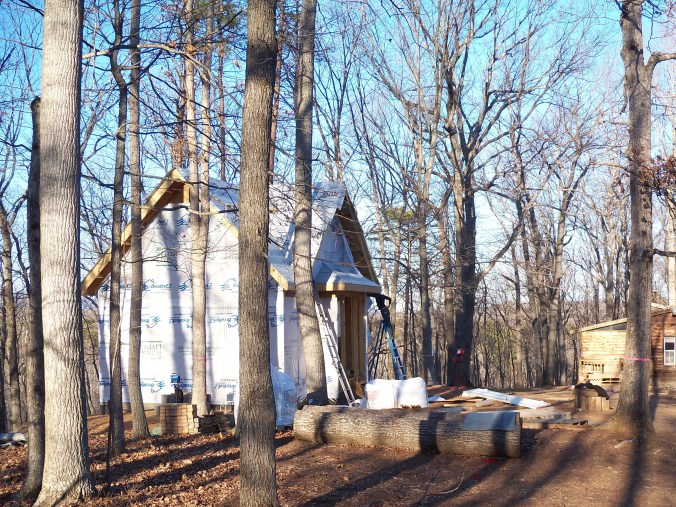
I’m talking about timbers, the kind that come from trees. In this photo from six years ago when the cottage was being built, you see two tree trunks laying down, about 12 feet long. I’m talking about timbers that come from logs like this.

morning wrapped (2).jpg

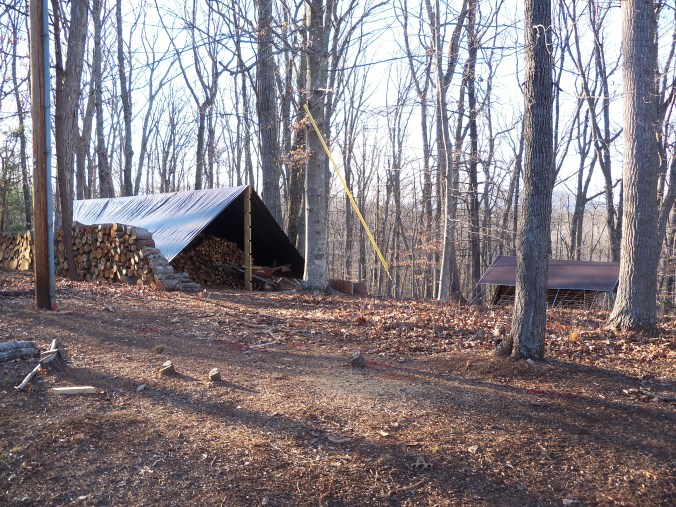
In our early days on this property, we had to take down trees. I hated it. Perfectly fine trees they were, but in the wrong place or just plain too many of them. I could hardly watch. After the deed was done though, Bradley used an attachment for his chain saw  called an Alaskan saw mill. With it he milled the logs into usable lumber. In the photo below you see two tents. The one on the right, down the hill a bit, was filled with usable lumber milled right here at Golden Hill. (The one on the left still stands, still houses firewood.)

stacked firewood.jpg

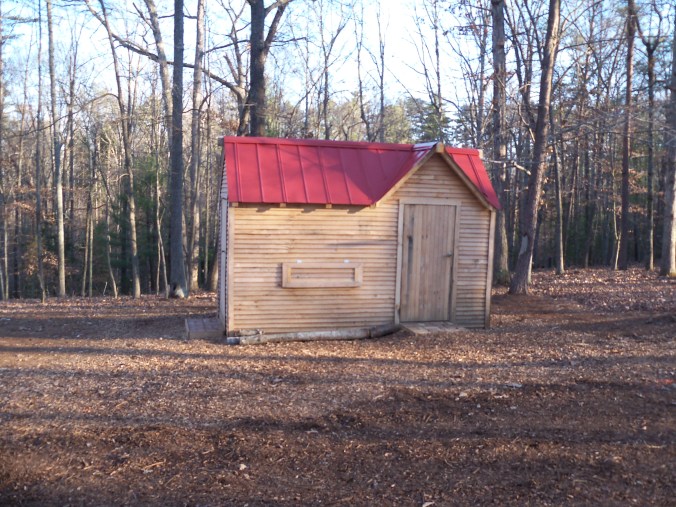
Among the stacks of wood were some larger oak timbers, the center sections of felled trees that ended up about 10” x 10” x 12’. Some of these were milled to make the clapboards that sided the original chicken coop that my sons Bradley and Lincoln built.

early coop.jpg

The rest sat under the tent, unneeded. Frankly, forgotten. Other things become more important (you know how that goes). But sometimes it’s a good thing to forget something. Sometimes, things need to age. This past spring, when building the new coop, I thought about its siding.

15.jpg

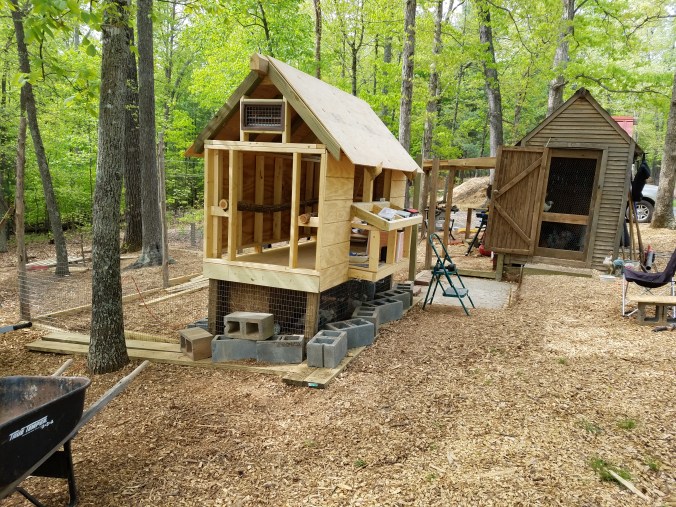
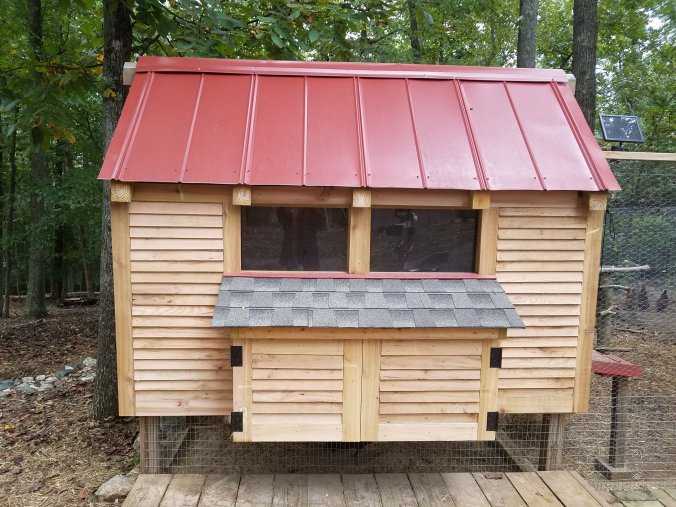
The T-111 all by itself (already skinning some sections of Coop #2 in progress) might have been ok if Coop #2 was not sitting next to Coop #1 with its rustic, oak clapboard look. We planned to use the same red metal roofing material, so that would coordinate, but the siding was in question. Obviously, rough cut oak clapboards would be best, where was I going to get them? (I completely forgot I had those oak timbers!) I rejected the T-111 because no matter how we might stain it, it would still look inferior and incongruent. I looked into cedar shakes, thinking they might complement the oak of Coop #1 nicely, but oh, no – really expensive.

It was one of those bumps in the road that (in part because of your failing memory) you can’t see to the other side of. All this effort — yes, I know, a considerable bit of effort for chickens! — and no idea how to side the coop. Thankfully, there was enough else to do, and I back-burnered this problem. Clearly there is always enough else to do around here!

That tent that houses the firewood, pictured earlier, also houses other things that don’t fit elsewhere but need to stay reasonably dry. (There is no proper barn or storage building here.) The lawn mower, ladders, straw bales, extra garden fencing, stakes and – OH! What’s that wood under that pile?? God bless my boys!

Large, long, aged oak timbers!

It’s one thing to have the right timbers. It’s quite another to have them cut down to the right size. I went to a local mill to see if they could help me. No, they don’t mill other people’s wood. I guess I can see that. What if there was a nail or something worse stuck in the wood? Much as I wished I could have clapboards made from these timbers, I felt discouraged. If this mill wouldn’t do it, what made me think another one would? I was lamenting this to my neighbor Tracy, who immediately and casually said she knew someone who could do it.

I’m from New Jersey where we have this thing: “I know a guy.” You have a problem with your carburetor, your friend says, “I know a guy.” Your septic backs up, your neighbor says, “I know a guy.” You need someone to move the old, no-longer-running camper out of your driveway, your uncle says, “I know a guy.”

Tracy knew a guy. His name is Chris, and he was very happy to turn those timbers into clapboards just like the ones on Coop #1. He came, took them and milled them into rough pieces about 3” x 1/2“ x however-long-they-ended-up – all for a very good price. Chris said that if the timbers had not sat for six years, the wood would have too much moisture in it and would warp more and shrink more, and you don’t want that. See? It’s good I forgot all about them! It’s good I found them again!

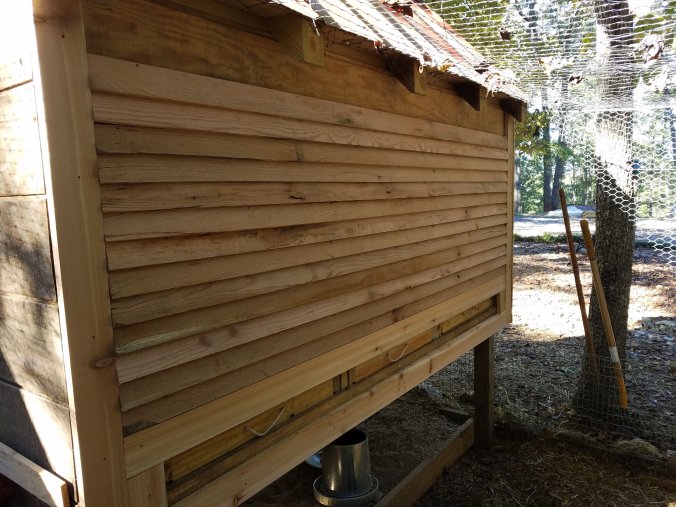
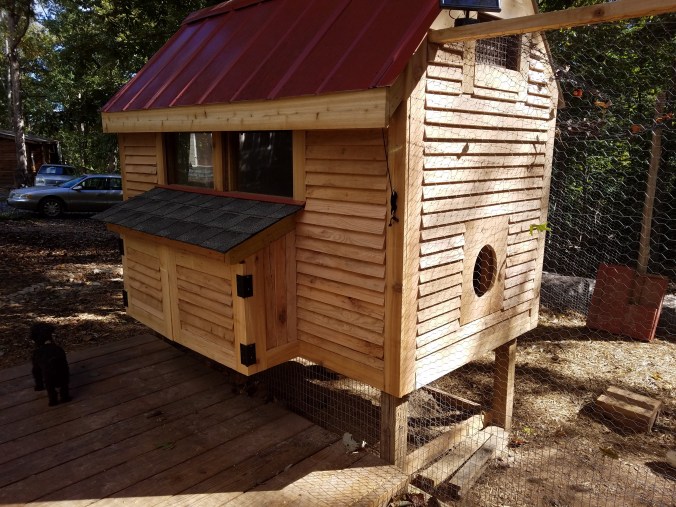
The past two weeks, while waiting for the rain to stop so we could proceed with Big Dig Part Two, it seemed like a good idea to get the rest of those clapboards up. One afternoon I put up long pieces along the back of the coop. Their imperfections are so perfect. You see how some are darker than others. Some have knots. As more went up, as if I didn’t like it a lot in the first place, I liked it better and better. You are welcome to disagree, but I do think the clapboards beat the T-111 by a long shot.

At the bottom, where you see those rope handles, a horizontal, red flap of a door will go.

back2.jpg

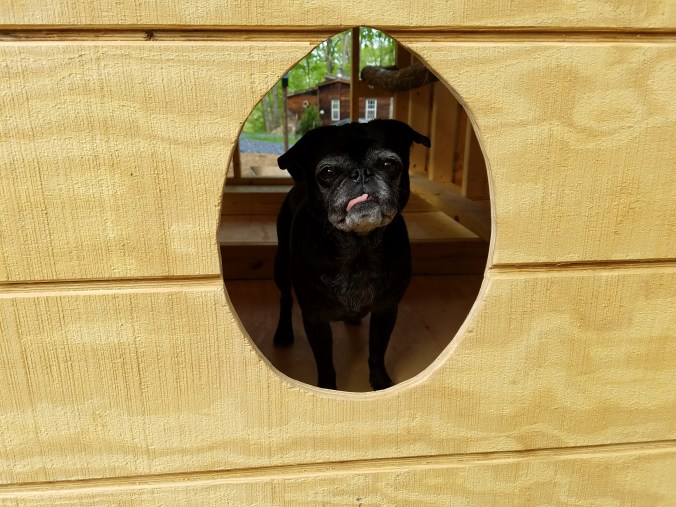
One thing at a time here, working our way around. The side with the egg door is special and needed special framing. This is silly Coco a few months ago. Someone (can’t imagine who) put her inside the coop. Hey, do something. I’m stuck.

egg door in early May.jpg

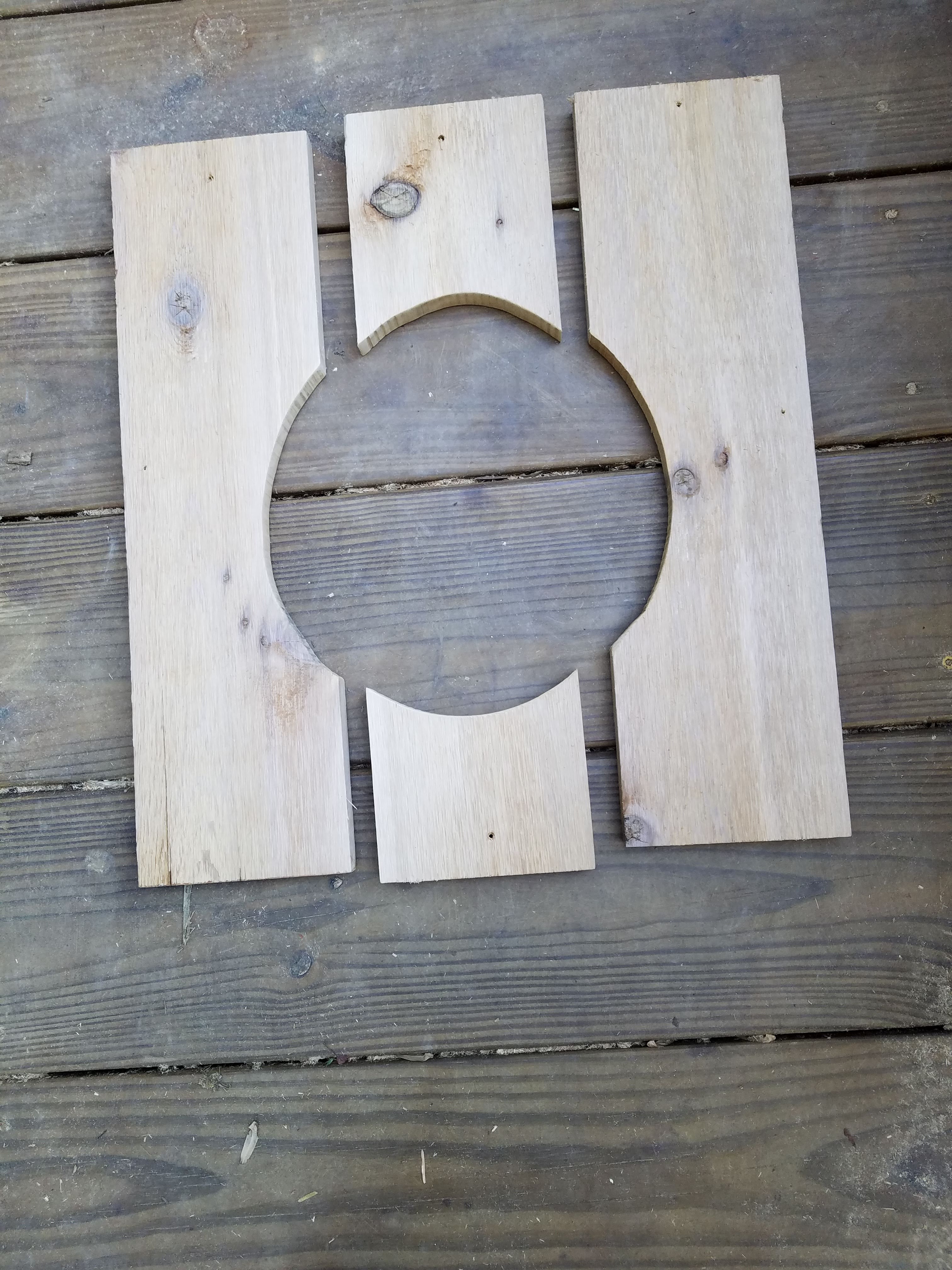
Joe showed me how to use the band saw to cut the pieces to frame it out after I’d enlarged a template I found online.

egg door frame.jpg

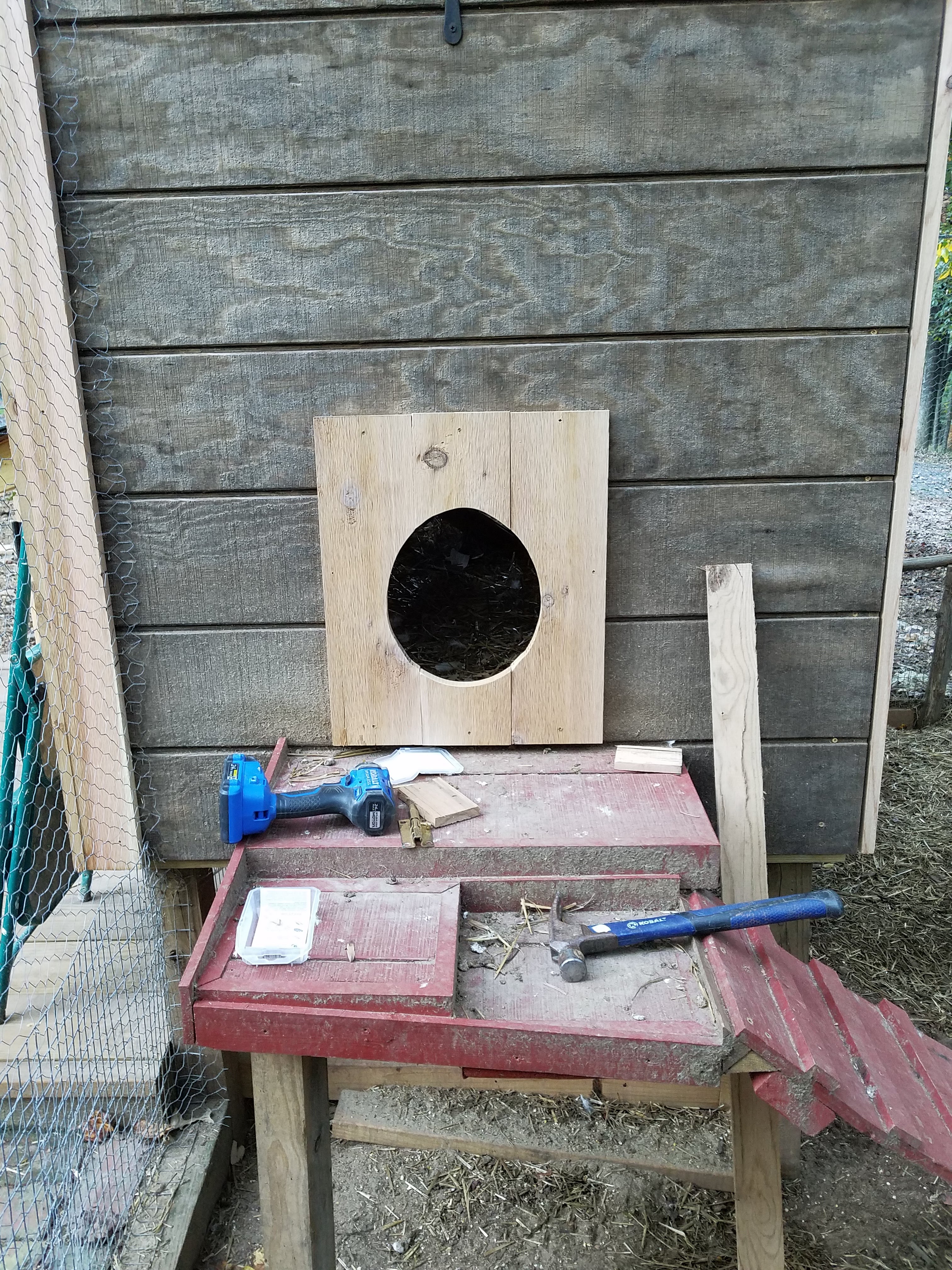
It framed out the egg door nicely. Do you think anyone else but me cares about this?

egg door framed.jpg

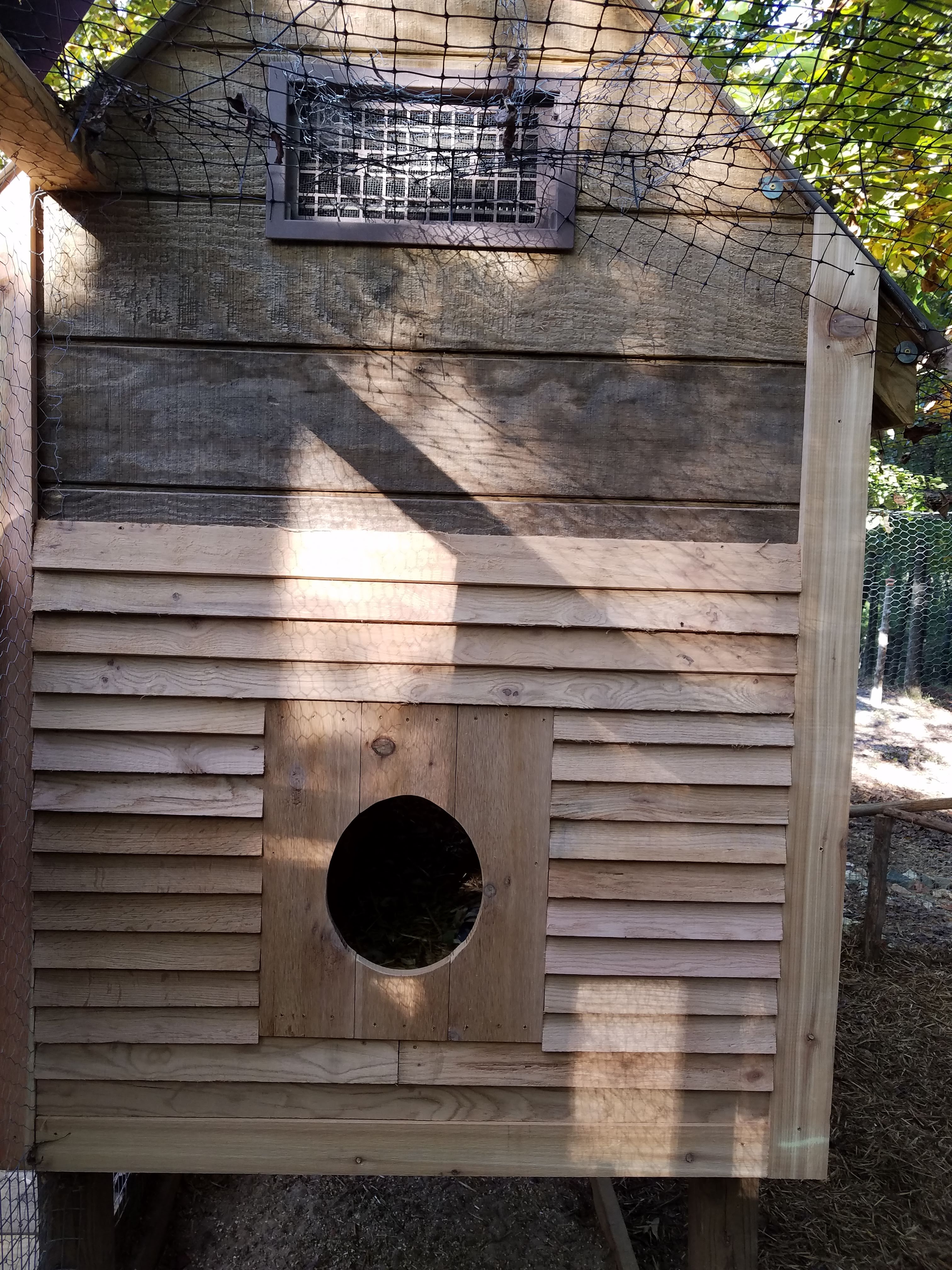
The weather was good, so I kept going. First the cedar upright along the right, then one along the bottom, then the oak clapboards.

egg door framed2.jpg

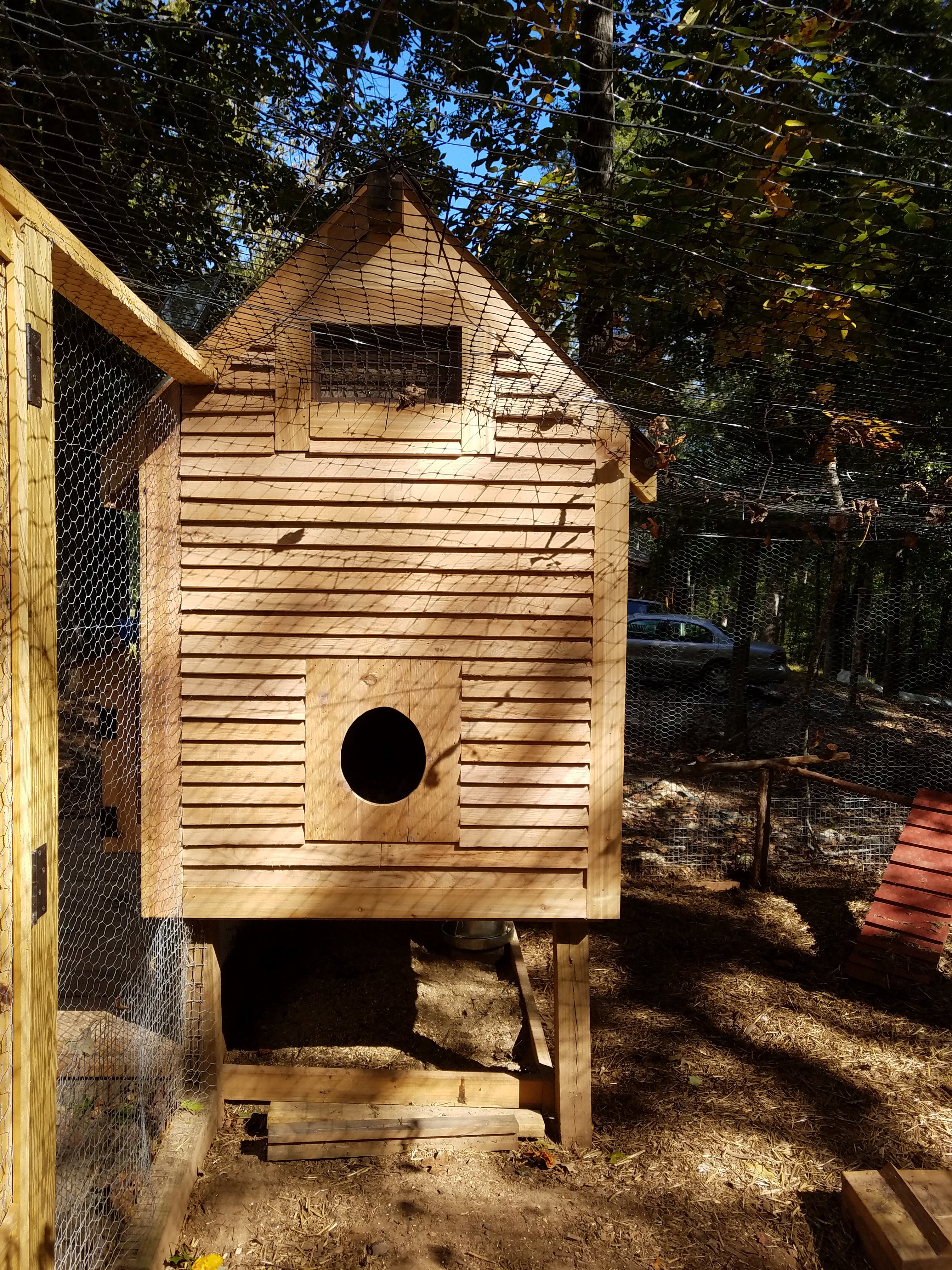
It was tricky working around the netting that forms a ceiling over the run to keep owls and hawks away from my Bridge Club. But with a lot of help from Sandy doing all the trim pieces, it’s (nearly) finished, and I love it! Chickens never had it so good, it’s true.

finished egg door.jpg

It still needs a ramp so the chickens can get up into the coop, which you may be glad to know they are now sleeping in on a regular basis! They are going in on their own at night! With no help! Okay, most of the time. Okay, with some help sometimes still, but mostly they have the idea. A new ramp would make it easier for the silkies. We want to make it easier for them. Who wouldn’t?

Sandy dressed up the front with a fascia board right — that horizontal piece just below where the roof ends. This is without it, earlier this week.

5

This is with it. See the difference?

finished two sides2.jpg

I’m not a builder. I’ve watched things being built many times, but never — before this chicken coop project — felt comfortable with the chop saw or the few other tools I had to use. There are many mistakes, many places where the cut could be better or the gap between boards a little tighter. And I’m still not comfortable when the piece is too small or the cut anything but straightforward. But it seems to me that a chicken coop is a good way to get your feet wet because when something is not perfect you can say, “It’s a chicken coop!” And not worry about it.

Also remember, next time you think nothing is happening, think again. Something is aging, waiting, getting better with time. The oak timbers needed to sit in a quiet, out of the way place for years. There they were under the tent, truly forgotten, doing their thing, releasing their moisture little by little, waiting for their day. Old timbers well aged turned out to be the icing on the cake!


A Dead Man and a Pipe

When you want to make a barrier, you have to make it strong. Sometimes you have to use a dead man to hold it fast, to make it stronger than it would be otherwise. Before today, I did not know how to do this. Before today, “dead man” had only one meaning for me. But now I am confident I understand when it makes good sense to use another kind of dead man.

I was up late last night listening to the rain falling on the newly graded front yard that was not yet finished. Joe had said a little rain wouldn’t hurt anything and would in fact make that loose soil more compact, but I worried anyway. I’d spent $500 to rent the mini-excavator for the weekend and wanted full use of it. No rain allowed! No daytime rain anyway.

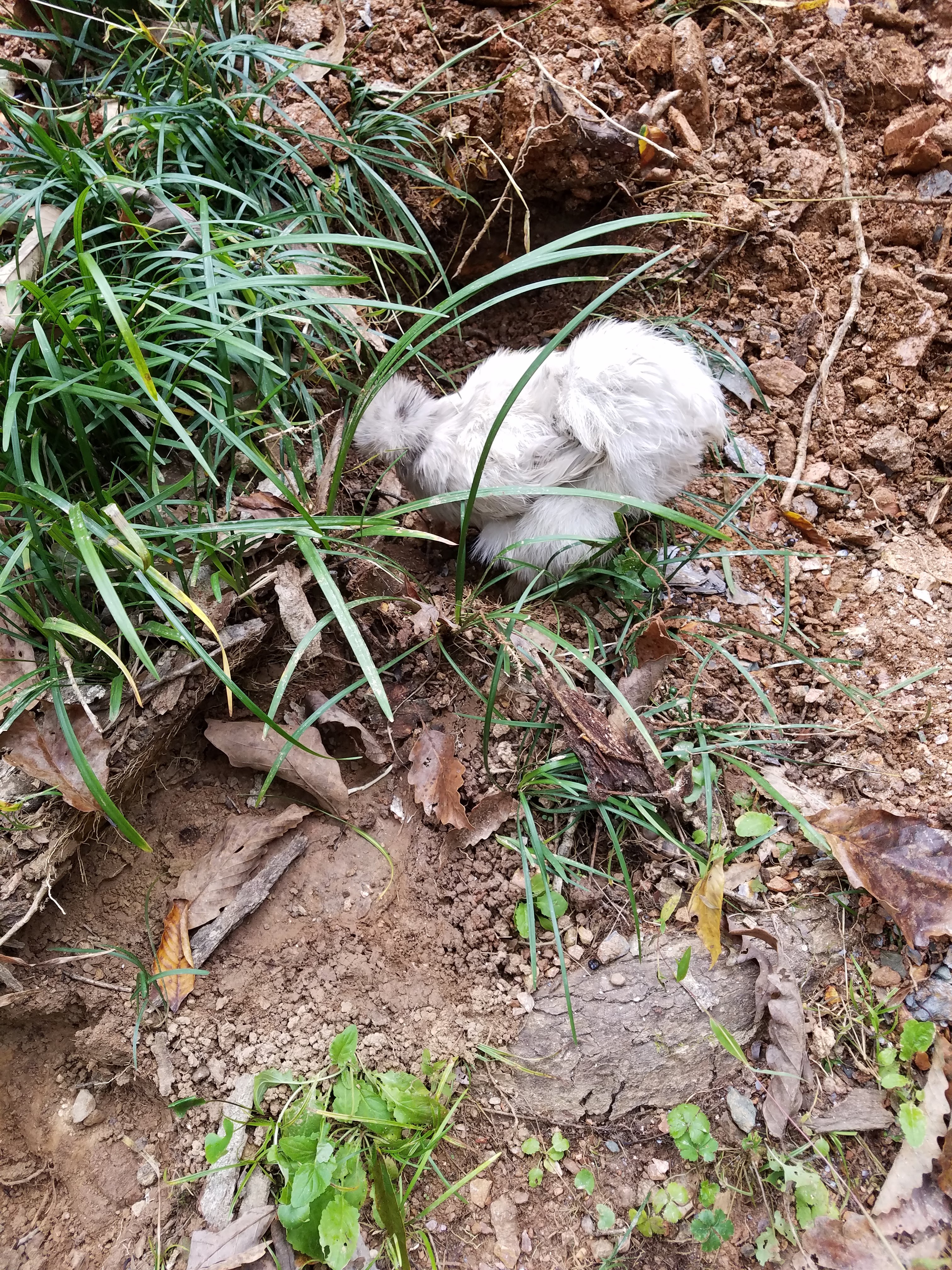
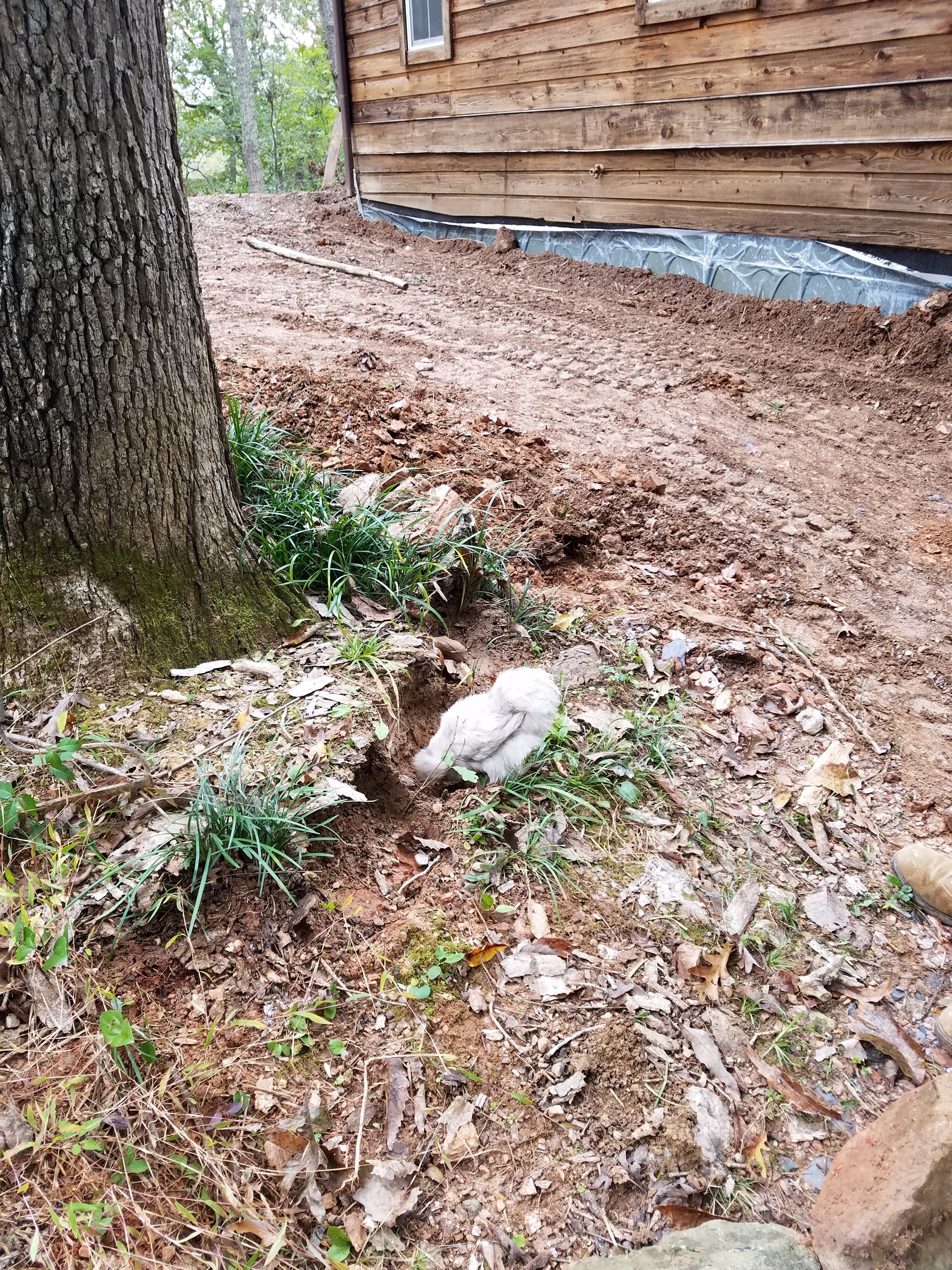
I woke up raring to go, thinking we’d get as far as digging post holes for the front porch today. I made a bacon/spinach/swiss cheese quiche to have for lunch while waiting for the guys to get here. Sandy and I then started with moving some liriope and rocks from around the big oak tree. When you move a big rock, there are often lots of bugs underneath it. A feast for a silkie! I went and got one lucky chicken. Oh, how we amuse ourselves!


This is One-Eye, the hen we thought we lost when she had an eye infection as a very young chick. She did not like the 4x-daily eye dropper with antibiotic, I can tell you. And she looked quite sickly for a while. But she lives and she hunts and she pecks!

silkie feast3.jpg

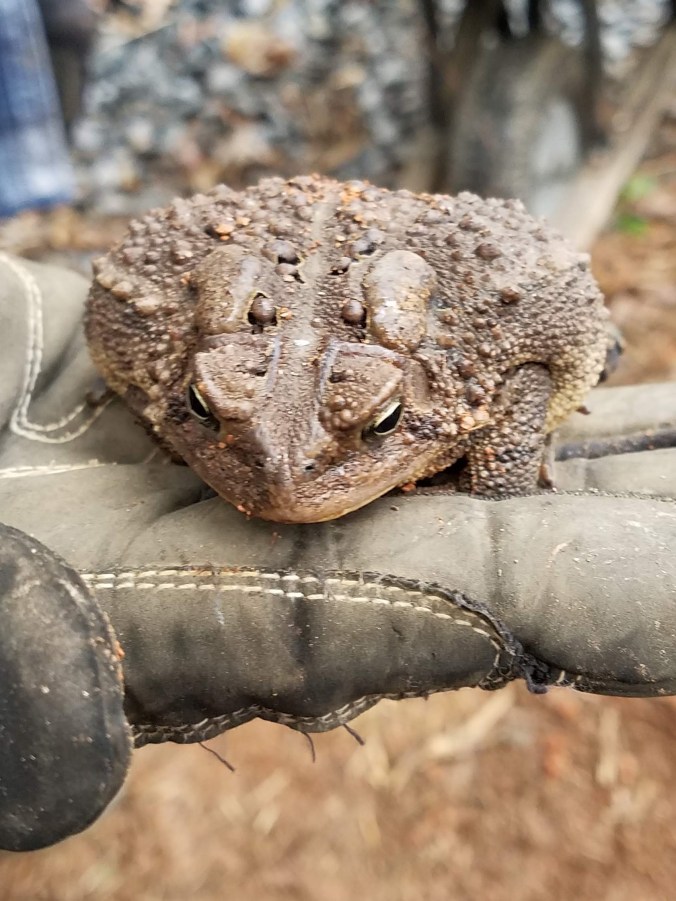
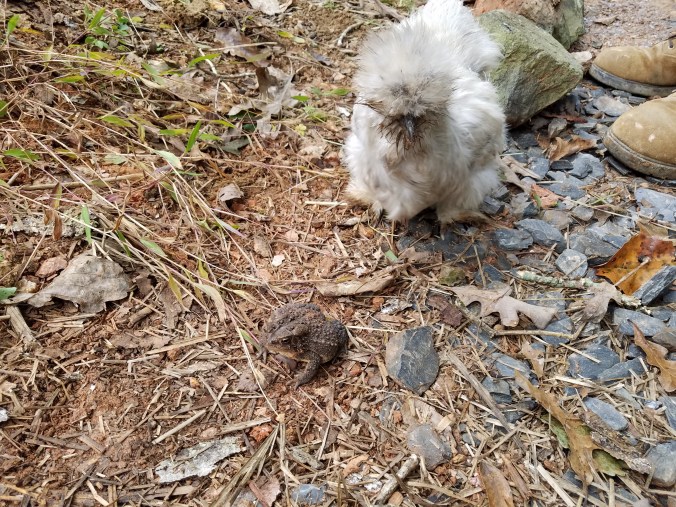
Our entertainment for today also included a native creature, Mr. Toad.

toad (2).jpg

We got the brilliant idea that Mr. Toad would like to meet Miss Silkie. This did not work out so well. She took one look at him and

silkie meets toad.jpg

turned the other way. They weren’t the slightest bit interested in one another. You can tell from her dirty face that she has been enjoying bugs in the dirt though!

This photo gives a better idea of today’s work area. The stick laying down on the dirt between the tree and the house is where the new porch will come to, 6 feet out from the house.

silkie feast2.jpg

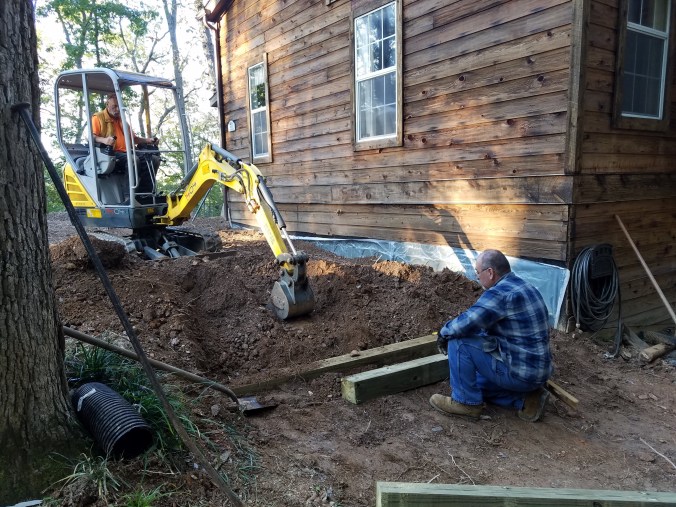
After Joe came, he got on his Tonka Toy and played with dirt for a while, moving it here and there, compacting it, preparing the place where we would put a retaining wall. There is no way we would have accomplished what we did today without Joe, without this machine and without Joe’s skill on this machine.

wall2.jpg

Because of the slope of the land and the driveway going down along the side of the house, a retaining wall is necessary. Five 12’ 6×6 pressure treated pieces of lumber would do the trick; anyway Lowe’s didn’t have any railroad ties. The first piece we put in, perpendicular to the house from the corner, we had to move. The porch is going to come out from the corner, and you can’t dig a post hole and pour concrete into it if you have a retaining wall there. So we moved it a foot or so inward, closer to where Joe is on the machine.

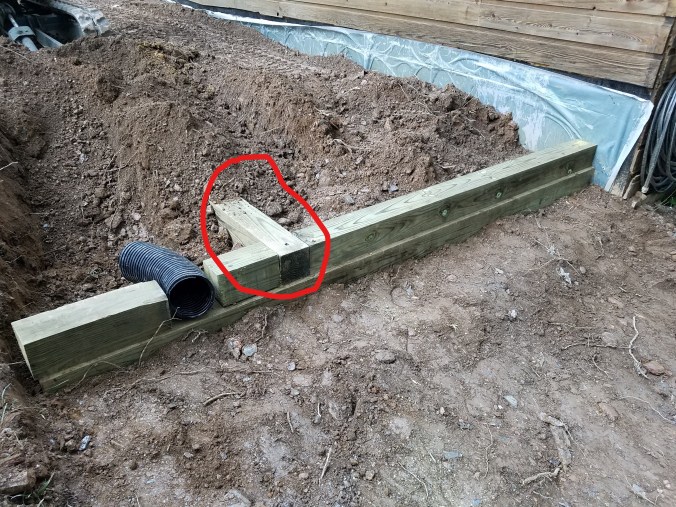
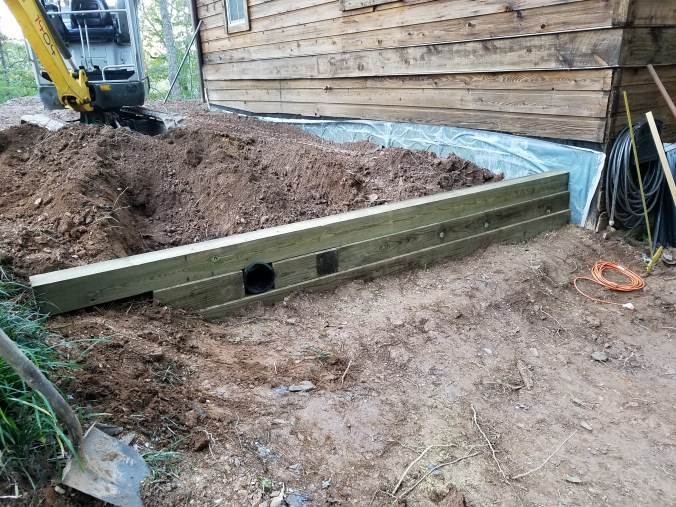
Once the first 6×6 was in, level and squared to the house, it was time for the second layer, including (the moment you’ve been waiting for!) the dead man! Why is it called a dead man? Your guess is as good as mine, but that’s the name for a long, buried object used as an anchor in constructing walls. It will keep it from leaning when the weight of earth, especially wet earth, pushes against it. The dead man goes back twice as far as you see; Joe got busy covering it in dirt before I could snap a photo.

wall with dead man and pipe_LI.jpg

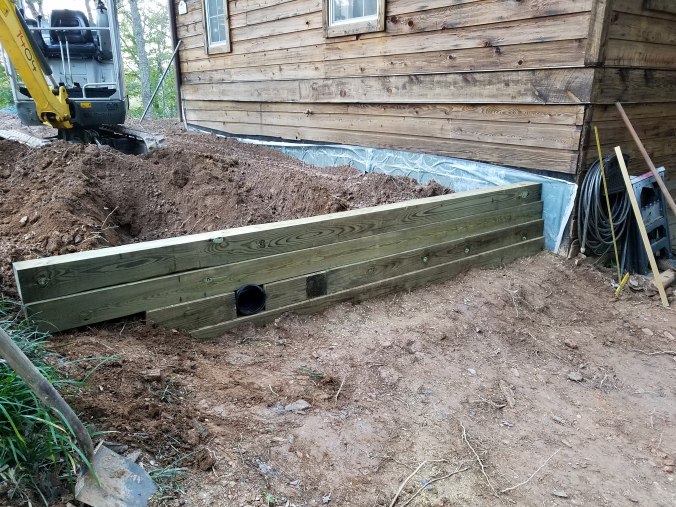
In our case the dead man is part of the second layer of the wall next to a short length of perforated pipe. We put screening across the back end of the pipe; the whole thing will be covered in gravel tomorrow, then landscape fabric, then dirt, and will help carry water away from this area. The pipe was a little taller than the wood, so Sandy used the heat gun to soften the plastic just enough for it to press down under the weight of the third layer.

wall3.jpg

Each layer was secured to the one beneath it by use of timberlocks, which are long, heavy screws that sink into the wood so the next layer can lay flat on top.

By level four we were moving quickly both because we could robotically drill-timberlock-drill-timberlock all the way down the line and because my cottage guests had returned and were building a fire in their fire pit and I was worried our noise would disturb them. Drills are loud. But they kindly said it was all fine and asked a lot of questions later about the project. That was nice!

wall4.jpg

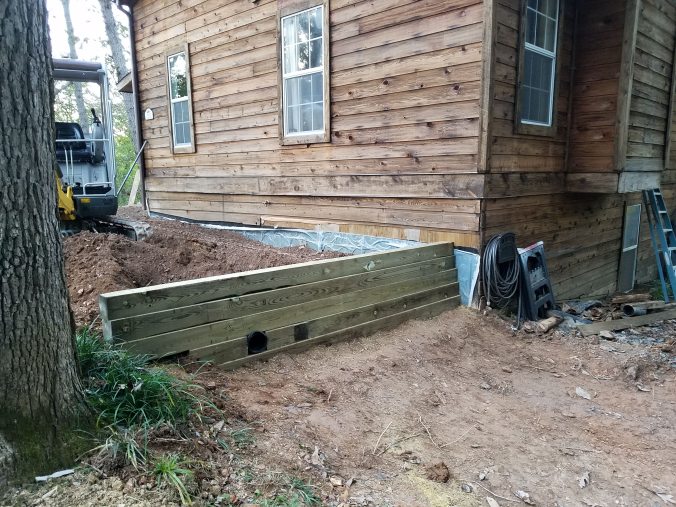
We decided that five levels would be enough. It’s way more than was there before, and has a drain, which the old wall didn’t have either.

wall5.jpg

Next we will fill in the gravel over the pipe, finish grading and dig post holes!! I know (I know!) it’s not normal to get excited about mixing concrete, but in my mind I can see what each step leads to – a beautiful new front porch! – and this makes it very exciting.

I’m not saying I don’t also get a thrill from seeing the incremental changes one by one, from digging shovelfuls of dirt, checking if the board is level, bearing down on timberlocks to get them through the wood (though I wished I was stronger for that task!) and learning about dead men. I do. I love having stared at this area for a long time, wishing there was a nice porch, and now watching it become a reality. I get to not only see the transformation, but also to work alongside and help make it happen. I am so grateful and happy that I am not just watching. For me the same thing happens when a tennis tournament is on TV. I can watch it for about five minutes and then I want to get out and play!

A Theater Entrance in Question

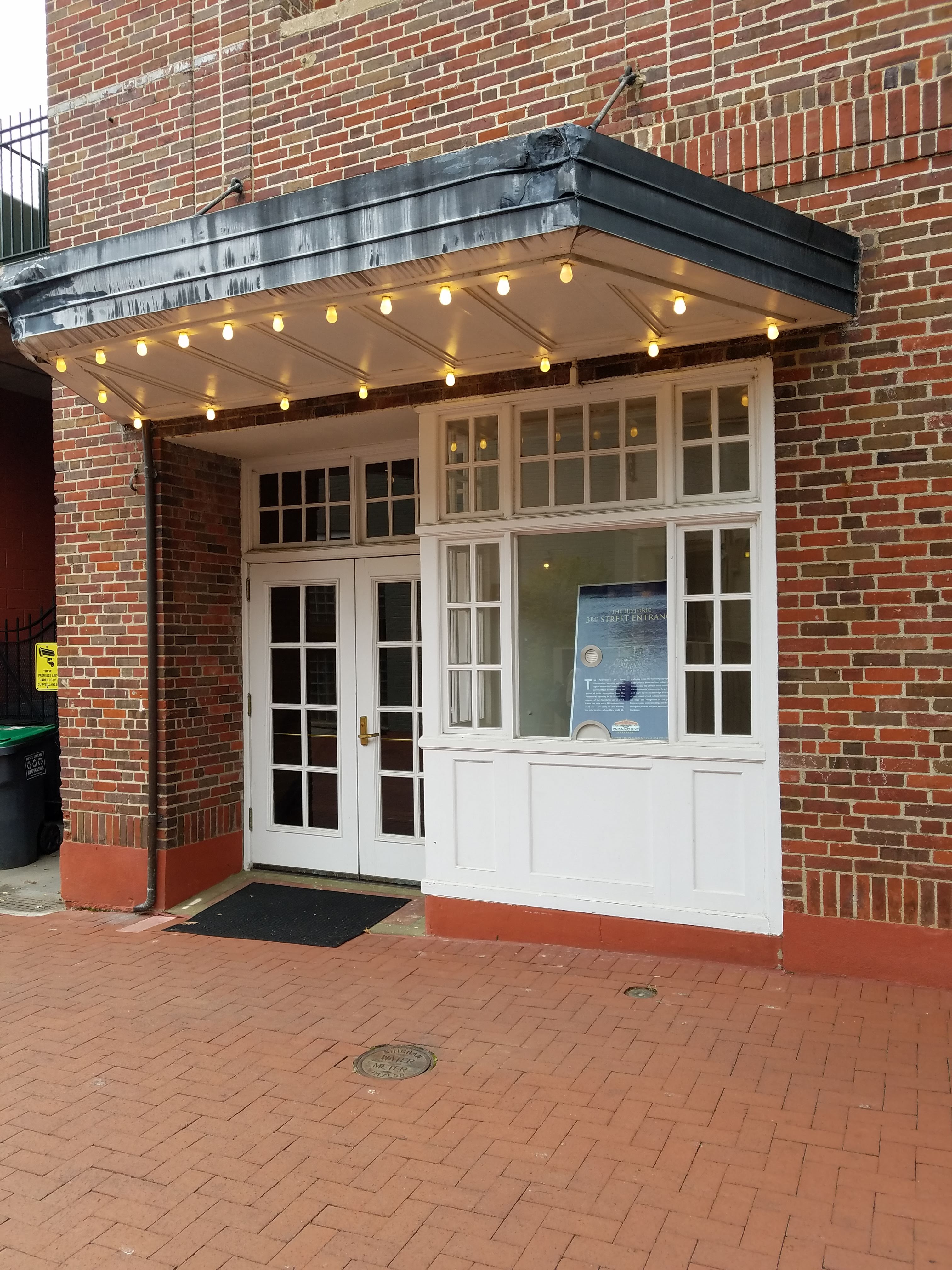
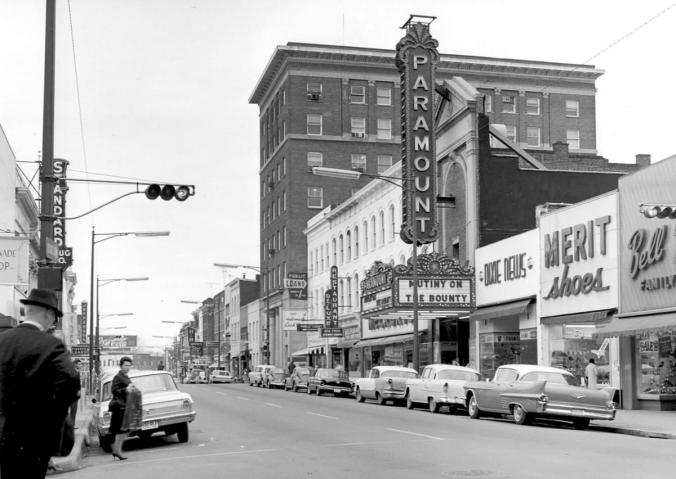
On 3rd Street in downtown Charlottesville is the old box office that a specific group of people were required to use if they wanted to get into the Paramount Theater to see the show. Back then, they were called colored people. They had their own ticket office, their own entrance, their own staircase leading to their own balcony.

3rd st entrance.jpg

This entrance is not as large as the main entrance, nor does it have the Paramount “blade” or the name of the current show. This is what it looked like on the East Main Street back in the day.

old blade.jpg

Mom and I took a historical tour of the Paramount on Tuesday. We learned that it was built in 1931, showed mostly movies (sometimes Vaudeville shows) until 1974 and then was closed for more than 30 years. When a group of Charlottesville citizens decided to renovate it in 1992 and managed to raise a lot of money to do that, the theater underwent a huge, lengthy facelift.

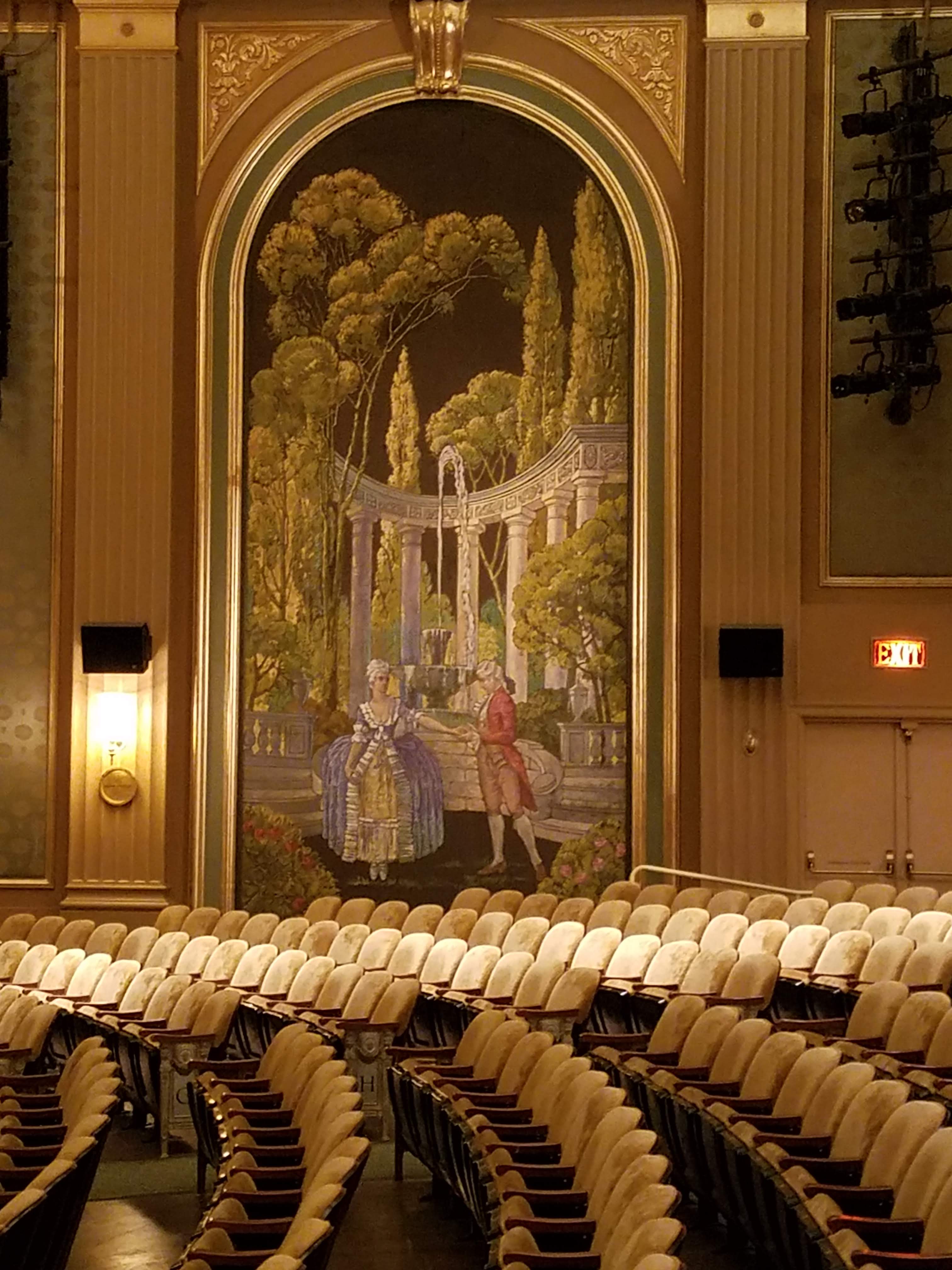
Thankfully, some of the original fixtures had been simply covered in plywood at some point. Removing the covering revealed original woodwork, plastering and art. This wall, for instance (think what you will of the artwork) is original.

wall covering.jpg

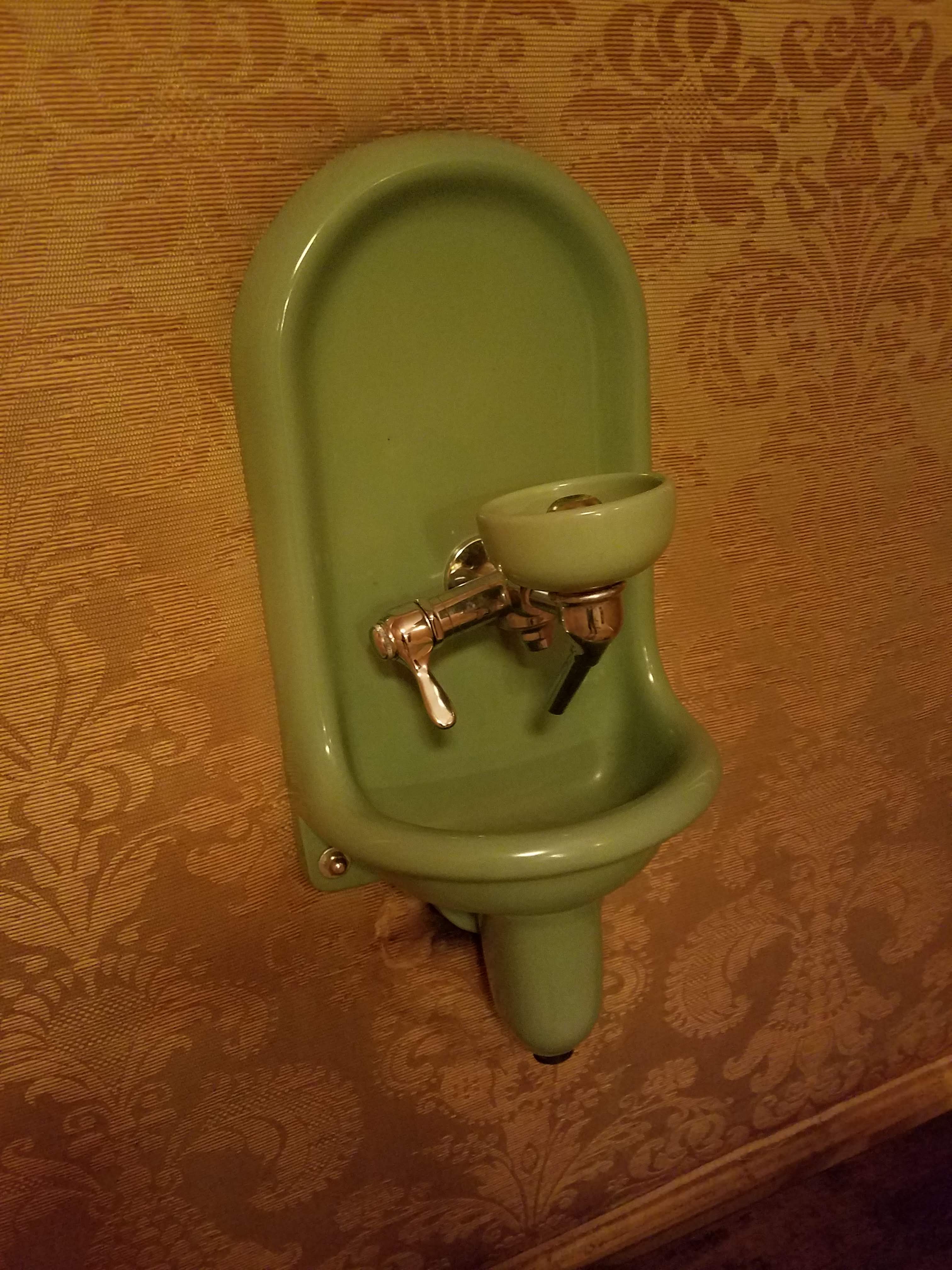
So is this water fountain.

water fountain.jpg

So is this lighted marker for Aisle 3.

aisle3.jpg

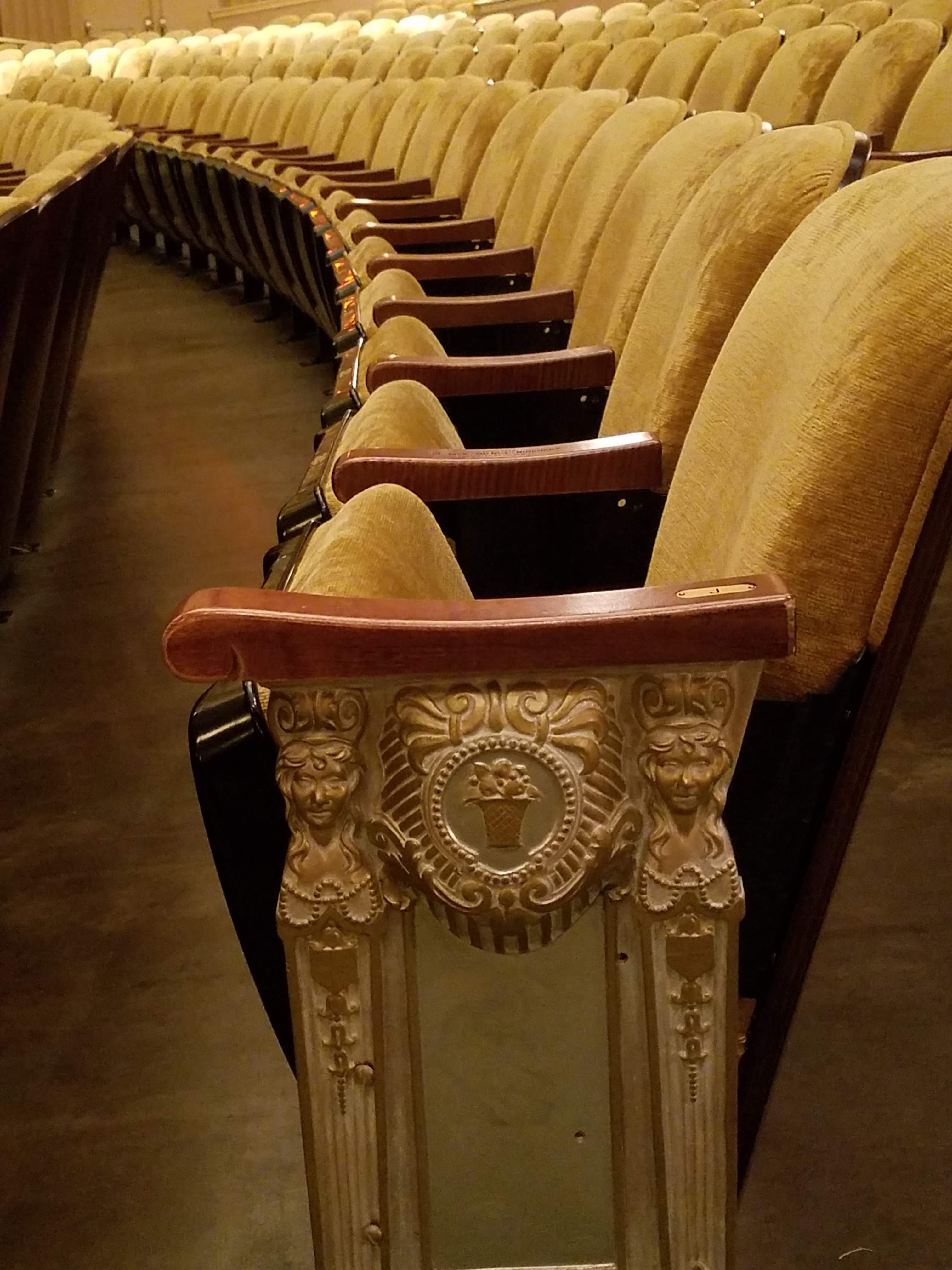
So are the decorative cast iron supports at the end of each row of seats.

original seat caps.jpg

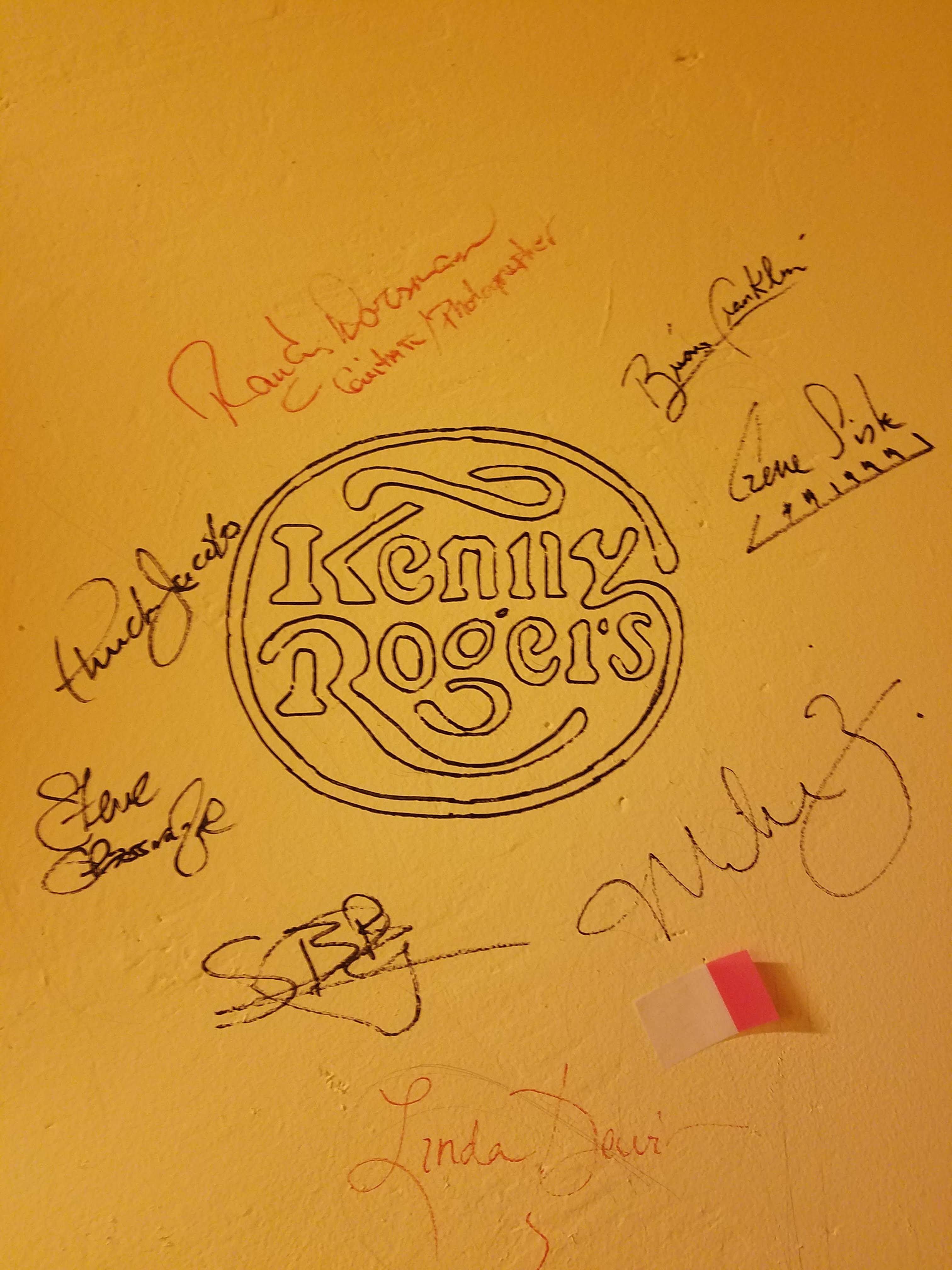
Downstairs on the walls of the hallway are the names and autographs of many of the famous acts to perform here since the theater re-opened in 2004, including Kenny Rogers,

Kenny Rogers.jpg

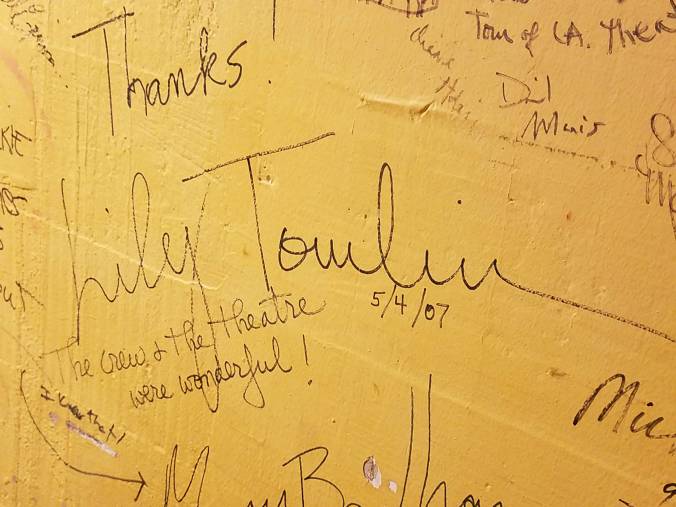
Lily Tomlin,

Lily Tomlin.jpg

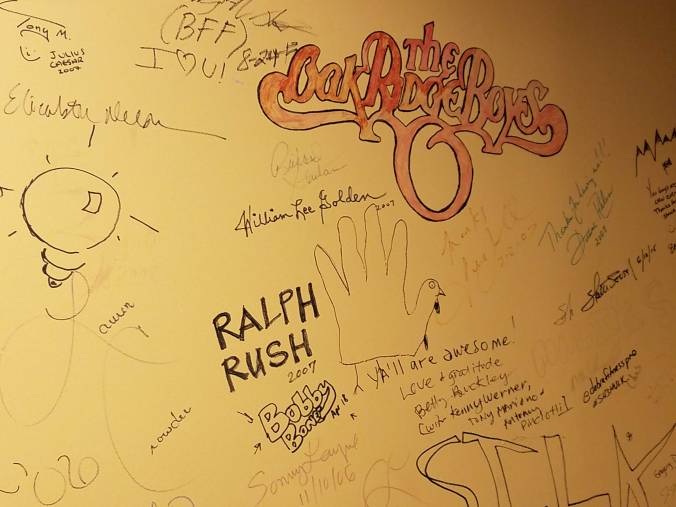
The Oak Ridge Boys.

The Oak Ridge Boys.jpg

I love going to the Paramount for shows and concerts. Clearly a lot of work, time and thought went into its renovation. But as our guide suggested, the question of the 3rd Street entrance remains. Some people think it should be taken away because it brings back bad memories of a time when certain people were thought less of, indeed relegated to a lesser entrance, unallowed to mix, unallowed to be equal, much as the law said “separate but equal.” Other people think it’s a good reminder, a way to remember that this entrance is no longer used, that we have indeed made progress, imperfect and incomplete as it is.

What I want to know is: What do you think? Should this entrance remain part of the structure, part of the tour, part of the concrete evidence of a past we wish were different in so many ways? Or should it go away? How much of what we choose to keep, how much of what reminds us of the past, however painful, is good and necessary? And how are such things to be displayed and presented in our communities?


Inflatables, Ibises and a Swiss Cheese Plant

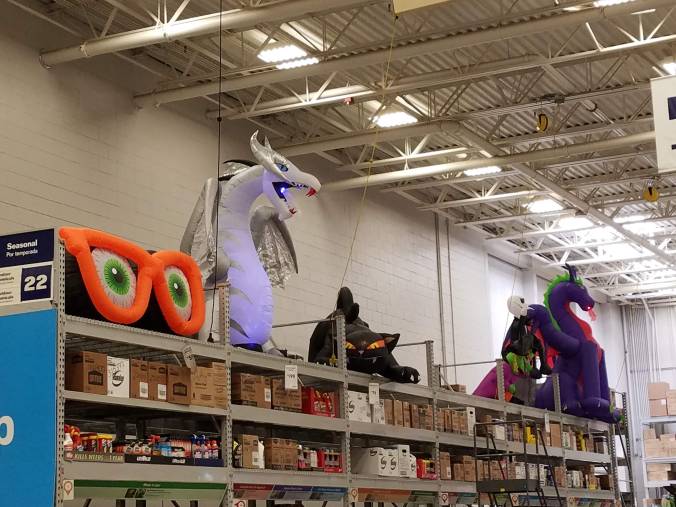
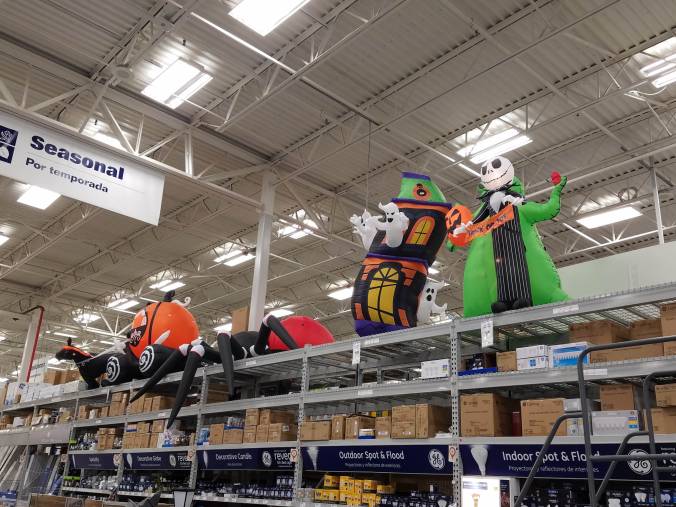
There are many things in this life that I will never understand. Blow-up lawn ornaments are one of them. Last week while in Lowe’s I could not help but see the selection for sale on the very high upper shelf in the – you got it – lawn care department.

lawn ornaments2.jpg

They have two dragons, one black cat looking evil (as evil as plastic can look), orange-rimmed eyes and something next to the purple dragon on the end that I cannot figure out. On another shelf they have a pumpkin carriage, a black spider (widow, no doubt), a haunted house and a green ghoula monster.

lawn ornaments4.jpg

The one that greets you – just imagine this in your neighbor’s front yard! – is this:

lawn ornaments3.jpg

Every town in America, sometimes every neighborhood, has at least one house with a variety of such “decorations.” It seems that Halloween is strongly vying for the #2 spot behind Christmas, when all manner of inflatable Santas, reindeer, snowmen, grinches, polar bears, nutcrackers, penguins and even nativity sets adorn front yards.

I have decided that I don’t have to understand or even appreciate everything. People have different eyes, different sensitivities, different preferences. Sometimes I go into a store and think: Who buys this stuff? But people do! And it’s not only what people buy. It’s the music they listen to, the foods they eat, the things that strike them as beautiful. It’s what they see, what they like, what they remember, what they want more of.

Some people will not look at Louisa’s gourds and think How beautiful! as I did when I saw them in August still hanging on their vine. Isn’t the shape magnificent? Traditionally, because a gourd’s shell will become as hard as wood, they have been used for bottles, dippers and musical instruments. People paint them, carve into them, display them. I am content and delighted to look at them hanging from a vine.

Louisa's gourds.jpeg

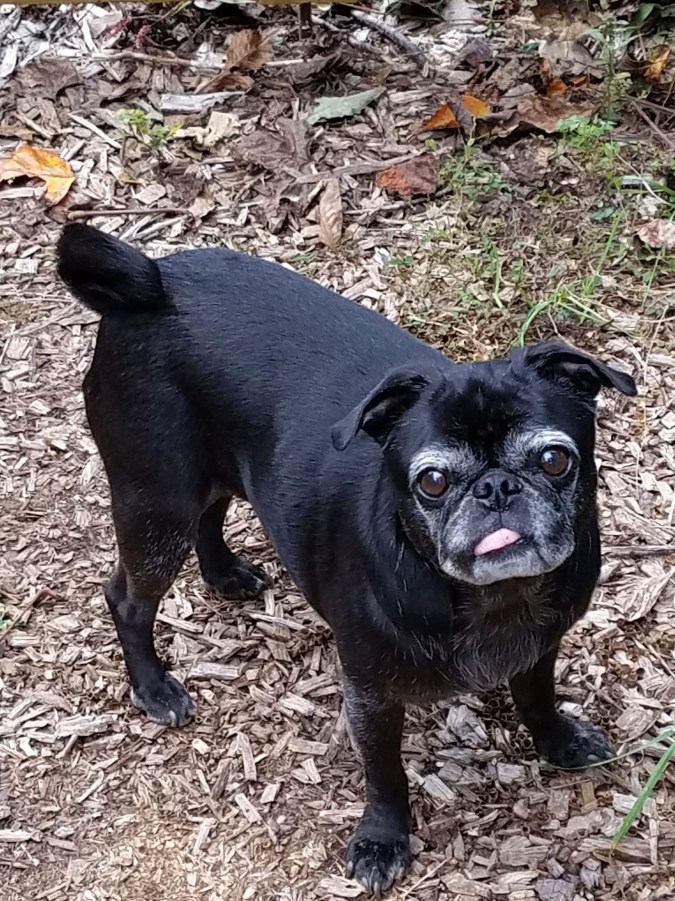
Some people will think Coco, the little black pug I get to laugh at every day, is ugly. I did. For a long time. Curiously, I also thought she was cute. I’d say How can a dog be ugly and cute at the same time? But now I don’t think she’s ugly. She wiggled her way into my heart and now I think she’s beautiful. Yes, beautiful! And still cute. I call her Cutie Pie.

Coco in garden (2).jpg

You can put a bunch of pillows on top of her and she will still just look at you like What? Is there a problem here?

Coco in pillows.jpg

See her in there? She doesn’t care!

You can put her on the rooftop of the chicken coop’s brooding box and she will not care!

Coco2.jpg

There are a lot of things that strike me that someone else might walk right by. I am drawn to form, pattern, color, character, authenticity and uniqueness with a curiosity that I suspect will never quite be satisfied. Last week this MO was confirmed in Galveston, Texas, at a place called Moody Gardens. Their “rainforest” is a bit imposing from the outside – a tall, glass pyramid amid lots of palm trees (this is not Virginia!).

top of rainforest pyramid.jpg

Inside I marveled at the patterning on this fish’s back. Do you think every one of its species has a different “fingerprint”? It’s like a maze, like the corn mazes people walk through or the ones in activity books that challenge you to get from Point A to Point B. Do you suppose there’s a way through this one?

fish.jpg

I don’t know what these birds are called, but there they were, right in front of us, looking as perfect as if they had been manufactured in a factory according to detailed specs.

birds.jpg

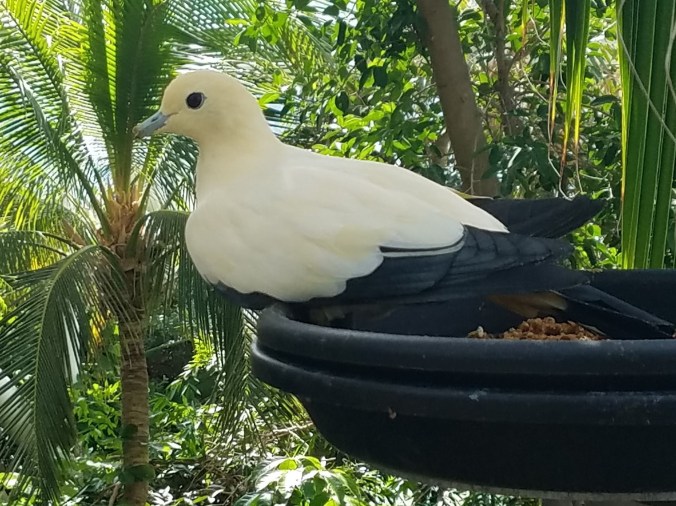
The shape of the one that sat so still, its distinct all-black and all-white sections so crisply divided, its unblinking eye with no shadowing, no lash, no imperfections – she’s amazing, but she doesn’t know it.

white bird (2).jpg

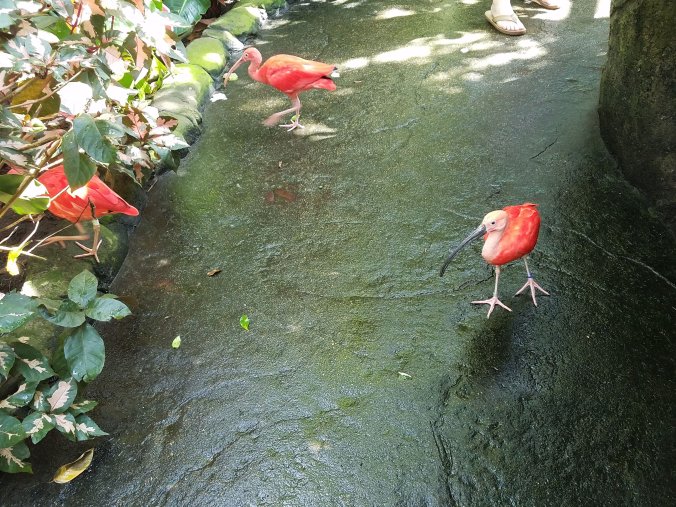
The gorgeous color of these scarlet ibises is like something off an artist’s palette. What do you even call that color? To me, scarlet isn’t the word you want. But the birds don’t care what you call them.

scarlet ibises.jpg

They freely walk around, seemingly oblivious to the humans observing their skinny legs, their outstanding posture, their disproportionate beaks. Why do those beaks have to be so long? Perhaps their food lives deep in the mud at the bottom of the pond?

scarlet ibis.jpg

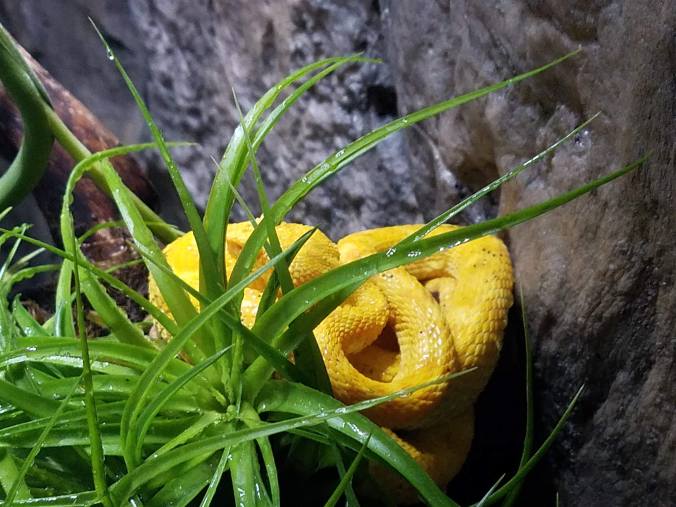
I have to admit that the color of the palm viper is extraordinary, but I did not stare at it for long. The coils, the gleam, the idea of what it is capable of sent me on my way even though it is behind glass. I think people must be innately repulsed for good reason!

palm viper.jpg

Onward!

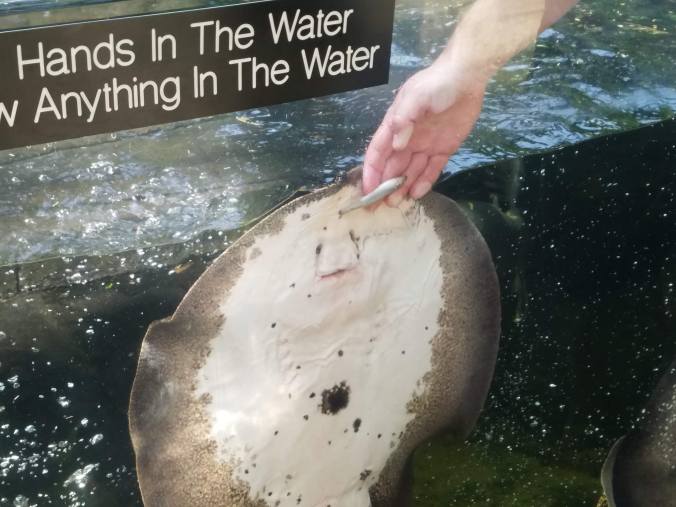
I do not want to be the one who feeds the mantas, but it was quite something to watch! The man who does this has been feeding them for five years! His hand is inside the glass.

feeding the mantas.jpg

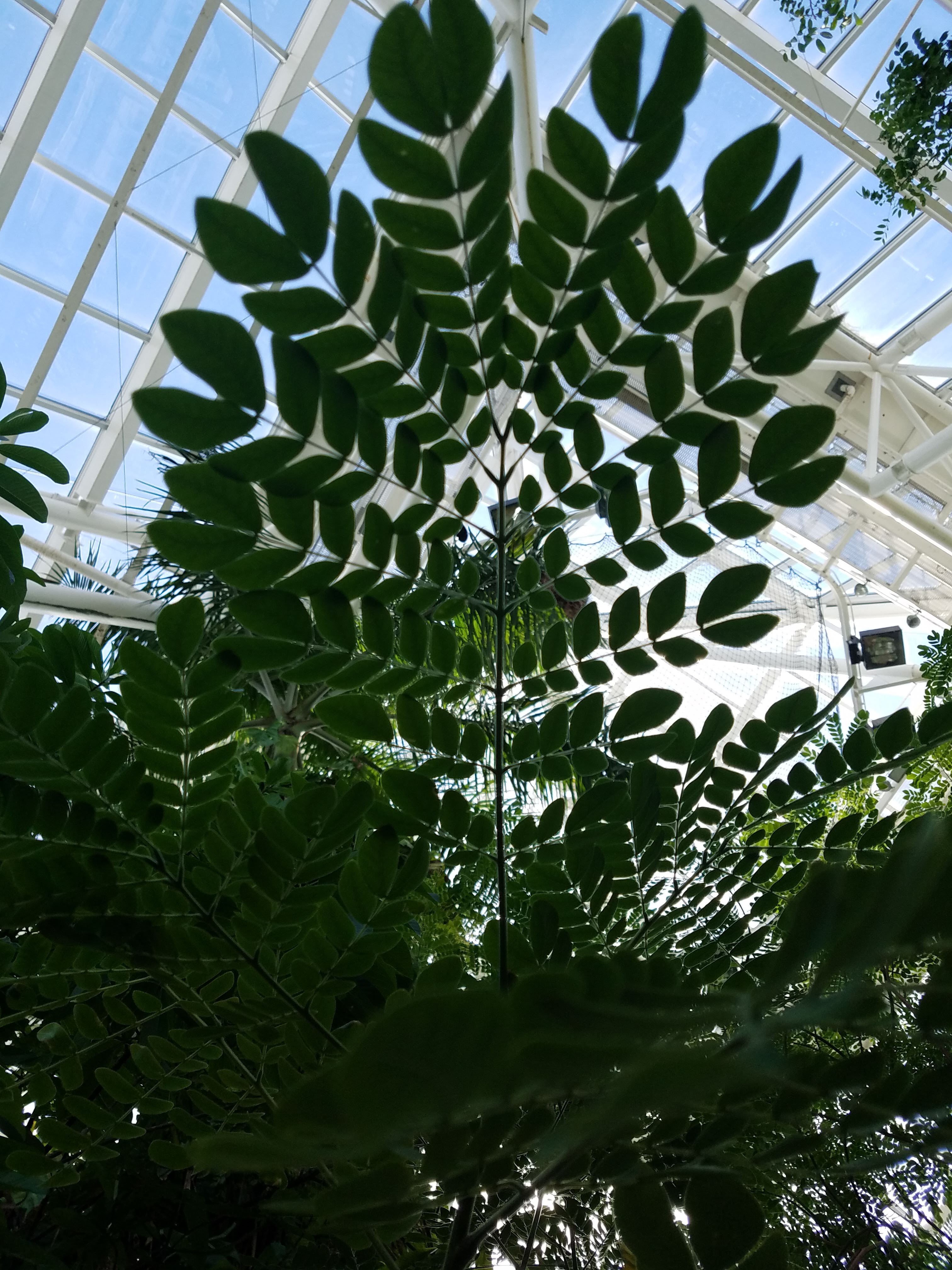
How amazing is the patterning of this branch of the “rain tree”? It grows that way without any help from a computer program! Notice though that it’s not perfect. Some leaves are missing. If a person made this, or a program constructed it, you can bet that all the leaves would be there.

rain tree 2.jpg

Seen from below, with the sunlight framing it, this branch is to me even more amazing.

eain tree.jpg

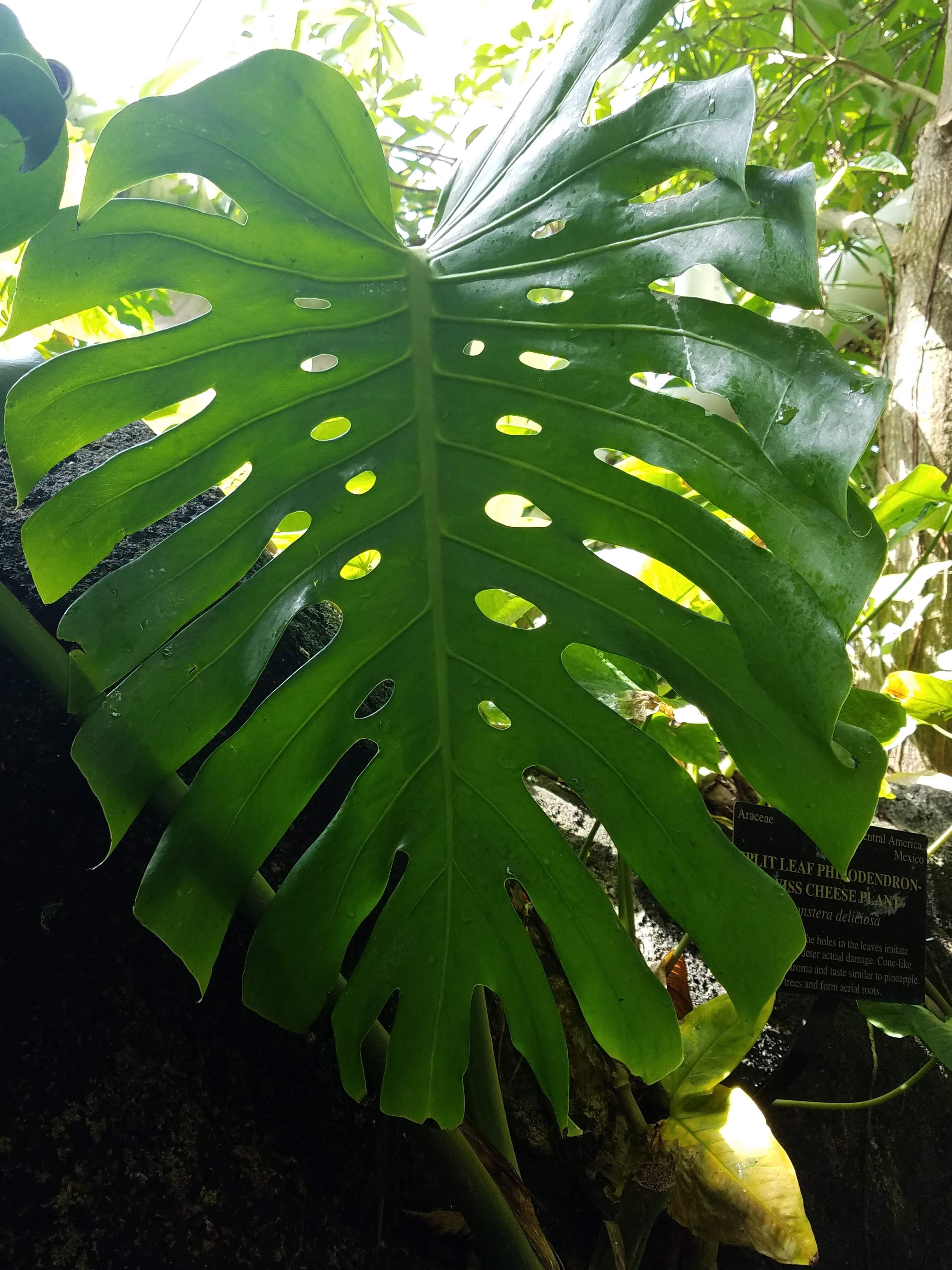
The Split Leaf Philodendron or “Swiss Cheese Plant” is just plain funny! What reason could there be for the naturally-occurring holes in the leaves? To get more light to the leaves below it?

swiss cheese plant.jpg

On the sign in the lobby at Moody Gardens is a Kenyan proverb that says: Treat the earth well. It was not given to you by your parents. It was loaned to you by your children.

To me this says more broadly: Keep your perspective. Be careful. Pay attention.

It gets me thinking about what an incredibly diverse and fascinating world we live in. All too often we get caught up in the everyday issues – bills to pay, things that break down, people who disappoint us. We forget to take notice of the miracles all around us all the time. Without our usually noticing it, there’s beauty: someone’s smile, the color of flowers, the rays of sun making speckled shadows. There’s growth: we don’t struggle quite as much with something as we used to, our work yields more satisfaction, our cooking is more delicious than ever! And there are simple and complex systems in every corner of our world that actually, consistently work! The lights go on when we flip the switch, fresh and wonderful food from around the globe is available in our stores, the mail arrives! Much as I will never understand it, even the inflatables in people’s front yards at Halloween and Christmas give (some) people something to smile about.

Besides all this and a thousand other things, there are plants in the world that look like swiss cheese! Just for fun maybe?

Take a moment today to look around and think about what you normally take for granted. You don’t need to make a list (though mine is very long!) but I think if we all spent a bit more time being grateful for what we have instead of lamenting what we don’t have, if we celebrated the good instead of bemoaning the bad, if we channeled our energies toward gratitude and service instead of anger and greed, think what the world would be.

A is for Applesauce

For as long as I can remember, I have made applesauce come fall. It’s a signal of the season change, when my best descriptor of the air is “crisp” and my thoughts turn – without intention – to hunkering down and getting ready for the colder, shorter days of winter. It’s fundamental to our primal instincts to get ready for scarcity of food, even if we don’t have to worry about that at all. Applesauce is one of those pure foods that’s good warm, cold or icy, all by itself or next to a slice of pork roast or a potato pancake.

It’s simple. You wash the apples, cut them up, put them in a pot with a little water, let it cook down, press it through a strainer, add some cinnamon if you want, and enjoy! I’ll take you through it step by step.

Amazing apples make amazing applesauce, so start with apples as fresh and crisp as possible and as local as your location allows. I am fortunate to live 20 minutes from a well-established and super impressive family farm that specializes in heirloom apples. https://www.albemarleciderworks.com/

sign.jpg

One day last week I happened to be going right by there, so I stopped in for 40 pounds, my usual portion when applesauce is the goal. (Forty pounds fills three canvas shopping bags a bit more than half full each, in case you wondered.) Normally Albemarle CiderWorks has five or six long folding tables set up along the outside wall of the barn with a box of each kind of apple, one after the next, in a long row on the tables. (There’s a good photo on their web site showing this.) They have small paring knives and paper plates and descriptions of each apple set out in front of the boxes, so that you can sample them and decide what you like best.

But last Thursday it was raining and all the apples were in cold storage. I was escorted into that living-room-sized refrigerator and chose fast! Cold storage is cold!

Different apples are picked at different times, and different apples are best for different purposes. Applesauce naturally comes out best when you use apples that are best for cooking. For me that means they are very firm and a bit tart, which is as technically descriptive as I can get. Last year I got one called Black Twig that was extraordinary, but it comes late in the season and was not available yet. Virginia Gold and Liberty looked good to me in the ten, very cold seconds inside the fridge that I allowed myself to contemplate this decision, and the woman helping me confirmed that they would make great applesauce. Pack ‘em up! Done! Homeward I drove.

Yesterday, following too much rain this past week, the ground was too wet for the final grading in front of the house, so we thought maybe it would be a good time to get the oak clapboards on the coop. That job has been sitting all summer on the back burner while we waited for the wood to be milled and got involved with other things. We had barely started measuring and cutting boards when raindrops came again, so we turned our attention to the basement, more specifically to making order in the basement. A lot of stuff got moved to clear the space in front of the interior wall of the foundation that needs repair, and that stuff had been put here, there and everywhere. It took a couple hours, but all is decently in place now. A bunch of stuff is in the trash.

Then it wasn’t raining anymore, and the coop siding beckoned still. But before heading out, I decided to get the applesauce going. Look how beautiful they are in my sink.

apples in sink.jpg

I rinsed them off and stared at them a bit, admiring their gloss, their unique colorings – every Liberty with slightly different transitions from reddish to greenish, every Virginia Gold with different splotches and spots of brown. I have to admire them before I cut them up. It seems the respectful thing to do.

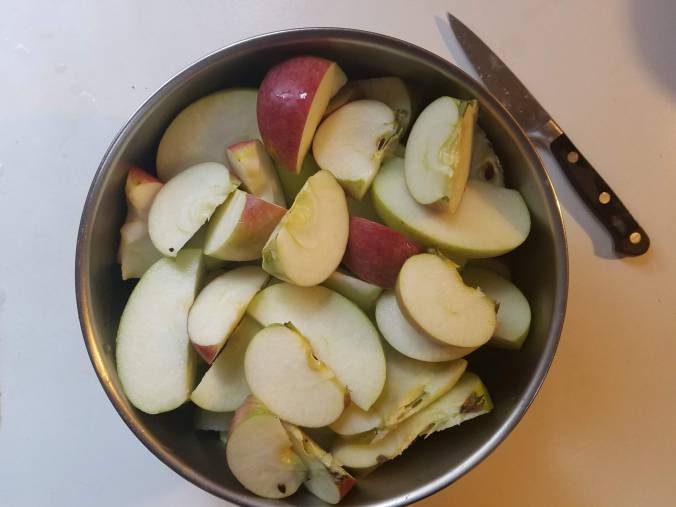
But once you start cutting, you just cut. The little ones you can quarter, the big ones in sixths or whatever is quickest. Seeds and skins stay; stems go in the compost or trash.

cut up.jpg

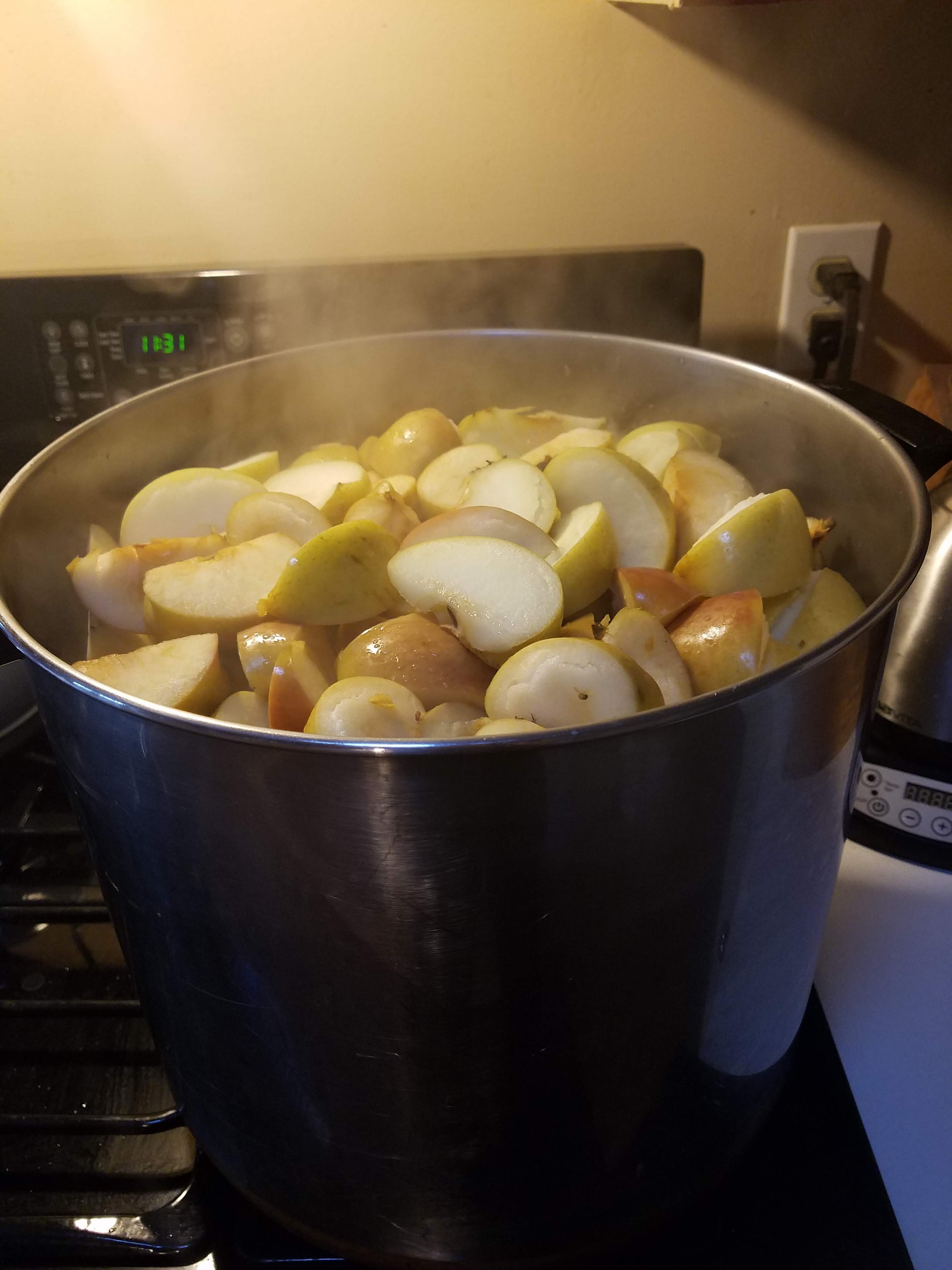
I can’t be overly specific regarding quantities here because it’s entirely up to you how much applesauce you want to make. Take out a big pot (I used my five-gallon pot) and put about half an inch of water in the bottom of it. Put your cut-up apples in the pot until you can’t fit any more. Mine looked like this.

start.jpg

Cover the pot, turn on medium and walk away. Go read a book or put siding on the coop. With the lid on top and the water in the bottom, those apples will just steam and get soft. After about an hour I took a break from the siding and checked on them; mine were doing what they are supposed to do: reducing in volume, steaming away, looking like this.

after one hour.jpg

Yours might take a little less time if it’s a lesser quantity. (What makes me think that not everyone is going to fill a five-gallon pot? You can make a smaller amount, but after you taste it, you’ll wish you made more!) The apples need to cook down slowly, and all they need is time and heat. Give it a stir at this point if you want, but it’s not the end of the world if you don’t.

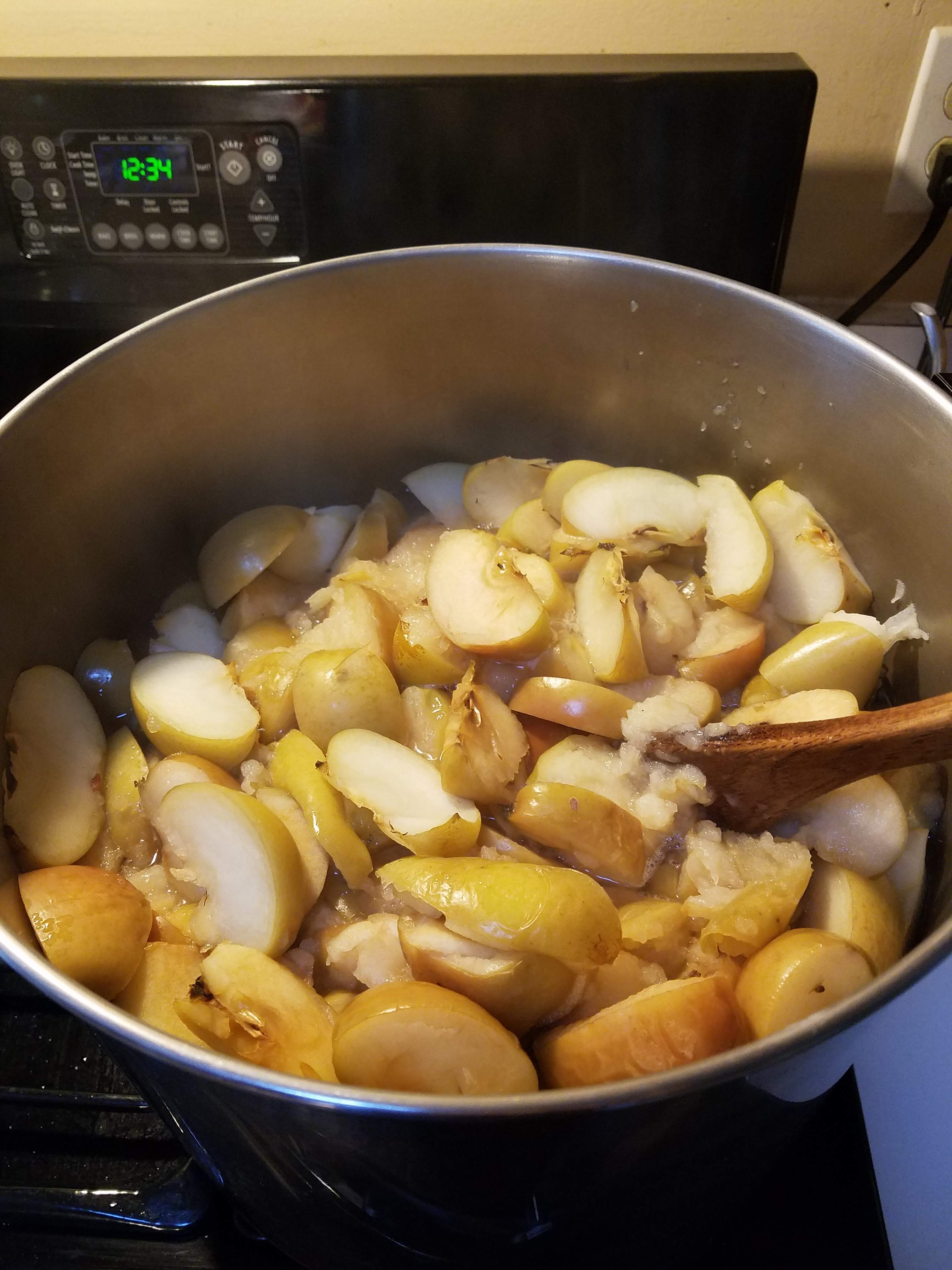
After about two hours it reaches the point of mushiness where you can easily stir it with a wooden spoon and make mash by doing so. By this time the aroma of apples fills your home and you wonder why more people don’t cook.

after two hours.jpg

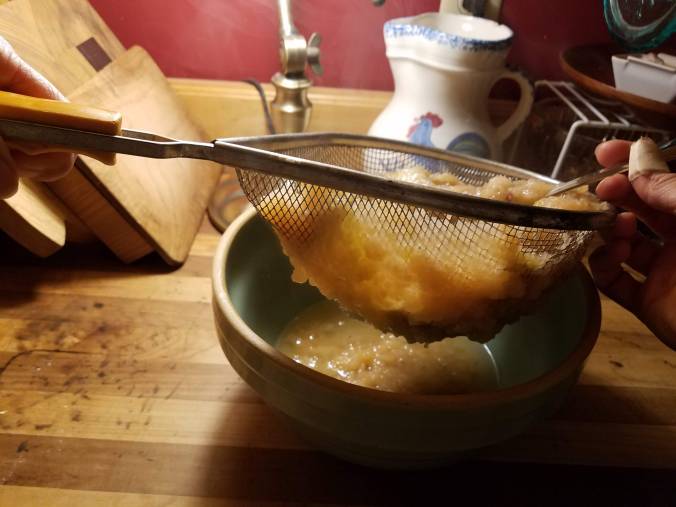
See the mash around my spoon? With a few more stirs, it all looks like that and you can spoon it into the strainer that you have set up in a bowl.

mash in strainer.jpg

Except for the skins and seeds, it’s applesauce now. Why not just peel and core them before cooking them? You can, but that process is tedious and time-consuming, and you lose more of the flesh of the apple that way. I do not have that kind of patience, much as my chickens would love the extra apple they’d get. And these apples are precious to me – I want as much of them as possible going into my applesauce.

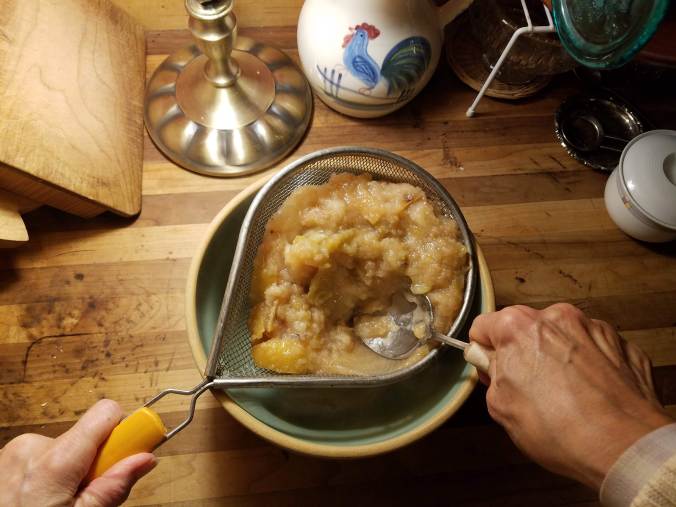
Now all you have to do is press the applemash through the holes of the strainer with the back of a spoon. A Foley food mill works well for this too, if you have one of the older models. I found the newer ones problematic and more trouble than they are worth. My sister Lynn loves her Foley food mill; if I still had my old one, I’d probably love it too. But we get used to things one way or another. See what works for you.

pressing against side.jpg

Note that the holes of my strainer are not super tiny. They are big enough for the sauce to go through pretty easily, but not so big as to allow the seeds through. Every now and then scrape the underside of the strainer.

underside of strainer.jpg

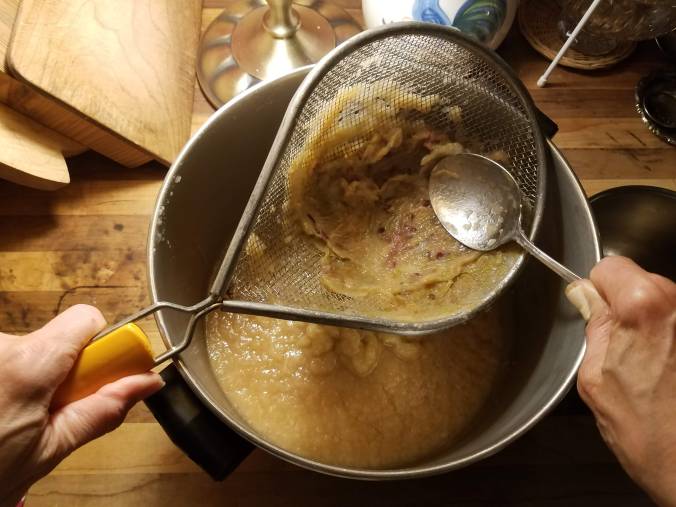
I discovered quickly that my bowl was going to fill up too fast, so I switched to using my Dutch oven as the bowl underneath. Then when the level of the applesauce reached the bottom of the strainer, I transferred the applesauce to the bowl.

Keep pressing applemash against the sides of the strainer until all you have left is skins and seeds. It will look like this.

seeds and skins.jpg

Scrape out the seeds and skins from the strainer into a separate bowl (this is great for your compost or your chickens!) and start again.

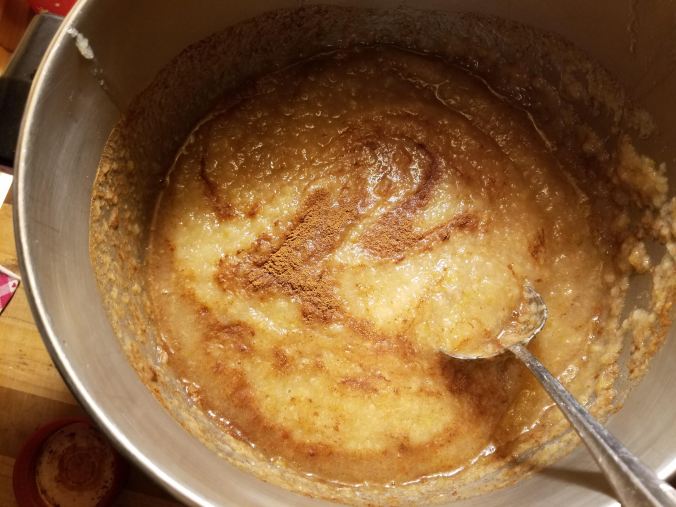
With the quantity I made, I added cinnamon each time the bowl became full (instead of waiting till it was all strained through and then adding cinnamon). Now that I think of it, I suppose you could put cinnamon sticks in the pot with the cooking apples, but oh well, maybe next time! I can’t tell you exactly how much cinnamon to use. It’s like salt and pepper: Add what seems right to you. I used about two teaspoons per three quarts of strained applesauce.

I love the swirl of the cinnamon getting stirred in.

stirring in cinnamon.jpg

You can put your applesauce in a container and put it in the fridge to eat soon, or you can put it in mason jars and can it in a hot water bath, or you can freeze it. I think freezing is best. It’s easy and allows for icy applesauce at some point down the road.

Quart-size ziplock bags work great. If one person holds the bag open and another person spoons it in, that’s ideal. If you are by yourself, try putting the applesauce in a large measuring cup with a pour-spout or a small bowl with the same, and holding the bag with one hand and pouring with the other. A wide-mouth funnel can be good too. You can also freeze in jars as long as you allow a good inch or so of air space for expansion, otherwise the glass will break. (And you don’t want that!)

I had filled my five-gallon pot to overflowing with cut-up apples and ended up with about ten quarts of applesauce and three cups of seeds and skins which my chickens enjoyed tremendously. Always keep a little out for enjoying fresh.

finished.jpg

Oh, and if you think your applesauce is too watery, just cook it down a little more after you’ve removed the seeds and skins. That’s how you get apple butter – it’s just way-cooked-down applesauce. It might take another hour or so to cook down. Turn off the heat when it’s as thick as you like. In the meantime your house is blessed with apple aroma again! Some people add sugar too, at the end. That’s your call.

For those who are wondering how you get icy applesauce, just thaw one of your frozen bags or jars to the point where you can break the applesauce apart with a fork. Stir until desired smoothness. Oh yum!

And the coop — I love the siding! Claudia calls it a chicken castle! More on that soon 🙂

5.jpg

Not-Your-Average Cultural Exchange

I know there are people in the world who would feel, as I do, a twinge of sadness the day after a storm splits the gigantic chrysanthemum.

mum storm damage 10.12.jpg

Or who wish they could wander out to the garden to pick fresh oregano and purple basil for the homemade pizza about to go into the oven (see the basil in the box behind the rosemary?). Or who would like to make applesauce together from freshly picked heirloom Virginia apples. I suspect there are people who have some time – a few weeks or a few months – to explore a corner of the world that is surely different in some ways than their own and who wonder about my corner of Virginia.

I’m thinking this is Not-Your-Average Cultural Exchange.

There’s always something going on around here: planting, harvesting, building, cooking, baking, (eating!), trying, creating, discovering, resting, marveling, playing, listening, digging, watching, learning, discussing, fixing, pondering.

There are my various gardens with herbs, vegetables and perennials. I’ve moved the azaleas in between the crape myrtles in front of the fenced garden. Turns out, the neglected bush that just got dug up in the front corner of my house was actually two bushes. This photo shows them moved, with their fresh dirt around them, but not yet trimmed, staked or mulched. I did that later in the day, after taking the photo. I had to take the photo when I did, and you see why. I did not ask little Coco to park herself there to enjoy the sunshine…

azaleas crape myrtles Coco2 (2).jpg

We have got to do something about the blackberries that are going crazy inside the garden, and the tomatoes could be pulled and winter crops planted. The asparagus bed is none too tidy, begs for attention. One of the rudbeckia got smashed somehow and needs a little love. The front yard is a mess from the recent Big Dig, but soon we’ll be pouring footings and building a nice front porch.

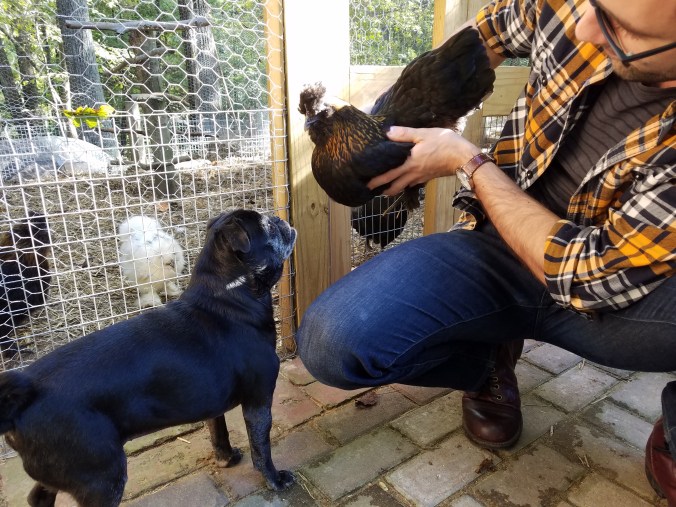
My two custom-built chicken coops provide palatial accommodations for 29 interesting (some bordering on ridiculous) chickens. They need new mulch or straw when they’ve scratched through what we put down before, but they give lots of amazing eggs to make good food with! My lone araucana isn’t laying her greenish eggs any more though – could there be a reason? This black copper maran had a face-off with Coco yesterday. Both have curiosity, but the chicken less so. She just wants to get back to scratching in the straw. A white silkie came toward us to investigate.

Coco and chicken3.jpg

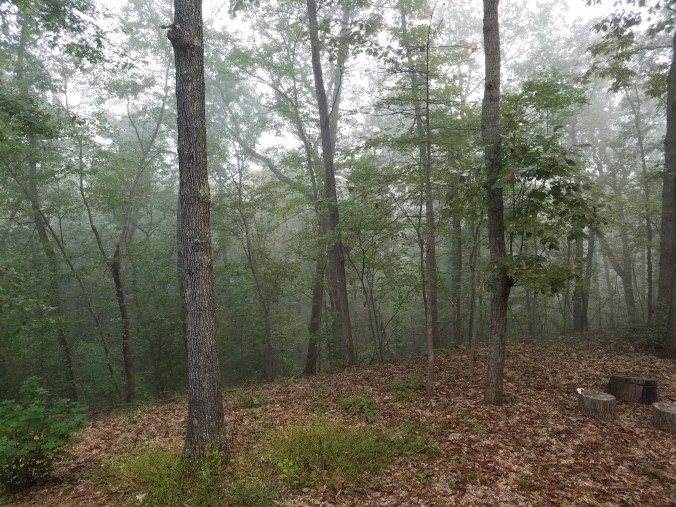
When the sun rises on a day with too much cloud cover, and it can’t quite get its rays to stream through the giant trees in my back woods, there’s always an otherworldly feeling and sometimes a glorious mist that sparkles on the leaves or in the air.

mist in trees.jpg

When the wind kicks up such that those trees can’t help but engage in a wild dance, it’s a sight. The not-so-manicured trails through the woods are a pleasant walk leading to the beaver pond with its lodge and dam. The beavers keep making their pond a little bigger. I don’t get down there often enough.

When a fox trots in a wide circle around the coops, wishing (you know it!) that there was a way to get to those fat and surely delicious chickens, it doesn’t know how its red fur shines in the sun. When guests stay at my gorgeous Airbnb cottage, they just might see a mother bear and two cubs walk through the yard. A few weeks ago, someone did.

Recently I was in Seattle and met several enthusiastic, capable au pairs. I got to thinking that some people who would like to come to Virginia for a little while (but don’t necessarily have a friend here already) might prefer a household without small children, and might prefer a country setting. They might enjoy getting to know the plants that grow in this climate, or the way we lay decking boards, or the vibe of downtown Charlottesville, fifteen minutes away. It’s a vibrant university town with great restaurants and shops, exhibits and lectures, sports and music events. The Presidential homes of Jefferson, Madison and Monroe are all within half an hour’s drive.

Over the years I’ve had short- and long-term visitors many times and would love to share my little piece of the world with some new friends. If you are thinking it’s a good time to do such a thing and have a little interest, you can let me know.

Brilliant Sheepdogs, Clueless Sheep

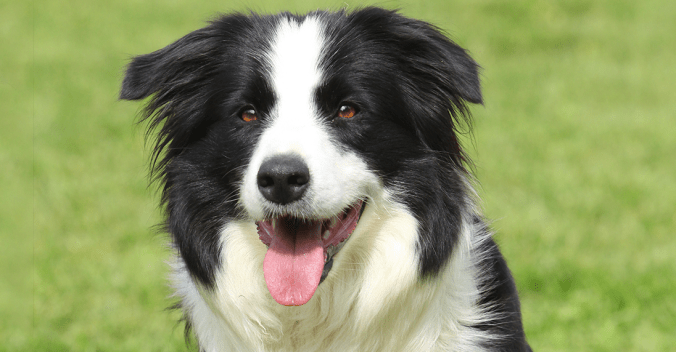
The next time you think you are up against an impossible task, compare it to getting three sheep to move through a series of obstacles on a 25-acre hillside. Sheep are not the brightest animals (clueless is the word that comes to mind), but the border collies that guide them through this competitive course are brilliant, fast and oh so determined to be successful.

border collie (2).png


It isn’t every day you get an “open” trial of the US Border Collie Handler’s Association practically in your backyard. When you do, you go see this amazing spectacle. Tracy and I drove about ten miles to Edgeworth Farm, knowing almost nothing about sheepdog trials except that it involves sheep, dogs, a person giving commands (whistle and voice), a great big open space and some sort of timed challenge.

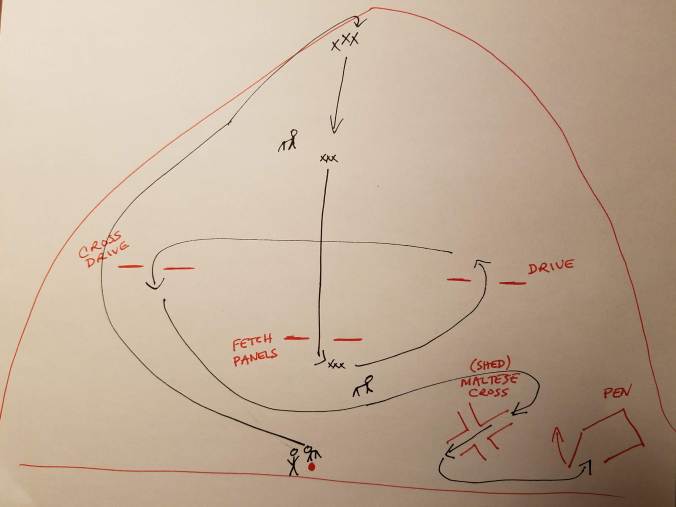
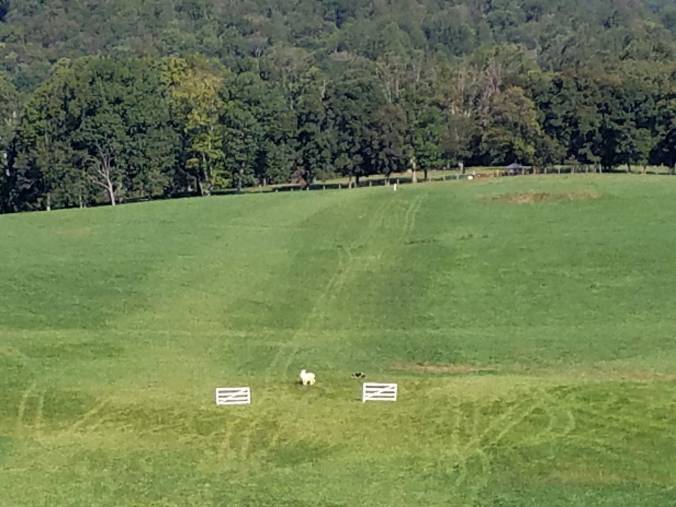
It’s a challenge all right. We stood looking out on a huge field that is roughly triangular in shape, in the middle of one flat edge (at the bottom of this drawing)  looking toward the far point that was more than 400 yards away. That’s where the sheep start (the xxx at the top). I am not going to get a prize for drawing, and there are surely inaccuracies in this, but the obstacles and the route the dog has to take looks about like this.

course.jpg

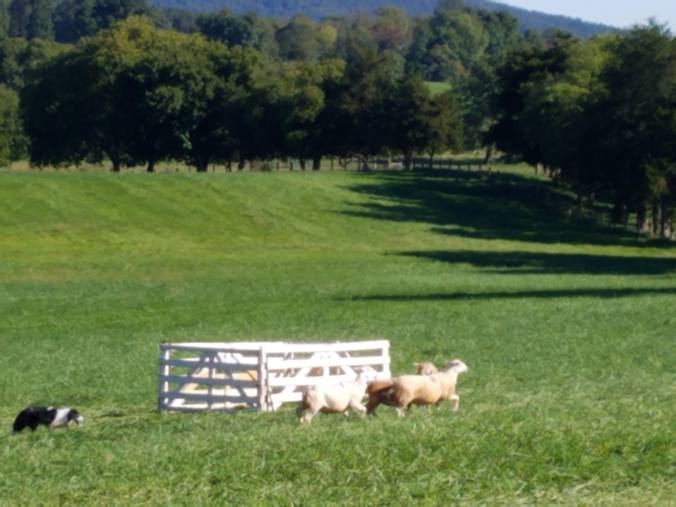
The dog starts with the handler at the dot near the bottom, opposite the three sheep (the three xxx’s at the far opposite end of the field), a spot called the outrun. The dog has to run around to the left toward the outrun, approach the sheep from behind, “lift” them (get them moving in the right direction), then make them go through the middle “fetch” panels that are seven yards apart, veer around and then up through the “drive” panels, go across the field through the “cross drive” panels, go toward and then through the “Maltese cross” from one specific entry point all the way through (they are not allowed to go out the sides of the cross), then into the pen. The dog does not have to close the door of the pen; the handler does that and also can help guide the sheep through the cross.

The sheep do not want to do any of this. Therefore please also note: My lines are relatively straight, but the sheep zig-zag all over the place, and the dog zig-zags behind and around them constantly. The sheep clearly have absolutely no idea what’s going on. They just want to go home, back to the barn, back to the food, back to the safety of their many other comrades who, unknown to them, are also three by three having to go through this same inane exercise.

Oh and by the way, this whole course is 12 minutes!

A very nice man named John stood next to us, also watching. His wife is a handler so he goes to these competitions all the time. The way he explained it, there are two main things to know about sheep. 1. Sheep assume safety in numbers so they stick together. But that doesn’t mean one of them might not “squirt” (his word) and separate from the rest randomly. 2. Whichever way the sheep’s head is facing, that’s the direction they are likely to move, so the dog has to get them facing the right way.

In this trial, the dog had to keep all three sheep together throughout the course. Sometimes, in other competitions, one or more sheep will be marked with a bandana or something, and the dog has to purposely separate that one or two from the rest and then get the unmarked group to go through the panels or into the pen.

approaching fetch panels.jpg

The photo above shows the dog and the sheep approaching the fetch (middle) panels and gives you an idea of how huge the field is. (I am not using a zoom lens.) You could barely see the sheep up near the trees when the dog was first released from the handler at the beginning of the trial. That black and white blob above the right-hand panel is the dog and the white blob in the middle is the three sheep, all clustered together, surely wondering what on earth they are doing running down this field and why this annoying creature is pestering them to do it!

John said the sheep are constantly deciding which is worse: the annoying dog always behind them that won’t leave them alone (so they continually try to get away from it) or the scary obstacle (gate, pen, etc) that the annoying creature is trying to make them approach and go through or into.

Next time you have to choose the lesser of two evils, remember these sheep! You can see them eyeing the “Maltese cross” with great skepticism (below), but that bothersome dog is still behind them. Why won’t it just go away??

near cross shed.jpg

The dog has to sometimes coax, sometimes drive, sometimes wait. The handler whistles or shouts voice commands but can’t do that too much. Until the dog gets to the cross with the sheep, the handler stays at the starting post issuing commands from there. The whole thing is not only timed, but point-based. Each obstacle is worth a set number of points. Getting the sheep through the fetch panels – from the starting point (the outrun) through the first (middle) set of panels is worth 20, for example. It is not only getting them through that matters, it’s how the dog gets them through.

Didn’t your mother always say: It’s not what you do, it’s how you do it! or, It’s not what you say, it’s how you say it!

The rules are specific, though with a good bit of subjective judging required. Regarding that first part of the course, the USBCHA rules for international competition read as follows:

5.2.3 Lift

  1. At the end of the Outrun, the dog will either come to a full stop or merely slow down.
  2. The dog’s approach should be smooth, cautious and steady.
  3. The dog will take control in a firm and quiet manner.
  4. The dog should not rush in and startle the sheep nor should it lie back and require numerous commands before getting its sheep on the move.
  5. The lift should be smooth and balanced where the sheep move away in a direct line to the first obstacle.
  6. Judges should use their personal knowledge of sheep and sheep dogs to determine whether a lift has disturbed the sheep unduly and mark accordingly.
  7. Judges will deduct points for excessive commands, slowness, etc., at this point of the trial.

Several things strike me while reading through this. First, you try getting sheep to move in a direct line!! C’mon, sheep, you know you don’t want to just stand there. See that nice set of panels? God only knows what’s on the other side of them, but you know you want to go straight toward them and then right on through! Sheep have no idea whatsoever what a direct line is.

Second, “…whether a lift has disturbed the sheep unduly…“ – trust me, the sheep look very disturbed! Why is that infuriating dog behind us all the time??

Tracy and I watched eight or ten dogs try to do this course. Two or three got the sheep through the first (fetch) panels. One of those got the sheep through all three sets of panels (fetch plus drive plus cross drive). ONE! (This shows the “drive.”)

through drive.jpg

One of them (a different one) got the sheep to go through the cross (in the right entry point and without squirting out the sides). One of them (yet another) got the sheep in the pen at the end. This is hard!!! The sheep don’t want to go in the pen! Damn dog! Make it go away!

pen.jpg

These dogs — and the people who train them — are remarkable. It struck me as its own world, a community of people and dogs who love this challenge, who work tirelessly to outwit and overcome the small-brained decisions of a bunch of sheep. It was highly entertaining and I’m sure is very hard work. The dog tries so hard! The sheep are so dumb! And when it works, when the smart, fast, skillful dog causes the dumb, jittery, unpredictable sheep to go where they are supposed to go, it’s so exciting, you cheer! Well, you quietly cheer because you are in such awe. You wouldn’t want to disturb the dog’s concentration or add any random noises that might add confusion. It’s hard enough!

When A Dig Is Big

When you have been waiting seven years to dig a hole, to expose the foundation, to see what’s really there, to assess the problem and to fix as required, and the day finally comes, you want two things: You want to be there and you want the sun to shine. When what you are doing is a dig so big that you can’t call it anything but The Big Dig, you can’t have rain. Our planned dig-date coincided with Hurricane Florence making landfall. Here in Virginia we didn’t get the worst of the storm, but we got plenty of rain. Bother. We had to cancel the plan to dig the weekend after Labor Day.

I didn’t want to miss all the fun, but I was heading out west on Sept 20. It kept raining in Virginia and was too wet to dig the weekend of Sept 22-23, and the weekend of Sept 29-30. Finally, the forecast for October 6-7 looked rain-free. And I flew home on Oct 6. It begins!

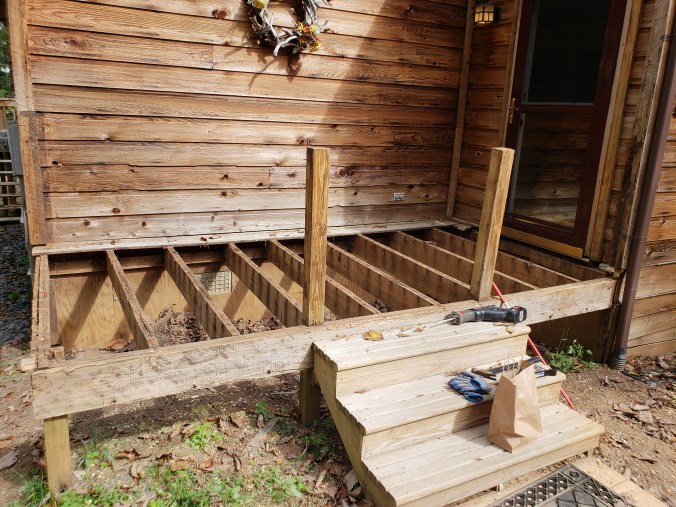
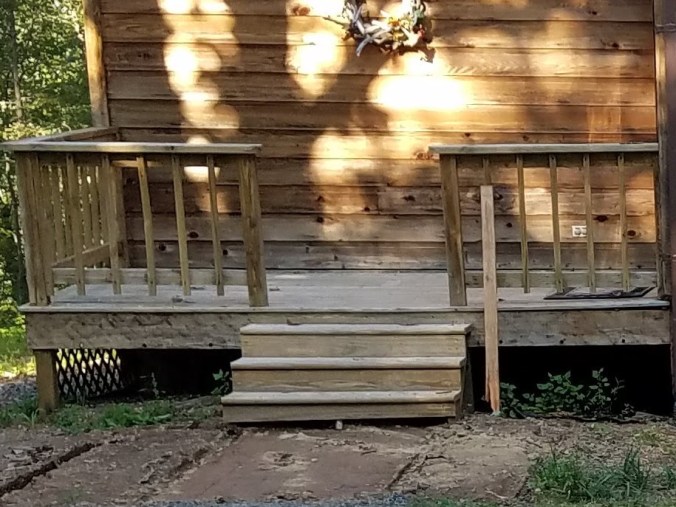
Joe had said he could take the old front porch off with the excavator, but I thought there might be salvageable wood. Sandy took it apart board by board on Friday.

Oct7 (1).jpg

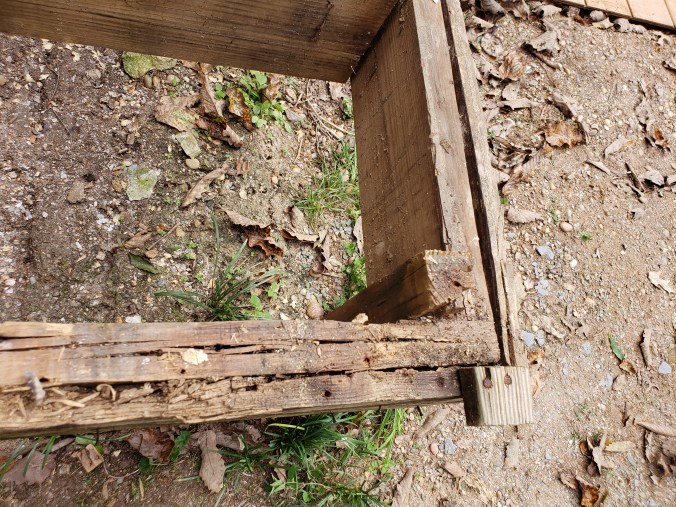
Except for the steps, which were new a few years ago, he found that the rest was rotted beyond further use.

Oct7 (11).jpg

So it all went in the burn pile.

With no way to get into the front door, this project was officially underway. Now there’s no turning back! A new front porch there will be. But not until we make sure that the front foundation is in no way damaged, in no way compromised, in no way going to cause problems in the future.

Oct7 (15).jpg

Weeks ago, when I was frustrated at being unable to find a contractor willing to do this work and we had determined to do it ourselves (because it had to be done, and you know, it can’t be rocket science), we had talked to Joe about this project. God bless him. He said, “You don’t want to do this yourself” in regard to the excavating. Graciously, without flat-out saying People who have never operated an excavator should not do this work, he implied that such things were best left to those with experience. I am so glad he said what he said, however he said it to make me understand, and I am so glad I listened! This man is a master on that machine! It might not be rocket science, but it’s a skill he has perfected over the years. You don’t rent a machine and figure this out in a morning.

Oct7 (22).jpg

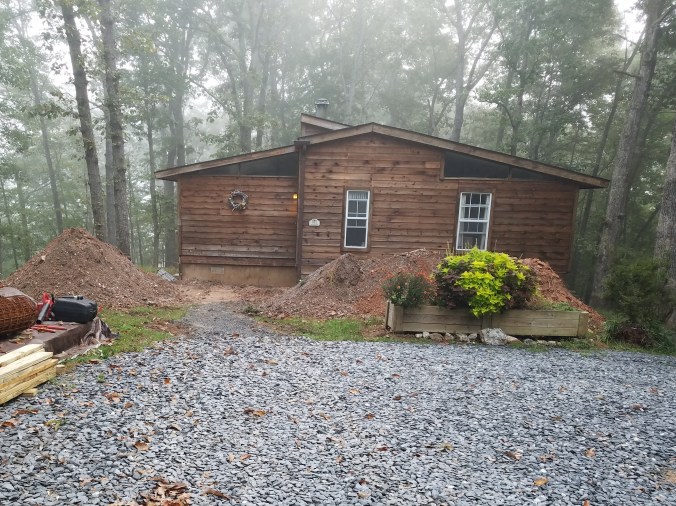
Joe removed a lot of dirt. The piles in front of the house looked like this when he was done.

10.7 (2).jpg

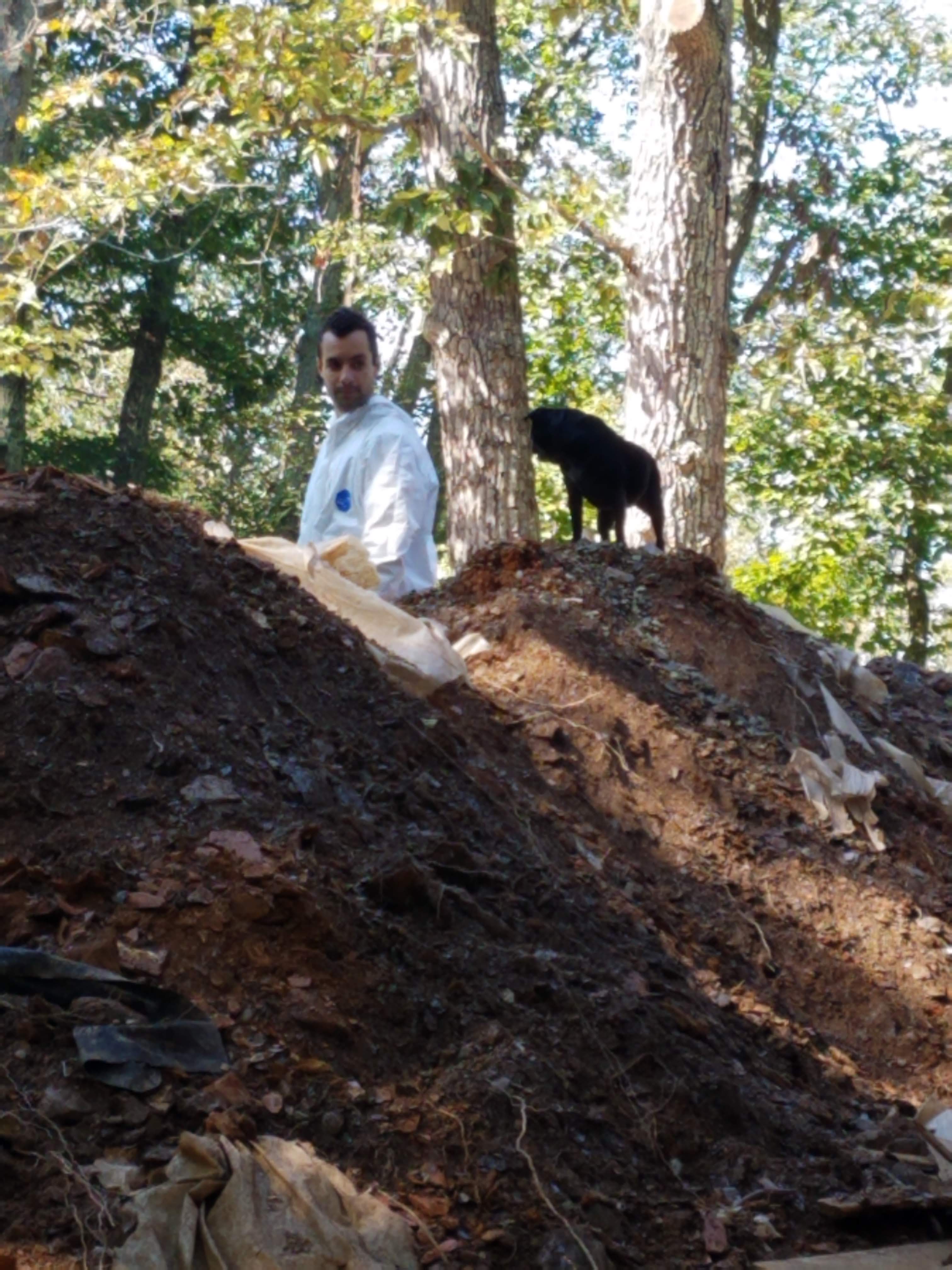
Coco had to play Queen of the Hill of course!

Coco on pile.jpg

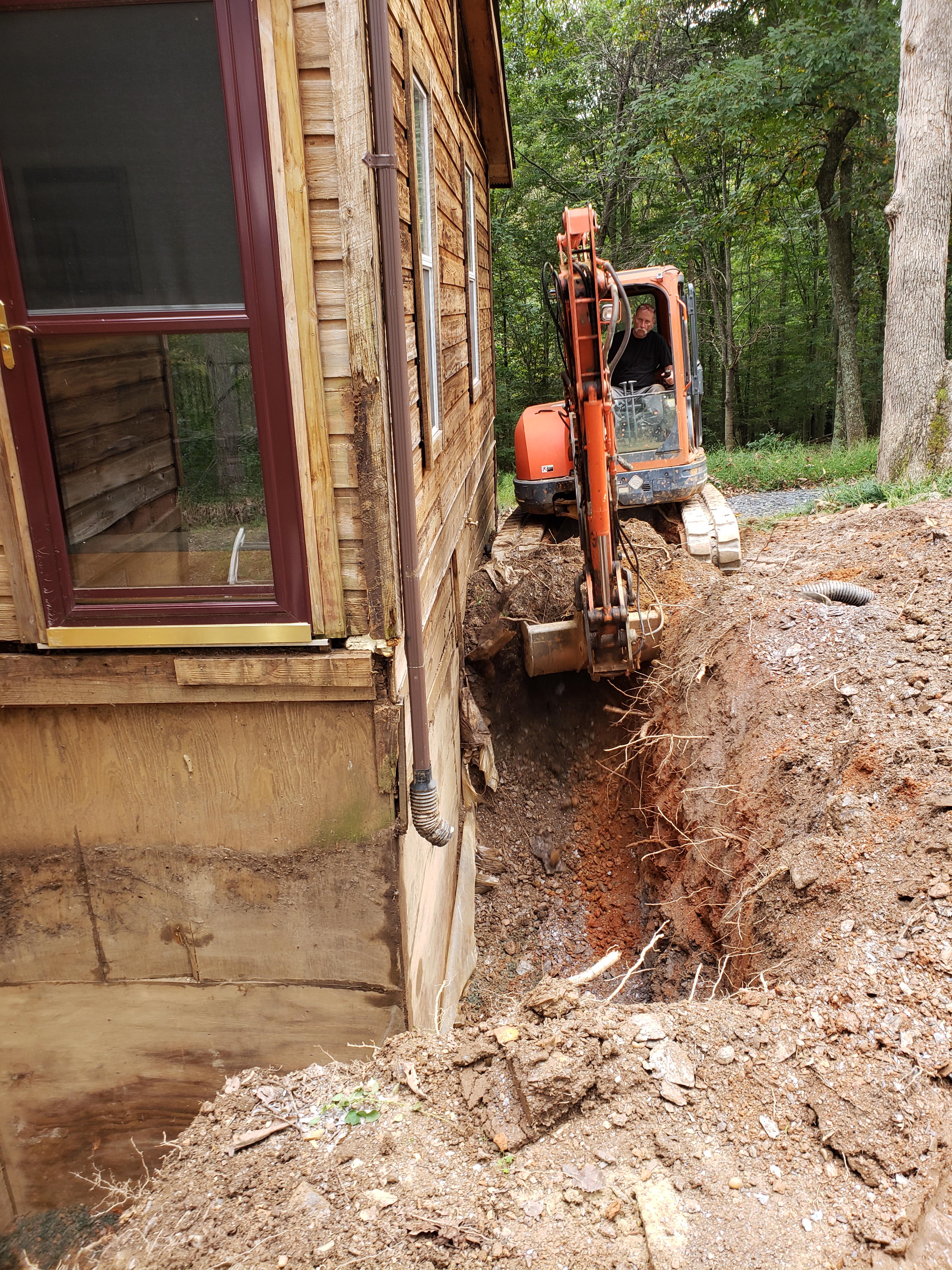
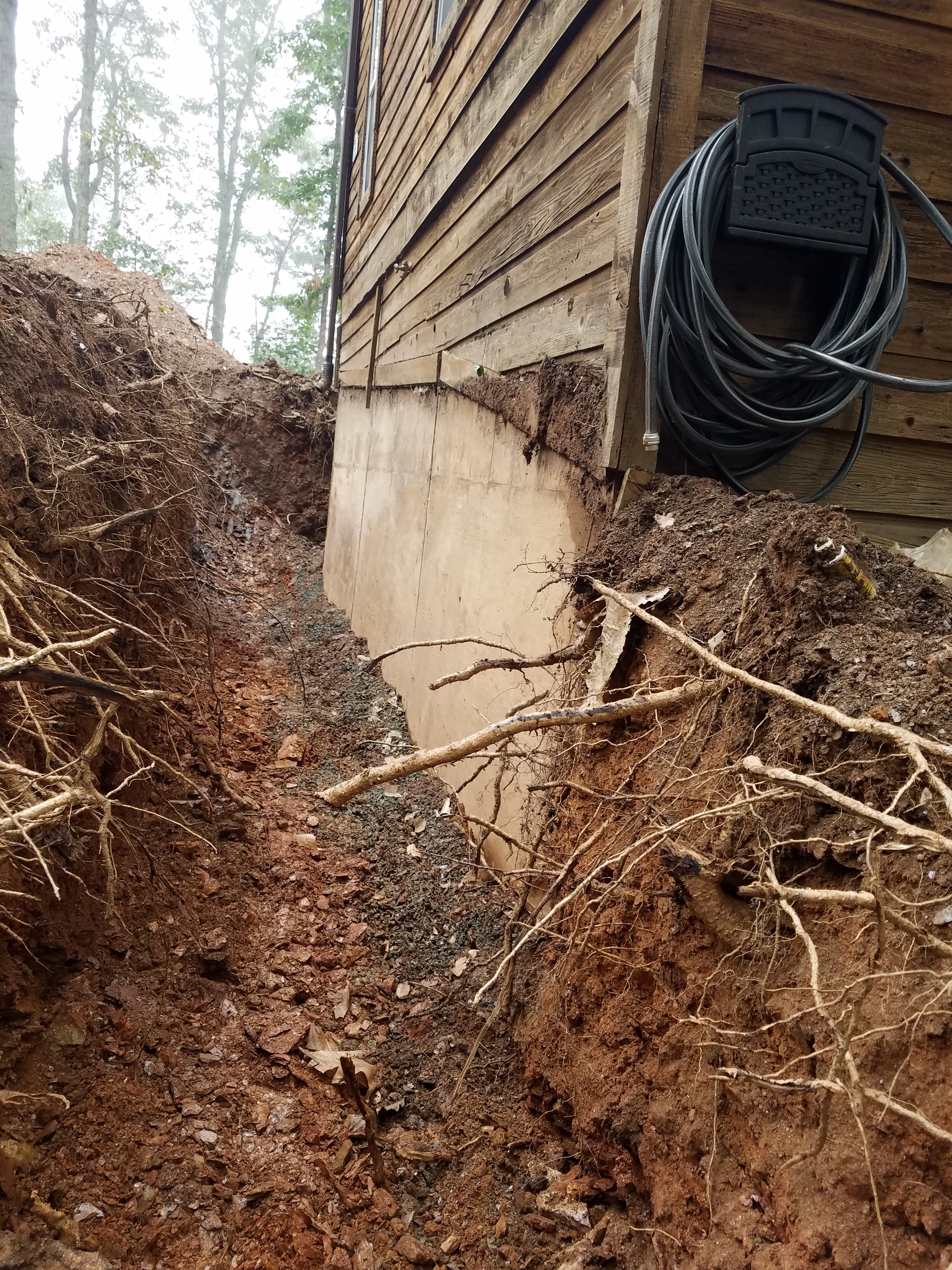
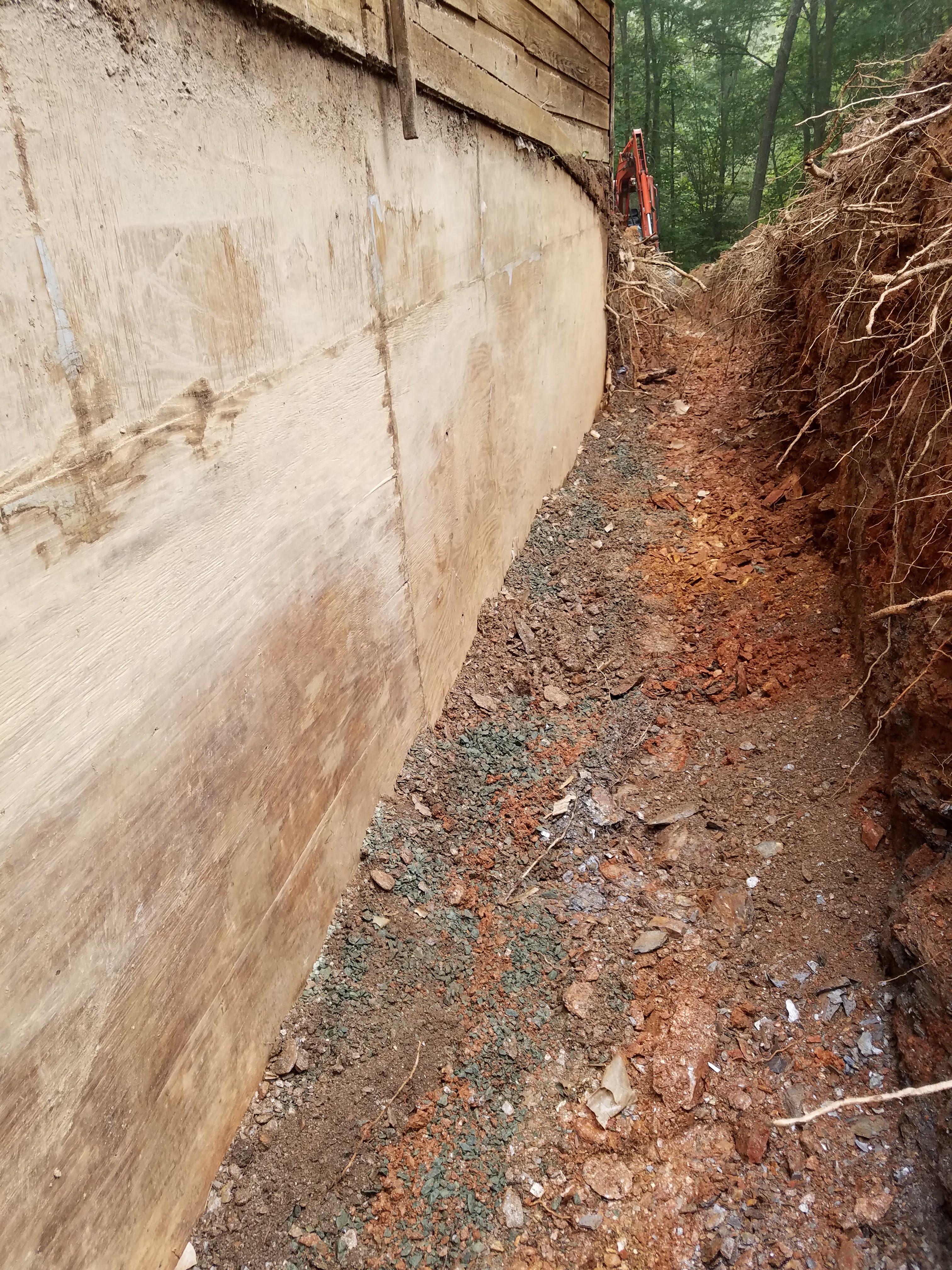
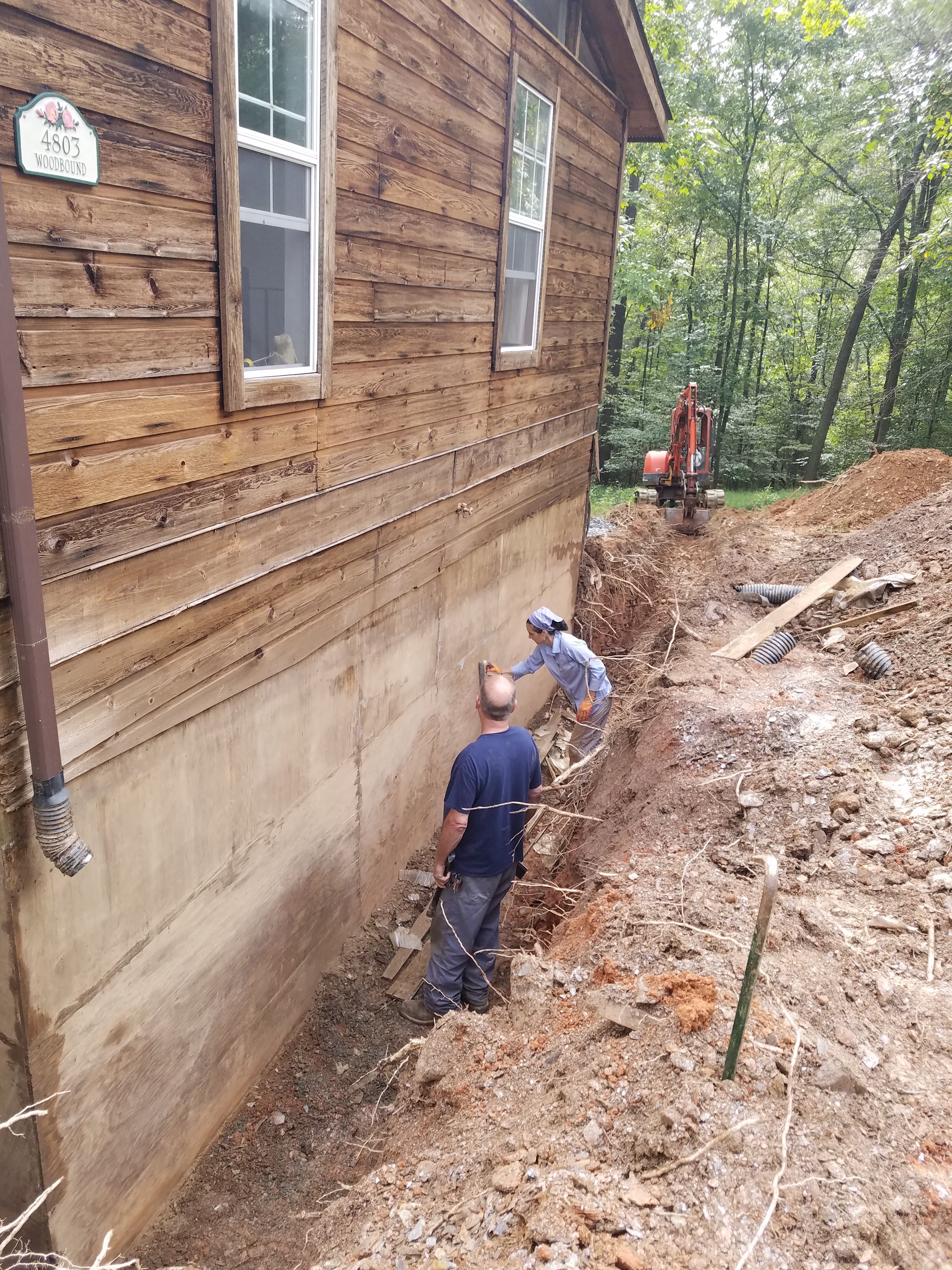
Joe dug the hole down to the level of the basement floor, leaving the entire front foundation wall scraped clean, unmarred by that bucket (imagine the damage an amateur could have done!), exposed for inspection and …. drum roll ….. do … we … need … repair?

You tell me. This is from the one side.

front wall from side.jpg

And this is from the other.

front wall cleaned off.jpg

That’s plywood! Been there 45 years! And it is in very good shape! I was thinking that when the house was constructed, some (probably most) of the people on the job site were saying This is stupid. Who puts plywood in the ground? But I bet there was at least one who said It’ll be all right. This’ll work. It worked!

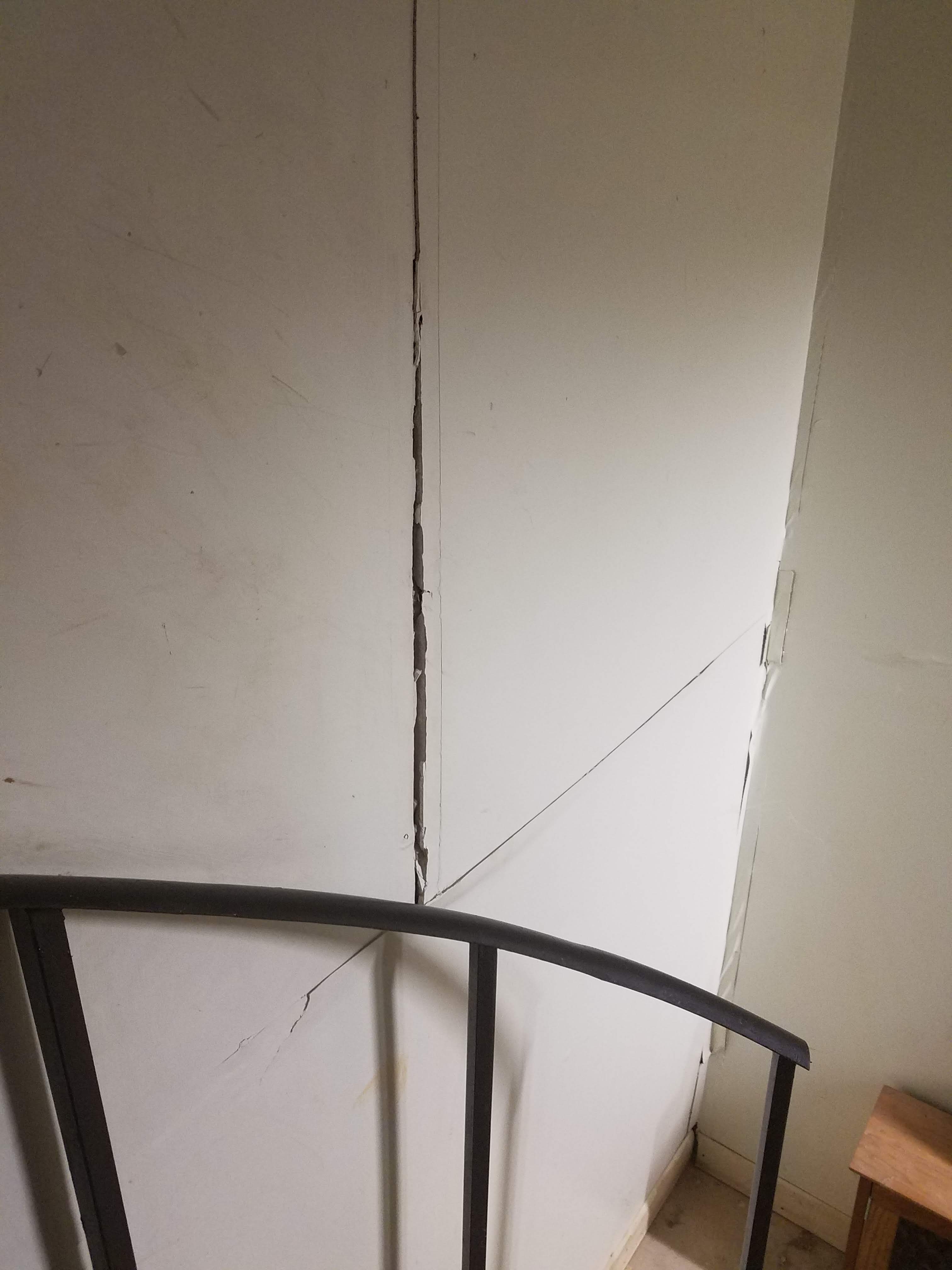
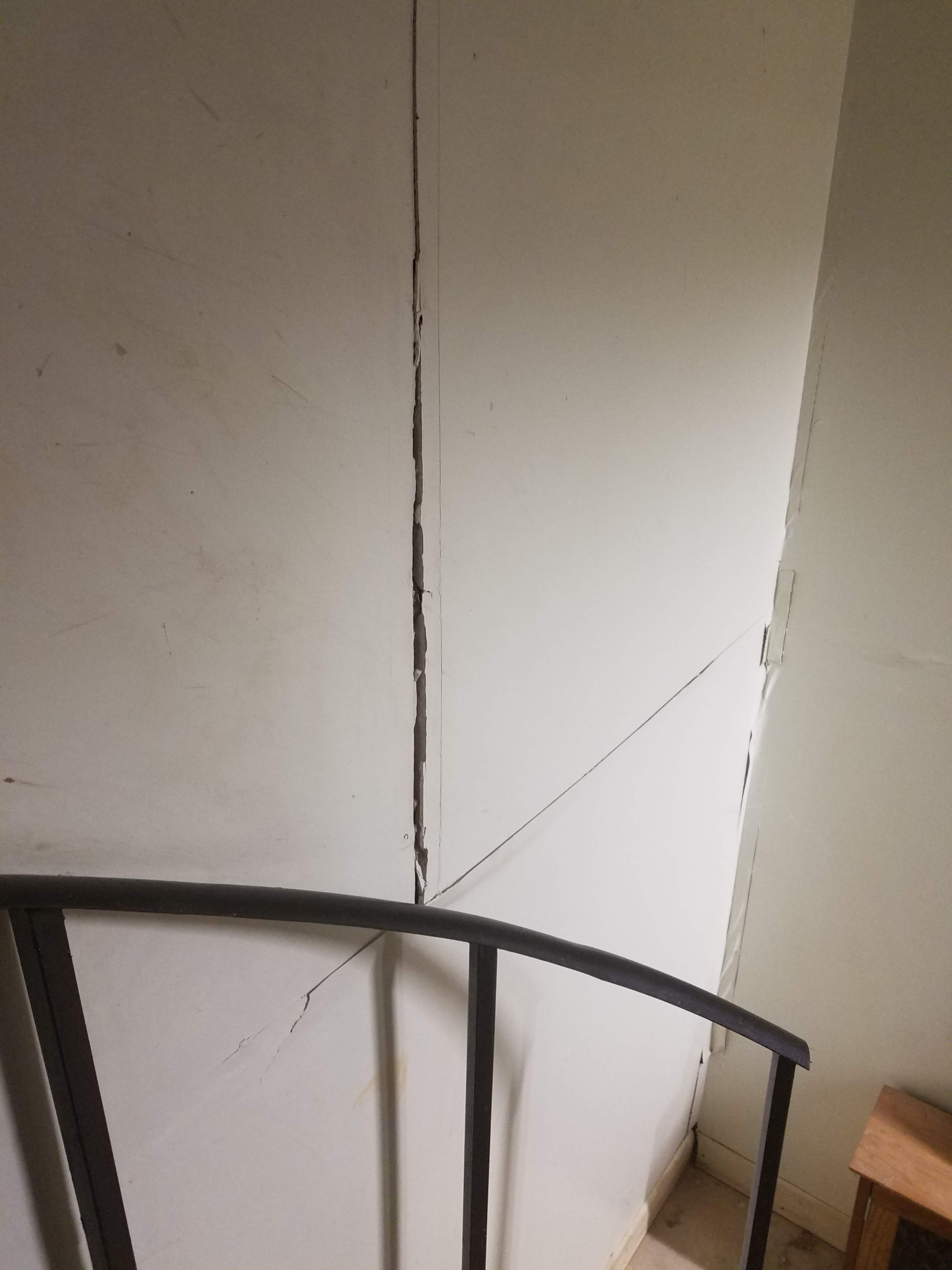
As you may recall, my interior wall begged to differ. It showed bowing, indicating excessive pressure and possibly serious structural damage.

inside wall stairwell.jpg

This is because of what Joe did not find at basement floor level when he dug out the dirt. There was no gravel or drainpipe. When water flowed downhill (as water will do!) – and my land slopes toward the house – and soaked the earth that pressed against that plywood, it was very heavy! It pushed the plywood in, pushed the 2×6’s that stand between the exterior plywood and the interior drywall, and cracked the drywall. But moisture apparently did not penetrate the one sheet of plastic that they had put between the plywood and the dirt (which of course Joe’s machine shredded when he dug out the dirt). As soon as he removed the dirt and the pressure, that wall straightened right out.

Thus the wall is in such good shape! No repair necessary on the outside. Just need to waterproof it and add a way for water to escape in the future. On the inside we’ll add some 2×6’s for extra support and replace the drywall.

I used a wire brush to get as much of the dirt as possible off the exterior surface.

scraping dirt.jpg

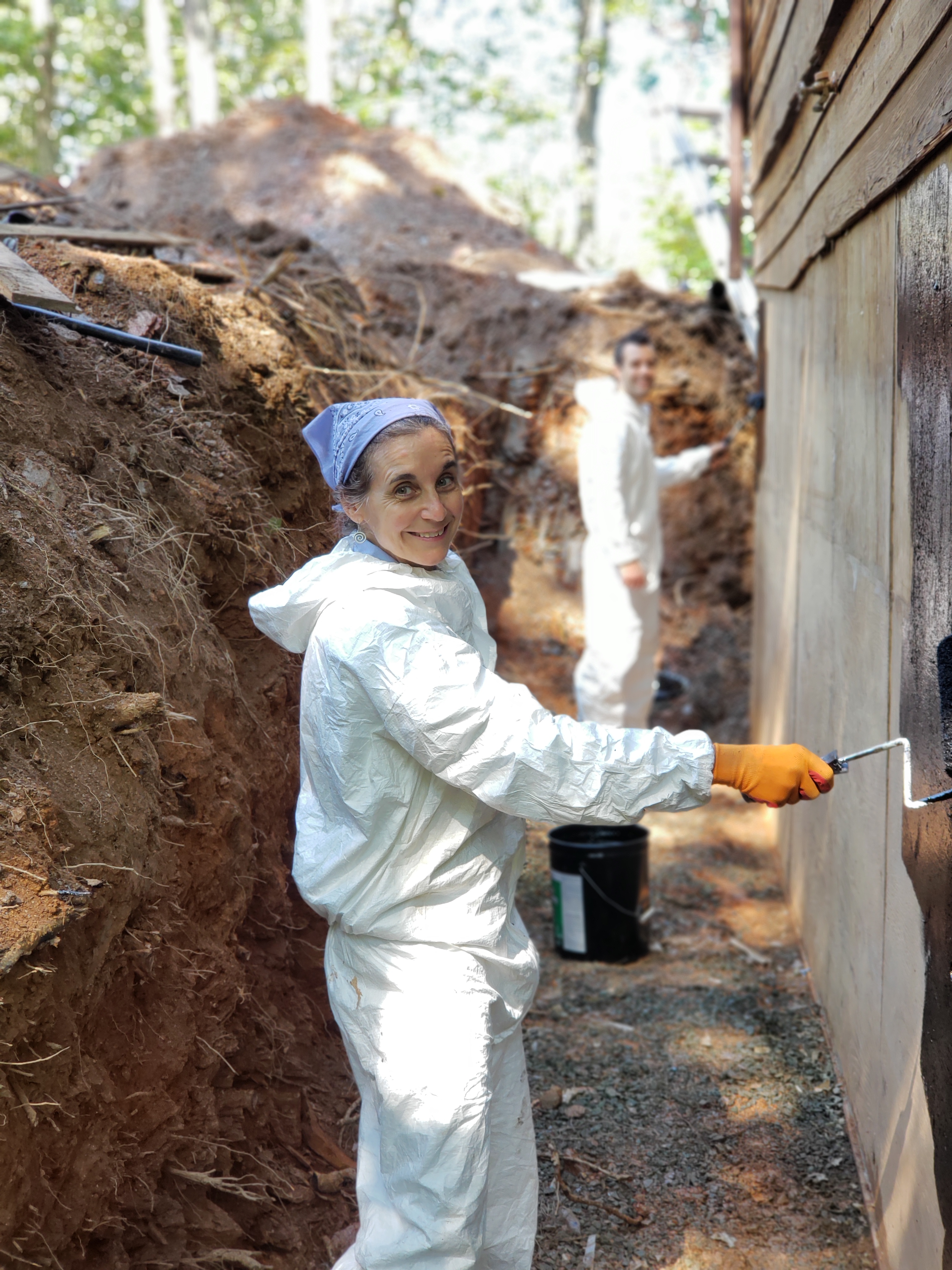
With a heat gun I did the best I could to dry the surface where, along the bottom especially, it was still damp from the dirt that had been sticking on it overnight. Then Samuel and I got into our paint suits and rolled liquid asphalt on the wall.

Oct7 (34).jpg

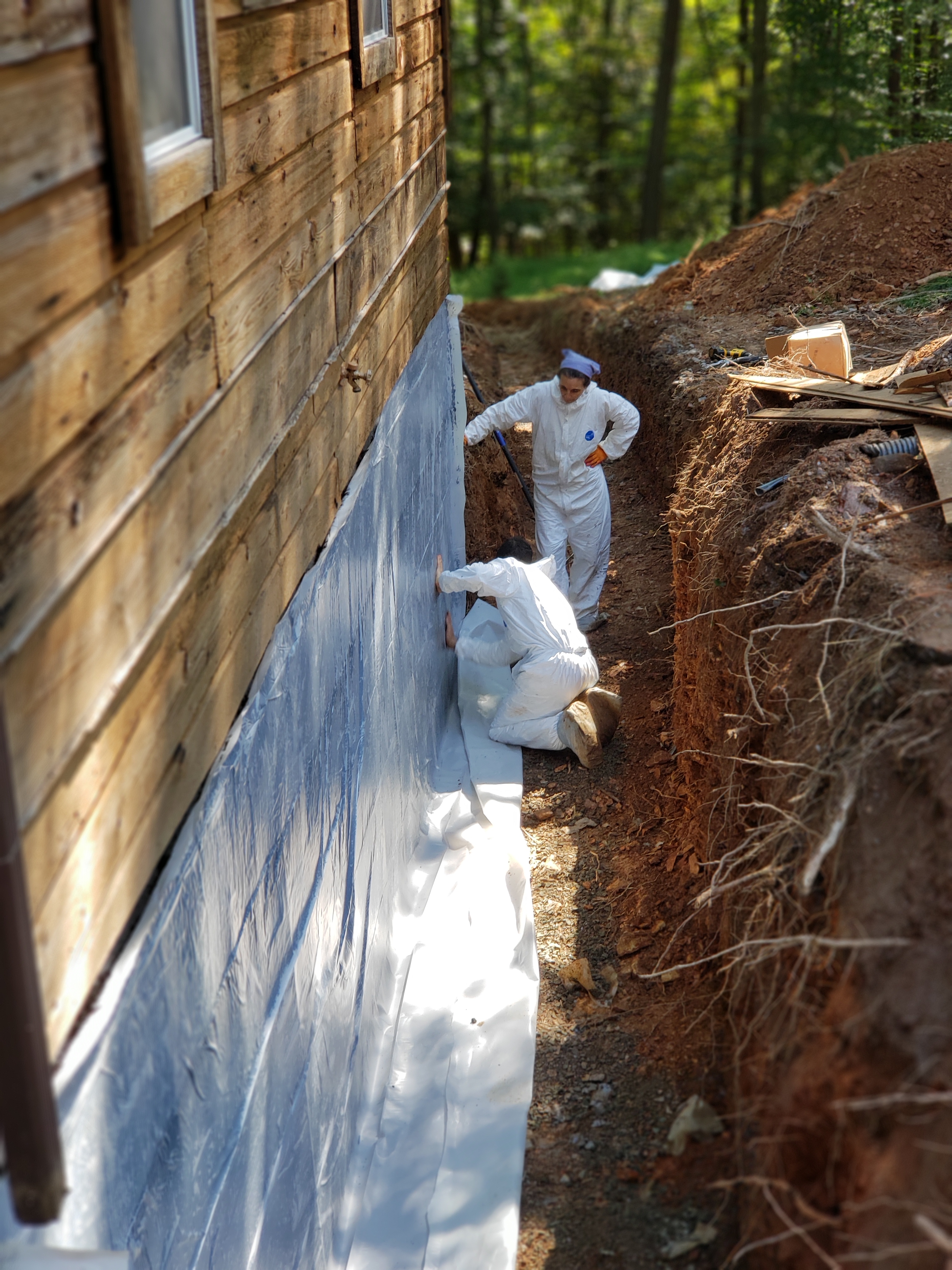
Onto that we pressed a solid sheet of 6ml plastic. Or maybe he pressed and I watched?

Oct7 (41).jpg

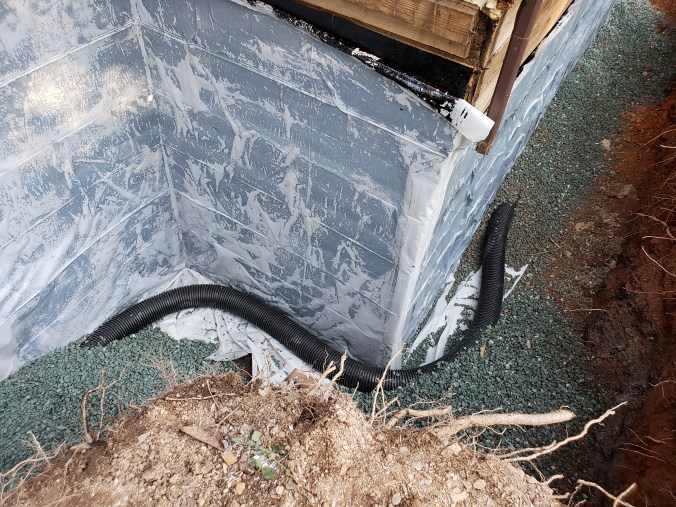
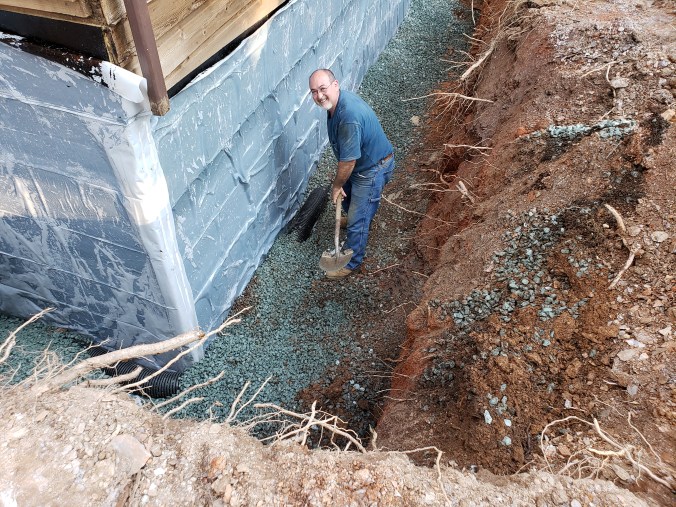
The 6” perforated pipe came next, followed by gravel. There’s a big black snake under my house!

Oct7 (57).jpg

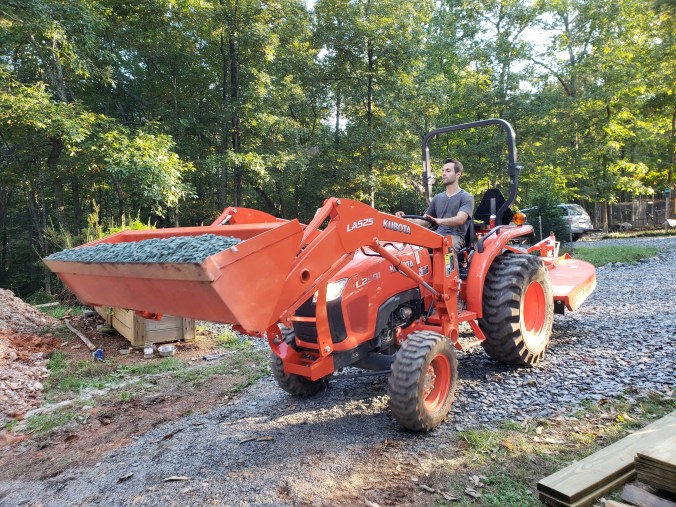
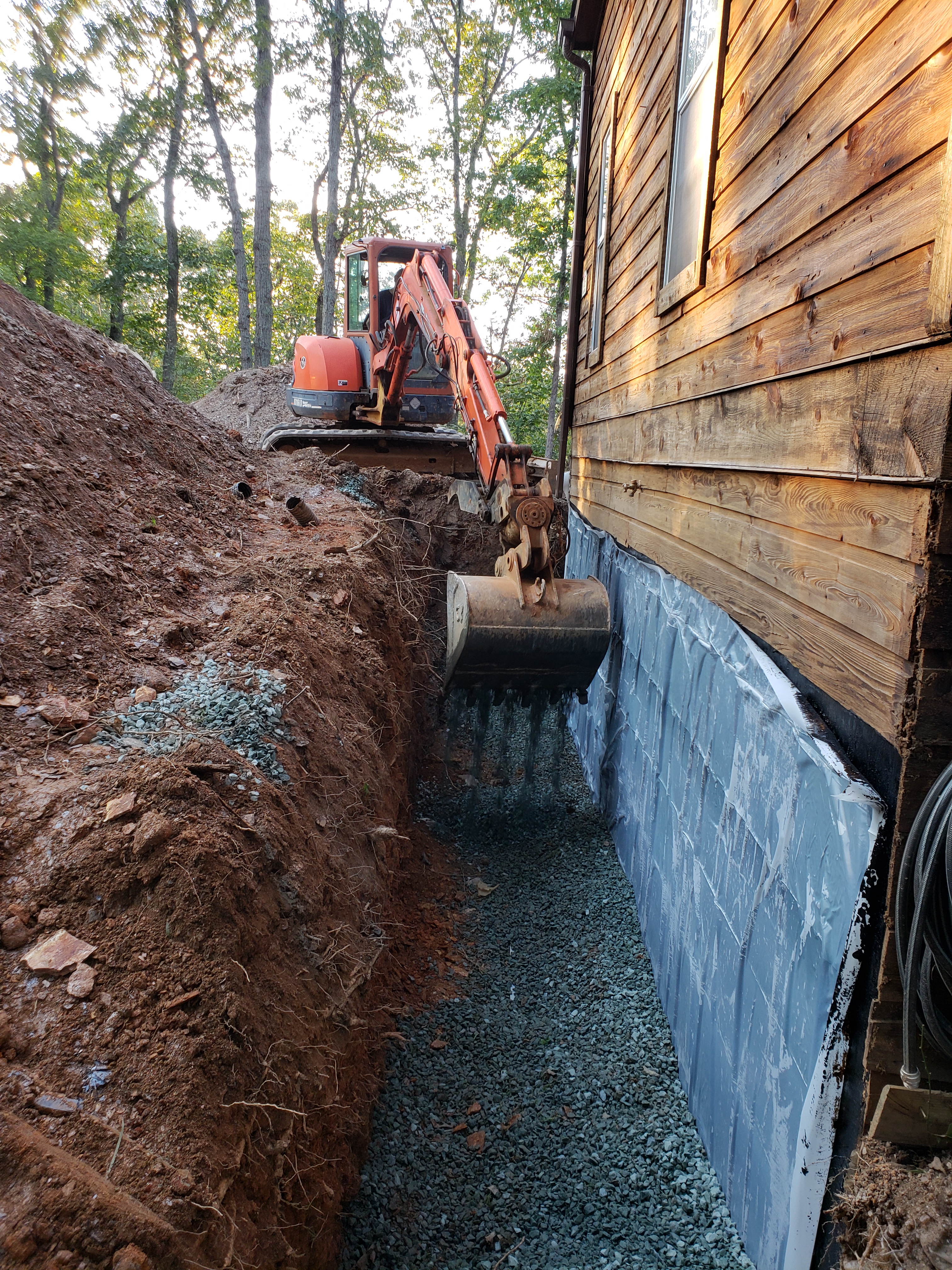
Samuel drove Tracy’s tractor to bring gravel to where Joe could pick it up and unload it into the hole.

Oct7 (55).jpg

Sandy raked and shoveled gravel so that it sat where it should on top of the pipe.

Oct7 (60).jpg

And then got out of the way for Joe to add more gravel.

Oct7 (63).jpg

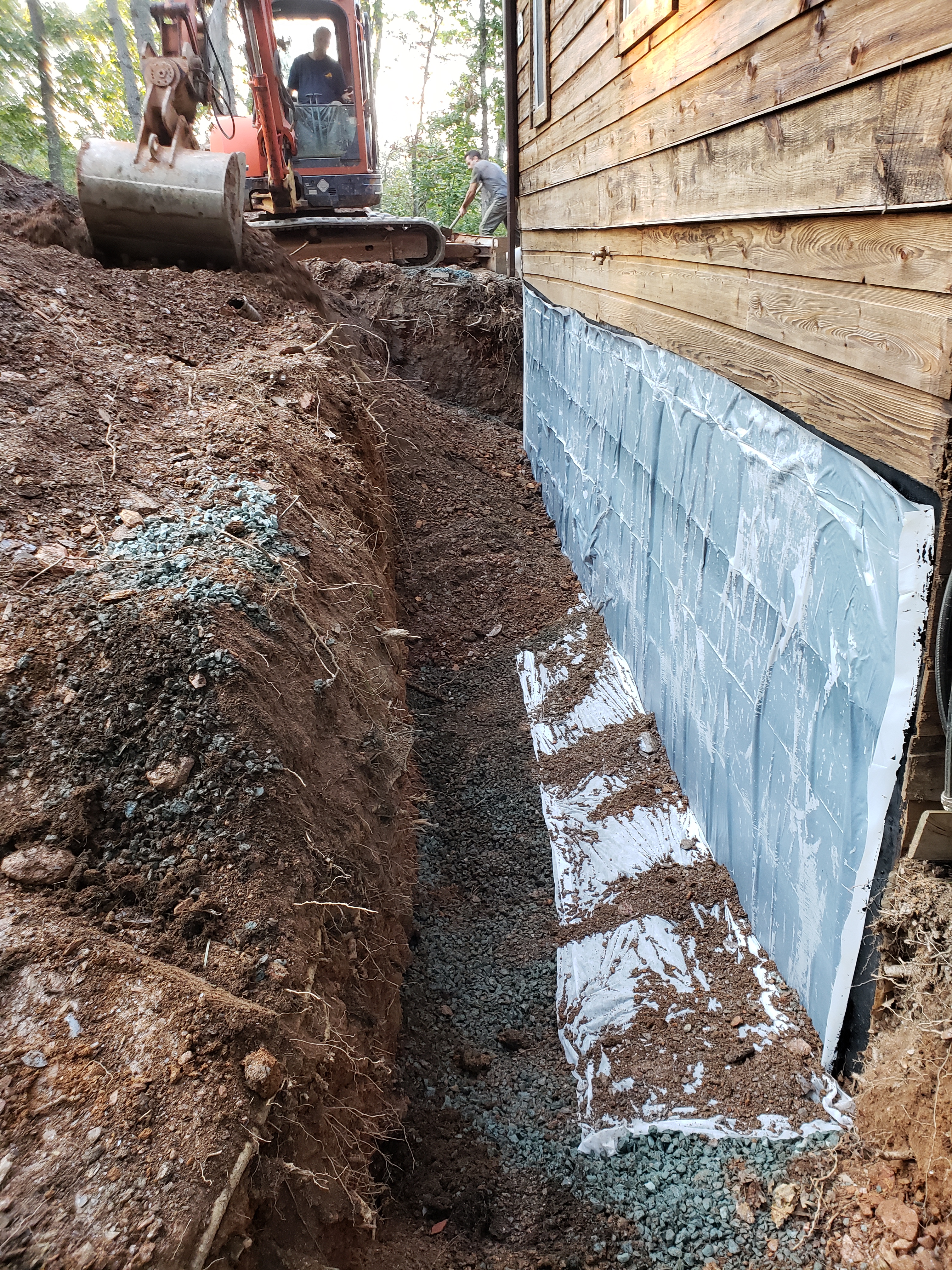
On top of the gravel we put a piece of landscape fabric (so that dirt doesn’t seep through the gravel and get into the perforations of the pipe), and then those big piles of dirt in the front yard disappeared.

Oct7 (80).jpg

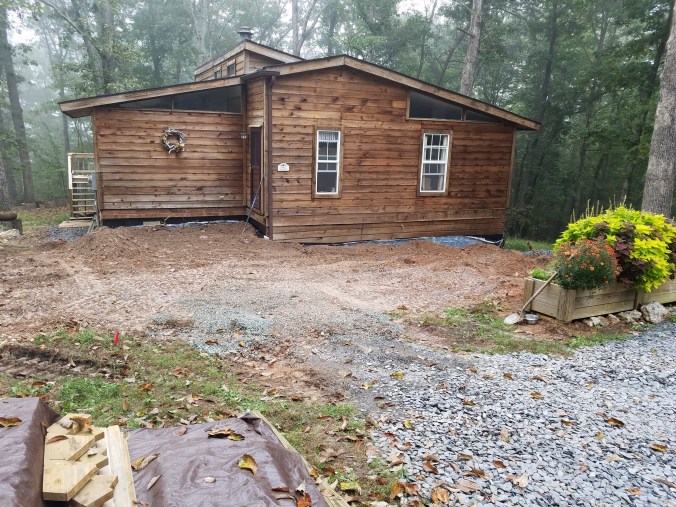
The front yard still needs a final grading, and it’s a mess to walk across for now.

dirt filled back in.jpg

But as the old Alka Seltzer commercials used to say: Oh, what a relief it is! I don’t have to worry about this foundation any more! When it rains, when water gets into the earth, it will seep down (as water will do!). When it gets to the landscape fabric, it will go through it. When it gets to the gravel, it will go through it. When it gets to the perforated pipe, it will go into it through the perforations, and then this water will flow away from the house, out into woods along the side of the house, to where the end of the pipe exits the ground.

Easily, I’d say, there’s more than 45 more years left for this plywood foundation!


Work, Mess and One Terrifying Spider

Expecting the worst sounds so pessimistic, but it has its upside. If and when the thing comes to pass and is not as bad as you expected, you can be pleasantly surprised and a great deal relieved – positive emotions both, and most welcome. The truth of the matter is: Some things are wonderfully and surprisingly simple, uncomplicated, straightforward.

That doesn’t mean they are not work. That doesn’t mean they are not a mess. But work is good because it gives us problems to solve, which in turn makes us stronger in many ways. And messes are good because cleaning them up leaves you feeling like you accomplished so much.

At my house right now is both work and mess. But I expected more work and worse mess. Truly I am grateful. For seven years I have been thinking I had a problem. Here’s why.

In my house is a funky circular staircase that leads to the basement. The wall in that stairwell that faces the front foundation of the house has been, shall we say, compromised. That’s what that crack is, a compromised wall. Clearly something has been pushing at it from the other side.

inside wall stairwell.jpg

You can see that the sheetrock has separated along its seam and is pushing inward. It has been that way for seven years. Part of the reason for this problem, we assumed, is that on the other side of this interior wall is an exterior wall made of plywood. Yes, plywood.

In the late seventies, when this house was constructed, they thought a plywood foundation wall was a good idea. A few years later the company went out of business but that is water over the dam for me. I bought the house with the plywood foundation. Over the years I have had both architects and structural engineers tell me it was sound and solid, and I wanted to believe them, but I see that crack every time I go downstairs. Not good, I tell myself, that cannot be good.

I might have watched it a few more years, hoping it’s not a disgusting mess behind that wall just waiting for the tipping point of enough water pressure + enough rot. The land slopes toward the house, so imagine the pressure of all that earth – especially when it’s soaked with rainwater – against my wood foundation. I envisioned a muddy mess busting through some rainy night when numerous other problems were also on my plate and of course, when this happened, I would be here alone. Can you see the creepy creatures that might accompany the burst? Yick!

The work and the mess that are here now might not be as bad as I expected, and I know there are worse things on earth than giant wolf spiders. But encountering them is still a near-death experience for me. (You do NOT want a picture of these, trust me! You will have to use your own very capable imagination.) I had to deal with one this morning and my heart is still beating too fast. It was on the inside of the screen door of the sliding door, which was inside the house, meaning there was no way to get it outside, and no way to sleep at night without killing it.

The spray that kills hornets was standing nearby. If it kills hornets, it will kill a spider, right? I figured I’d spray through the screen right at it. What part of my brain thought that would kill it immediately, I don’t know, but the thing did not roll over and die. It moved! And they move fast. I kept spraying, making a line of spray on the little red rug that, until this morning, occupied that part of the floor. It got as far as the small wooden cabinet in the corner, and I went to step on it (though you have to know I could hardly look at the thing).

What I saw when I lifted my slippered foot was just a bit of ick. No mashed spider. That’s very bad. Where did it go? If I missed it crawl under the cabinet, I’m in big trouble. I looked. I didn’t want to see it. But I needed to. I didn’t see it. I looked around some more. Oh.

That seems to be a bit of leg sticking out from under the red rug. It took refuge under there, clearly not realizing it was not altogether hidden. Probably it was delirious from the poison, probably would just die, and soon, from all that stuff I sprayed on it. But I couldn’t take the chance. I had to step on it. I had to hear the sound. I did. I had to. When it was done I could know it was done and I would once again be safe.

Didn’t I just write yesterday about your home being a place where you feel safe?!

My heart was beating like mad by this time, but I’m finished. There was no more in me. I sat. I waited for Samuel to wake up. Finally he did. I asked him to please clean up the mashed spider from the underside of the rug. He is a wonderful son who just smiled and got a tissue and did the thing. Then I decided that the rug, with its ribbon of poison spray, is probably trash now because what if Coco’s tongue, the one that doesn’t fit in her mouth, happened to touch the poison? Yup, trash.

See what an exhausting time I had?

One time, when I first moved here, there was one of these creatures on the outside of my bathroom window screen. When I told a colleague that day at work about that near-death experience, she calmly said to me, “You live in the woods. That’s their territory.” She had zero sympathy. Zero. I have never forgotten it.

All right, I confess. It’s not just the image of muddy slime oozing into my basement along with all manner of slitherers and crawlies that forced this repair. (You KNOW there would be an army of those things coming through!) It’s also the money. In the end I care about the money. I want a new front porch. I know this old one doesn’t look that bad.

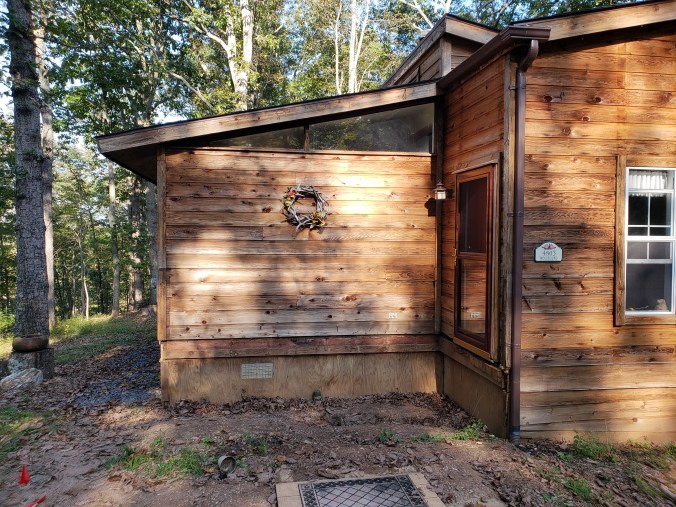
front of house 9.3.18 (2).jpg

But it is. Its rotting boards would probably hold up a little bit yet, but it’s fair to say that wanting a new front porch was turning into needing a new front porch. So if I need to spend money on a new front porch, it makes sense to fix what would be henceforth unreachable under that new porch before building said new porch. Imagine not fixing the problem, ignoring the problem, moving forward in hope that there is no problem, and then finding out that there is in fact a problem after investing a lot of work and money in something that renders that problem unfixable without investing more work and money.

As much as I wish that stairwell wall was flat and perfect, it isn’t. It’s mine. I own it. Buck up. Fix the foundation.

On Saturday the excavator was here. That night at almost 11pm, my plane landed and Samuel picked me up at the airport. We talked till 3am. I woke at 730, went outside, and saw the piles of dirt.

10.7 (2).jpg

Like I said, I came home to work and mess. But I love it. Despite the downside.

Tomorrow, when I have truly recovered from my near-death experience, I will explain where the piles went and how we fixed the wall. At the moment I am still exhausted!