Girls and Aprons: Straight Out of Another Time

Two little girls. My world is more wonderful this week because Rise and Eppie are here. By the time they are six and four, there’s more they can do on their own. I do not have to accompany them to the chicken coop every time, but can suggest there might be eggs, and off they go.

If you look carefully, you can see the chickens at the door of their run waiting for Rise. Food! Food! Humans approaching! They bring food! Not this time, ladies!

Rise walking toward coop.jpg

That’s my hat she’s wearing, and she loves it because it’s purple. The love of purple applies universally. In other words, if it’s purple, she loves it. This one is especially appealing because besides being purple, there’s a flower on the side. She likes it so much, she wears it indoors sometimes.
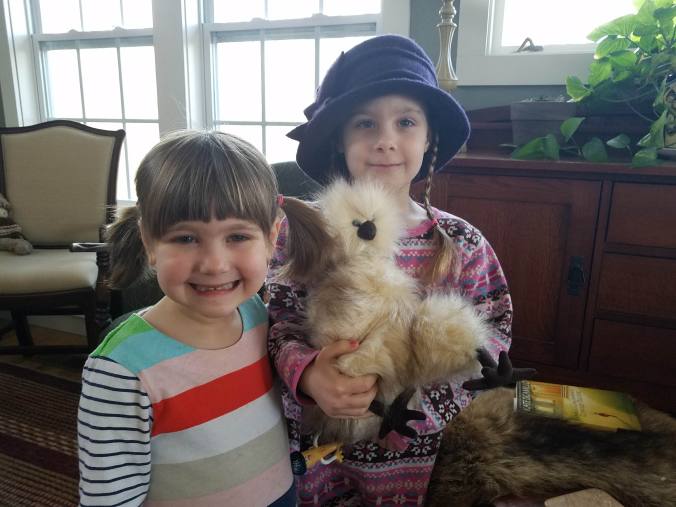
girls.jpg

(Yes, that’s Edward Tulane sitting on the table next to Rise on my raccoon skin. They loved reading through it with me the first two or three days they were here. Imagine, as soon as Edward was thrown overboard, Rise said, “I want him to get back to the little girl!” Do you remember what happens at the end of the story? Do you think the author anticipated that a six-year-old would want that?)

On another day, a colder day, Rise got the first 13 eggs of the day and Eppie went out later by herself to get one more. (Don’t rush me! Don’t rush me! one hen said.) Yes, another hat of mine under her hood. If you are an Oma, it is best to have a selection of hats available when the little girls come to visit.

one of fourteen eggs today.jpg

There’s nothing like a good Ravensburger puzzle to occupy Eppie for a few minutes. She had both 20-piece puzzles together in no time. (I have a puzzle with chickens on it. Imagine that!) I hope kids everywhere are still doing puzzles. 

puzzle.jpg

I hope they are still eating apples too. I cut up two different varieties and put them in separate bowls and suggested they might do a taste-test to see how they compared. Rise said one was tart and one was sweet. Fair enough. Looks like they each found a favorite.
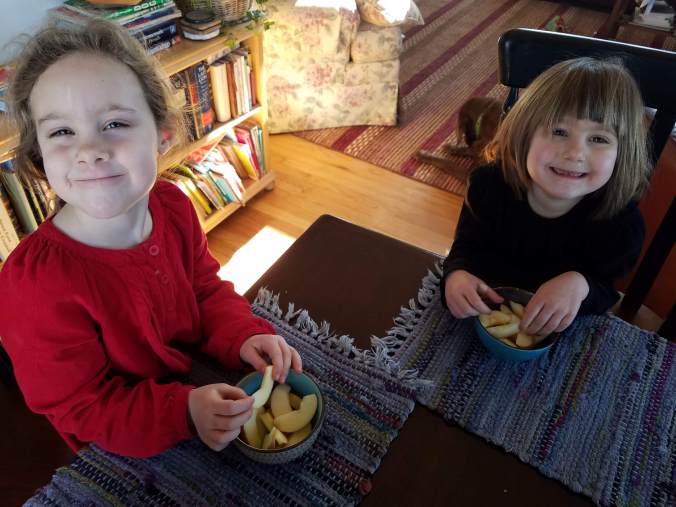
apples.jpg

Eppie likes reading aloud whether anyone else is listening or not. My mom gave them a marvelous reprinted Dick and Jane set for Christmas, which has adorable drawings and easy story lines. Here she is reading Green Eggs and Ham without prompting. Once in a while she needs help with a word. But only once in a while.

reading.jpg

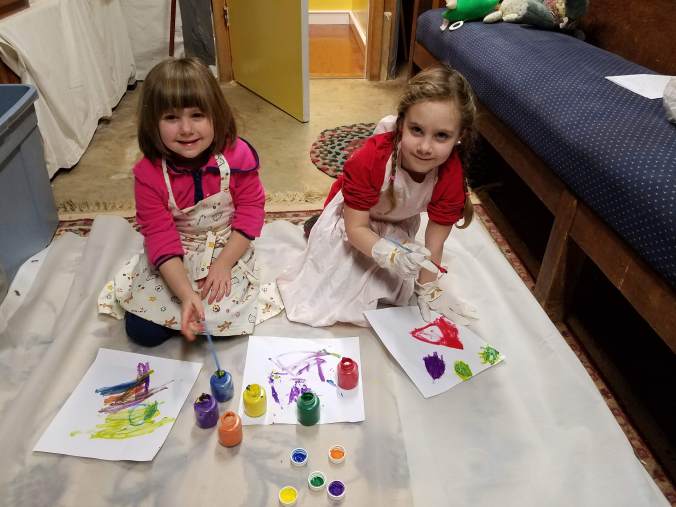
“Oma, I found paint downstairs…” Ah, yes, children’s paint, supposedly washes out of clothes. But let’s not take that chance. I pulled out the aprons I still had from when my own kids were little, set an old shower curtain liner on the floor and gave them gloves to wear (which did not work on Eppie at all and I had to take them off and take my chances on how well the paint would wash off skin – it did!).
painting.jpg

After this, they did not want to paint again but Rise wore the apron nonstop. I didn’t realize till later that she was wearing it in this photo of all of us.

girls and Oma cropped.jpg

Which got me to thinking. Of course. She should have one of her own for when she goes back to her house. They both should have one. While Eppie was sleeping one day, Rise and I went into my newly reorganized fabric scrap boxes (I knew I did all that last week for a reason!) and found some pieces that would be big enough for an apron. Rise settled immediately on a pale pink calico, but we didn’t want to decide for Eppie, so we found several. Eppie chose blue over green, which was a surprise.

Today was a good day to sew. While they played quietly in another room, I got to work, modeling the new ones after the old one. The girls were right there to measure when I needed, so it was easy. Waist to knees and height and width of bib, that’s all I need. The rest was gathers and ties. The girls were a little too quiet at one point. Hmmm. I found an abandoned mess of crayons later. When I asked about it, they said, “Oh, we like to clean!” Good thing, because I’m not cleaning it up.

mess.jpg

They were tickled with the aprons. And I was tickled when Kim said (in response to this photo I sent her), “Oh gosh – straight out of another time.” Indeed they are, though I didn’t think about the fashion era they represent until she said that. You see, girls (these girls anyway) love twirling, and if the skirt is full, the twirl is greatly enhanced. And the ties are long enough to make a bow in the back. Rise always wants a bow.

new aprons.jpg

If you know anyone who wants one (and I don’t mean Coco!), just let me know 😊 All I need is measurements!

Any Berry Tea Cake

Last week I had a request for my cottage from a guest who has been here several times before. Crystal’s note included: My daughter and myself absolutely looove that cake you make. It’s my birthday and my friends are trying to bring me to your place tonight. I will pay extra if you have one of those cakes laying around! I know what cake she means.

There’s always something freshly baked under the glass dome waiting for my guests, and sometimes it’s this Strawberry Ripple Tea Cake. (I am not sure what the difference is between a coffee cake and a tea cake, but we’ll just put that point of pondering in the category of Things I Don’t Need to Know.) The recipe came from a hardcover cookbook sitting on my shelf called Old-Fashioned Home Baking, back when (decades ago!) you got recipes either from someone you knew or from some printed material – usually a cookbook or a magazine.

RECIPE cropped.jpg

If you know me even a little, you know that I am all for tweaking/simplifying. This recipe, for instance, calls for making a thickened mixture using strawberries or raspberries. I might have done that the first time, but then I realized it was basically jam. Henceforth, guess what, jam it is! How much simpler and just as yummy.

Also it calls for one large baking pan, but why not two smaller pans? Why not muffin tins? I’ve tried it numerous ways, and with strawberry jam, raspberry jam and this week (on account of a bargain jar) blueberry jam. All good! This recipe is a keeper, and simpler than it looks.

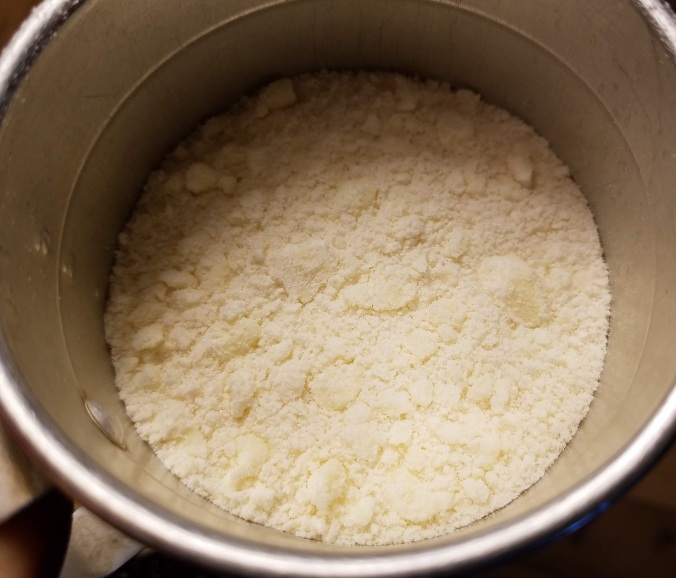
Mix together the 2 ¼ cups flour and ¾ cup sugar. And whatever you do, use butter, not margarine! (I wonder when decent recipe books stopped suggesting margarine as an alternative…) Use a knife to cut up the cold butter in the bowl with the flour and sugar, then a pastry blender till it resembles “coarse crumbs.” My half-cup set aside looked like this.

crunbs cropped.jpg

To the flour/sugar/butter that remains in your bowl, add the baking powder, baking soda, egg, salt and buttermilk (or sour milk, which is nothing more than milk with a teaspoon or so of vinegar added to it, no kidding; vinegar will sour the milk in no time).

Stir this up, just enough to blend. Overbeating will not make a better cake.

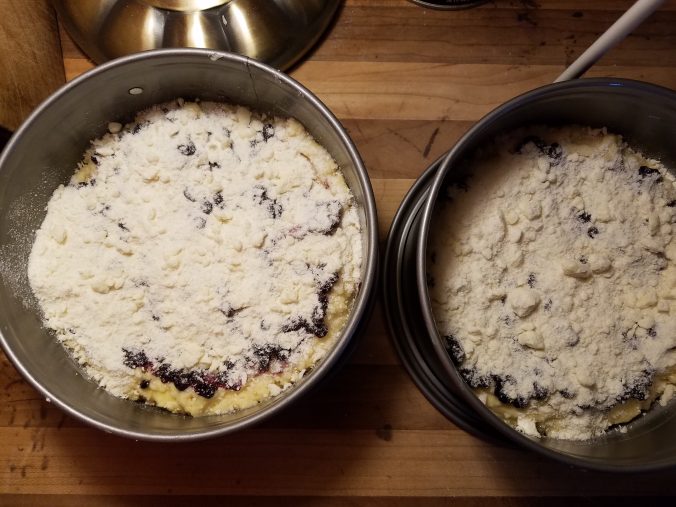
Here’s where, in a hurry, I forgot one of the key steps of this recipe. You are supposed to put most of the batter in the greased (and in this case springform) pan(s), then the fruit, then blobs of the remaining batter, then the crumbs. I just spread the batter in my two pans…

batter in pans.jpg

…added the blueberry jam (about ¼ cup per cake, a little more would not have hurt it)…

jam on batter.jpg

…spread the blueberry jam…

jam spread.jpg

…and topped it with crumbs.

crumbs on batter.jpg

It would have been better to mix that jam into the batter a bit, even swirling it in with the blade of a round-tipped knife, before putting the crumbs on top, even if I bypassed the blobbing step. But as my sister would say, “Oh, well!”

The forgetfulness of the baker aside, the result was not so bad.

cake cropped.jpg

It makes a terrific cake for someone who is having a stressful time, or for a neighbor who is always doing kind things for no seeming reason, or just because for people you love, or (oh, right!) for yourself! It is not overly sweet or messy, not trying to be splashy or gorgeous. It’s simply light and moist and delightful with the freshness of fruit and the tender buttery crumbs. It says, “How about a cup of tea or coffee, a slice of this goodness and a few minutes of relaxation?” Some days, sometimes, that’s just perfect.


__________________________

*Better Homes and Gardens Old-Fashioned Home Baking, 1990, Meredith Corporation, Des Moines, Iowa

I’ll Get Around To It

How many times have we set something aside that needs doing and thought: Yeah, someday, not today, but someday I’ll get around to it. Life is busy, we are bombarded with demands constantly, “stuff” clutters our attics, basements and closets. The jobs of sorting, organizing, fixing and refurbishing often don’t make it to the top of the list. Yet some things are hard to throw away. Some get buried, covered, boxed up or otherwise hidden. Some are just waiting for their day.

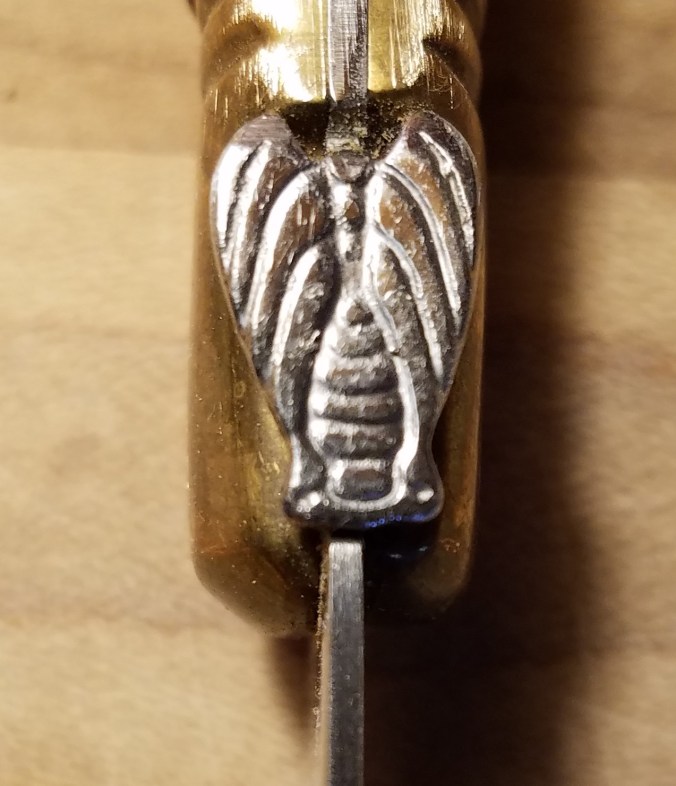
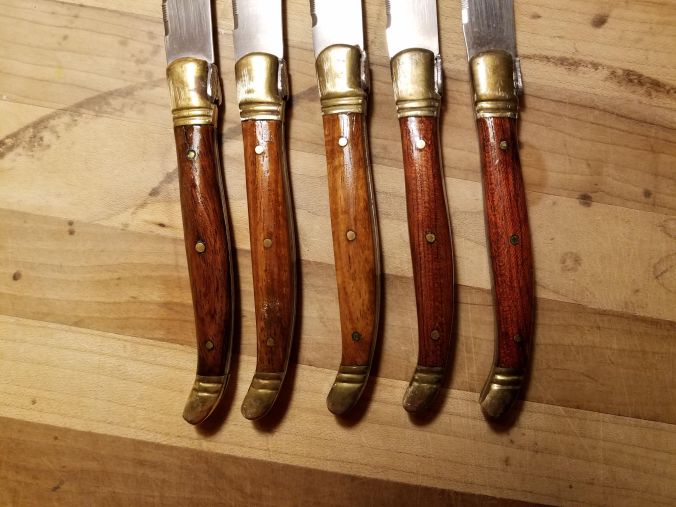
Ten years ago I worked at a restaurant where Laguiole steak knives were part of the tableware, appearing only when someone ordered an expensive steak. The type we had were sleek, elegant, wooden-handled and costlier per knife than the steak. I remember the servers carefully polishing the sharp blades and setting them side-by-side in perfect rows on napkin-lined trays in preparation for dinner service. Laguiole’s signature bumblebee, affixed at the uppermost portion of the handle, seemed to all of us a mark of authenticity.

15 cropped.jpg

(Little did we know that there are no regulations prohibiting the use of the Laguiole name or bee on cutlery. Imitations abound. Chances are decent that the ones I have are not authentic knives from the village of Laguiole in the department of Aveyron in France. For my knives and their purpose, does this matter? Probably not.)

If you have ever worked in a restaurant of any kind, you know that some people are more careful than others with plates, glasses and silverware. Some are gentle, some bang things around. Some have a better sense of the replacement cost of such supplies. Some understand that certain items are best washed by hand rather than put through the high heat and pressure of an automated dishwasher. Some forget they have been told not to put the wooden-handled Laguiole steak knives in the dishwasher.

Ours got bad. Their fine finishes were blasted off and they began to look shabby. A restaurant serving roasted rack of herb-cured lamb with pomme purée or king salmon “sous vide” or classic iced grand marnier soufflé cannot expect guests to use shabby knives. As a manager was about to throw them away, I asked if I could have them. Sure, he said, why not?

I promptly wrapped them in a napkin, bound it with a rubber band, brought them home with the very good intention of refinishing those handles, put them in a drawer and forgot about them for ten years or so.

Oh, look, those old steak knives! While rummaging around in a drawer recently for something else I hadn’t been able to locate in a while, I came upon the knives. They looked as shabby as I remembered, but my intention was revived. Today seemed like a good day to remedy their finish. (Perhaps the doll mender from the story of Edward Tulane was whispering in my ear?)

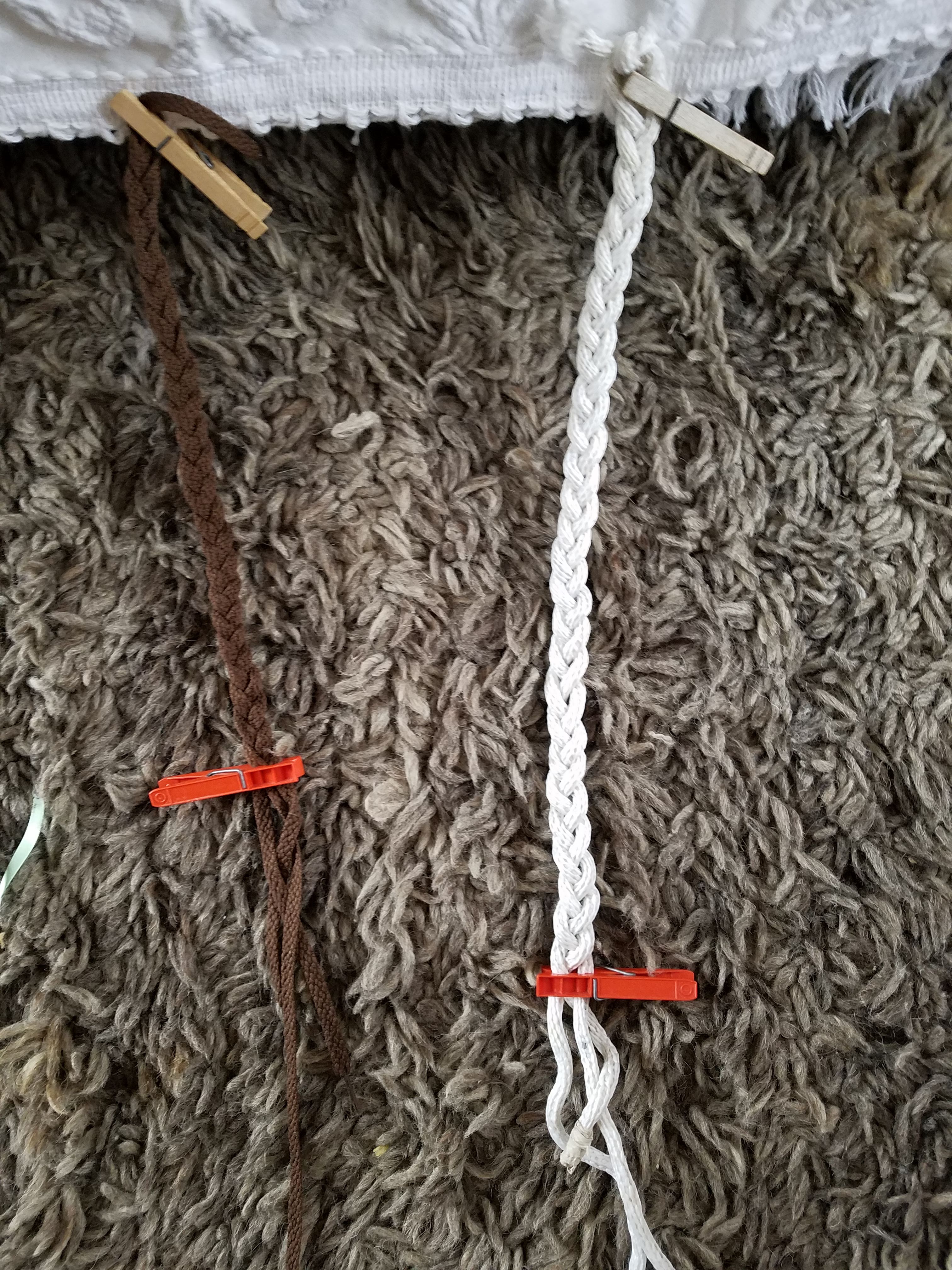
It’s a rainy Sunday afternoon. Eppie was sleeping off a sickness, Rise was amusing herself with learning how to braid, practicing with shoelaces and clothesline, which work well for this purpose, in case you wondered.

braiding.jpg

I had a few moments for a little job so I went to my shelf of paints where a can of marine grade polyurethane sits front and center. In the last few weeks I used it on some funny little garden signs that are not yet finished and I lightly sanded and then refinished the ash handle of a very fine Smith and Hawkin garden fork that Peggy gave me (and doesn’t that look nice now, thank you, Peggy!).

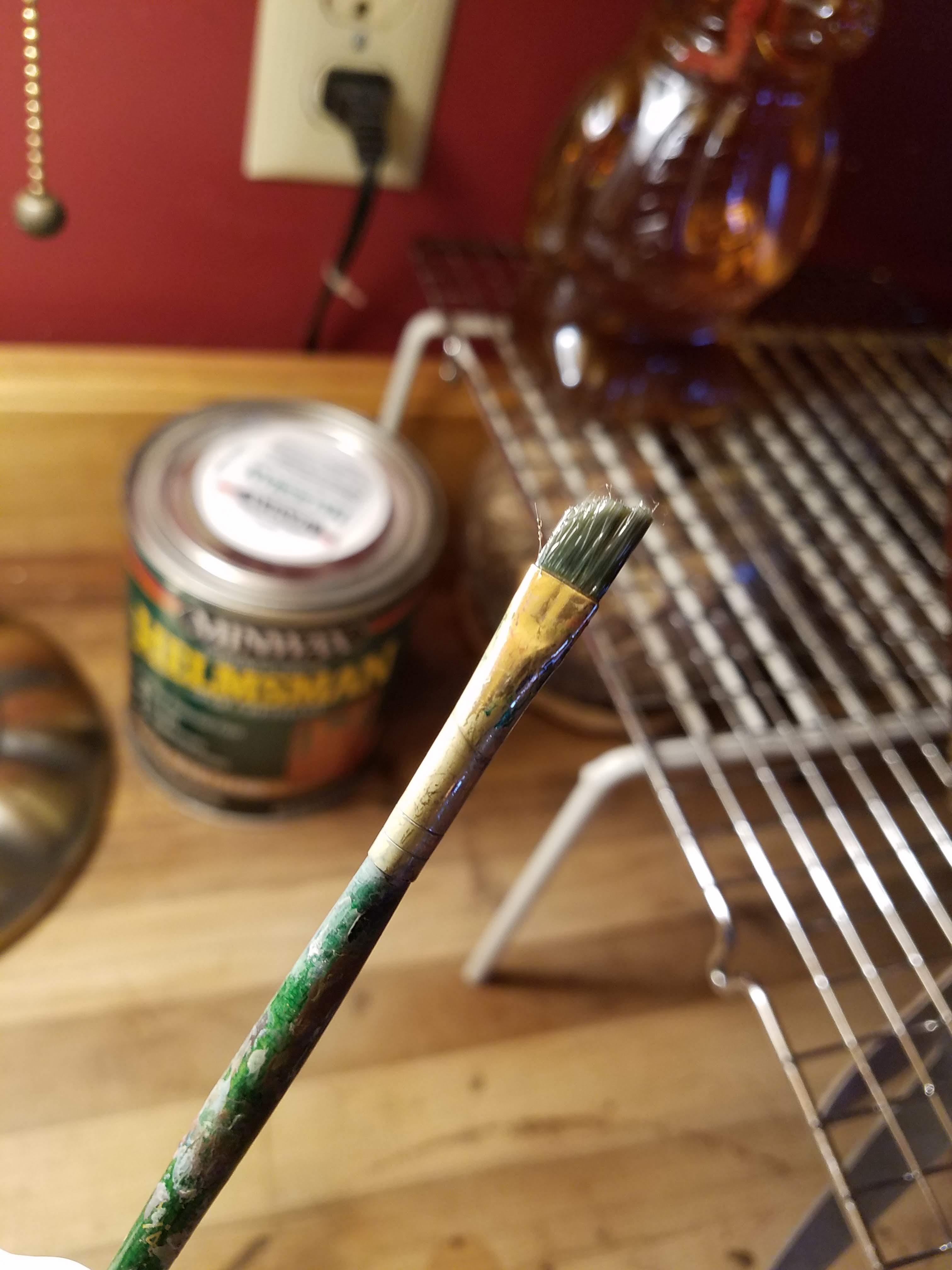
I nabbed the poly, found some super-fine-grit sandpaper, laid out the steak knives, prepared a small old brush by snipping off the tips of its bristles (that somehow had dried paint clumped on them),

13.jpg

sanded and dusted the knife handles, then devised a way to prop them to dry. A cooling rack set up high and anchored with a bear-shaped jar of vinegar worked beautifully. Imagine my delight as I brushed the first strokes of poly on the parched wood. Look at that rich color!

8_LI.jpg

Polyurethane can bring out the gorgeous grain in wood the way salt brings out the amazing flavor in food. See the difference between done and not-yet-done in another way? These two are propped in my makeshift drying rack.

1.jpg

Completing all five gave me a sense of accomplishment that the ten-year delay on this job only heightened.

16.jpg

There will always be more undone than done in my world, always more to do than I have time to do, but the truth today is that I DO sometimes get around to the things (some of them anyway, a small fraction of them anyway) about which I seem to be always saying: I’ll Get Around To It. And when I do, it’s a victory like no other.

Do I need these steak knives? No. Would anyone else like them? Maybe. Was this a necessary task? Hardly. But seeing the wood go from sad, rough and dull to smooth, shiny and richly colored was a thrill. Knowing the knives have life and use yet in them and that someone may be glad to have them makes me smile. Making a checkmark on the mental list I keep is also satisfying (even if I did forget I had them!).

Remember that old saying “You can’t please all of the people all the time”? Personally I think it’s ok to settle for pleasing a few people as often as I can because my experience tells me it’s better to devote my energies to fewer people for maximum effect than spread myself over many people to little effect.

Along parallel lines, I’ve also always told myself: “You can’t tackle all the little jobs all the time.” They will wait for their day. I settle for small victories when I can – a little job here, another little job there. Over time I chip away at my list, even if more things get added to it. Rome wasn’t built in a day. I sometimes even find some little treasure hidden in a box, or something I can finally bring myself to part with – like these knives that need a new home…

Anyway, now I can say I Got Around To It!

Noodle-Pillows Your Way, or Spaetzle 1-2-3

On the way to town yesterday, I was asked “Is driving easy?” by my six-year-old granddaughter Rise. It’s easy for me, I told her, because I’ve been doing it a long time. For someone who just started driving, it’s not so easy. If you make scrambled eggs every day, after a while you can have a conversation, straighten the countertop and scramble eggs at the same time. Same for anything: The more you do it, the simpler it seems.

I used to make spaetzle once in a while for a treat, but more and more I find myself reaching for the tool (this is a good one) that turns eggs-flour-salt-water into the tenderest noodle I know. They are so soft, they should be called noodle-pillows. Spaetzle is the base for a wonderful dish called Kaesespatzin (literally cheese-spaetzle or cheesy noodles), which is simply cooked and drained spaetzle layered in a bowl (three layers) with shredded, imported swiss (like Jarlsberg or Emmentaler) and topped with a lot of onions sautéed till super-soft in butter. My friend Claudia’s family ate this dish every Friday for her entire childhood – that fact all by itself used to remind me that it can’t be that hard.

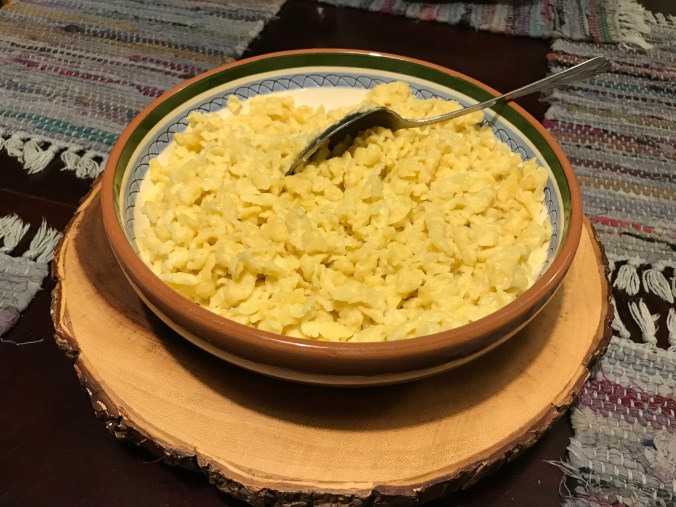
Plain spaetzle are great alongside any roast that has gravy or as a side dish with just butter.

in bowl.jpg

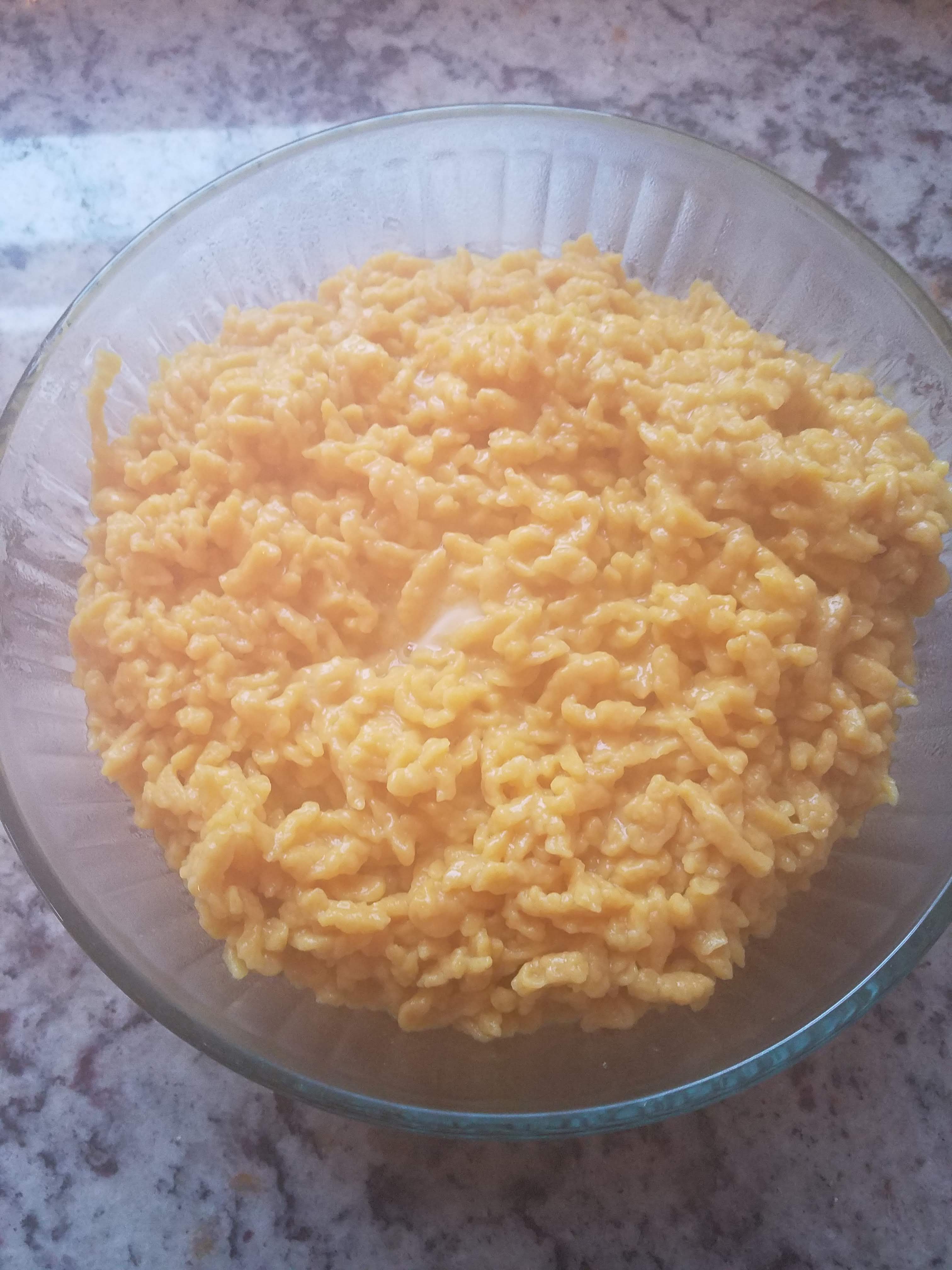
In a nonstick pan on the second day, they roast up beautifully with a little more butter. Last week at my daughter’s I used a can of pureed pumpkin instead of the water in the recipe – you get light orangy-colored spaetzle with a mild pumpkin flavor – try this with butter and tell me it’s not yummy!

pumpkin spaetzle.jpg

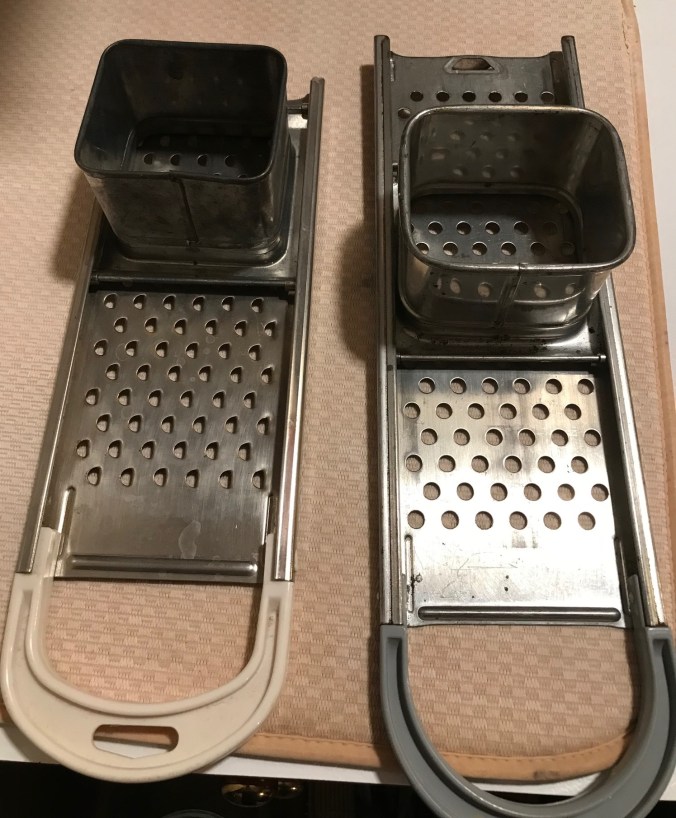
If you study the spaetzle in the two bowls, you’ll see that they are not only a different color due to pumpkin in the second, the spaetzle themselves are different. That’s because my daughter’s spaetzle maker has smaller holes (half circles). Hers is like the one on the left (below); the one I usually use (and prefer) is the one on the right.

makers cropped.jpg

This week with the spaetzle I did something new. I made them as usual and combined them with the cheddar cheese sauce I make for mac and cheese (which is essentially a white sauce with Cabot cheddar added).

Spaetzle are also better for us than pasta from a box because you make the dough with eggs. Yes, the woman with 22 chickens is suggesting a use for eggs – imagine that!

What I really want to say is that making spaetzle isn’t that hard. Like anything else, do it a few times and you will develop a rhythm. They will be so easy and so delicious you will wonder why you don’t make them more often. And then you will make them more often!

The basic recipe I learned years ago used a ratio of one egg per one cup of flour. For my family I usually made three eggs and three cups of flour, then a teaspoon of salt and as much water as makes it the right consistency. (Start with a third cup of water and go from there. Don’t worry, I’m walking you through this.) But before you start making the dough, get a Dutch oven (large) pot of water going on a high flame. You need the water at the boiling point.

Over time I found I liked more eggs proportionally for the dough, more like a 4:3 ratio (eggs: cups-of-flour). If you use three (3) eggs, you will need more water. If you use four (4), you will need less. That’s why I can’t be overly specific about the amount of water.

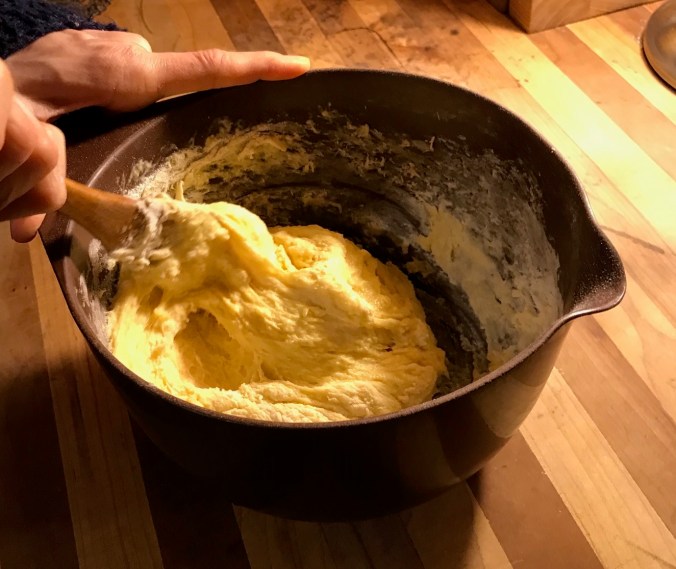
The amount of water you add should make the dough begin coming away from the sides of the bowl, like this. (You didn’t forget the salt, right?) If the dough is too wet (too much water), it will drip through the holes of the spaetzle maker and turn into a disintegrated mess in the pot. If it is too stiff (not enough water), it will stay in a tight ball and resist going through the holes. We can’t have resistant dough now, can we? This is the regular dough.

mixing cropped.jpg

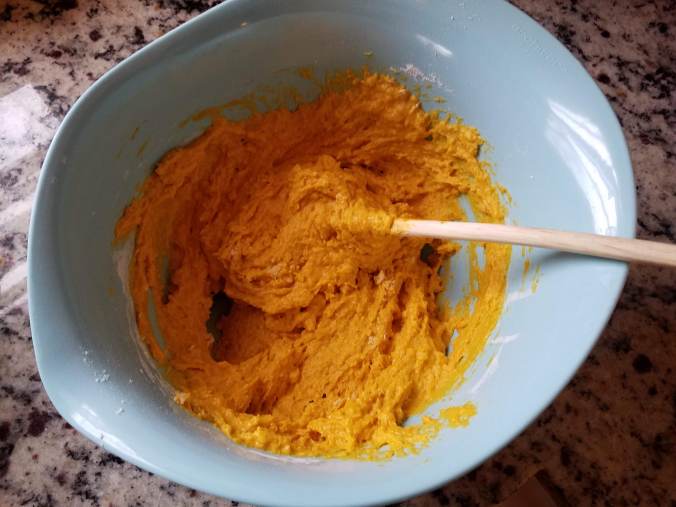
This is the dough made with pumpkin.

pumpkin spaetzle dough.jpg

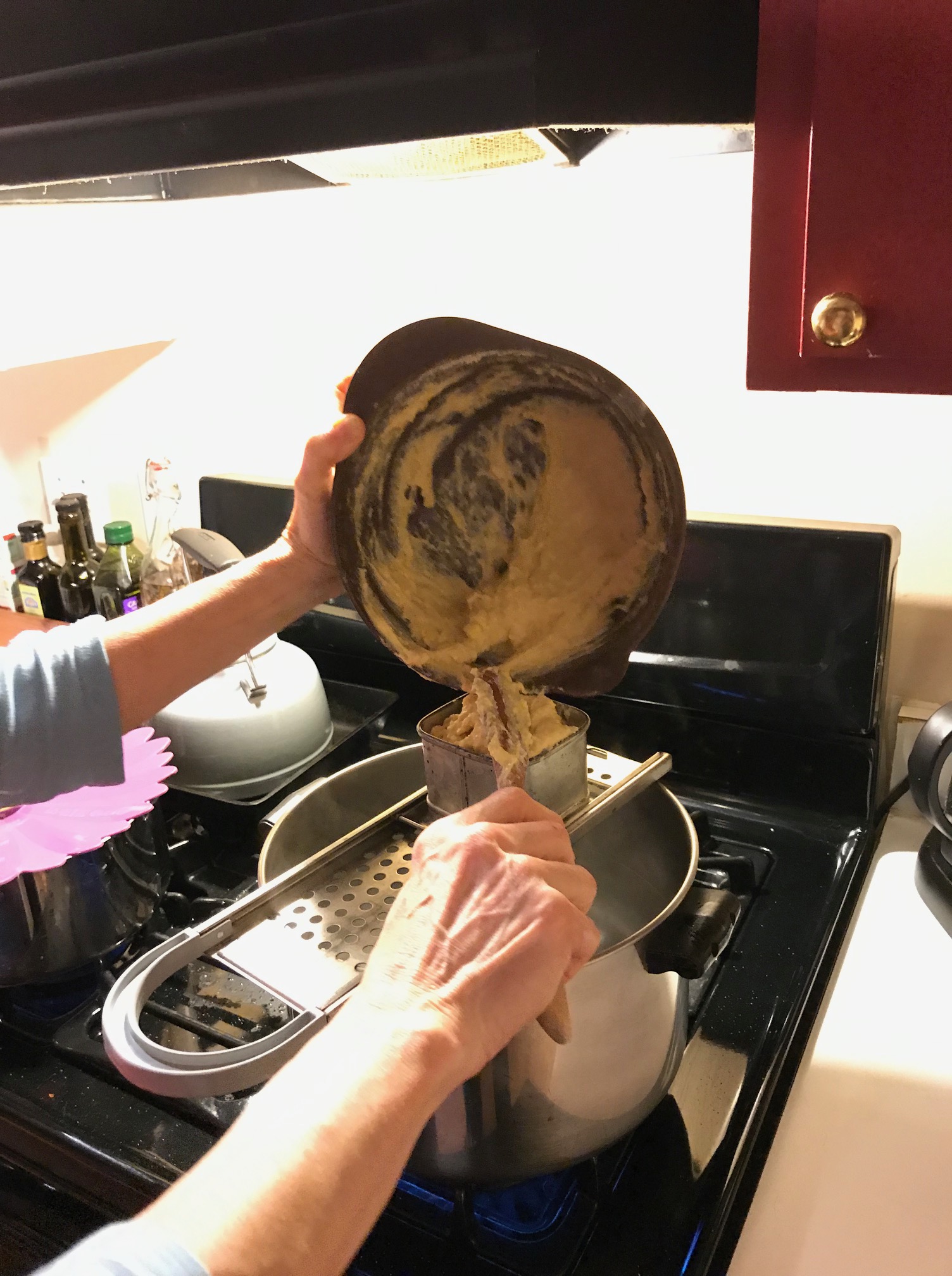
Position your spaetzle maker on top, fill the little bucket,

into the pot.jpg

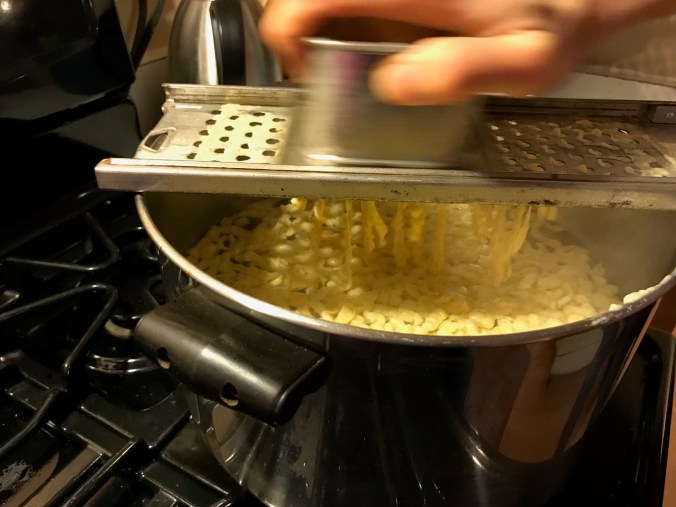
and begin sliding back and forth. The spaetzle come out through the holes and plop into the boiling water.

through.jpg

If you have a friend or family member nearby who can keep the water moving with a long-handled spoon back and forth in the water alongside the spaetzle maker, that would be great. If you are by yourself, not the end of the world. Just give it a stir when you refill your bucket.

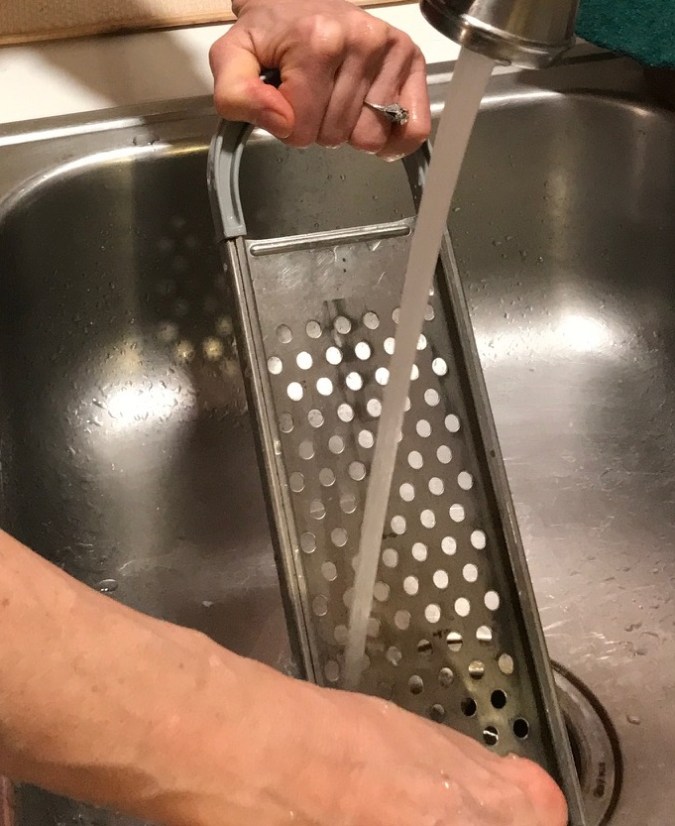
Once all the dough has gone through the holes and into the water, go to your kitchen sink, taking the spaetzle maker with you (both parts), and clean it. Trust me, you will be glad you did this before all that dough dries in the cracks. Use a little scraper rather than a rag or a sponge. The amount of time this takes, let’s say five minutes (though ten in the pot won’t hurt them), is about right for how long it takes the spaetzle to cook in the water.

cleaning cropped.jpg

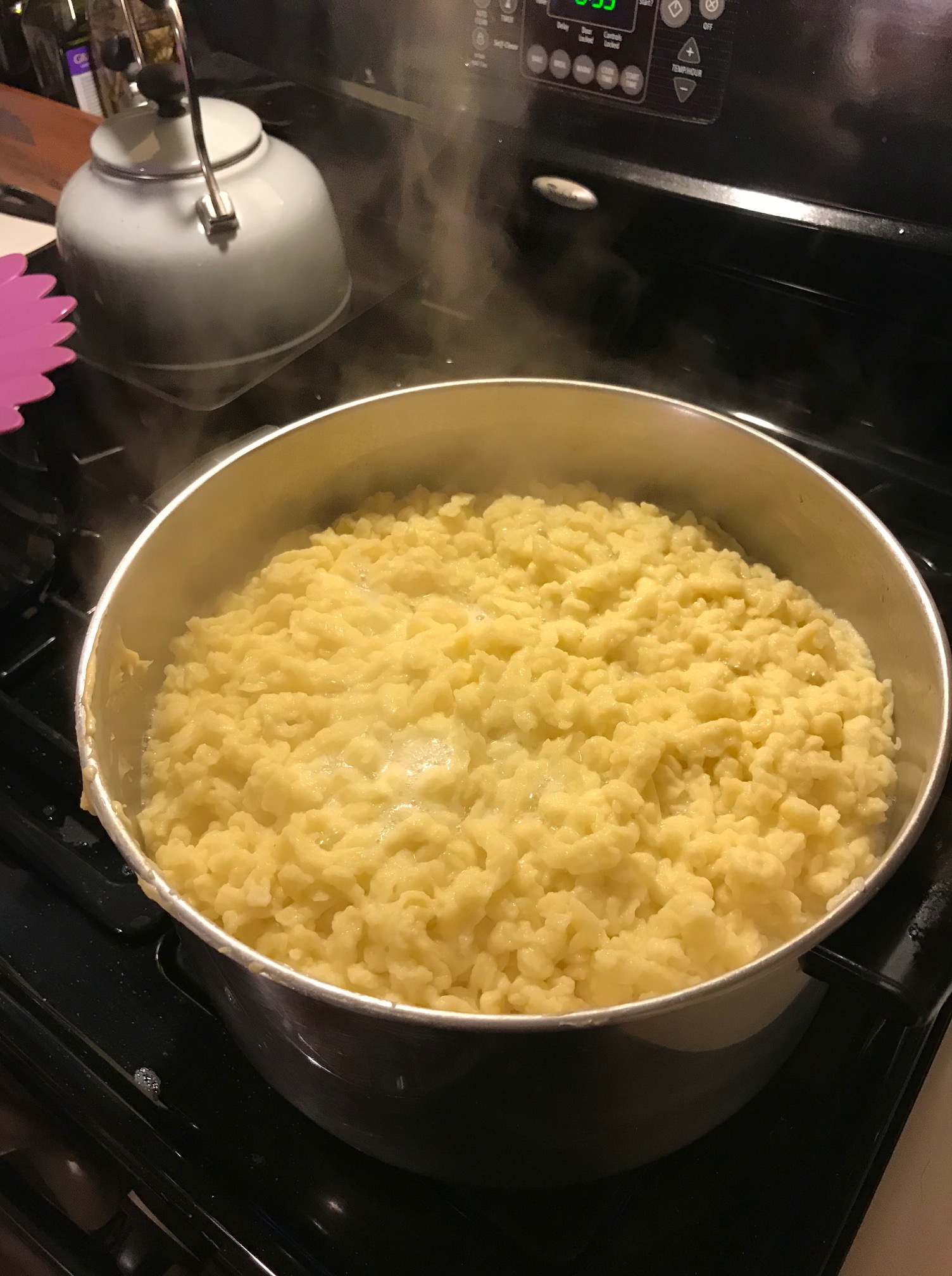
They will be looking like this in the pot. You probably will need to turn the flame down (or it might boil over and you don’t want a mess). I usually add salt to the water too, by the way, just as when I cook pasta.

in pot.jpg

Now drain and serve in any of the above-suggested ways, or however you like.

By the way, in case you were wondering, spaetzle is pronounced shpet-zle, not spetz-le. Have fun! I’d love to know how else anyone dresses them up!