Watching Girls Watching Whales

We got lucky at Zoo Atlanta on Sunday. We watched the elephant munching his lunch, the tiger slinking as only tigers can and the gorillas lumbering about, vying for status. The bald eagle perched as if posing for us just a few arms’ lengths away, the naked mole rats moved bits of straw about and the baby pandas sat facing us in their black and white perfection. I love to see their sleek bodies, fluffy fur, insane talons, unique markings, hilarious expressions and fascinating form. I want to see their bulk and their grace, the way their heads are shaped and how their eyes connect (or don’t) with mine or how the wind makes them cock their heads to catch a whiff of something. But in the middle of a hot and humid summer day, I was also not surprised to see a lounging lion, snoozing sun bears and tired turtles.

An aquarium is a whole nother thing. Everything is moving at an aquarium. Optimal water temperatures can be maintained. If you go to almost any of the tanks – jellyfish, otters, sea horses – you see bubbles in the water, fantastically shaped and colored marine life and almost continual movement. For these animals, moving sleekly and majestically through the water is part of staying alive. For the people watching them, that movement is mesmerizing.

Case in point, my darling granddaughters, not only mesmerized on Saturday at the Georgia Aquarium,

beluga2

but also genuinely thrilled! There it goes, one of the beluga whales making another round, flipping over, spinning, gliding, accelerating, diving, playing, smiling, peeking at us, showing off!

beluga 5

The belugas are extraordinarily graceful, obviously powerful, delightfully cheerful. These gigantic, all-white creatures from the Arctic Ocean are not small. I’m not sure of the stats on these individuals, but belugas can get to be 18 ft (5.5 m) long and up to 3,530 lb (1,600 kg). They can swim backwards, sideways and upside down. I loved watching them, but I was drawn even more to the five-year-old and four-year-old in my charge for whom nothing else in the world existed at that moment. The girls alternately oohed, aahed, squealed with delight, pointed and exclaimed, “Whoa! Look! Look!”

beluga6

Other marvelous creatures inspired our awe as well. The sea urchins that you touch with two fingers together, the sea dragons that look like they could breathe fire if only they weren’t under water, the massive whale sharks that move hauntingly among the groupers, sea turtles, manta rays and hundreds of others, the dolphins that eject like rockets out of the water and touch a ball suspended 30 feet above them – these animals are absolute wonders of our world. I’m grateful to all those many people who worry about them, care for them, advocate for them – very grateful – but I am most grateful that what they do makes it possible for me to bring two sweet, wonderful little girls to see them, marvel at them, delight in them.

When is the last time you were awed by a majestic animal showing its stuff? For an even more awesome experience, take a child or two along. Watch them stare in amazement, watch them touch the sea urchins with two fingers carefully pressed together, listen as they recount the day and tell you from their experience that “You can’t touch the belugas!”

beluga7 (2)

A Quick Fix for the Signpost

Some things take a long time. It’s true. The general rule of thumb, I’ve found, is that things take about twice as long as you think they will. But not always.

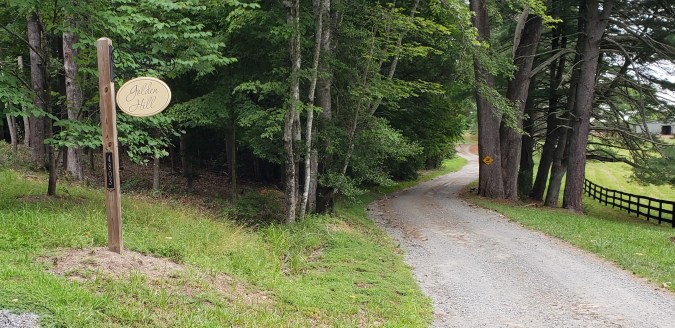
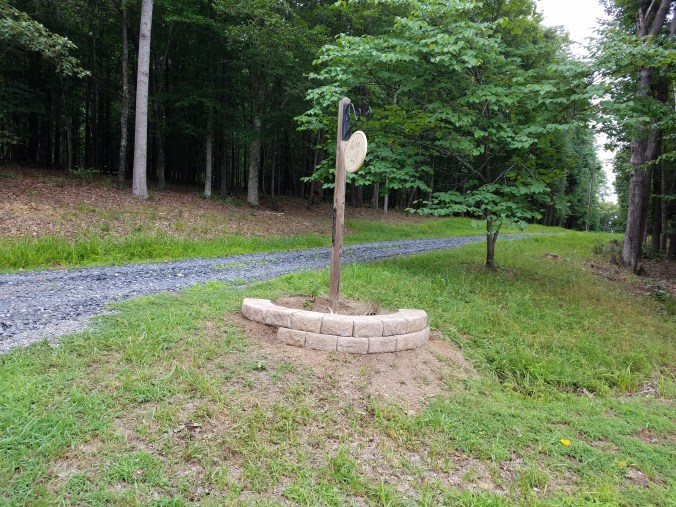
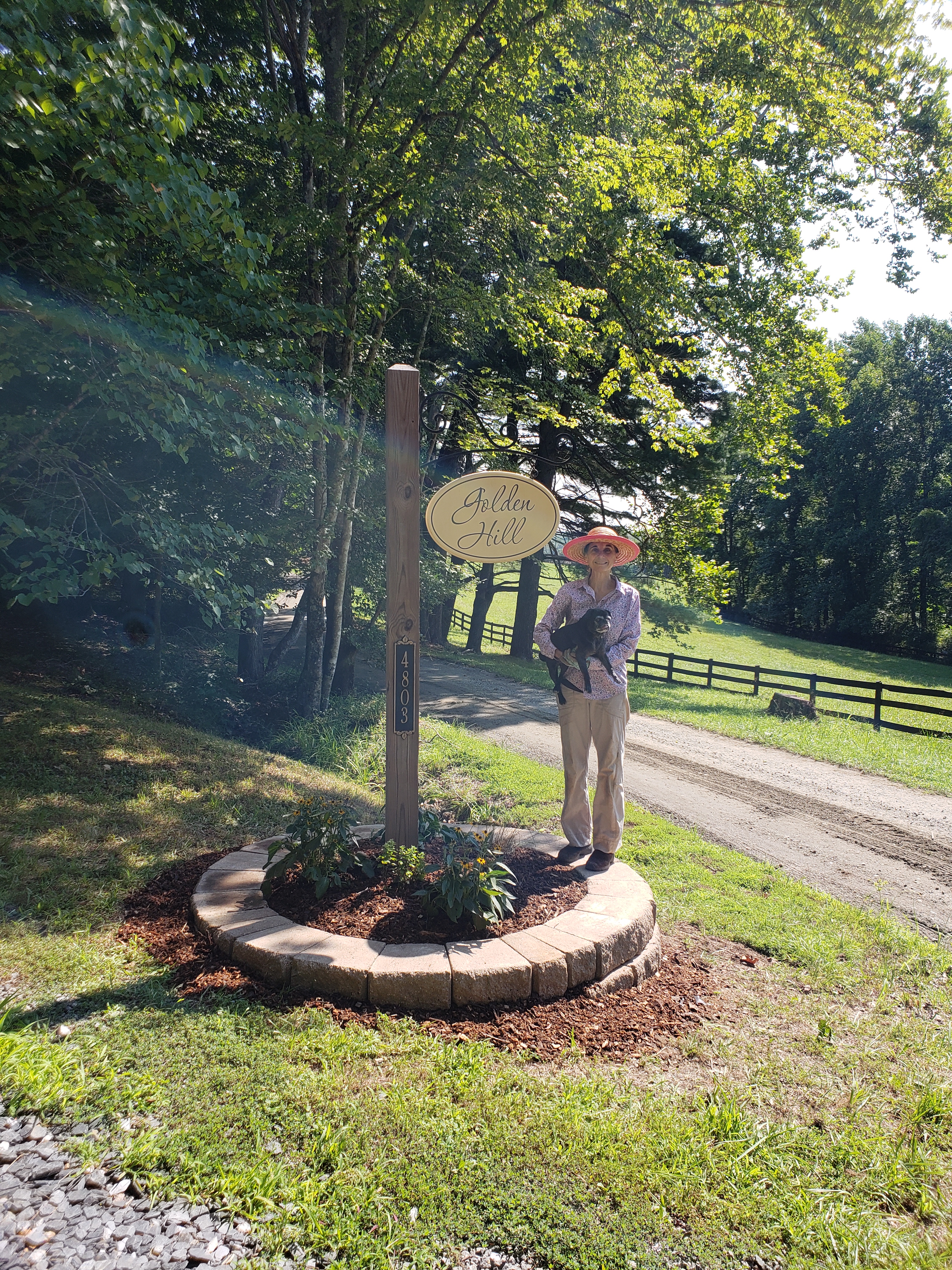
When my great niece was here, we started a project at the end of the driveway. I wanted to surround the signpost with some plantings, but the area is steep on one side. Something to hold the dirt in seemed like the ticket. See what I mean?

I know. It’s a mess. When it’s this messy, you don’t even feel motivated to mow! Good heavens, how did I let it get like that!?

entrance5 before (2).jpg

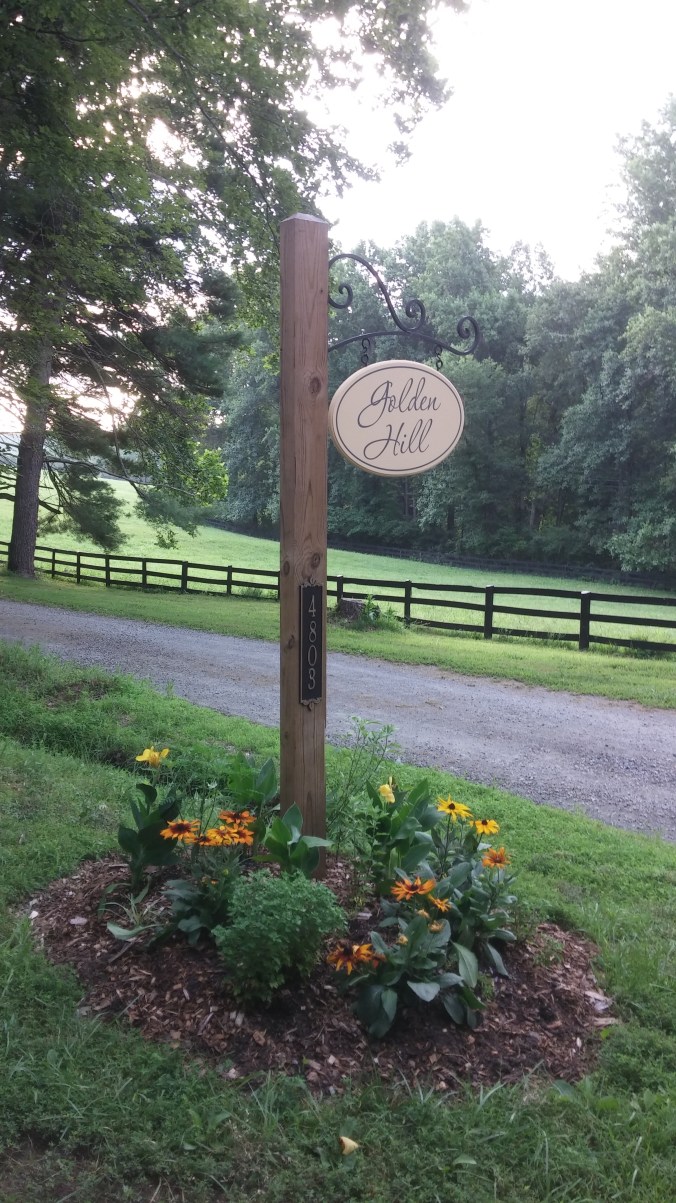
There was a time when it looked way nicer. Maybe even last year. All right, this photo is from 2015. But I’m sure it looked nice last year too, for a little while anyway. When there are flowers and it is all neat and tidy, it’s very welcoming. And it is the entrance, and I do have guests coming and going…

Golden Hill sign summer 2015

The way I see mess is this: When it’s a little messy, I take care of it and bring it back to standard. When it’s past a little messy and will require some time to remediate, I can somehow more easily overlook it. But then it gets to be a lot messy, and I can’t stand it anymore. That’s what happened with the signpost.

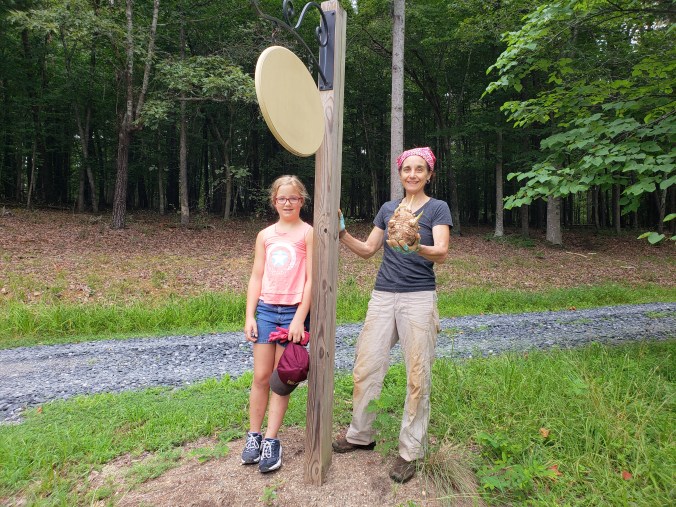
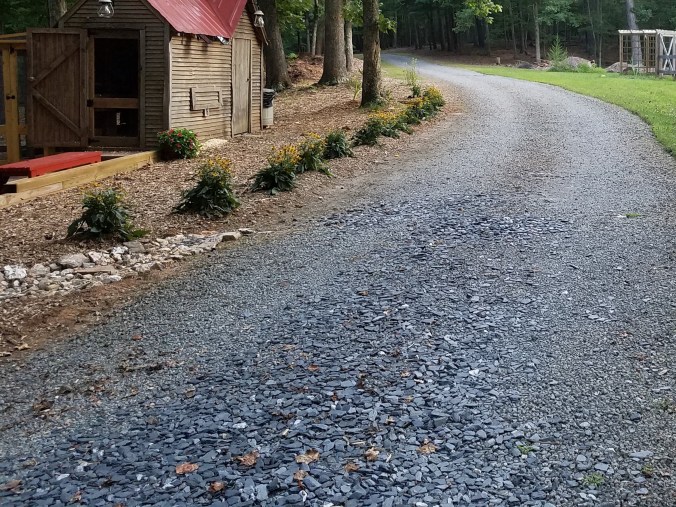
Busy with chicken coop, successfully ignore signpost, busy with garden, successfully continue to ignore signpost, busy with stream bed, no time for signpost. But then one day it happens, like the butterfly effect. All the pieces come together – it’s looking really terrible now, I have nothing else pressing that I can justify ignoring the signpost for, it’s not raining, there’s a ten-year-old here who says she likes to dig! – so out came the shovels (and the elephant ear bulb that would find a new home soon).

entrance2 before.jpg

Kaileena’s enthusiasm to dig put me over the edge, got us out there, and put the project in motion. She discovered quickly that Virginia soil is the next best thing to concrete, but she hung in there a while before suddenly her book, waiting patiently for her next to the couch in the house, called out loud and clear, which Kaileena heard from the end of the driveway, and she had to go see what was happening next in Immortal Reign (by Morgan Rhodes, who had a ten-year-old fan in Virginia that week).

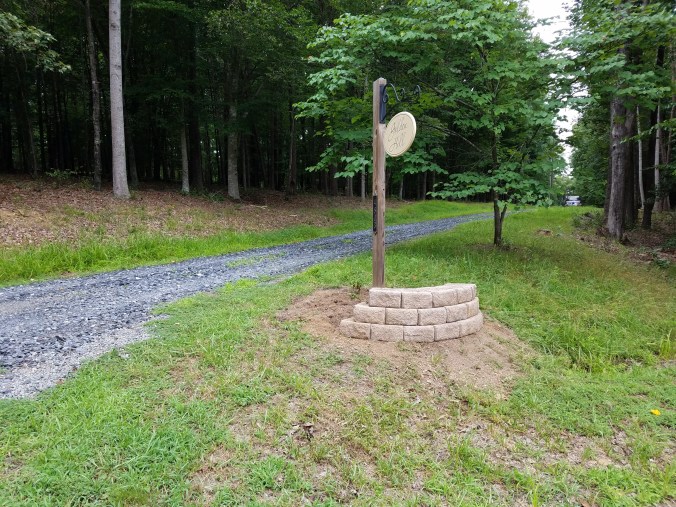
This is as far as we got the first day. I played with making it three high, but I think you’d agree it’s too high.

three high.jpg

So I moved those top ones over and left it. There are other things to do when you have a ten-year-old in the house. But the wheels were turning, the gears were in motion.

phase 1.jpg

Mom said, “Looks good, but you need another block on the first level on the left. Looks like a hole there.” Thanks, Mom. She was right. Moms usually are.

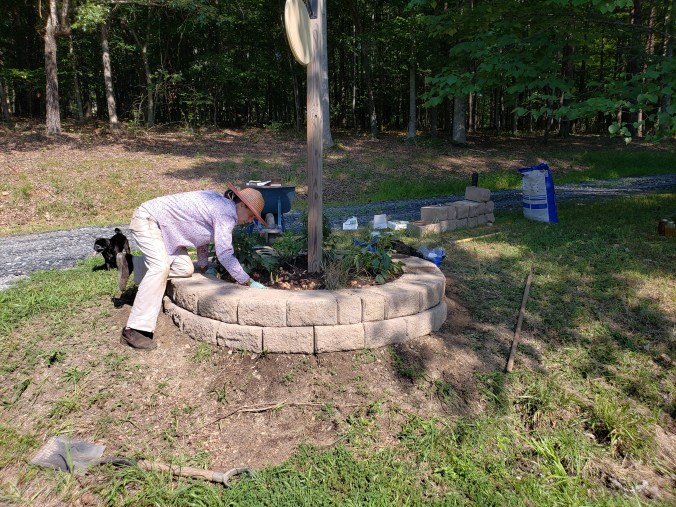
This past Saturday was the day to keep going. The challenge was not only that the blocks are heavy – they are about as heavy as I can manage, any heavier and I couldn’t do it – and of course you need them to be reasonably level, which they were, despite how it looks in the photo, trust me. But also these are the kind of blocks with angled sides so that when laid edge to edge, you will get a circle. But how big is the circle? And did I start in the right place so that the post will be in the middle? And what happens if the last two don’t actually meet edge to edge? Then what? How can you cut one of these things?

Hoping for the best (I seem to do a lot of that), one block at a time went down next to the one before it. Lo and behold, two wonderful things happened that meant a lot less time would be needed to get this project done.

  1. The last two blocks had about a half inch gap between them, easily rectified by nudging the adjacent blocks a smidgeon over until they all had a slight gap but none too noticeable.
  2. The post was not quite in the middle when the circle was complete, but allowing for the sign that hangs from it, the post-plus-sign was plenty centered for my satisfaction.

Whew! Now for the plants and bulbs. I had bought a load of rudbeckia for the berm along the driveway by the chicken coop when they were on sale for $3 each. I bought 18, wild guess as to how many I’d need. I needed 18.

coop rudbekia2 (2).jpg

But before I had planted them, Sandy was going to Lowe’s and asked me if I needed anything. “Maybe get three more of the rudbeckia, just in case.” I then didn’t need them, so I put them in the garden box that had had peas in it. The peas had passed their prime and I’d pulled them.

So three rudbeckia were just waiting for usefulness, and where better to show their stuff than at the entrance? So far the deer hadn’t bothered the ones by the coop, so I was confident these would not be mowed down the next day.

bulbs2.jpg

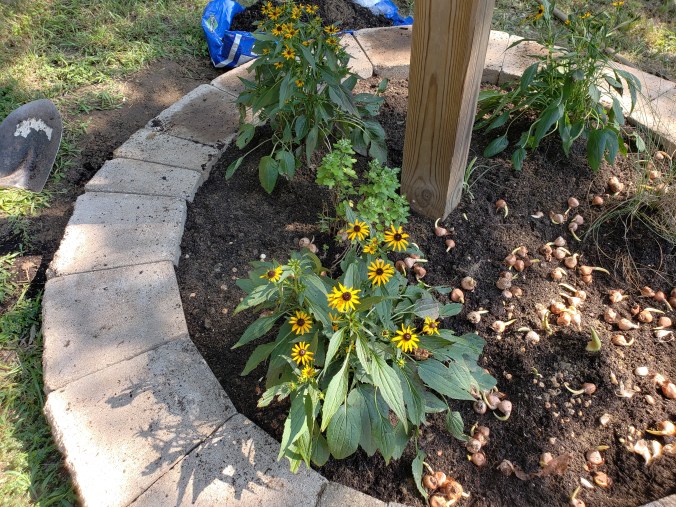
The little things you see strewn on the right are bulbs of various kinds including echinacea and a smaller variety of elephant ear. The huge one I was holding earlier is planted where a fourth rudbeckia would be. We’ll see what happens with that.

We were done before lunch, and notice that gap on the lower level is filled in.

planting2.jpg

Maybe grass will grow on the slope leading to the road. Do you think it will do that if I just hope?

sun shaft3.jpg


Tea and Thatch

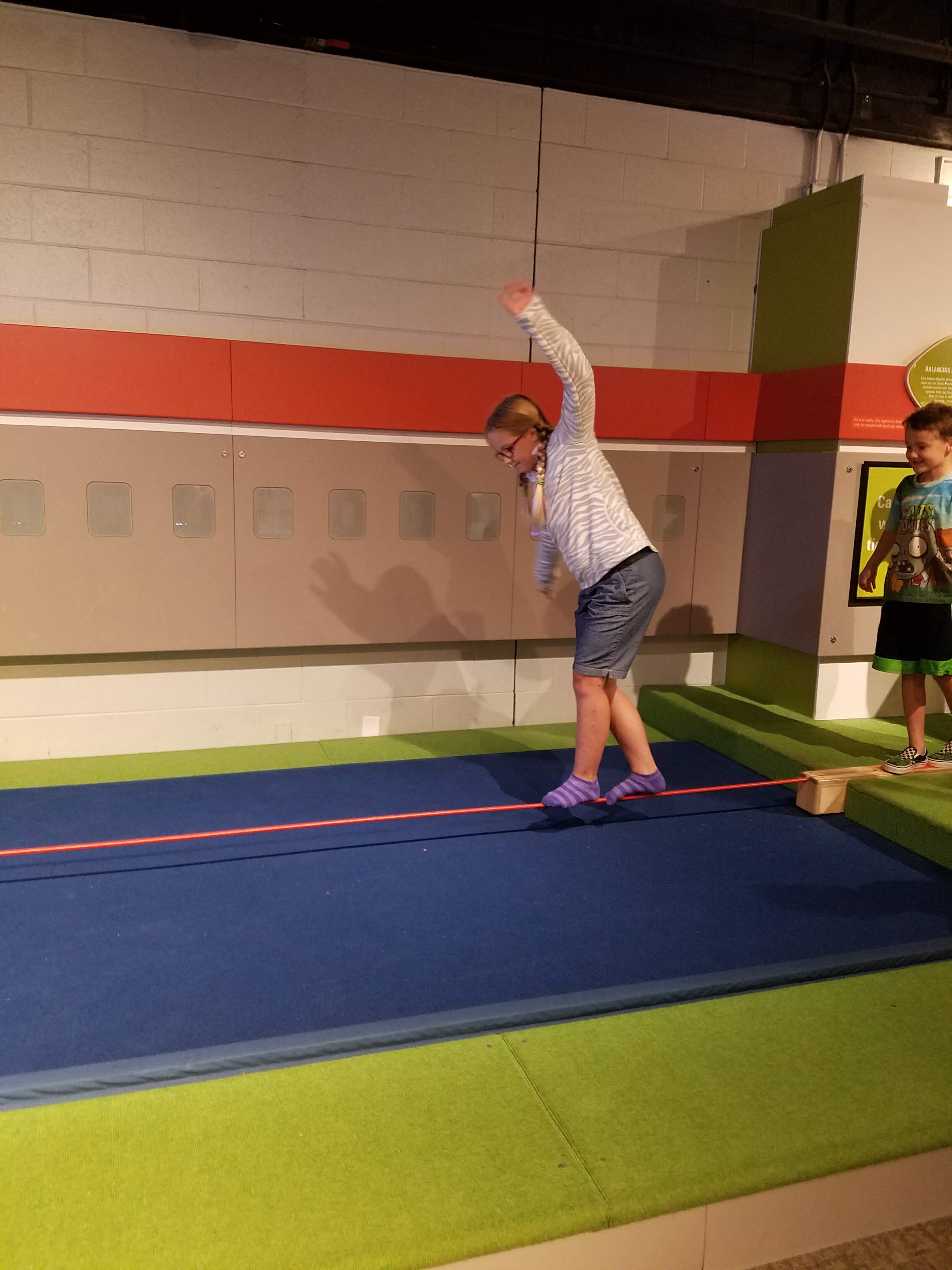
When you have your ten-year-old great niece staying for a week, you think about what activities might be fun. On Wednesday we drove to the Science Museum in Richmond especially to see its “Animals Inside Out” exhibit. Kaileena said the best part of that outing was, you guessed it, the tightrope!

tightrope.jpg

I asked her what else she liked that day and she did not hesitate in the least: the cartwheels on the back deck that she did when we got home! This reminds me of a family I knew who took their two daughters on a special trip to Disney World, and the thing the girls liked best was – yup – the pool at the hotel!

You do what you can. You hope for the best.

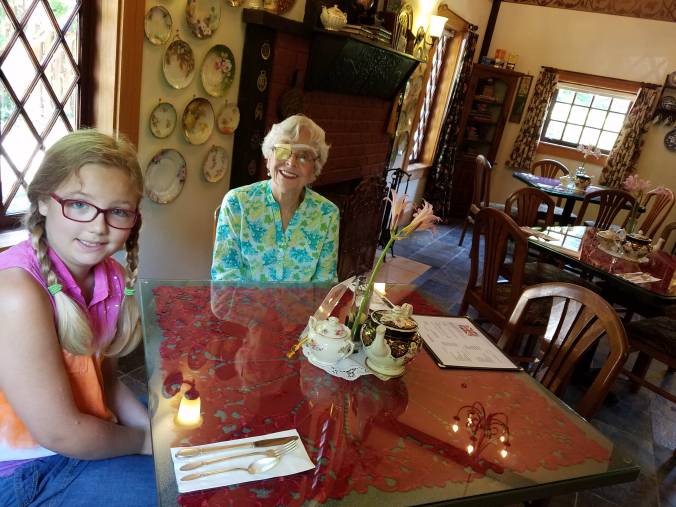
On Thursday we drove west. The destination was Beverley’s summer home where Kaileena got to slide down a natural water slide in a rushing mountain stream (a highlight of the week, to be sure). On the way we stopped for lunch at the Anne Hathaway Cottage Tea Room in Staunton. The interior was elegant in an old-world way – stone floor, dark wood fireplace, fine old china decorating the walls – utterly charming. My beet and strawberry salad, with feta cheese and a creamy balsamic dressing, was divine. Mom’s and Kaileena’s sandwiches were equally impressive and delicious: cream cheese and sliced strawberries on one, and ham salad with pineapple on the other. If you want sugar in your tea, you use the small tongs to pinch a lump and drop it in. You can see the tongs hanging off the sugar bowl on the table.

tea room interior.jpg

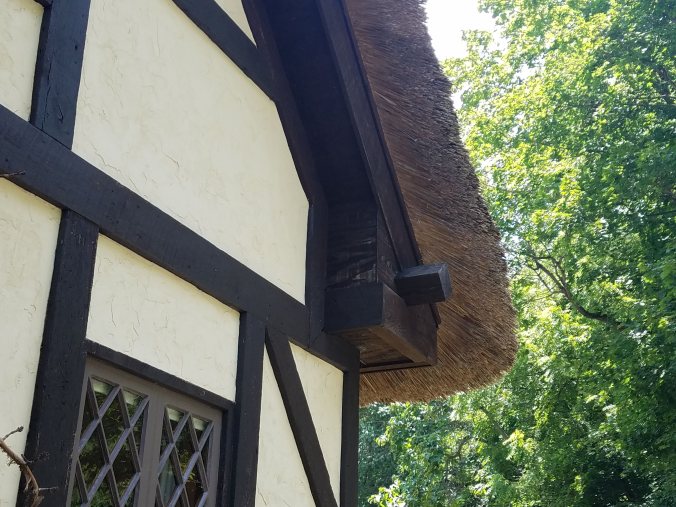
Set back from a fairly main road, almost hidden, the cottage itself looks as authentic as it is. That roof is thatch. In addition to being the most common roofing material worldwide, thatch is apparently making a comeback in higher-end circles on account of being lightweight, versatile and waterproof. A great variety of wild and cultivated grains, including wheat and rye, can be used. The wheat that makes the straw that was historically used for making roofs is the same wheat that gave grain for making bread.

tea room1.jpg

The owner proudly told me that the roof of this cottage in Staunton is likely to last 30+ years.

thatch.jpg

When I was a child in grade school, we got a little Scholastic Books catalog every now and then, and Mom allowed me to make some choices. One of the books I picked out, which probably cost 25 cents, had a story that included a thatched roof. I could not help but think of that story when I saw this thatched roof. Lines of dialog were etched in my mind. The story affected me hugely and I remember it well, though its title escaped me.  Its message undoubtedly helped shape the way I think about wisdom and age to this day.

The book itself did not survive my childhood. As I had children of my own, and they got a little bigger, I reflected often on the part that story had played in my life. Finally, sometime in my thirties, I wrote to the Library of Congress to see if they could help me find it. This was back when you wrote longhand letters on real paper and waited weeks for a reply. This was way before search engines.

I wrote to them what I remembered from the story, a summary as well as some lines of dialog. In less than a month, they sent me a photocopy of the story from an anthology of folk tales. How thrilling it was for me to read the story again, twenty or so years later. Some of the lines I had remembered verbatim.

This is how I remember the story. Maybe it will be as powerful for you as it was for me.

Long ago and far away, there was a rural village where the people had always done things a certain way. They followed their traditions strictly and kept close tabs on each other. For the most part their way of life worked very well.

One of the expectations of life in this village was that you must be productive and useful. When you got too old or feeble to be able to contribute your share of the work, you were put on a sled and brought to the woods in the middle of the winter and left there to die.

In one family, the grandfather was no longer able to work. His legs hurt and he was not strong. His son knew the day had come to follow the tradition of the village, even though he didn’t like the idea. He put his father on the sled and strapped him in. The grandfather said nothing because he knew and accepted the custom. But all the while, the grandson was watching.

“Daddy,” said the little boy. “Are you taking Grandfather out to the woods?”

“Yes, son.”

“Don’t forget to bring the sled back.”

“Why?”

“Because someday I need it to take you to the woods.”

This gave the man pause. The idea of his father – or himself – freezing to death in the cold, dark woods made him want to defy the custom. But he knew that if he did not take him, someone else in the village would do it. The only other choice was to hide the old man.

From that day forward the old grandfather lived in the attic. He could not risk being caught, so he did not make a sound and he could no longer take walks in the street or sit in the full sun. But he lived. His grandson brought him food and drink.

This went on for several years. One spring, the boy began to bring less and less food. When his grandfather asked him why, the boy said, “The crops were so bad. We have only a little food left and we have no seed grain for the next crop. It’s terrible. We all will starve.”

“Something like this happened when I was a little boy too,” the old man said. “Tell your father to take the thatch off the roof and thresh it again. There will be seed in it yet, and that seed will produce a crop.”

The father did what the grandfather suggested, and sure enough, there was seed for the next crop! When his neighbors saw what he did and saw his success, they said, “How did you know there would be seed yet in the thatch?”

The man knew he had to confess. “I didn’t know, but my old father did. How fortunate for all of us that he is still alive. His memory and his wisdom have saved us all.”

After that, the people changed their ways. They did not take their old people out to the woods any more. Instead, they cherished them, honored them and took care of them because now they knew that “useful” is not just about how much you can work.

The little boy was especially proud of his grandfather. Sometimes they would sit together and enjoy the full sun.

In a Pickle

Some things ask to be done, and it’s best to just do it. I had not planned to make pickles this week, but it’s the middle of the summer and five more cucumbers in the garden were ready to be picked (with more to come!) and there were already nine in the fridge, so it was time.

cukes to start with.jpg

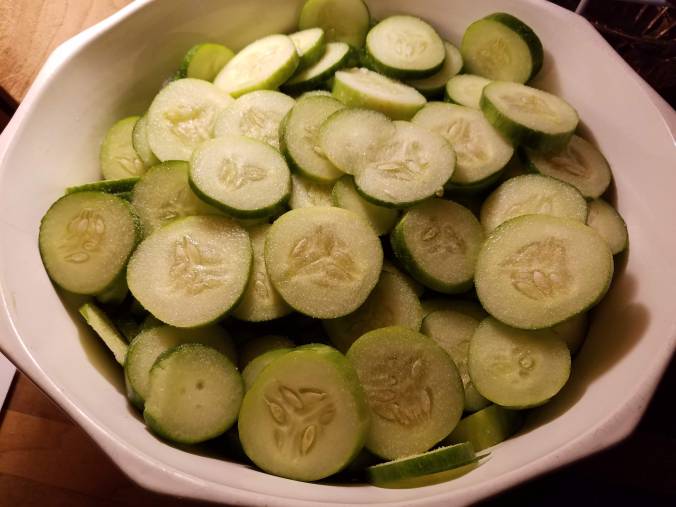
I started with 14 cucumbers, sliced them up and layered them with salt in my big bowl (which is 7” high and 12” across the top). If you want to make these yourself, you let that sit about an hour. You could add sliced onions or green, yellow, red or orange peppers, or cauliflower cut up into florets, but I had so many cukes, I’m stopping there this time.

Part of cooking, part of life, is knowing where to draw the line.

Kenny Rogers doesn’t know it, but he really helped me a few years ago. I had a difficult decision to make and I kept hearing him singing in my head: You got to know when to hold ‘em, know when to fold ‘em, know when to walk away, know when to run… Kenny knew. Sometimes you are just in a pickle about what to do and there are reasons for this choice and reasons for that. Should you hold on or let go? Stay or move? Buck up or give in? Hope for more or settle for what you have?

In the end, back then, I knew it was time to walk away. Not run, not bolt. Just walk. The voice in my head – his voice in my head – guided me not only in what choice to make, but also in the best way to do this thing that had to be done. Funny, the song doesn’t tell you what to do. It just tells you there are choices and you have to pick one. You can’t waffle, and you can’t pick them all. You think it through, you pick a route and you take it. It leads to new scenery and new experiences that you would not have on another route.

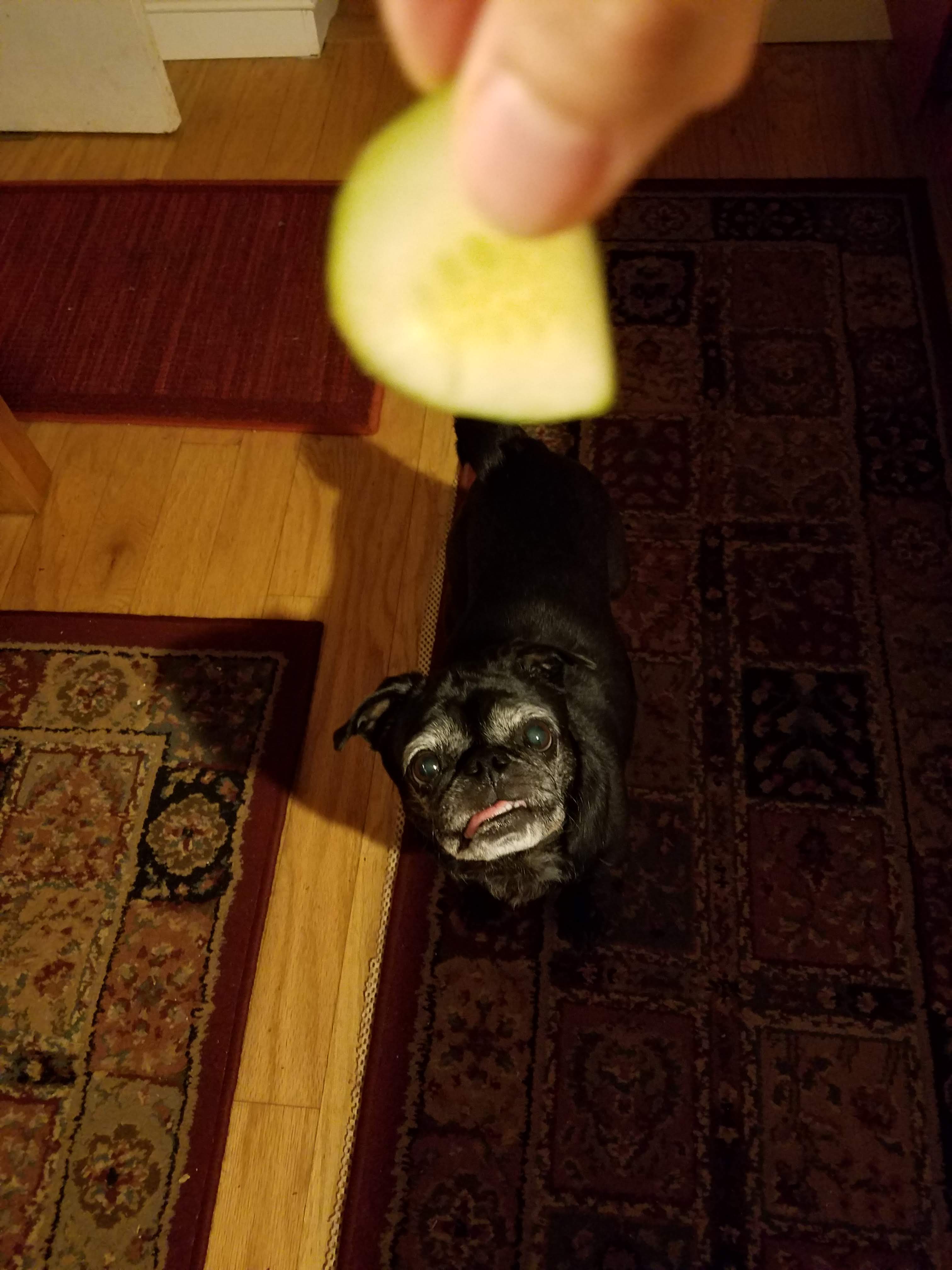
I picked the route tonight that included 14 cucumbers and it led me to nine jars of pickles! I made the dog happy too. Within seconds of opening fridge and beginning to bring the cucumbers out, she was out of her sound sleep, off the couch and at my feet. She LOVES cucumbers!
coco better.jpg

Carrots too, in case you’re wondering, and the heel of the romaine lettuce head, and peppers (the guts or the outside part with skin that we eat), and watermelon!

But we are on pickle-making now: Here are my cut-up cukes, resting, sweating (the salt will cause them to do that, really), relishing (hehe) their final unpickled moments.  cut up and salted.jpg
As soon as I am not being distracted by how many cucumber chips a small black pug can eat, or watching her adorable begging, I go get my jars. Everyone has a cabinet with jars in it, right? Mine contains the ones I’ve been saving because they are just too pretty to put in the recycle bin. Or too potentially useful down the road. If you have not been doing this, you might have to buy mason jars, which are great also, but if you had been saving jars all along…

You laugh, but jars come in very handy. You just ask the 35 or 40 jars in my basement how useful they have been, how many times they have been called to action, how integral to the operation they are, how versatile, how easy to clean, how good looking – the list goes on. If jars had feelings, mine would feel good!

Make sure your jars are clean, inside and out, and that the lids are good. By good I mean they have that rubbery ring along the inside edge which provides the seal. I keep my pickles in the fridge, and I give them away, so I am content with this kind of seal. The yummy pickles are not going to last that long.

While the cukes are sitting with the salt, and once you have your jars clean and ready, you can prepare the brine. I like a sweet-sour taste, also called bread and butter pickles. The brine is basically vinegar and sugar and spices. You can put together your own combination of spices (recipes abound) or buy something called “pickling spice.” The one I got at Yoder’s includes mustard, allspice, coriander, cassia, ginger, peppercorns, cloves and bay leaves. I am happy with this one, but you might have particular flavors that you like or don’t like or want to include more of. That is the joy of cooking – you make it the way you like it!

The basic method is

  • Cut up the cukes/other veggies
  • Layer with salt and let sit an hour
  • Prepare jars
  • Prepare brine
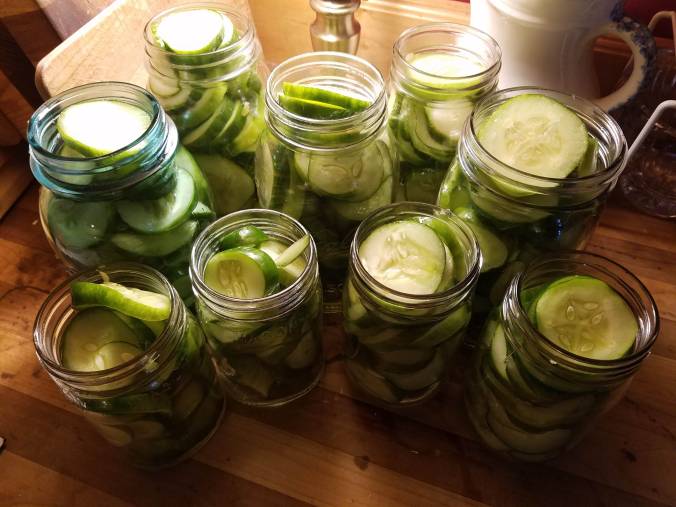
  • Pack salted cukes in jars
  • Pour brine over top
  • Close up jars and refrigerate

The basic proportion is for every 3 cups of cukes/veggies, make a brine with 1 cup sugar, 1 ½ cups vinegar and about a teaspoon of pickling spice. Figure out how many cucumbers you have and do the math. I find the easiest thing is to let the cukes sit in the salt for an hour or so, then stuff them into the jars. Put as many as you can fit in there. That tells you how many cups of cukes you have, so it’s easier to do the math. Then measure out your vinegar, sugar and spices into the pot and turn on the flame.in jars waiting.jpg
If you don’t have a garden or access to a farmer’s market, you can use cucumbers from the store just as well. I would use the European cukes because they simply wrap them in plastic instead of putting a waxy whatever on their skins. You don’t want that waxy stuff.

You can use brown or white sugar. A combination is good. With this batch I used up a bag of brown sugar that had gotten too hard. It dissolved in the vinegar over a flame just fine, but the proportion of brown to white sugar made my pickle brine darker than usual. If the amount of sugar seems too much for you, use less. The pickles will just be more sour and less sweet. It’s up to you. You can use white or cider or rice vinegar or a combination. The flavor you get — just like the scenery you see and the experiences you have! — comes from the choices you make. Have fun! Every time you make pickles, make them a little different. Why not?

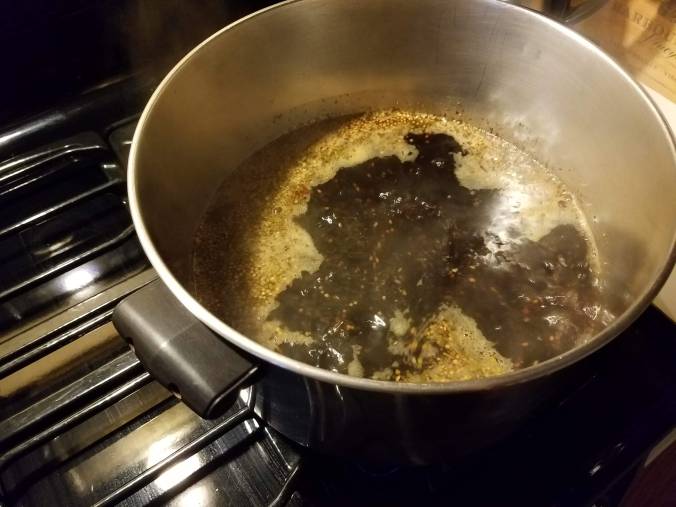
Combine the sugar, vinegar and spices in a pot and bring it to a full boil (making sure the sugar is dissolved). The slight fuzziness you see in this photo is not blur. It’s steam rising from a fully boiling brine.
full boil.jpg

Use a 2-cup or 4-cup glass measuring cup that has a pour spout to get the brine from the pot …

dipping.jpg

into the jars filled with cukes. Be careful. The jars are so full of sliced cucumbers, it could make a splashy mess otherwise, and still might.
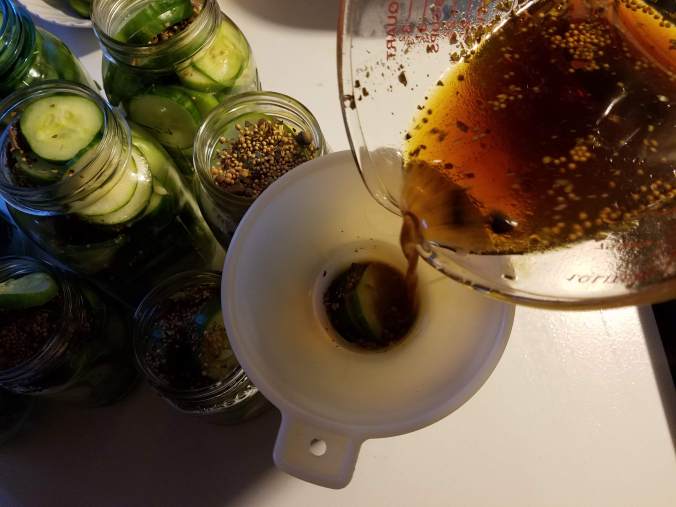
pouring.jpg

Oops. It did make a mess. I poured too fast. Bother.
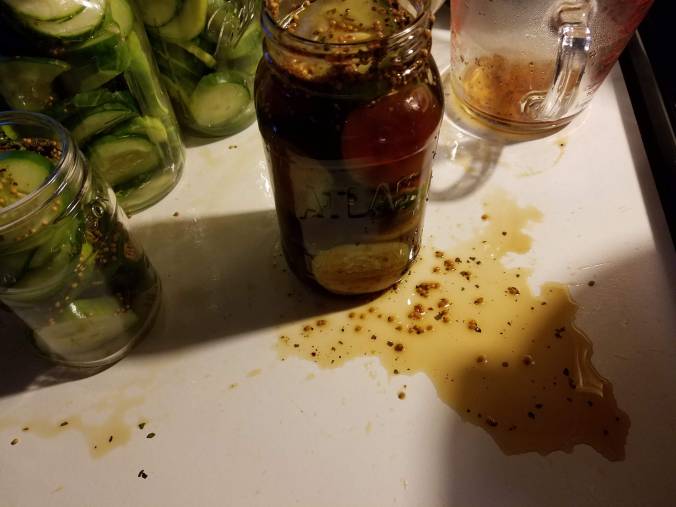
mess.jpg

You can see that the pickling spice likes to collect at the top of the liquid. If you end up with a lot of the mustard seeds or whatever sitting on the topmost cucumber in the jar, you can spoon some of that off. You don’t want your pickles that spicy. Or maybe you do?

As each jar is filled, use a damp cloth to clean the outside of the jar and around the rim where the lid will seal against the glass. Put the lid on and set aside. Keep going until you have filled and closed up all your jars. Set the jars in a nice place and take a picture of your collection to show your friends! When they are cool, put them in the fridge.
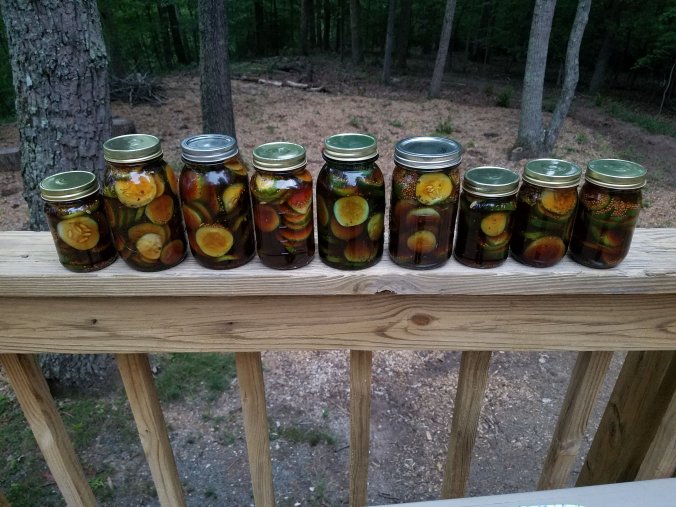

finished.jpg


Finally! Eggs and Crape Myrtles

When you know something is going to happen and you really want it to happen but you’re not quite sure when it’ll happen, you get really excited when it finally does happen! It was a good week for things that have been in that almost-zone to get into the it-finally-happened zone. First the starter eggs. Then the crape myrtles.

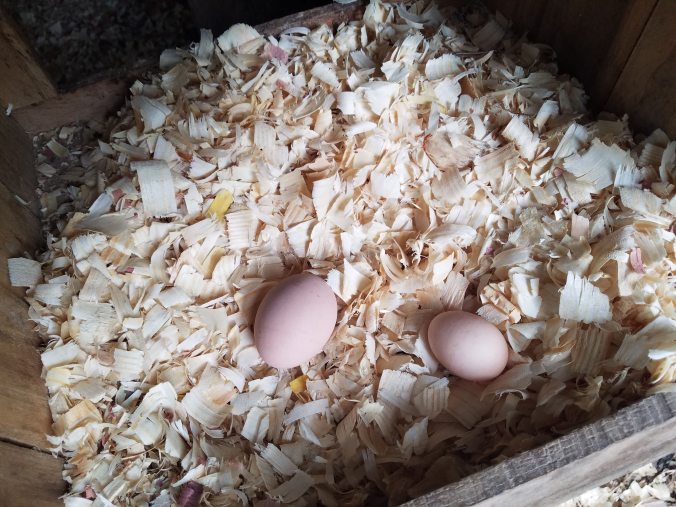
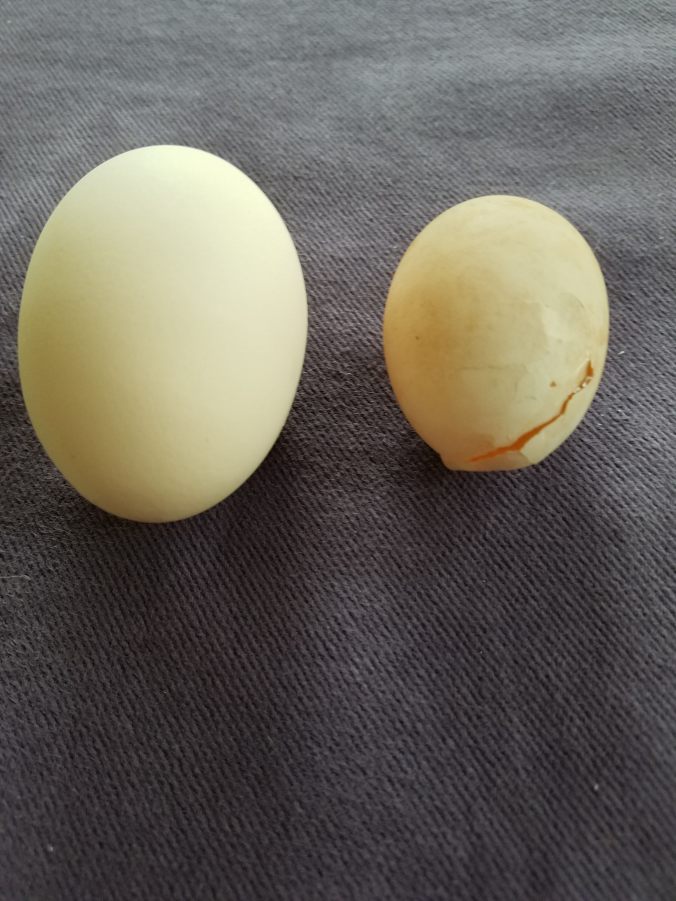
It’s super exciting that the hens, now about five months old, have started laying! Kaileena found the first one in the brooding box when she was here and came running to tell me. “You have to come see!” Starter eggs are small and have soft shells. To find one unbroken is quite something. I think the hen can hardly stand up from laying it without cracking that shell. When we picked this small one up, it was broken underneath. See the size difference? The regular size egg on the left is a fake, placed there to train the birds where to lay.

starter egg3.jpg

The second starter egg that came was just as soft. I got it into the house intact, but before I could take a photo of it next to a real, regular size egg, I had cracked the shell. You can see how the soft shell is also dented.

starter egg2

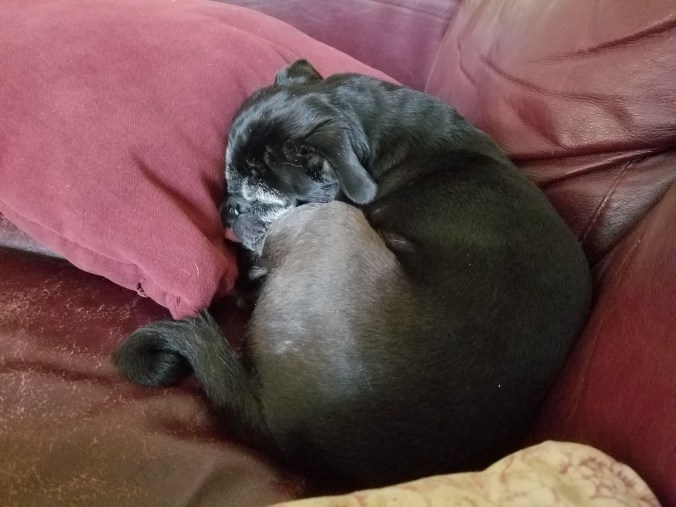
It won’t take long before the eggs that come are normal size and filling up my bin (fast!). In the meantime Coco gets a treat. They say eggs make a dog’s coat glossy. I don’t see how hers could be glossier:

Coco on couch.jpg

but she is so happy for an egg, however small, that I don’t care about gloss.

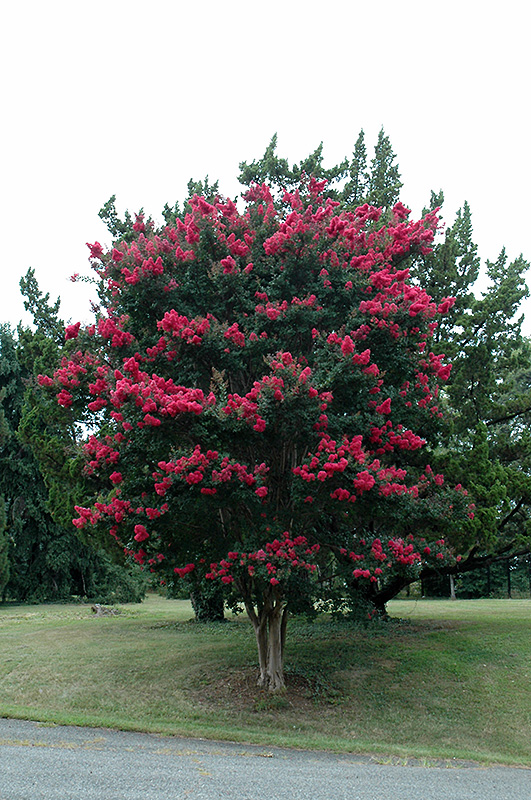
I have been in this house for more than seven years, and from the very beginning I have wanted to have crape myrtles somewhere on the property. If you are not from Virginia, you might not be familiar with this glorious tree. When mine are fully mature, they will look something like this. Crape myrtles bloom all summer and remind you that even when things look dark, there is beauty in the world.

crape myrtle mature.jpg

It will take years for my trees to gain this height, but rain was in the forecast. When rain is in the forecast, it can be very motivating. When you have a trip coming up and will not be home for a few days, and there’s rain in the forecast, it’s super motivating. Especially for planting things. Crape myrtles were on sale this past week. Guess what I did.

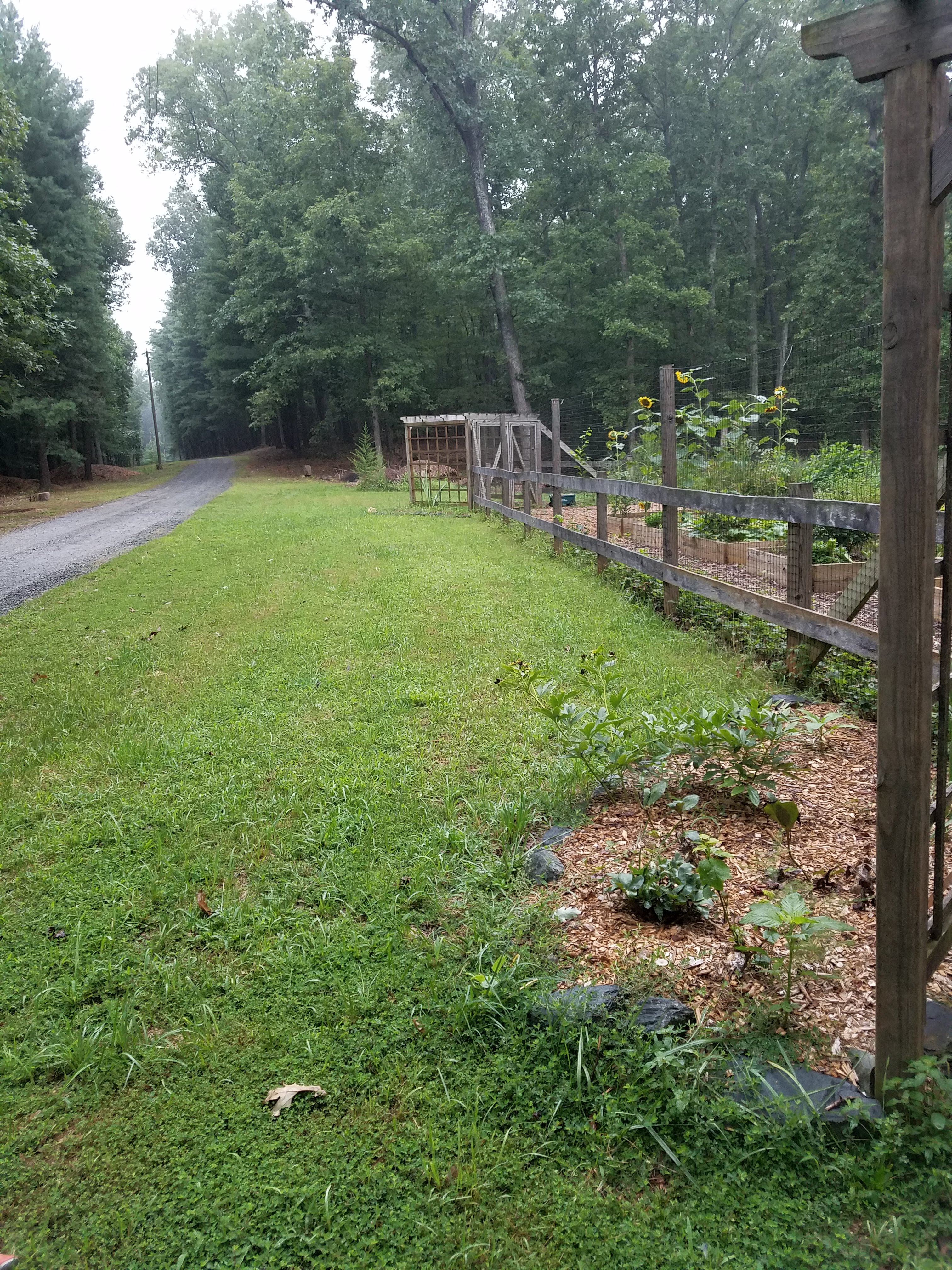
Yup. The trees will be great in front of the garden fence along the driveway. Here is what that space looked like at 7am when it was already misting.

before.jpg

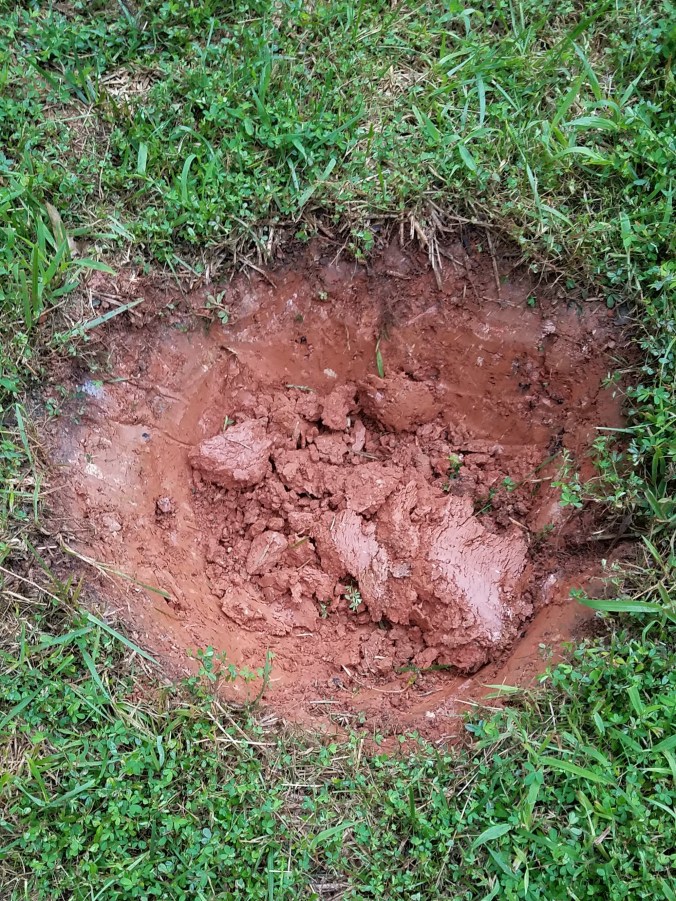
I can dig in the mist. Bless my children for having churned up this soil six or seven years ago to make the garden. Because of their work, I encountered no roots when digging. Just clay, but I expected that.

hole 1 (2).jpg

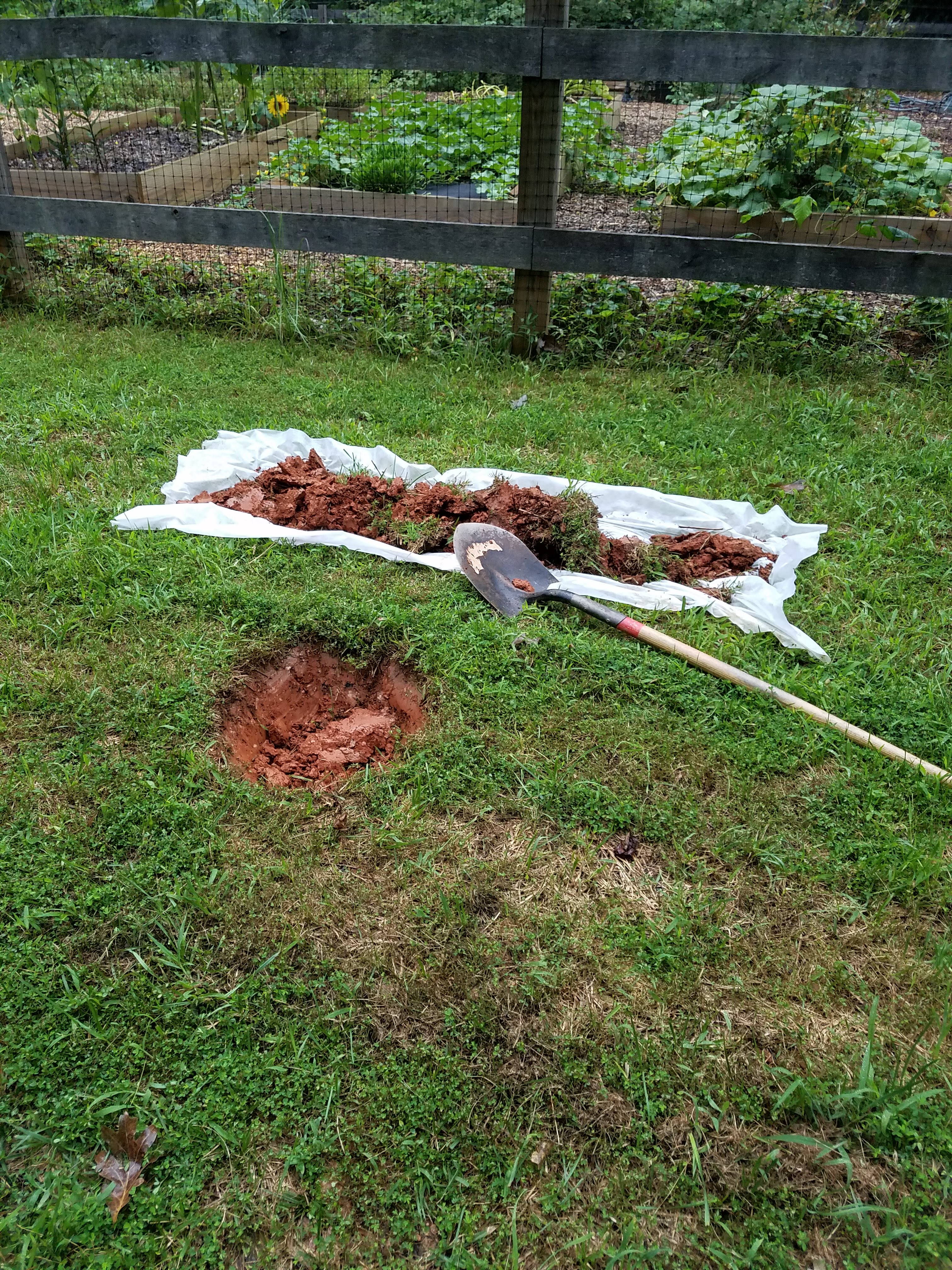
You can’t plant a beautiful young tree in this stuff. Well, you can, but you don’t want to. It’s best for the tree if you dig each hole about each twice as deep and twice as wide as the tree ball. I cut pieces of cheap landscape fabric to put the clay on (it’s hard to call it dirt!) so I would have it to mound around the tree later.

digging.jpg

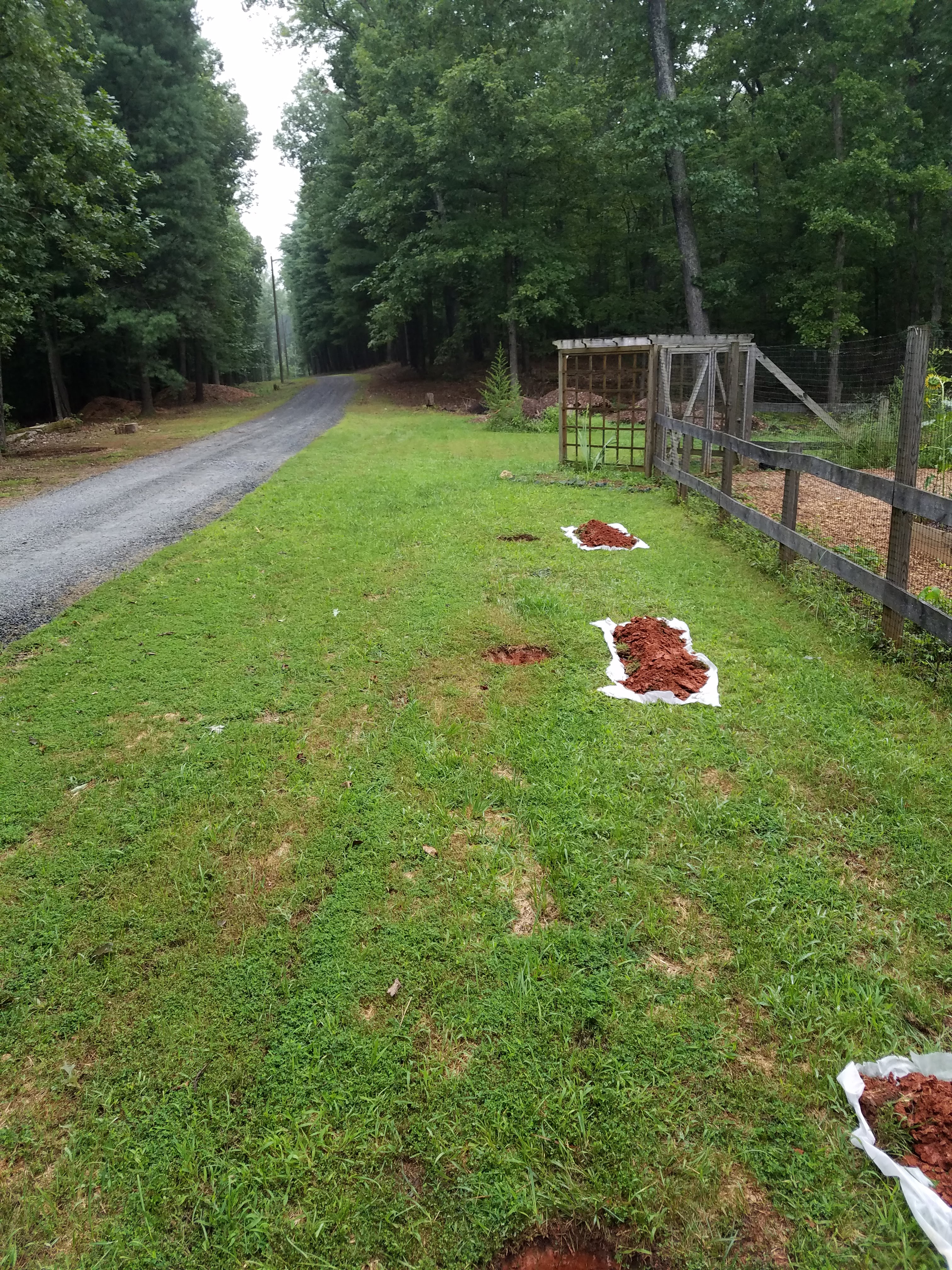
I dug three holes. As digging goes, this was not bad, nor did it take very long. Spacing them was easy. The fence posts were the right distance apart to allow for the 15-foot canopy there will be, and I dug the holes about eight or ten feet out from the fence posts.

ready2.jpg

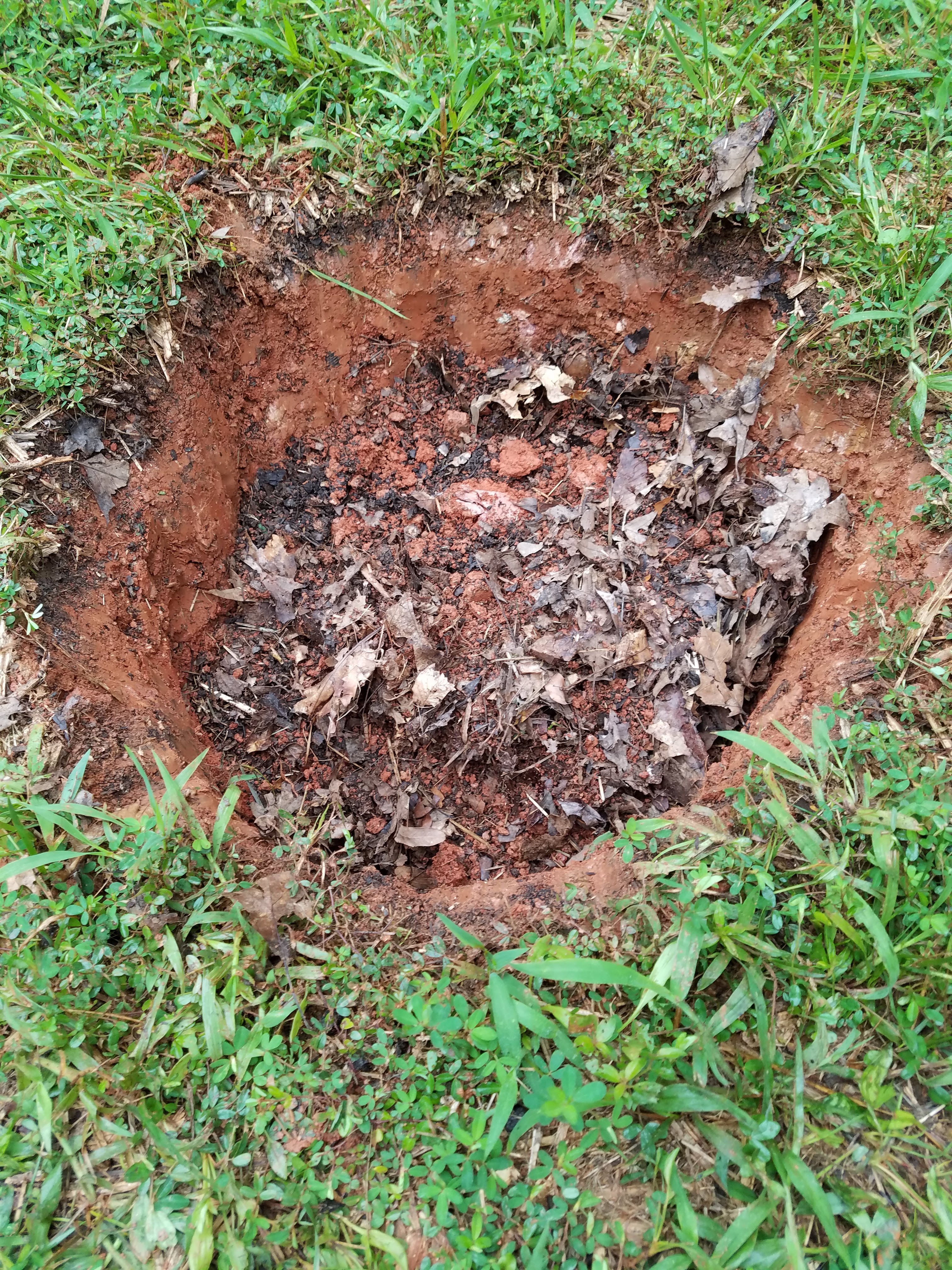
Into the holes I put chopped up leaf matter and some good compost mixed with the red clay. The leaves will break down and add nutrients later, the compost will add nutrients now, and the clay was there in the first place and can’t be all bad. How the early farmers in Virginia managed with this stuff, I have no idea.

leaf matter.jpg

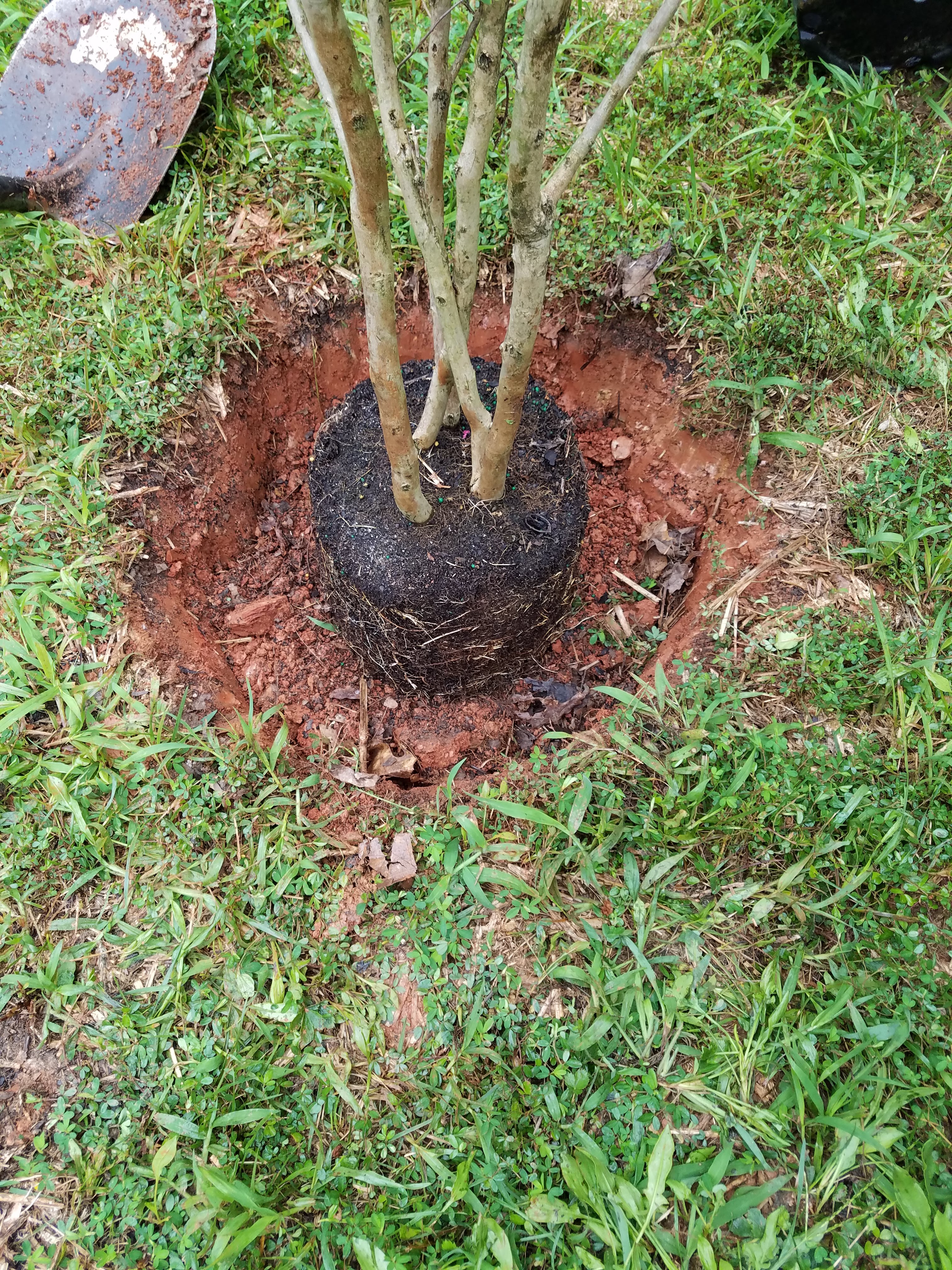
I broke apart the roots that were bound up in the pot (no wonder these were on sale) and introduced the tree to its new home.

in hole.jpg

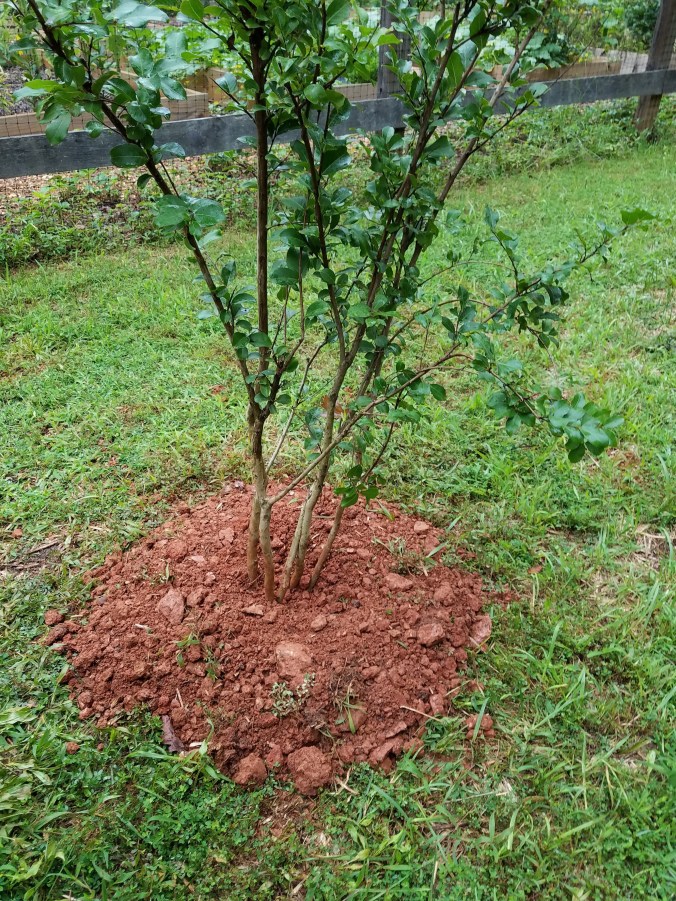
In the rest of the hole I put more leaf matter and compost and finally all that clay that was on the landscape fabric waiting patiently. This made a good mound around the tree but as the leaves decompose, it will settle.

filled in 2 (2).jpg

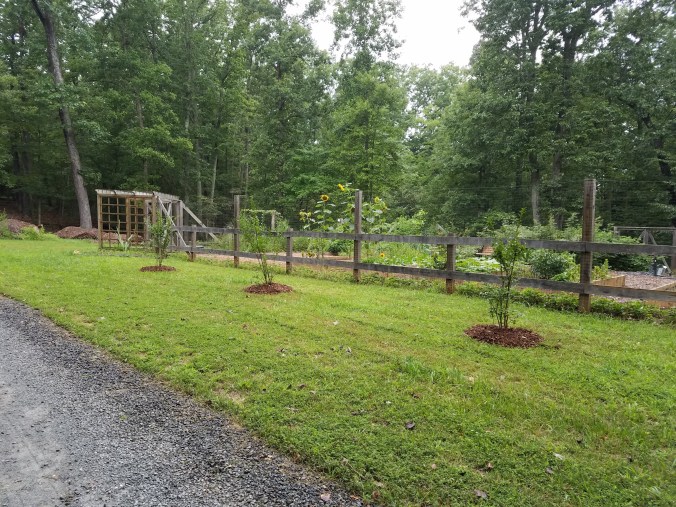
One at a time, till all three were in. Then mulch. Then water from the hose because all the while it still just misted. Then finished! Not till an hour or so later did the rain come. And I smiled. I think my crape myrtles are going to love their place of prominence. I didn’t get these in seven years ago (imagine how big they would be by now!) but they are in now. You have to start somewhere.

view 1.jpg

Just One Rhubarb Cobbler This Year

I love rhubarb. If my plants gave me lots, I would use lots. But they haven’t been doing well the past couple of years. We planted them five years ago among the strawberries because strawberries and rhubarb go together, right? The second year and the third year I had lots of rhubarb – oh, the cobblers we had! Now I wonder if possibly the combo works in baking but not in planting?

All I got this year is this amount. It’s not much. But it’s something, and something is better than nothing.

stalks

When you have only a little time, you spend it doing something you really like. When you have only a little money, you spend it on something you really want. When you have only a little rhubarb, you make the recipe you think is the yummiest! I will get enough rhubarb from my garden to make cobbler just once this year, and I will enjoy every bite!

My version of rhubarb cobbler is quick. A lot of the food I make is quick. It had to be, back in the day, and still has to be. When you walk an unboring path for a lot of years, every single day, you figure out that if you spend too much time on one thing, there is not enough time for another thing. There are always other things to do! And I want to do them too!

This many stalks of rhubarb made about 2 cups all chopped up.

cut up

I put it in a small bowl and poured about ¼ cup of my strawberry jam (the one that came out a little too runny) on it and mixed it up. I put it in my baking dish. You can see the bits of strawberry jam in there. As you might realize, the jam adds not only the strawberry flavor but also the sweet balance to the tart rhubarb.

mixed with jam

My topping is oats, flour, sugar, butter and cinnamon. It’s going to go right on top of this, so I opened my oats tin (I love my oats tin….

oats tin.jpg

…You can see it’s old. I think it was a promotional item 20+ years ago or so. I have been using it ever since. One of these days I’ll show more of my various beautiful tins.)

I took a handful of oats out of the tin. I’m afraid I’m not one for measuring much. The amount that fits in a handful is about right. I put that in the bowl that the rhubarb and jam had been in, and then looked down at the rhubarb and jam in the baking dish and realized I forgot to butter the dish.

Two choices now:

  • Put the rhubarb and jam in a clean bowl. This would mean I would have two bowls to wash.
  • Put the rhubarb and jam in the previously used bowl. This mixes the oats with the rhubarb and jam. But that’s ok too. So that’s what I decided to do. The oats will take up some of the rhubarb’s moisture when it cooks down.

I buttered the dish and put the mixed-up rhubarb, jam and oats back in it. By the way, these are “old fashioned” oats. I like them a little bigger – those finely chopped “quick” oats get too mushy.

mixed with oats too

Now for the topping. In the same bowl, which is now empty, I put a couple heaping tablespoons of sugar, same of flour and maybe about 1 ½ tablespoons of soft butter. My butter sits in a covered glass dish in my cabinet, not in my fridge. It always has. I have not died yet.

Oh, and another tablespoon or so of oats, just so some oats are mixed in with the topping. And a couple shakes of cinnamon. Mix this up with a spoon until it’s reasonably well blended, like “coarse crumbs” as they say in recipe books.

with topping

Put the topping on top and bake at 375 until it’s done, which means golden brown on top, probably about half an hour, maybe a little longer. My nose is telling me it’s almost done. I just checked it. Not quite. I like my baked goods a little more golden brown. This is what not quite looks like:
not quite

For someone else this might be perfect, and that’s ok too. I’m sure the rhubarb is cooked down already. Just waiting for the topping to brown up. I am just thinking: I could have added dried cranberries to this. That would have been terrific too.

Now, Louisa, if only we could sit down with this cobbler and a cup of tea together…

done

The Flip of a Toad

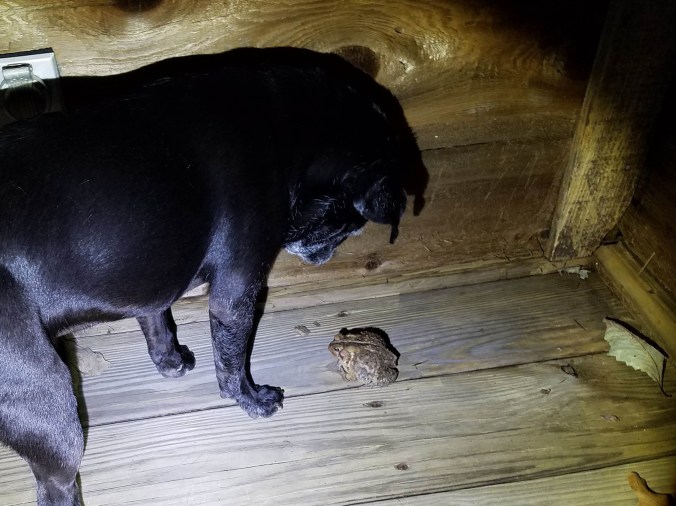
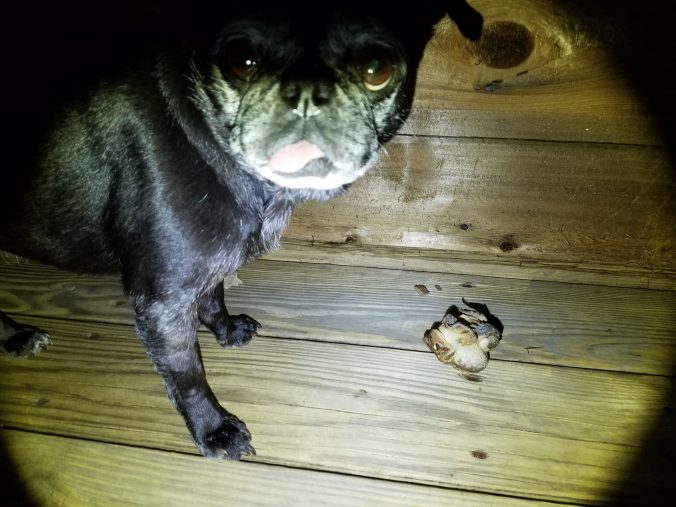
Can a dog hear a toad through an exterior wall? Can she smell it? I wonder about that because last night Coco jumped off the couch around 10:15 and gave me the let’s-go-out look. She does not normally do this. Normally I tell her It’s time, c’mon and she gives me the do-I-have-to look.

I oblige when she asks because she knows her own needs. I soon realized that if she had a need, it was not a need to do business but a need to play. Either that, or the need to play immediately commandeered the need to do business.

Right outside the door, in the inner corner of the front porch against the wall of the house, was Mr. Toad. We can safely assume it was the same fellow as last time when we found him next to the planter box, which from a toad’s point of view is just as much a wall. He likes walls.closer eyeing (2)

Coco did not waste time but went right up to him and began the whole domination thing again. Do you see who’s bigger, Mr. Toad? I am bigger. Make no mistake about it.

domination (2)

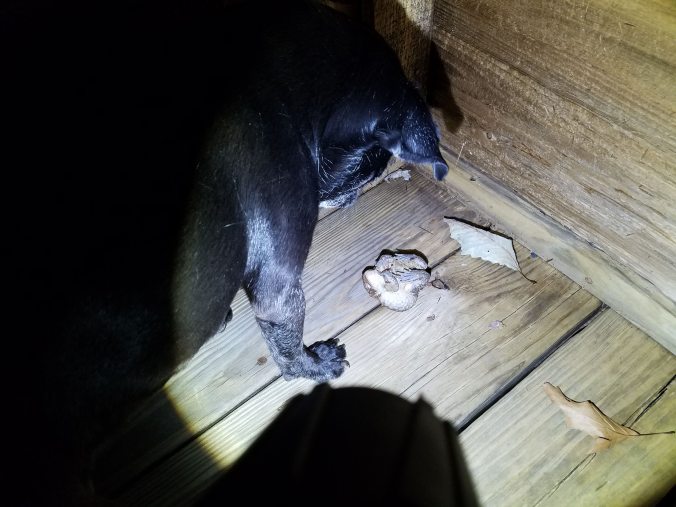
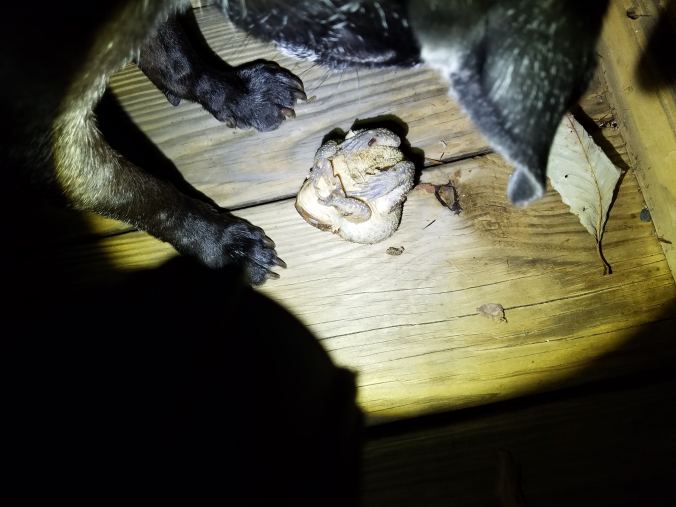
Poor Mr. Toad. Trapped and timid, he stayed glued to the spot for a few moments, then did a remarkable thing when Coco leaned in a bit too far. He flipped himself over! (Okay, maybe toads do this routinely and I am as clueless about them as I am about backhoes and biscuit joiners, but it seemed pretty remarkable to me!)

flipped 1

Coco couldn’t stand it of course. She had to get closer.

begging.jpg

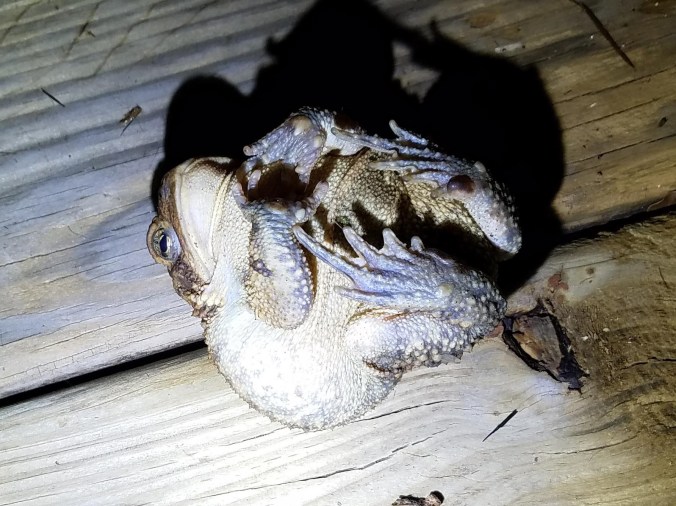
In case you have never seen what a toad looks like upside down, up close and personal, this is it. Complete submission. Please don’t hurt me. I’m just a little toad. I mean no harm.

flip close up (2)

This toad got me thinking about submission. Generally it gets a bad rap, but we do it all the time.

Submission: the action or fact of accepting or yielding to a superior force or to the will or authority of another person.

Life doesn’t work unless we yield to forces and authorities beyond ourselves.

  • Someone else designed and built the vehicle you willingly drive. You trust that it’s not going to fail or crash. Driverless cars will add another level of trust.
  • Someone else grew, harvested, transported and prepared the food you willingly eat. You trust that it’s not going to make you sick.
  • Someone else built the house you live in. You trust that the roof isn’t going to cave in and water won’t leak through the window seals and the electricity is safe.
  • Someone else guards your neighborhood or steps in when there’s serious trouble. You trust that you and your family can sleep safely at night.
  • Someone else cleans your teeth, prescribes your medications, oversees your medical situation. You trust that they will not hurt you.
  • Someone else watches your children, your dog, your elderly parents. You trust that they will take good care of those you love.

We are all a little like the flipped-over toad. His eyes are open, as ours should be. He is protecting himself as much as he can (limbs drawn in to cover his soft belly), as we do in our own way (whether we have soft bellies or not!). Why he chose to be on my porch instead of a potentially safer spot in the first place is another point we could ponder, but since we cannot ask him, and maybe it’s none of our business anyway, we will assume he exercised his best judgment at the time and that’s just where he landed.

Clearly this toad also understands that despite his open eyes and shielded belly, he is still highly vulnerable and, if toads can hope – a big if, I grant you – must hope for the best when the situation is precarious. So must we and should we, for we know that we in turn are watching someone else’s children or prescribing their medications or making their food or building their houses, and we know that we are doing it to the standards we would want for ourselves.

Remember not to be like the master builder who was at the end of his career and couldn’t wait to retire. His boss said to him, “I just need you to build one more house for me.” Reluctantly the builder agreed but because it was the last one, he didn’t care anymore. He went as fast as he could, took all kinds of shortcuts and did sloppy work. He knew there would be major problems with that house, but he didn’t care. It would be someone else’s headache. All this time, his boss did not see what was going on – he had always been able to trust this builder to do outstanding work. When the builder told his boss he was done, his boss reached into a drawer and handed him a key. “Enjoy your new home,” he said. “My gift to you for all your years of service.”

Coco would have stared at and possibly pawed at and tormented that toad for a long time, but at 10:15pm we are not out there for playtime. I tried getting her attention, but she just looked at me like Hey, busy here.

looking at me

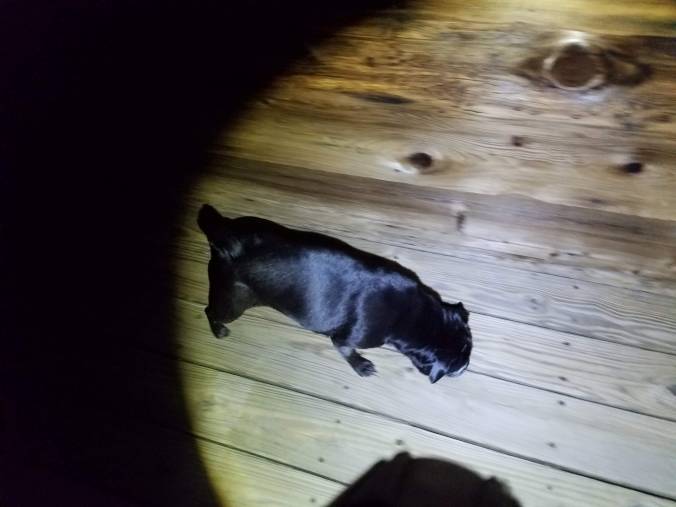
I picked her up and brought her to the grass. She did her thing and back up on the porch she trotted. I was a little disappointed in her nose because she did not head straight for the toad that, same as last time, had not used his window of opportunity to make a mad dash for a place of safety.

Where is it? I know it’s here somewhere!

looking for it

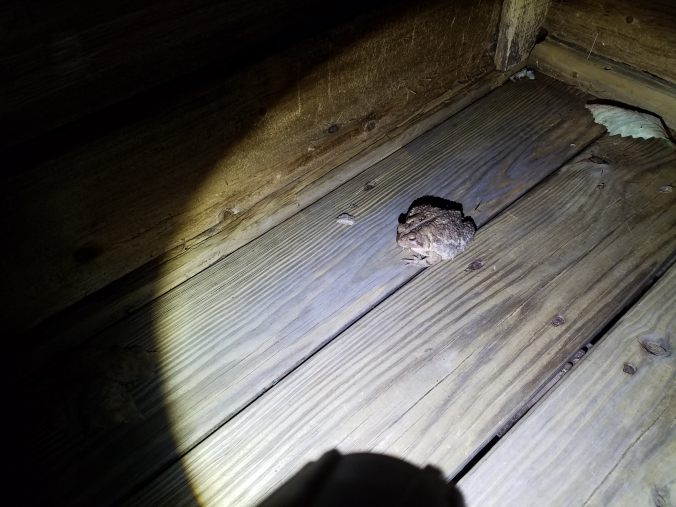
There is no place to hide in the inside corner of my porch (unless you are a blue-tailed skink of course, in which case you have all kinds of options, plenty of cracks to slide into). The toad was still there, but had gotten braver in that half minute, had decided to forget the whole upside-down, evoke-pity thing.

He had flipped himself back over and was going to stand up to the giant.

right side up

Coco got closer. Here we go again. What is it?

The power (domination!)?

The smell (yum!?)?

The intrigue (hmmm….)?

The weirdness (what the…??).

closer eyeing (2)

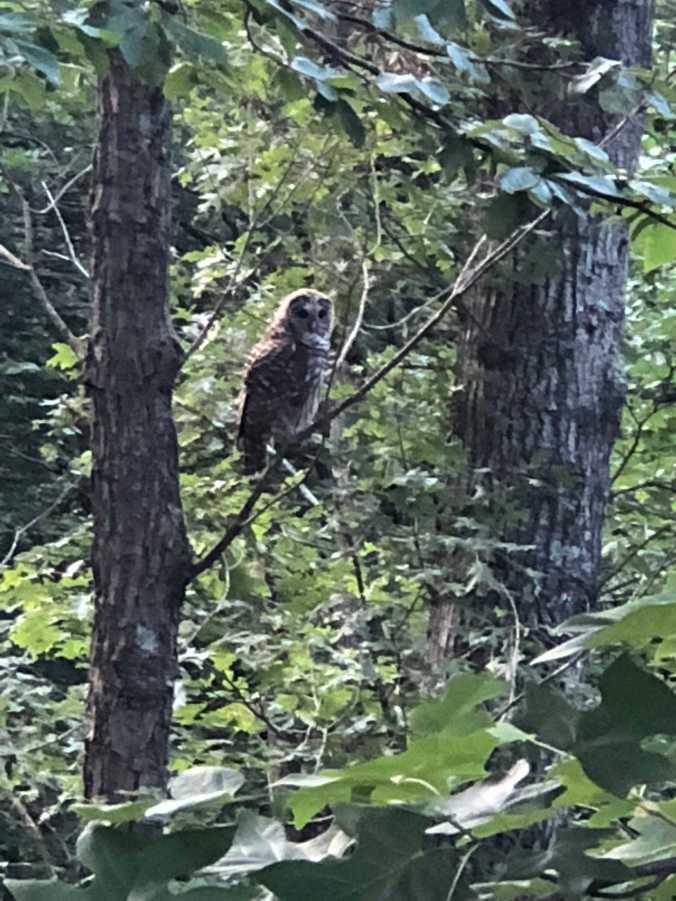
Coco doesn’t know it, but sometimes she’s the toad. So she better watch out! (And I had better watch her!) Just yesterday morning, my Airbnb cottage guest said to me as they were leaving, “Look, I have to show you what we saw last night.” And she pulled out her phone and showed me a photo clearly showing…

owl 7.29

… an owl in a tree just next to my house. It is not a small one. It has a powerful grip and very sharp eyes. I suspect it would not dominate Coco in the toying, tentative way that Coco dominates the toad. It would simply eat her.

Is it altogether safe in the country? No. Is it altogether safe in the city? No. It is altogether safe nowhere. Are we always strong? We are strong only sometimes, and often only for a little while. Do we always have to yield to forces and authorities beyond ourselves? No. Like the toad – even when we are upside down – we keep our eyes open and our self-protection mode in place, and usually things work out. We do our best. We eat well, stay healthy, put our best foot forward, make good choices, associate with good people and contribute our bit to the well-being of our family and our community. We believe that (and for the most part it is true that) others are looking out for us as we are looking out for them. Like the toad in his vulnerable position, we sometimes just have to hope and pray for the best. I don’t know if toads pray, but I’m sure they would do that too if they could.

“C’mon, Coco. Leave the poor toad alone! We’re going inside.” Given the choice of staying outside by herself in the dark (not that I would leave her there!) or coming into the house with its cushy couch pillows, she made the smart choice. Good dog.