Watching Girls Watching Whales

We got lucky at Zoo Atlanta on Sunday. We watched the elephant munching his lunch, the tiger slinking as only tigers can and the gorillas lumbering about, vying for status. The bald eagle perched as if posing for us just a few arms’ lengths away, the naked mole rats moved bits of straw about and the baby pandas sat facing us in their black and white perfection. I love to see their sleek bodies, fluffy fur, insane talons, unique markings, hilarious expressions and fascinating form. I want to see their bulk and their grace, the way their heads are shaped and how their eyes connect (or don’t) with mine or how the wind makes them cock their heads to catch a whiff of something. But in the middle of a hot and humid summer day, I was also not surprised to see a lounging lion, snoozing sun bears and tired turtles.

An aquarium is a whole nother thing. Everything is moving at an aquarium. Optimal water temperatures can be maintained. If you go to almost any of the tanks – jellyfish, otters, sea horses – you see bubbles in the water, fantastically shaped and colored marine life and almost continual movement. For these animals, moving sleekly and majestically through the water is part of staying alive. For the people watching them, that movement is mesmerizing.

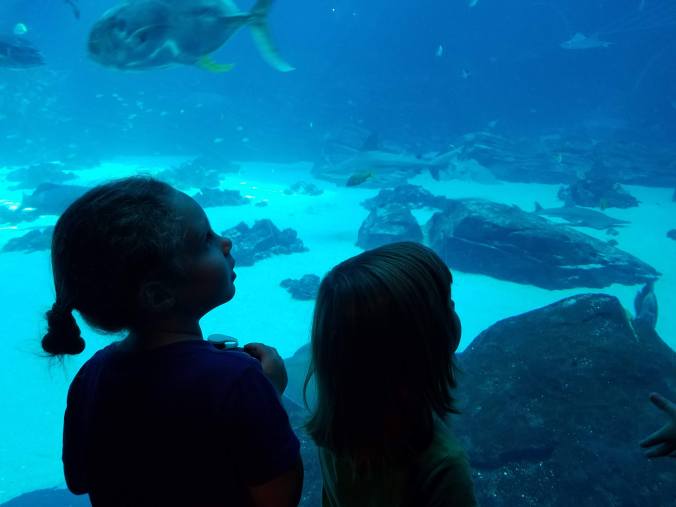
Case in point, my darling granddaughters, not only mesmerized on Saturday at the Georgia Aquarium,
beluga2

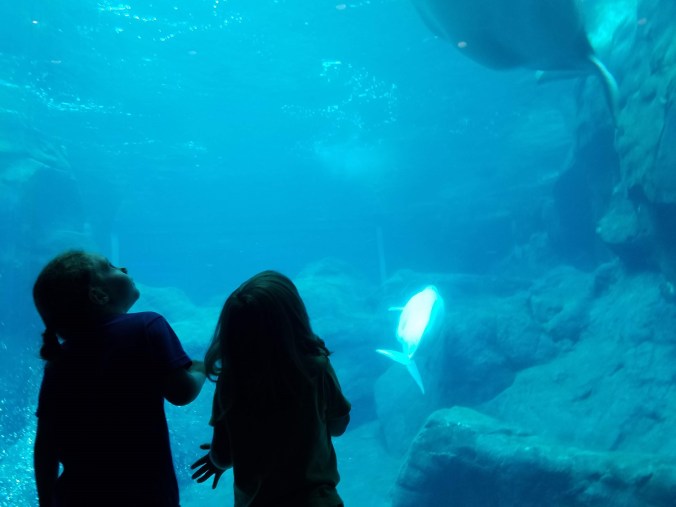
but also genuinely thrilled! There it goes, one of the beluga whales making another round, flipping over, spinning, gliding, accelerating, diving, playing, smiling, peeking at us, showing off!

beluga 5

The belugas are extraordinarily graceful, obviously powerful, delightfully cheerful. These gigantic, all-white creatures from the Arctic Ocean are not small. I’m not sure of the stats on these individuals, but belugas can get to be 18 ft (5.5 m) long and up to 3,530 lb (1,600 kg). They can swim backwards, sideways and upside down. I loved watching them, but I was drawn even more to the five-year-old and four-year-old in my charge for whom nothing else in the world existed at that moment. The girls alternately oohed, aahed, squealed with delight, pointed and exclaimed, “Whoa! Look! Look!”

beluga6

Other marvelous creatures inspired our awe as well. The sea urchins that you touch with two fingers together, the sea dragons that look like they could breathe fire if only they weren’t under water, the massive whale sharks that move hauntingly among the groupers, sea turtles, manta rays and hundreds of others, the dolphins that eject like rockets out of the water and touch a ball suspended 30 feet above them – these animals are absolute wonders of our world. I’m grateful to all those many people who worry about them, care for them, advocate for them – very grateful – but I am most grateful that what they do makes it possible for me to bring two sweet, wonderful little girls to see them, marvel at them, delight in them.

When is the last time you were awed by a majestic animal showing its stuff? For an even more awesome experience, take a child or two along. Watch them stare in amazement, watch them touch the sea urchins with two fingers carefully pressed together, listen as they recount the day and tell you from their experience that “You can’t touch the belugas!”
beluga7 (2)

Tea and Thatch

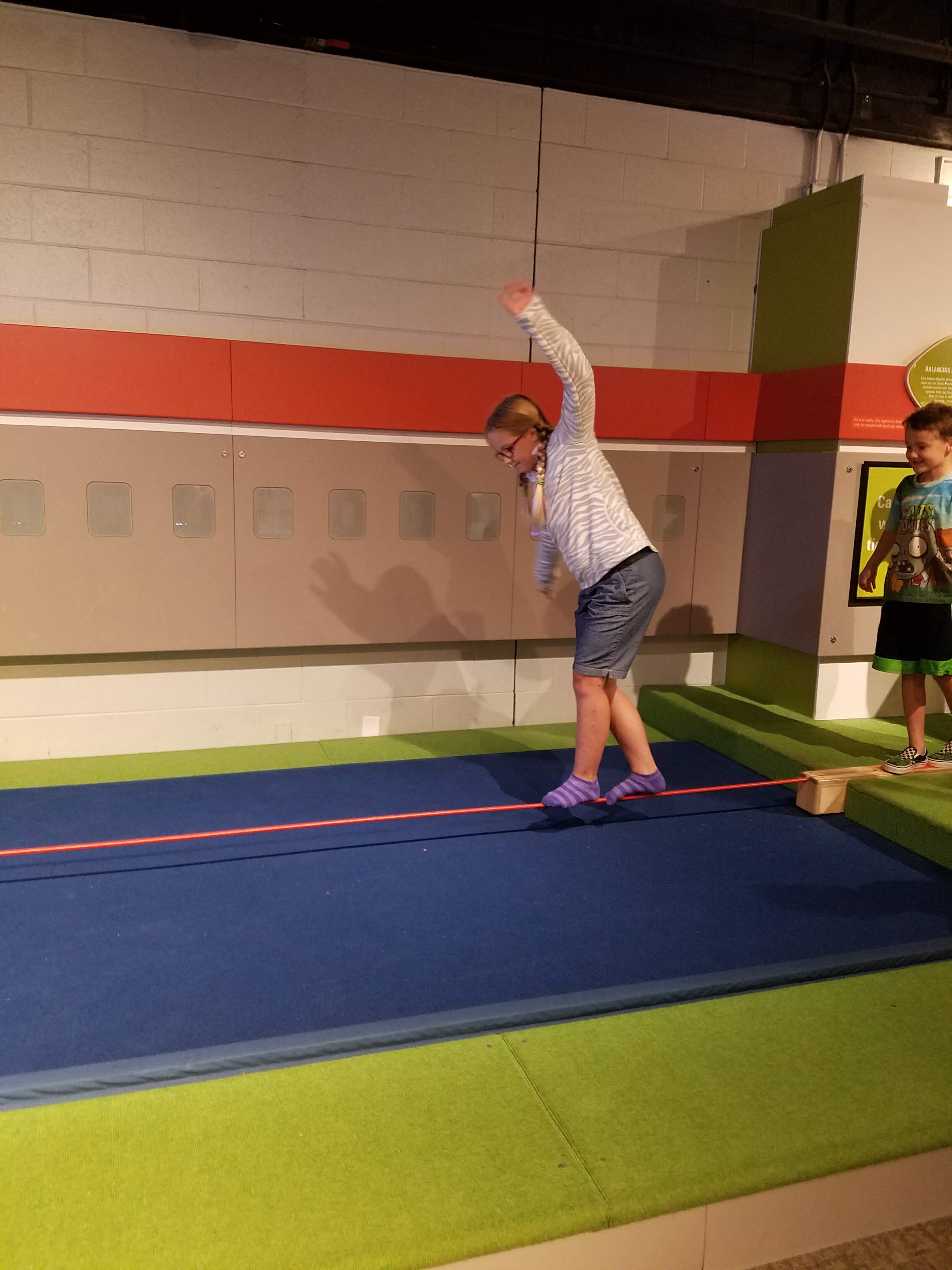
When you have your ten-year-old great niece staying for a week, you think about what activities might be fun. On Wednesday we drove to the Science Museum in Richmond especially to see its “Animals Inside Out” exhibit. Kaileena said the best part of that outing was, you guessed it, the tightrope!

tightrope.jpg

I asked her what else she liked that day and she did not hesitate in the least: the cartwheels on the back deck that she did when we got home! This reminds me of a family I knew who took their two daughters on a special trip to Disney World, and the thing the girls liked best was – yup – the pool at the hotel!

You do what you can. You hope for the best.

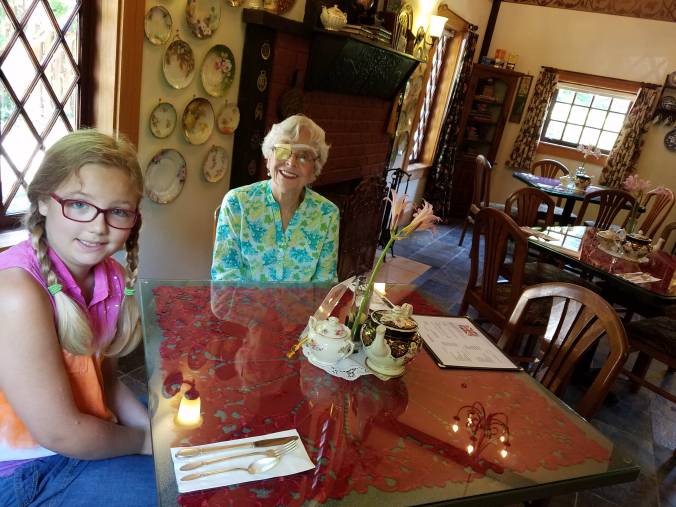
On Thursday we drove west. The destination was Beverley’s summer home where Kaileena got to slide down a natural water slide in a rushing mountain stream (a highlight of the week, to be sure). On the way we stopped for lunch at the Anne Hathaway Cottage Tea Room in Staunton. The interior was elegant in an old-world way – stone floor, dark wood fireplace, fine old china decorating the walls – utterly charming. My beet and strawberry salad, with feta cheese and a creamy balsamic dressing, was divine. Mom’s and Kaileena’s sandwiches were equally impressive and delicious: cream cheese and sliced strawberries on one, and ham salad with pineapple on the other. If you want sugar in your tea, you use the small tongs to pinch a lump and drop it in. You can see the tongs hanging off the sugar bowl on the table.

tea room interior.jpg

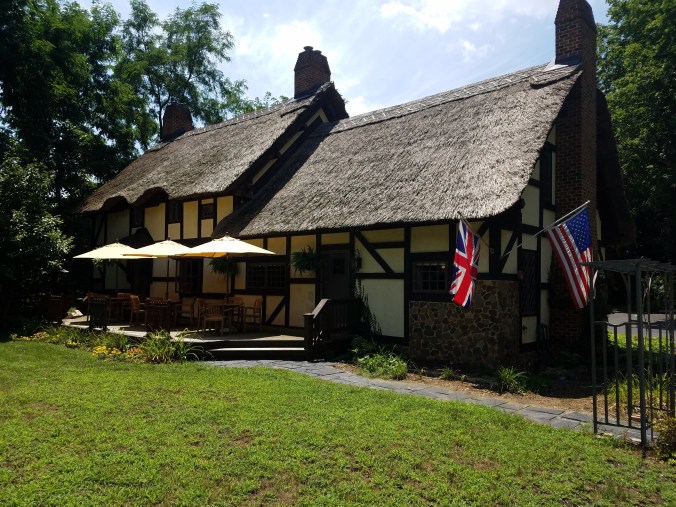
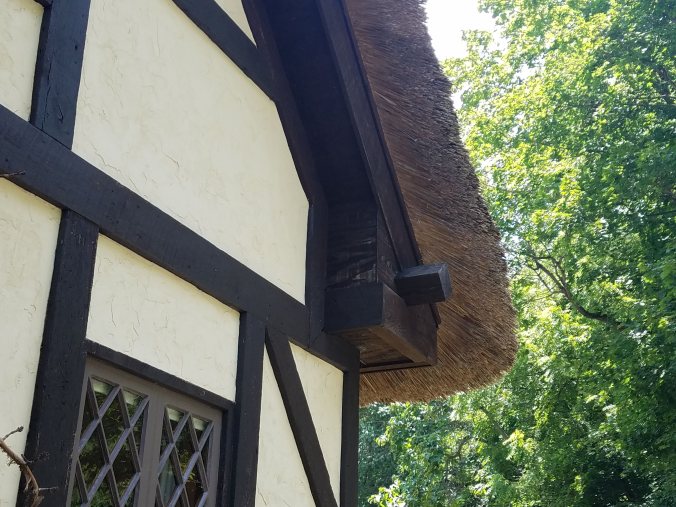
Set back from a fairly main road, almost hidden, the cottage itself looks as authentic as it is. That roof is thatch. In addition to being the most common roofing material worldwide, thatch is apparently making a comeback in higher-end circles on account of being lightweight, versatile and waterproof. A great variety of wild and cultivated grains, including wheat and rye, can be used. The wheat that makes the straw that was historically used for making roofs is the same wheat that gave grain for making bread.

tea room1.jpg

The owner proudly told me that the roof of this cottage in Staunton is likely to last 30+ years.

thatch.jpg

When I was a child in grade school, we got a little Scholastic Books catalog every now and then, and Mom allowed me to make some choices. One of the books I picked out, which probably cost 25 cents, had a story that included a thatched roof. I could not help but think of that story when I saw this thatched roof. Lines of dialog were etched in my mind. The story affected me hugely and I remember it well, though its title escaped me.  Its message undoubtedly helped shape the way I think about wisdom and age to this day.

The book itself did not survive my childhood. As I had children of my own, and they got a little bigger, I reflected often on the part that story had played in my life. Finally, sometime in my thirties, I wrote to the Library of Congress to see if they could help me find it. This was back when you wrote longhand letters on real paper and waited weeks for a reply. This was way before search engines.

I wrote to them what I remembered from the story, a summary as well as some lines of dialog. In less than a month, they sent me a photocopy of the story from an anthology of folk tales. How thrilling it was for me to read the story again, twenty or so years later. Some of the lines I had remembered verbatim.

This is how I remember the story. Maybe it will be as powerful for you as it was for me.

Long ago and far away, there was a rural village where the people had always done things a certain way. They followed their traditions strictly and kept close tabs on each other. For the most part their way of life worked very well.

One of the expectations of life in this village was that you must be productive and useful. When you got too old or feeble to be able to contribute your share of the work, you were put on a sled and brought to the woods in the middle of the winter and left there to die.

In one family, the grandfather was no longer able to work. His legs hurt and he was not strong. His son knew the day had come to follow the tradition of the village, even though he didn’t like the idea. He put his father on the sled and strapped him in. The grandfather said nothing because he knew and accepted the custom. But all the while, the grandson was watching.

“Daddy,” said the little boy. “Are you taking Grandfather out to the woods?”

“Yes, son.”

“Don’t forget to bring the sled back.”

“Why?”

“Because someday I need it to take you to the woods.”

This gave the man pause. The idea of his father – or himself – freezing to death in the cold, dark woods made him want to defy the custom. But he knew that if he did not take him, someone else in the village would do it. The only other choice was to hide the old man.

From that day forward the old grandfather lived in the attic. He could not risk being caught, so he did not make a sound and he could no longer take walks in the street or sit in the full sun. But he lived. His grandson brought him food and drink.

This went on for several years. One spring, the boy began to bring less and less food. When his grandfather asked him why, the boy said, “The crops were so bad. We have only a little food left and we have no seed grain for the next crop. It’s terrible. We all will starve.”

“Something like this happened when I was a little boy too,” the old man said. “Tell your father to take the thatch off the roof and thresh it again. There will be seed in it yet, and that seed will produce a crop.”

The father did what the grandfather suggested, and sure enough, there was seed for the next crop! When his neighbors saw what he did and saw his success, they said, “How did you know there would be seed yet in the thatch?”

The man knew he had to confess. “I didn’t know, but my old father did. How fortunate for all of us that he is still alive. His memory and his wisdom have saved us all.”

After that, the people changed their ways. They did not take their old people out to the woods any more. Instead, they cherished them, honored them and took care of them because now they knew that “useful” is not just about how much you can work.

The little boy was especially proud of his grandfather. Sometimes they would sit together and enjoy the full sun.

Mushrooms from Outer Space

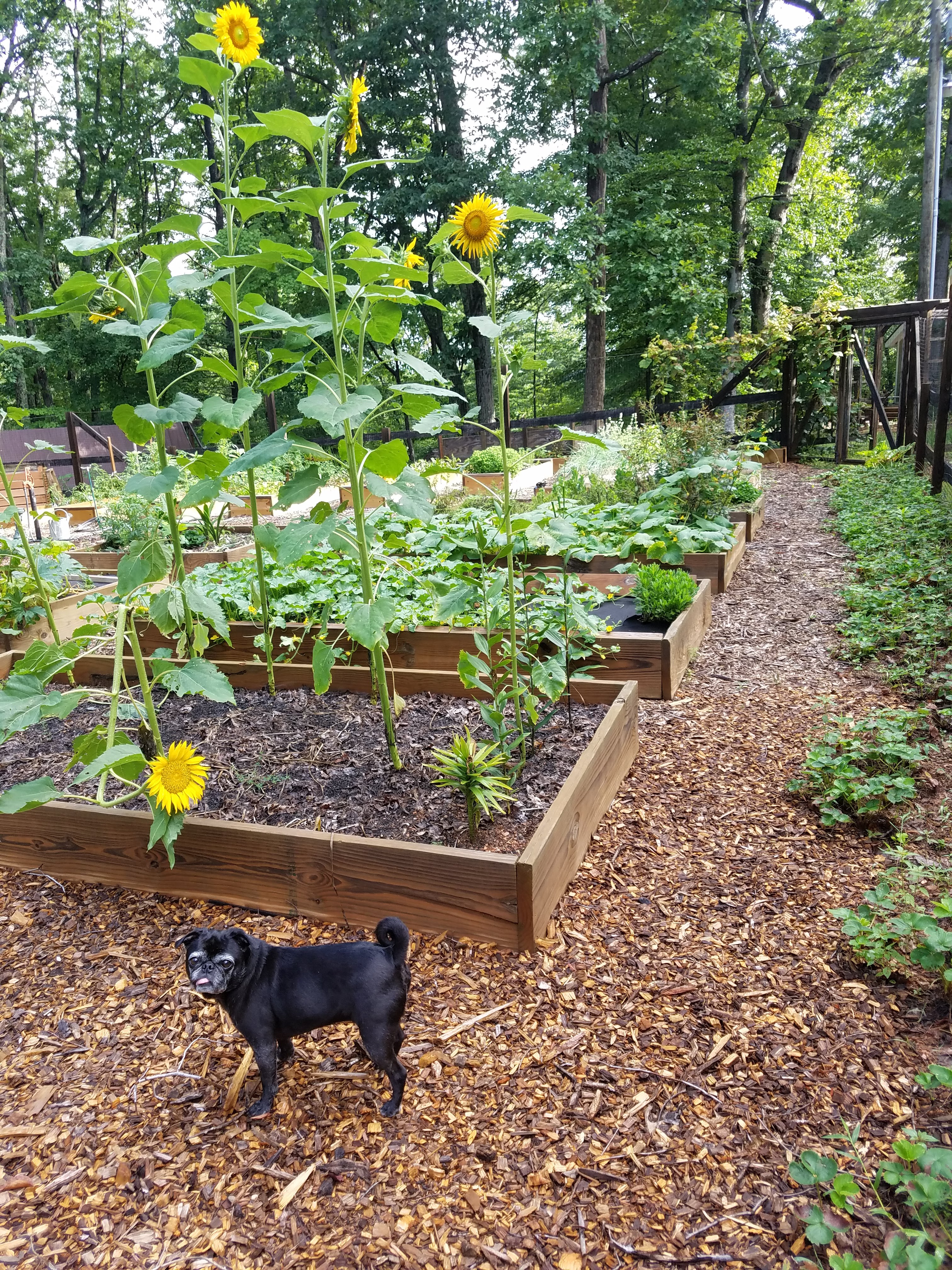
The sunflowers caught my eye. Coming down the driveway late yesterday afternoon, I had to stop the car in front of the garden and go look at them. Coco had come along for the ride and hopped out to go have a sniff around too. Look, one of the flowers is even (sadly) fallen over, yet it still turns its face toward the sun! What a lesson in that alone!

sunflowers.jpg

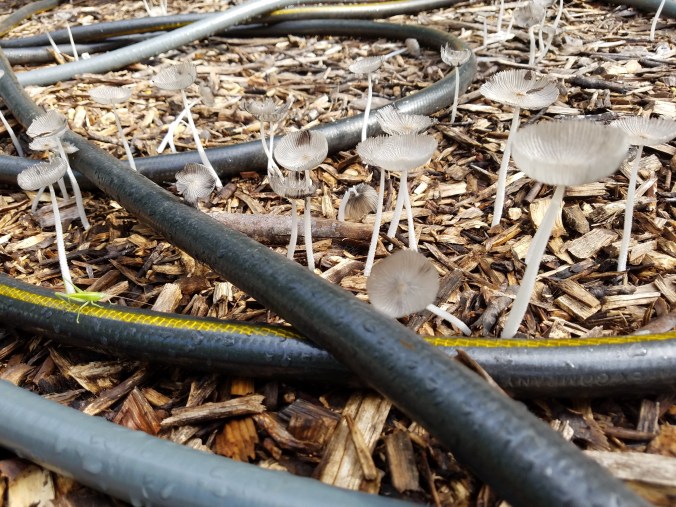
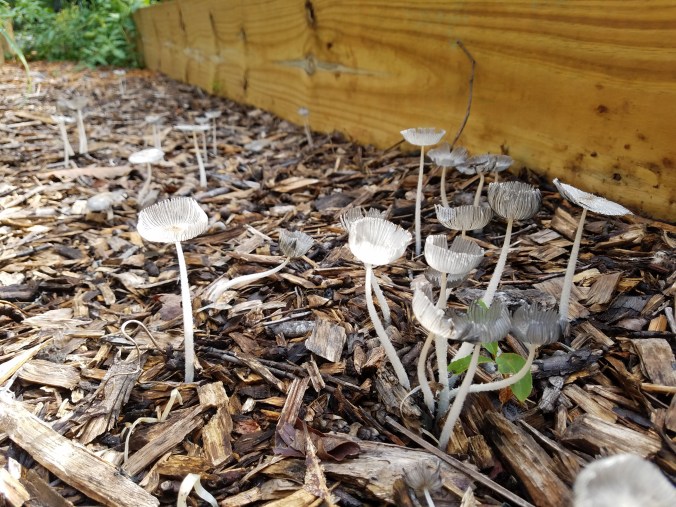
Naturally I can’t just take a picture of the sunflowers and then get back in the car. I remembered the tomatoes, and decided I also had to quickly check them. When I got there, I noticed something strange. All the rain we have had brought visitors of an otherworldly kind. This little colony of mushrooms was restricted to the area near the water pump, on the way to the tomatoes, where for some reason I am content to leave the hose a mess.

Check it out! These little volunteers are so delicate.

funky mushrooms 2

Forgive me, I just watched The Princess Bride (a thing to do with a ten-year-old visitor), so in my head I hear:

Inigo: The mushroom heads look just like *lace*

Fezzik: I think they come from outer *space*

I could easily crush them, easily overlook them, easily dismiss them. Instead I have forgotten about my car left in the middle of the driveway (and the ten-year-old in the car), and find myself fascinated, entranced, intrigued.

Where did they come from? Why are they here? Why are they only here and not growing up from the rest of the mulchy areas in the garden? Why do they cup their heads like that? Do they serve any purpose? Will they be gone tomorrow?

funky mushrooms

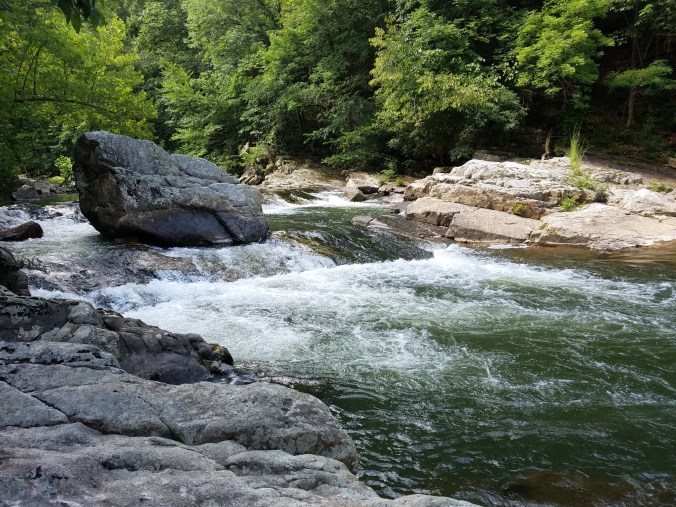
Sometimes I ask myself how much I miss, how much beauty exists all around me that I never see because I am too busy with this or that. Today I did not have to ask. Today did not lack for breathtaking beauty. I got my fill. We visited a friend in Williamsville, in the western mountains of Virginia more than an hour beyond Staunton. Behind her house is this incredible mountain stream. I don’t know the words rich enough to describe it.

mountain stream (2)

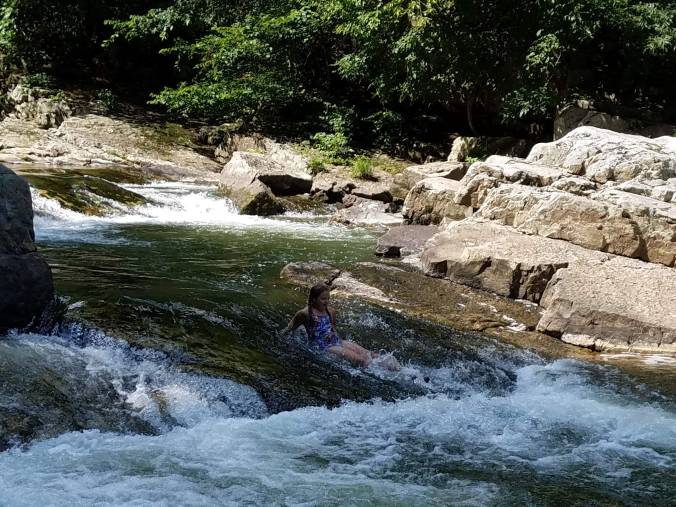
Kaileena was not the least concerned with descriptions — she found it to be a perfect natural water slide!

mountain stream K

My adventurous 83-year-old mom walked a hundred yards or so along a not-so-easy mountain path to get to the not-so-easy stone steps leading to a rock to sit on in this little pocket of paradise. Bravo, Mom! She doesn’t want to miss anything either.

When you think a thing is very cool, it’s even cooler when someone else thinks so too. We all were awestruck at the swimming hole and waterfall. We listened to that water rushing over the rocks the way it’s been doing for countless generations. How many kids have slid down that rock the way Kaileena did today? How many beamed like she did every time she landed in the froth?

mountain stream K3 (2)

Rivers like this don’t get old or tired. The water keeps coming, keeps flowing, keeps rushing. Kids keep having fun. Sunflowers keep turning toward the sun. And mushrooms have landed from outer space!

You think the day has given you enough and you are grateful. But it is not finished. On the drive back we watched a mother wild turkey and her two little ones prance across the road in front of us. Many adorable black calves walked closely to their mothers in the green fields of the farms we passed. A raccoon did not see the danger of dawdling along the shoulder of the road. And just as I turned into the driveway, two deer leaped gloriously within our field of vision. Kaileena let out a breathless Ohhhh! as she watched them bound into the forest. I hope she remembers today.

Pies, Galettes, Bread and …Cartwheels?

I have been cooking and baking for a long time. When I was a kid, we always helped my mom make the salad or stir the pot. When I was 16 I got a job at a French restaurant called Picot’s Place in Hamden, Massachusetts, and learned to make Beef Wellington, French onion soup, chocolate mousse and the best omelets ever. I wanted to learn to be a master chef and was accepted to the Culinary Institute of America in Hyde Park, New York. Before I turned 18 I had worked in the kitchen at a German restaurant, at a country club and, for part of a summer, at a little country inn in Bavaria. Starting in my 20s I made food for my family all the time.

What on earth this has to do with cartwheels is a good question. Getting there…

Today was a baking day with Kaileena, my ten-year-old great niece. She said she wanted to make something like a tart and had mentioned swirl bread as well. A wet front has been coming through our area, so on this rainy July day, we picked up Mom, got what we could from the garden before the skies opened up, and headed for the kitchen. We decided on plum galette and cinnamon swirl bread.

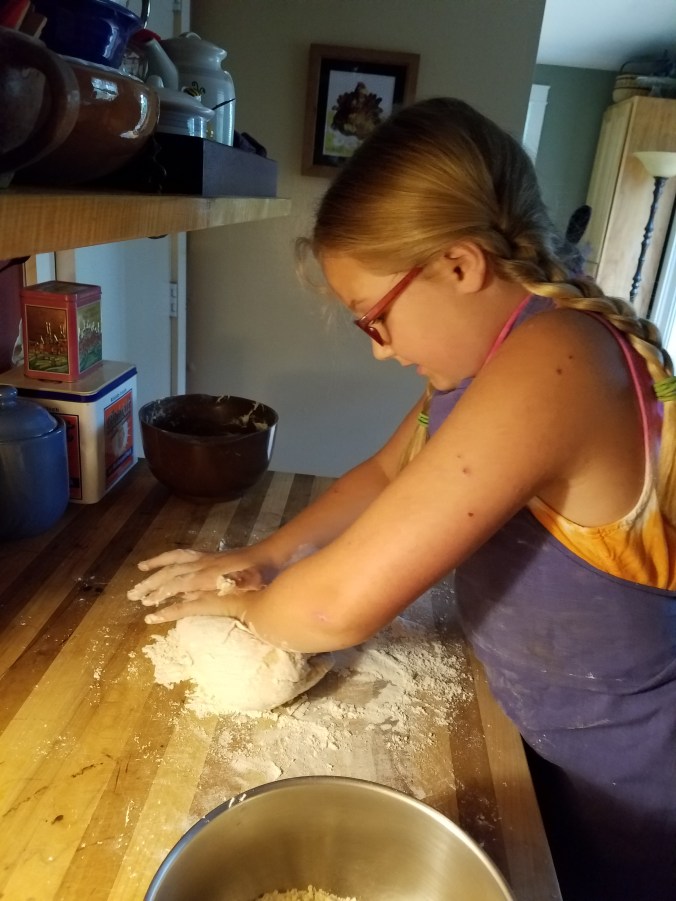
Kaileena has helped make pies at home at Thanksgiving every year but had never made any kind of yeast bread before, not that she remembers anyway. She helps a lot in the kitchen at home, loves watching cooking shows and is very comfortable in the kitchen. Nonetheless, kneading bread dough until it is smooth and elastic, incorporating enough flour but not too much and keeping yourself and the kitchen from becoming a gigantic mess is no minor effort.

Kaileena kneading bread dough

“Wow!” she said upon seeing that her dough had risen the way it is supposed to.

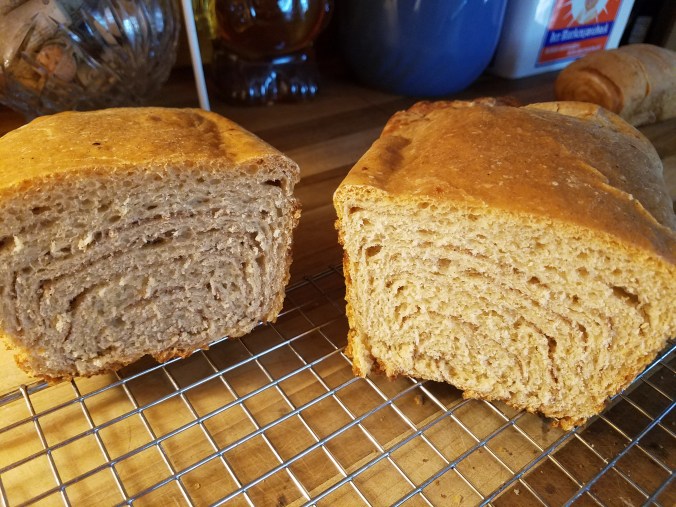
And oh how yummy the bread was, lightly toasted, a few hours later with its delicate swirls and hint of cinnamon…

cinnamon swirl bread.jpg

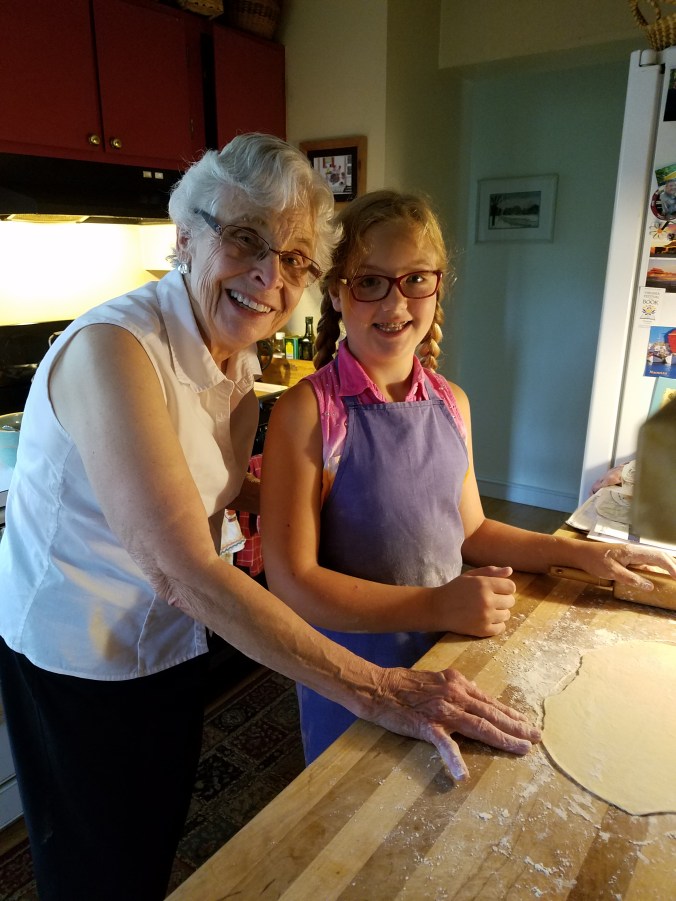
Rolling out pie dough so that it doesn’t stick to the counter, is the right shape and the right thickness and then transfers nicely to the pie dish takes some doing as well. Kaileena had the distinct advantage (and pleasure!) of working alongside her great-grandma.

Mom and Kaileena rolling out dough

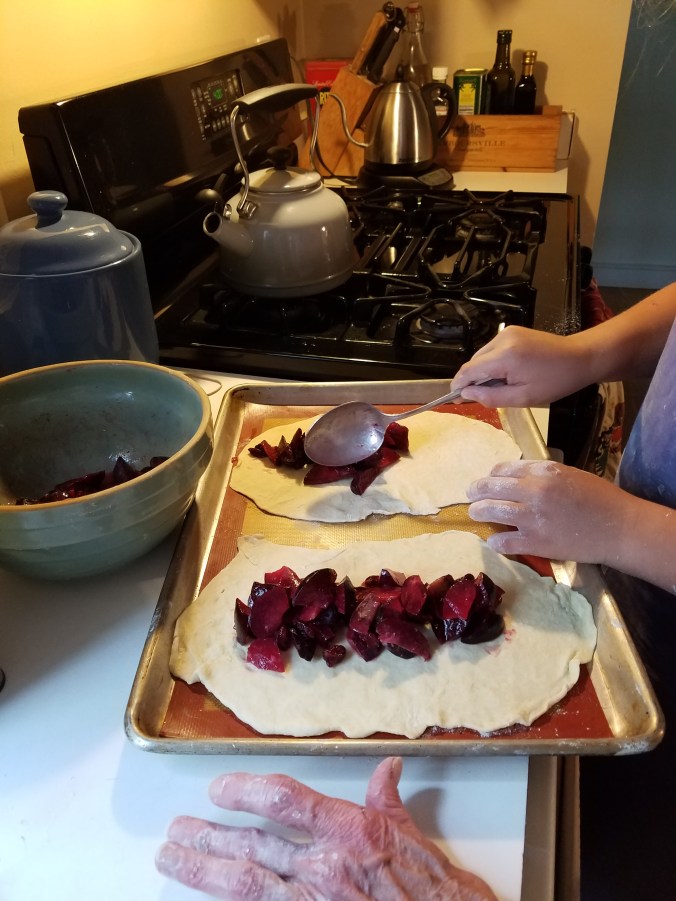
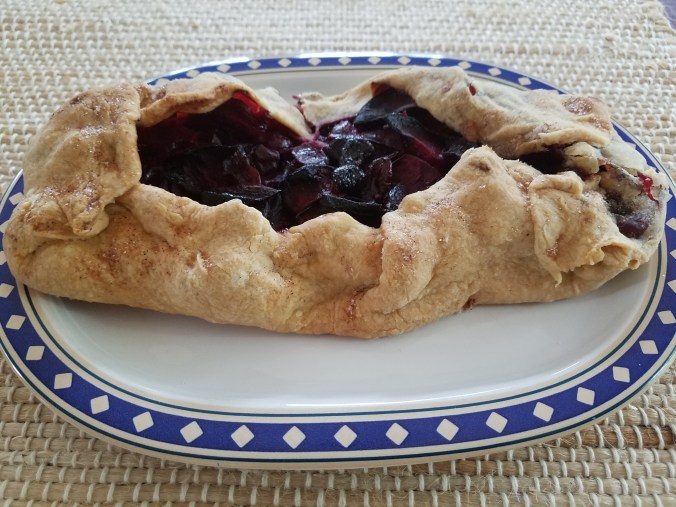
She learned what a galette is – a free form pie, in this case filled with pieces of plum and a few dried cranberries, mixed (as with any fruit pie) with a little sugar for sweetness and flour to bind,

filling galette

and baked to golden brown!

plum galette.jpg

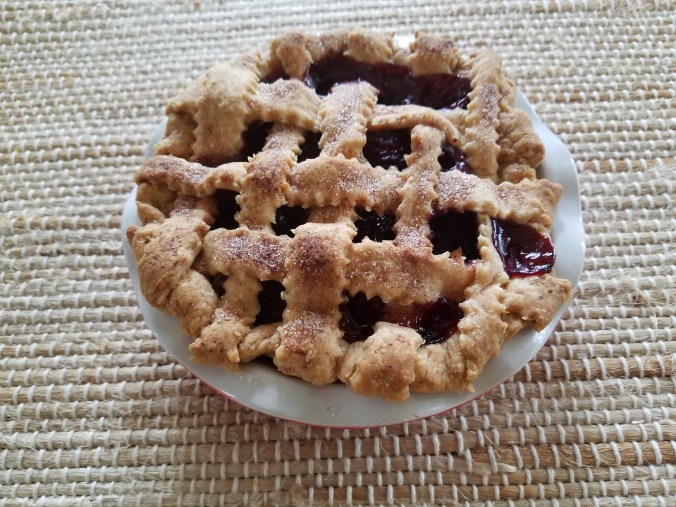
She even learned how to put a lattice top on this little pie (which did not last long)!

plum pie.jpg

Have you ever tried to put a lattice top on a pie? You start with rolling out a piece of the dough as thin as your bottom crust. A tool called a pastry wheel (which we affectionately in my family call a Raedle) is used to cut the dough into thin strips that have a zigzag edge. You start with two strips laid across the middle of the pie at right angles to each other, then add one strip at a time and weave them together working outward – over, under, over, under – and then another strip in the other direction until you have covered the pie. Crimp the edges and into the oven it goes. As they say, easy as pie!

If you have never made a pie, or put a lattice top on a pie, it’s a little like doing a left-handed cartwheel if you have been doing them right-handed or doing a right-handed cartwheel when you have been doing them left-handed – harder than it looks! Or like signing your name with your nondominant hand. Or like walking up stairs backwards or trying to have an intelligent conversation in a foreign language you learned in high school and never quite polished. In my case it’s like using a biscuit joiner – a woodworking tool that has nothing whatsoever to do with making yummy biscuits! I think about how cool it would be to make useful and beautiful things from wood, and I’ve watched other people do it many, many times, but doing it myself is oh so different!

If you do a thing often and are very practiced at it, you develop an ease, a finesse, an effortlessness. I think of Mark doing a drop shot, Brad or Lincoln or Ernie building anything with wood, Marie taking photos, Samuel doing a handstand, Kim holding a preemie, Claudia making jam. It’s easy to forget how many steps are involved when a given skill is broken down, how awkward and slow you (you too!) used to be back when you had not devoted so much time to developing and practicing it.

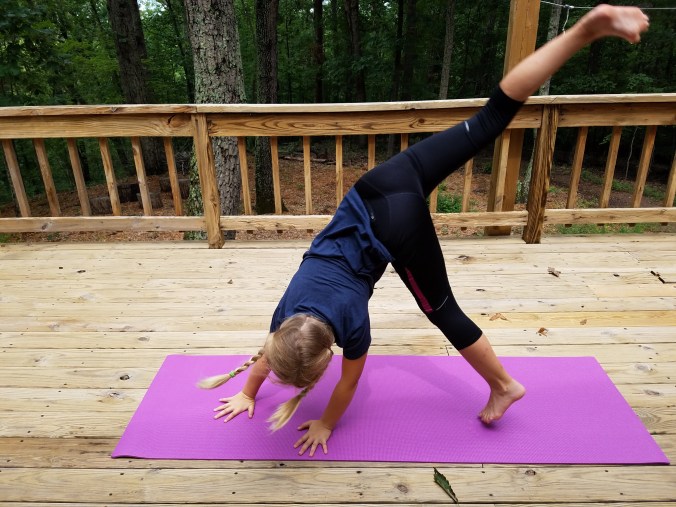
Doing a cartwheel, for instance, involves lunging with your dominant leg in front, then in one smooth motion putting your hands on the ground shoulder-width apart and turned 90 degrees, kicking your back leg up and over followed by your other leg and landing in a lunge facing the opposite way you started. That’s a lot of steps. Not to mention keeping your weight over your shoulders when you are upside down or keeping your legs straight.

Sure, that’s doable, right? This is Kaileena, who is not a gymnast, in mid-cartwheel on her dominant side.

Kaileena cartwheel

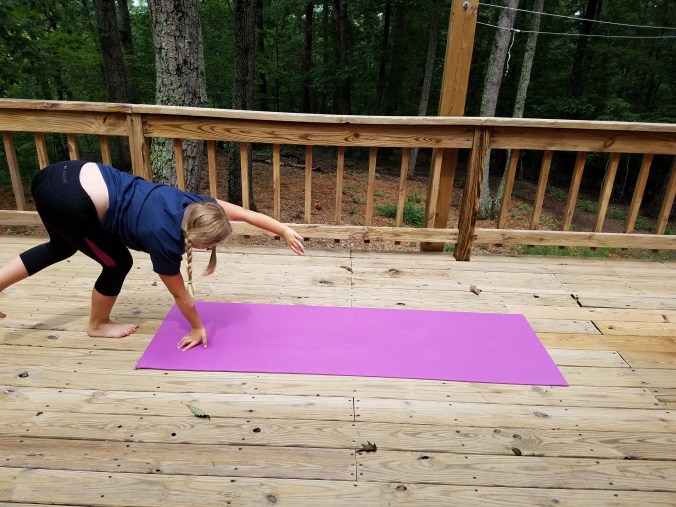
And this is her non-dominant side.

Kaileena cartwheel 2

Wait, what? How do I do this? It felt totally awkward to her, but no amount of awkwardness prevented her from wanting to try it again. And in one short session, that cartwheel improved considerably! Luckily, gymnastics is not a required activity for most of us.

As we get older we see the cycle of learning more clearly. People of any age can be eager and energetic but also fairly clueless about the how-to or the why, and certainly lacking in high levels of skill. Others come along to guide, instruct and encourage.  As learners we get the joy of doing something new, which is not only exciting but also feeds on itself and makes us eager to learn something else new. We also get what it feels like to be the novice so that we don’t get too impatient with the novices when we ourselves are on the guiding side. As guides we get the joy of passing along some of our sometimes-hard-earned knowledge and skill, and seeing someone else enjoy a thing maybe as much as we do, as well as carry forward a method, a style or a tradition.

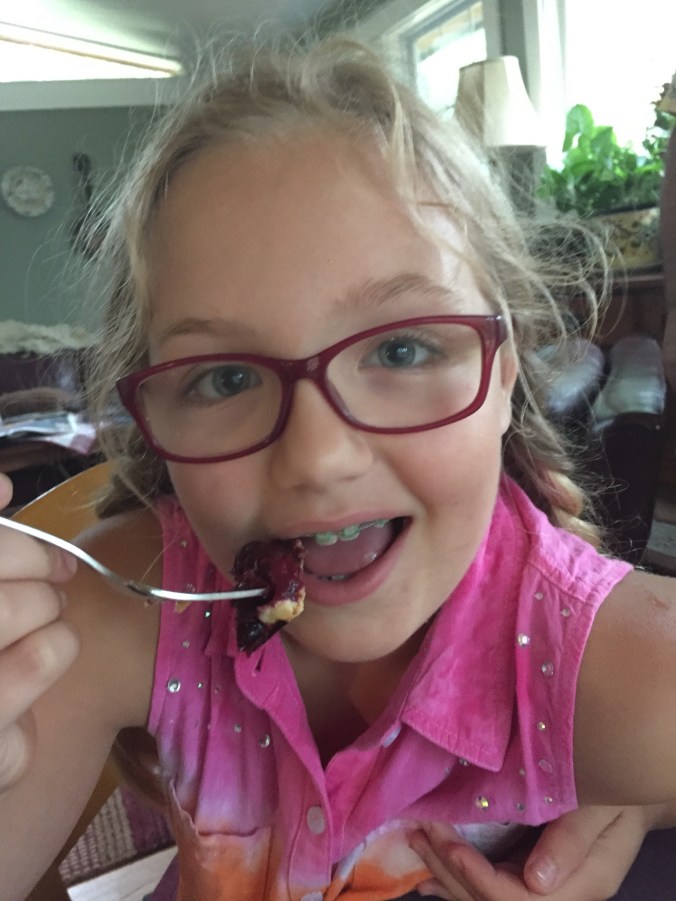
I love this cycle. I love being in some things on the learning side and in some things on the guiding side. I got to make a beautiful red bench with my uncle’s patient help, and with my help and Mom’s, Kaileena got to make a scrumptious pie. For this happy face, I’ll guide her any day!

Kaileena and pie