The Rodbusters

Do you ever wonder how parking garages can hold all the weight of the cars? For me it’s one of those things – like open heart surgery or jet engine maintenance – that has science and skill behind it but is in that large set of things I will never understand. I know I just have to trust that the people who do this work do it right.  As you carefully drive from one end to the other of a parking deck, making tight turns at the ends to get to the next level to eventually find your spot, do you wonder how those concrete columns are connected to entire floors of concrete, and how the floors of concrete hold up vehicle after vehicle in neat rows?

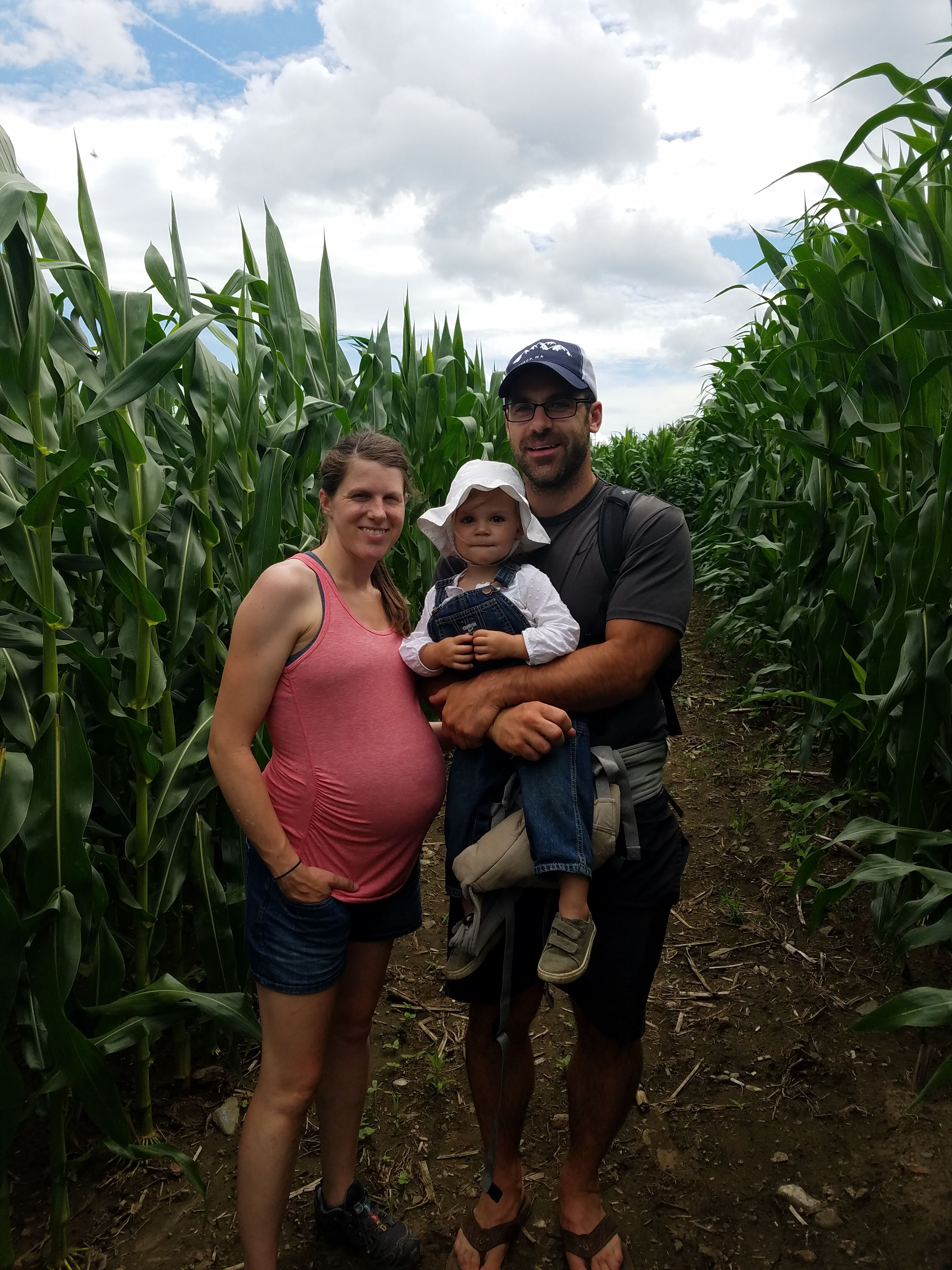
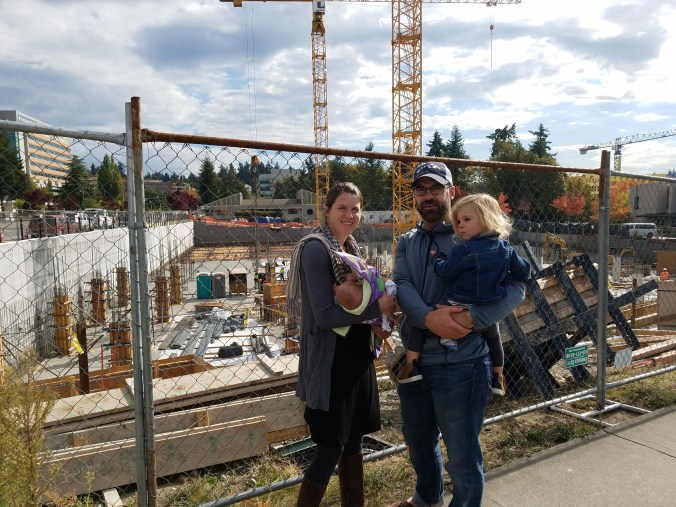
I don’t wonder about parking garages every day, but today I watched the ongoing construction of one in Kirkland, Washington, just outside Seattle and I am less foggy about them. I watched with great interest not only because I saw various stages of the process, but also because my son Bradley, who built the cottage on my property six years ago, is managing this project. Here he is with his family at the job site. Beth is holding two-week-old Zoe and Brad has two-year-old Piper, who was not as fascinated with the rodbusting as I was.
family.jpg

Eventually this site will become a six-story, mixed use building, meaning in this case retail on the ground level and apartments above. Its architectural rendering is posted behind the fence.

future view.jpg

Right now it’s a hardhat area at the beginning stage of construction.

9.jpg

This was my first view of the job site.

24.jpg

The white concrete columns – see them? – are standing on the lower level of what will be the underground parking deck of the new building. (The people who will live in the apartments above will need a place to park their cars below.) If you look a little closer at the columns (next photo), you see rods sticking up from them. The rods stick up much taller than the concrete of the column because…

24 (2).jpg

…once you put the floor of the second level in, the rods from the first level need to stick up through the floor, like this. You’ll see why shortly.

3.jpg

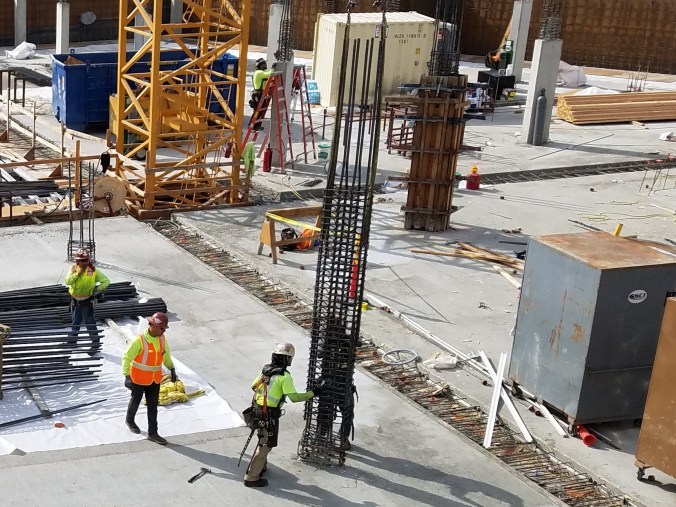
Those rods are strong steel called rebar that’s caged in by more strong steel. Before the concrete encases it and forms the strong concrete column, the assembled steel looks like this …
12 (2).jpg

The guys in the photo below, who cage the rebar, assembling the strong innards of each concrete column, are the “rodbusters.” They are using a kind of cable tie to connect the rebar to the steel caging pieces around it.

11 (2).jpg

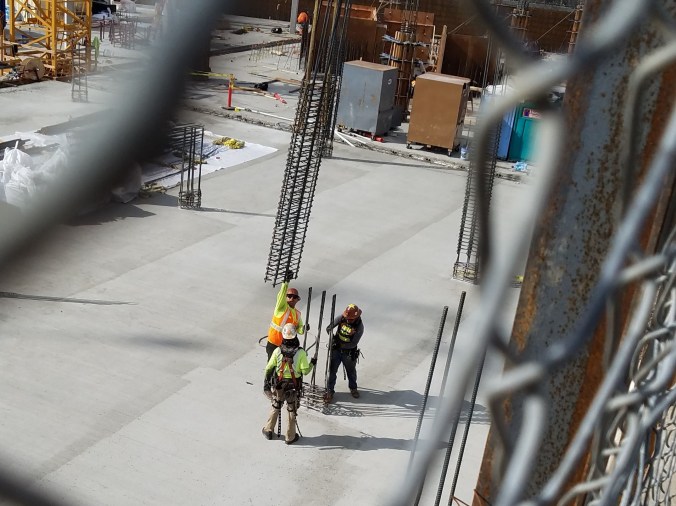
When they finish one, the crane comes along, picks it up and brings it to its mate, i.e. to the rebar that’s sticking up from the level below. The workers in the next photo are helping the crane operator to guide the caged rebar to the exact spot, and…
6 (2).jpg

…Ah, there it goes.

4 (2).jpg

Each assembled steel column is then surrounded by a wooden concrete form. See the rows of wooden forms below? The height of the form will be the height of the concrete column.

19 (2).jpg

A gigantic cement truck comes along next with its very long arm and pours concrete into each form. When the concrete is dry, the workers remove the forms and set them aside for the next use. The steel inside adds a lot of strength to the column. Notice again how the rods stick up much taller than the concrete of the column. The part that’s sticking up becomes the base for the next level.

Now for the floor. You know what a concrete floor looks like. But under the concrete are cables, very strong steel cables. They are red in the picture below. Just as the steel rebar in the columns makes the columns much stronger, the steel of the cable makes the floor much stronger – in fact strong enough to support all the weight of the cars.

8.jpg

After the concrete is poured onto the wooden platform, making the floor, the cables are pulled from all sides and secured (sealed) at a specific tightness. This provides the support so the floor doesn’t collapse. After the concrete dries, the no-longer-necessary wooden platform (now underneath) is removed.

Rebar is great for adding strength to the columns, but cables are preferable to rebar for the floors. To gain the same strength/support using rebar, you would have to make the floors much thicker, which uses more concrete and makes the building overall taller. The curve of the cables plus the tension gained from the pulling means the floor can be thinner (less concrete is used and the building is not as tall overall), which is a more efficient use of materials and space. You have to know your math and your science to make this all work of course, and you have to have the right machinery and good materials and the project manager and the inspectors and all the workers, including the rodbusters. Without the rodbusters, forget it.

If you didn’t know all this before, as I didn’t, don’t you feel better now about parking garages? I do!

I also feel very proud of my son.


New To Me and Unexpected

No matter how old we are, there is something new around every corner. This is especially true if you are traveling to places that are not so familiar. Delightful discoveries keep things so interesting. They make you see the world differently. They keep you young, reminding you that you have not arrived yet, that there is yet something to learn, to puzzle over, to marvel at, to be astonished about and even in some cases to cringe about (see below!). Let us never lose our sense of Are you kidding me?

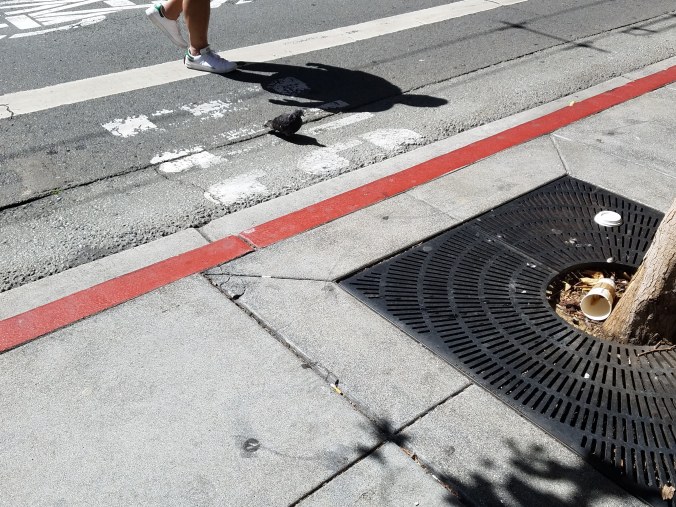
In San Francisco, a bird looked dead on the street. I felt a moment of sadness. But as in Berkeley, where I questioned why the cooler-on-wheels was moving along the sidewalk on its own and Drew said nonchalantly Oh, that’s a robot delivering smoothies, I was equally taken aback by this bird on the street as we walked to the Embarcadero Ferry Building.bird from afar sleeping int he road.jpg

It sure looked dead to me. But no, Drew said, it’s just sleeping.

Sleeping? Whoever heard of a bird sleeping in a road? What kind of bird sleeps in a road? This kind apparently. Get a little closer. Is this bird sleeping?

bird sleeping in the road.jpg

Doesn’t it know that a road is a bad place to sleep? Didn’t its mother teach it the basics? If you want a long life, stay in high places away from humans and large, fast-moving vehicles. Get close only when you see lots of grass and the humans are tossing food about. Well, I don’t see grass here and no humans are offering food, but something must have clued it in, maybe even the person who then walked close to it, because in the time it took for us to get past, that bird turned around, faced the sidewalk and got out of harm’s way.

bird walking away.jpg

Smart bird? Or dumb bird got lucky?

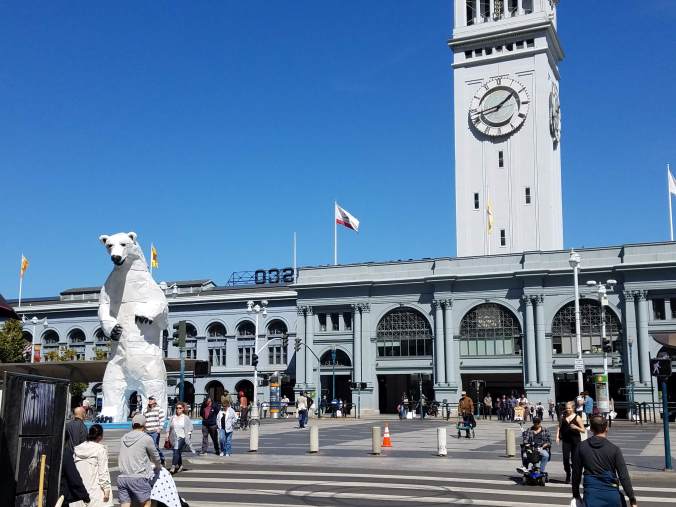
Approaching the Embarcadero, we encountered a massive polar bear, part of the Salesforce descent upon the city this week. It isn’t every day you see a massive polar bear. There is something both majestic and adorable about polar bears, even when they are fake. You must agree, this is massive.

polar bear at embarcadero.jpg

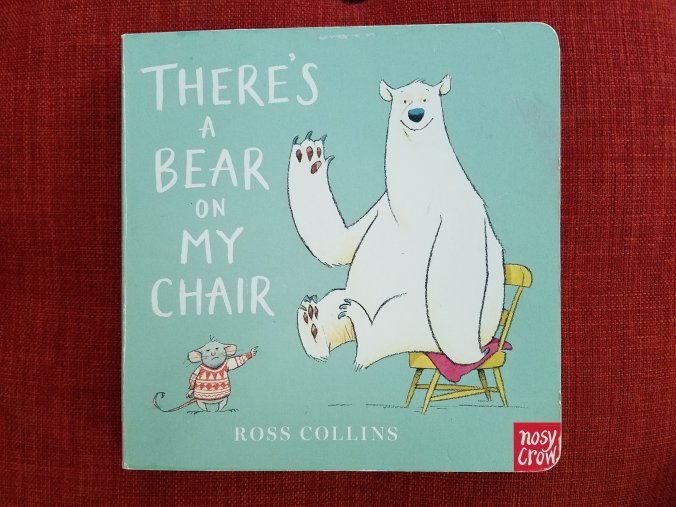
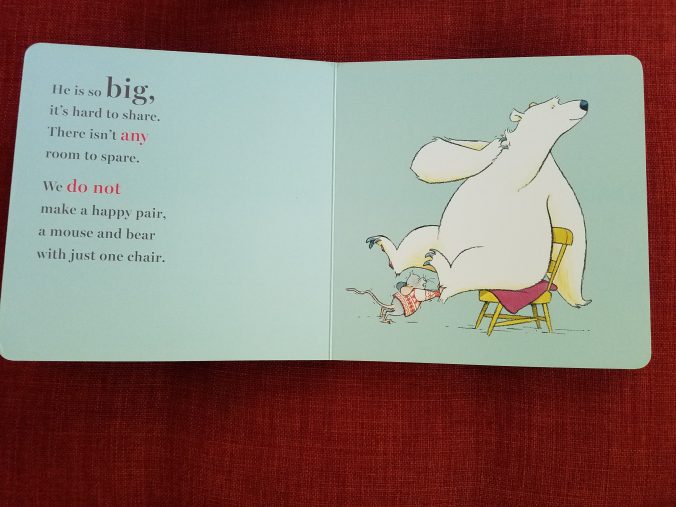
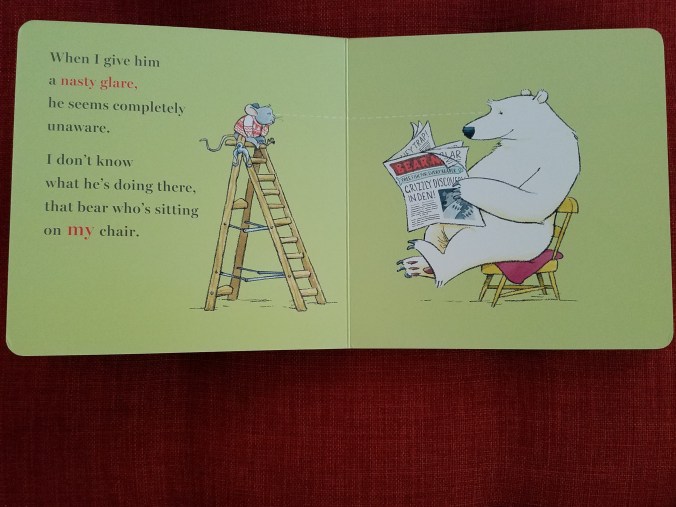
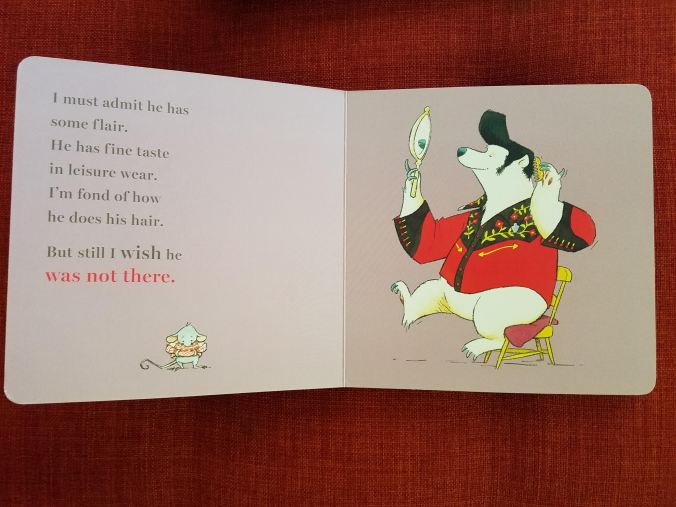
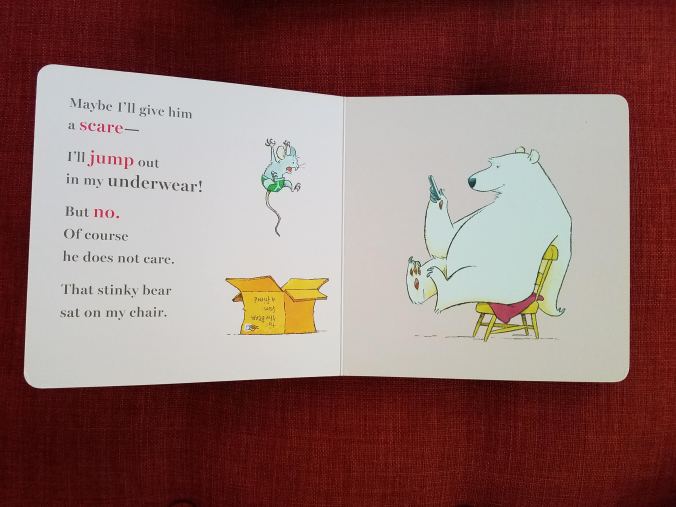
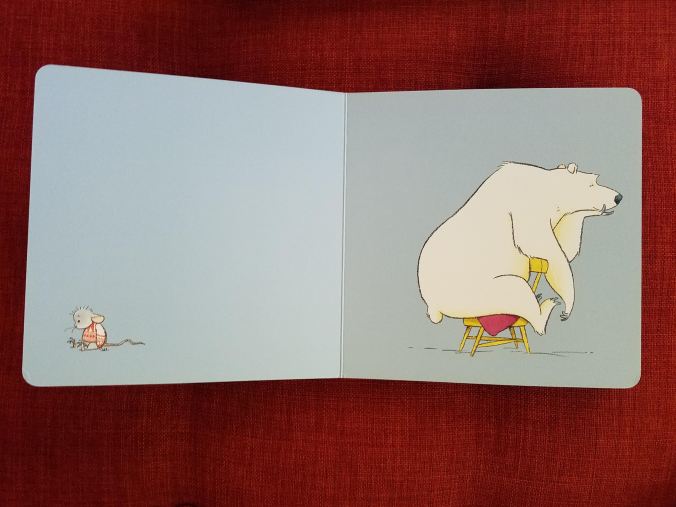
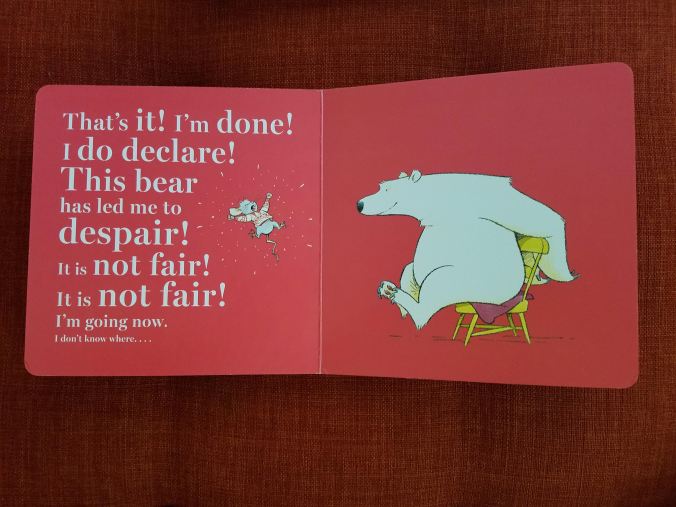
It also leans toward adorable rather than majestic, as does the one in a fairly new book called There’s a Bear on My Chair by Ross Collins that I discovered at Marie’s house. It has joined my all-time-favorite-kids’-books list. I will show you the pages at the end.

cover.jpg

I am a huge fan of children’s books. The good ones are as good for adults as they are for kids. This one has it all: rhyme, cadence, delightful illustrations, originality, silliness, cleverness (the kind kids show you at the most unexpected times), hilarity and subtle yet powerful parallels to the “real” world, though you have to think about it a little to arrive at these.

It is impossible to be around children, as I am here now in Boise, without discovering something new in something old. Another book on my list, one that has been there for decades, is Mike Mulligan and His Steam Shovel. Unsurprisingly, someone thought to make it an audio book. That’s all well and good. What would never have occurred to me is using the London Philharmonic Orchestra in the background with bagpipes, and a narrator with an Irish accent! I never thought of that! Mike Mulligan. Irish. Go figure! Ellie loves listening to Mike Mulligan on the way to school. The music meshes with the story perfectly.

If you have a child in your life – your own or a neighbor having a birthday or a niece or nephew – get both of these books and the philharmonic audiobook to go along with Mike Mulligan. You cannot go wrong.

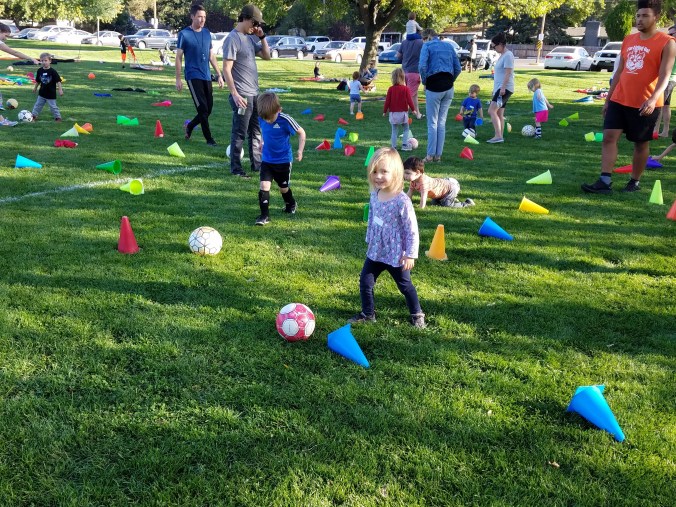
While on the adorable track, I must mention the three-year-olds at soccer practice, another reality of the world that somehow escaped me before now. I am sure I didn’t do any organized sport myself until I was at least nine or so, but these days they have soccer at three. They do in Boise anyway. Ellie loves it. All those cones are for foot control, by the way. You put your foot in the open end and lift it off the ground and hold it up. Who knew?

soccer1.jpg

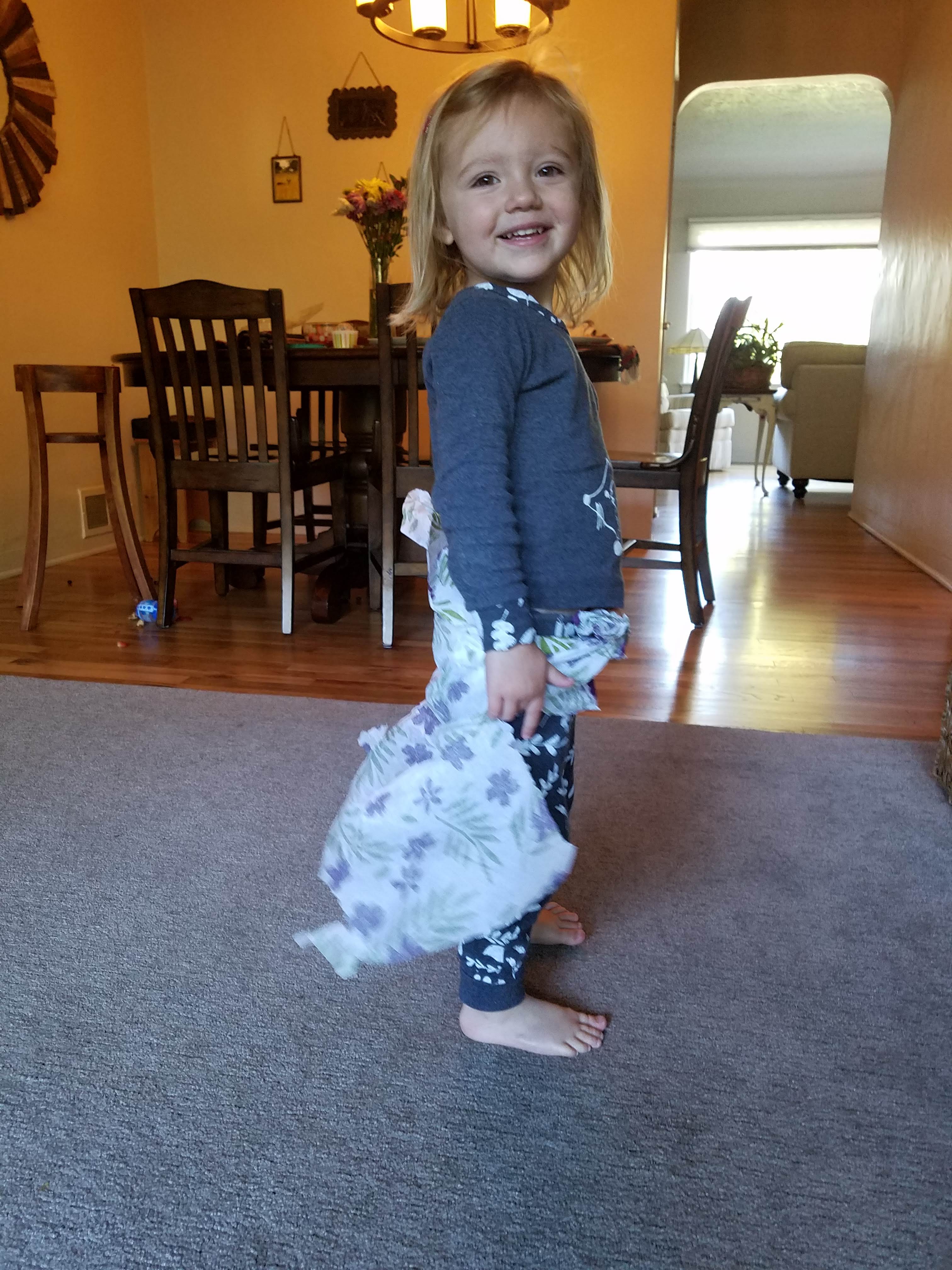
This is the same child who loves to wear a paper skirt, by the way.

paper skirt.jpg

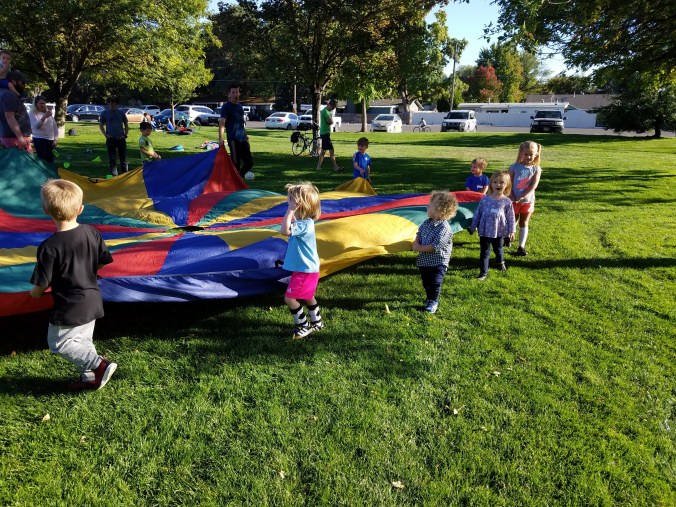
Anyway, in case you didn’t know it, soccer for three-year-olds in Boise sometimes involves “making a pizza” on a parachute (after you walk around in circles for a bit to make you hungry enough to eat the pizza),

soccer2.jpg

the last part of which is kicking the “meatballs” on top of the pizza. What’s your guess? Will these children grow up to love soccer or some other active organized sport? I think so!

Not everything that is new is adorable. Not everything is even pleasant. Whether just contemplating it or actually taking a drink from it (I couldn’t!), this exhibit at the Exploratorium in San Francisco challenges your grossness meter. According to the sign, the standard drinking fountain on the right and the one attached to this toilet (which has never been used as a toilet) are identical. Both clean, both usable, both dispensing fresh water. But who can bring themselves to drink out of the fountain attached to the toilet? “A Sip of Conflict,” they call it. I’ll say!

toilet drinking fountain.jpg

I can hardly look at it without cringing, let alone take a drink! So enough of grossness, let’s head back to Boise for something else I did not expect.

Here is a very old tortoise. How do I know he’s old? I have no idea actually. Tortoises are always old, right? This one was at the downtown zoo, active as a sloth, dry as the sand he stands on. Ellie was fascinated with him.

tortoise.jpg

Why did I not expect a tortoise at the zoo? You expect giraffes, llamas, zebras. But a tortoise? Possibly I am overwhelmed with newness and adorableness all around me (save for above toilet, we can all agree) and I didn’t even have time to have expectations. I just know that this amazing animal took me by surprise.

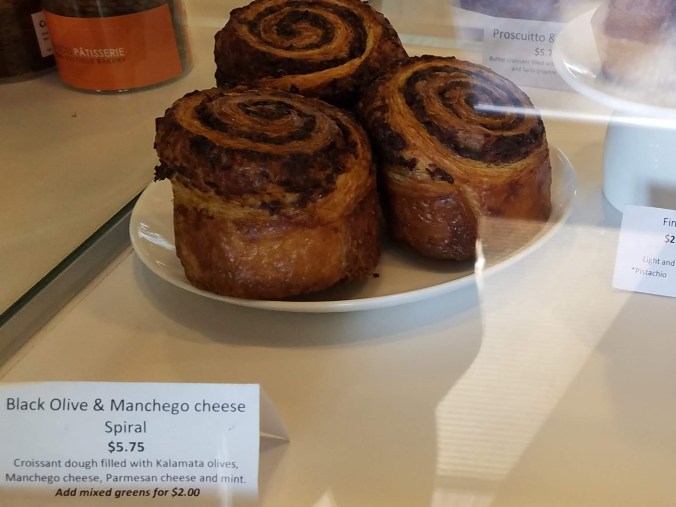
Lastly (you knew there had to be food somewhere in here), we made a stop this morning at a French bakery in Boise called Janjou Pâtisserie. I know: French bakery in Boise, something else you would not expect. But what was even more unexpected, what was totally new to me, was a spiral croissant with olives and manchego cheese. Oh yum! I have never seen or had olives and cheese in a croissant before, let alone in a croissant of award-winning quality. Who thinks of this? Why didn’t I think of this?!

olive and manchego croissant (3).jpg

I cannot describe this adequately. You will just have to imagine the soft/crisp, buttery/flavorful, done-to-absolute-perfection nature of this pastry. Drool if you have to. I won’t tell.

I would like credit for having restrained myself in this post with regard to the many awesome trees and other plants one finds while traveling. I know I covered the eucalyptus trees in Berkeley and the Boise rose garden recently, but Boise has more awesome flora, and it is with serious effort that I hold back the low-lying spikey things, the weird wisteria, the blob tree – I spare you this time!

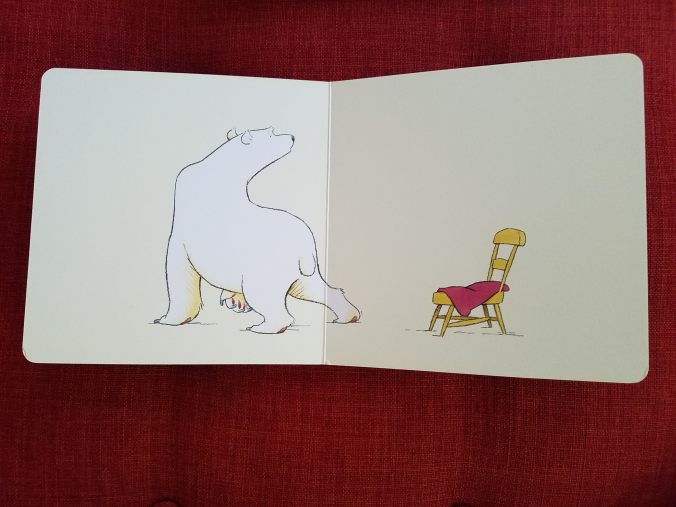
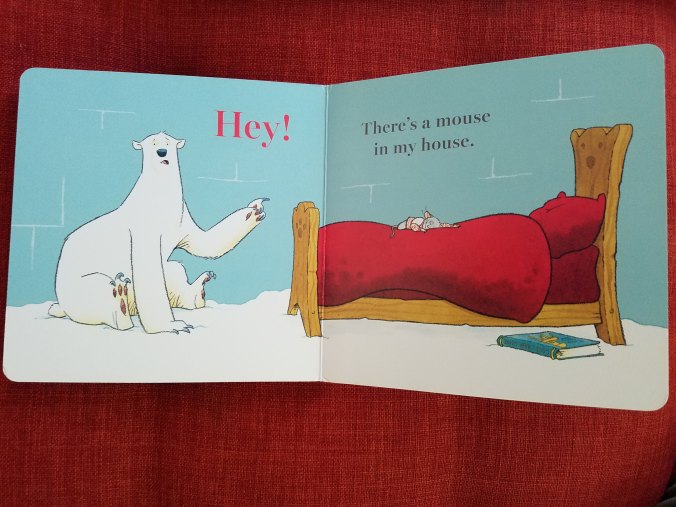
But I have to show you the pages of the adorable polar bear and mouse book. Thank you, Ross Collins, for your marvelous book!

Take your time now. Read slowly, deliberately and out loud if you can. Get a good rhythm going. Look at how the illustrations coordinate with the text. Pretend you have a child on your lap… Better yet, pretend you are the child.

1.jpg

2.jpg

3 (2).jpg

4.jpg

5.jpg

6.jpg

7.jpg

8.jpg

9.jpg

10.jpg

11.jpg

12.jpg

The Artist in the Grocer

Some people are artists. Some aren’t. But this is not a black and white distinction. Somewhere along the spectrum between Artist Extraordinaire and Person with No Sense Whatsoever for Color, Form and Design is the place where I suspect most of us reside. We may marvel at the artist’s skill – how can human hands can produce something that amazing – yet have a modicum of understanding (a little, anyway? a teeny bit?) as to why the rest of the world marvels with us.

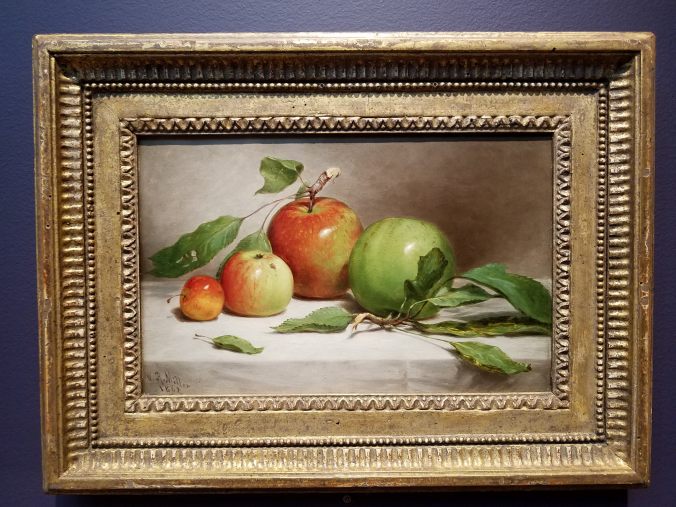
Part of the reason we marvel is that we ourselves (all right, let me speak for myself), I myself, would have all to do to draw a shape vaguely resembling an apple (through it might look more like a pumpkin or a tomato) and color it red (to hopefully distinguish it from the pumpkin at least) and put little green leaves at the top of a brown stem (to hopefully distinguish it from the tomato). In my wildest dreams I couldn’t come up with something like this. I’m not sure I could even imagine this composition, let alone put color to canvas and create it.

apples.jpg

But William Rickerby Miller did. This oil on canvas “Study of Apples” that he painted in 1862, hanging in the de Young Museum in San Francisco, falls into the category of art known as trompe l’oeil. Do you see how the leaf at the edge of the table seems to be coming off of the canvas, almost three-dimensional? Do you see how the apples shine, as if someone just polished them because they wanted a bite? How does he do that??

Trompe l’oeil is a genre of art that is a trick, a trick of the eye, a very deliberate attempt to make you think the objects on the two-dimensional canvas are real, when you know (because you are looking at a painted drawing in a frame) and the artist knows (because of having painted that drawing) that they are not. In theory, this trick reminds you that all art is an illusion, so do not be mistaken: What you are looking at is an image of the thing, and not the thing itself. In turn we can take the broader lesson to be careful in this world: All is not what it seems to be!

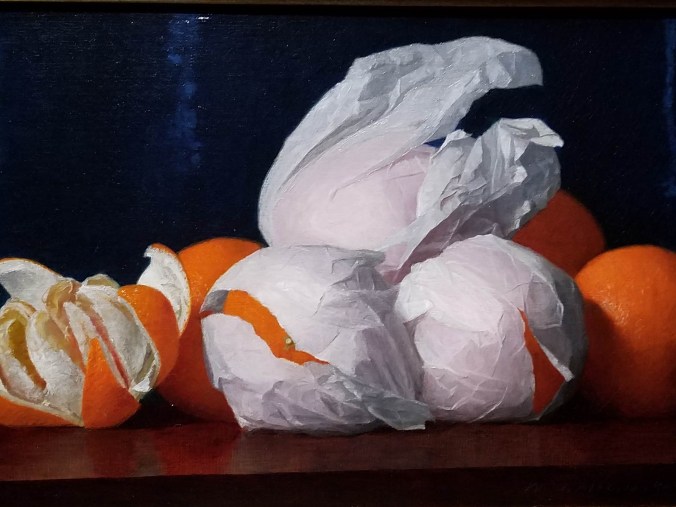
These oranges have the same effect on me. Also a still life, also oil on canvas, it is called “Oranges in Tissue Paper,” painted in 1980 by William Joseph McCloskey. The oranges look so real, even more real than a photograph could render them. The orange color is bright, almost plastic, with a dark background setting them off even more. The tissue paper practically sounds crinkley, the sections of fruit look juicy. I want to eat them! No wonder this painting is part of a group the museum calls “10 Works of Art to Avoid if You’re Hungry.”

oranges (3).jpg

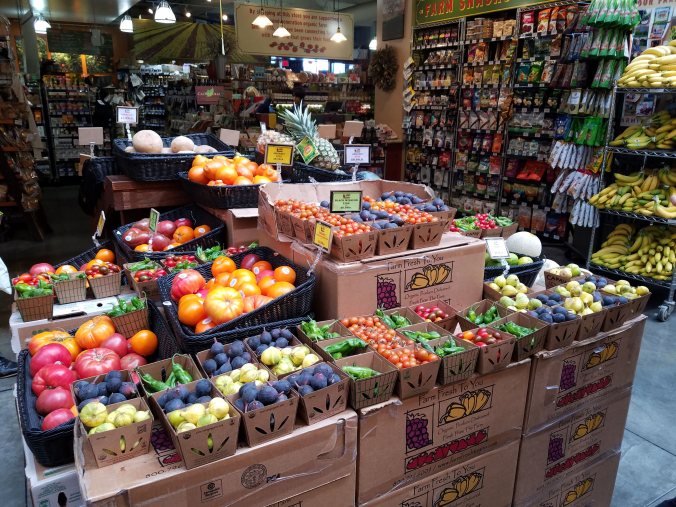
I grant mega-credit to these artists and all great artists. I stand in awe at what they do with tools and color, with hands and minds, with time and effort. But I return to the spectrum – those who cannot be considered in the master class, but nonetheless have an admirable eye for Color, Form and Design and some skill with the same. I present the unnamed person behind the fruit display at a grocer called Farm Fresh to You, one of the extraordinary little businesses at the Embarcadero’s Ferry Building Marketplace.

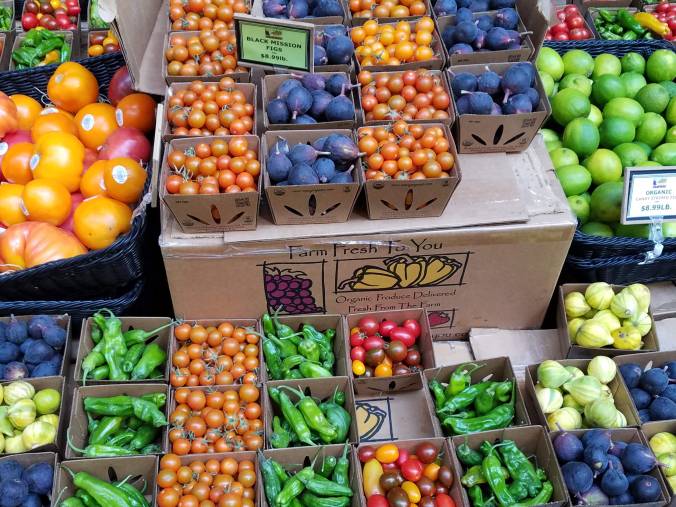
It takes no small skill to arrange the display I observed there. At first glance, and to most passersby, it’s fruit for sale. Indeed it is, but if that’s all it is, why the spattering and alternating of color? Why the angled baskets leading up to the top-most level? Why the bananas all together as almost a backdrop of the familiar but the black mission figs (that look purple to me) alternated among its fellows in sixteen different spots, setting off the yellow-greens, green-greens and oranges of the fruits and veggies around them?

embarcadero fruit1.jpg

Why green apples on one side of the raised, middle carton and large orange/pinkish/reddish tomatoes on the other? Why some small, orangy, cherry tomatoes below some others just like it but in line with the ones above? Why the peppers below the purple figs and multi-colored small tomatoes below some other orangy ones? Why not purple figs here in this one spot, orangy cherry tomatoes there in another spot, big fat tomatoes all together in one basket?

fruit at market Farm Fresh to You.jpg

Because whoever put this display together has an eye for Color, Form and Design. Whoever did this made multiple decisions to put this here and that there, to vary the colors and shapes, to let some look random and some intentional – for good reason! Just like the trompe l’oeil above or any other type of art, it catches your eye, draws you in, gives you pause, and in this case, hopefully causes you to buy something!

Why don’t we see such elaborate displays more often? Because they take time and effort and no small amount of skill. Because the owner of the shop has to pay the person who does it, and that adds to the cost, which some markets cannot bear (but evidently this one can). Because people who can do this don’t come along every day. Because the artist had fun!

Granted, the colors of the natural fruits and vegetables negate the artist having to duplicate them with oil or acrylic on canvas, their natural shapes are 3-D to begin with, and the continually changing nature of the display – the gaps here and there reveal that someone recently bought multi-colored tomatoes, purple figs and green peppers – makes it a continual work in progress for this artist. I do not place this art on par with the paintings above. But whoever does this work (probably all the time) gets new material every day and every season, can rearrange at will and elicits admiration, I venture to say, on a daily basis. I was not the only one taking a picture of it.

I also venture that there is great pleasure in work well done, in creating something both functional and pleasing to the eye, in knowing that some people – just a few maybe, but still some – see the artist in the grocer, the art in the display,  and smile. I did.

Having Eyes, and Seeing Beauty

In downtown Boise (Idaho) is a lovely rose garden. I explored a small part of it today with my daughter and her two little darlings, and I learned something about myself: I’ve changed. There was a time when I would have said Those are pretty flowers, and left it at that. I did not “have time” for such things. I had other things to do. I had seen pretty flowers before.

No more. I could have spent all afternoon admiring the blooms. There were so many! They were every color imaginable. They were so perfect.

pink up close.jpg

Clearly someone (or probably a team) spends a lot of time tending them and does it very well. As we approached on this picture-perfect day, I realized this was no ordinary rose garden. There are over 2000 rose bushes in this special place named after Julia Davis, Boise’s “city mother.”

lo ng view.jpg

You can’t rush through a rose garden because roses are such extraordinary flowers up close. In my case, however, you also can’t take too much time when you have a three-year-old with you and another who’s almost one because the zoo is right next to the rose garden, and that is the actual destination – and guess where they would rather go! Roses do not compete with giraffes when you are three, especially since they have a baby giraffe!

baby giraffe (2).jpg

But Marie graciously gave me some time to use my eyes and see the beauty of the roses. It’s impossible to decide which is the prettiest color. I have always loved the yellow ones.

yellow2 (2).jpg

This one decided to be both pink and yellow.

pink and yellow (2).jpg

Coincidentally, one of the books I brought along to read on this trip is the engaging story of a little girl growing up in pre-WWII Japan (Totto-chan, The Little Girl at the Window by Tetsuko Kuroyanagi, a longstanding bestseller describing the early school days of a woman who went on to become one of Japan’s most popular television personalities).

Totto-chan (2).jpg

Beginning when she is about five – having been expelled from her previous school because her intense curiosity was disruptive to other students – Totto-chan attends an extraordinary school led by a schoolmaster who becomes a hero to her. This man listens carefully, allows for individual differences, advocates for the unsung, celebrates a fresh look on almost anything and creates an environment intent on giving every child the best way to grow, to learn, to shine. How ironic that I come to an extraordinary rose garden the very day after reading these words:

“Having eyes, but not seeing beauty; having ears but not hearing music; having minds, but not perceiving truth; having hearts that are never moved and therefore never set on fire. These are the things to fear, said the headmaster.”

I did have eyes and I did see beauty, and for the beauty I saw I am very grateful. But I did not see only beautiful roses in the rose garden. In the middle of the path leading to the gazebo sits this fountain. I don’t like the blue water because it looks artificial to me, but I soon saw past that. Look carefully around the edge and you will see imbedded plaques.

park2

The etched words were mostly in memory of loved ones, such as this one.

sign2 (2).jpg

But this is the one that moved me nearly to tears:

sign1 (2).jpg

At first I thought maybe Linda’s Uncle Fred was one of the gardeners, and maybe he was. But it could also be that they strolled this garden together and it was all the better for having done it together. In the end, for these two people, together was best. And I thought: Would the zoo today have been as wonderful if I had not been able to listen to Ellie’s gasp when she saw the lion?

lion (2).jpg

Would I have enjoyed watching the anteater look for his own lunch in the dirt if we had not been together on benches next to him eating ours?

anteater2.jpg

Being together today, I stood next to my daughter holding her daughter who’s feeding the llama – most definitely a sight more beautiful than any rose – and the roses are very beautiful! I am so blessed to have eyes to see it all, to enjoy their sweet company, to spend this week together.

Marie and Ellie feeding the lama.jpg

“Having eyes, but not seeing beauty; having ears but not hearing music; having minds, but not perceiving truth; having hearts that are never moved and therefore never set on fire. These are the things to fear, said the headmaster.”

Monkey Bread: A Baking First

It was not the original plan to make monkey bread this morning. I have never even made it before. Other than having seen it (though not purchased it) at Vive la Tarte yesterday, I only vaguely even heard of it. Having only random fragments in my mind about a thing, disconnected from personal experience, generally would not translate into Let’s Make That Thing.

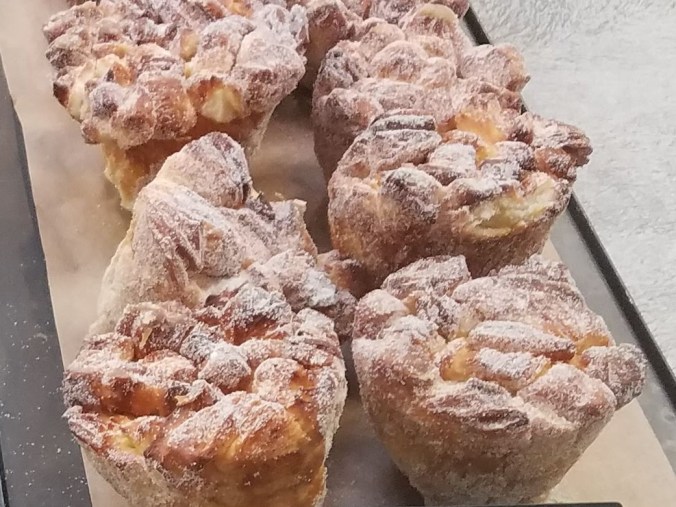
But if you had seen the monkey bread yesterday, you might be motivated to try it too. This is what we saw.

croissants monkey bread (2)

You have small chunks of dough individually coated with cinnamon, sugar and butter all baked together into one multi-chunk, sweet treat.

Drew and Nicole and I had started talking about the buttery, sweet, cinnamony goodness of monkey bread, and I said to myself: It Can’t Be That Hard.

Suddenly there we were with a plan. Early morning grocery run for yeast, butter and other essentials followed by fun in the kitchen. Meet at 8, eat by about 10, right?

Oh, dear. Jet lag is real, and I still have it. Every morning since I got to the west coast I have woken up by about 4am. Thinking about the monkey bread project, I was allowing two hours for all of the following: a four-block walk to the store, shopping, walk back, prep of dough, rising of dough, assembly of sweetened dough chunks into muffin tins, re-rising of dough and baking – all to make something I have not made before and in somebody else’s kitchen! Yeah, I was way off. Can I blame this on jet lag?

All to say, the idea-to-results sequence took way longer than anticipated. Nonetheless, we would have our monkey bread.

When you have never made something before, it’s a good idea to have a good recipe. I read a few online. They were all different, but basically we’re talking about a sweet, soft dough that is smothered in butter, sugar and cinnamon and baked into delicate, pull-apart, heavenly rolls. I have a great recipe for soft dinner rolls. Add the sweet element and that should work, I thought. It was going to be, shall we say… experimental. Thankfully my sister Lynn came to the rescue. She is a great cook, has made monkey bread many times and gladly sent me her recipe. See below.

I had no doubt that this was the best plan. And perhaps if I had followed the instructions, these would have been even better than they were.

You read that right: IF I had followed instructions…

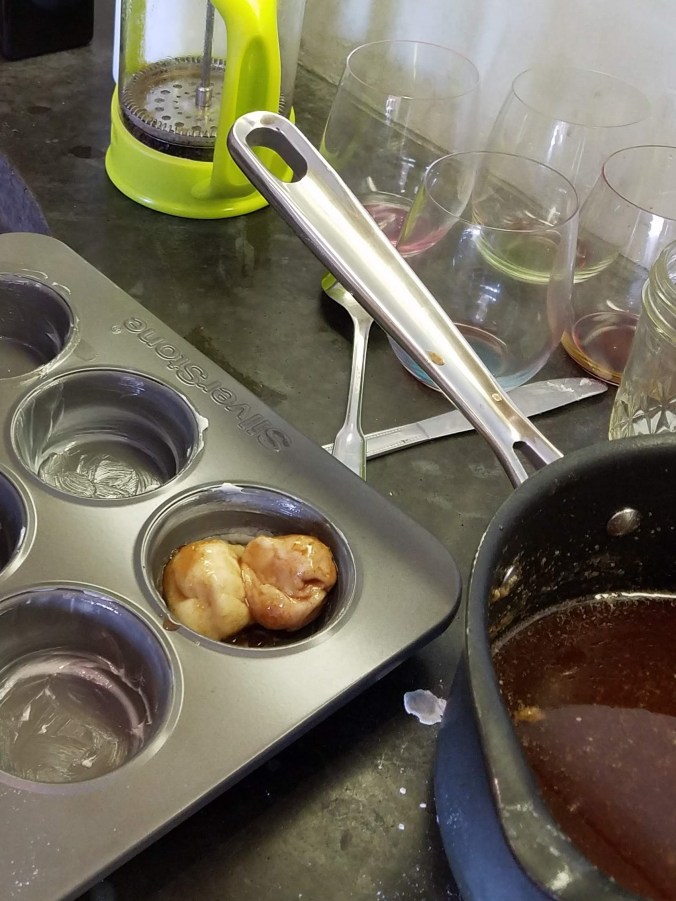
Let me back up. I love my phone. I think smart phones are amazing. But one downside is that they are very small. I opened up the recipe on my phone and it was really hard to read. I did not have a printer or a larger screen. My eyes aren’t that good. Then you set the phone down to do the next thing, and by the time you do that next thing, the screen has gone black. You open it again, get to the download again, try to read the tiny writing again. It was problematic. I know I got the ingredients right, but why I thought to put the brown sugar in with the melted butter in preparation for rolling the dough balls, I am unsure.

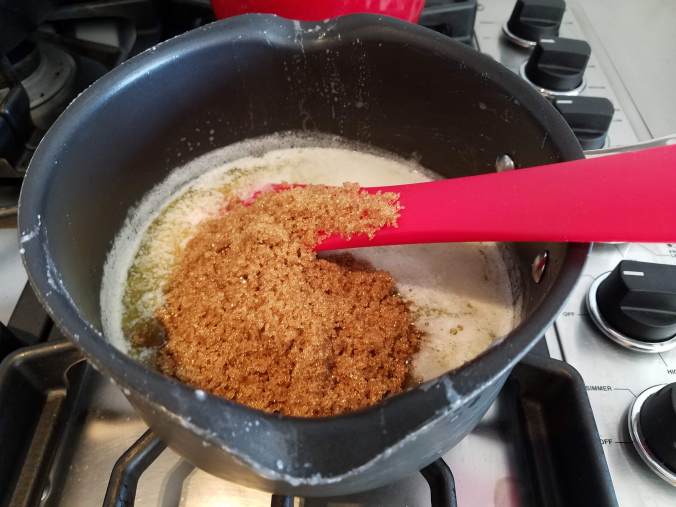
This was my deviation, putting the brown sugar into the melted butter. Then Drew added the cinnamon and I got to stirring.

sugar into butter

I actually got quite excited about how beautiful the sugar and cinnamon looked as I was swirling it in there with the butter. That’s about the time I got a flashback to the actual words of the recipe which was something to the effect of “Dip the dough balls in butter, then roll in the sugar/cinnamon mixture.” Oops.

swirling in pot

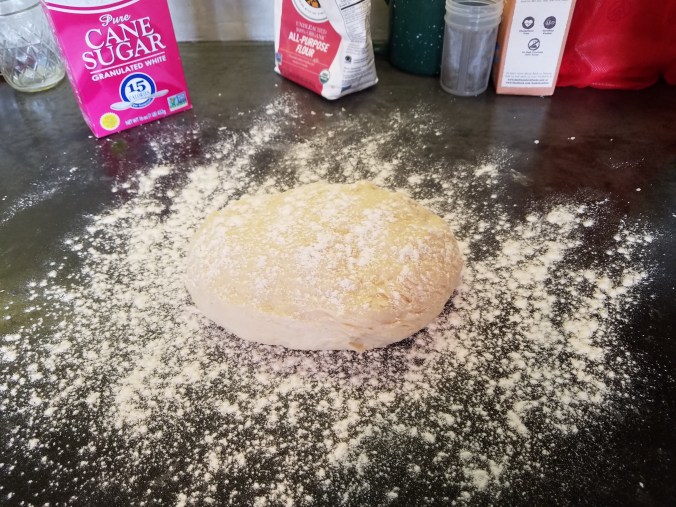
I did most everything right, I promise. The dough was soft and elastic.

dough

I covered it and let it rest.

covered dough

I buttered the muffin tins. Lynn’s recipe says to use a bundt pan, but I wanted ours to be like Vive la Tarte’s, so I used muffin tins. See all the pieces of butter waiting to coat the inside of each cup?

buttered pan

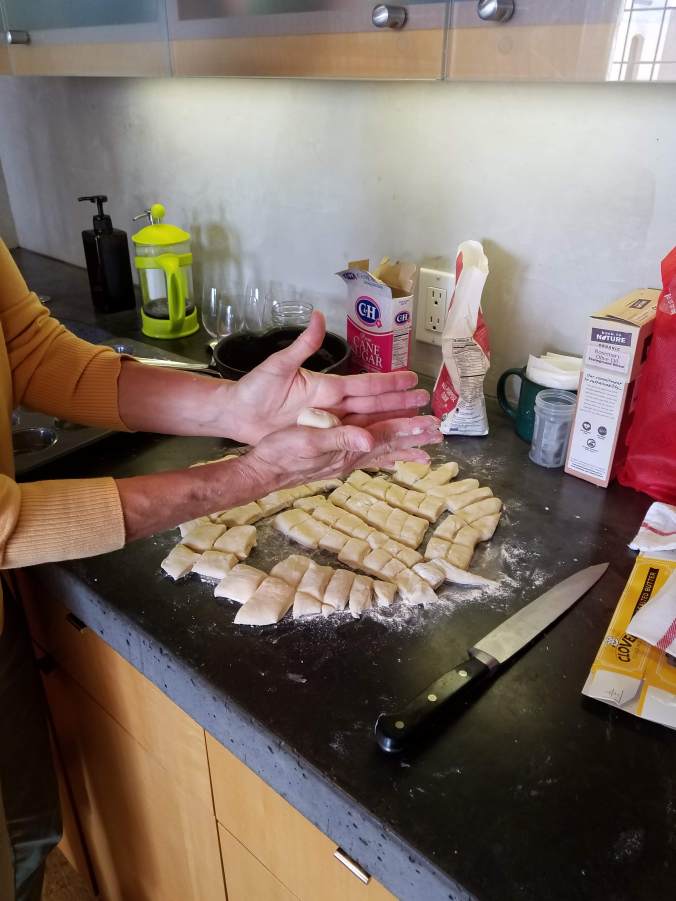
I cut the dough up into pieces and formed little irregular balls.

cutting up dough and forming balls

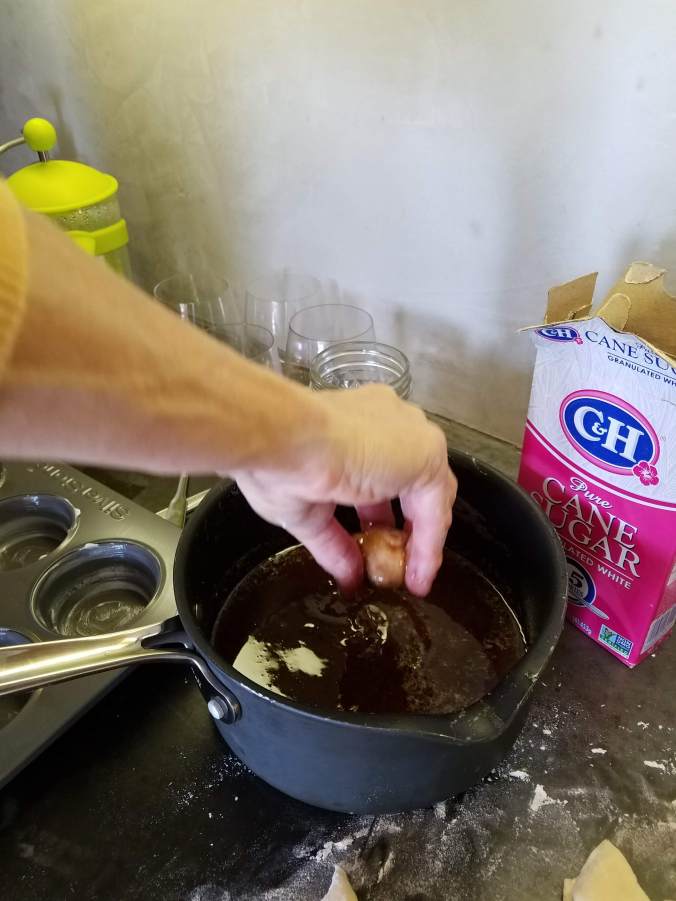
But then I had no choice but to dip the pieces one by one into the butter/sugar/cinnamon goo

dough ball

and put them in the cups of the muffin tins

balls in pan (2)

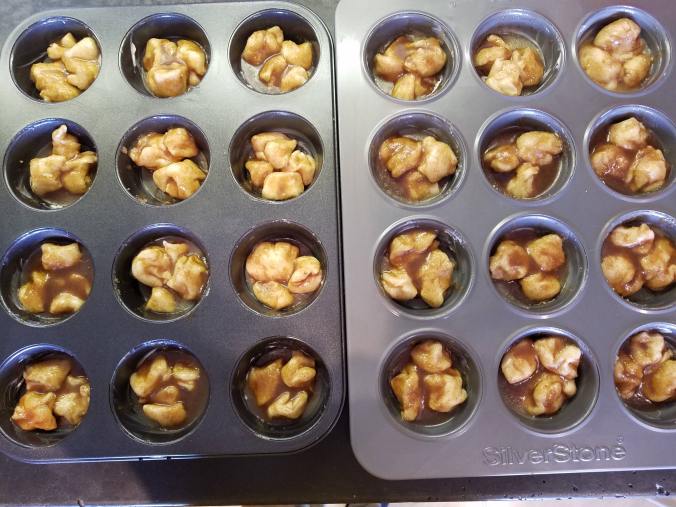
until they were all in.

in pans unbaked

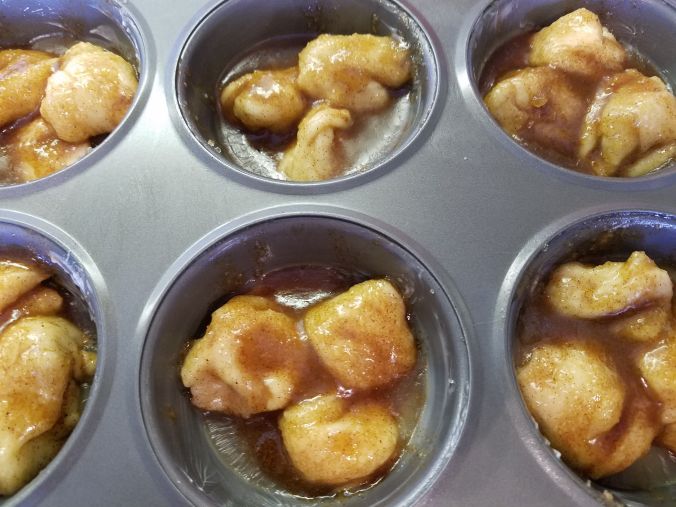
Up close it looked like this.

up close unbaked

Baked, like this. We had waited so long by this time. It was long past when we had had the rest of the brunch we’d planned. I didn’t take the time to put powdered sugar or a glaze on top.

baked on plate

Still, they pulled apart like nothing. The dough was soft as a pillow. The sweetness surrounding the dough was divine (seemingly none the worse for having been done wrong). If I had sprinkled powdered sugar on this plate, or put the suggested glaze on them, it would have looked better, but hot out of the oven Drew and Nicole loved them. Loved them. Do wait a few minutes until they are not quite so hot but still warm. Yes, do eat them warm out of the oven.

Still, I was not perfectly happy with them and will try again another time. I think more balls per cup would be better. Letting them raise longer would have been better (we were in a hurry to get to the Exploratorium so I rushed that part). Following instructions about the butter-dipping and sugar-rolling might have been better (not sure, that part seemed okay).

And this is how we learn. Try it, work with what you have, try to recover if you make an oops, see what happens. Try again another time, a little smarter than the first time. This is how we learn anything.

Lynn’s recipe:

Monkey Bread

DOUGH:

  • 4 tablespoons butter, divided, 2 tablespoons softened and 2 tablespoons melted
  • 1 cup milk, warm (about 110 degrees)
  • 1/3 cup water, warm (about 110 degrees)
  • 1/4 cup granulated sugar
  • 2 1/4 teaspoons instant yeast
  • 3 1/4 cups all-purpose flour, plus extra for work surface
  • 2 teaspoons salt

BROWN SUGAR COATING:

  • 1 cup packed light brown sugar
  • 2 teaspoons ground cinnamon
  • 8 tablespoons butter (1 stick), melted

GLAZE:

  • 1 cup confectioners’ sugar 2 tablespoons milk
  1. Butter a Bundt pan with the 2 tablespoons softened butter. Use a pastry brush or a paper towel or anything that will really help get inside all of those nooks and crannies. Set aside.
  2. In a large measuring cup, mix together the milk, water, melted butter, sugar, and yeast. Mix the flour and salt together in a standing mixer fitted with dough hook (see below for instructions to make the dough by hand). Turn the machine to low and slowly add the milk mixture. After the dough comes together, increase the speed to medium and mix until the dough is shiny and smooth, 6 to 7 minutes. If you think the dough is too wet (i.e. having a hard time forming a cohesive mass), add 2 tablespoons flour at a time and mix until the dough comes together (it should still be on the sticky side, just not overly wet). Coat a large bowl with nonstick cooking spray. Place the dough in the bowl and turn to coat lightly with the cooking spray. Cover the bowl with plastic wrap and let the dough rise until doubled, 1-2 hours (alternately, you can preheat the oven to 200 degrees, turning it off once it reaches 200 degrees and place the covered bowl in the oven to speed up the rising time).
  3. For the sugar coating, while the dough is rising, mix the brown sugar and cinnamon together in a bowl. Place the melted butter in a second bowl or shallow pie plate. Set aside.
  4. To form the bread, gently remove the dough from the bowl and press it into a rough 8-inch square. Using a bench scraper or knife, cut the dough into 64 pieces.
  5. Roll each dough piece into a ball (it doesn’t have to be perfect, just get it into a rough ball-shape). Working one at a time, dip the balls in melted butter, allowing excess butter to drip back into the bowl or pie plate. Roll the dipped dough ball in the brown sugar mixture, then layer the balls in the Bundt pan, staggering the seams where the dough balls meet as you build layers.
  6. Cover the Bundt pan tightly with plastic wrap and let the monkey bread rise until puffy and they have risen 1-2 inches from the top of the pan, 1-2 hours (again, you can use the warm oven approach to speed this up).
  7. Heat the oven to 350 degrees F (remove the pan from the oven if you placed it there to rise). Unwrap the pan and bake until the top is deep brown and caramel begins to bubble around edges, 30 to 35 minutes. Cool the monkey bread in the pan for 5 minutes (any longer and the bread will be too sticky and hard to remove!), then turn out on a platter or large plate and allow to cool slightly, about 10 minutes.
  8. For the glaze, while the bread cools, whisk the confectioners’ sugar and milk together in a small bowl until the mixture is smooth. Using a whisk, drizzle the glaze over the warm monkey bread, letting it run over the top and sides of the bread. Serve warm.


Vive la Tarte

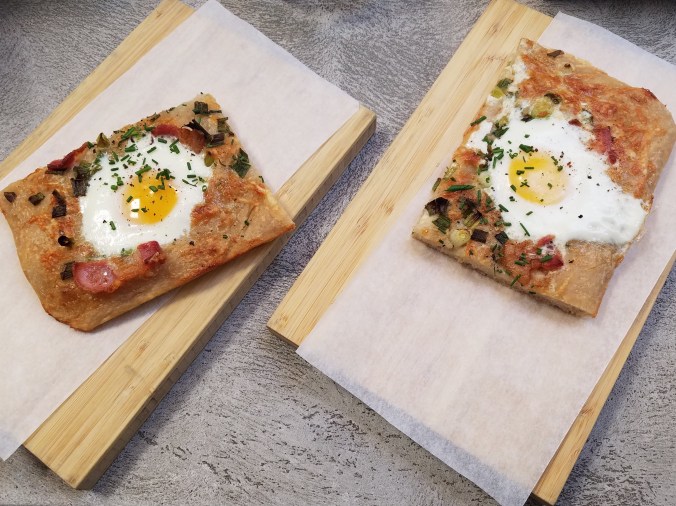
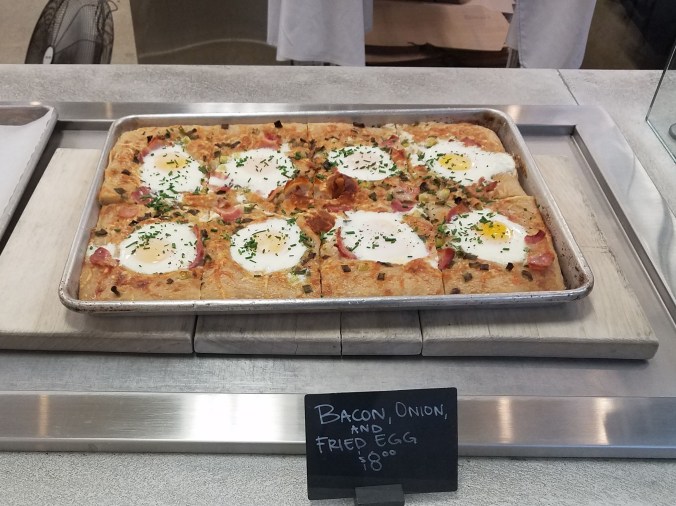
It isn’t every day you have pizza for breakfast. It isn’t every day your breakfast pizza includes an egg. I want to think that the eggs on our breakfast pizza today came from chickens as happy as mine at home in Virginia, but of this I cannot be sure. Regardless, this breakfast pizza with its bacon, egg and shallots, was (note past tense) an excellent way to start a Saturday in San Francisco. It was absolutely the perfect balance of its three simple toppings on a soft-on-the-inside, crisp-on-the-outside, bread-like crust. What else can you say but Oh yum!?

breakfast pizza (2)

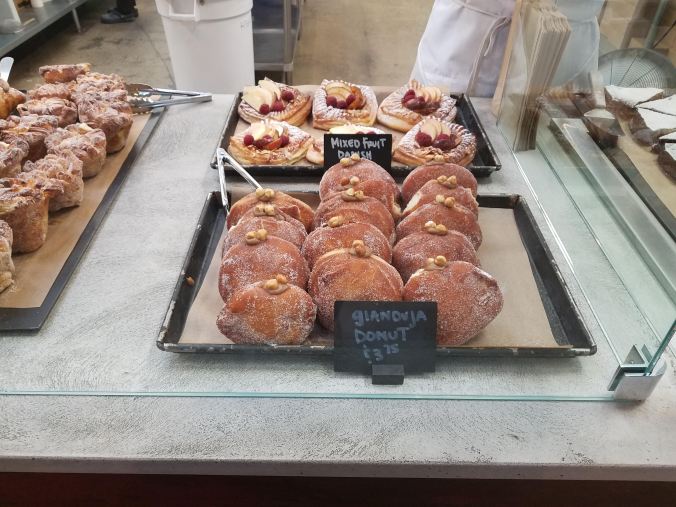
The full pan of them looked like this. Drew told me that by 11am, these, and all the delectables you see below, will be gone, disappeared into the happy stomachs of Vive la Tarte’s customers. Notice they don’t call it breakfast pizza. I think they should. Drew did.

breakfast pizza2 (2)

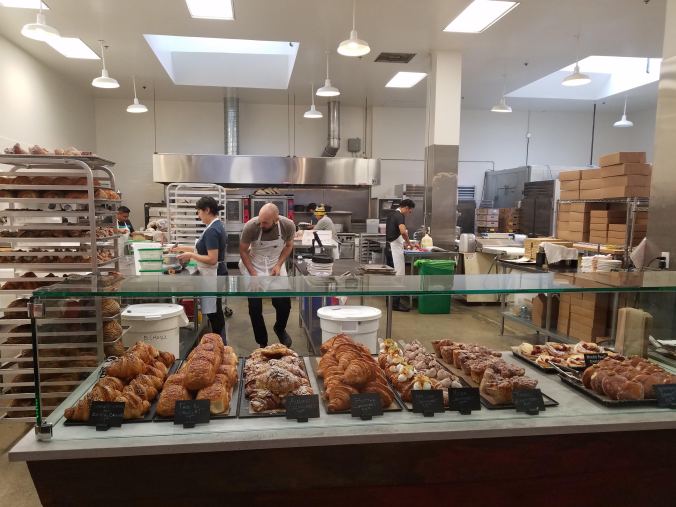
Vive la Tarte is one of those places you hope the residents of this city are very grateful for.  It’s popular for good reason — its food shares the same basic descriptors as most good foods, the most important descriptors: simple and delicious. You know you have come to a wonderful place when you want to eat one of every single thing they offer. I’m talking croissants,

croissants up close


more croissants, monkey bread,

croissants monkey bread

donuts, Danish,

donuts danish

quiches,

quiches

and the pizza, which was at the end of the line and became mine because walking through the line again would not have made it any easier to choose.

Seeing all of these wonders makes me want to bake more at home, to play around with different ingredients. That middle quiche has goat cheese in it. Why didn’t I ever think to put goat cheese in mine? And monkey bread – what’s monkey bread? Think pieces of soft bread dough baked together with cinnamon, sugar and butter in such a way that the adjectives to describe it include: soft, sweet, gooey, sticky, golden, cinnamon, buttery and last but not least sinful.

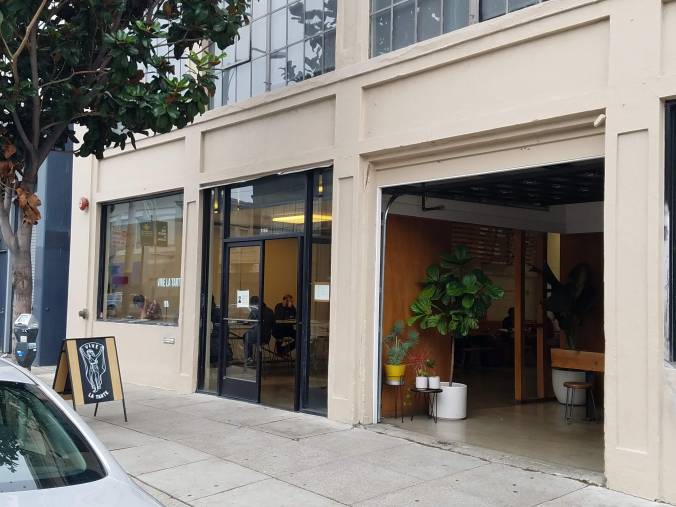
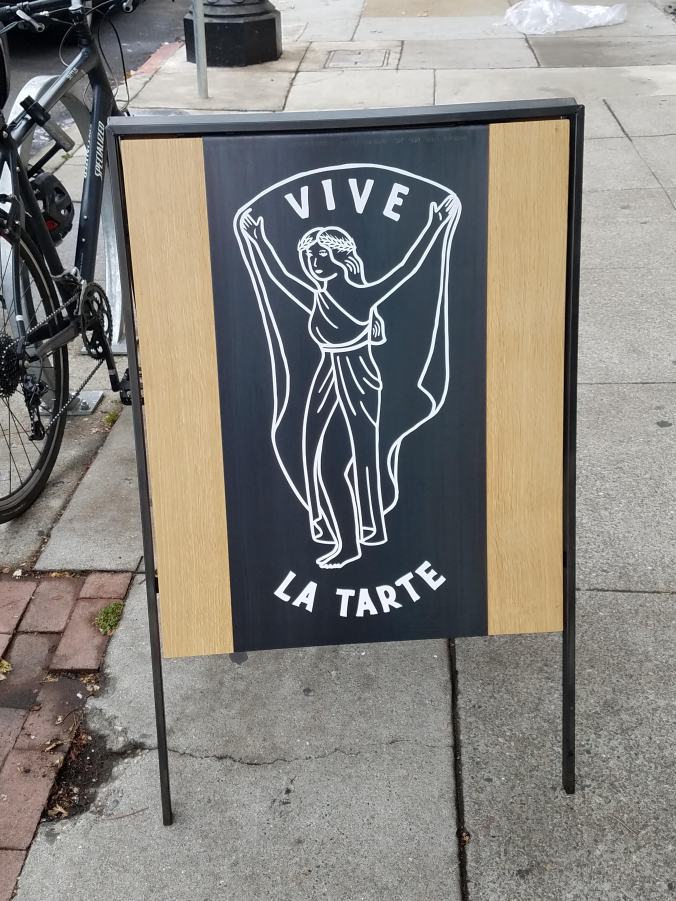
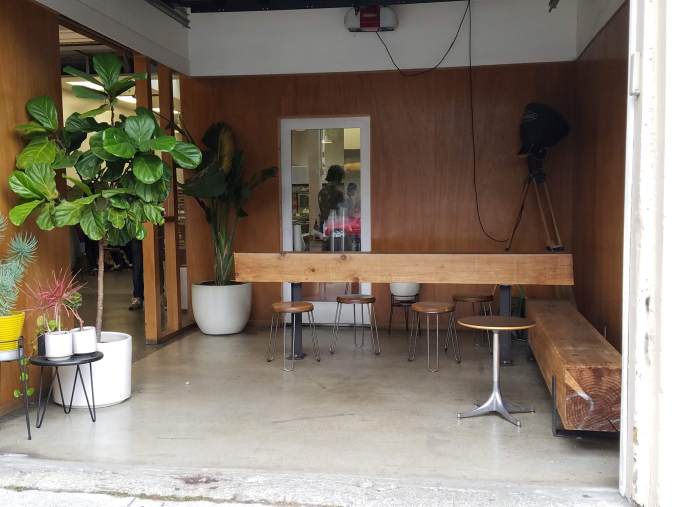
From the outside, Vive la Tarte doesn’t look like much.That large open space on the right, that’s called the sunroom. It was too cloudy a morning for me to attest as to any sun that might on a different day stream in there, but if they want to call it the sunroom, so shall it be. There’s an opening within the sunroom that leads into the restaurant, besides a main entrance. See the sandwich board outside the main entrance?

outside2

As you are walking down Howard Street, that’s your indicator. This is the place to be.

sandwich board

The same simple block-lettered name in the window identifies the bakery. Look elsewhere for fancy.

outside1

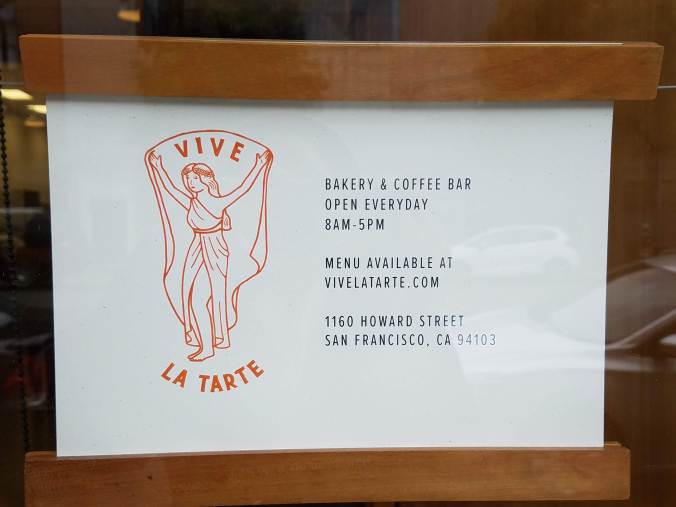
Two simple signs hang in the windows. One has the basics.

window sign.jpg

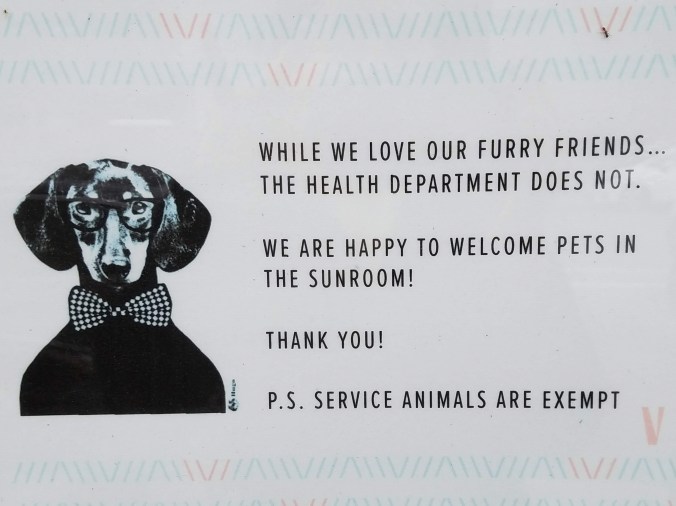
And one informs you of the dog policy.

dog policy (2)

Not to worry if you have your dog with you. That open garage door, a.k.a. the sunroom, is indoor-outdoor space is just for you and your dog. No takers while we were there.

sunroom

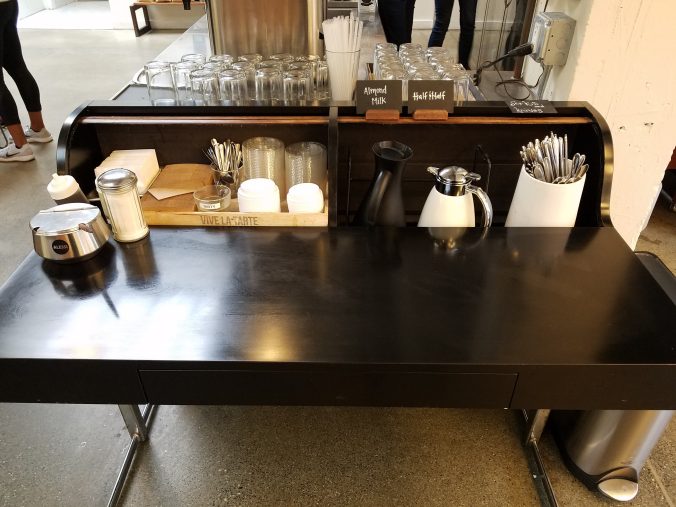
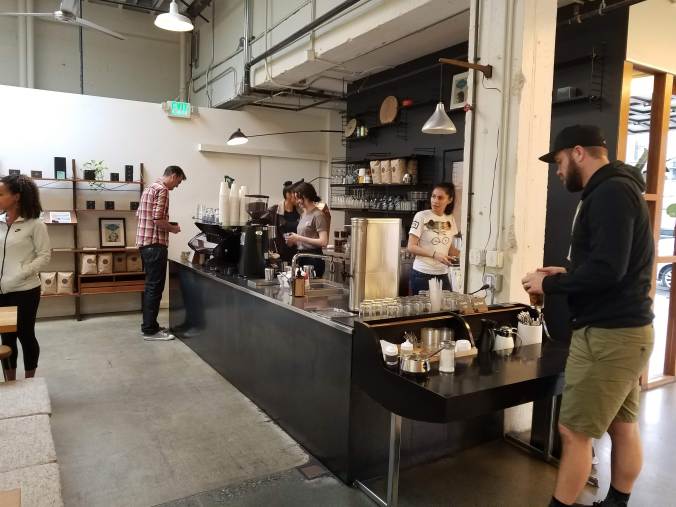
I am especially enamored of San Francisco’s evident commitment to producing less waste. The coffee station does not have sugar in packets that become trash, plastic or wooden stirrers that become trash, or half and half in little plastic cups that become trash. I know these things have their place, but the less of them the better.

milk and sugar

You have real spoons for measuring your sugar out of a glass jar (and for stirring), a cup to put the dirty spoon in, ceramic cups and real glasses to drink from and a helpful staff to get you anything you need that you don’t see.

coffee station

After I finished my pizza and tea (which I grant does not, without context, sound like a good combo but you know what my pizza looked like), I stood back and took the whole scene in. It’s huge and wide open.

long view inside

The kitchen is in full view as you approach the counter. I like when you can see what they are doing.

kitchen

I watched the lady banging her huge whisk to get most of the meringue off it. It’s a quantity of meringue that is inconceivable in a home kitchen, but oh how delightful a dollop of it is on a lemon tarte. Meringue is a kind of free-form marshmallow fluff, a simple mix of egg whites and sugar beat up till it’s fluffy as a cloud. Oh, the incredible ways people have come up with to make food so delicious!

meringue2 (2)

I wish I could come here for breakfast every day.

No, I don’t.

If I did, at least two things would happen that I don’t want to happen.

1. Vive la Tarte wouldn’t be special any more. It would be normal, every-day-ish, and I want places like this to always be special to me. (Once a week maybe I could live with though…!)

2. I would not be incentivized to play in my own kitchen or somebody else’s, which a visit here has very much made me want to do. For starters, monkey bread… So guess what we are going to do tomorrow in Drew and Nicole’s kitchen! I’ll let you know how it comes out 😊

Best Onion Soup Ever

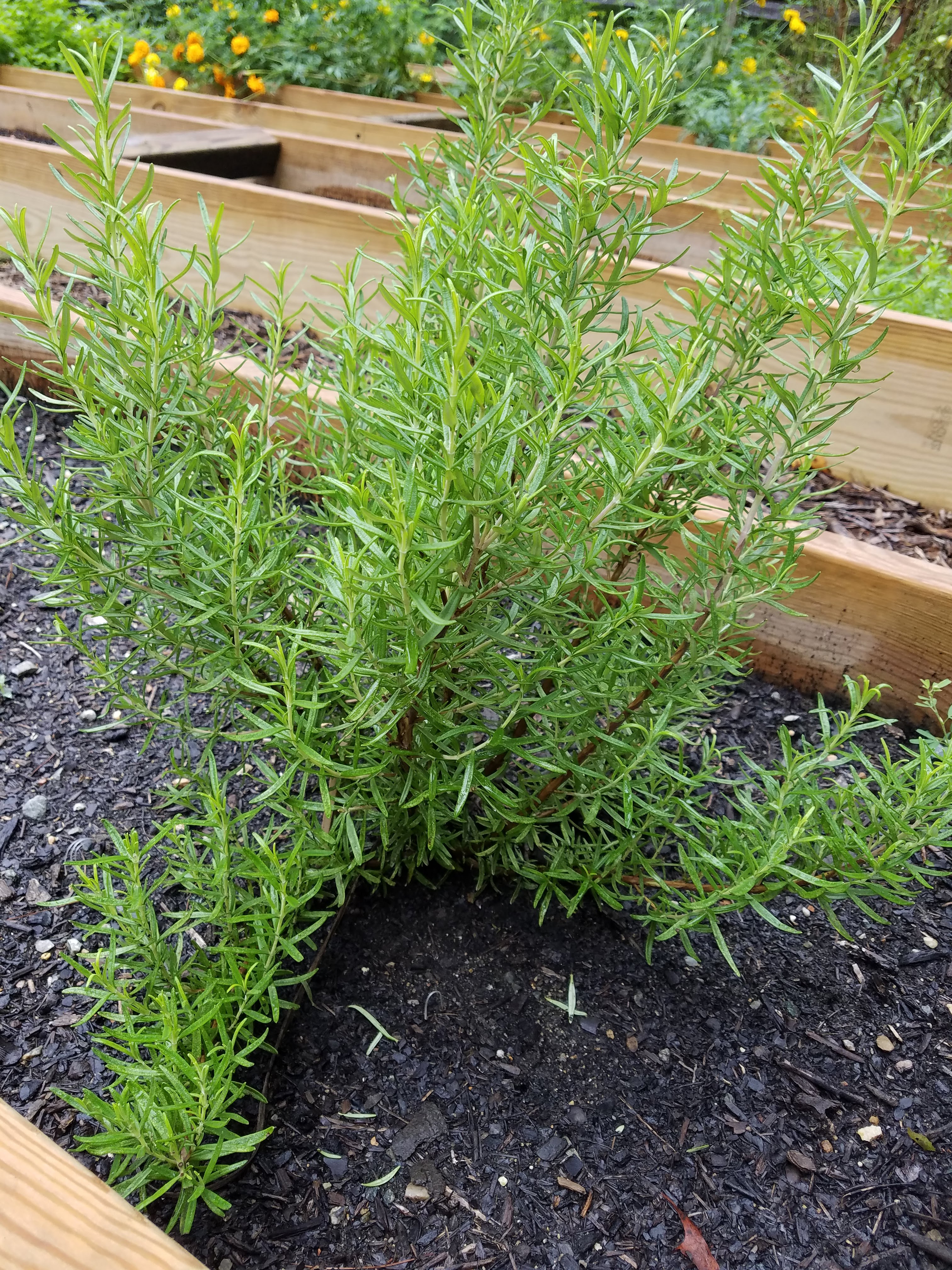
I never planted onions before, but this year I went big: one hundred sets each of white, yellow and red. I never planted rosemary with success before, or thyme at all. But these essential ingredients for the best onion soup ever all grew well this year. I know this isn’t the fullest rosemary bush in the world, but for me, it’s phenomenal.

rosemary.jpg

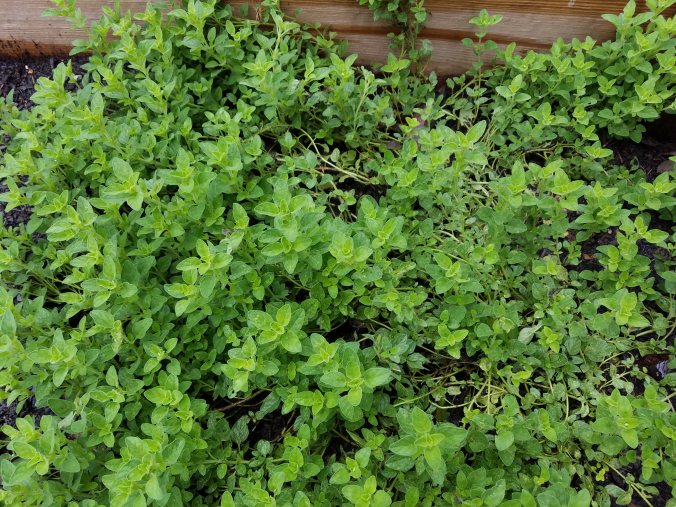
The thyme might look like a weed, but those perfect little leaves strike joy in my heart.

thyme.jpg

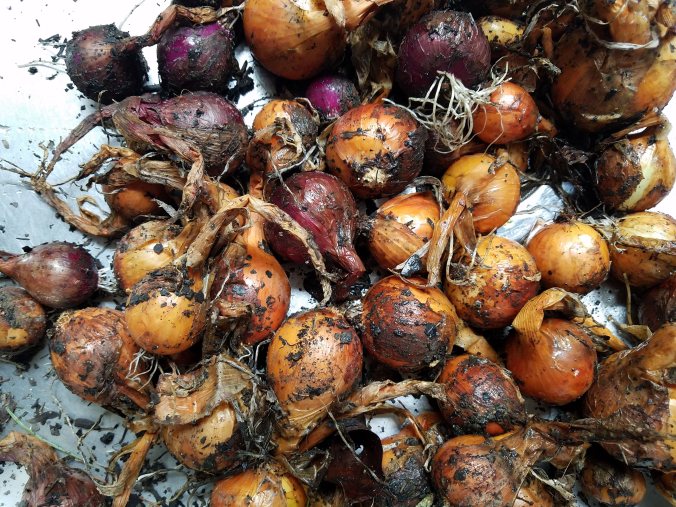
Onions, well, onions sit in the dirt. They are a mess when you bring them in and put them in the sink to clean them.

garden onions dirty.jpg

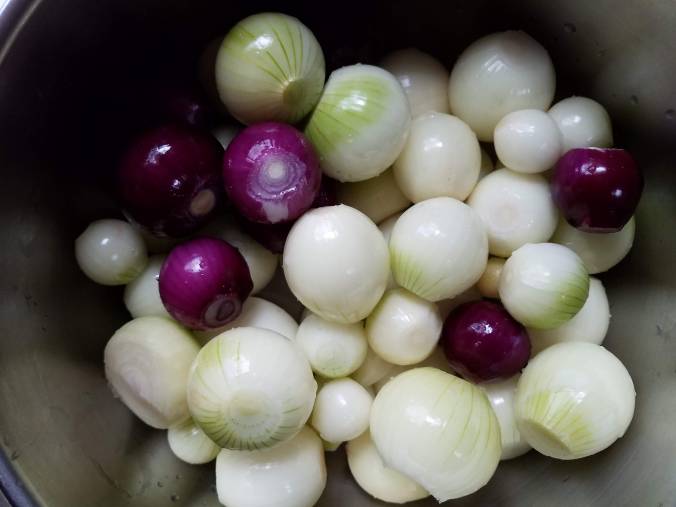
But what’s inside the mess is glorious. They glisten like jewels.

garden onions clean.jpg

I learned how to make onion soup when I was 16. That year, I wanted to make a trip to Germany to meet Claudia. She and I had been pen-pals since we were 12, having met through my great aunt Lina, who was her father’s cousin and my mother’s aunt by marriage. Claudia used to say that she and I were related “around nine corners.”

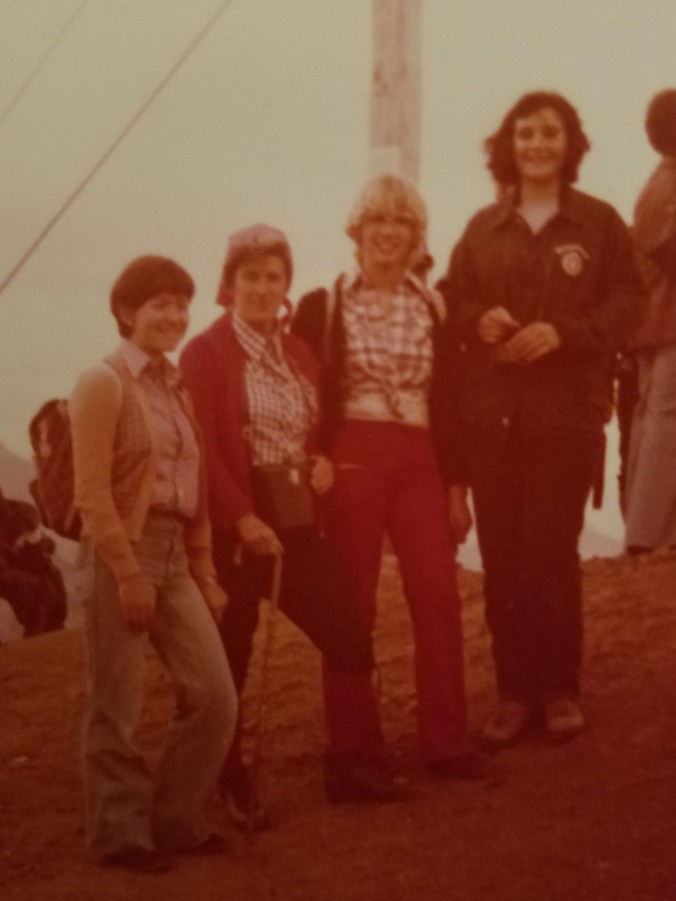
Here we are during that trip, posing with two other (closer) relatives between us on top of a mountain we hiked in what I think was the foothills of the Alps. (Claudia, help me here, what mountain was that?) I didn’t plan this Onion Soup post to fall on this date, but I’m so glad to be able to say: Happy Birthday, Claudia!!

Claudia and I 1977 hiking (2).jpg

This ties to my onion soup because I needed money to pay for my trip. For the nine months before my trip, throughout my senior year of high school, I held a weekend job at a French restaurant called Picot’s Place. It was there that I observed the chef making onion soup week after week. I have since made it myself countless times the same way he did. I LOVE onion soup, and I have never been disappointed in how mine turns out. Somewhere, I got the right kind of crocks long ago, and have always made it with the bread and melted cheese on top, the way it is often served in restaurants.

Nothing wrong with that. Well, except for how difficult it can be to eat it with the cheese adhering to the bowl the way it does, on and under the rim. And sometimes, when you get it in a restaurant, they put too much bread in there which soaks up all the broth, or sometimes too much cheese so that you are eating just gobs of melted cheese before you can get to the soup.

This past weekend, at the Inn at Mount Vernon, I had onion soup that was BETTER than mine. Not only was it better, it was better in a way that I thought I could duplicate, so I did, thinking there might be some onion soup fans out there. How was it better?

  1. The onions were cut up smaller than you often get it, meaning we did not deal with trying to get long floppy pieces of onion onto our spoons.
  2. It had been thickened! Never had onion soup except with a clear broth before, and this change was amazing.
  3. The bread-cheese on top was cheesy croutons – bread cubes on which cheese had been melted prior to simply putting them on top of the bowl of creamy, rich soup.

I promise that the fact of it being a nasty, rainy day this past Sunday at Mt. Vernon and our being finally inside, out of the weather, and into the warmth of the dining room had nothing to do with how good the soup was. On any day, this soup would be judged (by me, anyway) as outstanding.

For my version, I started with that bowl of onions above, minus the red ones, which turned out to be 5 full cups of chopped onions. Chop them as fine as you want. I asked Samuel to cut them up, which was rather a pain because they are so small and therefore it took a long time. All I said regarding what size to chop them was “not insanely fine,” which he interpreted as meaning the size could fall anywhere in the huge range of possibilities between no-longer-whole and minced. I realized my communication error, my inexactitude, when he asked me to confirm that he had judged “not insanely fine” correctly, which he realized he hadn’t when I simply stared at his pile and did not verbally approve in a glance.

All to say, cut them as big or as small as you want. Just don’t leave them whole.

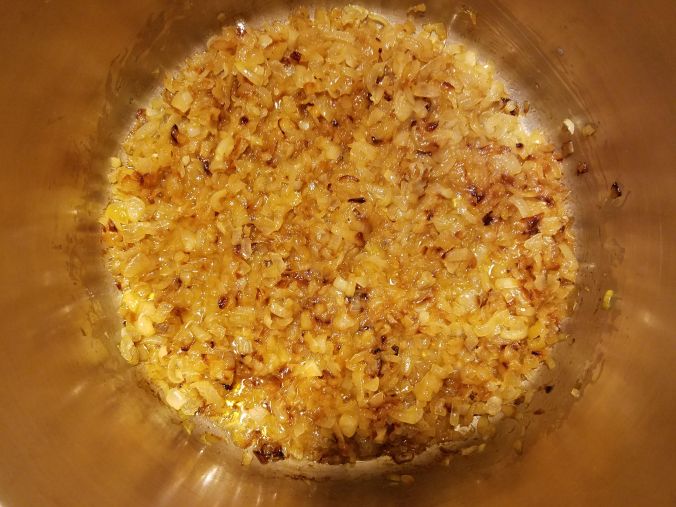
Put the five cups of chopped onions in a large pot (my Dutch oven came in handy again) along with a stick (1/2 cup, or 113 grams) butter. Turn this on low and let it cook for about 45 minutes, stirring now and then. It will look like this in half an hour or so, but leave it a little longer, about 15 minutes longer, on real low for those onions to get super soft and transparent. They are like gold to me.

sauteeing.jpg

Next I veered from onion soup tradition and added half a cup of flour, and stirred it in, making a pasty roux. Making a paste like this is the basic way to thicken something without ending up with lumps. Stir that flour in (a whisk works well) till the paste is smooth, then add four cups of chicken broth/stock and stir it up again. Then add four cups of  beef broth/stock and stir again.

That’s 8 cups of liquid total, and I split mine between chicken and beef broth because that’s how I was taught. You can use all chicken stock, homemade or purchased, or vegetable stock, or all beef stock or whatever combination you want. You can use 8 cups of water plus 8 bouillon cubes (4 chicken, 4 beef) if push comes to shove and that’s all you’ve got.

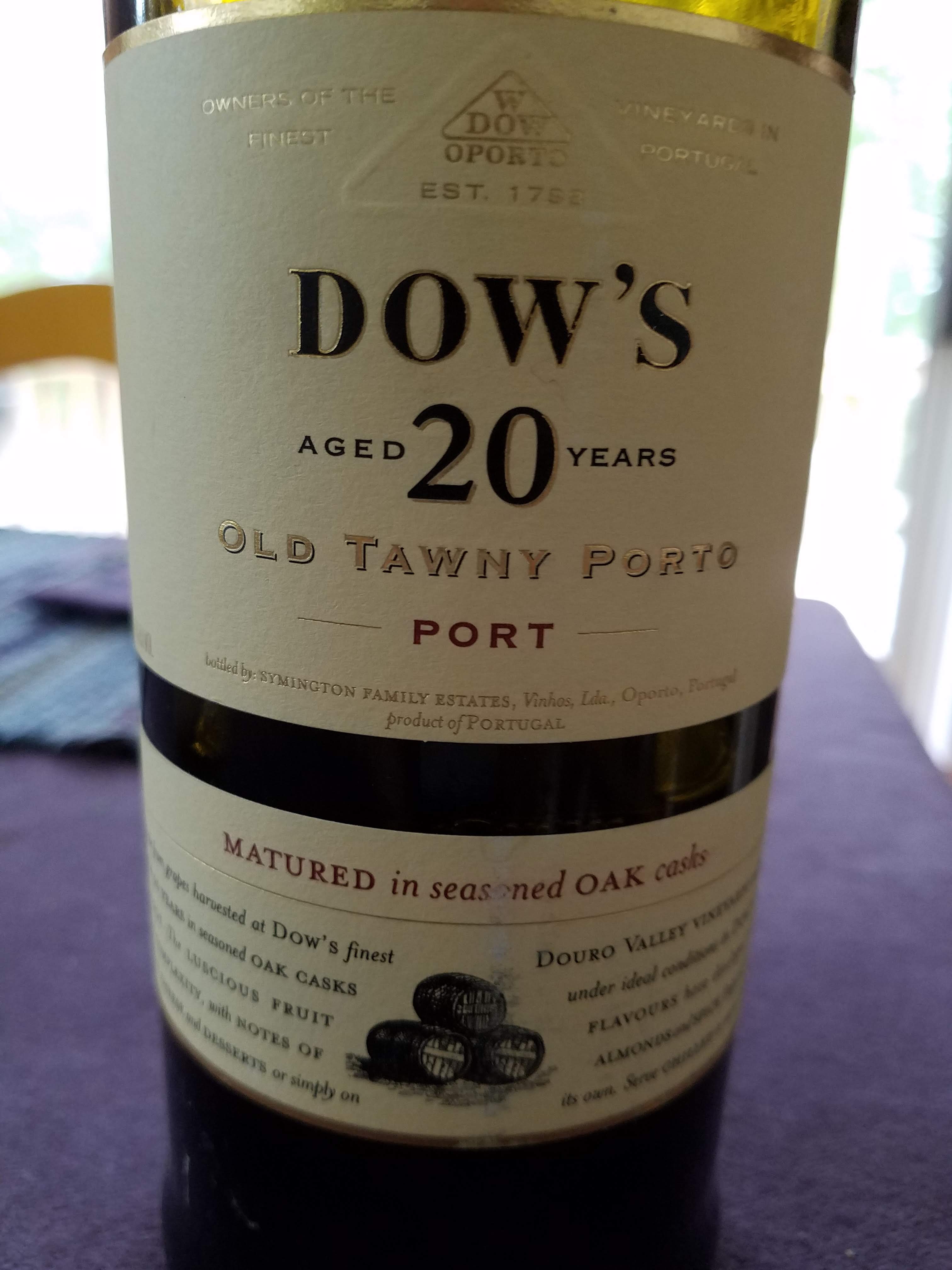
Then add half a cup of cooking sherry. I was running low and had only a quarter cup of cooking sherry so I added another quarter cup of this fine port, which is possibly why it turned out to be the best onion soup ever. I cannot be sure.

port.jpg

If you happen to have a bit of leftover pork gravy from a roast you recently made, or beef or chicken gravy, feel free to put that in. I had about half a cup of pork gravy. Whether this contributed to it being the best onion soup ever, I also cannot be sure. But I think maybe.

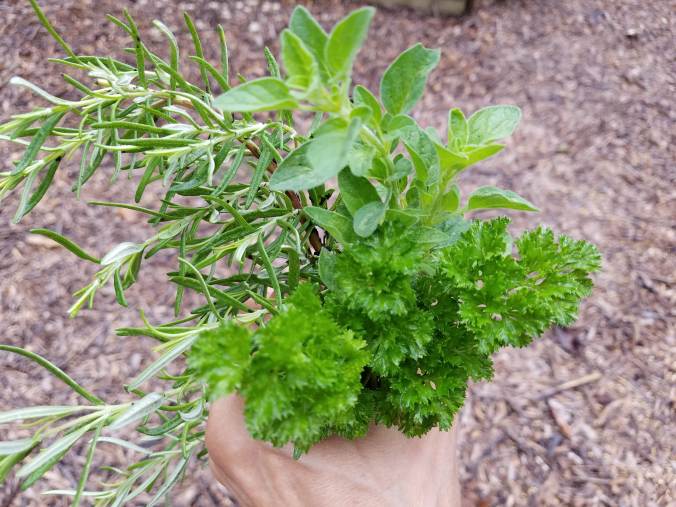
Then add your herbs. My handful for this pot of soup looked like this. I picked the parsley because it looked so pretty, thinking I might use it in the soup, but I have never put parsley in onion soup, so in the end I used only the rosemary and thyme. (The parsley came into play later with chicken piccata.)

herbs.jpg

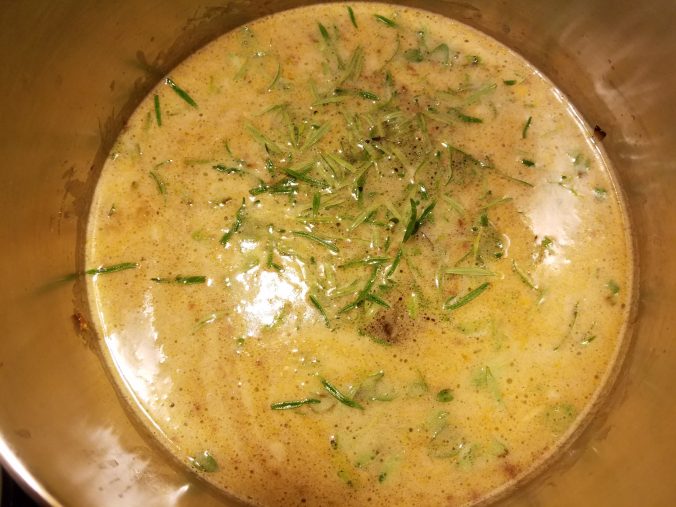
Quantities of herbs: If using fresh, use the leaves of five 6”-long sprigs of rosemary, plus the leaves of five 5”-long sprigs of thyme. (I am trying to be exact here. A little more or less will be fine.) If using dried, use 1 ½ tsp each of rosemary and thyme. In my pot after adding the herbs, it looked like this.

herbs in pot.jpg

Let all of this cook for about an hour on a low simmer. That means the heat is high enough for there to be some bubbling along the edges of the pot but not a full boil. Salt and pepper to taste.

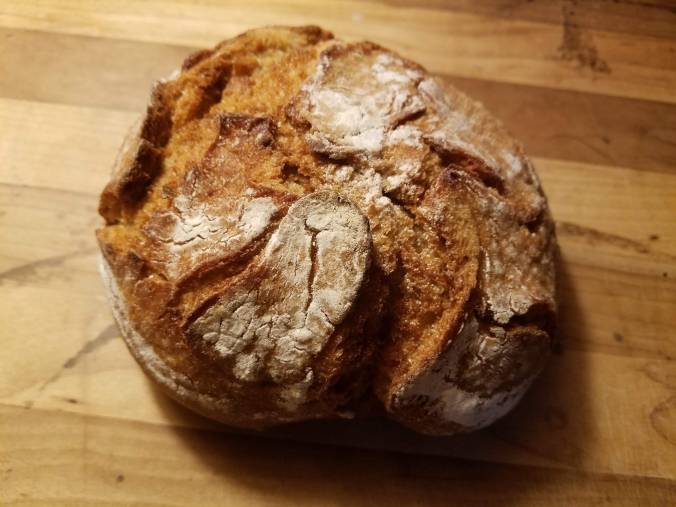
While all those flavors are working their magic in the pot and the soup is becoming delicious, you can make the croutons. Choose bread you think would make good croutons. A small baguette or a firm white loaf will work. I would avoid anything with seeds. I happened to have this lovely darker bread in my freezer, which might have had some rye flour in it, but I don’t know because I didn’t make it. It was small, only about 5 inches across.

bread.jpg

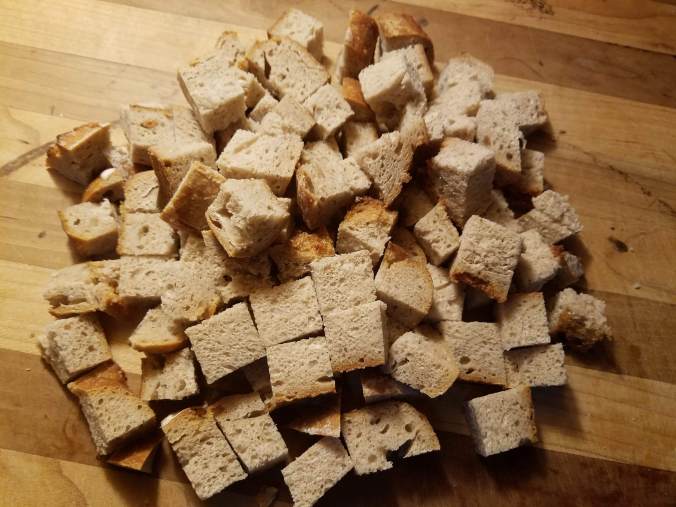
I let it thaw, then cubed it like this,

bread cut up.jpg

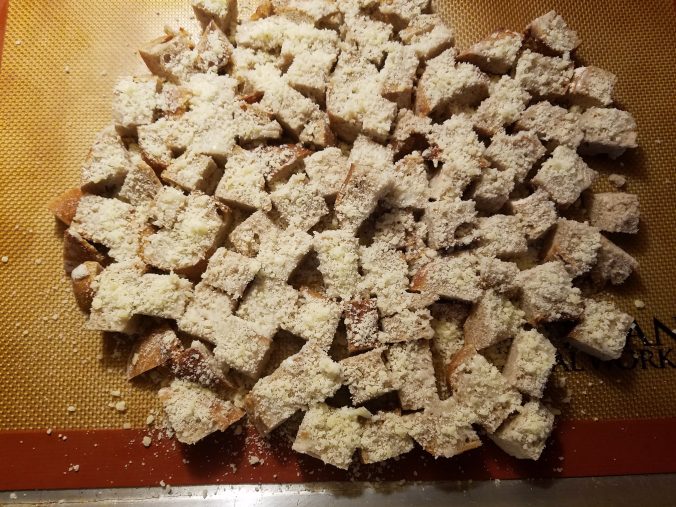
then put the cubes on a cookie sheet, buttered them with a little melted butter (with a brush as you would butter corn on the cob), then sprinkled parmesan cheese on them. The butter is both for flavor and to help the cheese stick. You could probably use a different cheese like cheddar or swiss, as long as it’s finely grated.

bread with butter and cheese.jpg

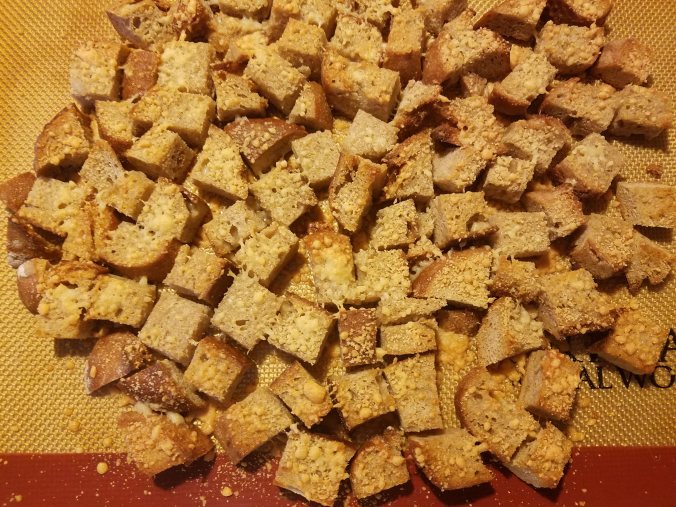
I preheated the oven to 400 degrees and baked the croutons for 20 minutes. Then I turned the oven off and left them in there. Leaving them in as the oven cools draws more of the moisture out of them and makes them crispier without being darker. Finished they looked like this.

bread toasted with cheese.jpg

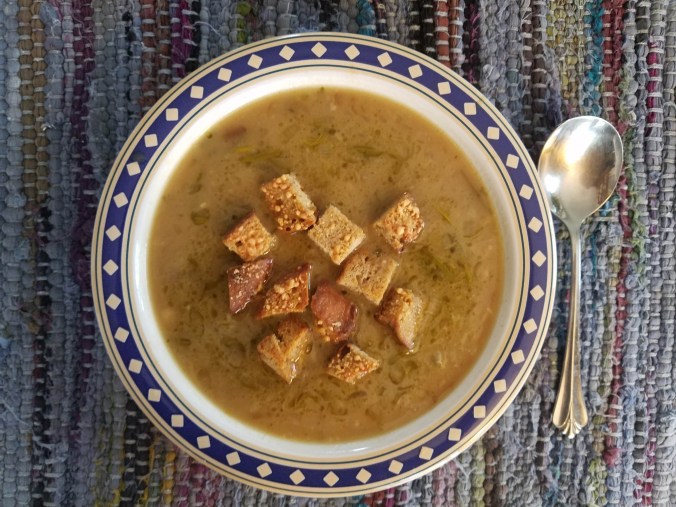
They are marvelous and would be marvelous on almost any soup, but on/in the onion soup, oh my!

soup in bowl.jpg

We were all in heaven. Samuel used four verys to describe how good it was, as in “very, very, very, very good.” I told him I’m not sure he ever used four verys before about anything I’ve made, and he said something to the effect that he was too overwhelmed with how good the soup was to bother with finding better descriptors.

The superlative soup found yet another use this morning. When making myself some scrambled eggs, I used a slotted spoon and took up some of the onion/herb part of the refrigerated soup and heated it up in a skillet. Then I added a handful of spinach chopped up a bit. Let that cook a couple minutes till the spinach got soft. Then added my two beat-up, positively orange-yolked eggs. How many verys? I’ll let you guess.

Botanical Beauties

I never want to see all there is to see or do all there is to do. (Not that I could if I wanted to, but that is another story.) Don’t get me wrong, I want to see a lot, do a lot, fill my world with fun, challenging, delightful, worthwhile, interesting amazing and beautiful things and activities. I want to use every moment I can wisely because you never know what’s around the next bend.

But if I could see it all and do it all, what would be left? In my world, there’s something new every day. The reason for this seems clear: Otherwise I might cease to be astounded at the diversity and majesty of the natural world around me as well as the artistry and cleverness of my fellow humans. Standing in awe at the wonder of creation or the ingenuity of people keeps me on my toes, which is one way to keep things unboring.

Yesterday, for instance, a quick walk through the botanical gardens here in Washington, D.C., included lots of green, lots of spikes, lots of color. None of that is what struck me first though. As you walk in the door, the very air embraces you, tells you a story, encourages you to keep moving forward. It both feels and smells fresh, sweet and in its own way intoxicating. I kept going.

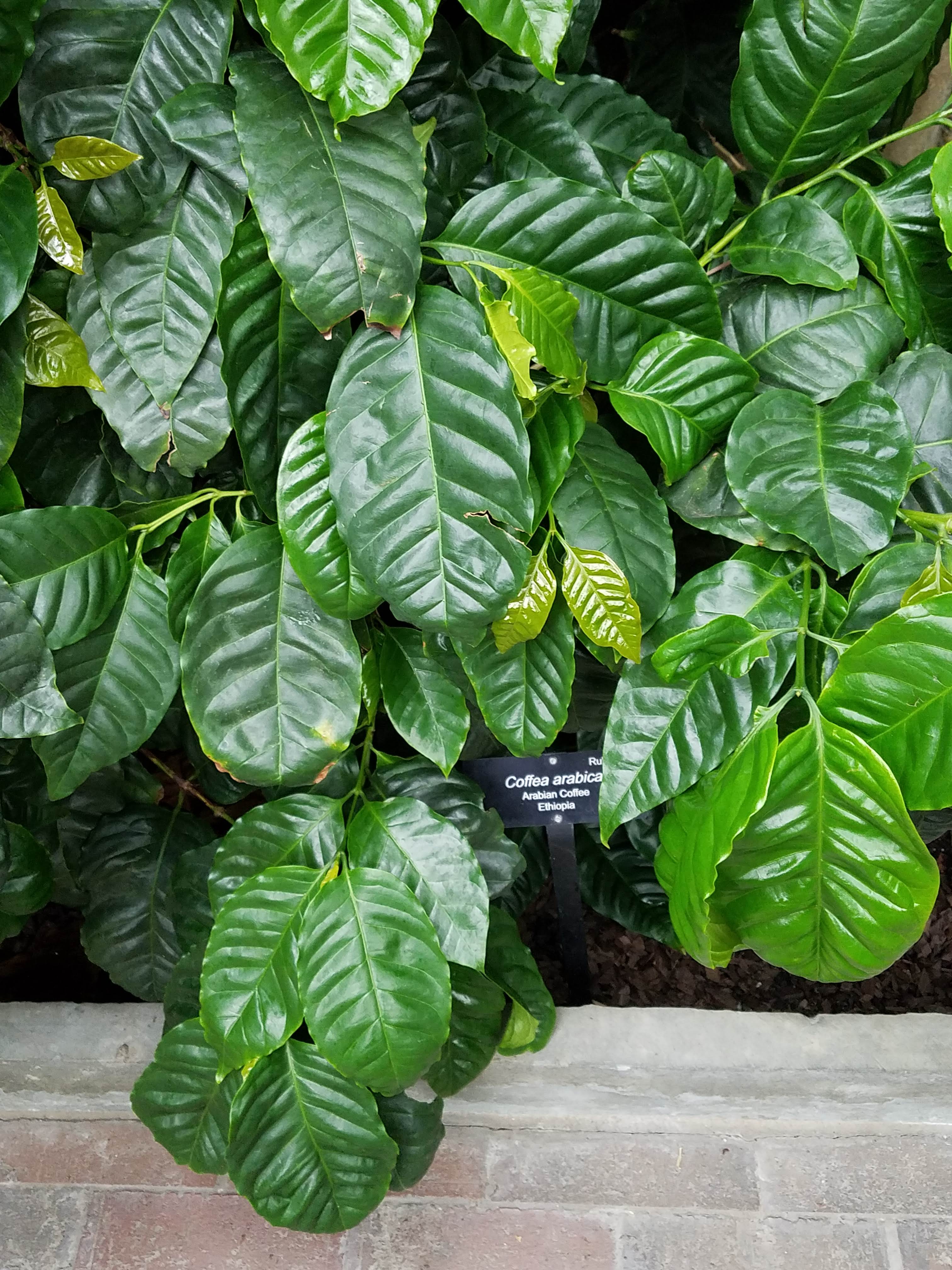
Maybe you have seen how coffee grows, how shiny green its leaves are, but I hadn’t. They might be plastic for as perfect as they looked to me. The staff added those few broken brown edges just to make it look real, right?

coffee plastic.jpg


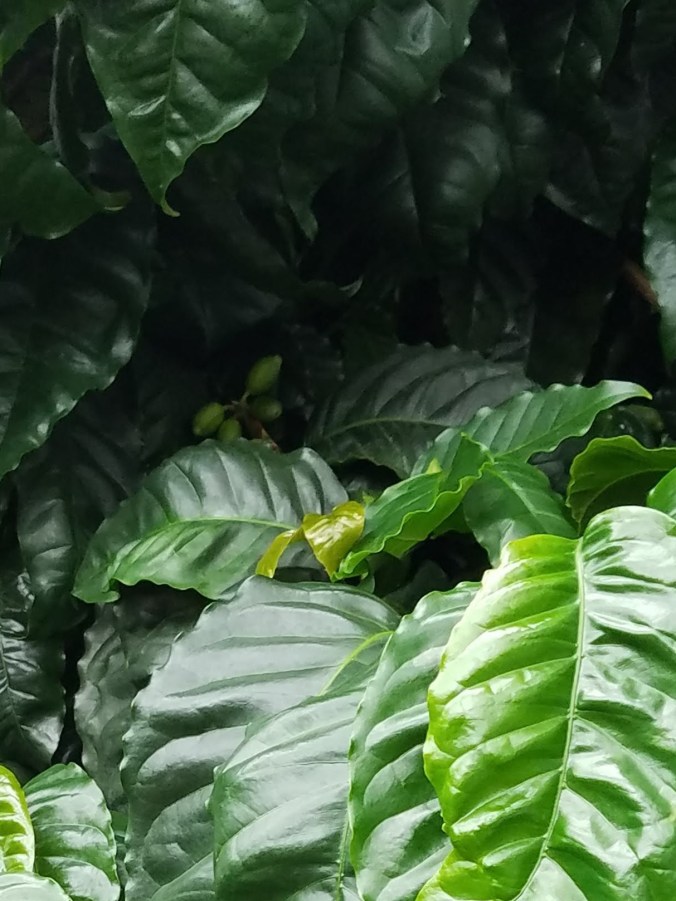
The beans seem to like to hide. Shy maybe? Hoping to escape detection? See them in there?

coffee beans (2).jpg

Some of these plants have a very effective way of protecting themselves. Don’t even think of touching me! says the cactus to anyone or anything that comes by. We get the message!

cactus up close.jpg


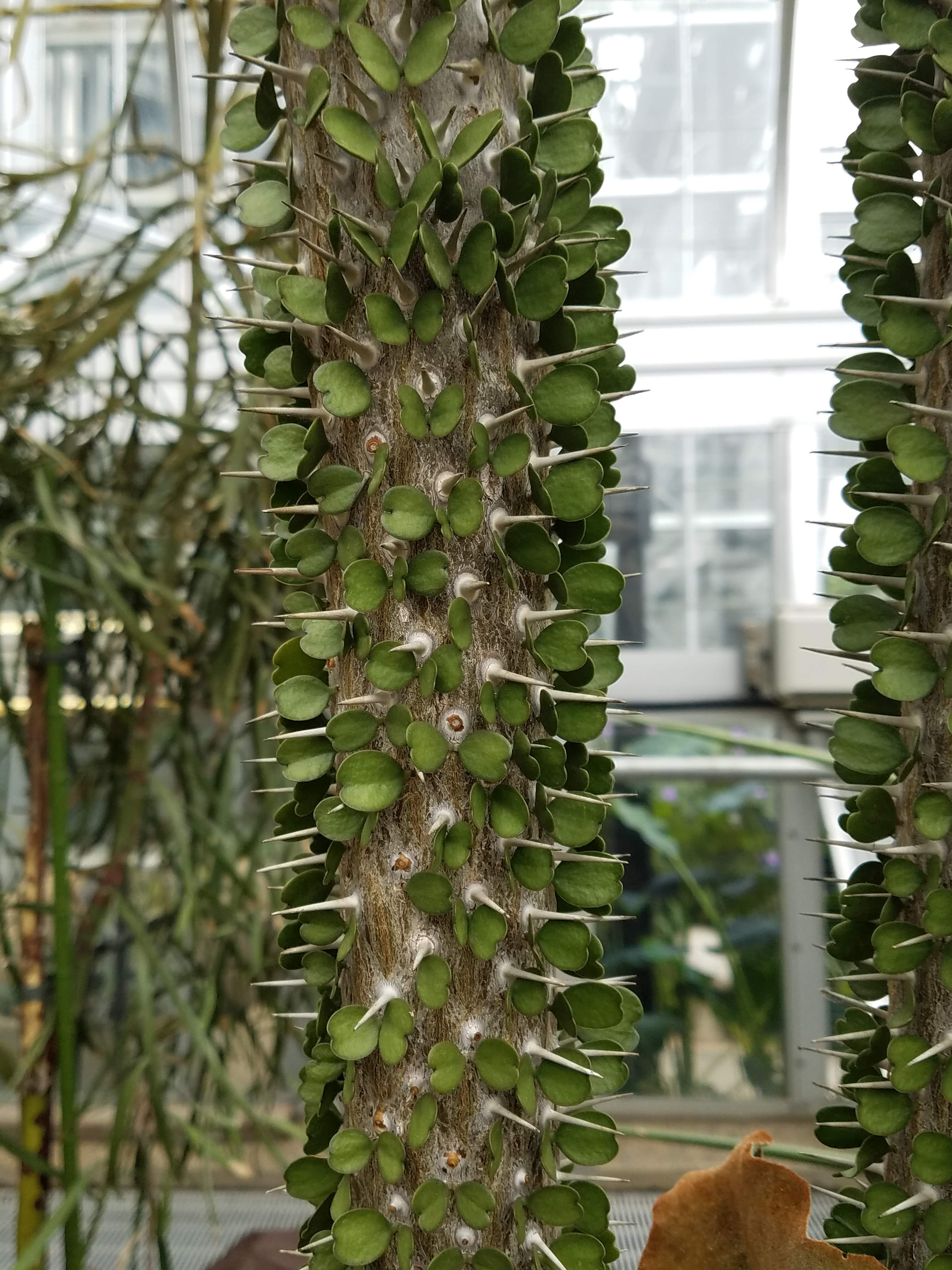
Some plants are aptly named. Botanists sometimes get the fun of assigning a name. Do you think this name works? It’s the “devil’s dagger.” The little heart-shaped green parts looking remarkably like harmless leaves are a bit misleading. They say You know you want to touch me, while the spikes are waiting patiently, in just as plain sight, for you to try it. Just try it!

devil's dagger2.jpg


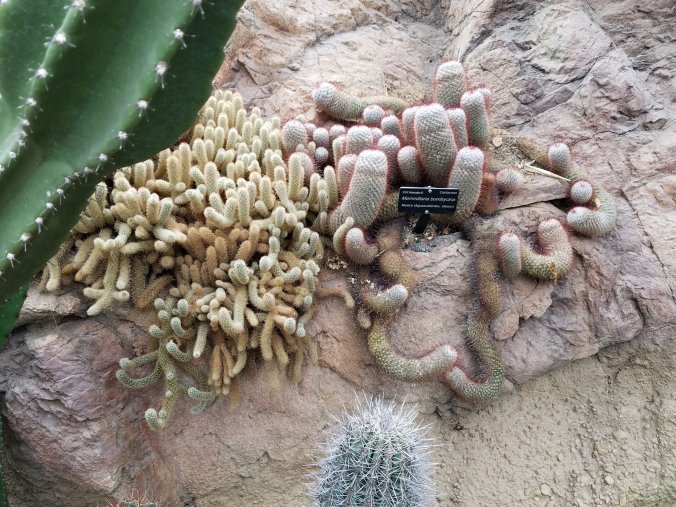
Whoever named these little babies clearly did not have a sense of humor, so I am choosing to call them “sausage cactus.” What would you call them?

sausage cactus.jpg

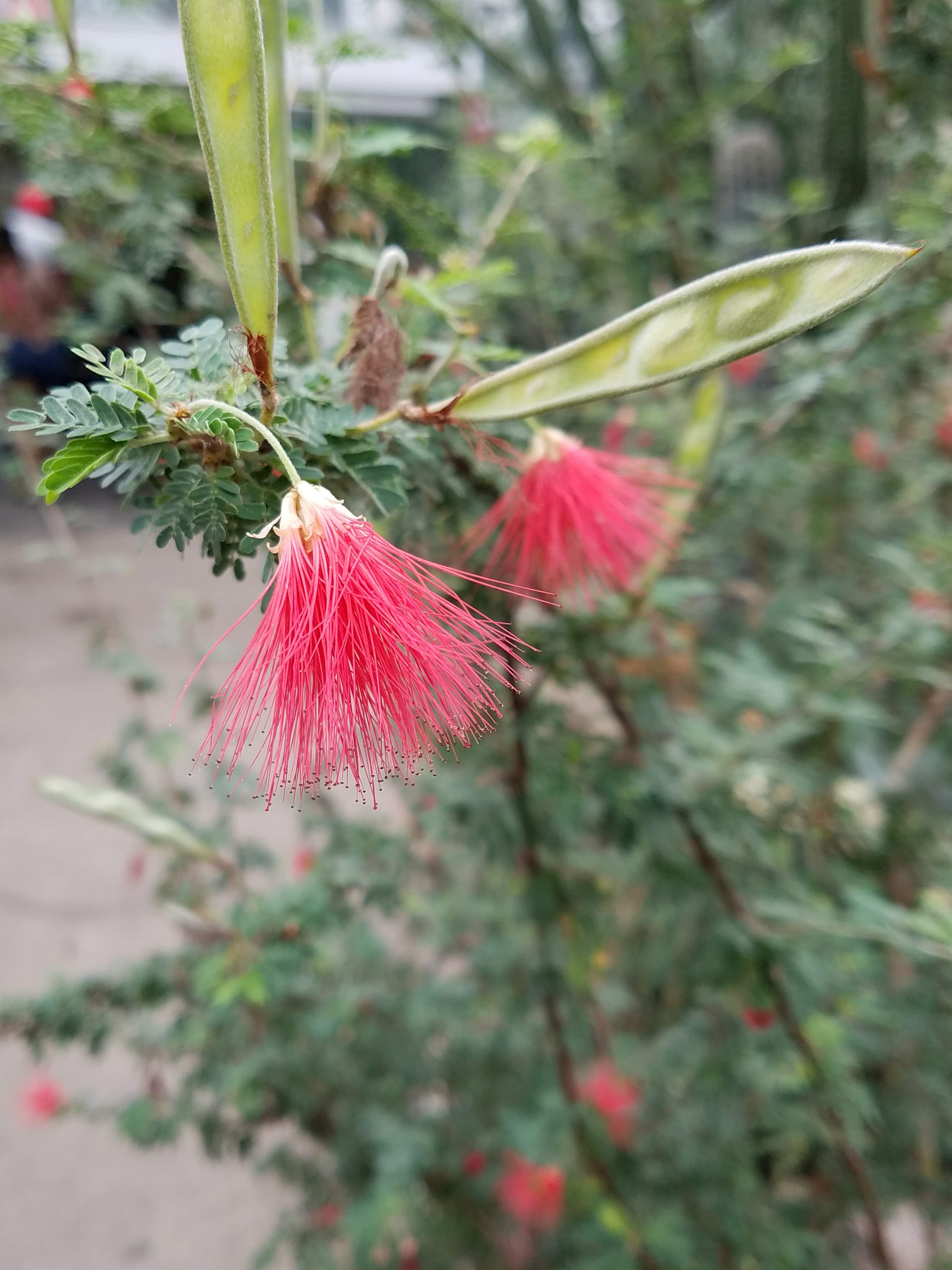
I did not see a name for these beauties, but a fairy who is bent on housekeeping would surely carry one around as she goes flitting from crystal to crystal on your undoubtedly gorgeous but unfortunately dusty chandelier, happily revealing the splendor under the dust with her “fairy duster.”

fairy dusters.jpg

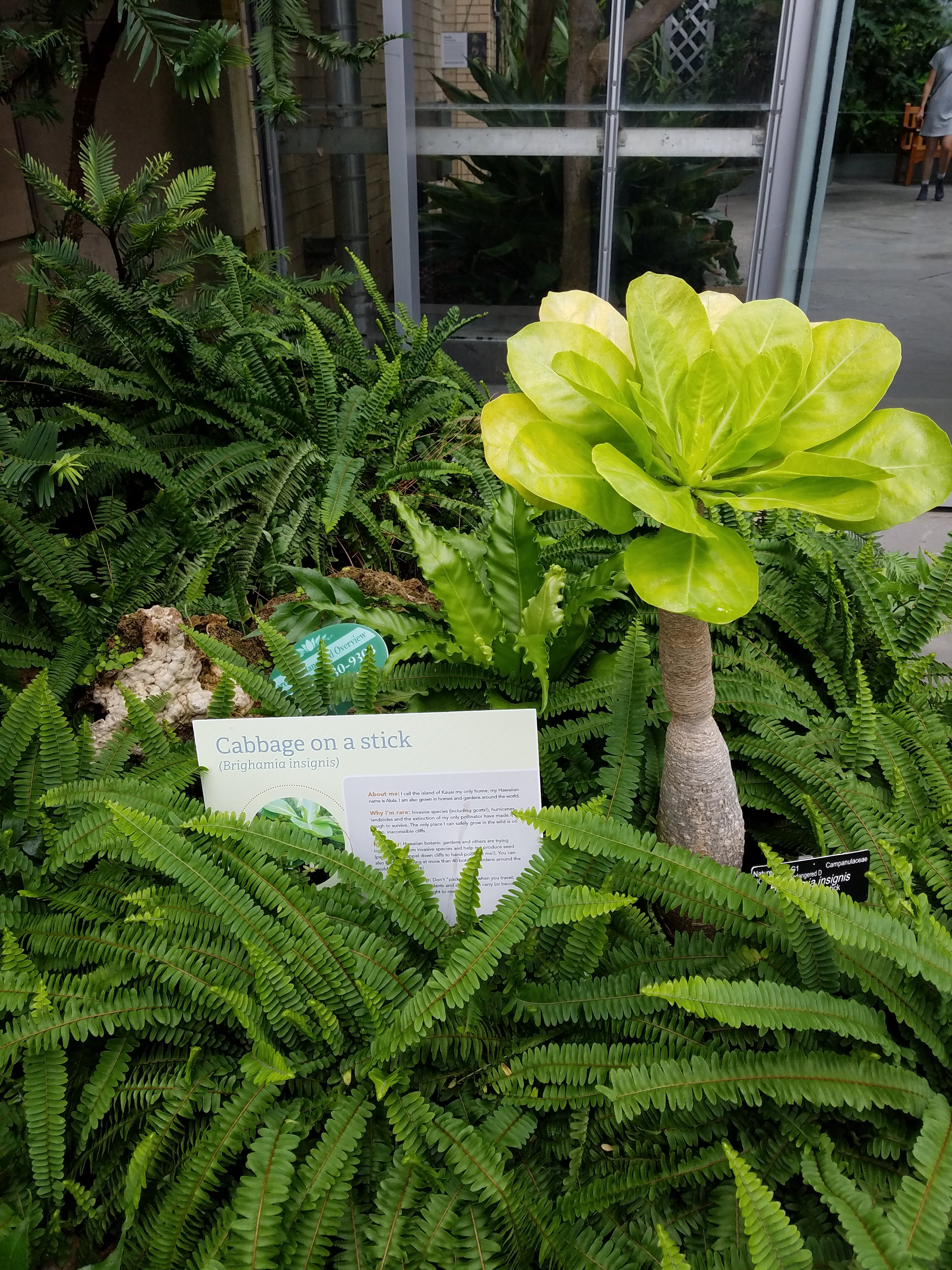
And who could look at the Cabbage on a Stick without wondering who had the fun of naming it?

cabbage on a stick.jpg

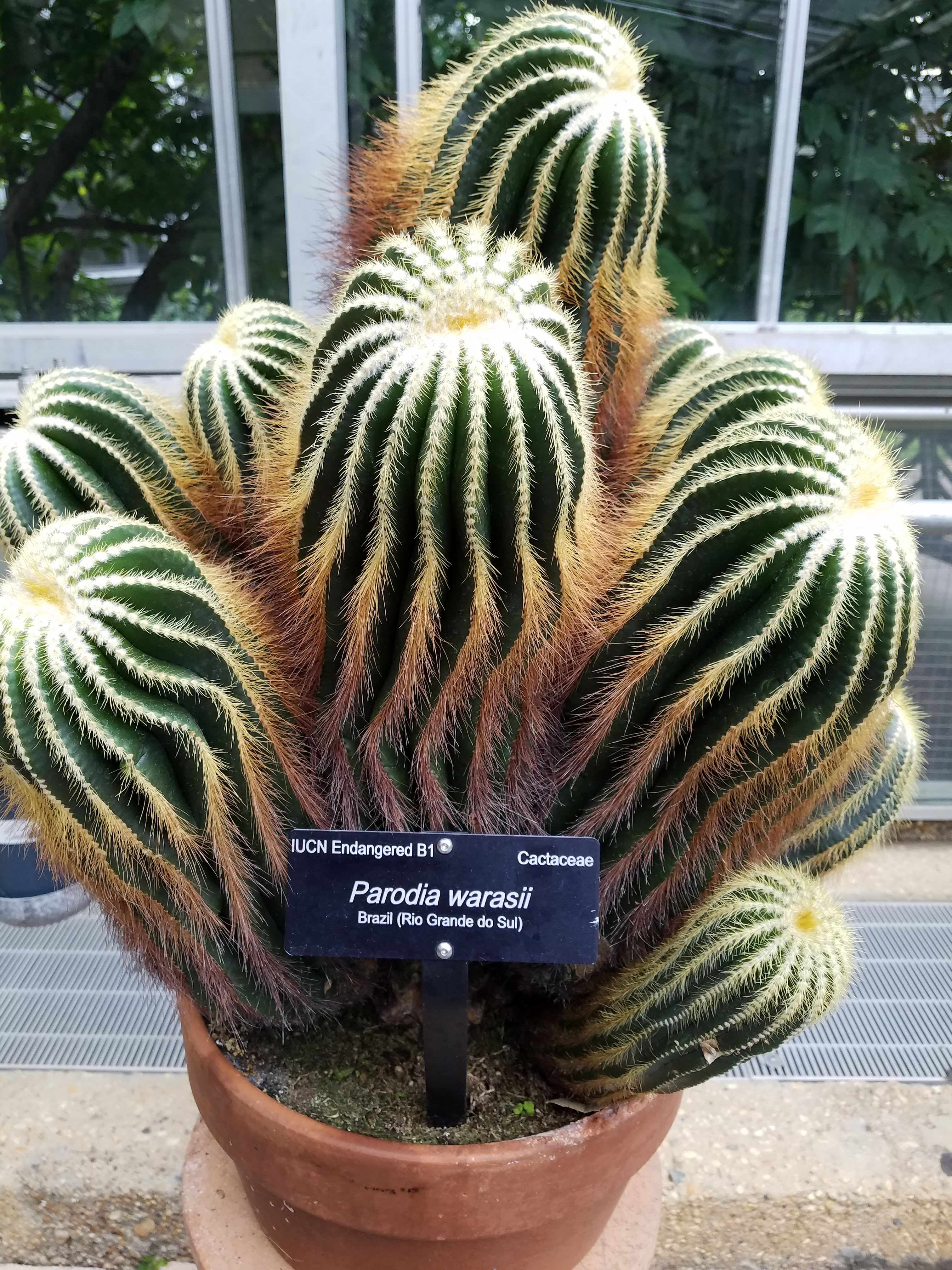
Here’s another great name: parodia warasii. It looks healthy, wispy – don’t those hair-like things look wispy? soft even? It’s very interesting and, yeah… don’t come any closer.

parodia warasii.jpg

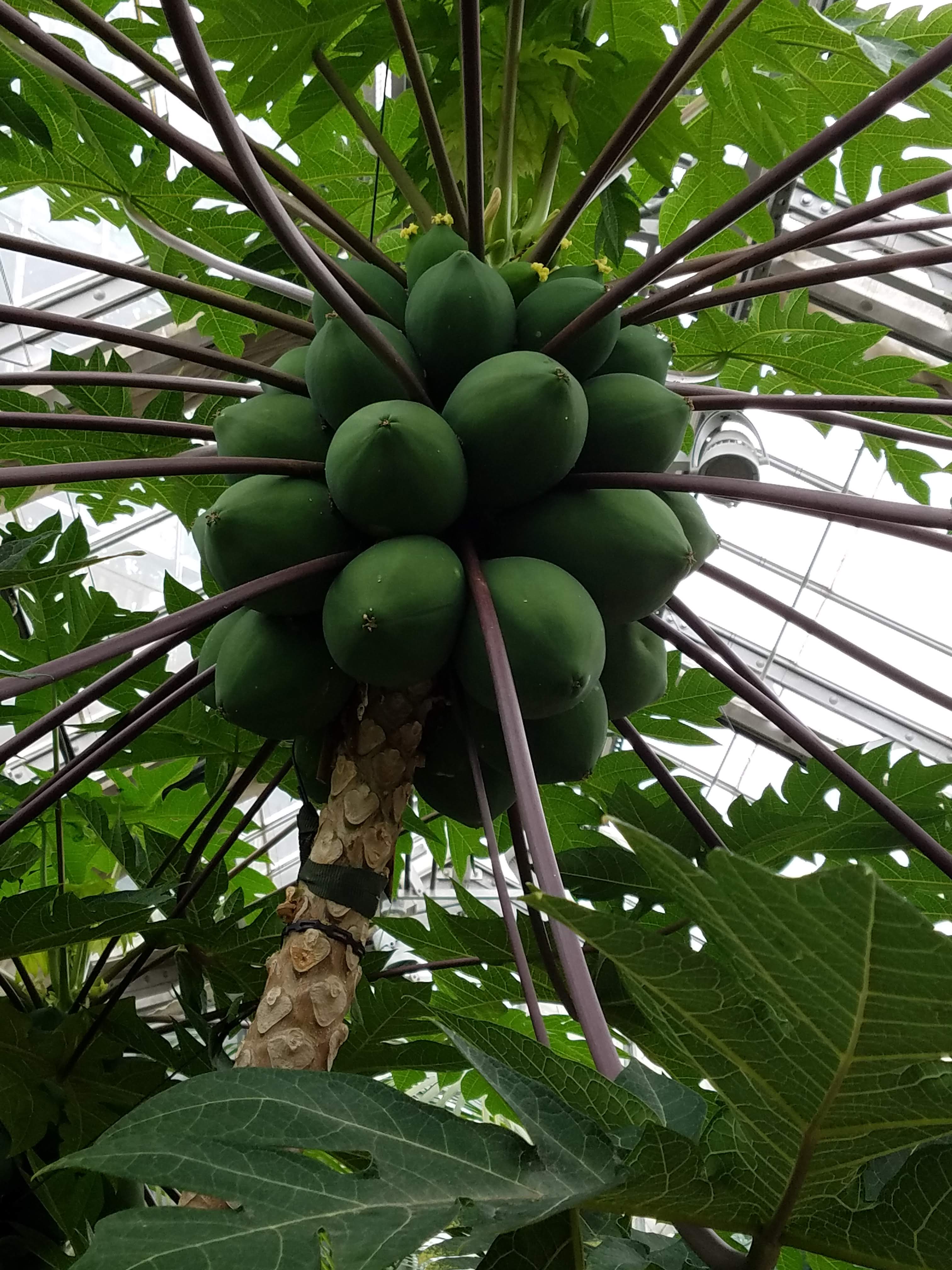
It’s great to see where fruits come from. My education today included papayas. Who knew they look like this when they’re growing on a tree? I admit I didn’t.

papaya2.jpg

This handful of plants is but a drop in the bucket (or a drop in the ocean!) of what’s out there in this marvelous world of ours. Knowing that, taking a moment to grasp the enormity of that, makes me happy to be a part of it, even if my part is just looking and not touching!

One more — bougainvillea. How beautiful is this?? And who can’t love a plant with a name that rolls off the tongue like boo-gan-viya?

bougainvillea


A Giant Beanstalk and Treasure Found

I say Beanstalk but I mean Gourdstalk. Nobody thinks of Fee-Fi-Fo-Fum when they hear the word gourdstalk – if gourdstalk is even a word. But Beanstalk – this evokes giants and bravery and treasure. I’m glad for the reference because even if I didn’t deal with a mean giant or a little boy bravely taking back stolen goods, I did find treasure recently.

beanstalk.jpg

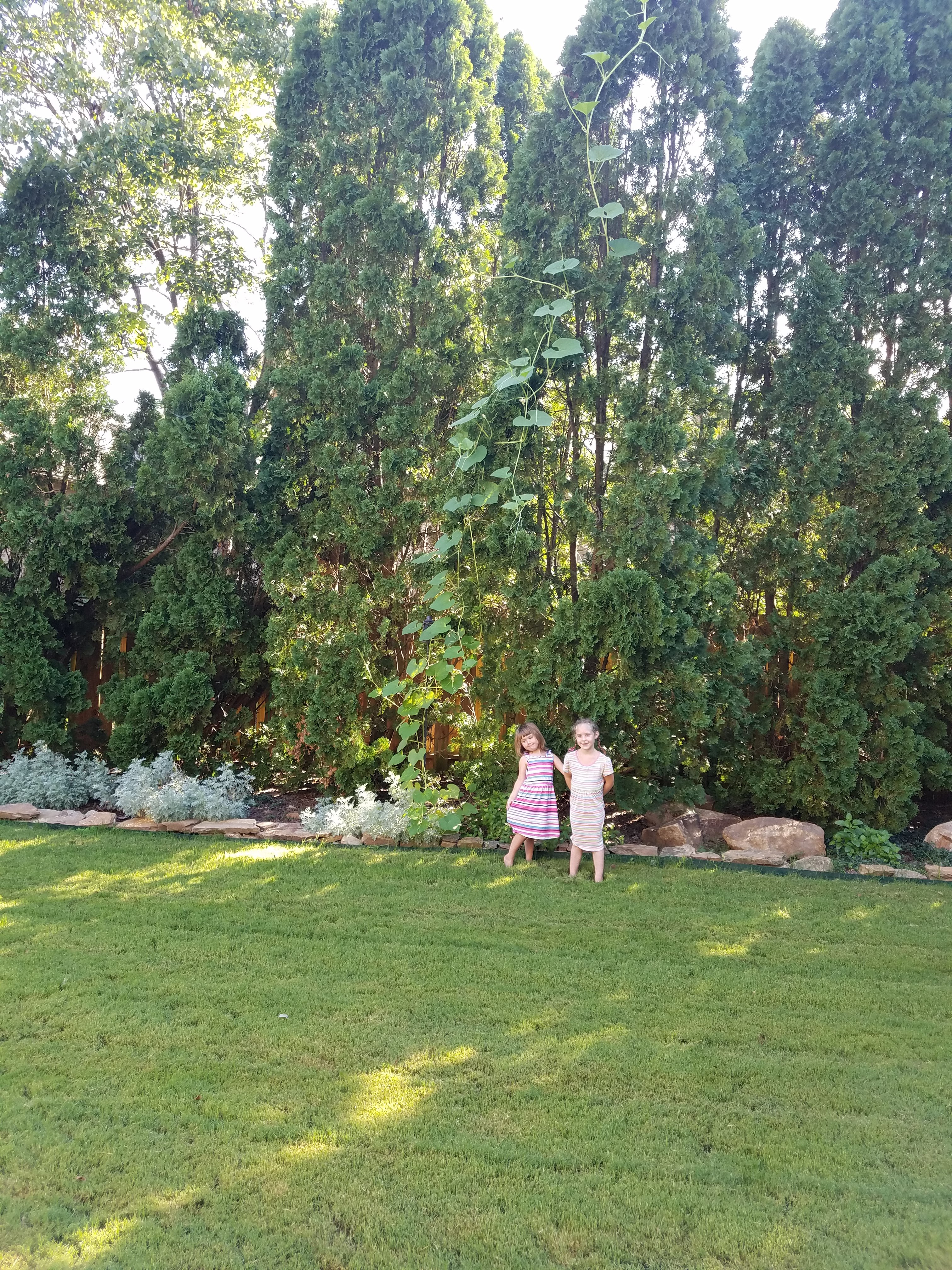
The viney thing with the big green leaves growing vertically to the left of my granddaughters is a gourd. The photo does not even capture the full height of the stalk, which grew from two small seeds. A little closer up, the leaves look like this:

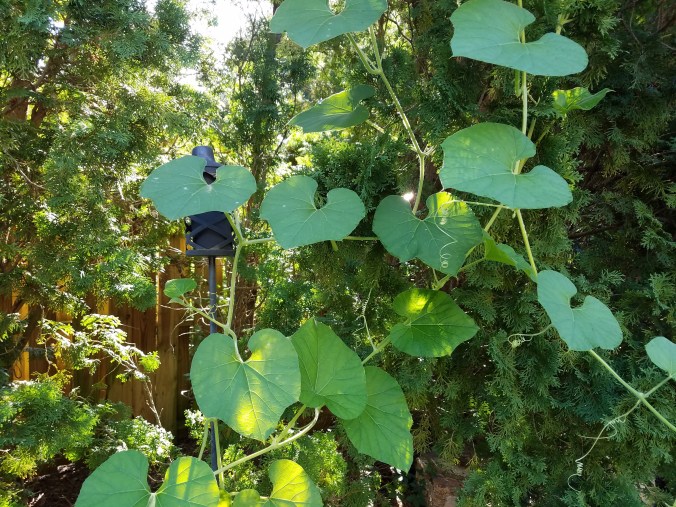
gourd.jpg

The leaves are beautiful and the height is remarkable – even if it doesn’t reach up to a land high in the sky where a giant’s castle stands. But the plant is not the treasure. The treasure is whose plant it is. Last week I made new friends. Not to say I didn’t know them before. Louisa and Jake are friends of our mutual friend Millicent and I met them more than a year ago. But now they are no longer friends of a friend. Now they are simply friends. My friends. And I am theirs.

When I mentioned to Louisa that the girls and I would be passing through Charlotte, she said, “I wish you could stop in. Is there a way?”

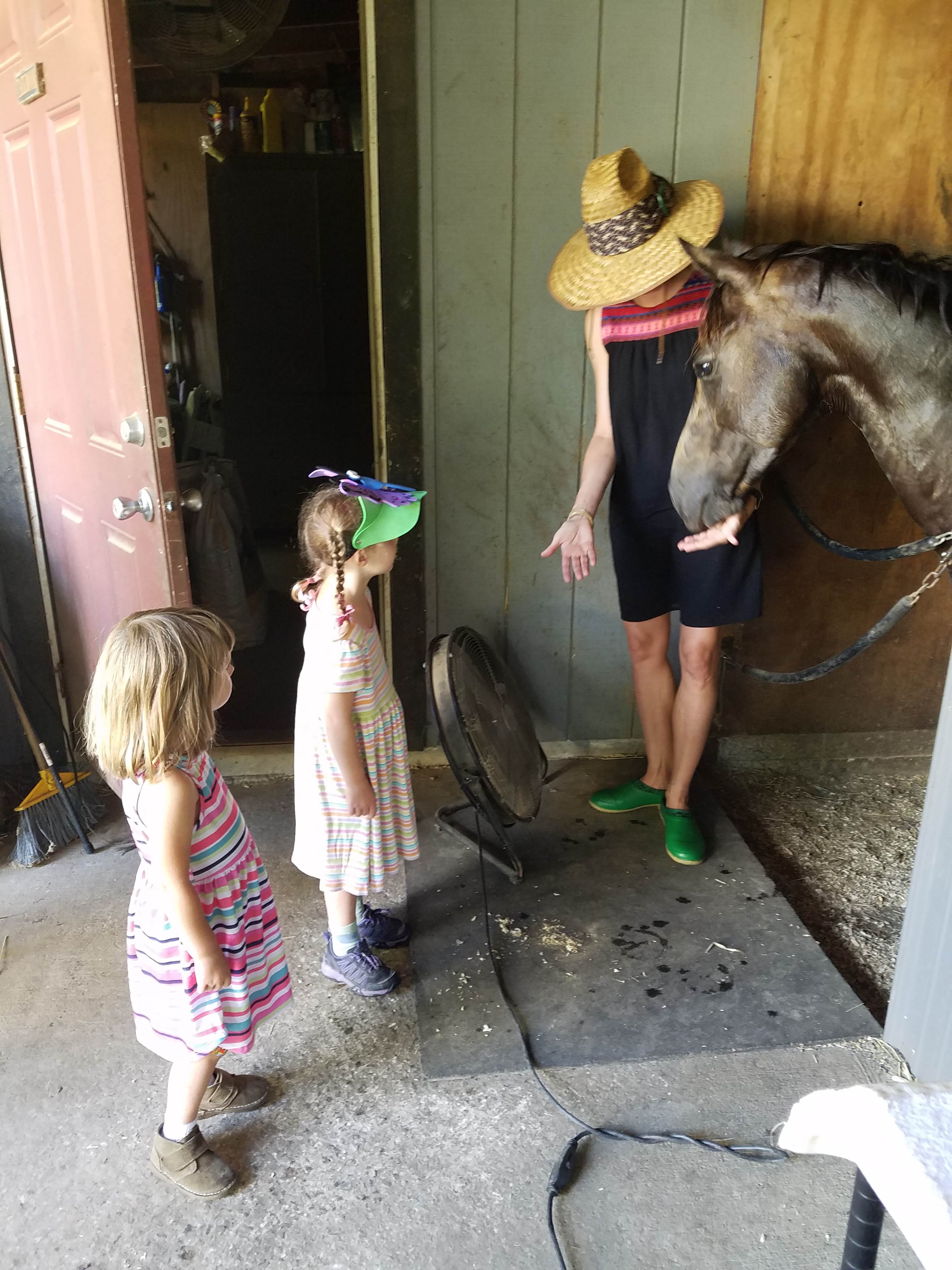
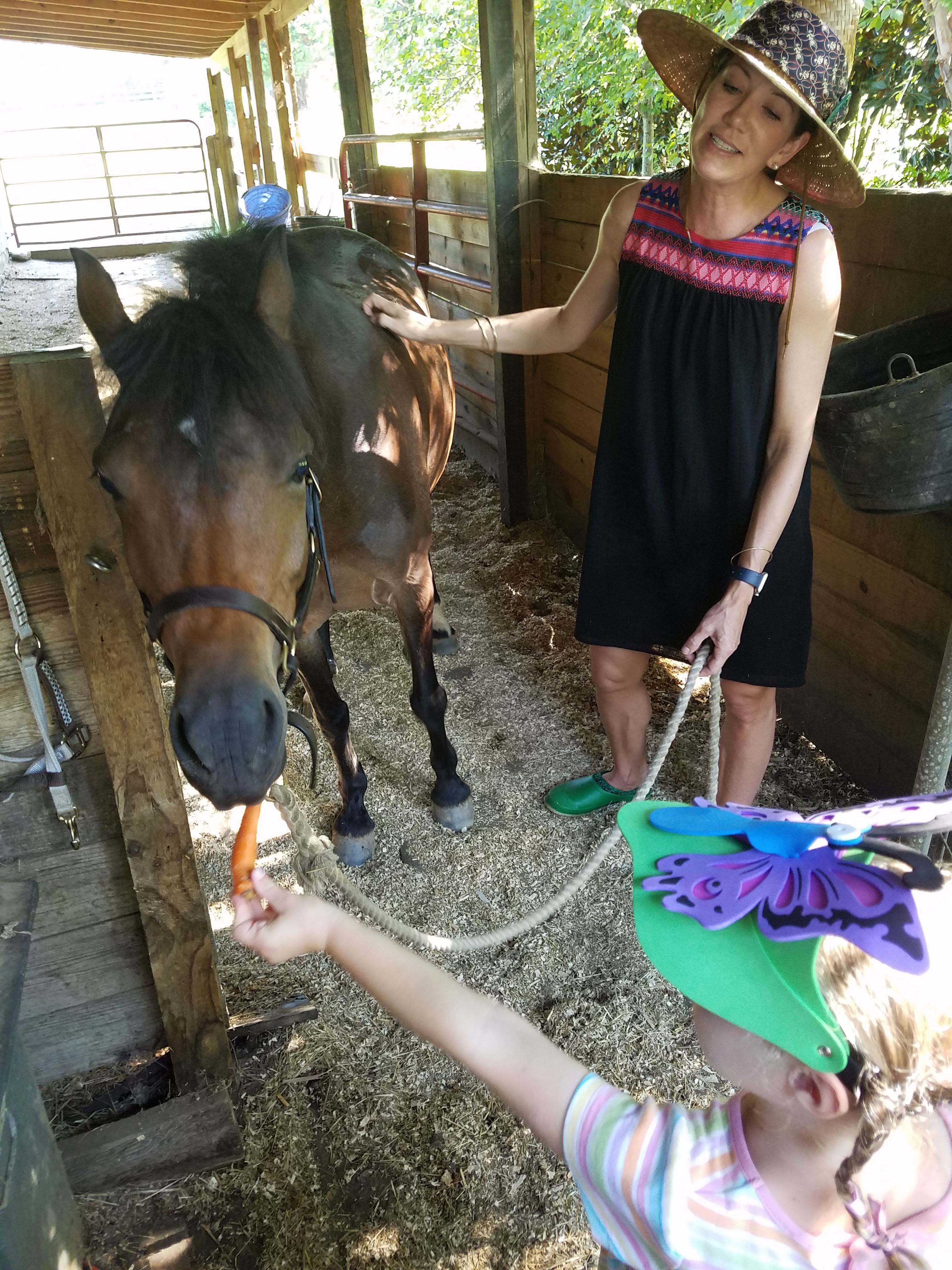
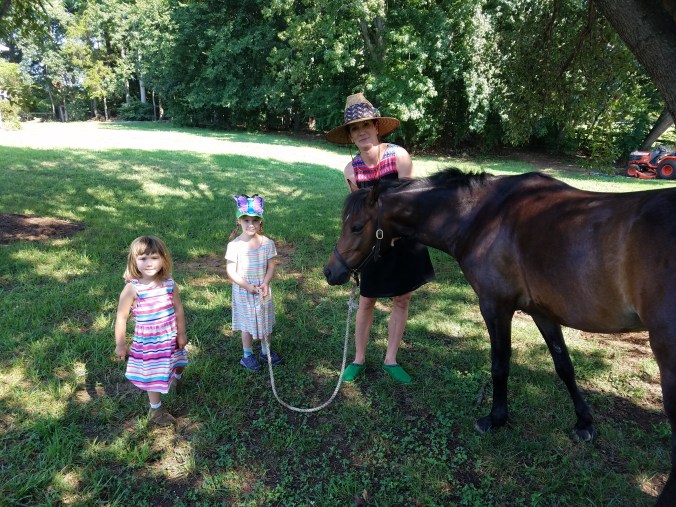
We made a way and it was marvelous! Their kind hospitality included the best mac and cheese I have ever had, the best hot dogs I have ever had and a visit to the barn where Louisa’s horse and a pony live. The girls got to meet the pony,

meeting the pony.jpg

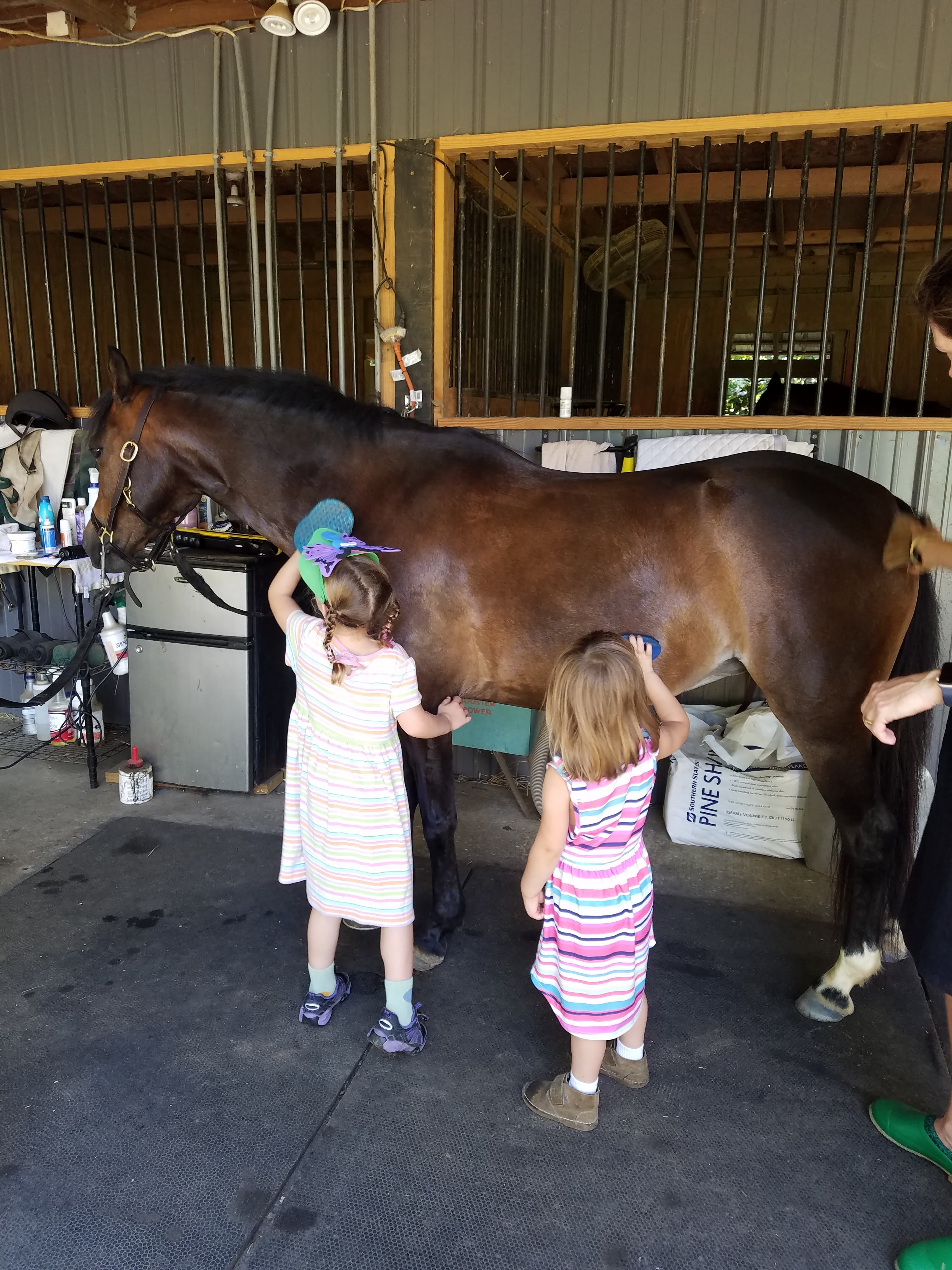
brush him,

brushing.jpg

feed him,

Rise feeding the pony.jpg

and walk with him a bit in the yard. He has not yet been trained to carry small children, but not getting to ride him in no way detracted from this experience for the girls.

walking the pony.jpg

Back at the house, they stared up at the top of that amazing gourdstalk, ran around the yard and fished leaves out of the koi pond.

koi pond.jpg

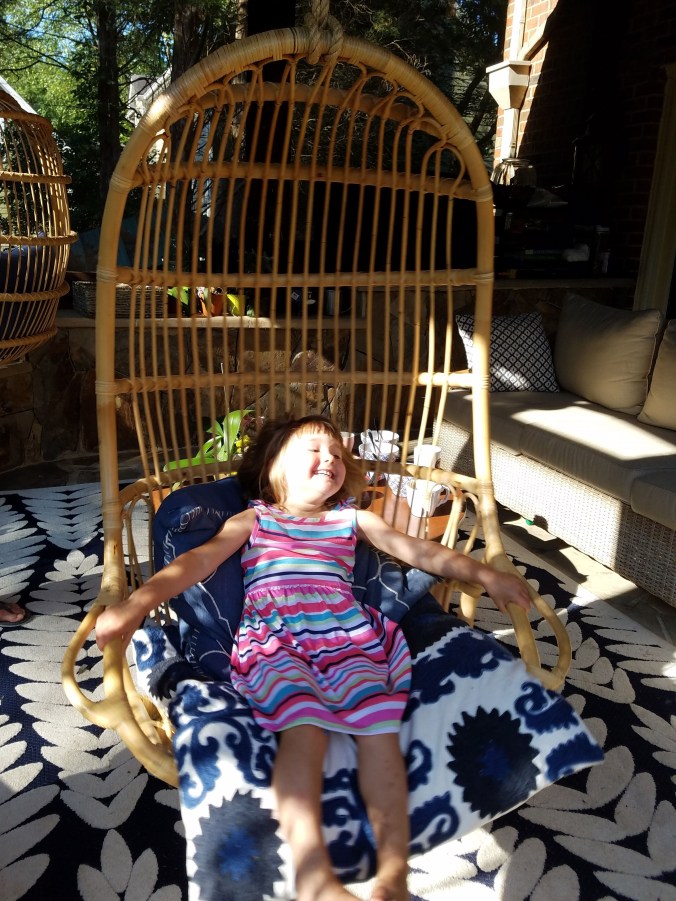
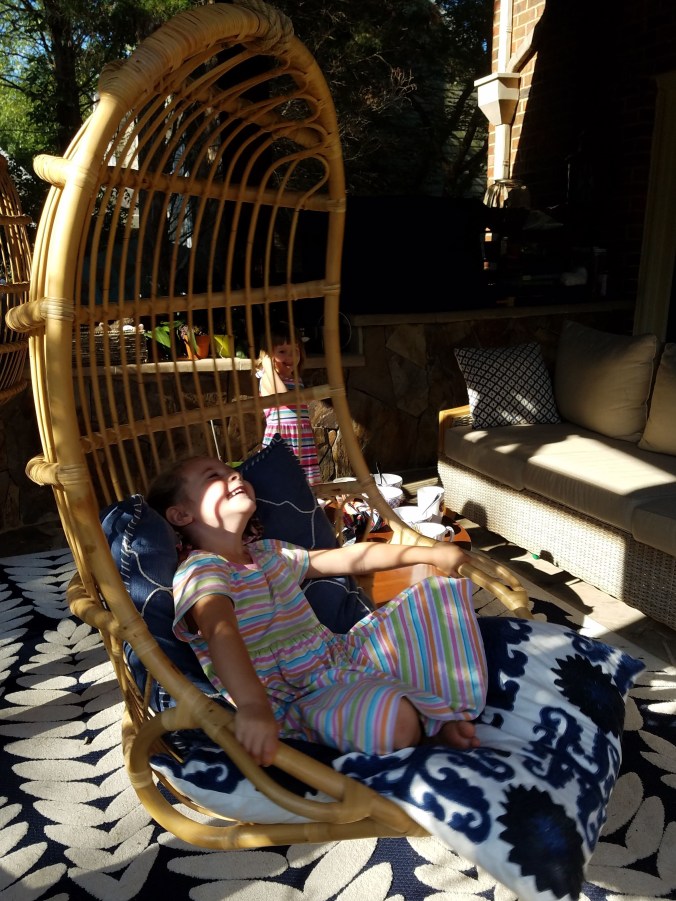
The kindness shown to all of us, our time at the barn and the giggly fun we had at their house with dogs and balls and popsicles and spinning chairs — all of it was remarkable.

chair swinf Eppie 2 (2).jpg

chair swing Rise 6 (2).jpg

Not only this, but I found in Louisa and Jake what Anne of Green Gables would have called “kindred spirits.” I felt as if I had known them for a long time, as if I could be myself, as if we were just catching up after a long absence, as if we could talk forever, which we very nearly did! I felt accepted, cared about, respected. This is what friends do! It’s so wonderful! Most amazing of all was that truly we did not know each other well at all before this visit.

I realized that this must be a bit of how my mom feels. She moved into her new home about eight months ago, not knowing anyone there before she moved in. Now she knows almost everyone in her community. She attends outings of all sorts, invites people over for dinner, says hello in the hallway to everyone she sees, works on the flower committee, reads to Evelyn (who is 101 and blind) and represents her floor in meetings that include discussion of larger issues. (And I’m sure I’m forgetting something.) In this short time, she has been asked to be in photo shoots for new marketing material and is also already on the welcoming committee, reaching out to new residents. She’s never been so happy, so involved, so engaged with the people around her.

I have dear, wonderful friends who have been in my life for decades. I count myself exceedingly blessed in this department, so much so that it could be tempting to close the door to others. Making new friends at any age can be unnerving. Opening up, taking a chance, trying something new, giving of yourself (with an uncertain outcome), going out of your way – it’s a bit risky. There’s no guarantee that you’ll connect with this person or that person. But what a treasure is found when that connection feels genuine and fun at the same time! When you smile thinking back on the time you had together. When someone who doesn’t have to care about you does anyway. When you very much look forward to next time…

The Maze of Life

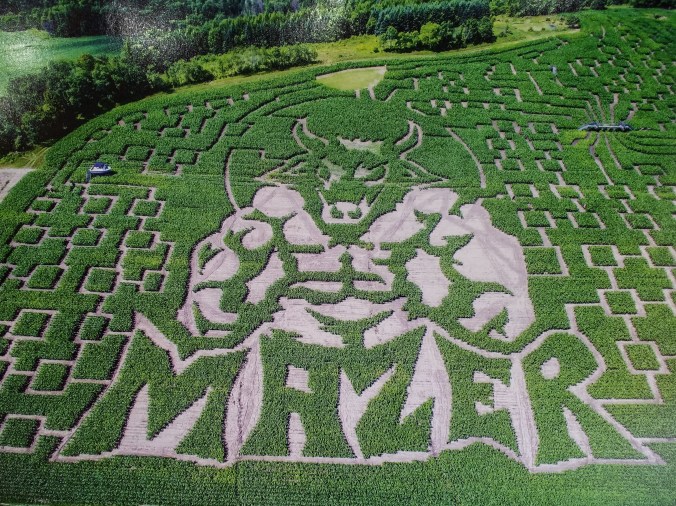
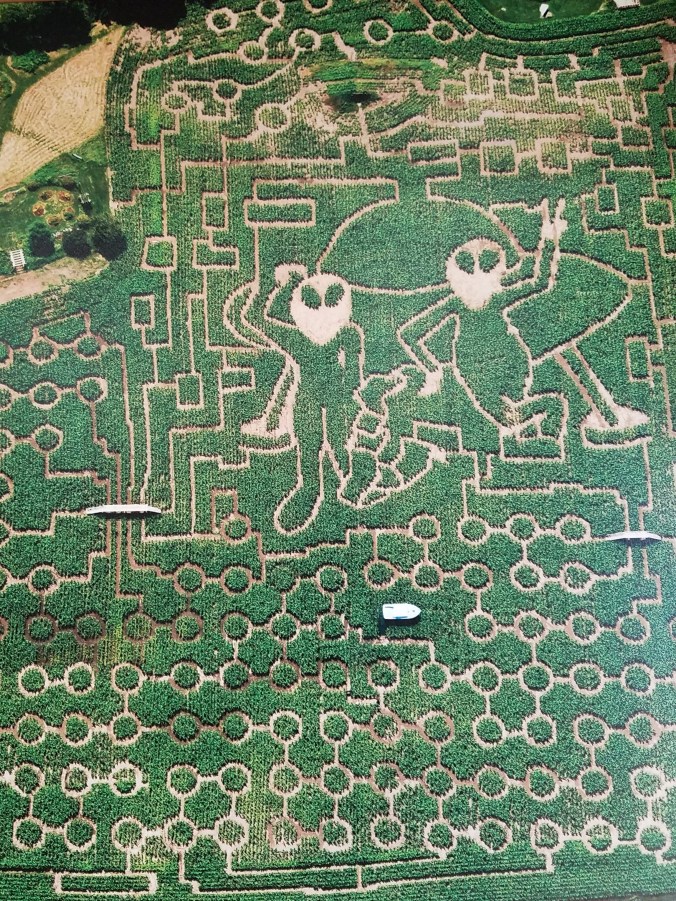
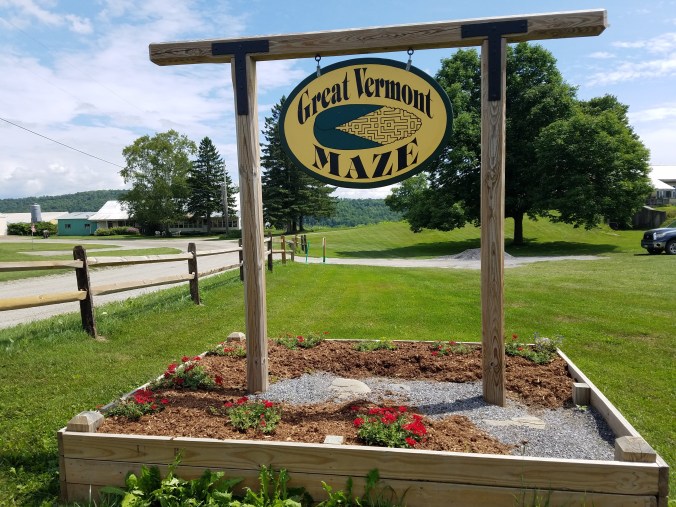
I love it when people find ingenious ways to make money using what they already have. For 20 years a farm family in Vermont has been planting 24 acres of corn, cutting an intricate maze into it, charging admission and making untold numbers of people thrilled that they found their way out! Here is a previous year’s maze to give you an idea of what they do.

maze1 (2).jpg

There is a boat and a bridge in this one; a boat and two bridges in the next.

maze2 (2).jpg

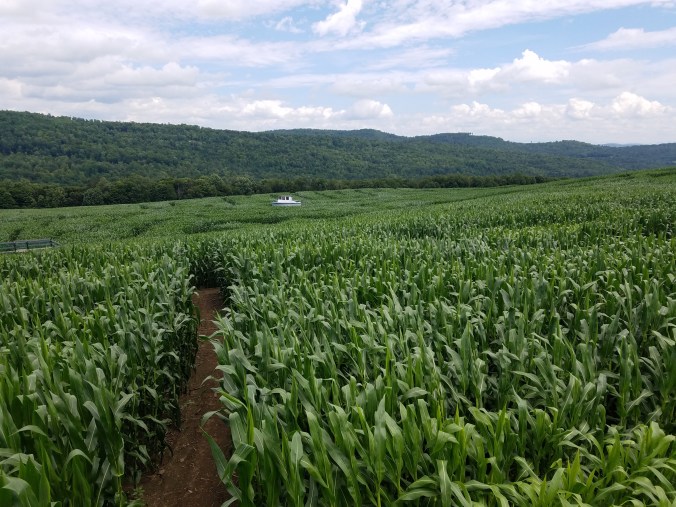
Perhaps it’s hard to understand the scale from the aerial photos. What it looks like from atop one of the bridges is this:

long view.jpg

That’s a boat way out in the distance. The corn is taller than all but the tallest people. And even if you were a giant, it would be hard to see which path to take.

BBP.jpg

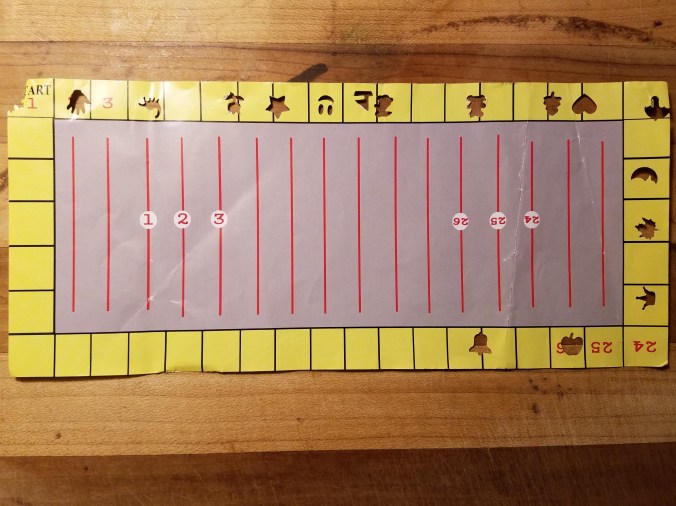
There are a lot of pointless loops and dead ends. There are “guides” posted on the bridges, wholesome yet also rather smirky young people who may or may not steer you right, and they will tell you they may or may not be steering you right! (I may be reading the smirky into it.) There are two “frustration bells” located in random places just to give you something to do when you feel like you are going in circles. There are numerous paper punches mounted on stands that all make a different shaped hole in the card they give you to punch: star, apple, boat, teddy bear, umbrella, hand moon, leaf, etc. Mine looked like this by the end.

card (2).jpg

You are supposed to punch the card every time you come to one, and when you are all done, you “compare your sequence of punched shapes to their locations marked on the aerial photo in the admissions booth to see how you solved the maze.” Let’s just say I used the card as a way to feel like we were making some progress. If you come to the same hole puncher twice, you are really in a loop! We only did that once that I remember, but I was piggy-back-carrying my almost six-year-old granddaughter a good deal of the time, so forgive me if my memory is a bit fuzzy on the details.

We were fortunate during our trek last week to have a scout in our party who often went on ahead and checked to see if we all should keep going that way or try another direction (thank you, Lincoln!). Nonetheless I am sure the nine of us went under one of the bridges at least three times. We discussed what mistakes we might have made. We tried to intelligently choose the next direction. On my own I would not possibly have made it out of there in the two and a half hours it took us.

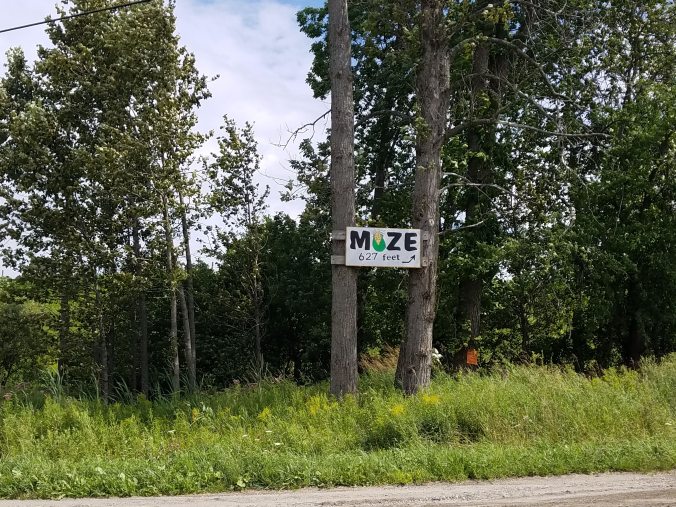
I should have had a clue it was going to be as challenging as it was. Just getting to the place feels like going to the middle of nowhere.
sign2.jpg

You are on a dirt road (not that that’s unusual in Vermont). Finally you see the sign that says M [ear of corn] Z E 627 feet. 627 feet?? That’s your clue right there. This going to be fun!

sign.jpg

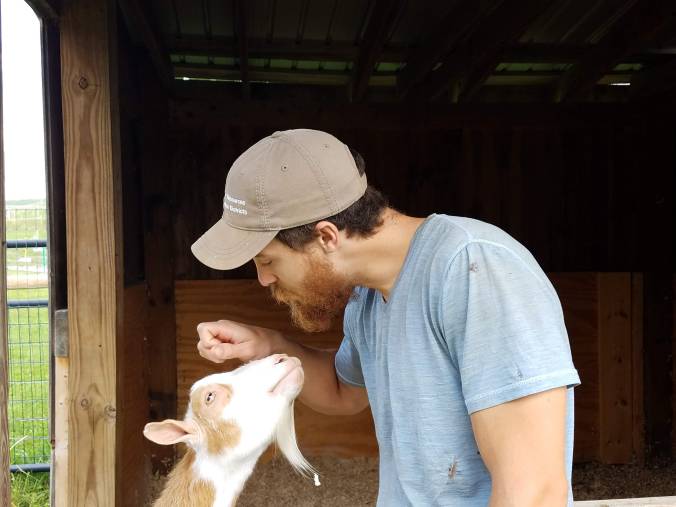
Parking is easy. There are goats to visit,

Lincoln and goat

toys to play with,

Eppie

and all kinds of fun things to do before entering the maze itself.

haybales1.jpg

It’s no wonder people love coming here. Kudos to the owners/designers who give us not only a fun and challenging way to spend time together. They have also made possible an experience that fabulously parallels real life, whether anyone but me thinks about it that way or not. How is a maze like this NOT a parallel of a person’s lifetime?

We come into it, we bumble around (fairly clueless), we think about it, we rest, we have a snack, we try again, we note the milestones, we carry the little ones, we share stories, we slow down for the slower ones we care about (or they slow down for us!), we feel a bit of success, we marvel at the complexity, we get dirty, we keep going, we get help (or not, as we choose), we discuss our options, we go the other person’s way sometimes, we laugh, we leave clues for other people and hope it helps, we get frustrated (not that bridge again!), we make progress, we get tired, we sense we are getting to the end, we celebrate, we finish and we sit down!

Seems about right to me. Some people bumble more than others, some have more successes, some carry little ones more often, some get dirtier. But all in all, life is a maze. We don’t know what’s around the next bend, we don’t know how long it will take us to get through it, we don’t know what our path will be until we start going along. We back up and start again sometimes. We experience surprise, frustration, challenge, relief. We keep going.

I am in the middle of my own maze as you are in yours. Don’t you love it?!