On the way to town yesterday, I was asked “Is driving easy?” by my six-year-old granddaughter Rise. It’s easy for me, I told her, because I’ve been doing it a long time. For someone who just started driving, it’s not so easy. If you make scrambled eggs every day, after a while you can have a conversation, straighten the countertop and scramble eggs at the same time. Same for anything: The more you do it, the simpler it seems.
I used to make spaetzle once in a while for a treat, but more and more I find myself reaching for the tool (this is a good one) that turns eggs-flour-salt-water into the tenderest noodle I know. They are so soft, they should be called noodle-pillows. Spaetzle is the base for a wonderful dish called Kaesespatzin (literally cheese-spaetzle or cheesy noodles), which is simply cooked and drained spaetzle layered in a bowl (three layers) with shredded, imported swiss (like Jarlsberg or Emmentaler) and topped with a lot of onions sautéed till super-soft in butter. My friend Claudia’s family ate this dish every Friday for her entire childhood – that fact all by itself used to remind me that it can’t be that hard.
Plain spaetzle are great alongside any roast that has gravy or as a side dish with just butter.
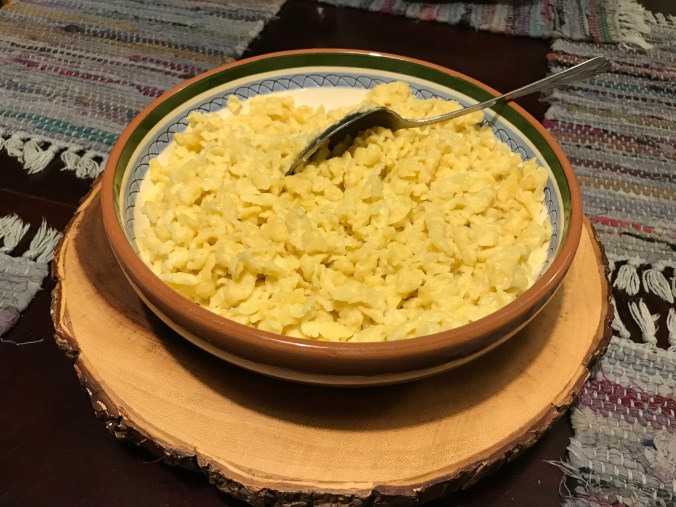
In a nonstick pan on the second day, they roast up beautifully with a little more butter. Last week at my daughter’s I used a can of pureed pumpkin instead of the water in the recipe – you get light orangy-colored spaetzle with a mild pumpkin flavor – try this with butter and tell me it’s not yummy!
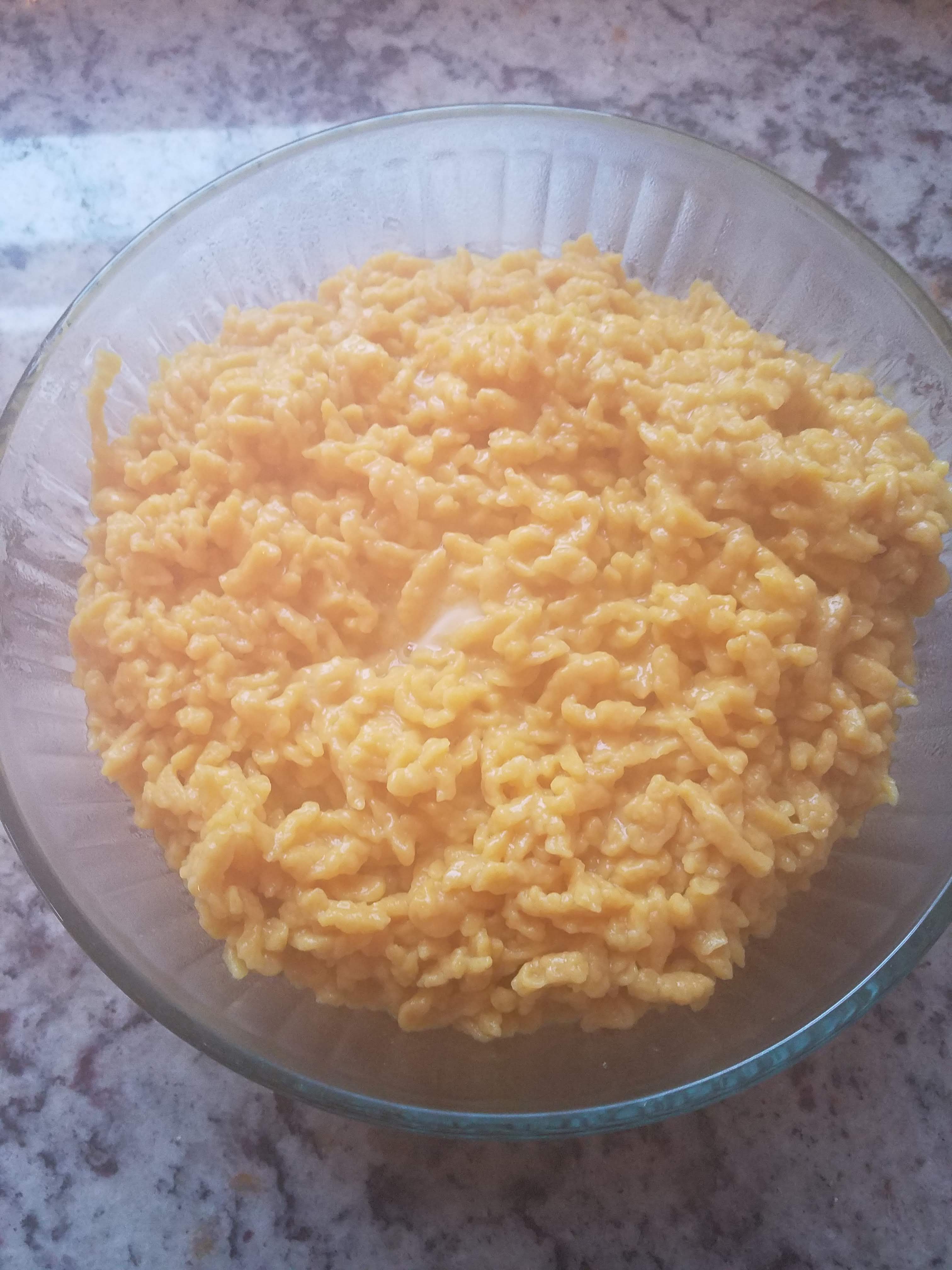
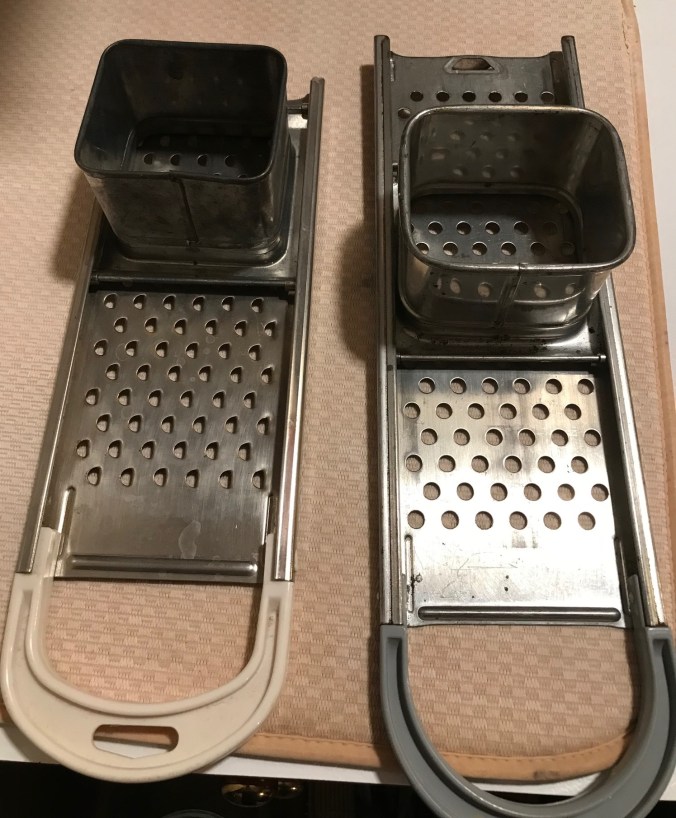
If you study the spaetzle in the two bowls, you’ll see that they are not only a different color due to pumpkin in the second, the spaetzle themselves are different. That’s because my daughter’s spaetzle maker has smaller holes (half circles). Hers is like the one on the left (below); the one I usually use (and prefer) is the one on the right.
This week with the spaetzle I did something new. I made them as usual and combined them with the cheddar cheese sauce I make for mac and cheese (which is essentially a white sauce with Cabot cheddar added).
Spaetzle are also better for us than pasta from a box because you make the dough with eggs. Yes, the woman with 22 chickens is suggesting a use for eggs – imagine that!
What I really want to say is that making spaetzle isn’t that hard. Like anything else, do it a few times and you will develop a rhythm. They will be so easy and so delicious you will wonder why you don’t make them more often. And then you will make them more often!
The basic recipe I learned years ago used a ratio of one egg per one cup of flour. For my family I usually made three eggs and three cups of flour, then a teaspoon of salt and as much water as makes it the right consistency. (Start with a third cup of water and go from there. Don’t worry, I’m walking you through this.) But before you start making the dough, get a Dutch oven (large) pot of water going on a high flame. You need the water at the boiling point.
Over time I found I liked more eggs proportionally for the dough, more like a 4:3 ratio (eggs: cups-of-flour). If you use three (3) eggs, you will need more water. If you use four (4), you will need less. That’s why I can’t be overly specific about the amount of water.
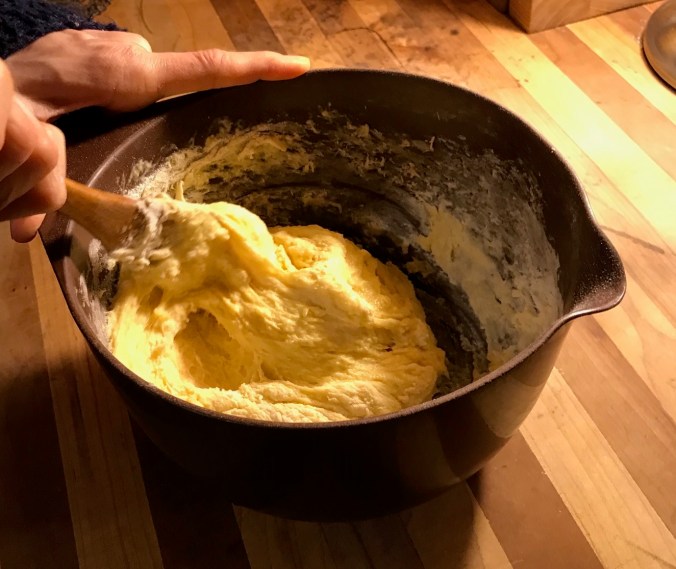
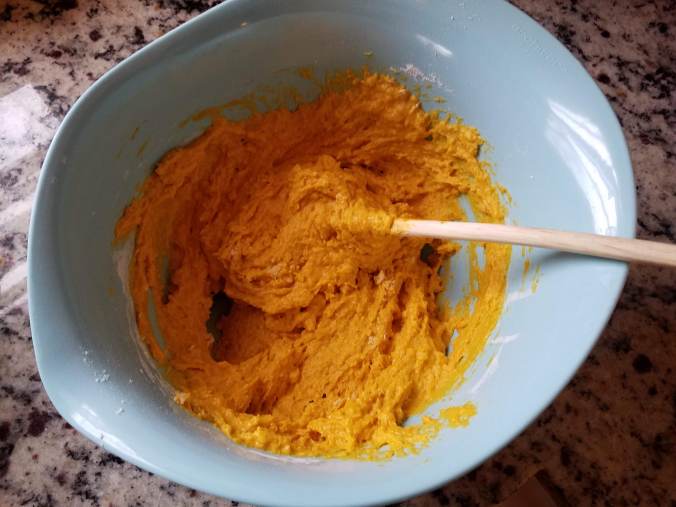
The amount of water you add should make the dough begin coming away from the sides of the bowl, like this. (You didn’t forget the salt, right?) If the dough is too wet (too much water), it will drip through the holes of the spaetzle maker and turn into a disintegrated mess in the pot. If it is too stiff (not enough water), it will stay in a tight ball and resist going through the holes. We can’t have resistant dough now, can we? This is the regular dough.
This is the dough made with pumpkin.
Position your spaetzle maker on top, fill the little bucket,
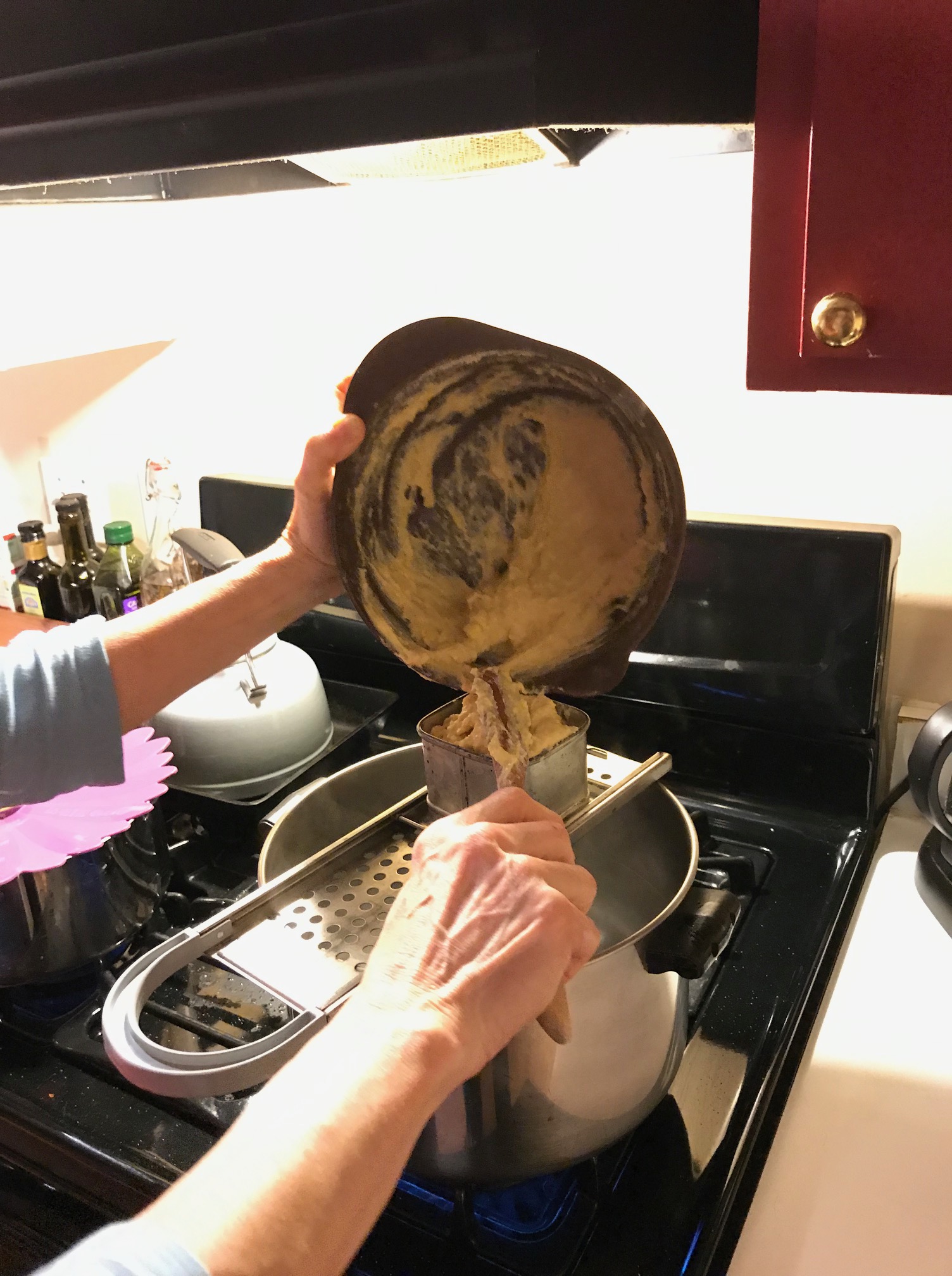
and begin sliding back and forth. The spaetzle come out through the holes and plop into the boiling water.
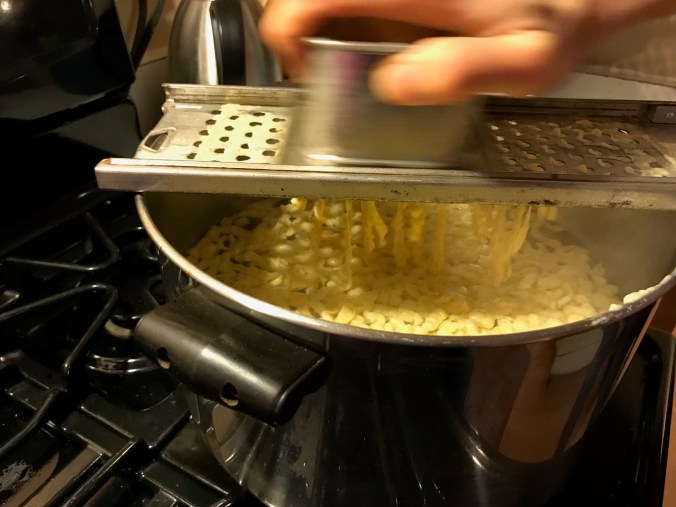
If you have a friend or family member nearby who can keep the water moving with a long-handled spoon back and forth in the water alongside the spaetzle maker, that would be great. If you are by yourself, not the end of the world. Just give it a stir when you refill your bucket.
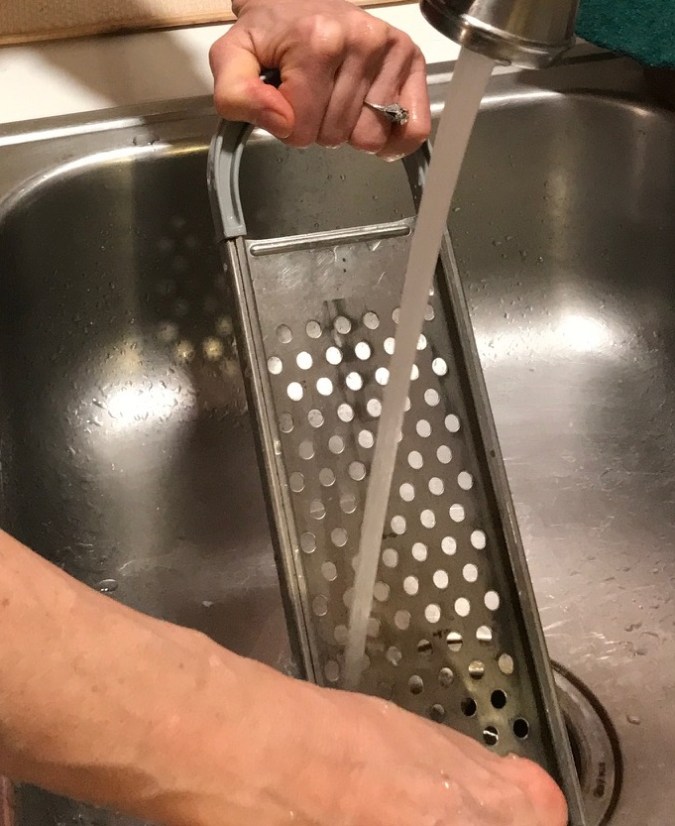
Once all the dough has gone through the holes and into the water, go to your kitchen sink, taking the spaetzle maker with you (both parts), and clean it. Trust me, you will be glad you did this before all that dough dries in the cracks. Use a little scraper rather than a rag or a sponge. The amount of time this takes, let’s say five minutes (though ten in the pot won’t hurt them), is about right for how long it takes the spaetzle to cook in the water.
They will be looking like this in the pot. You probably will need to turn the flame down (or it might boil over and you don’t want a mess). I usually add salt to the water too, by the way, just as when I cook pasta.
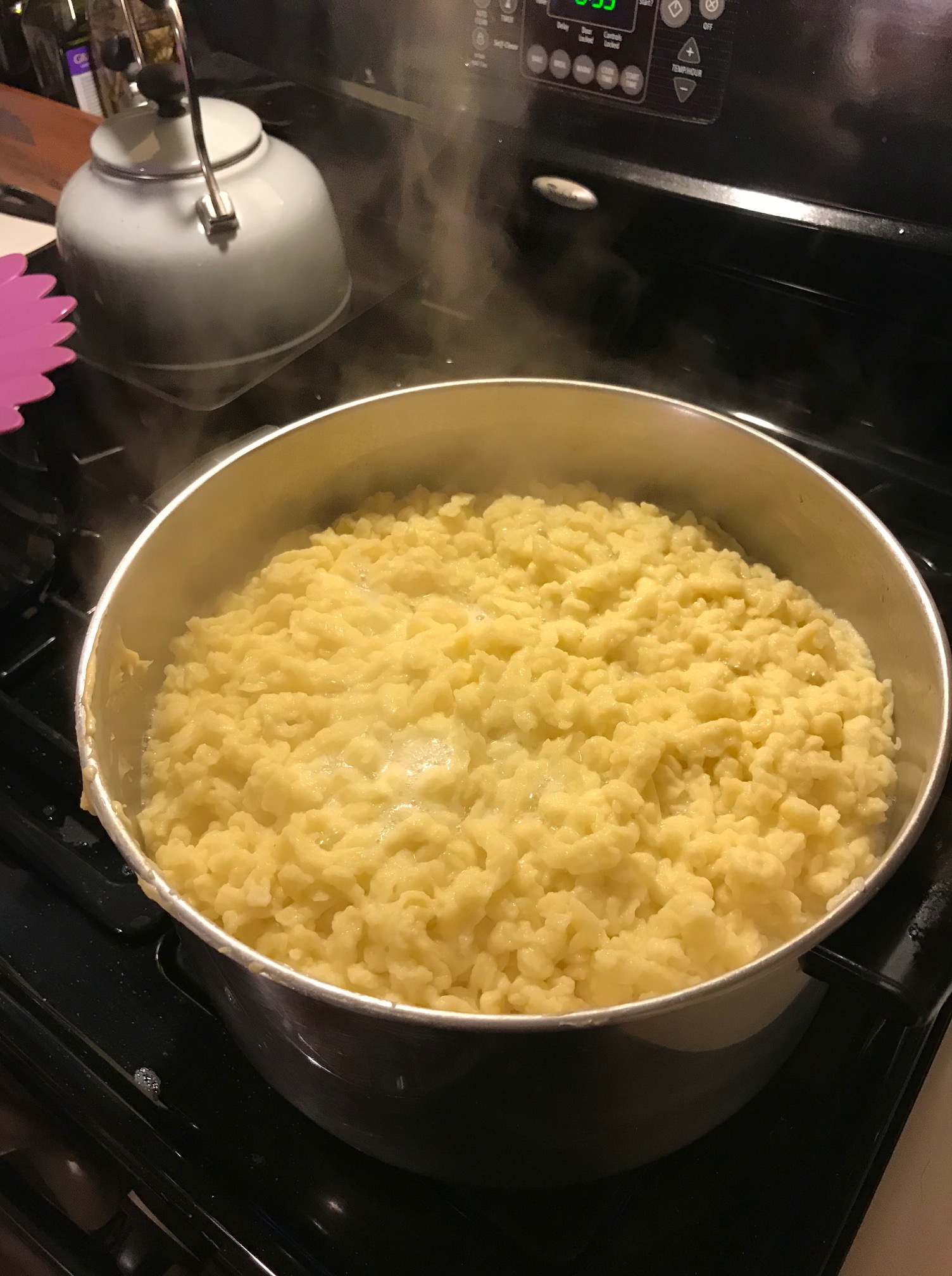
Now drain and serve in any of the above-suggested ways, or however you like.
By the way, in case you were wondering, spaetzle is pronounced shpet-zle, not spetz-le. Have fun! I’d love to know how else anyone dresses them up!
 An Unboring Path