The Best Life If You’re a Pig

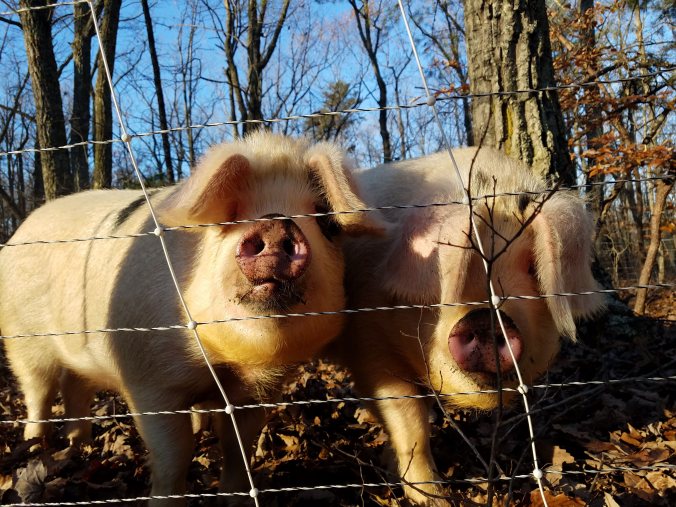
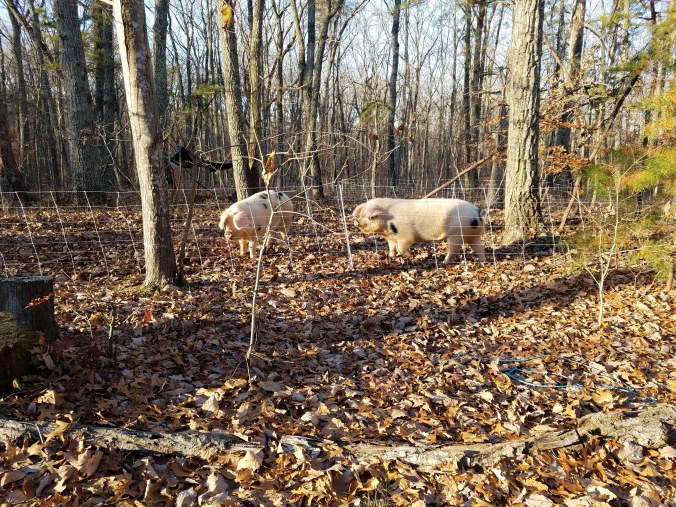
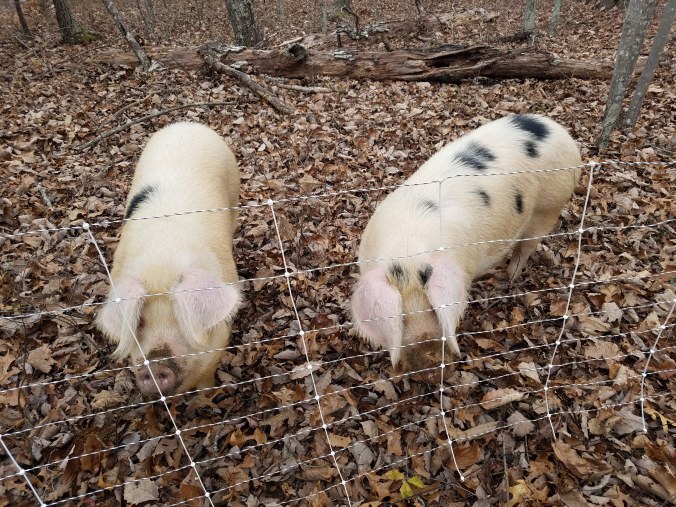
Pigs don’t have many choices in life. They are at the mercy of their owners and keepers, and I’d guess many of them would wish for a trade if trades were possible.  I would also venture to say that the vast majority would do anything pigly possible to have the life that Tracy’s pigs have. Do these pigs look happy or what? Okay, maybe they just look curious. There’s something about those noses that’s hilarious and remarkable at the same time.
pigs3.jpg

I’m not sure pigs could have a better life than these. They have oak trees dropping acorns all through their spacious, wooded area and freedom to root around all day finding those acorns and whatever else pigs consider yummy among the fallen leaves of this time of year. They have a huge enclosure made with movable fencing so it is, yes, moved around, which is better for the land, better for the pigs, plus a change of scenery (maybe they notice!). Oh, hey, this spot has great dirt!
pigs2.jpg

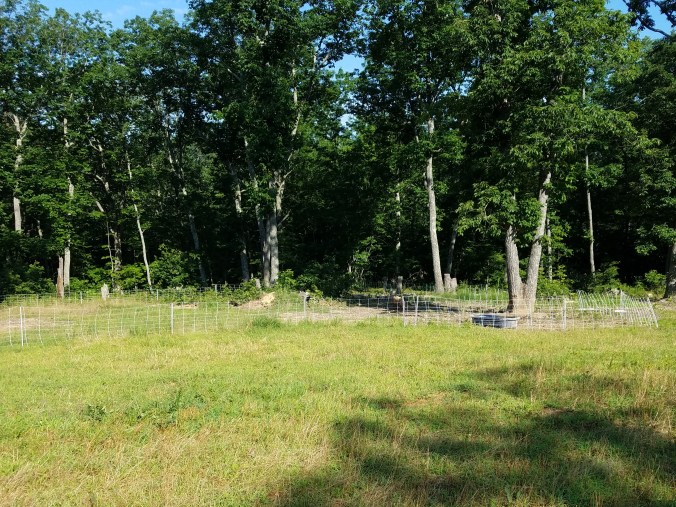
Their summertime life along the tree line let them pick shade or sun, assuming pigs can pick. Compared to most pigs, this had to feel like they had the whole state of Virginia to roam around in.
summer home (2).jpg

It’s pig paradise. Check out their big bathtub/pool, which is clean only until the moment one of them gets in it mainly on account of the adjacent mud hole for slopping around in.

pigs (27) summer in mud.jpg

You can’t tell so much when they are muddy, but one of these pigs has a few spots and one is mostly plain. I noticed it when I drove by the other day and they had been moved to the woods near the road.

pigs (2).jpg

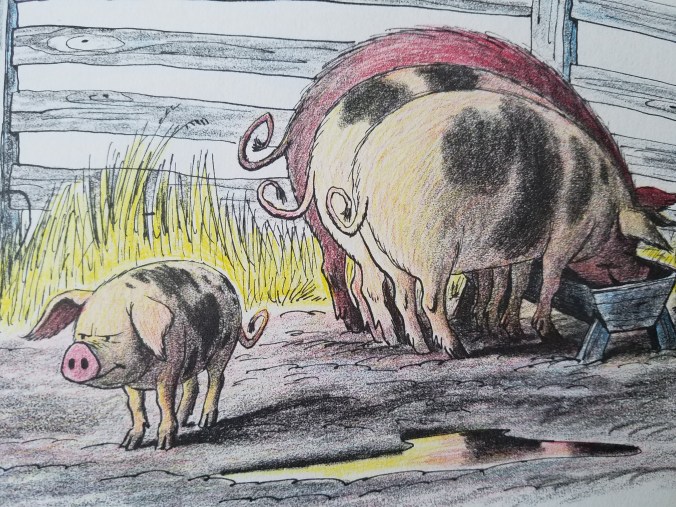
The spotted one reminded me of Chester the Worldly Pig, a fictitious, determined, clever creature created by Bill Peet in 1965 and among my favorite children’s books. Chester resented his lot in life. “Of all things,” grumbled Chester, “why on earth did I have to be a pig?” Does his face look annoyed?
chester8.jpg

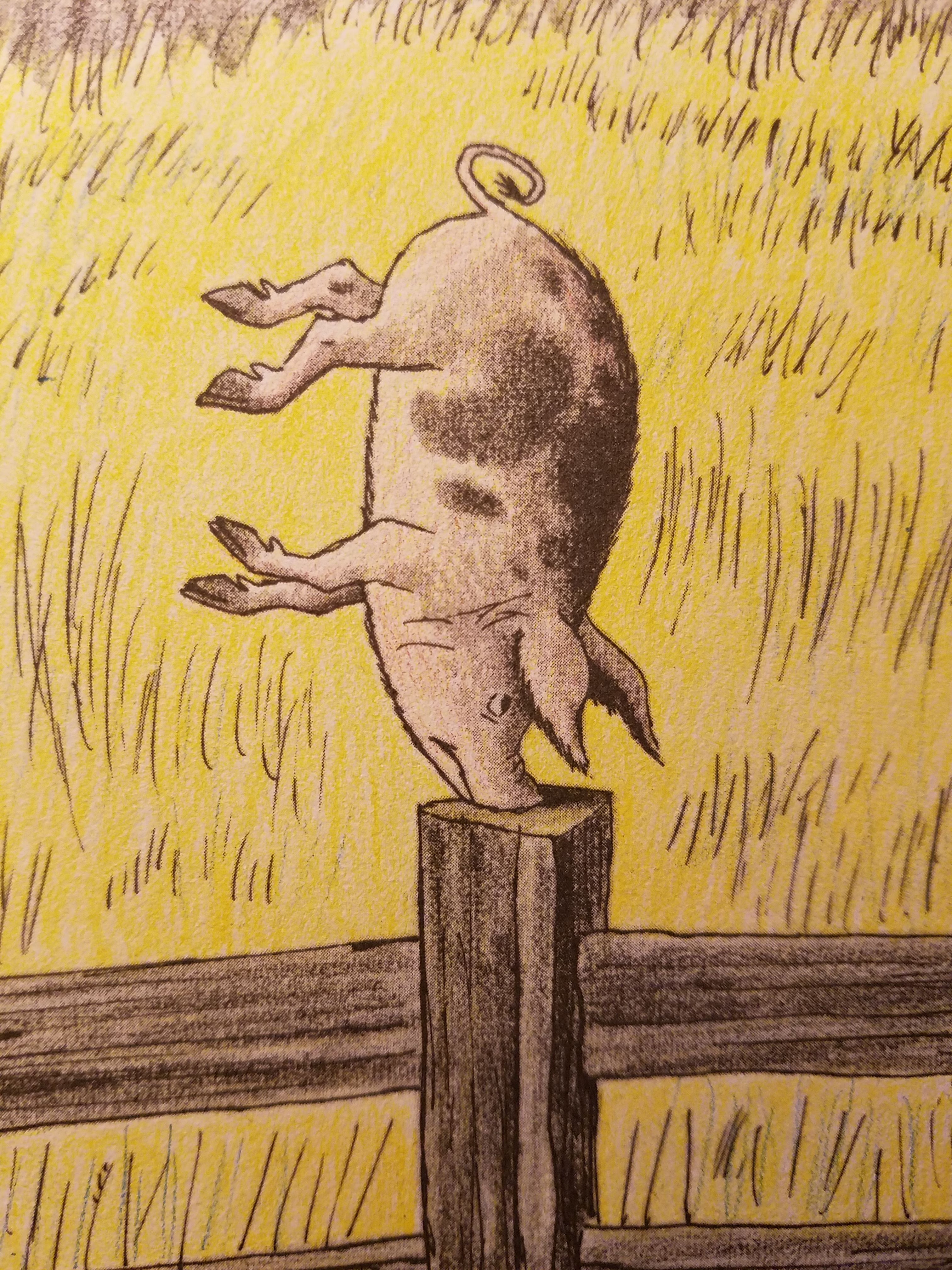
“But before I end up as so much sausage and ham, I intend to try and amount to something.” But what? To solve his problem, he did what we all do (or should do) when we have a problem, he thought long and hard about it. He “turned this around and around in his head until one day it came to him: ‘I’ll be a star in the circus!’” Chester perfected his nose stand and waited for the circus train to go by and see him.
chester3.jpg

His plan failed because the train passed by with its shades drawn, so he ran down the tracks until he came to the big top, jumped on a post, impressed them all and got himself a job.
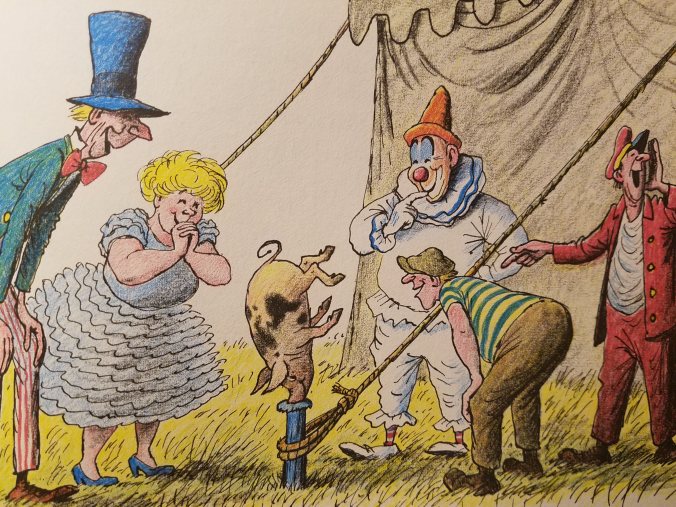
chester2.jpg

But as you might imagine it didn’t work out. Sometimes things don’t work out. First they put him in with the lions and terrified him, then they dressed him up like a baby so Roscoe the clown could wheel him around in a doll buggy.

chester1.jpg

It was beyond humiliating, so he took off first chance he got. A bear thought he’d make a great lunch,

chester11.jpg

but then so did a bunch of hobos. That’s Chester in the bag next to Red Beard.
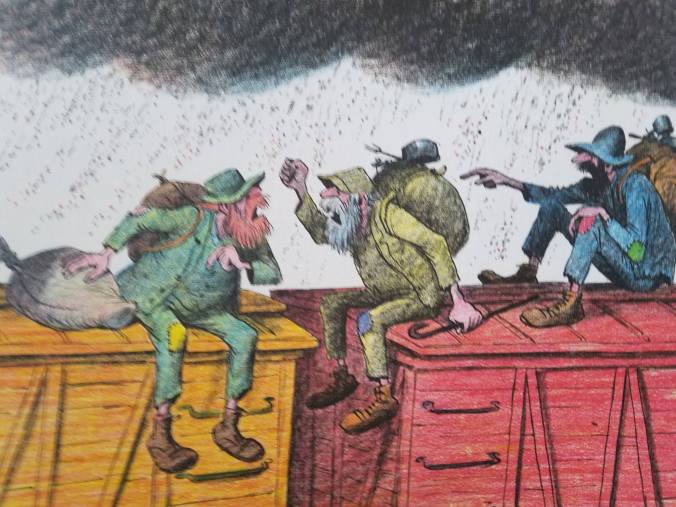
chester10.jpg

“I’m the one that caught this pig,” red beard roared above the noise of the train, “so I’m keepin’ him all to myself!”

“Oh, no, you don’t!” bellowed black beard. “It’s share and share alike! That’s the rule!”

“And rules is rules,” growled gray beard.

“I’m breakin’ the rules,” roared red, “so what can you do about it?”

Chester barely escaped with his life. He resigned himself to his fate, the “at the first barn lot he came to, he turned in the gate to give himself up, and the farmer greeted the stray pig with open arms.”

 “To the farmer’s delight, after a couple of years Chester ballooned into a huge blimp of a pig; and one morning the happy farmer said, “Today this little pig goes to market.”
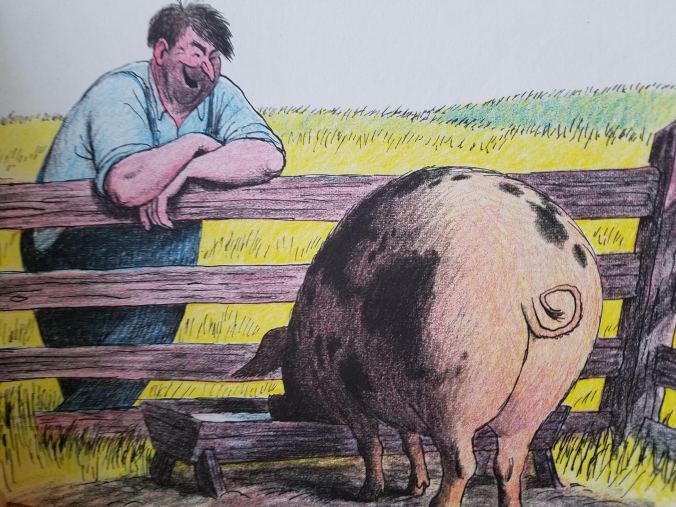
chester9.jpg

Now if you’re a child looking at this farmer, are you thinking What a nice farmer! or He got himself a lot of free pork! Or Poor pig! Is his face happy in a jovial kind of way or happy in a greedy way or happy in a didn’t-I-get-lucky way? That’s the thing about art, right? Even children’s art. Contrived as the representation is, you are still free to interpret it with your own experiences and biases weighing in. In fact, it’s practically impossible not to. From the beginning, Chester is painted as a survivor. And now we all know what the farmer is going to do.

Or we think we know.

It’s just like when you watch a movie the second or third time and you see things you didn’t see the first time. Once you know the outcome, you wonder how you missed the important clues. It was plain as day even in the first scene, but I missed it, and you probably missed it too.

On that very same morning a carnival van stopped at the farm, and out of the cab stepped a dignified white-whiskered man with a broad-brimmed hat and a fancy frock coat. He had stopped to buy fresh eggs, but when he saw the huge pig he forgot all about the eggs.
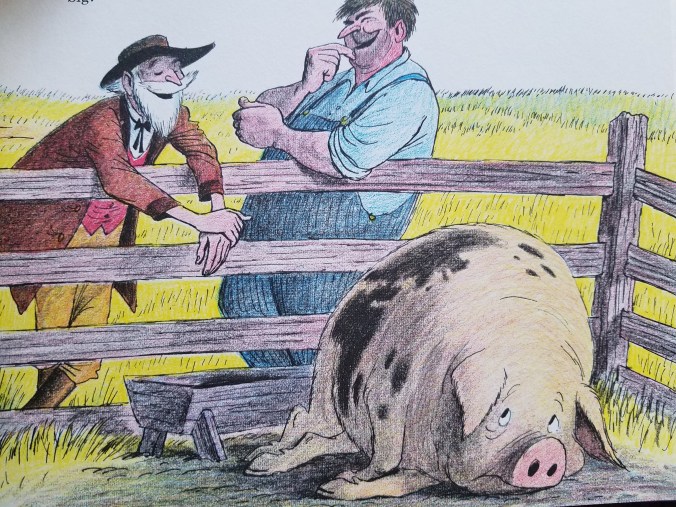
chester 12.jpg

“What will you take for your pig?” he asked. The farmer thought for a minute, then named his price, which was at least twice what he figured the pig was worth. And to the farmer’s surprise, the man didn’t so much as bat an eye; he counted out the money and the deal was closed.

After the pig was loaded aboard and the van drove away, the farmer had himself a good laugh. “So he thinks he’s bought the world’s biggest pig! Why I’ve seen at least a dozen bigger ones at the county fair.” But if the fellow had gone to school long enough to study geography, he’d have known that Chester was much more than just plain big.

Here’s author Bill Peet, who worked as a sketch artist at Disney Studio on such films as Pinocchio, Fantasia and Sleeping Beauty and authored of 35 books, plugging a good education. In the end, Chester’s grit – despite what we all know happens to pigs in this world – led to an ending where everyone wins. The farmer got a good price, the white-whiskered man got “The One and Only Worldly Pig” and Chester got the fame he hoped for.

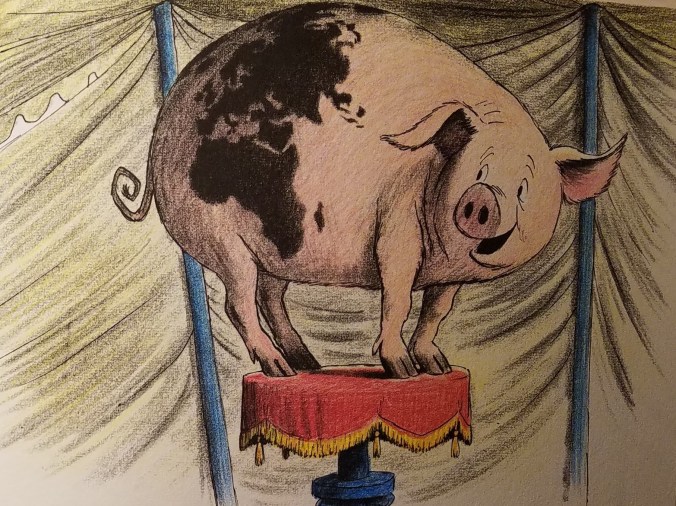
“Now if you will please move in a little closer,” said the white-whiskered man [to the crowd in the carnival tent], “you will see the entire map of the world imprinted by nature on this remarkable creature’s enormous hide. On his left side, the continents of North and South America, including the land of Australia, which is down under, of course.”

The crowd gasped in amazement, while Chester oinked in surprise. He was as amazed as anyone.

chester5 (3).jpg

“But that’s only the half of it,” said the man, turning the pig around on his revolving platform. “On his right side we find Europe, Africa, and Asia, and for good measure, even that tiny island of Borneo. So you see, my friends, this amazing pig is truly one of nature’s wonders…”
chester5 (2).jpg

Last week as I passed Tracy’s property and saw her pigs in the woods – and one of them is spotted! – how could I not think of Chester and the good life that some pigs get? There’s a lot we can’t do anything about, but many people do what they do in highly admirable ways. Hats off to Tracy! What lucky pigs she has!
pigs8.jpg

Bored Chickens? Say It Isn’t So!

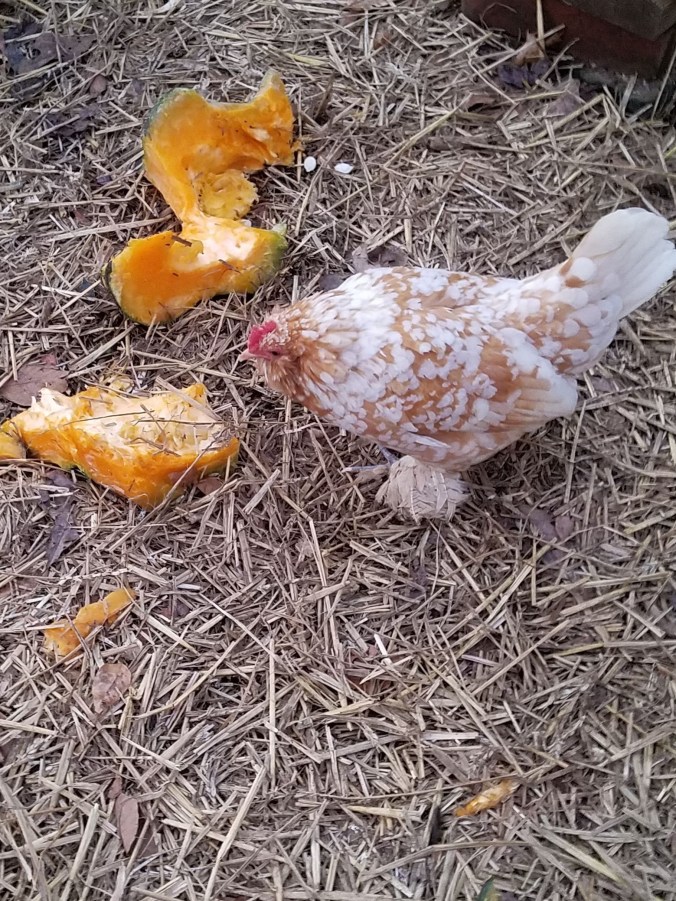
I asked Samuel to put an ax to a pumpkin yesterday. I did this because my Aunt Vivian gave me an idea. She suggested that my chickens might be bored. Bored??!! We can’t have that! Not in a place that proclaims unboringness to the world.

It had not occurred to me that chickens would be bored, could be bored, though I suppose on an unconscious level that’s possible? Vivian’s daughter Deb, my cousin, also keeps chickens, and apparently has had similar harassment problems among them. Let me assure you of what we all already knew: Chickens don’t learn. Despite her recent banishment because of harassing the silkies, yesterday morning I watched Goldyneck pull feathers out from Whitey’s tail! Just came along behind her for no apparent reason, right after I’d let them out for the day, and snatched and yanked at those fluffy feathers. I did not banish her this time, standing firm as I was (for the moment) in They will work it out. Whitey retreated to the under-coop space and Goldy minded her own business, for a while anyway.

Deb has mitigated the boredom-leading-to-harassment problem by putting a hay bale in the run, giving the chickens something to do. They’ll scratch at it and break it apart looking for something edible or at least interesting within. Okay, I’m on board. I’ll supplement They will work it out with Give them something to do. I had a bale available but remembered the pumpkins on the cottage deck.

on deck.jpg

Yes, that thing to the left of the orange pumpkin is also a pumpkin. Some of you may recall my stating very clearly my preference for orange pumpkins back in October when I went to Bob’s Corn and Pumpkin Farm in Snohomish, Washington. Thanks to Sandy’s thoughtfulness, I came home from that trip to a variety of pumpkins decorating the outdoor space at the cottage, including this unconventional, clearly-not-orange one. It’s an unboring pumpkin – I’ll give it that!

Nonetheless its day had come. After Thanksgiving you have to do something with the pumpkins and other fall adornments you picked up while creating the harvest image, if you have them, which I don’t. (Oh right, I did buy one of those tiny gourds for the little round table in the cottage. I am aware that gourds don’t have feelings, but I still feel bad just chucking it into the woods…)

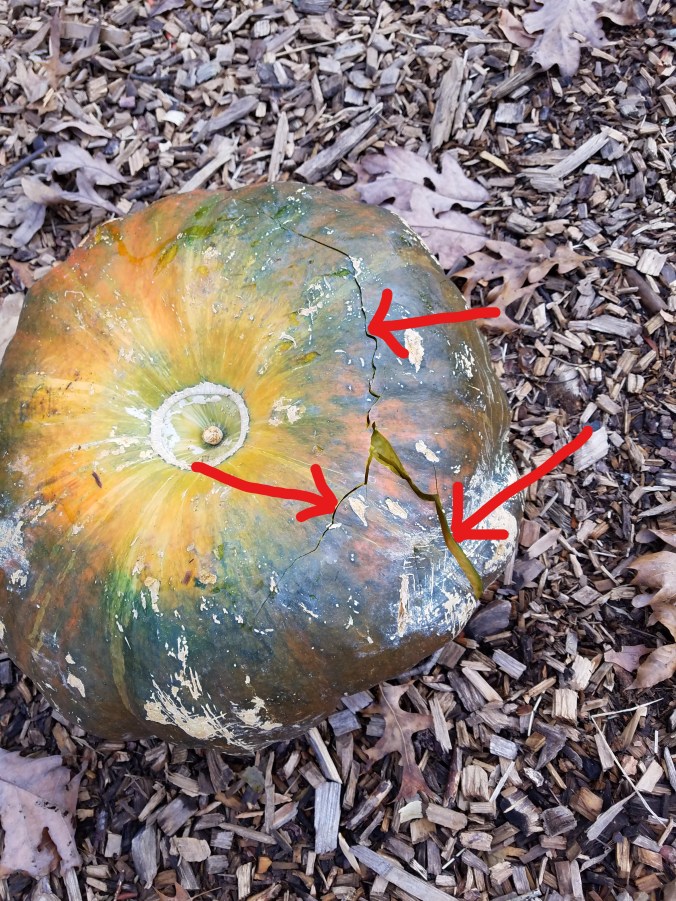
It is unclear to me why I thought I couldn’t break up this pumpkin myself. The image of Samuel swinging an ax while chopping cords of firewood, the whack of the blade against the hunk of wood, the crack of the splintering fibers unable to resist the force from above, yes, that’s probably what did it. Pumpkins however, especially old pumpkins, are not like wood. It doesn’t take much to break them. Just dropping this one on the ground got things going big time.

broken_LI.jpg

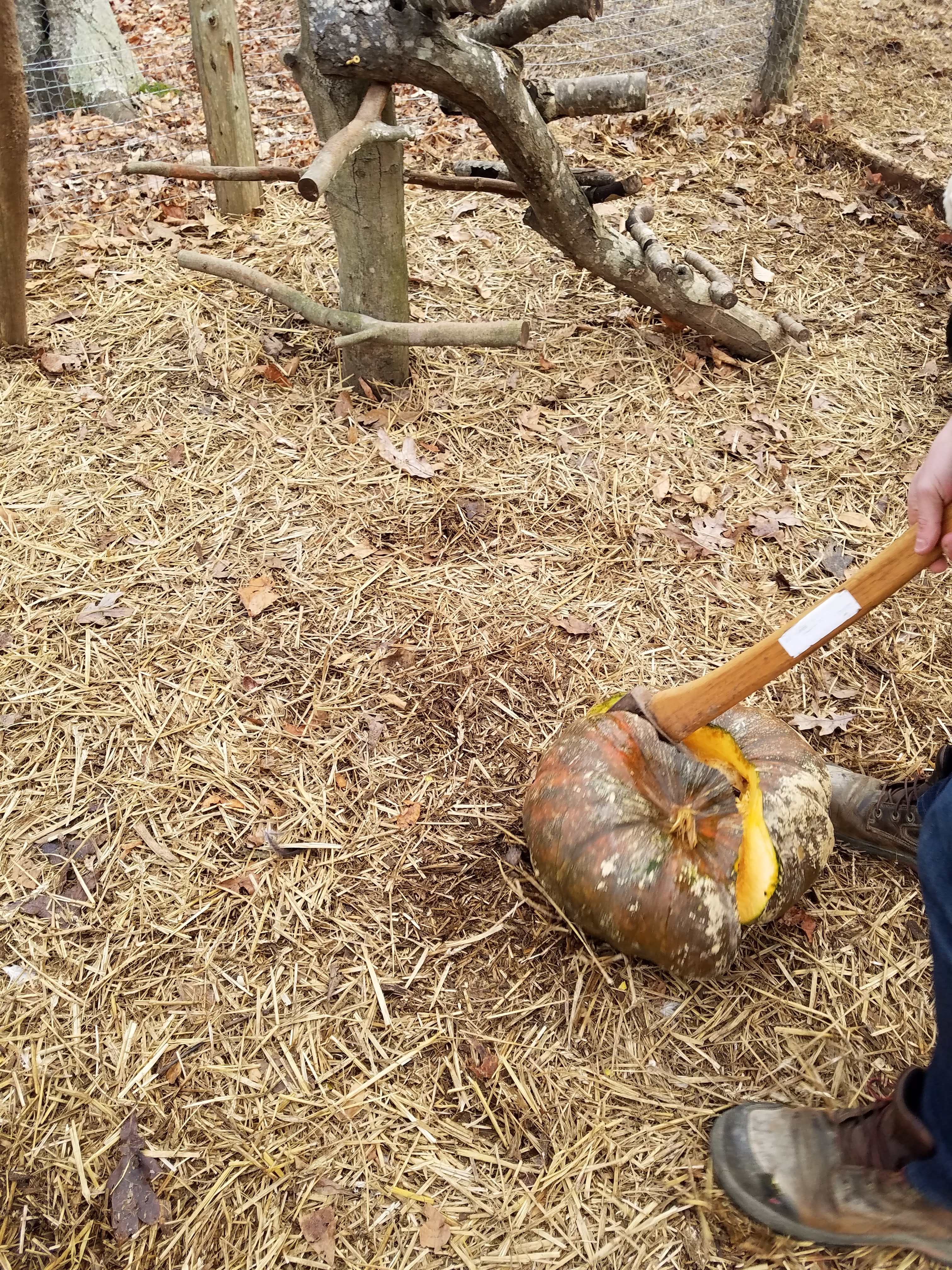
But what the heck. He agreed and it was fun to watch him with the ax. Notice he does not yet have an audience.

first cut.jpg

The first whack practically did the job. Had I done this myself, assuming I could lift the ax high enough to come down where it needed to, assuming enough accuracy not to just land the blade in the straw, bemoaning my weak arms all the while, I might have managed a similar split, then flipped it, cut side up, and given the other one to the Sewing Circle – half a pumpkin for each group of chickens, as I did with the watermelon – and stopped there, called it a day.

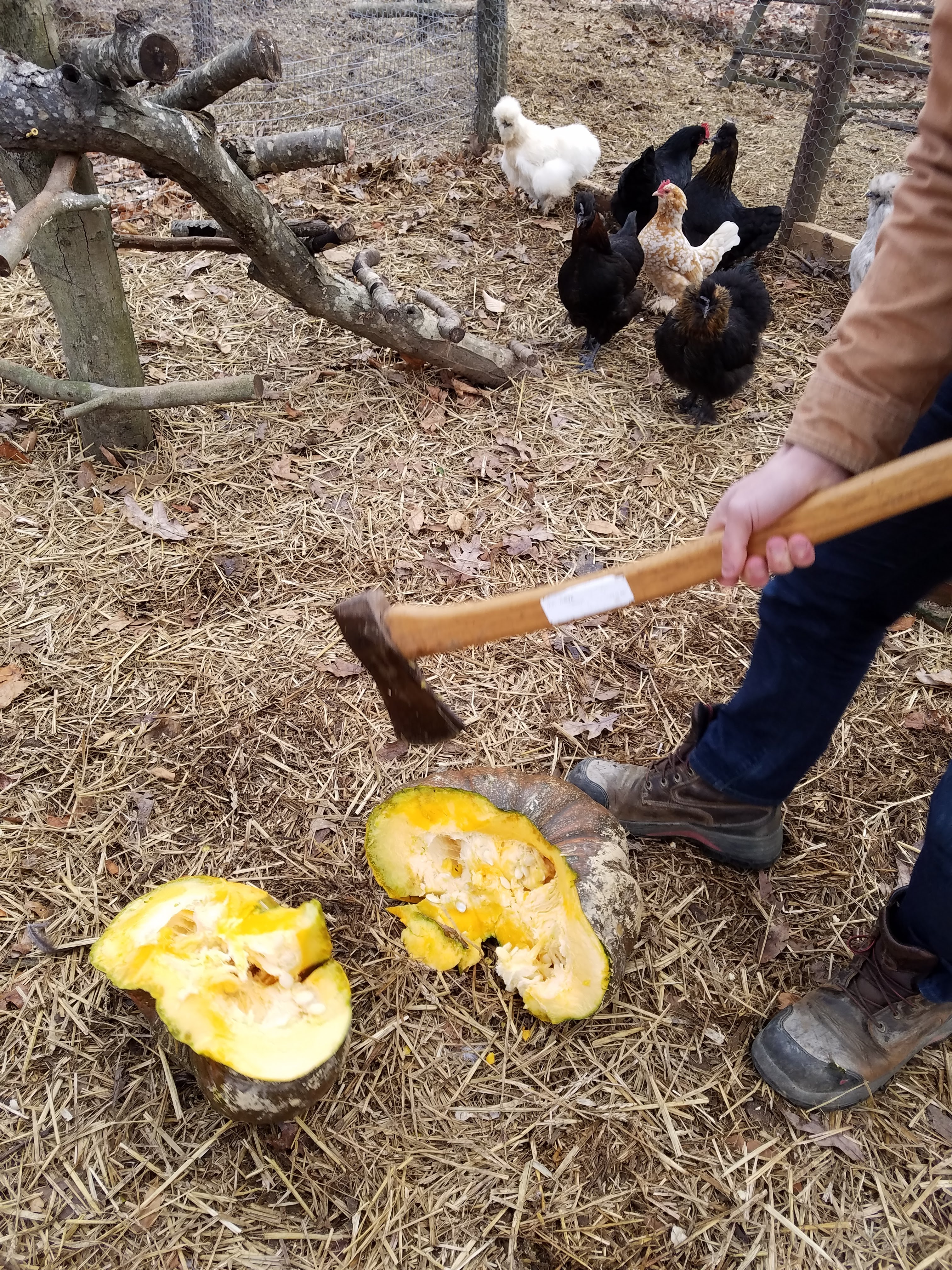
But no. Whack away, son of mine! The birds began to be curious.

curious.jpg

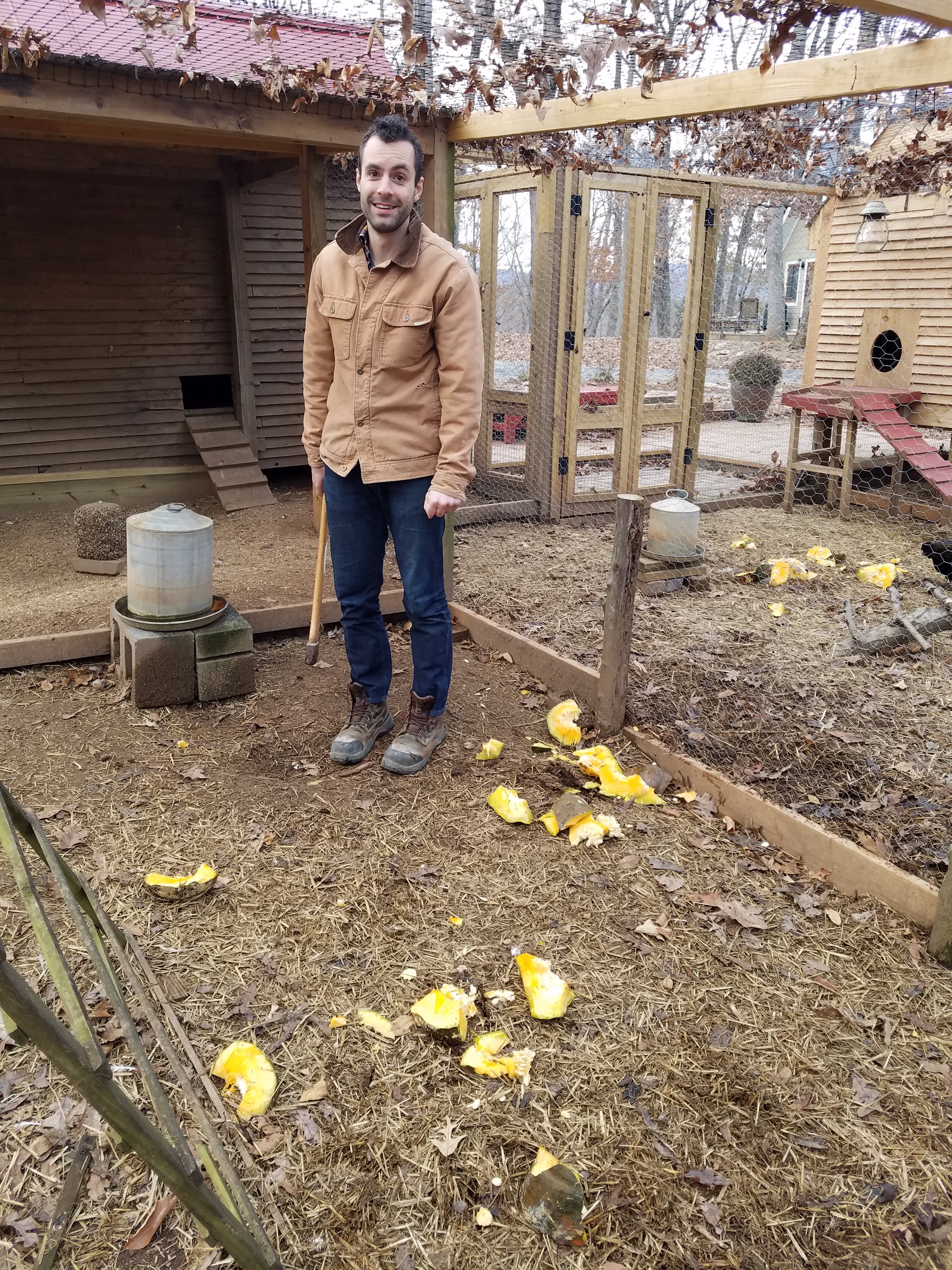
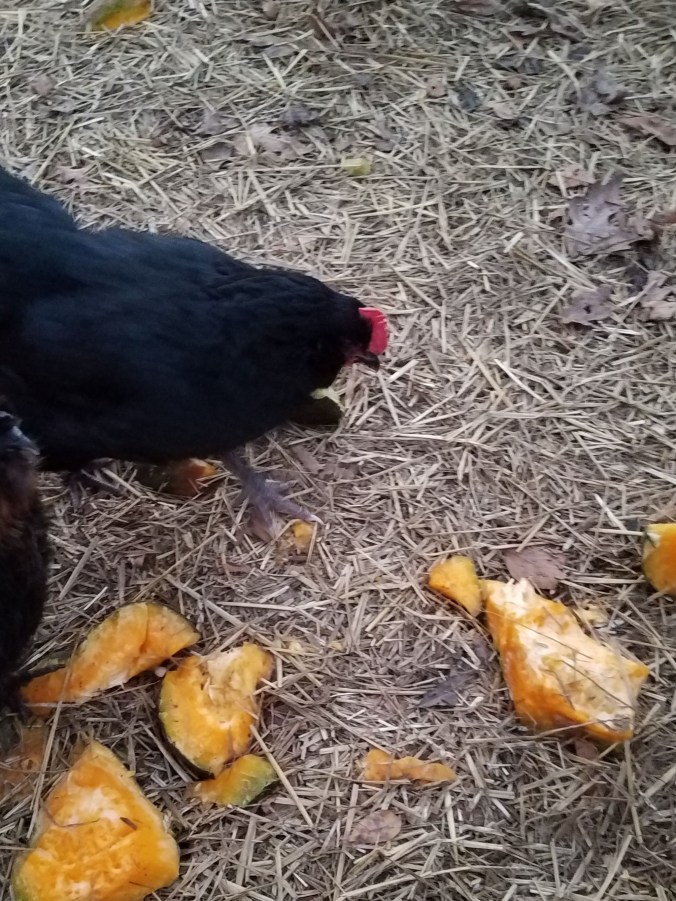
By the time he was done breaking up half for the Bridge Club and half for the Sewing Circle, there were scattered pieces of pumpkin, a way better situation anyway so that you don’t have them all crowding around one mass of food and possibly competing and showing each other who’s bigger or pushier. This would clearly defeat the purpose of the pumpkin giving them something to do so that they annoy each other less.

Samuel.jpg

Boring is a slippery slope to me, always has been. I bristled against the word when my children were small. They seldom used bored to describe themselves to me or to complain perhaps because they tried it once or twice (for sympathy maybe, or for a kind of attention?) and when they said it, breathed the very word, I immediately replied with something like, “Here’s a broom. How about sweeping the floor?” They soon learned to occupy their time in engaging and rather more pleasurable ways.

Time is short. We don’t know what’s around the next bend. And the world is so rich, so full of interesting things to do and learn and see and taste and feel and laugh about and listen to and ask questions about and marvel at! How is boredom possible in such a world? We are limited only by our willingness – within our individual capacities of course – to think, to imagine, to stretch, to wonder, to engage, to love, to serve, to explore. And of course by our obstinacy, as in doggedly determining that Boredom will not reside here. Not even in my chicken coops!
Hmmm, what’s this!!??

2 (2).jpg

It’s a hunk of something that wasn’t here before, sister! Have at it! What a life, eh? Never a dull moment!! 
1 (2).jpg

Six Siblings Celebrating

This past weekend I witnessed a remarkable thing in Kansas City. My college roommate and her five siblings have made a habit of gathering together to celebrate every time one of them turns 60, and it was Dina’s turn. They came from their homes in Kansas, New York, Arkansas and Kentucky and spent several days together talking, laughing, exploring the area, enjoying each other’s company. I was invited to join the party and marveled at this group, posing here in front of a Monet at the Nelson-Atkins Museum of Art.

six.2.jpg

Kansas City is Dina’s backyard, so she chose the activities, restaurants and agenda. Our excursion at this highly impressive museum had something for everyone. The entrance hall alone gives you some idea of its grandeur.

museum lobby.jpg

I did not expect the exquisite marble interior!

museum 2.jpg

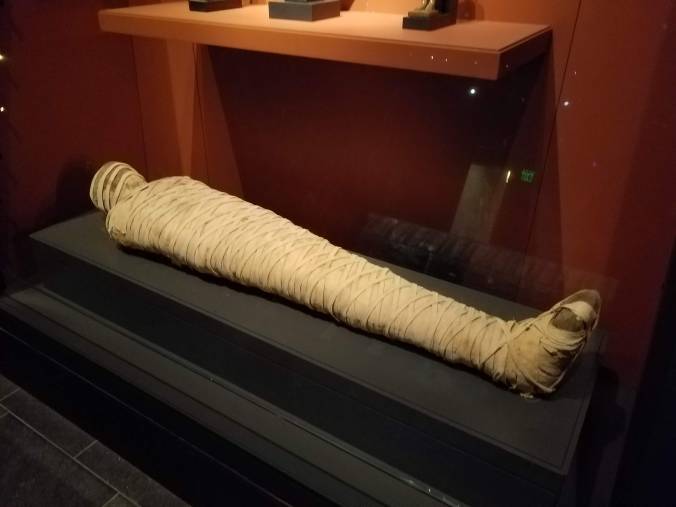
Or the mummy of Ka-i-nefer.

mummy.jpg

Or the mummy mask of Meret-it-es.

mummy mask front.jpg

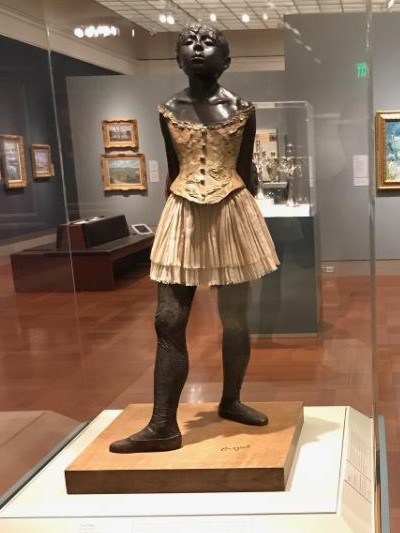
Or works by Degas.

dancer (2).jpeg

Or Renoir.

Renoir sculpture.jpg

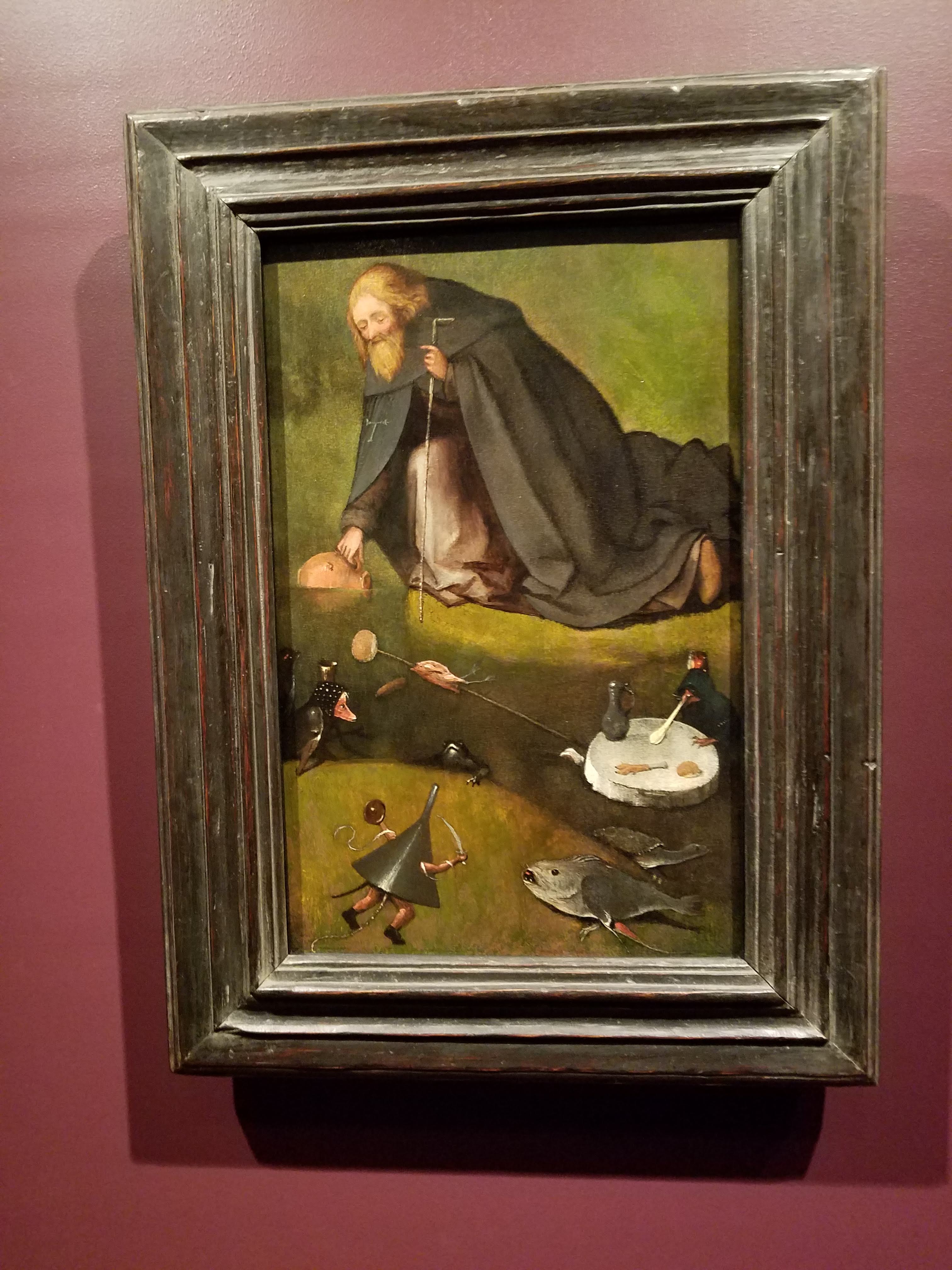
Or Hieronymus Bosch.

bosch painting.jpg

Or parts of a medieval cloister.

medieval cloister.jpg

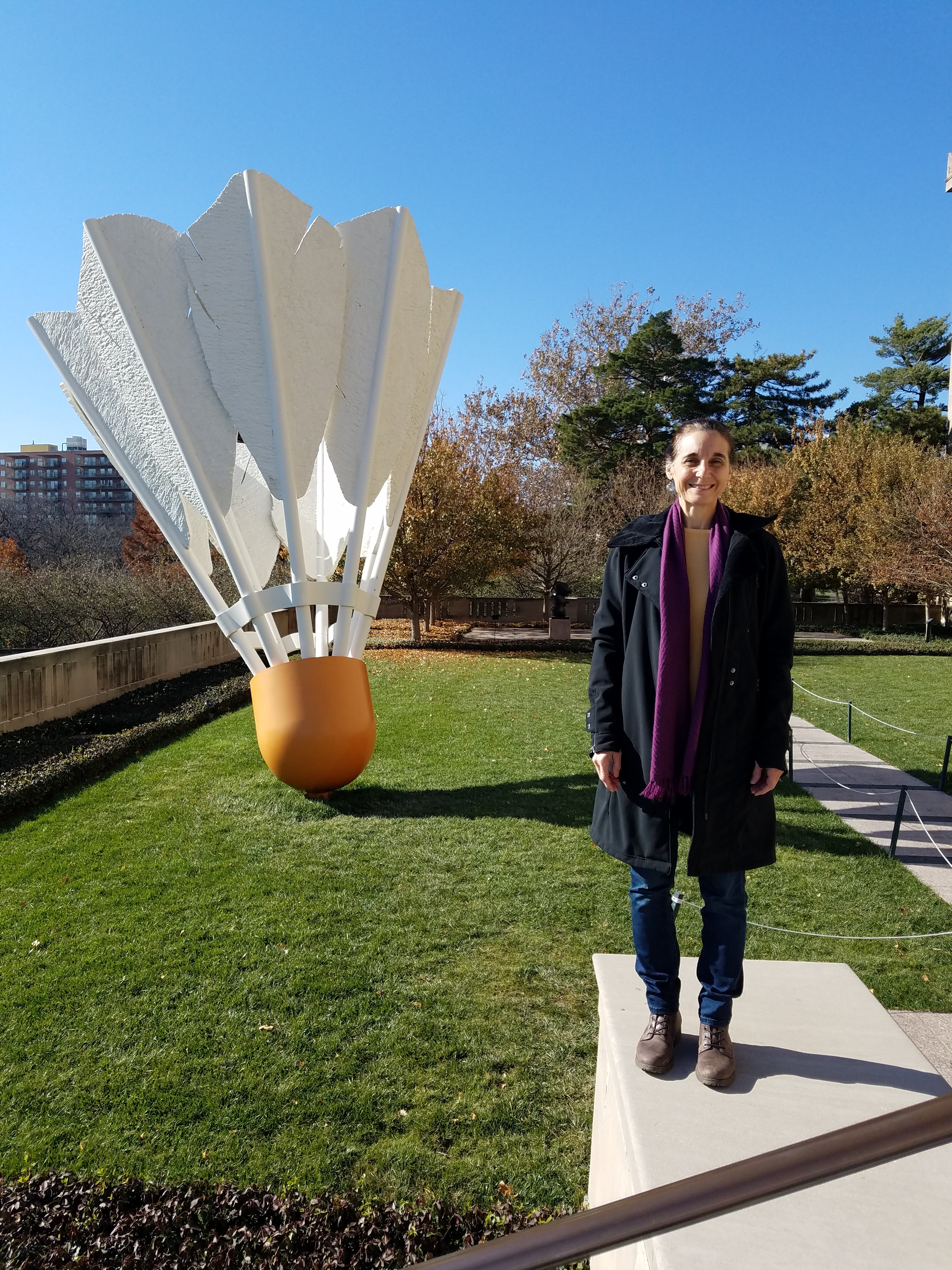
Or a giant shuttlecock! This one is 18 feet tall – way taller than it looks in this photo. I am standing on a tall ledge.

babminton birdie.jpg

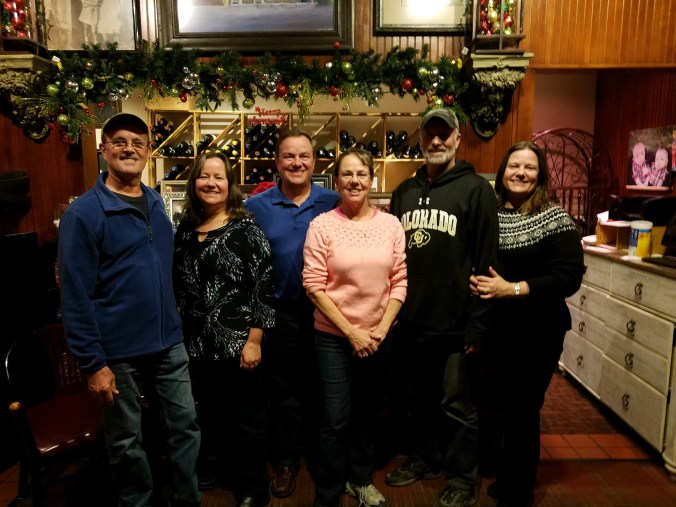
But as absolutely remarkable as everything in the museum was (and I am showing only a fraction of what we saw), it didn’t hold a candle, in my estimation, to how remarkable these six siblings are, shown here after the birthday dinner at Cascone’s.

six.2.jpeg

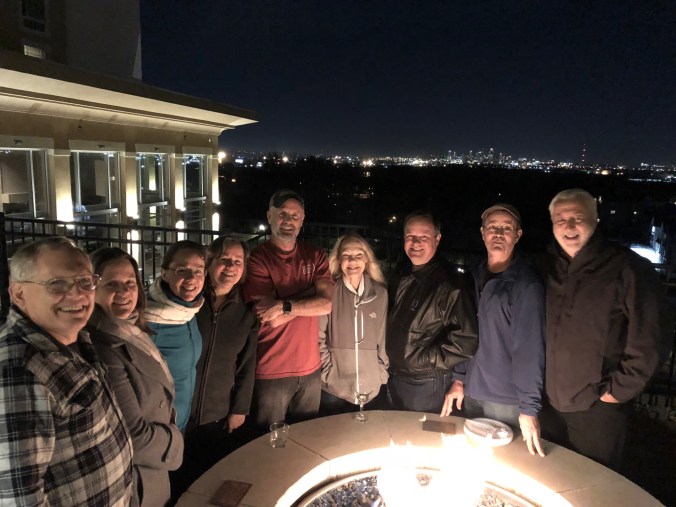
And here with spouses against the nighttime Kansas City skyline.

nighttime.jpeg

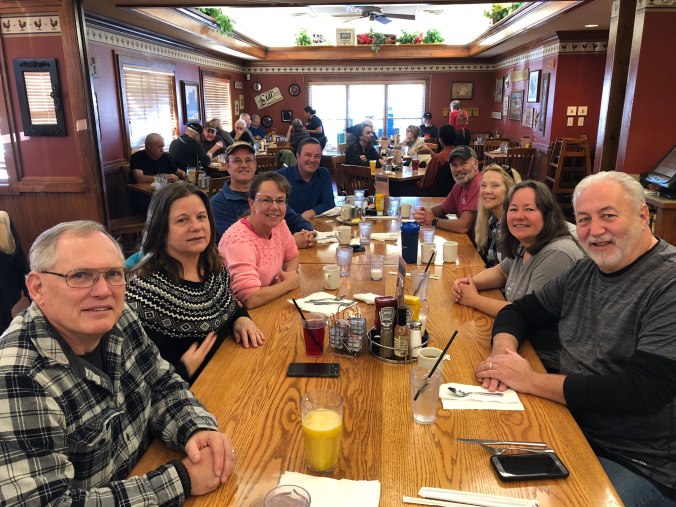
These wonderful people find a way to come together several times a year. They get along, overlook their differences, forgive each other their occasional bumbles, express interest in each other’s separate worlds and not only maintain familial ties, but also have fun and build new memories. The days together included meals of course (this was one breakfast – Dina the Birthday Girl is in pink),

breakfast2.jpeg

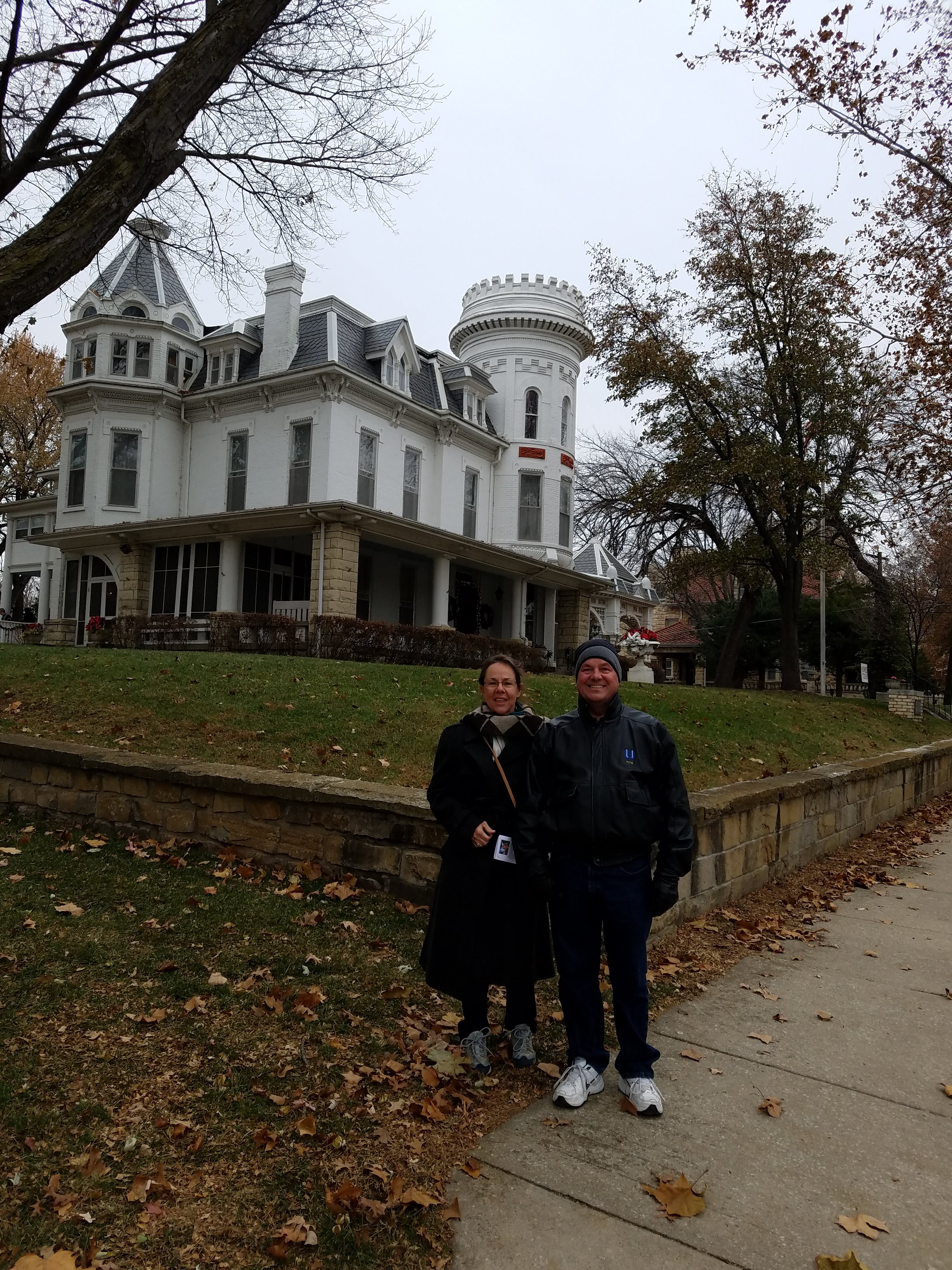
and time in the hotel’s hot tub, time for naps, time for a jigsaw puzzle, time for telling stories, time for touring special homes (Fred and Dina in front of this 25-room Victorian mansion called the Cray Museum in Atchinson, Kansas),

Dina and Fred house tour.jpg

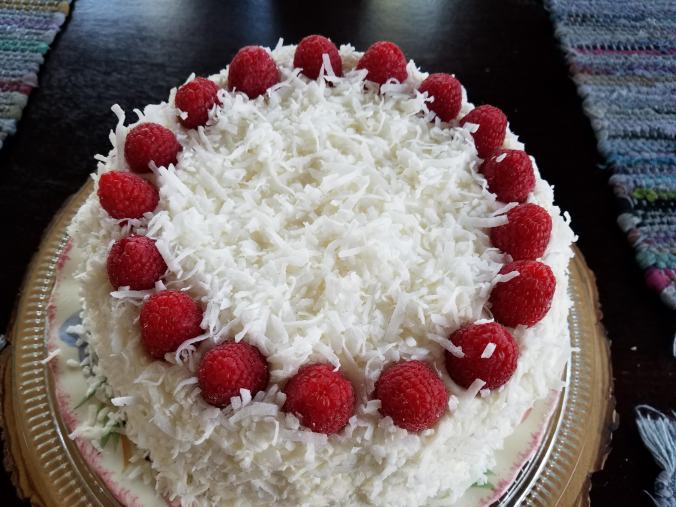
and time for Dina’s birthday cake.

cake.JPG

I asked some of them how they manage it, how they are still smiling after the loss of both mother and father, how they navigate diverse political affiliations and life choices, how the physical distances between their homes mean almost nothing – indeed how this many very strong individuals can be so (overall) very agreeable when they get together. The answers were expressed differently, but boiled down to the same thing: mutual respect. No one tries to lord it over anyone else or tell anyone else what they should do or how to think.

I watched and saw numerous examples. They waited patiently while one or more (I won’t say who!) took longer getting through the museum exhibits, even if the rest were ready to get going. Later they all stood outside for a while around that fire pit (in the skyline photo above) even though it was kinda, sorta, yeah quite cold (!) out there – because some wanted to. I watched them give each other room to be individuals, to have different opinions and different preferences. I watched them consistently practice the I Cor. 13:4-5 kind of love that is patient and kind, that does not envy, does not boast, that is not proud, nor dishonoring of others, nor self-seeking, nor easily angered, that keeps no record of wrongs. “Consistently” is a key word here.

I watched Six Siblings Celebrating (try saying that six times fast!!).  When in the future, in another location, they come together again, I have no doubt it will be just as pleasant, enjoyable and meaningful an occasion as this one was. I hope they know what a beautiful group they are, what a wonderful model for their children and friends and others, and how honored and delighted I myself was to have been a part of their amazing circle for a few days.

A Birthday Cake Worthy of Mom

My mom likes gooey frosting. If you are going to make a cake for her, that’s the first thing to know. If you are going to make her birthday cake, that’s perhaps the main thing to know. She will eat all around the frosting, saving the best for last, and savor every melt-in-your-mouth bite until it hardly looks like there was any cake at all on the plate.

I take that back. If you are going to make her birthday cake, the main thing to know is that the cake should be worthy of her. What is a birthday after all? To me it’s a time to celebrate that a person was born, that they came into the world, that they are part of your world. Clearly moms are in the enviable category of people essential to the fact of our own existence. But that doesn’t make them necessarily good, or in my case, great. I know I am blessed. My mom is amazing and I love her to no end. For as long as I can, I will celebrate her.

Last year, Mom moved to Charlottesville. For the first time in my adult life, I was close by – ten minutes from her place to be exact, as compared to six or seven hours as in the past. This year, on this birthday, she is happy and settled and nearby. Let the baking begin!

Fortunately for me, Mom not only loves gooey frosting, she also loves coconut. I’ve seen her eyeing those coconut-smothered cakes in the glass cases in bakeries. I’ve long known of her love of coconut macaroons, with or without a chocolate base. I’m safe putting as much coconut as I want on a cake. Does this look like enough? For a person who doesn’t eat nuts, oh, how I love coconut!

finished.jpg

This is the finished cake. It is two layers of sponge cake (also called genoise) with a filling of homemade lemon curd that has fresh raspberries and blueberries imbedded in it. The white fluffy frosting is a mix of buttercream and cream cheese appropriately smothered with coconut and decorated with more fresh raspberries. It is possible that I never made a cake for anyone that I was so anxious to eat myself!

The sponge cake part was new to me. What I mean is: I do not have a tried-and-true recipe for sponge cake nor do I remember ever having made one. To make this one, I did what any self-respecting wannabe baker would do, I consulted with an expert baker, or at least a credible one, which nowadays you do online. When you get a recipe online, you get not only the recipe, but often the many comments that others have made after trying said recipe. That’s a good bit of credibility, though not foolproof. I went with Natasha’s Kitchen and followed the instructions for her easy sponge cake.

One of the comments had to do with the consistency of the batter after it has undergone eight minutes of whipping in your stand mixer. The instructions said to whip the batter for 8-10 minutes and a reader said she had a trick to know if you had whipped it long enough: Detach the whisk attachment, lift it above the batter, make a figure 8 and see how quickly the 8 sinks into the batter. She said if you can count to ten and the figure 8 is still visible, you had whipped it long enough. At eight minutes (I used my phone timer) I stopped and did this trick. My figure 8 sank before I had counted to 2. I gave the batter another two minutes of whipping. It sank again. Uh-oh. Natasha said 8-10 minutes of whipping. I gave it one more minute on high and my 8 still sank. That’s where I said Bother this, it has to be good now, and poured it into the pans. It was very good.

The best part of this recipe is the suggestion to cut out circles of parchment paper for the bottoms of the cake pans. After the designated baking time, I let the two layers cool in their pans for ten minutes or so on a rack, then took them out of the pans, and let them cool the rest of the way, they wrapped them tightly in plastic wrap and froze them. This paper peeled easily off the frozen cake layer when I was ready to assemble and frost the cake. Another hint if you try this recipe. Use three pans instead of two. The amount of batter the recipe makes divided into my two standard cake pans spilled onto the sides of the pan. In the end this meant trimming off the edges when I took the cakes out of the pans, which left me having to eat them! Oh, yummy preview! Hmmm, maybe this extra, spilled-over part is not such a bad thing?!

Sandy brought marvelous raspberries the day before, and they are so pretty and so delicious, I wanted to use them in and on the cake. But they need something to sit in. On top they will sit in the frosting but in between the layers they needed something. Lemon curd seemed just right. Again I went online, this time to Taste of Home, having never made homemade lemon curd.

Again I followed instructions, and again the mixture didn’t seem thick enough after the amount of time it said to stir in a pot over a flame. I got impatient at that point and put a teaspoon of cornstarch in a cup and added just enough water to stir it into a thick paste, then added that paste to the hot lemon mixture. This worked. I can’t say whether the curd would have been fine with more patience and without my remedy. Probably it would have.

My last bit of improv concerned the frosting. You make a buttercream frosting with butter, confectioner’s (powdered) sugar and a little milk (and vanilla if you want but I ran out last time I used it, and know I have another bottle around here but couldn’t find it, so no vanilla this time). Again I used the stand mixer because I wanted the frosting really fluffy, so I let the whisk beat it like mad for ten minutes or so. But I got concerned that I didn’t have enough frosting for the sides and top of the cake, and I used up all the powdered sugar I had, so I decided that I could add some leftover cream cheese frosting (from another cake sometime recently) just to make sure there was enough. I let this all whip together in the mixer. When I relayed this story at the table while we were eating the cake, my daughter Marie said this example of make-do illustrated my lifelong culinary style. So be it. The frosting worked 😊

The last essential birthday cake element in my house is the plate that is used for the Birthday Girl’s piece (or Boy’s, as the case may be). Long long ago I got this plate and have always brought it out along with the other plain dessert plates. I am not good with balloons for calling attention to the person we are celebrating. But a plate I can do!

my birthday plate.jpg

I can’t say I like this plate’s design all that much, and have never been crazy about the orange, but it’s what I have and what we’ve used and it serves! Mom’s piece went on this plate.

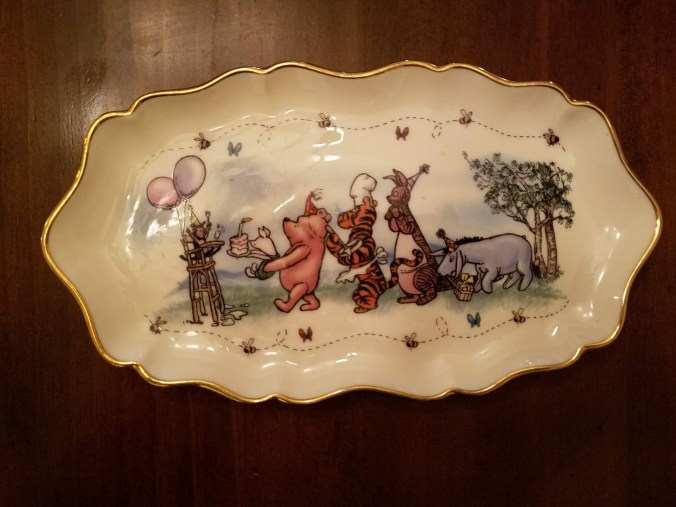
Whether or not my children follow this birthday-plate tradition, I don’t know. But I hoped they would. At one point a few years ago I searched on ebay and got them each a birthday plate. My favorite is the one I found for Marie. I have always been enamored with the original Winnie the Pooh stories and illustrations. Could there be a better Happy Birthday plate than this? I hope she uses it on everyone’s birthdays!

Marie's birthday plate.jpg

Our tradition, like many people’s, is that we bring the cake with lighted candles in from another room while singing Happy Birthday.

We sang,  Mom blew out her candles and we celebrated this wonderful lady I get to call Mom!

53746blowing out candles.jpeg

celebrating

Where our tradition differs from most people’s perhaps is that after the Birthday Girl or Boy blows out the candles, she or he gets to make the first slice into it. They do not cut their whole piece, just the first slice into the cake, which Marie said was my way of retaining control over portion size, but this is not actually true – that’s just the way my mom did it, so I did! Mom never explained why she did it, but the way I always saw it was that the Birthday Girl or Boy gets to be involved, gets to start the process, but is not burdened with the work of cutting up the cake (which, c’mon, can be messy and tricky and require more concentration than a person celebrating a birthday can rightly be expected to have at that moment) – a perfectly plausible alternative reason to do it this way, wouldn’t you say!?

Mom cut the first slice and I so enjoyed watching her enjoy her piece – down to the last bit of gooey frosting! And I enjoyed mine too!

Mom’s Delicious Bracciole

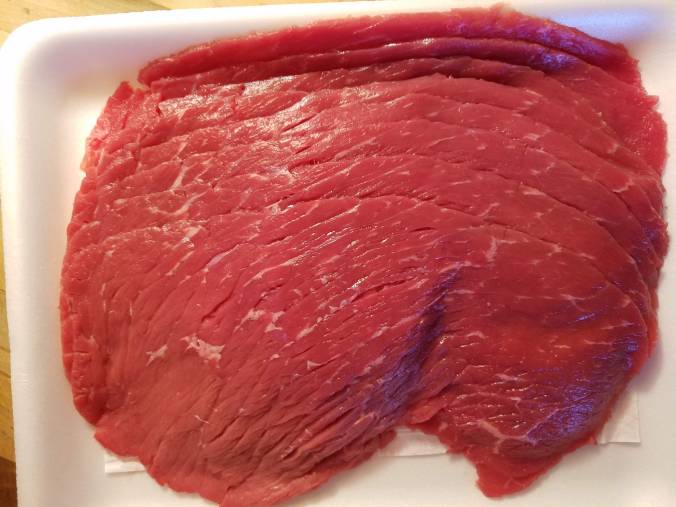
My daughter and her family are coming to visit and it’s Mom’s birthday on Sunday, so I am making a special dish – manicotti (prepared with homemade crepes) – a meal Mom doesn’t make for herself very often. I planned on having a good baguette, warmed up, and a big green salad on the side, as well as some pan-fried Italian sausage, always a delicious extra protein. But yesterday I happened to see “Beef Top Round Thin Cut” in the meat case and thought Why not make bracciole?  That’s what any person would think if they saw meat like this, right?

meat in package.jpg

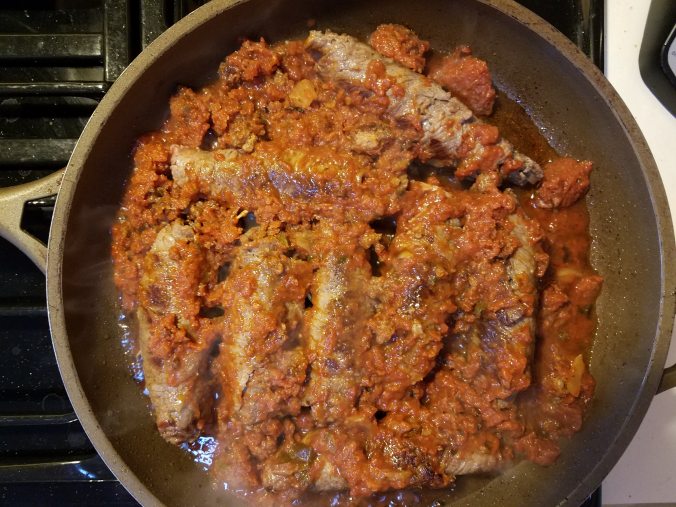
When I was a kid, Mom would make bracciole (pronounced brah-zho-lie) every now and then. I’m not sure why it didn’t appear on the table more often, maybe Mom will tell us. Bracciole is thinly sliced beef, rolled up with yummy parmesan or romano cheese and bread crumbs inside (that cheese was affectionately known in my family simply as “grating cheese”), seared in olive oil, then covered with your best red spaghetti sauce (affectionately known in my family simply as “sauce”) and cooked until tender. Oh yum!

finished.jpg

I asked my sister Lynn for her recipe because it’s not in my cookbook and I wanted to be sure I made them just like Mom used to. Perhaps I don’t have the recipe in my book because it’s so simple I thought I didn’t need the recipe? Lay out the meat, put bread crumbs, grating cheese and salt, pepper and seasonings on top, roll, secure, sear, smother in sauce, cook till done.

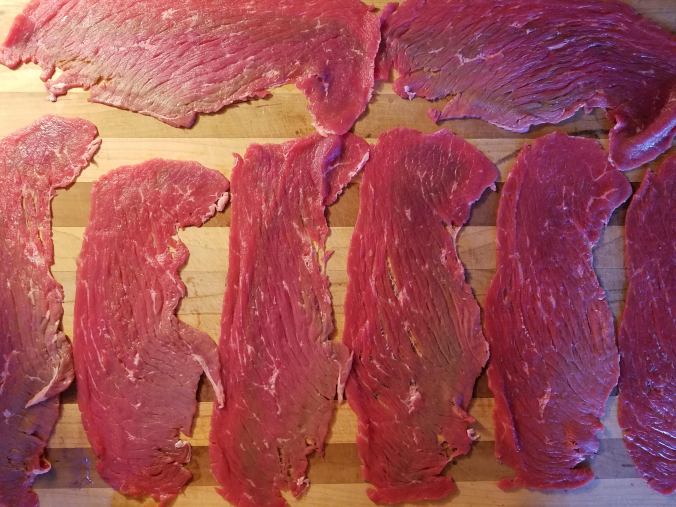
One step at a time, and with measurements, that process looks like this. My package contained eight slices. Start by carefully separating the slices from each other and laying them on a flat surface.

meat.jpg

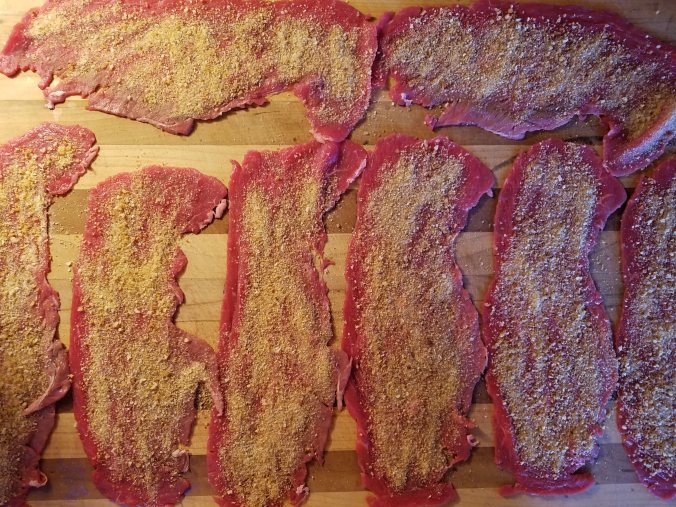
One half cup of bread crumbs was just the right amount to sprinkle on these pieces. Lynn’s recipe called for seasoned bread crumbs but I didn’t have those, so I sprinkled Italian seasoning on the crumbs. If you don’t have Italian seasoning as a mix, use basil, oregano and garlic powder. I bet the Italian seasoning had parsley in it too, but I cannot be sure. Go with parsley too. One tablespoon of the mix was enough for these eight. Some people would use chopped fresh parsley, basil and oregano and minced garlic instead of the dried seasoning. I’m sure this is also wonderful. But in my family we kept it simple.

with bread crumbs.jpg

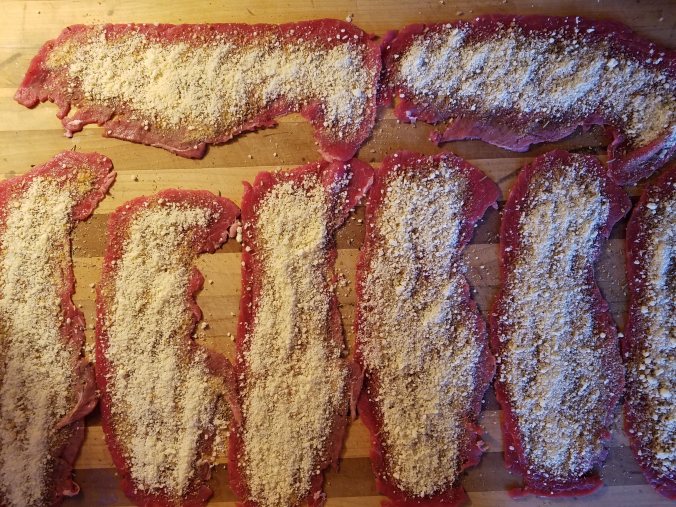
I sprinkled salt and pepper on them too, then ¾ cup of grated parmesan cheese.

ready to roll.jpg

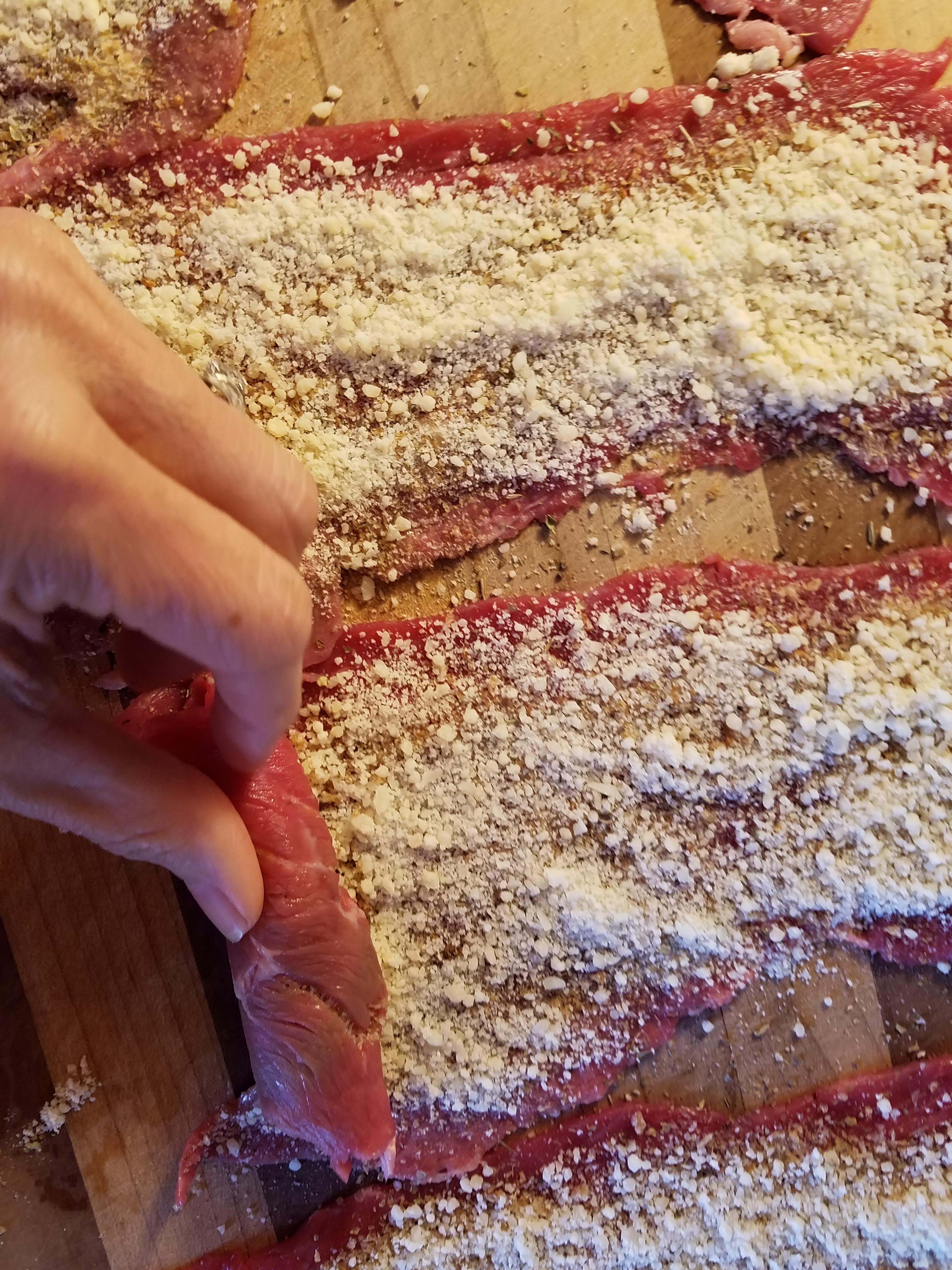
Let the rolling begin!

rolling.jpg

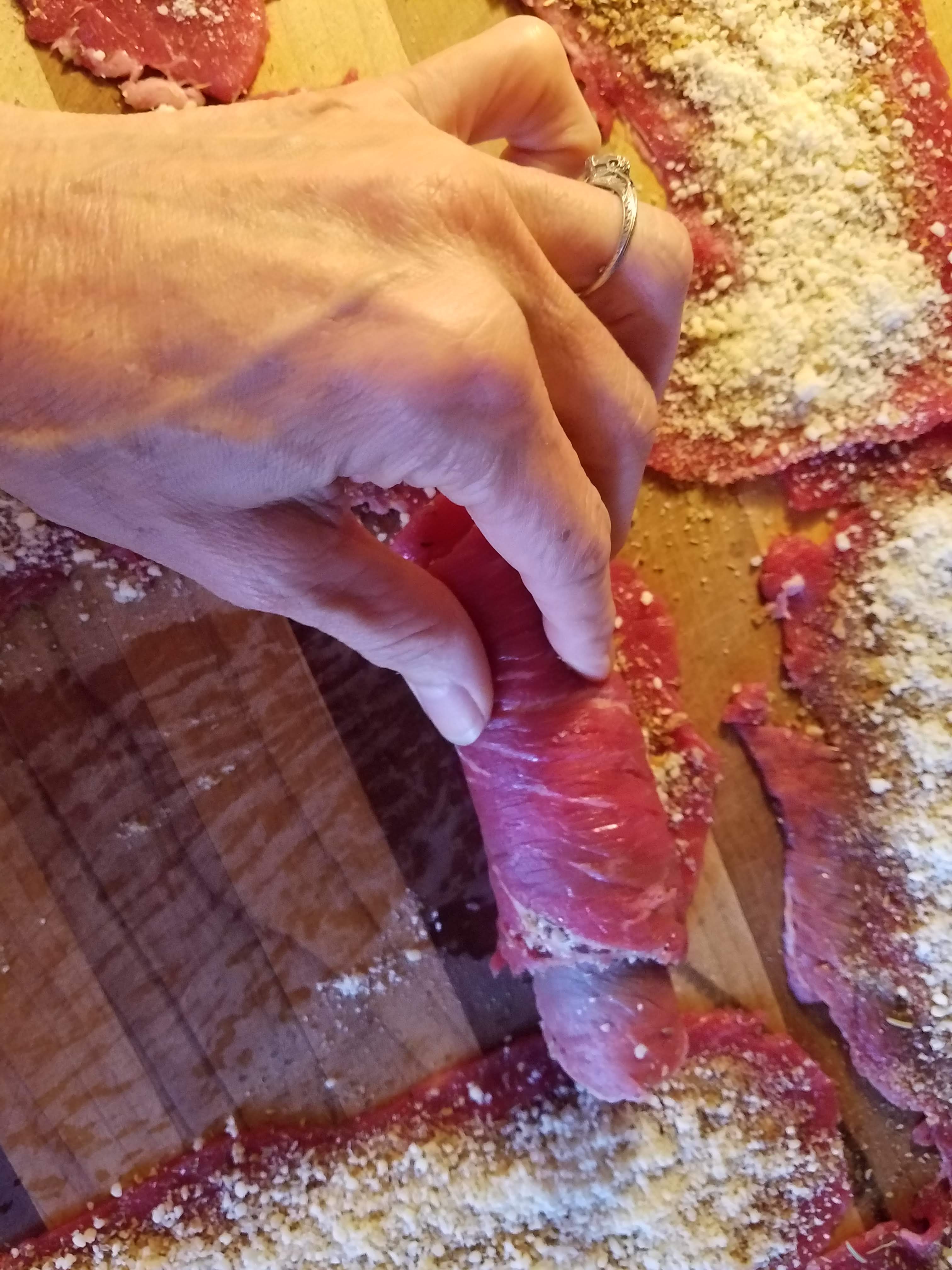
Nice and tight.

Normally I would roll with the fingers of both hands, but it’s mighty challenging to roll with two hands and take a photo with your phone at the same time! I can roll with one hand, but using two goes faster.

rolling3.jpg

My rolls looked like this.

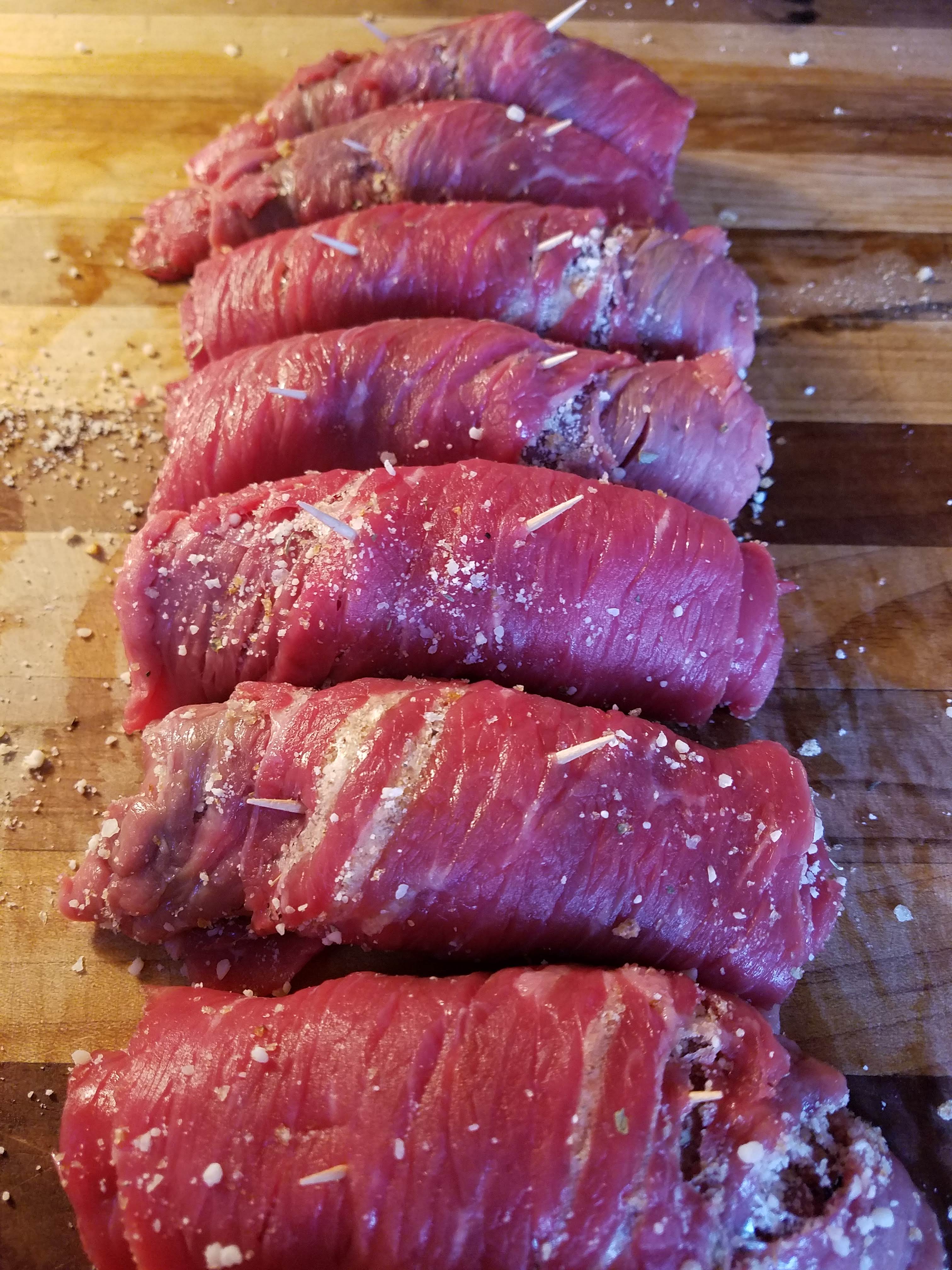
rolled and ready.jpg

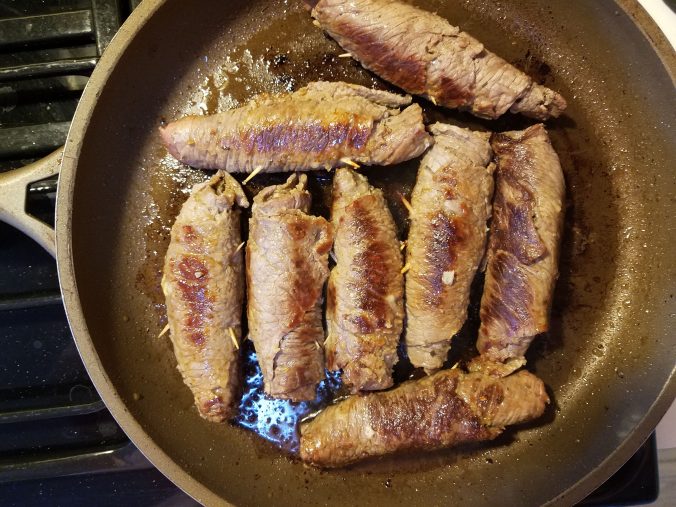
Do you see the toothpicks? I used two in each roll, stuck in at angles so they crossed each other in the middle. This holds the roll together during the searing process. You could also use string, the kind that holds pastry boxes together. I couldn’t find any string so I managed with toothpicks. It’s a little harder to get the sides all seared in the pan when you use toothpicks, but somehow I got through that.

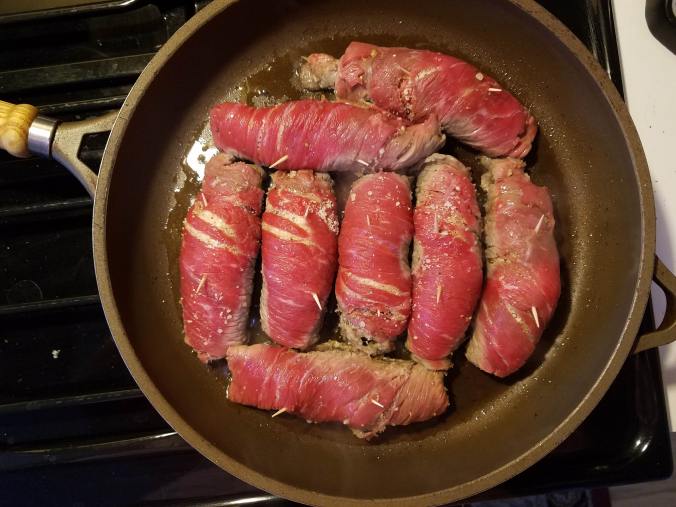
Into the pan I put about 3 tablespoons of olive oil, enough to coat the bottom well, and let it heat up for a minute or so on a medium flame. Then into the hot pan went the meat rolls.

in pan.jpg

Give them a few minutes to brown on that bottom side, then turn them to brown them on another side. Turn again when the second side is brown and let a third side brown. Now depending on two things (1. your level of patience and 2. whether you’ve browned them in thirds or fourths), you might need to turn them one more time.

By this point your kitchen smells really good, by the way.

seared.jpg

Once they are seared to your satisfaction, douse with red sauce (meat or marinara, whichever you like best) and turn the heat down to low. Cover and let this cook about an hour.

I let mine cool, removed the toothpicks, put them in a serving dish and covered them tight. I will heat them up again on Sunday (will probably just put my serving dish in the oven for half an hour on 325F) to serve with the manicotti. I have no doubt they will be scrumptious!

Soon I will show you how to use the same thinly sliced meat to make rouladen, the German variation of this dish, also totally delicious, but rouladen would not go with manicotti!

Unbeatable Biscotti

“You could sell these.”

“You should sell these!”

“If you’ll make me more of these, I’ll pay you.”

“These are better than any you can buy.”

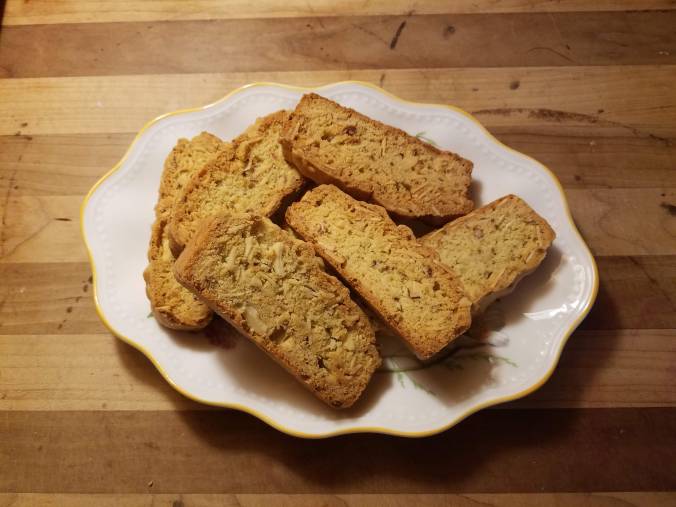
plated.jpg

If just one person had said such things about my lemon-anise-almond biscotti, I would have thanked her (or him) and carried on. But these make a great gift – they mail well and keep well – so I have made a gift of them many times. And I have heard similar versions of “these are great!” over and over again throughout the years since I discovered and tried this recipe in the Williams-Sonoma “Cookies & Biscotti” baking book.  I don’t even eat them myself (can’t abide the almonds) so I can’t chime in. Sometimes you have to just take people at their word.

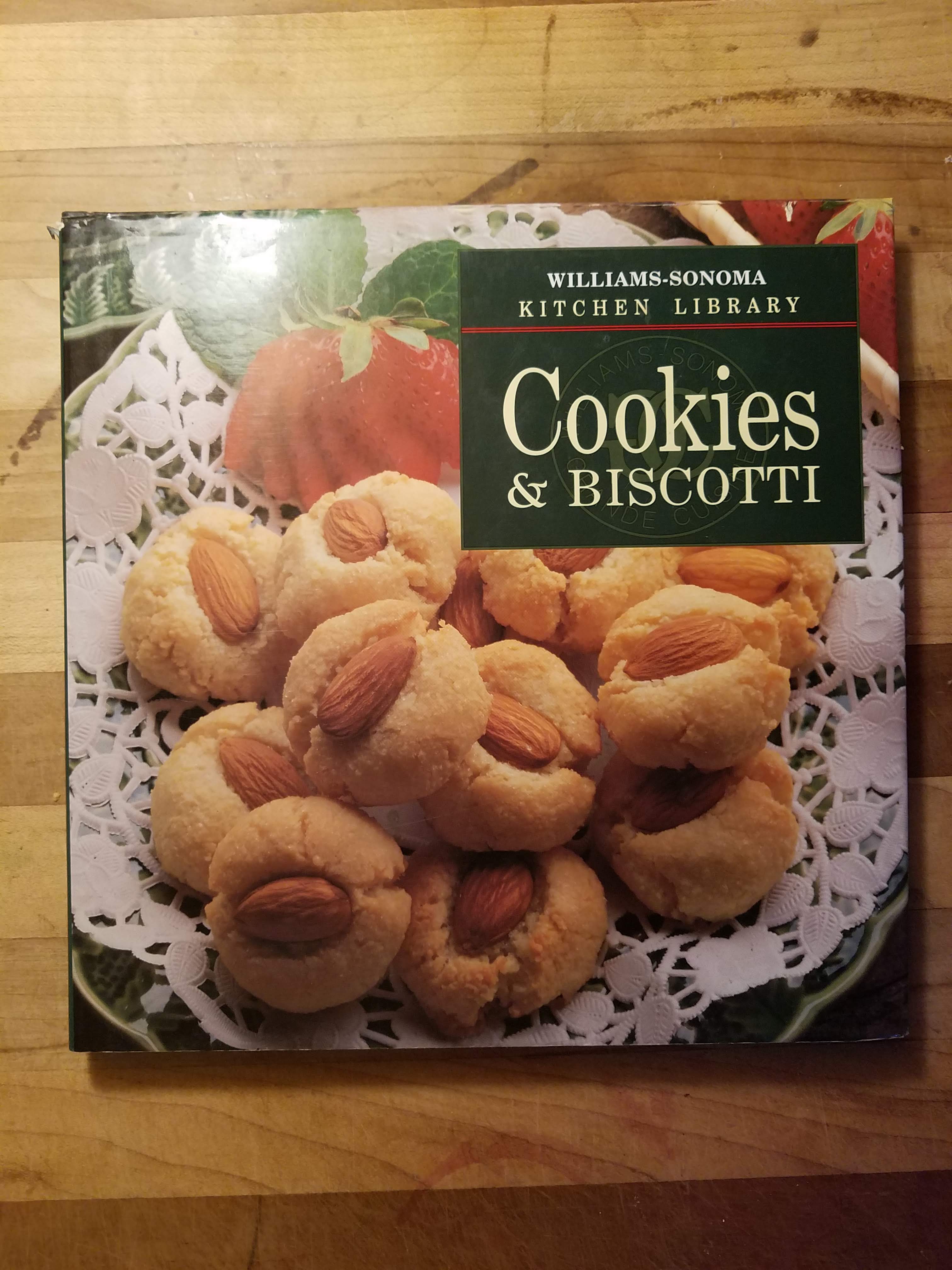
This is the book.

book.jpg

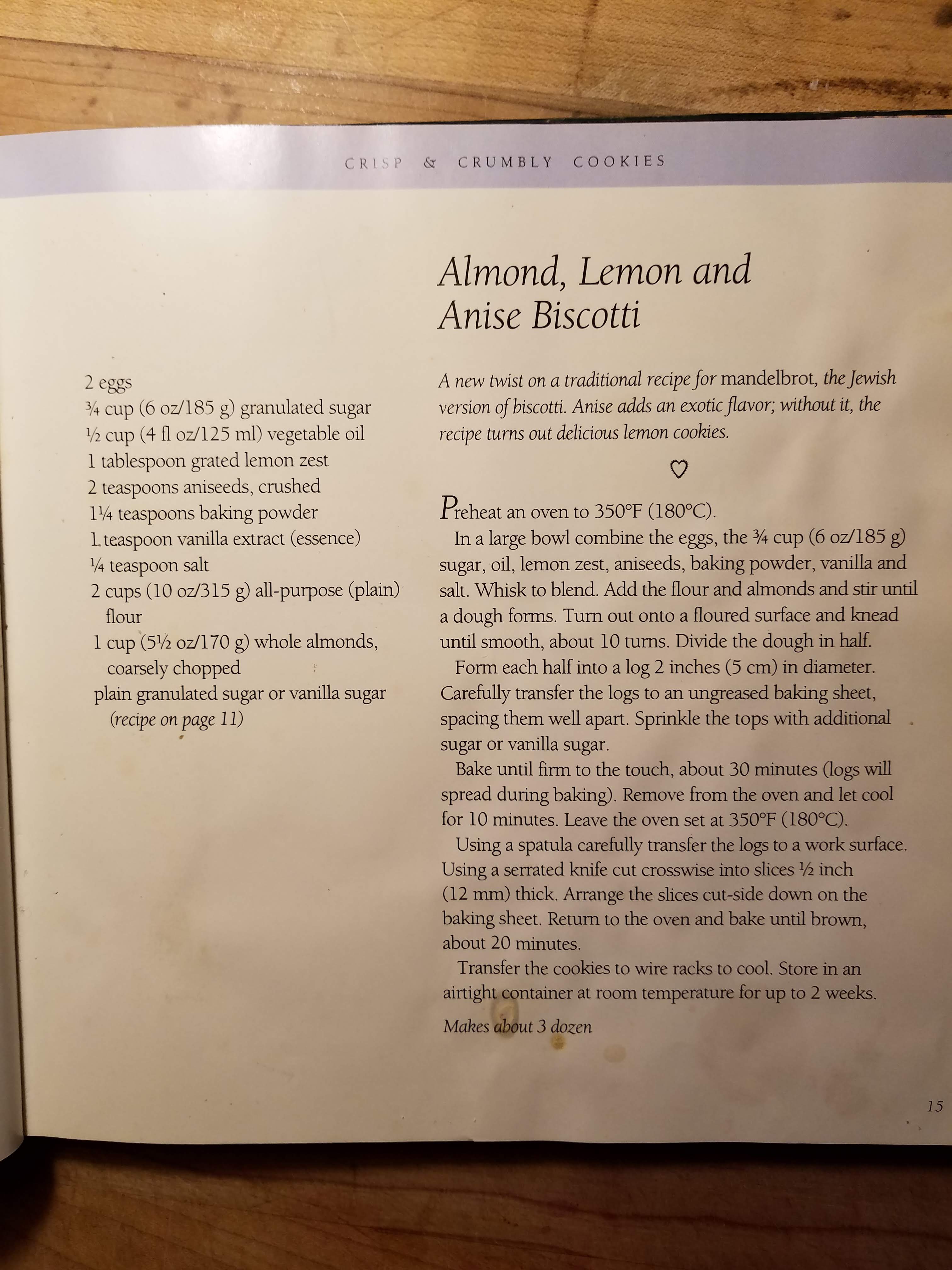
This is the recipe from the book.

recipe.jpg

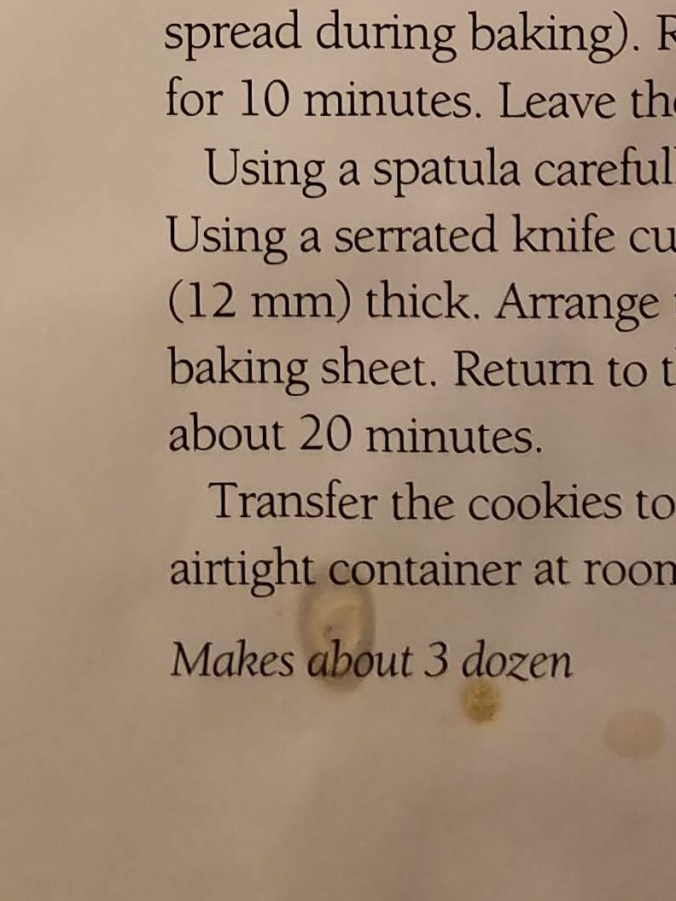
You can see that the page is wrinkled and has spots of something that spattered on it where it says “Makes about 3 dozen.”

recipe (2).jpg

This is what happens when a book is open near your work area. The marks of use are like a letter of reference or a proof that the book has been opened to this page near splashing ingredients numerous times. You don’t use a recipe over and over that you don’t have success with. The marks on this page are the same as a tattered quilt to me — used, loved, used again.

Not only are these a wonderful gift, but they are a joy to make – even for someone who can’t abide nuts! Start with the mixing of the eggs and sugar. I know I’m partial to my own chickens’ eggs. Yesterday, when I needed one and simply walked out to the coop to get one (and the door was stuck on account of being swollen from the rain and I couldn’t get it open and had to ask Samuel for help!), I thought How many people can just walk out to their coop and get a fresh egg when they need one?

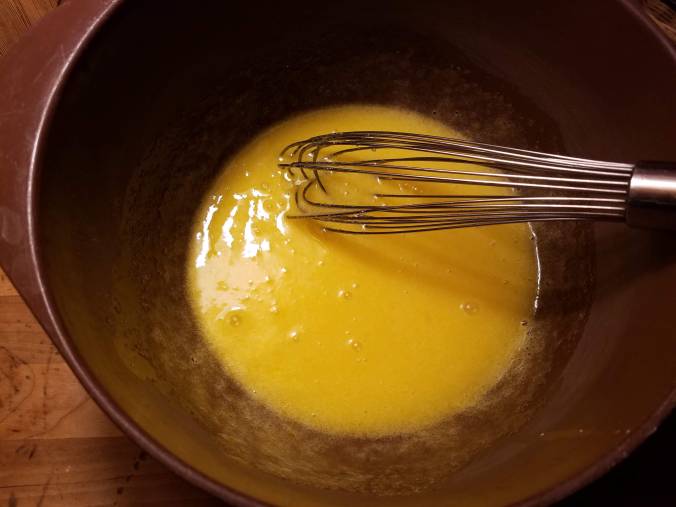
I know my eggs are super fresh, but I think yours would look just as beautiful as this whisked up in a bowl with the sugar.

eggs and sugar.jpg

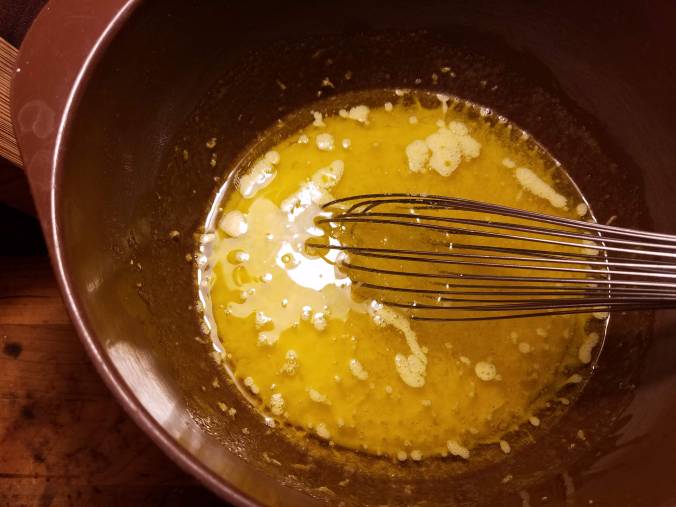
When you add the oil (olive oil for mine, I always use olive oil) and it sits on the top looking so separate,

oil in.jpg

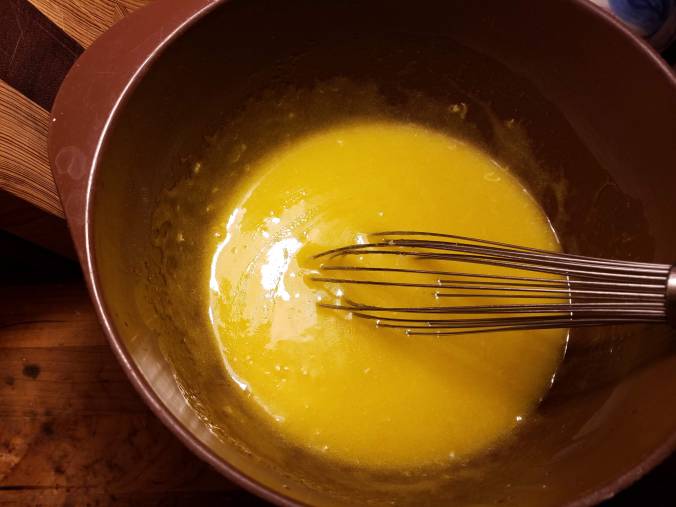
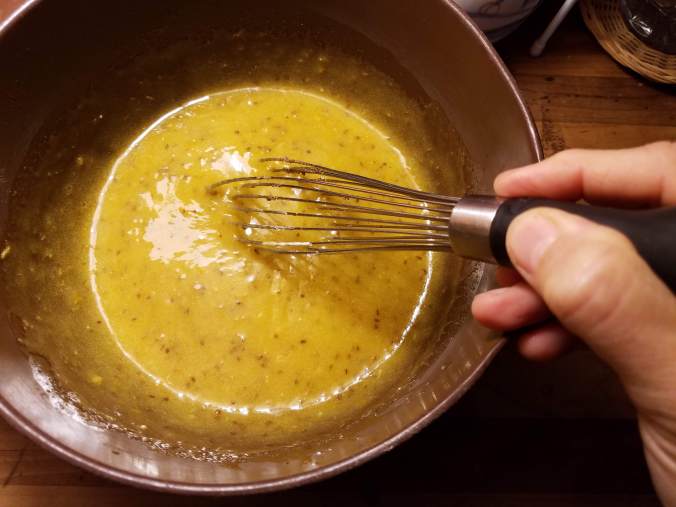
you might be tempted to wonder how it will incorporate. But a little wrist action brings those pure ingredients together into a smooth, glistening mixture that has its own beauty. I love the gleam.

oil mixed in.jpg

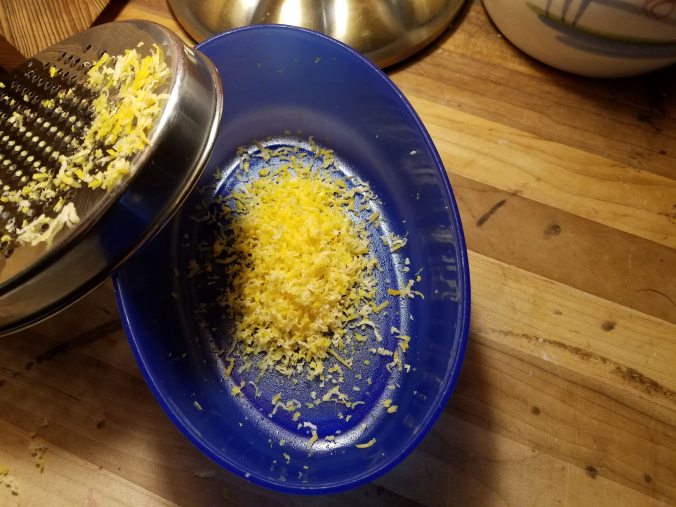
I don’t measure the lemon zest. The peel of one lemon, grated fine, has always been perfect not only in amount but also in how it adds to the pleasure of making these biscotti. On and in my grater, the little pieces of peel not only look beautiful, but the lemon oil that gets released fills the air with a freshness like no other. And however much it makes, it makes. I put it all in.

lemon rind4.jpg

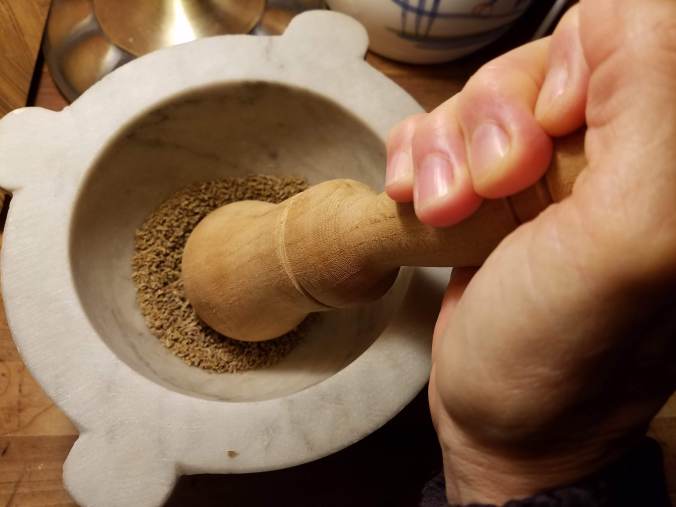
Next comes the anise, another sensual wonder. You can buy ground or crushed anise, but to crush it yourself in an old-fashioned mortar and pestle, to smell the rich aroma of the anise oils breaking forth from the seeds – well, I’m in heaven.

anise4.jpg

Once the grated lemon peel and crushed anise seed have been mixed in, it looks like this. Your nose will tell you you’re on the right track.

anise mixed.jpg

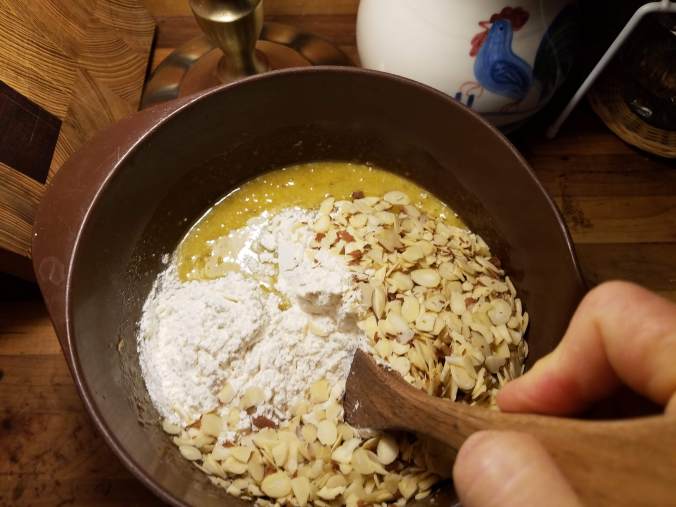
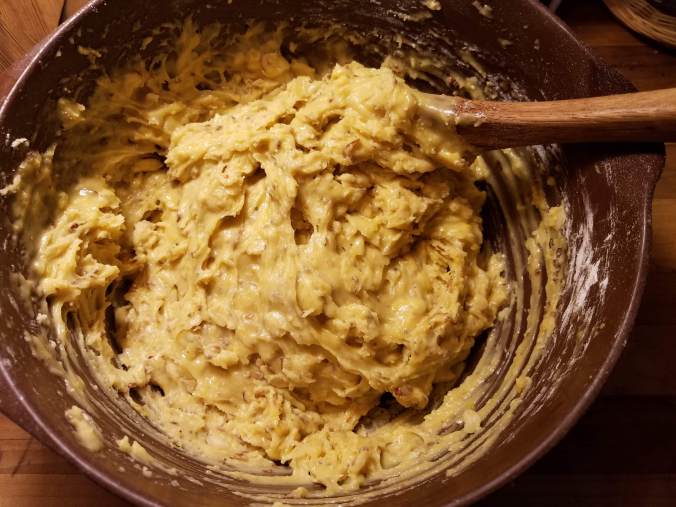
It’s time for the rest: baking powder, vanilla, salt, flour, almonds. The recipe says to use whole almonds and chop them coarsely. If I liked almonds and wanted the joy of that experience (no doubt for almond-lovers it’s right up there with mixing the olive oil in, grating a fresh lemon and crushing anise seed), I would do that. But I simply tolerate the almonds for the sake of those who like/love them, so I cheat here and add the very thinly sliced almonds you can buy. In this case it was raining the other day when I might have gone to the store and Mom had some in her freezer – thanks, Mom!

Notice I moved to a strong wooden spoon instead of the whisk for this part.

almonds flour etc.jpg

The dough is quite stiff by the time you mix everything in. The strong spoon is better.

stiff dough.jpg

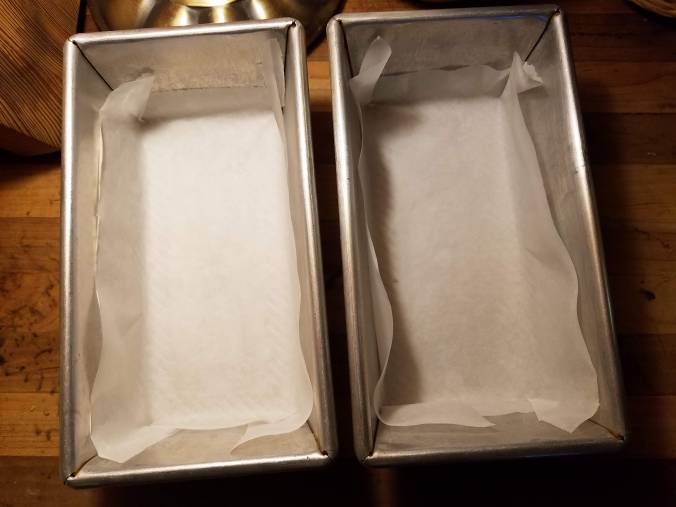
The recipe says to turn this out on a floured board and knead until smooth, about 10 times. I don’t know if I was distracted (that never happens around here!) or if I thought the dough looked smooth enough. Anyway I forgot this part and jumped to the pans. Again not sure what moved me to use parchment paper this time (for the first time ever) but I did, and it was great. I lined the pans. Notice I am not overly generous with the paper. Cheap runs deep!

pans ready.jpg

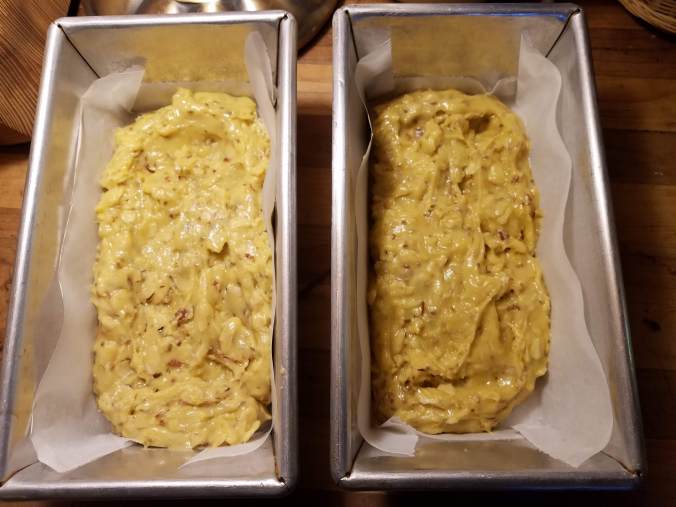
And put the stiff dough in.

pre oven.jpg

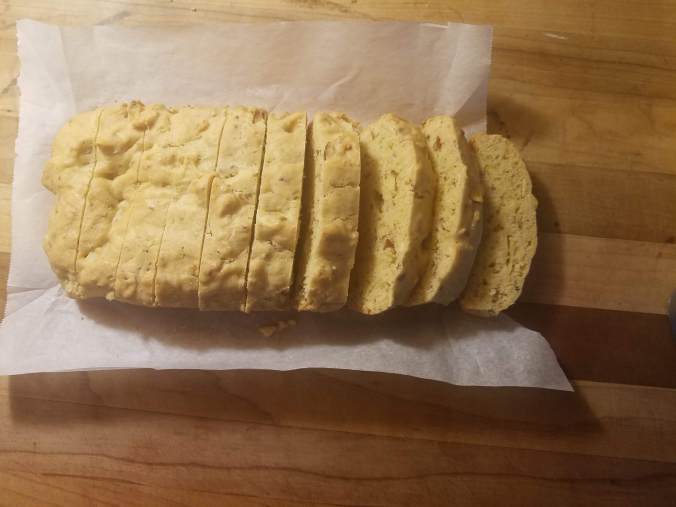
Turns out that not kneading the dough did not change the outcome. My loaves baked for the 30 minutes the recipe calls for, and they didn’t look very brown, but I took them out, waited a few and sliced them. It was just right.

Use a good serrated bread knife. You have to get through the almonds, and whether they are finely chopped or thinly sliced, they are an obstacle. Slice carefully.

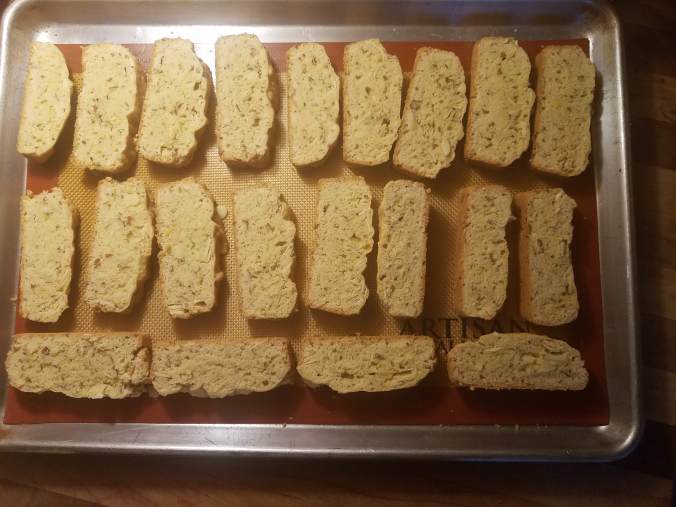
post oven sliced.jpg

Now put those slices, cut-side down, on a baking sheet and right back in the oven.

post oven on pan.jpg

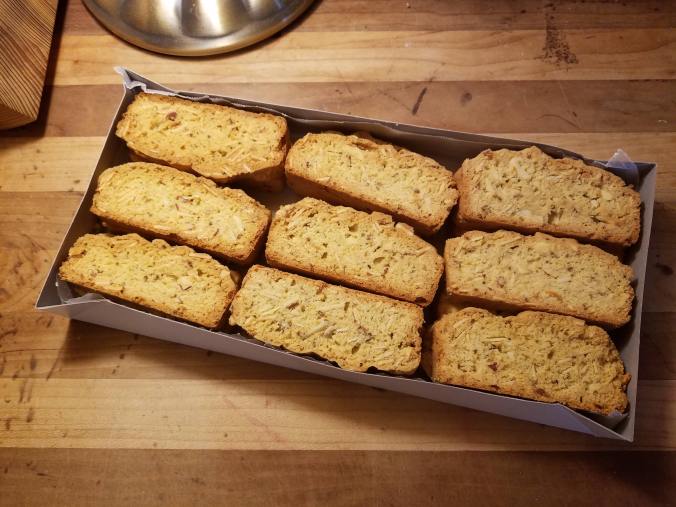
After 20 minutes in the oven for this part of the process, I didn’t think these looked quite browned enough, so I left them in another 8 minutes, and I liked that color, so I took them out, let them cool and boxed them up for my sister Joanne and her husband Fred, who were in town for a visit.

boxed.jpg

I found just the right box in my handy-dandy empty box collection. Look at that, two layers fit perfectly. My children always laughed at me for saving empty boxes of various sizes, but as any empty box collector knows, all boxes are not the same and there’s something to be said for having a good selection for times such as these, which I did (on account of careful saving), and which came in handy (again). I say, if a thing – say for example my empty box collection – doesn’t harm anyone, shall we perhaps kindly overlook the quirk and allow the collector to indulge? But I digress.

Enjoy your biscotti and prepare yourself for rave reviews!

Half a Piece of Pie

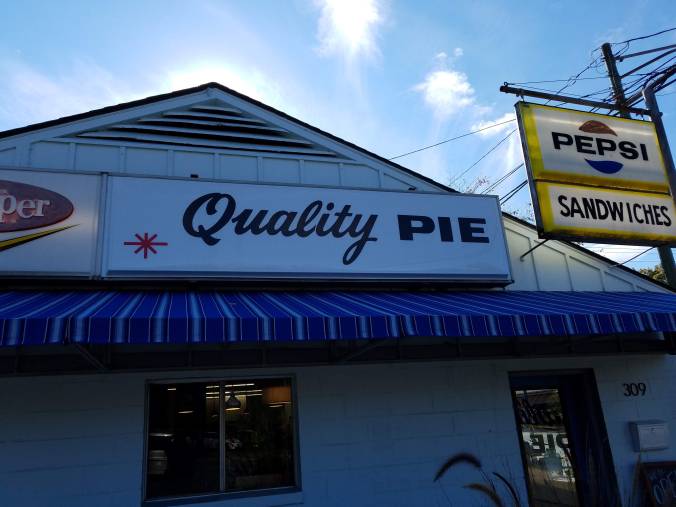
In the past few months, at least two new pie shops have opened in Charlottesville. There’s something about a good piece of pie, and everyone has their favorite. Or do they? Is cherry better than apple better than blueberry better than key lime? Oh, better than pumpkin?? I had to make a decision today at Quality Pie.

Quality Pie.jpg

This pie shop’s selection includes the basics. I looked in the glass case and asked the nice young man to tell me about the cherry pie. “Bing cherries,” he said, “that’s all I know.” Okay, fair enough. I like bing cherries. How about the crust? “All butter,” he said, “unless it’s for one of the savory pies. Then I think they use lard.” All butter works for me.

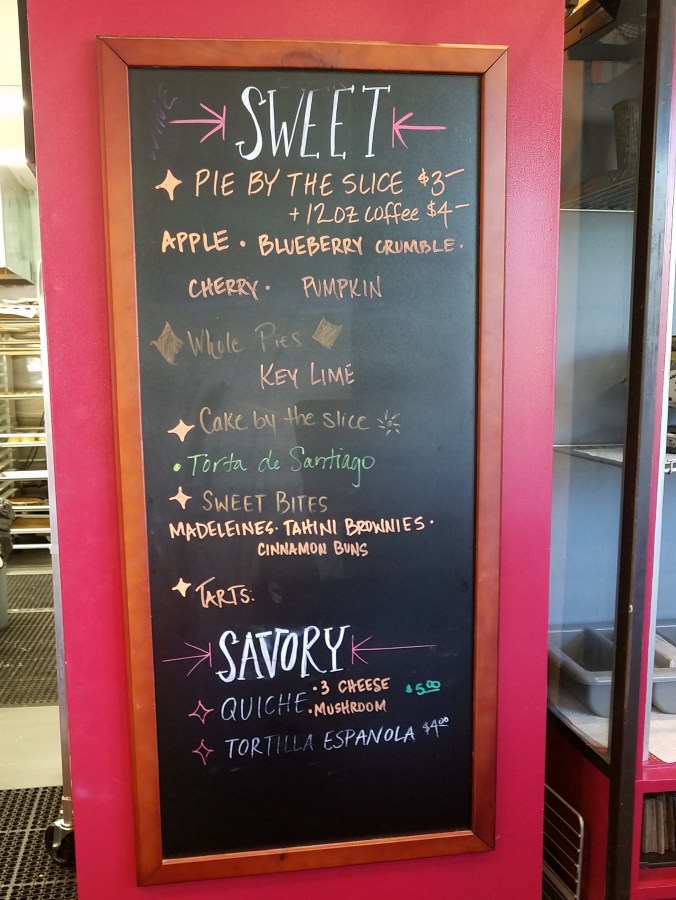
Their prices were decent too.

pie menu (2).jpg

I make pie myself. I love to make pie. But when cherries come into season, I do not think of making a pie with them because they are so good all by themselves. So, yes, the cherry pie called my name. It was wonderful. Hat’s off to the baker at Quality Pie.

cherry pie (2).jpg

One bite into my very delicious piece of pie, I remembered another piece – half a piece – that made a great impression on me. This half piece came from a pie I made myself when I was still in college at Rutgers University (Douglass College back then, a part of Rutgers). I was living in a small apartment and invited a friend to come for dinner. I don’t remember what I made for the main part of the meal, but for dessert there was pie.

It was good pie. You’ll have to take my word. I served Penelope her piece and served myself as well, and we kept on talking, having a lovely time. Then something remarkable happened. When she was halfway done with her piece of pie, I mean when there was half a piece of pie still on her plate, she put her fork down.

She put her fork down and did not pick it back up again.

I was 20 years old and confronted with something new. Who doesn’t finish a piece of pie?

We kept talking and I tried to ignore this bizarre turn of events. Eventually I couldn’t stand it anymore. I turned into my mother and said, “Is something wrong with the pie?”

She looked me straight in the eye and said, “No, it’s good. I’m just full.”

If she had stood on her head or told me she would turn into an alien if she ate another bite, I could not have been more surprised. Full? I thought. Full? Sure… but… too full to finish a piece of pie?

“Oh, okay, just making sure,” was all I said about it.

Never before had I encountered anyone stopping because they were full. In my house, growing up, you finished what was on your plate regardless. You were grateful. You had vague notions of starving children somewhere. You especially finished pie!

This was a monumentally earth-shattering, life-changing concept for me, I can assure you. In front of me was Penelope, not an ounce of fat on her, politely putting her fork down because she was full. In my mind I saw my family, many of whom (including myself) either on a diet or about to be on one, always finishing what was on our plates. I understand this is a very small sample size and a very unscientific way to draw a conclusion, but I saw that the person who put down her fork when she was full even if she was eating pie was by all appearances healthier than the people I knew who put down their forks only when their plates were empty even if they were full.

I won’t lie. I had a hard time throwing away Penelope’s uneaten half. No chickens in my life then, nothing to do but throw it away. But another thought occurred to me. Penelope was listening to her body in a way I had never done, never thought to do. Her body was telling her to stop, and she listened. I had always listened to my mind, to the words that had been said to me so often: Finish what’s on your plate. Period. No conditions here. No if’s. Just finish. It’s wasteful if you don’t.

But (I now thought) if my body is telling me I don’t need it, if I’m full but I eat it anyway, isn’t that wasteful too, in its own way? Isn’t that asking my body to waste energy doing what it wouldn’t have to do if I didn’t burden it with food it doesn’t need?

Thus began a profound shift in my thinking about food. I still didn’t like having to throw away the half piece of pie, but what if I had given her a smaller portion to begin with? What if I had not assumed what her portion would be and had perhaps asked her how big a piece she wanted? (This too was a foreign concept – a piece of pie had a size, a set size. You didn’t mess with these things.)

What if I had asked her? She might have said Just a sliver please. And there would have been no pie in the trash.

What if I asked myself? What if I thought about my own portion instead of robotically taking what seemed a normal amount? What if I thought about, gave even a few seconds thought to, how hungry I actually was and adjusted my portion? What if I listened to my own body?

I had a full course load that semester in college and was working three different part-time jobs. It was a lot of juggling. And now one more thing to think about, one more thing on my plate! I can’t say this experience brought about an immediate change for me – old habits die hard – but Penelope taught me a great lesson that slowly worked its way into my own eating patterns. Sadly, I lost track of her after graduation and therefore can’t thank her for the part she played in helping me be more reasonable about food. But I wish I could.

A Dead Man and a Pipe

When you want to make a barrier, you have to make it strong. Sometimes you have to use a dead man to hold it fast, to make it stronger than it would be otherwise. Before today, I did not know how to do this. Before today, “dead man” had only one meaning for me. But now I am confident I understand when it makes good sense to use another kind of dead man.

I was up late last night listening to the rain falling on the newly graded front yard that was not yet finished. Joe had said a little rain wouldn’t hurt anything and would in fact make that loose soil more compact, but I worried anyway. I’d spent $500 to rent the mini-excavator for the weekend and wanted full use of it. No rain allowed! No daytime rain anyway.

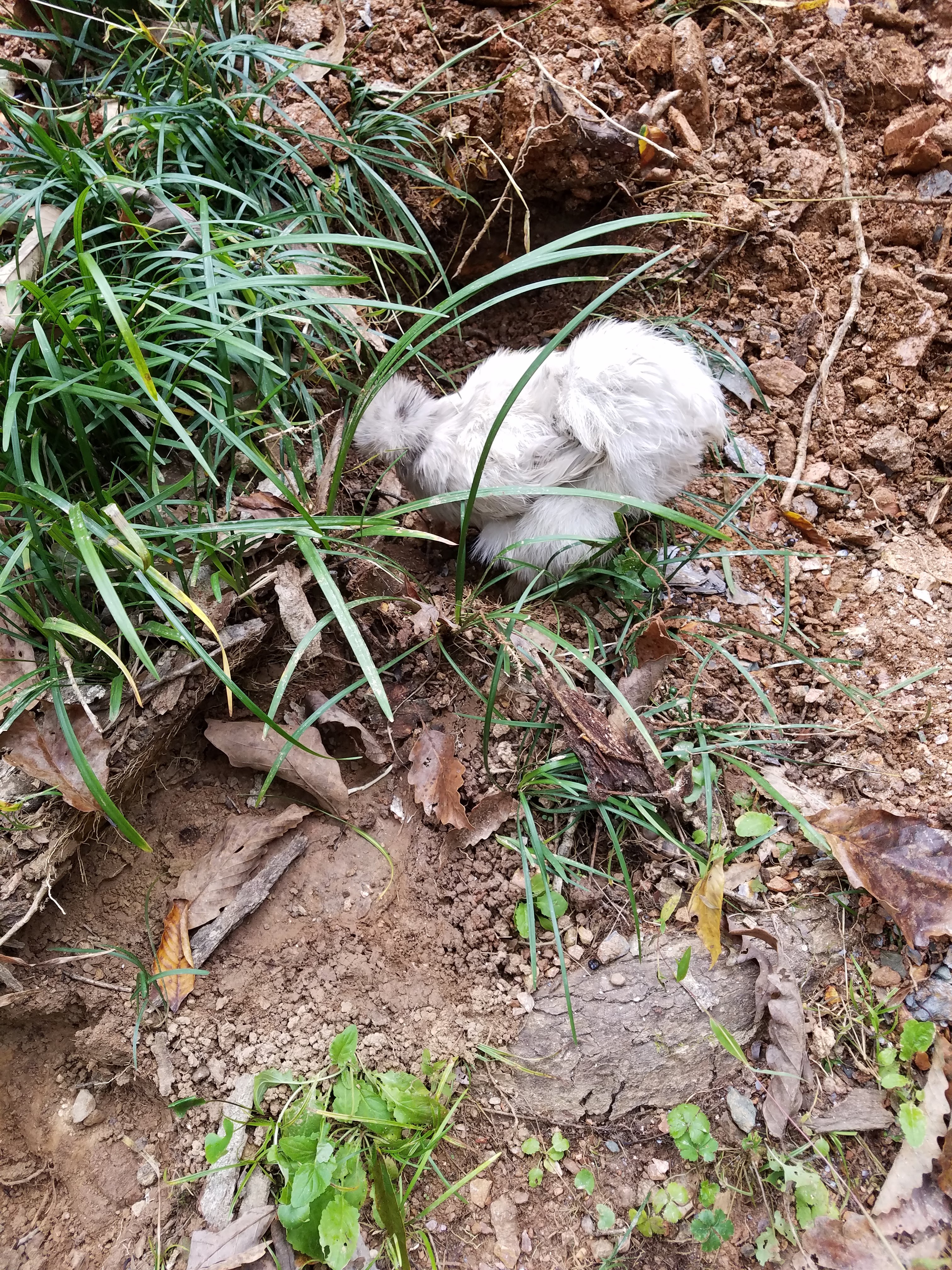
I woke up raring to go, thinking we’d get as far as digging post holes for the front porch today. I made a bacon/spinach/swiss cheese quiche to have for lunch while waiting for the guys to get here. Sandy and I then started with moving some liriope and rocks from around the big oak tree. When you move a big rock, there are often lots of bugs underneath it. A feast for a silkie! I went and got one lucky chicken. Oh, how we amuse ourselves!


This is One-Eye, the hen we thought we lost when she had an eye infection as a very young chick. She did not like the 4x-daily eye dropper with antibiotic, I can tell you. And she looked quite sickly for a while. But she lives and she hunts and she pecks!

silkie feast3.jpg

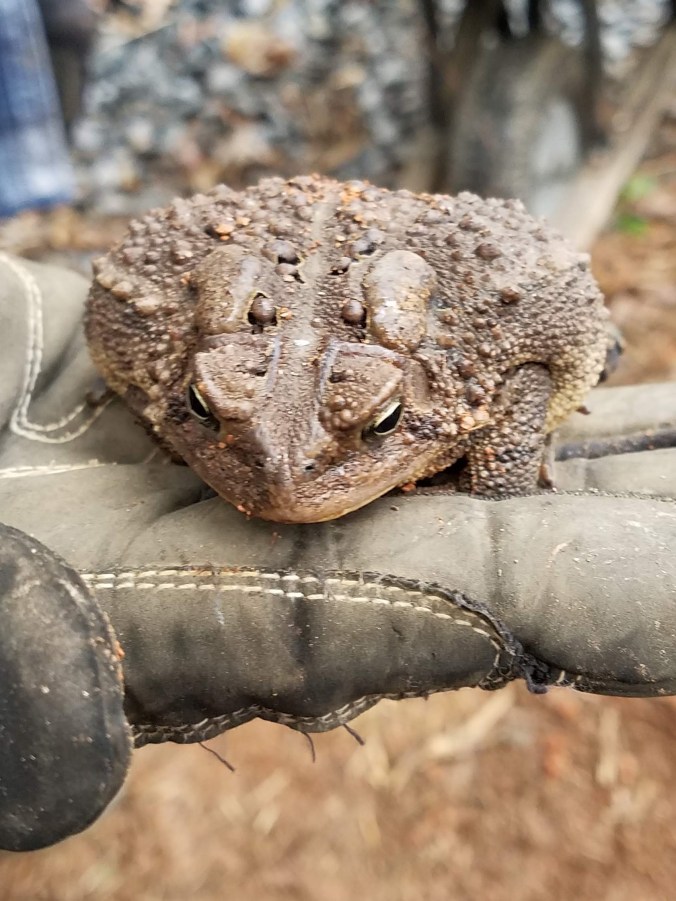
Our entertainment for today also included a native creature, Mr. Toad.

toad (2).jpg

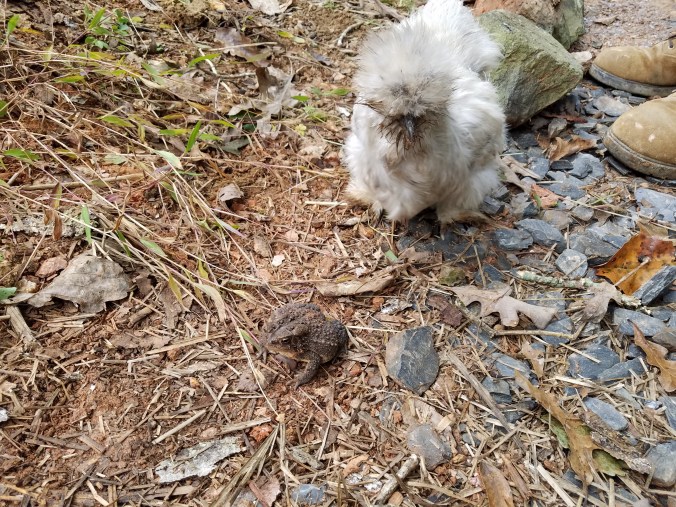
We got the brilliant idea that Mr. Toad would like to meet Miss Silkie. This did not work out so well. She took one look at him and

silkie meets toad.jpg

turned the other way. They weren’t the slightest bit interested in one another. You can tell from her dirty face that she has been enjoying bugs in the dirt though!

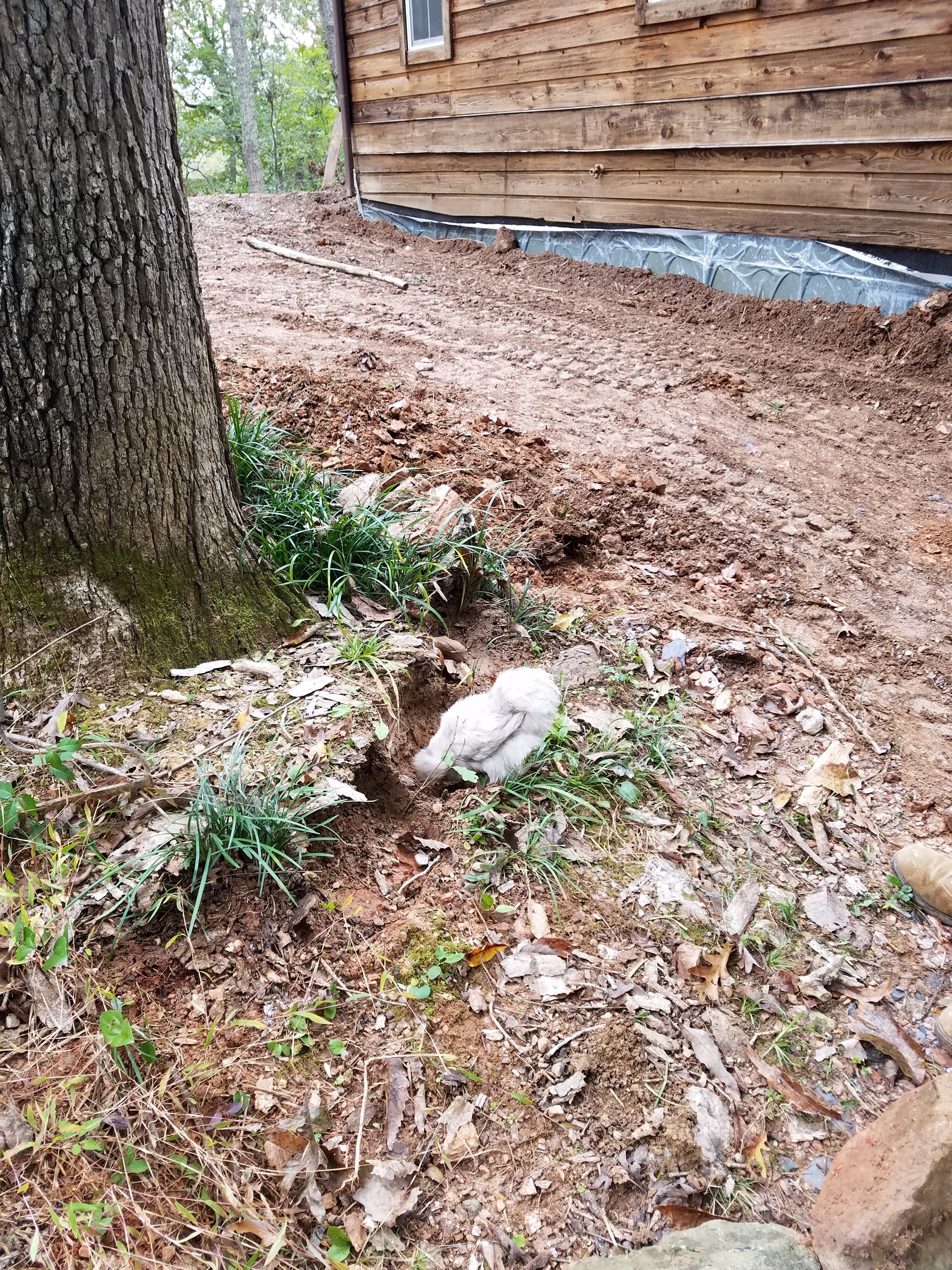
This photo gives a better idea of today’s work area. The stick laying down on the dirt between the tree and the house is where the new porch will come to, 6 feet out from the house.

silkie feast2.jpg

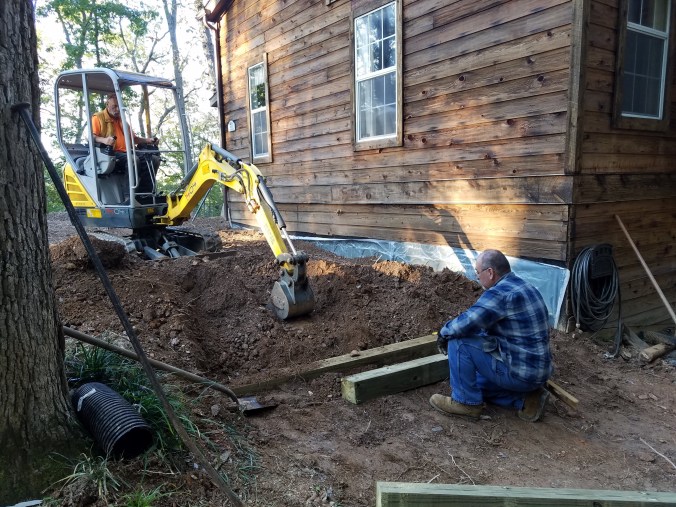
After Joe came, he got on his Tonka Toy and played with dirt for a while, moving it here and there, compacting it, preparing the place where we would put a retaining wall. There is no way we would have accomplished what we did today without Joe, without this machine and without Joe’s skill on this machine.

wall2.jpg

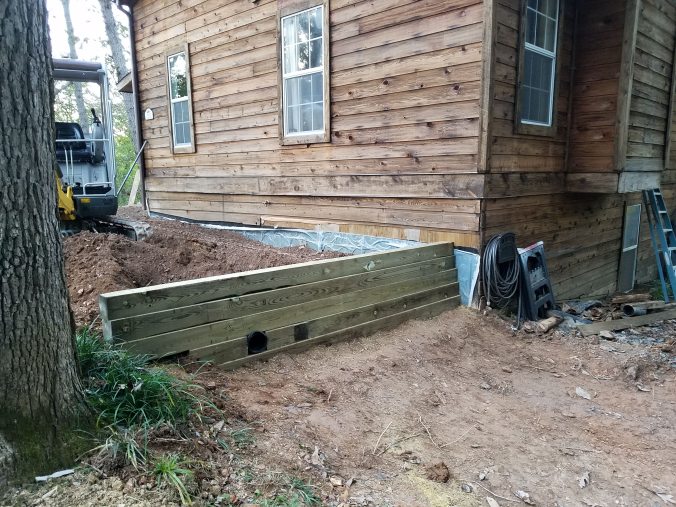
Because of the slope of the land and the driveway going down along the side of the house, a retaining wall is necessary. Five 12’ 6×6 pressure treated pieces of lumber would do the trick; anyway Lowe’s didn’t have any railroad ties. The first piece we put in, perpendicular to the house from the corner, we had to move. The porch is going to come out from the corner, and you can’t dig a post hole and pour concrete into it if you have a retaining wall there. So we moved it a foot or so inward, closer to where Joe is on the machine.

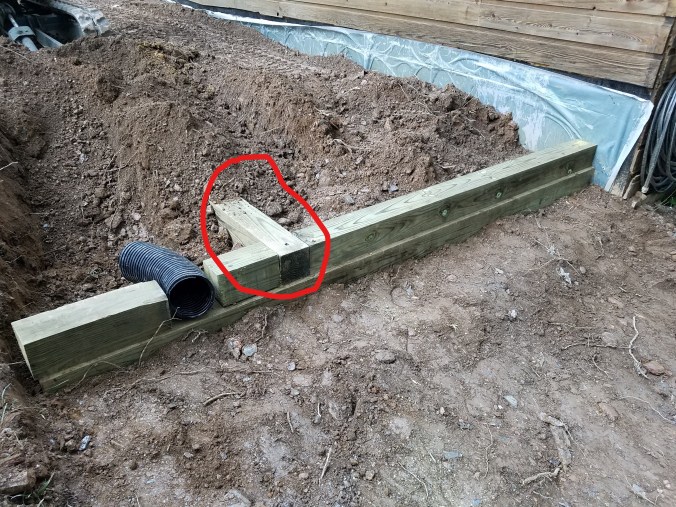
Once the first 6×6 was in, level and squared to the house, it was time for the second layer, including (the moment you’ve been waiting for!) the dead man! Why is it called a dead man? Your guess is as good as mine, but that’s the name for a long, buried object used as an anchor in constructing walls. It will keep it from leaning when the weight of earth, especially wet earth, pushes against it. The dead man goes back twice as far as you see; Joe got busy covering it in dirt before I could snap a photo.

wall with dead man and pipe_LI.jpg

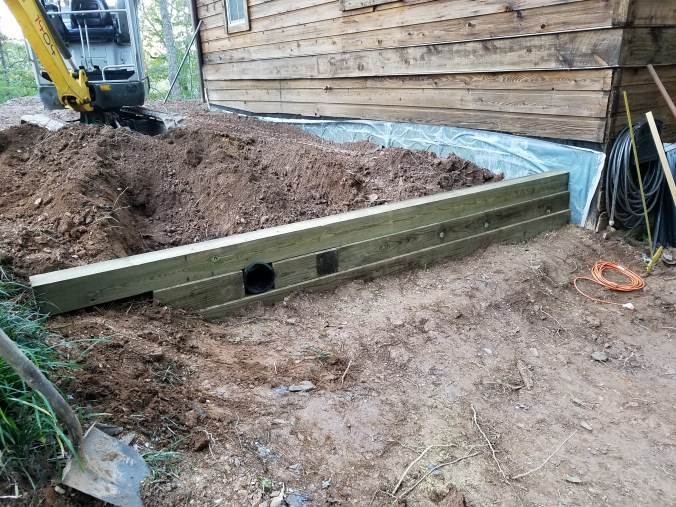
In our case the dead man is part of the second layer of the wall next to a short length of perforated pipe. We put screening across the back end of the pipe; the whole thing will be covered in gravel tomorrow, then landscape fabric, then dirt, and will help carry water away from this area. The pipe was a little taller than the wood, so Sandy used the heat gun to soften the plastic just enough for it to press down under the weight of the third layer.

wall3.jpg

Each layer was secured to the one beneath it by use of timberlocks, which are long, heavy screws that sink into the wood so the next layer can lay flat on top.

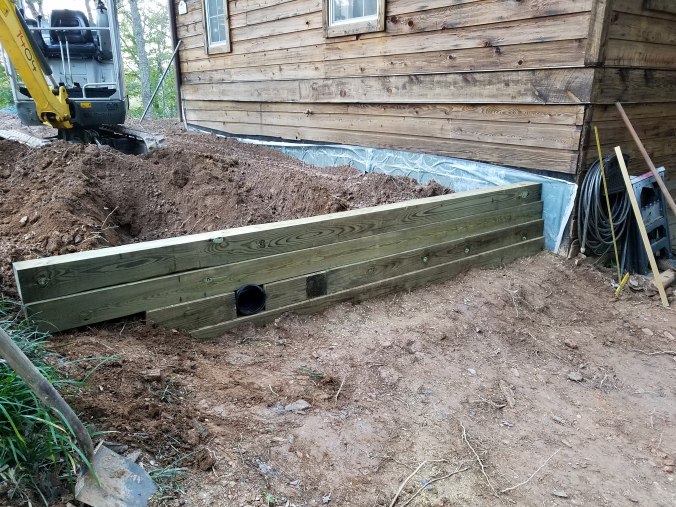
By level four we were moving quickly both because we could robotically drill-timberlock-drill-timberlock all the way down the line and because my cottage guests had returned and were building a fire in their fire pit and I was worried our noise would disturb them. Drills are loud. But they kindly said it was all fine and asked a lot of questions later about the project. That was nice!

wall4.jpg

We decided that five levels would be enough. It’s way more than was there before, and has a drain, which the old wall didn’t have either.

wall5.jpg

Next we will fill in the gravel over the pipe, finish grading and dig post holes!! I know (I know!) it’s not normal to get excited about mixing concrete, but in my mind I can see what each step leads to – a beautiful new front porch! – and this makes it very exciting.

I’m not saying I don’t also get a thrill from seeing the incremental changes one by one, from digging shovelfuls of dirt, checking if the board is level, bearing down on timberlocks to get them through the wood (though I wished I was stronger for that task!) and learning about dead men. I do. I love having stared at this area for a long time, wishing there was a nice porch, and now watching it become a reality. I get to not only see the transformation, but also to work alongside and help make it happen. I am so grateful and happy that I am not just watching. For me the same thing happens when a tennis tournament is on TV. I can watch it for about five minutes and then I want to get out and play!

One Bag Only

I did it. I gave in. I packed a medium flat rate box and will ship it to my home from Sugar Land, Texas, tomorrow.

On this sixteen-day trip I flew from Charlottesville to San Francisco, from San Francisco to Boise, from Boise to Seattle, from Seattle to Houston, and tomorrow from Houston back home. I chose to fly the cheapest way possible, using the new option to take only what can fit under the seat in front of you. One bag, one bag only. Everything I need for sixteen days in various climates has to fit on my person or in my bag and under that seat. (It was 47 degrees when I left Seattle. At 10:06pm it’s still 82 here in Sugar Land.)  I like books. I brought two along. I won’t lie. My shoulder is not happy. It might be somewhat bruised from the weight I carried each time.

Everything was fine – all the airlines let me through with my one bag plus my purse — until the most recent leg to Texas on United. I get that the airlines have to generate revenue however they can, and capping the carry-on max so that they can charge for overages is one way to do it. I get that I should not have bought slippers in Berkeley or a book at the de Young Museum in San Francisco or allowed my daughter to give me two other books in Boise (though I left one of mine with her, the net result being four books instead of two). I get that my laptop is huge.

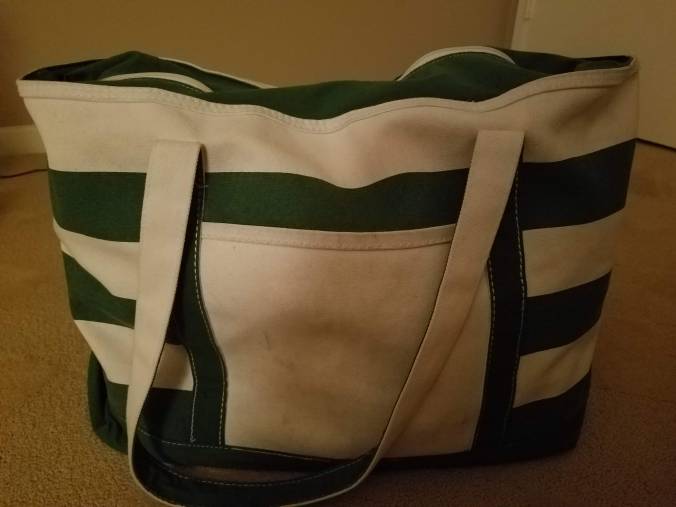
I put everything in my striped canvas bag that zippers across the top. It zippered without my having to pull it closed this last time, meaning there was room for more, right? I love this bag, but one of these days the zipper will fail or rip out. I have asked a lot of this bag over the years.

bag

I put the new slippers, my lunch and the book I planned to read in the plane in a small blue canvas bag (which worked better than my purse for these items) and walked up to the kiosk at the Seattle airport to get my boarding pass. They do not even let you check in via your mobile device when you have these cheapo tickets because they have to make sure you meet the luggage requirements.

The lady at the kiosk was skeptical. You have two bags, she said. This one just has my lunch and a few small things that will fit in the big bag, I said. She asked me to show her that my bag fit in the slot designated for poor travelers like me. It did! I smooshed down the top a little to show her there was room for the other stuff. They won’t let you through if everything is not in that bag, she said. You’ll have to pay $50. You might want to put your lunch in your pockets.

I did not like the stress. Never again, I said to myself. I’ll use a real carry-on like other people next time and pay for the privilege. But for now I was stuck, and you can bet your bottom dollar I wasn’t paying $50! But, yeah, getting that stuff in and getting the bag closed again without busting the zipper would be a trick. I might be able to do it, but it would be a squeeze to then get the bag under the seat, and anyway I had a better idea.

Already, to make this work, I was wearing two shirts, two sweaters, my scarf, my hat and my raincoat, so I figured Why not just wear more? There was no ladies room near my gate so I couldn’t do this as privately as I would have liked, but I stuck the slippers, side by side, into the waistband of my pants in the back – under the shirts, sweaters and raincoat – and the book into my waistband in front, under the shirts and the non-cardigan sweater and the scarf.

I just became a larger person temporarily. Lots of people are larger than I am. They get on planes.

I put my cell phone, my apple, my bread and my cheese in the pockets of my raincoat, got on the line (last boarding group, of course) and sailed through the checkpoint with my green striped bag over my shoulder and nothing else but the boarding pass in my hands. When I got to my seat near the back of the plane, I rearranged my weight. The slippers went back in the small canvas bag along with my lunch, and I sat and enjoyed my book.

(Outstanding book, by the way. Educated by Tara Westover. I will come back to this one of these days and tell you more about it.)

I left the plane with my green striped bag in one hand and my little blue canvas bag in the other. No one cared.

I have not bought anything in Texas to add to the problem, though I was sorely tempted today in Galveston to buy one on the 1900 hurricane, sorely tempted! Nonetheless, we stopped at the post office to get one of those flat rate boxes because I am not going through that stress again. I put all the books but Educated in the box, along with anything else that fit. I stuffed it full. It will cost me $13.85 to send home. I will be so relaxed tomorrow with one bag only!

Pumpkin Comfort

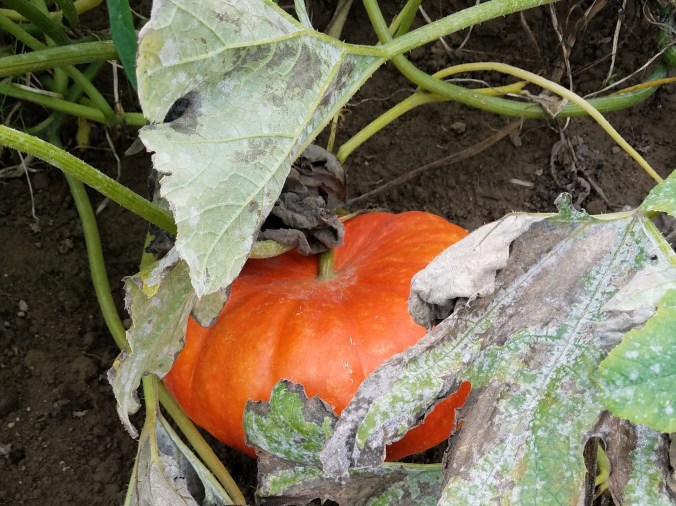
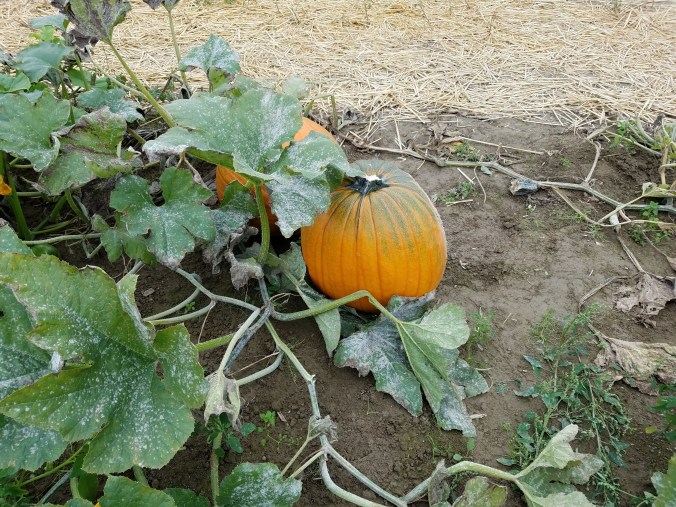
I have never before thought of pumpkins as comforting. They are not cuddly, adorable or delightful bundles of energy like my darling grandbabies. They do not talk me through struggles like a good friend or warm my insides like a good cup of tea. But traipsing through a patch of these characters this past weekend reminded me of another facet of comfort, one that pumpkins embrace wholeheartedly: With all the changes in our world, it was good to see that pumpkins are still mostly orange.

Duh.

pumpkin2.jpg

No, I mean it. For those who play with genetic modifications, it must be tempting to make a purple pumpkin or a red one, or to elongate them like way-overgrown zucchinis, the kind that hide under those big leaves and you don’t find until they are as big as a baseball bat. Someone must be working on a seedless variety that will revolutionize the ritual of pumpkin-carving – imagine if you could draw the scary face on the side and be able to cut into it without having to deal with all those stringy, slimy, seedy guts that insist on adhering to the inside flesh?

Lots of things change in this world. They change at an astounding rate. Isn’t it nice to know that some things stay the same? There is comfort in sameness. Sugar is sweet. Rain is wet. Pumpkins are orange. All right, mostly orange. There are a few renegades in every group.

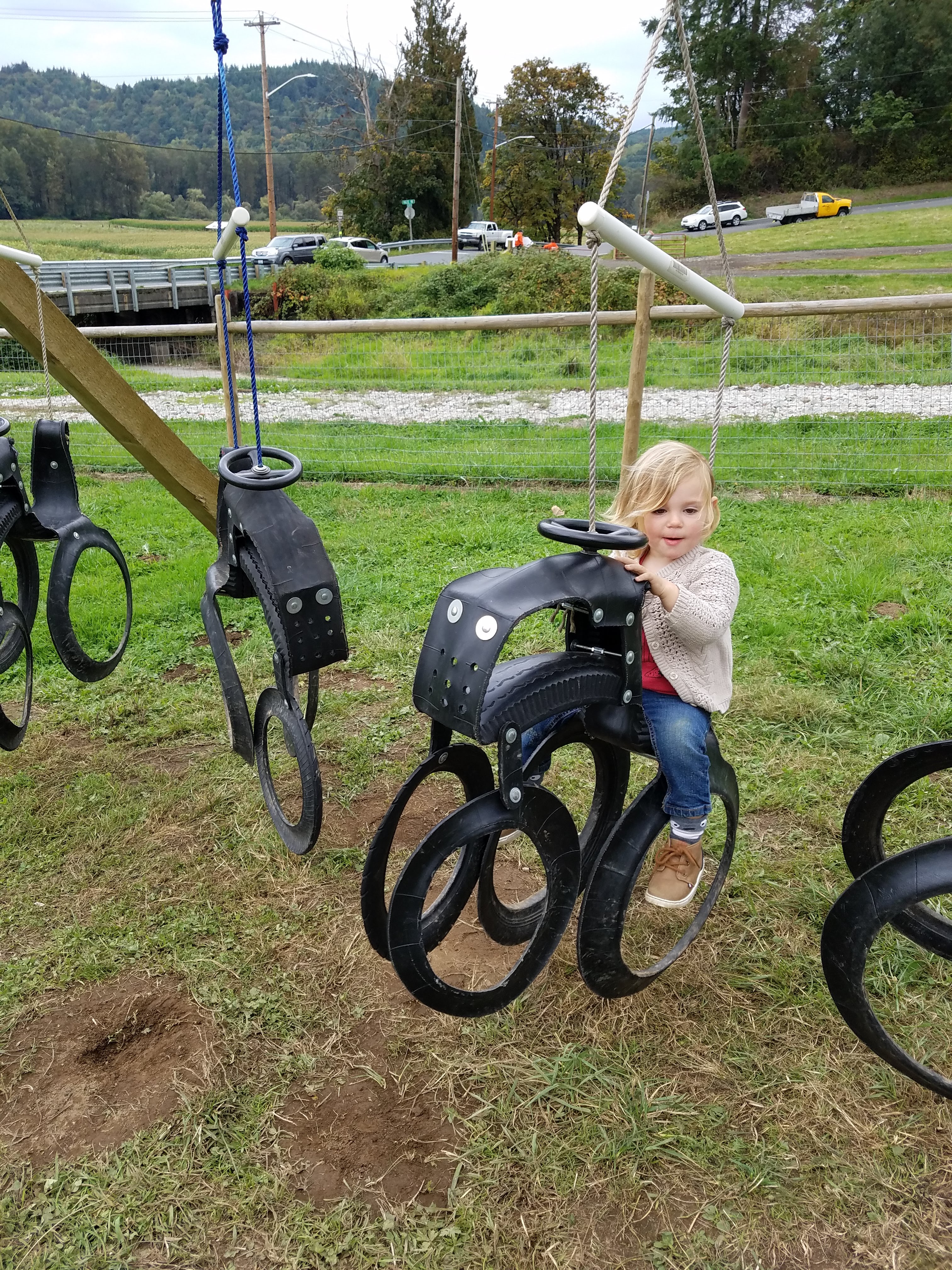
In Snohomish, Washington, we found a wonderful 40-acre pumpkin patch at Bob’s Corn and Pumpkin Farm. Bob’s grows corn and pumpkins, yes, but they seem to make their money (or at least a fair share of it) on people wanting to come and play amidst corn and pumpkins. They have newfangled, farm-themed tire swings


tractor tire.jpg

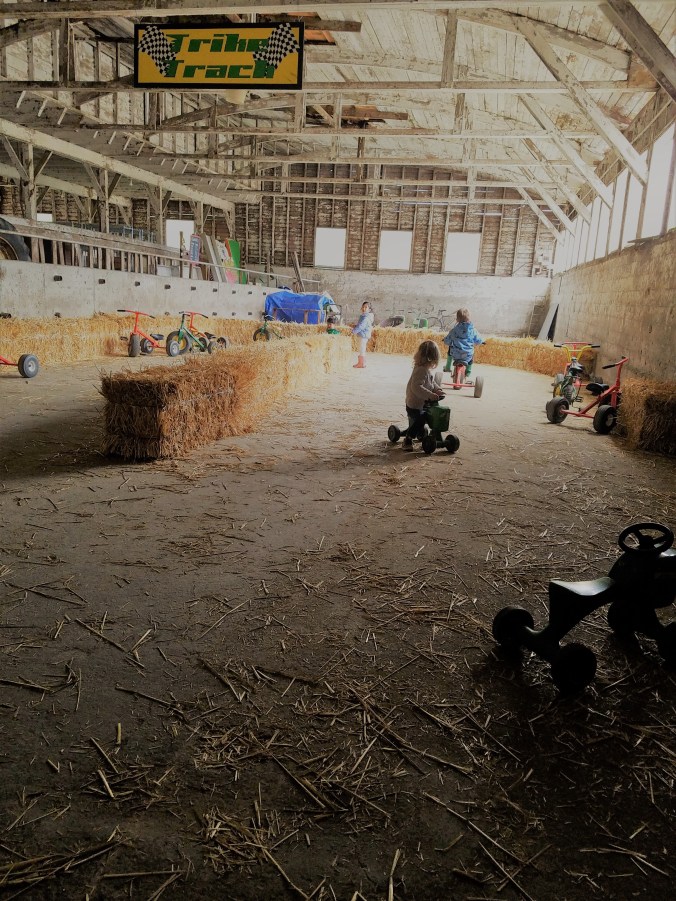
a “trike track” in one of the barns with lots of little tricycles in many sizes

trike track (2).jpg

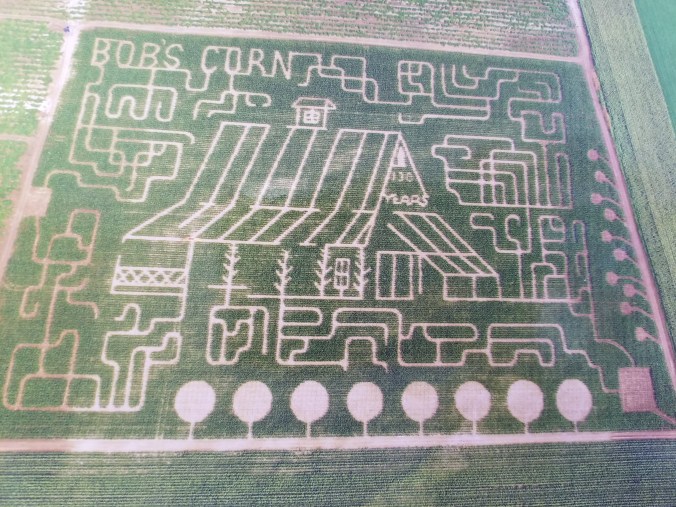
a gigantic John Deere for climbing into, tubes to slide down, all sorts of yummy fall treats to indulge in (and take home) and a ten-acre corn maze with firepits and private areas for group gatherings. We will come back to the pumpkins, but for the moment, look at the aerial view of the maze and think about this.

maze.jpg

Their web site says, “We have a total of 18 firepits inside the maze which can be rented for private groups and birthday parties. We provide the firewood and tiki torches. We even build and maintain the fire for you, you get to sit back, relax and enjoy the evening.

“Bring your roasting sticks, food and supplies. Leave them at the group check in area on the north side of Bob’s Country store, and we will transport them to your firepit so you don’t have to carry them through the maze.

“When you are finished, leave them at your pit, enjoy the second half of the maze. When you return from the hayride, your supplies will be waiting for you in the group check in area on the north side of Bob’s Country store! How easy is that??”

I want to know: If there are 18 firepits within the maze, how do you find the firepit that has your name on it or that has been otherwise designated for you? Or do you just land at one and let them know you have arrived, and then they bring your stuff?

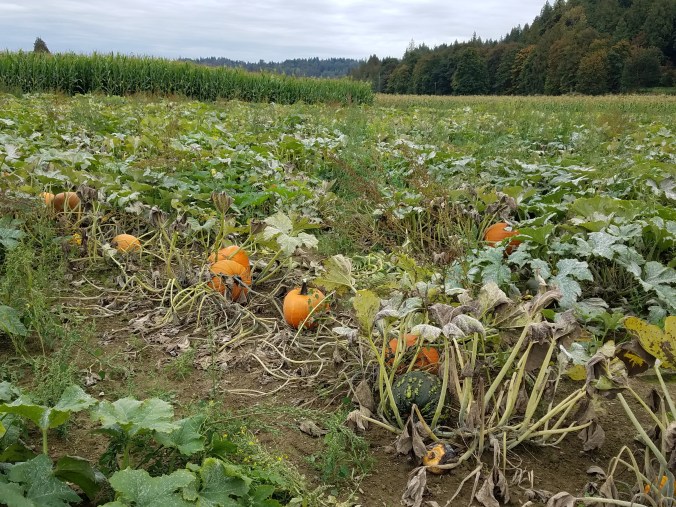
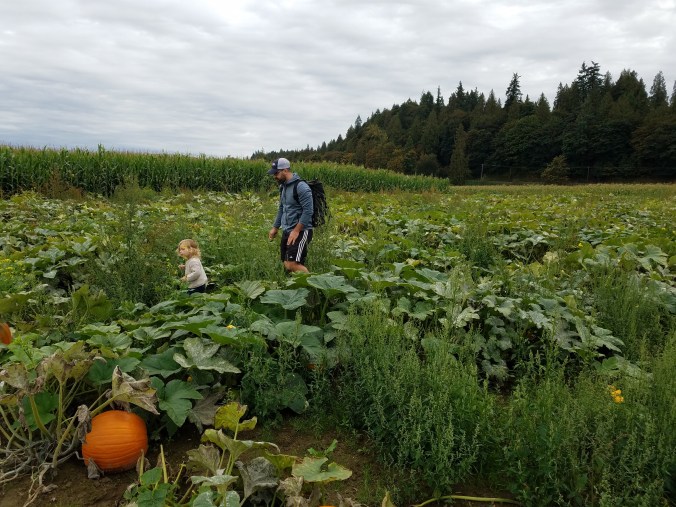
Wondering about the firepit protocol happened fleetingly for me. I saw the three staff members at the entrance of the maze (a fraction of the total work force present on the day of our visit), heard them telling some other visitors about this opportunity, registered the comments, thought “wow” and promptly transferred my attention to the forty acres of pumpkins next to the corn. Bradley and Piper and I explored a small part of it. Apparently there are 60+ varieties of pumpkins here.

pumpkin patch Brad Piper2.jpg

You have your Classics, and lots of these. They have smooth skin with longitudinal valleys, as if each pumpkin has its own special time zones. The ones we saw were not monster size, but maybe up to about 25 pounds. They are perfect for carving and setting on doorsteps, lots of different sizes. Bob’s gives you a wheelbarrow, by the way, for hauling your picks. I expect they have strong people who will put them in your barrow for you if you want, and probably then in your car.

pumpkin1.jpg

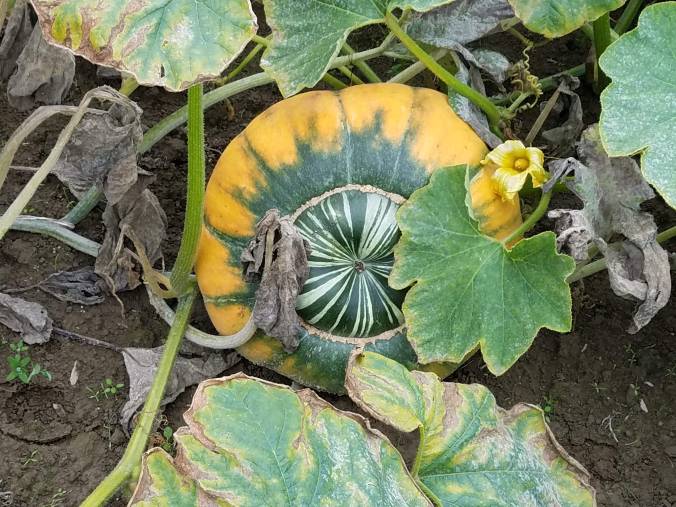
You have your Brights. Perhaps a gen-mod engineer had a little fun with this one (below)? It not only leans toward neon but also is rather flattish.

pumpkin6 (2).jpg

You have your Gnarlies here and there.  Okay, maybe there’s more genetic modification going on than I thought at first. Just how do they get the green warts?

pumpkin3.jpg

I get that Bob’s wants to mix it up a little, so they throw down some seeds of these crazy kinds. This one has yellow warts, making the orange rind seem to veer toward the yellow end of the spectrum.

pumpkin10.jpg

If you showed the photo below to a hundred people, I think you would be hard pressed to find most of them saying quickly and definitively, “That’s a pumpkin.” Beth said it looked like a monkey’s butt. It is another orange that is desperately trying to be yellow instead. Just to stand out. You know how pumpkins can be.

pumpkin4.jpg

Most of the yellow ones turn orange eventually, the way you can see this green one on its way to becoming orange.

pumpkin8

Real pumpkins, big orange pumpkins, are comforting not only in their sameness. Think about 40 acres of pumpkins – what is going to happen to most of them? For a few weeks, some will decorate entryways, tabletops, fence posts, schools, hotels, stores and offices. Some will become jack-o-lanterns a day or so before Halloween. A few will become delicious pie – but not many. I wonder how many never leave the field they grew in. Think about what pumpkins say about the abundance of food in our land, that so much space can be given over to a crop that provides such a small amount of actual food value. How blessed we are.

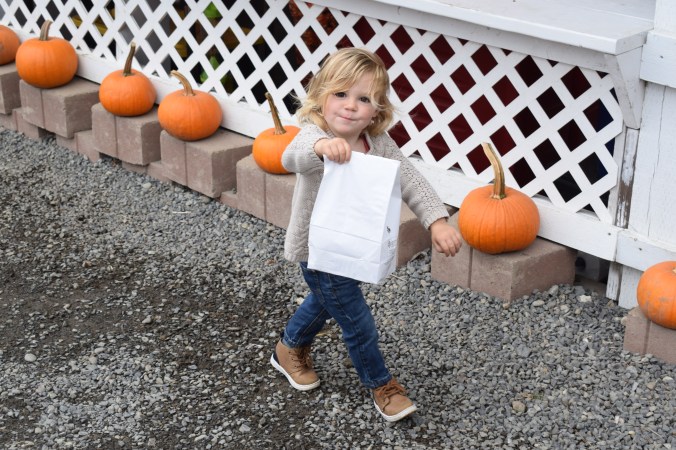
A row of pumpkins anywhere, but especially along a cider donut stand, is one of the joys of fall. Maybe you’d like one of Piper’s donuts? Too late! All gone!

Ela's photos (25).JPG