Playing with Food: Onion Cream Pizza!

If you are making whole wheat bread for the first time (or, name it: potato pancakes, chicken piccata, broccoli salad, oatmeal cookies…), you are likely to follow the recipe to a T. You walk consciously through the steps: Do I have everything on the list? Oh dear, I don’t have that kind of pan. How small should I cut this up? Is this the right consistency? What do they mean by “firm”?

But if you cook or bake a thing frequently, after a while you don’t need the recipe anymore. The ingredients, quantities, sequence, timing, temperature, variances and all other factors associated with making it have pretty well lodged in your head. You know what it looks like when it’s done right, what it feels like, what it smells like. You know what will affect it adversely, what doesn’t matter and what might enhance it. When you do a thing often, you get a sense for it. That’s when you can play with it.

For example, I made potato pancakes on Friday night: shredded potatoes, flour, egg, salt and pepper (and ideally a little chopped onion and parsley) mixed up in a bowl and plopped in hot oil until brown on one side, then flipped and browned on the other. In this case

  1. I forgot the flour (helps bind it a bit, oops, but somehow these were fine).
  2. A small red onion spoke to me from the pantry like Dory with the sharks in Finding Nemo – “Pick me! Pick me!” I don’t always have red onion in the house and I think it’s nicer than white.
  3. I was not feeling quite energetic enough to make a salad as well, but my good sense tells me “green is important!” so I chopped up some spinach and added it to the potato pancake mixture.
  4. I didn’t want to use two pans but I had a bit too much mixture for normal size potato pancakes. You can’t tell so much from the photo, but these are fat and thick, which meant a lower flame and a longer cooking time to make sure all of the potato got cooked through.

with spinach.jpg

This recipe works well with sweet potatoes too. Hmm, how would half sweet potato and half white potato be? What about shallots instead of red onion? What if I added a bit of bacon or ham next time, cooked to crispy and chopped up fine?

The potato pancakes were a side dish to pork chops (though sometimes they are a meal in themselves). I took some applesauce out of the freezer (that I made last fall) because applesauce goes beautifully with potato pancakes and pork chops. I had some apples in the fridge this past week that needed to be used, so I had cut them up small, with skins on, and cooked them till soft. I call this “stewed apples” rather than applesauce, though the difference is technical. Anyway there was a little of this left (not enough for dinner) but the two mixed together became applesauce with a bit more texture than usual. Why not?

I like playing with food. You can play even if you are not the one preparing the dish. Let’s say you like salad and you like quinoa. You go to a restaurant and they have one with a combination of ingredients you would not have thought to put together. Mine this past week at Burton’s Grill  came with dried cranberries, finely julienned veggies, roasted beets, candied pecans, shredded cheddar and maple dijonnaise. You know I don’t eat nuts, so they left those off, and once, maybe ten years ago, I had a great quinoa salad with a lemon dressing. One of the other salads on Burton’s menu had a lemon vinaigrette, so I asked if they could use their lemon dressing on the quinoa salad for me. Sure, our server said. It was fabulous!

But prize this week for playing with food goes to last night’s pizza. I have a wonderful book called Pizza Napoletana!* I used it for what Claudia calls “inspirational value.” I would not ordinarily be drawn to a recipe called Pizza Boscaiola all’ Lombardi (Mushroom Pizza). Nor did the intro grab my attention: “In the fall, the forests of Italy are dotted with mushroom hunters. Porcini is on everyone’s mind. Other wild mushrooms, such as shiitakes or morels, may be substituted.”

I assure you, mushrooms are not on my mind in the fall or at any other time of year. They are a bit too earthy for my taste. Like my aversion to nuts, it would be easier to be able to say “sorry, I’m allergic.” I’m not. I just don’t like them. I avoid them routinely.

What caught my eye were two words in the ingredient list: heavy cream. In a pizza recipe??? Mmmm! Oh, yeah! Those two words jumped at me. They were all I needed.

recipe2 cropped_LI.jpg

I did not actually have heavy cream in the house, seldom do, but Saturday night’s Airbnb cottage guests (bless them) left an unopened pint of light cream in the fridge. That works, I said to myself. I glanced over the recipe, seemed pretty straightforward. It wants me to sauté the onion in olive oil, add the mushrooms, cook till tender, add the cream, stir in the parsley and thyme, spread on rolled-out dough, sprinkle with cheeses and bake. I didn’t do it that way.

First there was the mushroom problem. What about some other vegetable? Samuel said. Peppers! I had a red pepper. That works. See? My aversion to some foods comes in handy — it forces me to play 😊.

I cut up the equivalent of three medium onions and one red pepper, got them going in the pan with half a stick (4 Tablespoons) butter – yes, the recipe said olive oil, which normally I love, but dairy was calling my name, so butter won that toss-up. There is nothing quite like the smell of onion sautéing in butter.
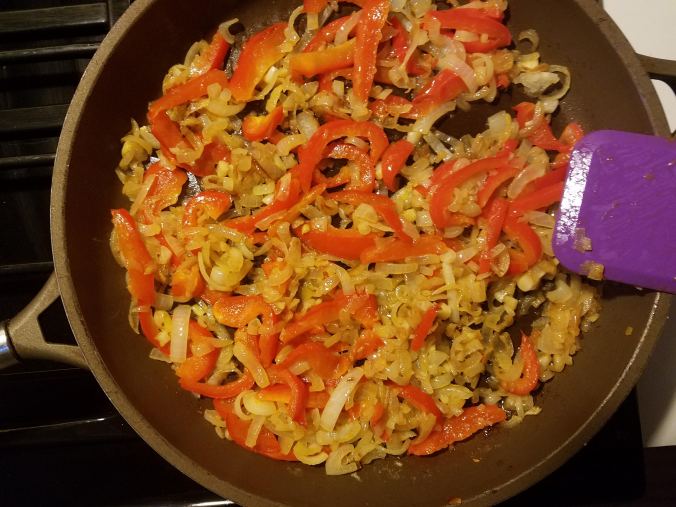
saute2.jpg

Then I thought, hey, what about garlic? I finely diced three cloves and added them to the onion and pepper.

Not having heavy cream, which would be heavy enough in and of itself, I decided to make a roux, or white sauce, to ensure a degree of thickness that wouldn’t be runny on a pizza. When the onions were soft and transparent, I added half a cup of flour (in retrospect, this might have been slightly too much) and then the pint of light cream a little at a time. Samuel ground some fresh pepper into it.
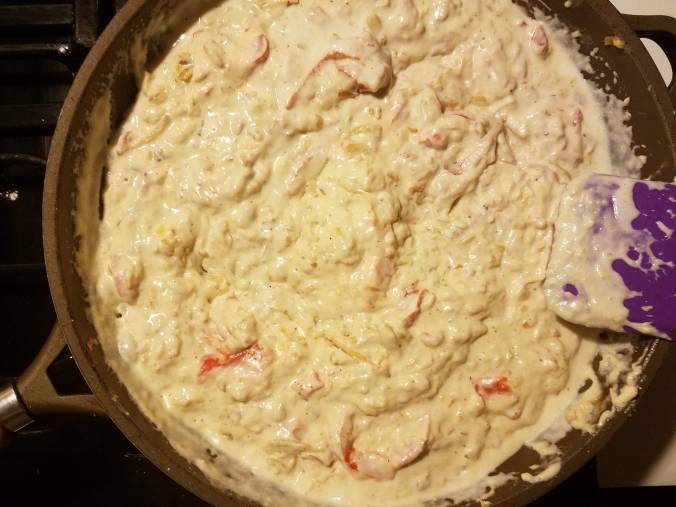
creamed onion.jpg

In the meantime I rolled out the perfect dough that Samuel had made (there is something about his dough that’s different than mine – better! – and I will figure it out someday!). Having used the recipe only for inspiration, in other words not referring to it as often as perhaps I should have, I then spread the creamy onion mixture on the dough and sprinkled salt and the cheeses on top.

I had parmesan cheese, but not the best kind, and this pizza was going to be good so I wanted to go with superior products. It came into my mind that I had had such luck with the asiago cheese on my pizza last week. So for cheeses I shredded a pound of mozzarella and a chunk of asiago that takes up as much space in your grip as a tennis ball, about 3x2x2”.

After the cheeses were on, I remembered (oops again) there were herbs called for as well. They should have been mixed into the onions and cream. Ah, well, on top they go.
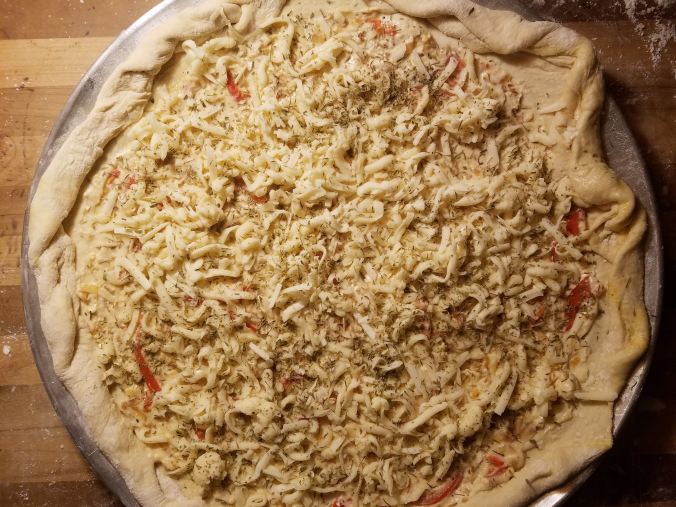
uncooked.jpg

I cannot imagine that mixing the herbs in would have made this pizza better because it was already quite amazing. But I’ll play around with this idea again – get the good, imported Parmigiano-Reggiano cheese maybe, or in the summertime use fresh parsley and thyme out of the garden, or see how heavy cream instead of a thickened light cream compares. In any case, this one’s a keeper!
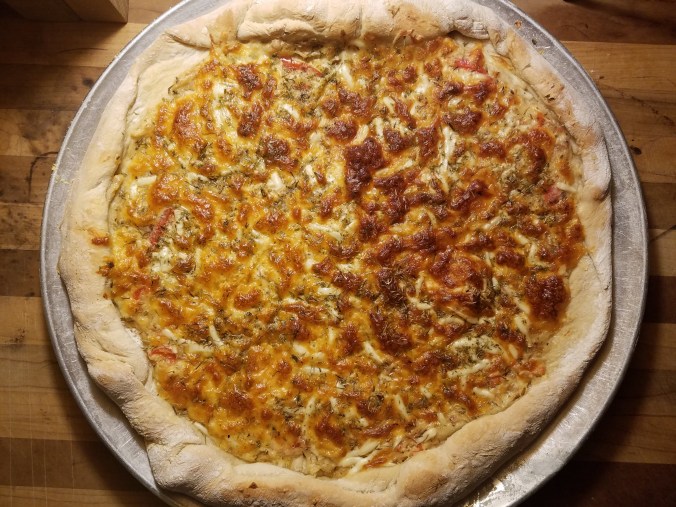
cooked.jpg

________________

Pizza Napoletana! By Pamela Shelton Johns, Ten Speed Press, Berkeley, California, 1999.
Straw Bale House: Part 4 (Driveway)

Point A to Point B

One thing in life we must find/have/create is a reasonable way to get from Point A to Point B. We have to get our bodies from sit to stand, our emotions from down to cheerful (☹ to 😊), our brains from first grade to second, our friendships from I-know-you to I-like-you, our careers from entry level to positions of seniority.

No matter where you live, you have to get from public space to private space, from the road to your own front door – a little snippet of your overall journey perhaps, but a vital one. If you live in the country, the thing that comes in handy for this purpose is a driveway. Not a big deal, you say. Simply step or drive off the road and walk or drive toward your house by way of the driveway. Most of the time a house comes with a driveway – a designated, hard-packed (or paved) surface between the road and the house. So simple and straightforward. You just drive on it. Duh.

Unless there isn’t one, as in the case of Lincoln and Julia’s Vermont property that they subsequently built the straw bale house on.

Unless the land immediately bordering the road is heavily wooded and drops off steeply along the entire length of the road-front property line. When I say steeply, I mean steeply, sharply, almost unmanageably. There was no way to walk from the road down to a reasonably level (but still not overly level) part of their property that felt remotely like a path for feet to tread on, let alone vehicles.

I remember it well. The first time I visited in the spring of 2017, we parked up on the road. When I say up, I mean up. Walking down felt like descending nearly vertically into a forest by way of roots, stones and irregular-sized patches of dirt. I found out later that Lincoln and Julia made the patches with a shovel and a good bit of stomping because they knew I was coming and had to create something that vaguely resembled steps. Walking down it while holding four-year-old Rise’s hand as well as a bag or two was not un-doable but still a challenge. How on earth had they hauled lumber, chairs and other bulky/unwieldy items to the yurt site we then carefully navigated our way toward?

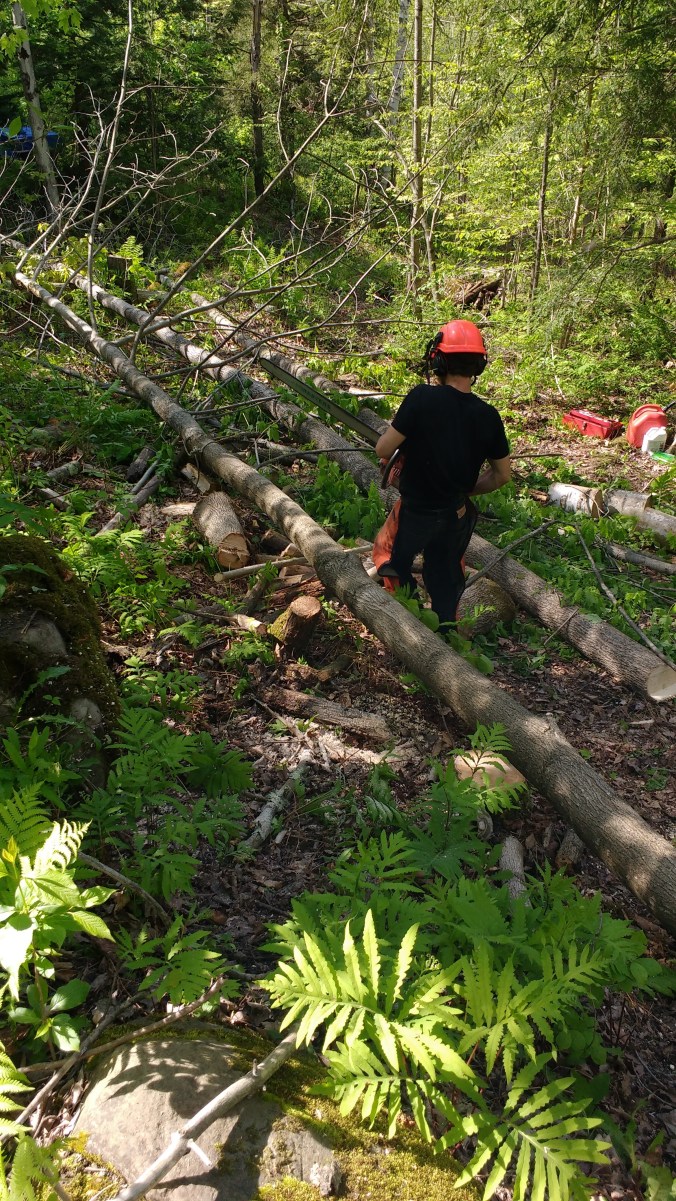
Clearly high on the agenda in the development of this property was the construction of a driveway. If you have ever constructed a driveway from scratch, you know that constructing a driveway is different than paving or in any other way surfacing a driveway. Lincoln started that spring making way for it, including countless hours with a chainsaw felling trees, moving trees, setting trees aside for later use, cutting up trees for firewood.

IMG_20170523_154516265utting down trees.jpg

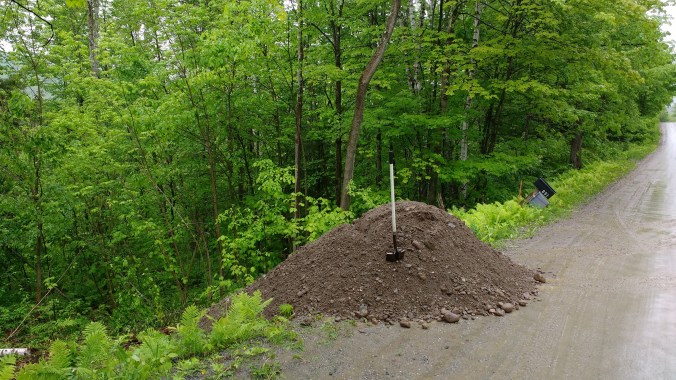
The property had come with a permit for the driveway, allowing for one to “cut in” off the road at a certain point, but Lincoln and Julia wanted a different entry point, so needed a new permit. Some things go easily (that did), so they ordered the first load of gravel. (Note the mailbox not standing upright in the background. The guy who delivered the gravel worried that he might hit the mailbox, so Lincoln pulled it out of the ground temporarily.)

first load of fill dirt.jpg

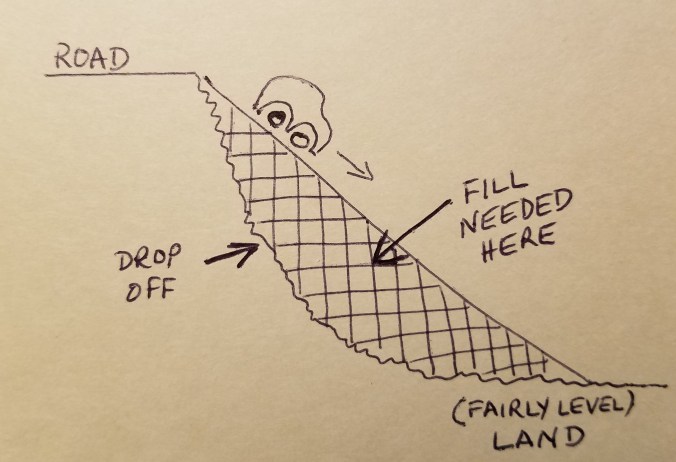
This pile included rocks up to 3-5”. The sole purpose of the first load was to fill in the space between the level of the road and the level of the land such that a vehicle could drive on it, the first vehicle being the excavator that would allow him to do the rest of the work — not the thing that might be interpreted as a car in my cross-section drawing that might make all this clearer, though Lincoln says the ground after the drop-off isn’t that flat!

drawing cropped.jpg

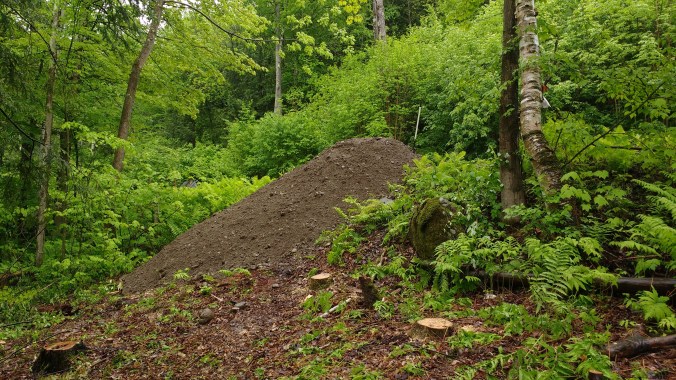
From below, from the land, that first load looked like this.

first load of fill dirt from below.jpg

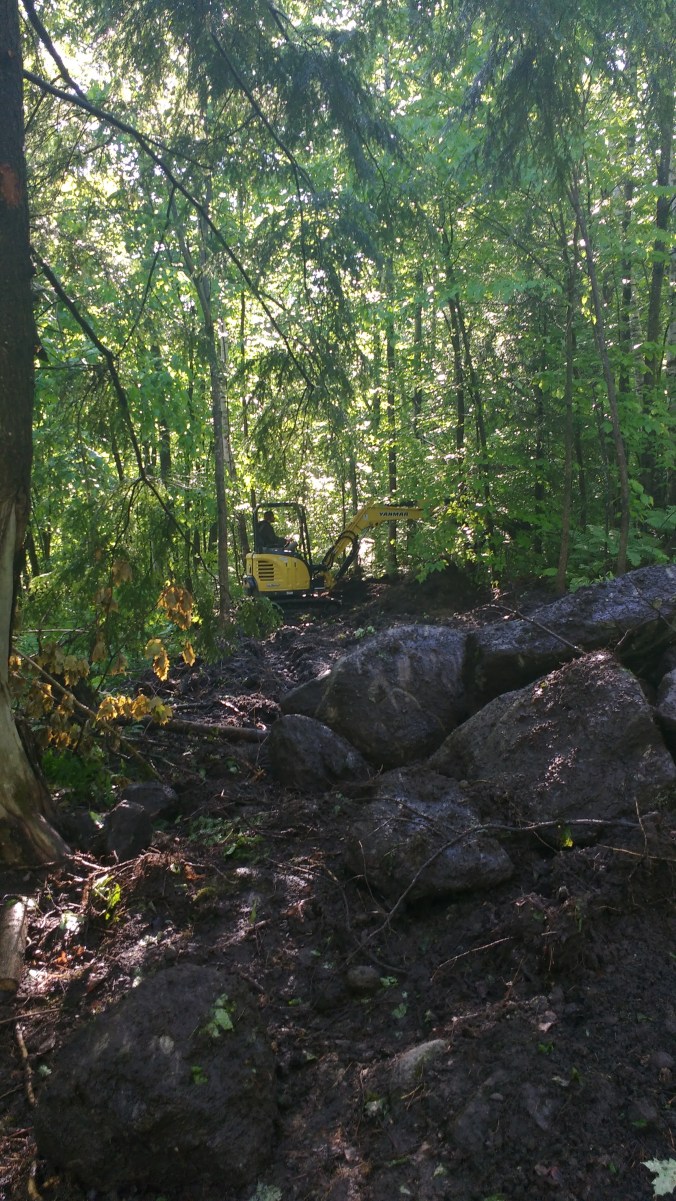
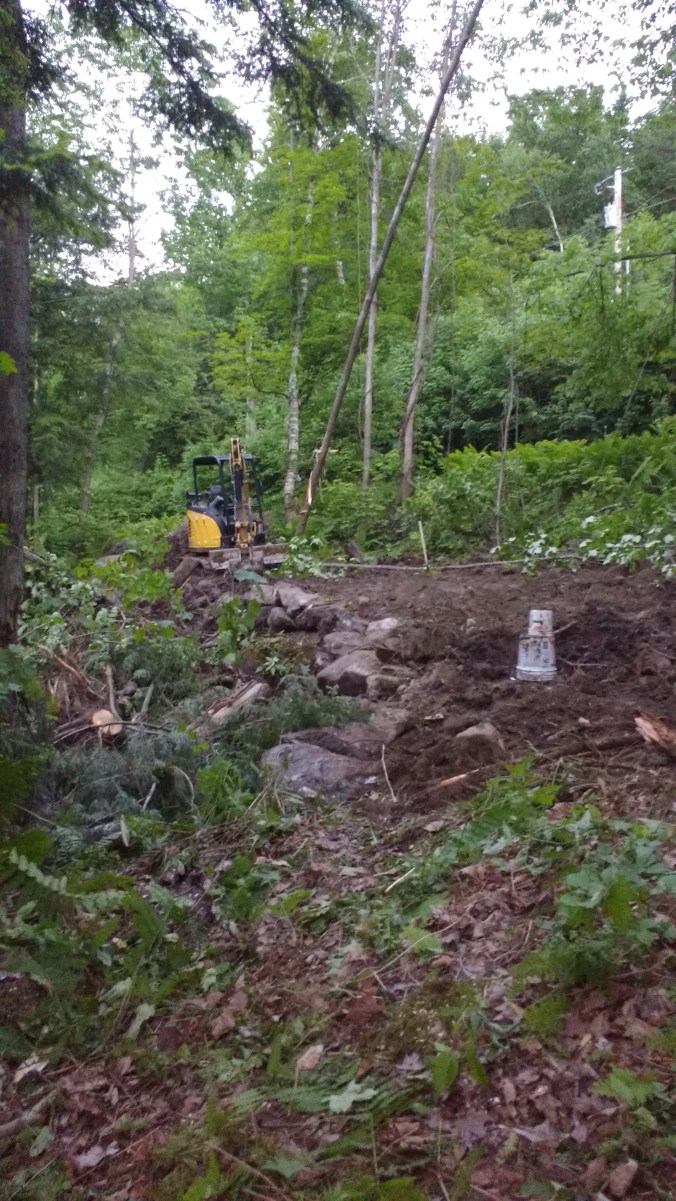
Once this load was smoothed out (by hand) and Lincoln was able to get an excavator down onto the land, he moved copious amounts of dirt from here and there. For eight days straight, he dug, carried and dumped load after load, changing the contour of the land rather dramatically in some places. He had to move not only fill dirt, but also some very large rocks to use for a retaining wall.

big rocks.jpg

The driveway slowly began to take shape. On six acres there’s plenty of dirt to create an acceptable grade. “Best practices” in driveway construction suggest that 10% is acceptable, meaning a 1-foot change in elevation for every 10 feet that the surface goes laterally. Lincoln got somewhere near that.

beginning.jpg

It is hard to describe just how tedious this work was, how stressful and harrowing those eight days of maneuvering of the excavator were, how very many buckets full of dirt and stone had to be moved uphill, how soupy some of the areas became as he took dirt away, how careful he had to be to not get the large machine stuck in mud because you sure don’t want it to sink so deeply into “the soup” that it can’t self-rescue with its own arm. Hours were wasted getting unstuck, and you pay by the hour when the machine is running.

When trying to make a reasonably flat ground, you necessarily aren’t on reasonably flat ground, so not flipping the machine is also a significant concern. Lincoln has flashbacks of ending up 45 degrees over with his feet up on the sides before catching it with its own arm. This happened, for example, while carrying a heavy boulder from one side of the machine to the other; he was not able to swing on the uphill side because of an obstruction (or maybe that tread didn’t have as solid a footing left), and halfway around the whole shebang started to go over. In retrospect he simply says, “Wheee!”

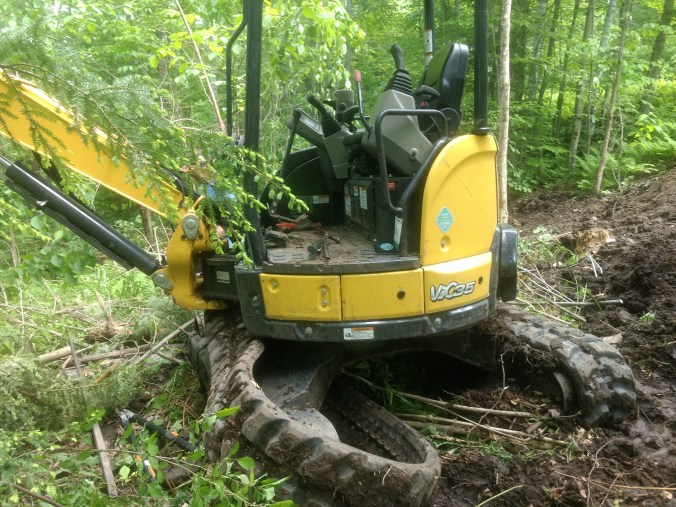
At one point one of the treads fell off, which was its own adventure,

tread off.jpg

to say nothing of how the bucket kept losing its teeth!

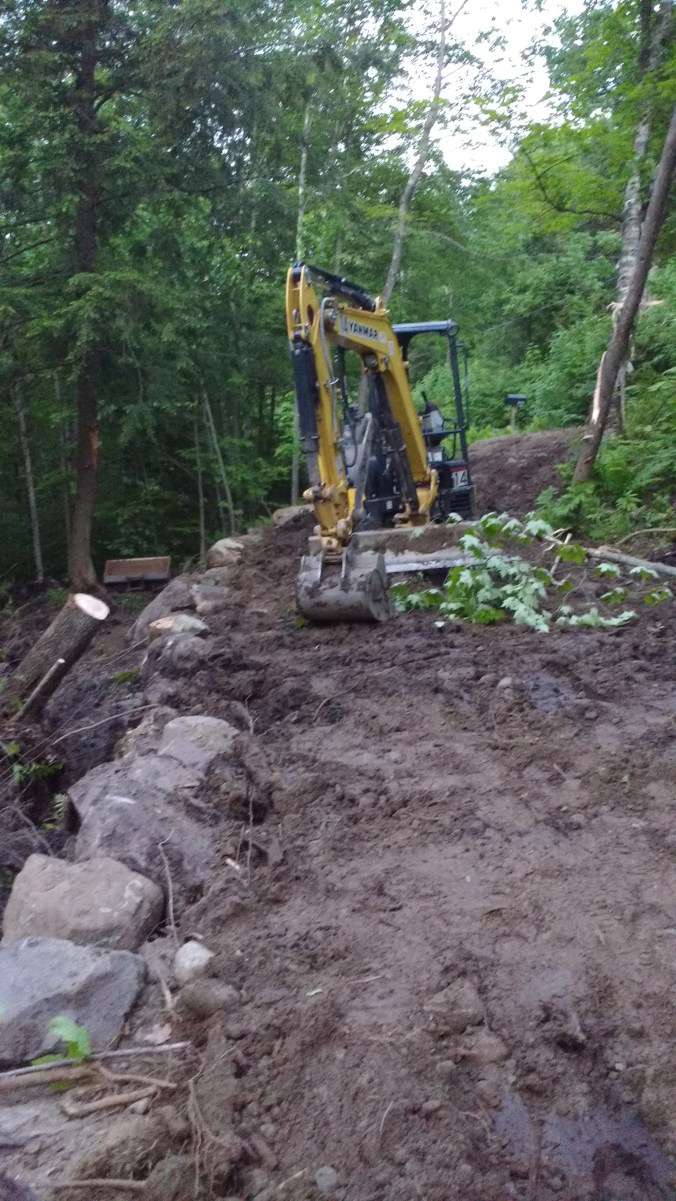
On the left in the photo below you see the huge rocks forming the retaining wall. Harder to see is the swale on the right, on the upside of the 200-foot driveway, so that any water coming from above the level of the driveway would go into the swale and turn into a stream along the side instead of washing over the driving surface, introducing too much water and/or washing away surface gravel. A swale was as necessary as a wall.

filling in.jpg

When Lincoln was done with the machine, he hand-graded for about a week before being satisfied that the driveway was smooth enough and had the right grade. It was still so soupy they could barely walk on it. The earth that became the primary passageway between the town road and their front door took all summer to dry out enough to drive on, but in the meantime, he built the barn (which we will come back to).

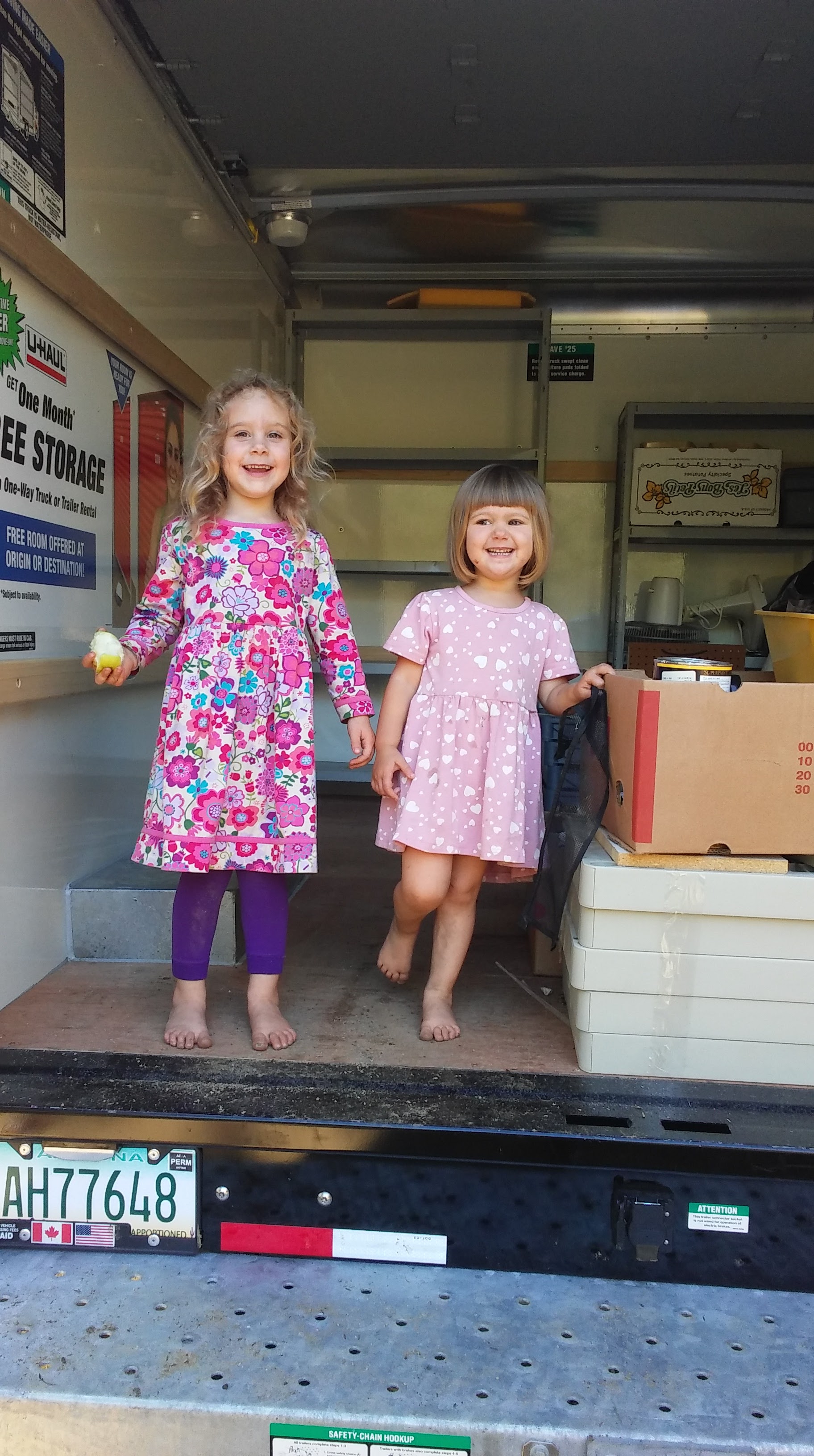
By fall it was time to keep going with surfacing the driveway, but reality forced more felling of trees, beautiful trees this time. In September Lincoln rented a truck with a 10-foot bed to bring some items from New Jersey to Vermont – items from his grandmother when she was moving out of her house. He backed the truck from the road to the barn without much trouble, and Rise and Eppie gave us another darling image,

girls in truck.jpg

but once the truck was empty, it was exceedingly difficult to drive it back up on account of there being no weight in wheels where power was trying to be delivered. The front wheels sank into sand, and all manner of spinning and sliding into the swale ensued. To get it up to the road required a winch, that is, hand-winching. During this laborious process, a beautiful maple tree that they had suspected would be seriously in the way was seriously in the way. They knew it would have to go. It’s not an easy thing on your heart to take down a beautiful, healthy tree, even if it just happens to be in the wrong place. Afterwards, visibility was much better, and they knew they had done the right thing, but it’s a pang to this day.

pre bricks.jpg

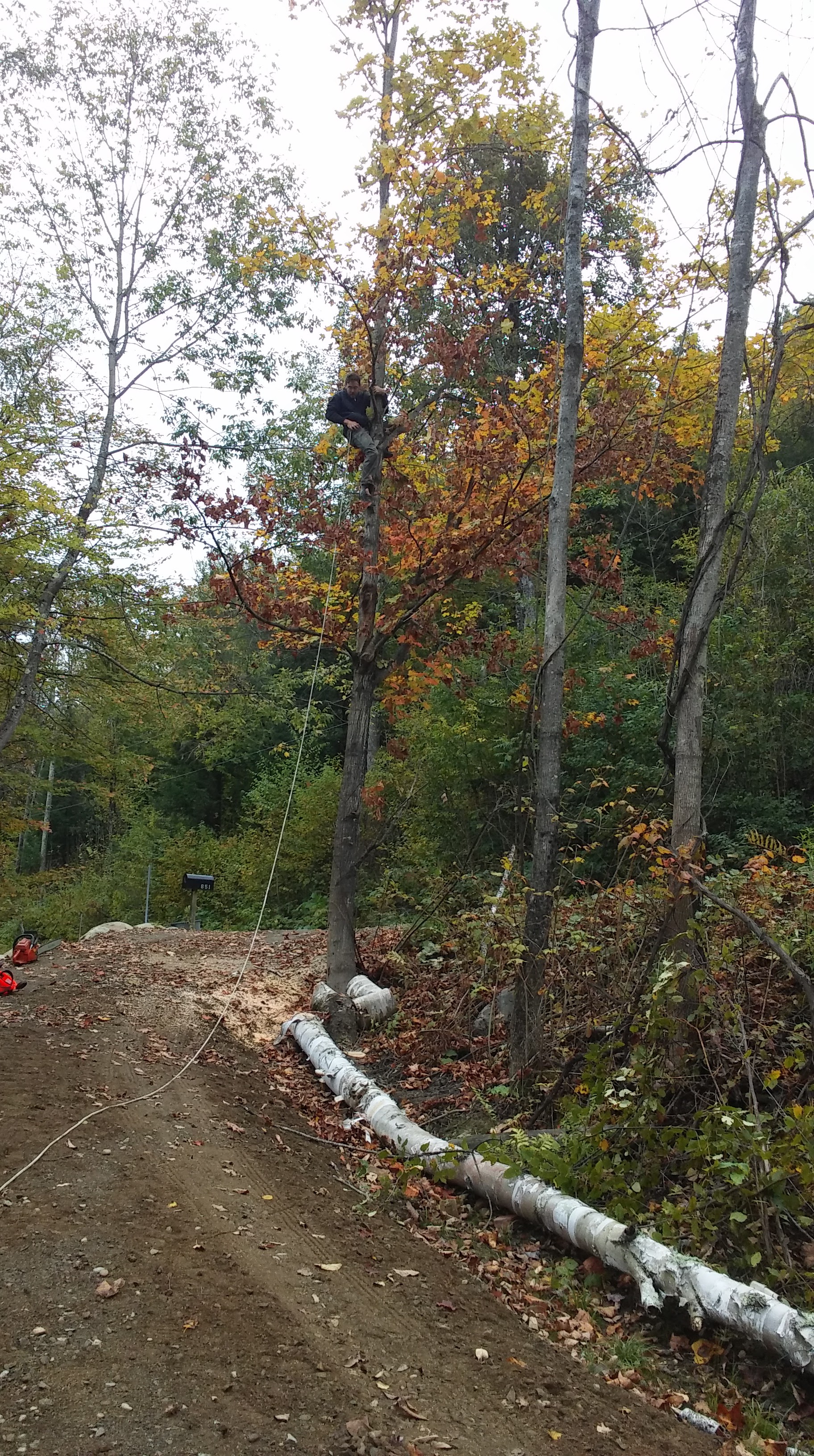
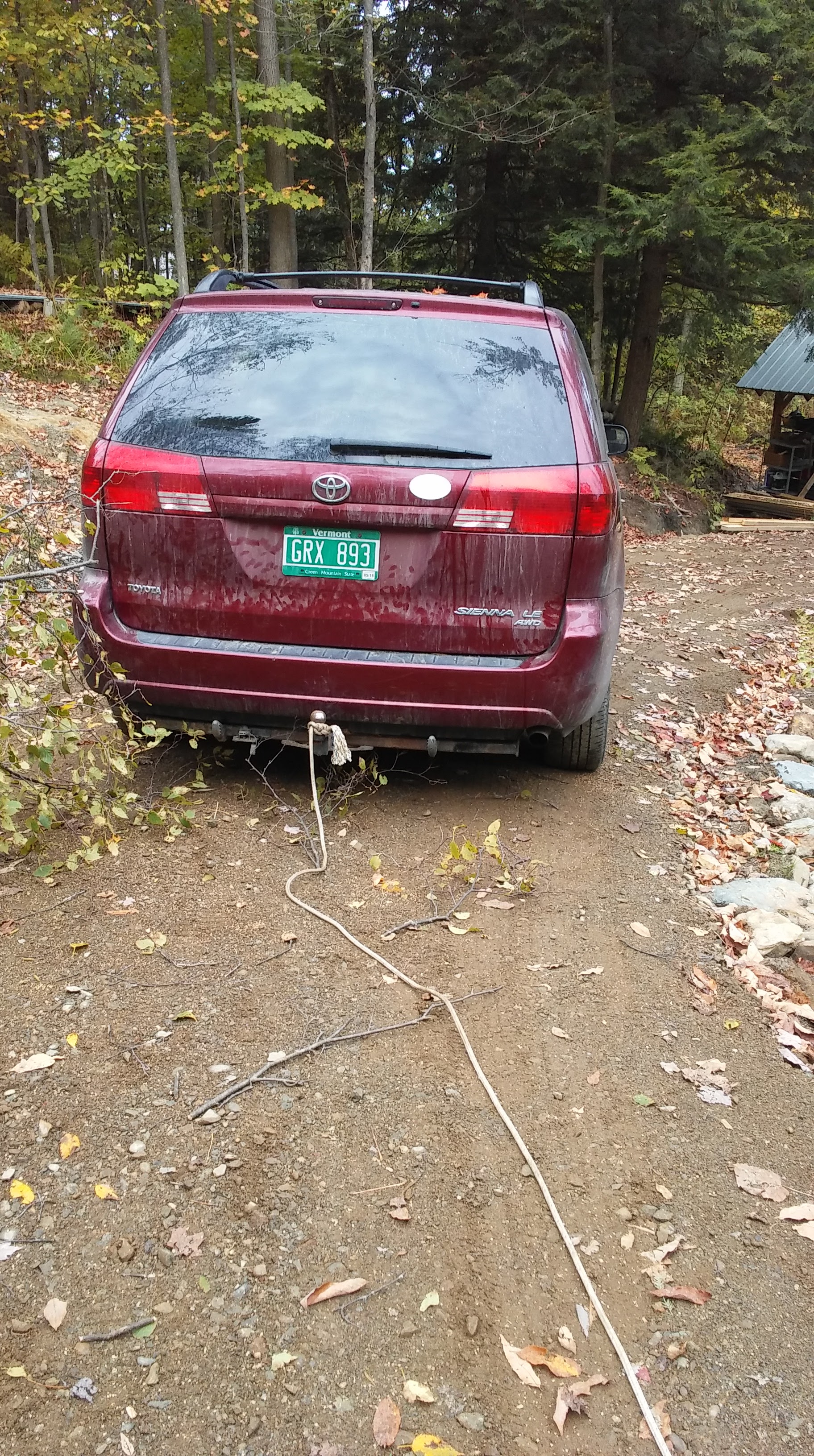
The three standing trees in this photo all came down. They were leaning heavily toward the road, and naturally you don’t want them to fall into the road. That’s where the car (photo below) helped. The rope you see was longer than the tree was tall, don’t worry.

pulling tree down.jpg

Once the grade was correct and those unfortunate trees were down, they could begin creating the driveway’s hard surface. On top of the native soil it is typical to first lay “road fabric” to keep a barrier between your soil and your gravel. Otherwise the earth will just eat the gravel, and in Lincoln’s case, with how wet the soil tended to be, this would happen fast. Lincoln worried about fabric because moisture can go through it and he was unsure how his driveway would behave with so much water. Bottom line: He didn’t want soup again.

pre shingles and bricks.jpg

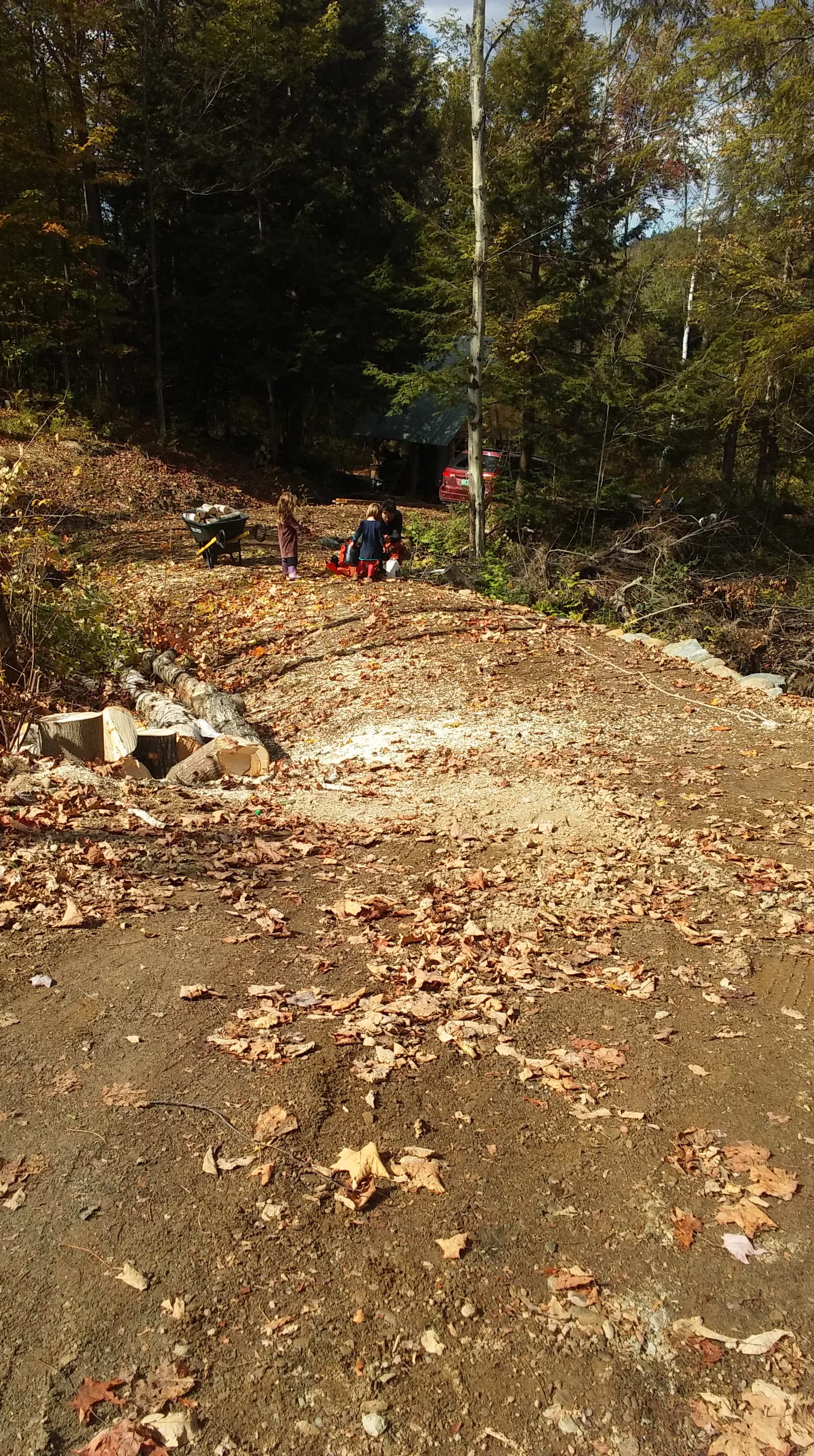
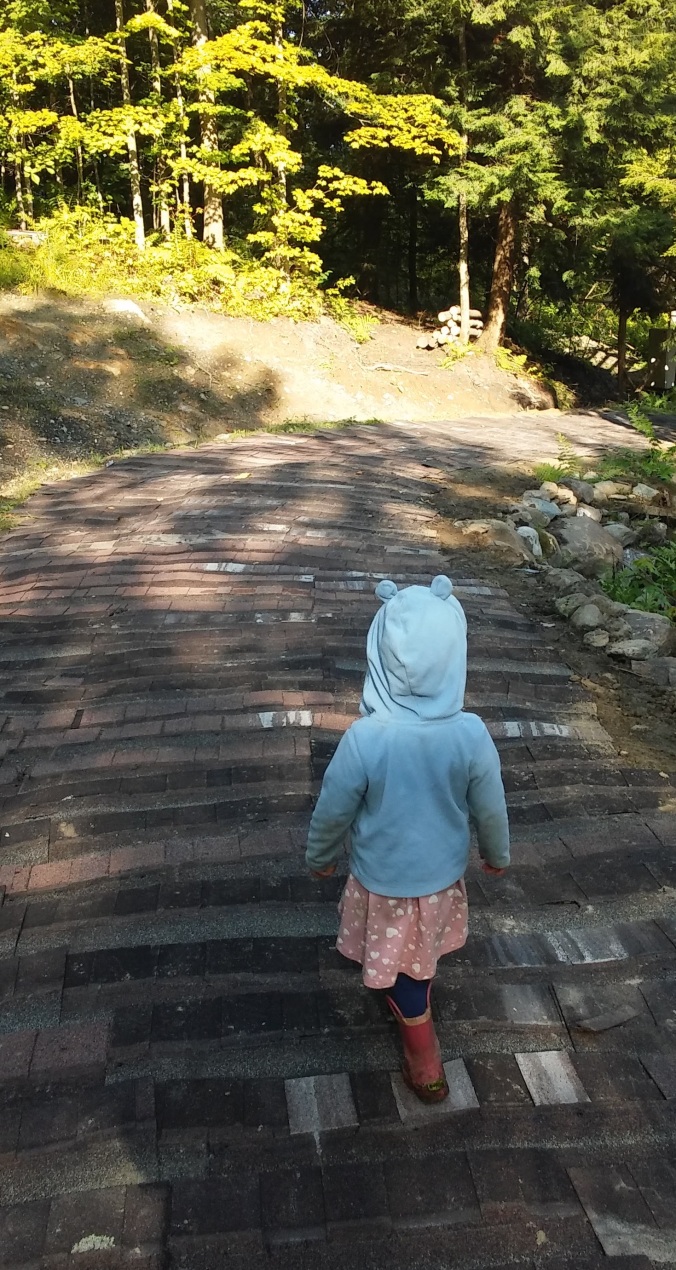
Demonstrating sound problem-solving skills, to say nothing creatively reusing otherwise landfill-worthy materials (wouldn’t Bertie Boyce be proud!), he put down shingles, which later got topped with gravel. Shingles? Yes, instead of just gravel or just road fabric topped with gravel, he created a weather shed using roofing shingles that made a solid surface of the first 100’ of driveway (up to the barn) so water can’t permeate, and soup cannot form. (With the leftover shingles he made a floor for the barn four layers thick).

This came about because Lincoln and Zach were re-roofing someone’s house at about that time, which resulted in a lot of used shingles that, per the contract, needed to go away. Instead of paying to dump them in a landfill, Lincoln took them to use on his driveway. The sticky point was the history of the disposal of shingles. Apparently it has been common enough practice among unscrupulous builders to dig a hole and bury unwanted shingles (causing the homeowner an unexpected sinkhole some years later) that it became illegal to “bury shingles.”

Naturally therefore Lincoln didn’t want to advertise what he was doing, even though his application in no way resembled the outlawed practice. This didn’t stop some people from misconstruing, looking askance and even asking outright, “Isn’t it illegal to bury shingles?” Following an explanation, he got a broad spectrum of responses including “Okay, guess that might work” (tinged with incredulity) and “Oh, brilliant!” (with genuine excitement followed by stories of their own unconventional solutions to similar challenges).

Lincoln’s driveway has been “hard as bones” even during Vermont’s famous mud season. Unconventional works sometimes. May we open our minds to it more often!

laying shingles2 cropped.jpg

Chocolate Chip Walnut Biscotti

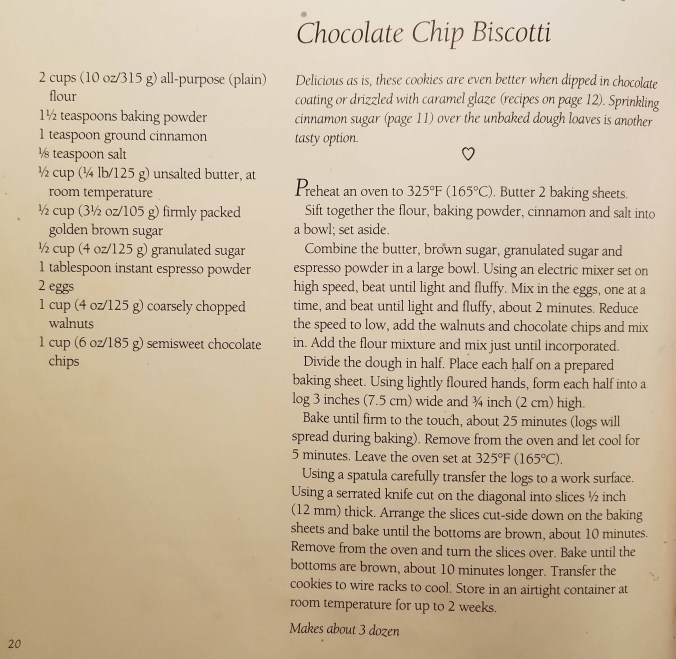
Most people have an aversion to certain foods. They don’t like bananas, or are allergic to garlic, or can’t stand cilantro. I don’t do nuts of any kind, and I don’t drink coffee. This biscotti recipe contains both nuts and coffee, a double whammy for me, so I cannot tell you that they are good. But you could believe me when I tell you that everyone who has tried them has loved them, and then give ‘em a go yourself.

I doubled the recipe* because I like to have enough to give some away. Okay, I give all these away. My friend Melba and her husband Brian had sad news recently about their beloved dog, and I hope these biscotti will help console their hurting hearts. If you know someone who could use a bit of cheer, consider a small gift of something homemade. We cannot change the circumstance, but we can remind people we love that they have been on our hearts. Food conveys love, care, warmth.

on plate.jpg

It’s an easy dough to put together, but I don’t know why they set up recipes the way they do. If they want you to cream the butter with the sugars and then add the flour and other dry ingredients, why don’t they tell you that? In that order? Why do they tell you first of all to combine the dry ingredients and then set them aside? Why would I want to wash two bowls when I can wash just one?

recipe cropped.jpg

I suggest: combine the butter and sugars, add the eggs, then the dry ingredients (I do not sift together these together, I just put them in), then the chips and nuts. This recipe says to use an electric mixer. You know I love my new mixer, and certainly you are welcome to use yours, but this is one you could manage with a good spoon. Your call.

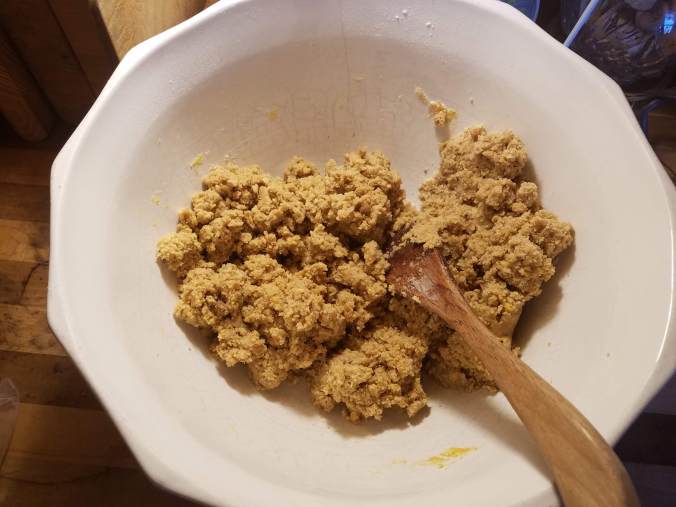
The dough is like a cookie dough, pretty stiff, easily pulling away from the side of the bowl.

dough.jpg

I did not have instant espresso powder, whatever that is. But my former barista son Samuel tells me that ground coffee is the same thing, that the difference between coffee and espresso is in the brewing method and the brewing method only. Well, I hope so because he was sequestered while I was making these, solving yet another perplexing coding problem, and I had some ground Folger’s in the fridge, so I substituted that for the instant espresso powder.

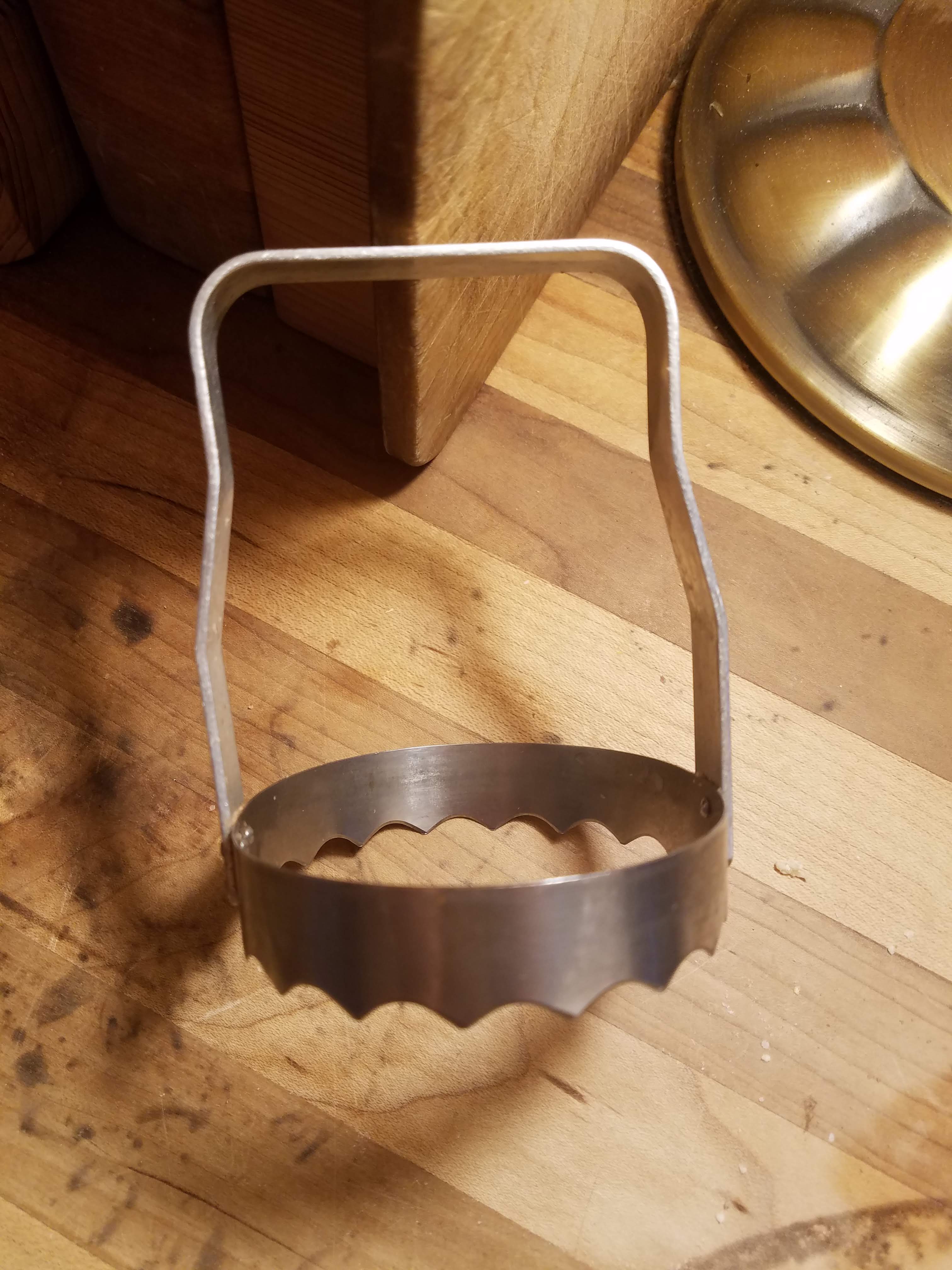
The walnuts are another thing. I had bought them already chopped but have learned from making this recipe in the past that if they are too big, the loaves are harder to slice when the time comes for that, so I chopped them smaller. For this purpose may I present the best chopper I know (Kwik-Kut Mfg. Co, Mohawk, NY). I’ve had it for decades but I know they still sell them. I got some for gifts at Yoder’s this past year. (Great for egg salad too, if you are into that.)

chopper.jpg

I put the 2 cups of nuts (remember I doubled the recipe) into my four-cup glass measure and chopped them right in there (again why measure in one cup and chop in another – that would be two things to wash instead of one). I didn’t get carried away and I didn’t go for a specific size piece. I just chopped till I got tired of chopping.

chopping nuts.jpg

I suggest using mini chocolate chips instead of the regular-size morsels (again for the ease-of-slicing reason), but I didn’t have enough (having used half the bag in the oatmeal cookies I made yesterday). So I used some regulars too, and tried chopping them into what I needed, the same as I chopped the nuts. It was a little harder but I reduced their size a bit. Using all mini chips would have been better. Get the minis.

all ingredients.jpg

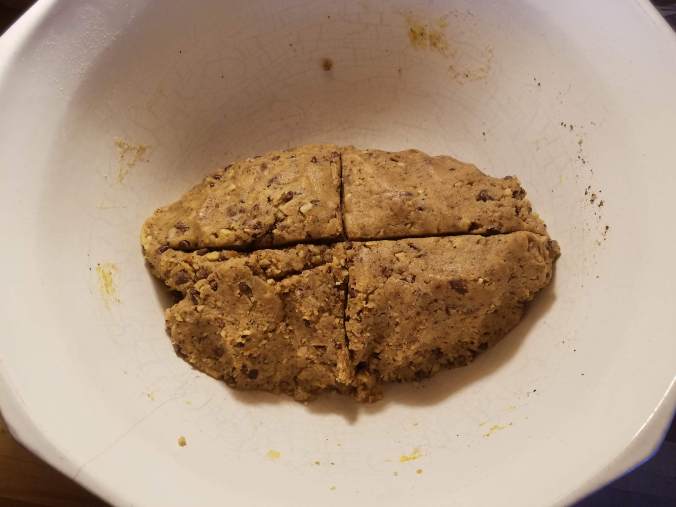
Once all of the ingredients are combined, you can use your hands and form one solid ball of dough. I cut this into four pieces so that I’d have equal-size loaves.

divided dough.jpg

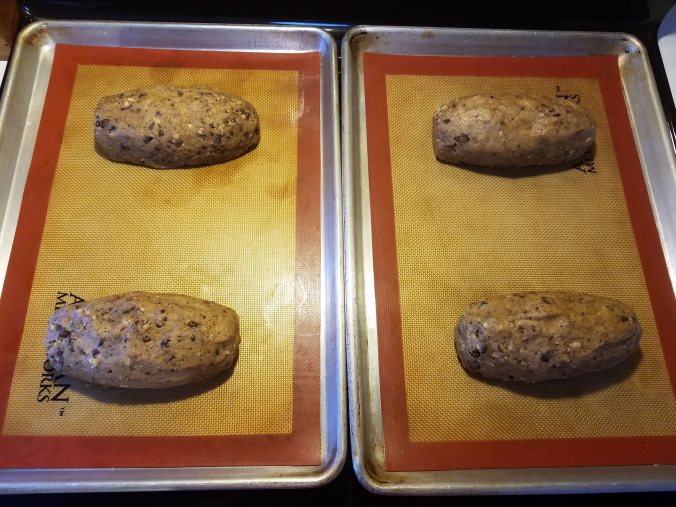
I formed these quarters and put them on my pans, hoping they wouldn’t spread too much. They look like little meatloaves to me!

unbaked loaves.jpg

I found that it took longer to bake than the 25 minutes at (fully pre-heated) 325F for these loaves to be firm to the touch, more like 35 minutes. I gave them their prescribed five-minute rest period, then used the right knife for slicing biscotti to slice them. Between the nuts and the chips, and the loaves still being pretty hot after the five minutes, it was not as smooth going through as perhaps it might be (you see a few breaks), but I managed to slice them, put them cut side down and bake again. This too took longer, more like 15 minutes per side.

sliced2.jpg

Who knows, maybe I sliced them thicker, or maybe my oven is on the cooler side and I should have upped the heat. Whatever the case, they looked great in the end, even if I cannot tell you they tasted great. Samuel gave them the thumbs-up, and he doesn’t even like sweet things generally.

batch.jpg

Doubling the recipe made quite a few; I count about 30. These keep well, ship well, dunk in coffee well 😊 Enjoy!!


*recipe from my William-Sonoma Cookies and Biscotti cookbook, Time-Life Custom Publishing, 1993